Flora_bee@Web3_floraB
Data Gravity & Where the Center of Mass Forms
A perspective almost nobody applies to infra: data gravity.
In every technological era, the layer that accumulates the most high-value data becomes the center of mass. Once gravity forms, adjacent layers orbit around it.
Now analyze dGrid, 0G Labs, LightLink, Permacast, and Dango through gravitational pull.
@dgrid_ai aggregates compute supply. But compute alone doesn’t create gravity workload does. The real gravity forms where inference demand accumulates. If dGrid successfully attracts persistent AI workloads rather than sporadic tasks, it begins to anchor an ecosystem of tooling, scheduling logic, and optimization layers around it.
@0G_labs Labs is structurally positioned to capture gravity at the data-verification layer. AI-native systems generate and consume massive datasets. If 0G becomes the default coordination layer for verifiable AI data availability, it doesn’t just process data it anchors where trust-weighted datasets live. That creates stickiness.
@LightLinkChain sits at execution gravity. Applications gravitate toward predictable cost environments. If developers build consumer AI apps that rely on stable transaction economics, execution patterns begin clustering around that environment. Over time, state density forms gravitational pull.
@permacastapp is gravity for cultural memory. Once communities and AI agents begin referencing permanent content primitives, links, and artifacts anchored there, migration becomes expensive. Cultural gravity is often stronger than technical gravity.
@dango is interface gravity. If users onboard through a simplified abstraction layer and build habits within it, behavioral gravity forms. Switching costs become psychological rather than technical.
The strategic insight:
Gravity doesn’t form where tech is flashy. It forms where dependency density accumulates.
Compute dependency. Data verification dependency. Execution dependency. Content dependency. UX dependency.
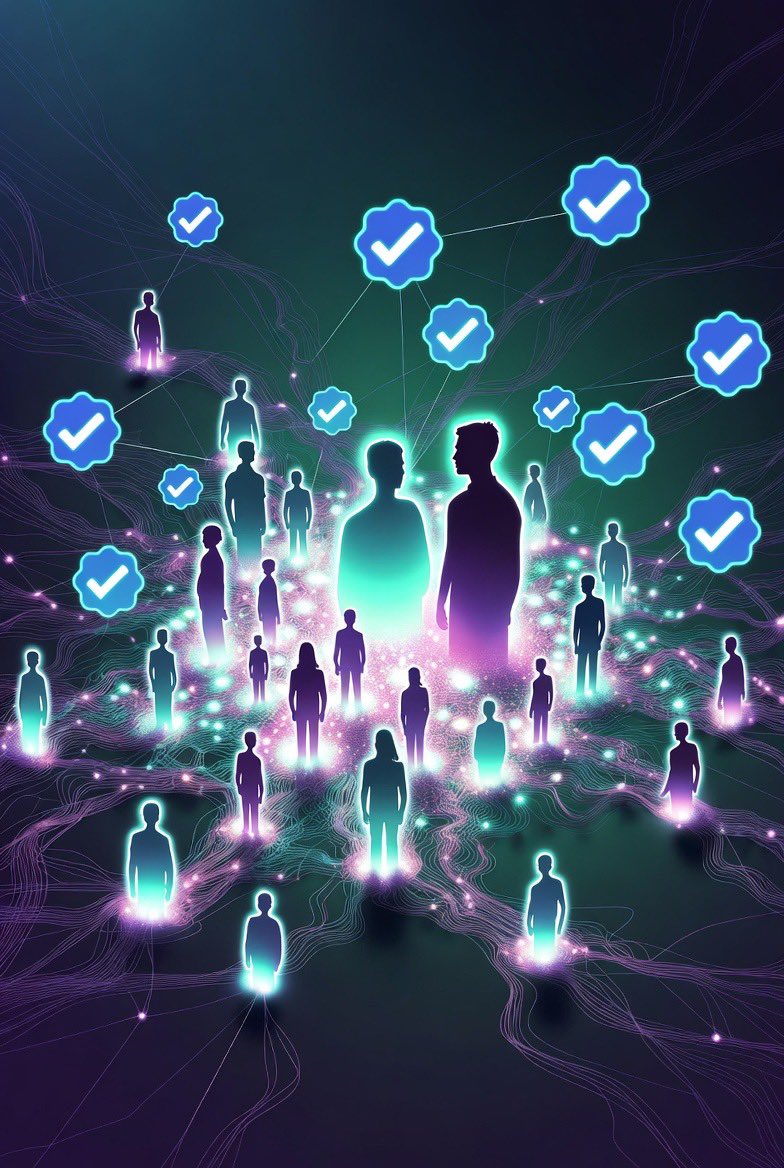
If these projects independently succeed at increasing dependency density in their domains, something larger emerges: overlapping gravity wells.
When gravity wells overlap, ecosystems consolidate.
This isn’t about narrative alignment.
It’s about where the center of mass of decentralized AI-native activity forms over the next five years.
The project that accumulates the densest dependency graph doesn’t just grow.
It becomes structurally difficult to displace.
That’s the long-horizon signal most are not modeling.