
고정된 트윗
MrbenTheFounder
4.6K posts

MrbenTheFounder
@mrben_eth
African Infrastructure Strategist | Building scalable platforms in agri, fintech & infrastructure | Thinking in systems, acting in impact. building | FARMSTACK
Lagos, Nigeria 가입일 Temmuz 2022
153 팔로잉8K 팔로워

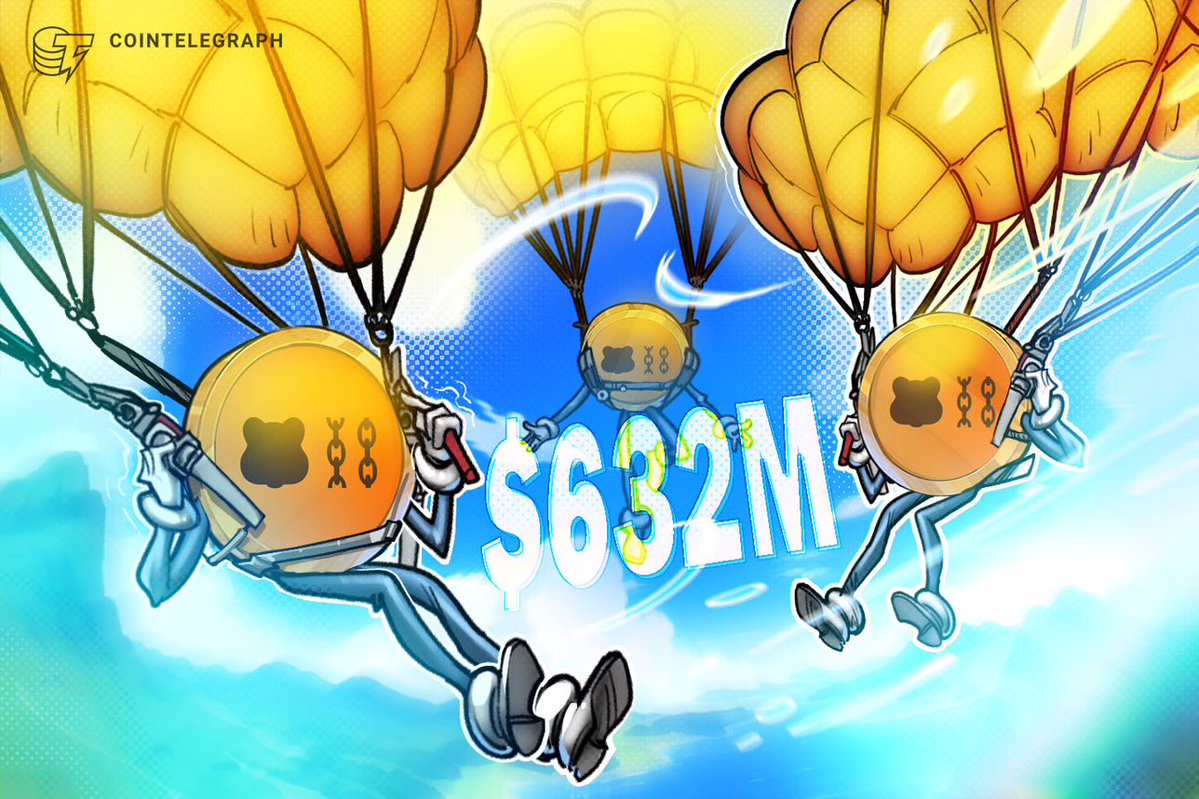
A blockchain just dropped over half a billion dollars onto its community before a single transaction settled on its mainnet.
Berachain’s mainnet launches with a $632 million airdrop already distributed. This isn't a reward for past loyalty. It's a calculated war chest, funded by the project's own treasury, handed to users before the network even goes live. The goal is instant liquidity and a user base that is financially invested from minute one.
This flips the entire launch playbook on its head. Most chains bootstrap with promises. Berachain starts with a deployed army of token holders who must now make their new wealth meaningful. The "Proof of Liquidity" concept is no longer a theory. It's a live experiment with a $632 million catalyst. This massive, upfront capital injection forces immediate pressure on the ecosystem to build real yield opportunities, or watch that capital evaporate to other chains.
The market doesn't reward potential. It rewards active capital. Berachain just bought itself an entire economy on day one.
#cryptoairdrop

English

The 2025 crypto report just dropped a bomb, $33 trillion in stablecoin volume. That's not a typo. That's more than the GDP of the United States and China combined, moving through crypto rails in a single year.
This marks the end of the casino. The "industrialization of crypto" is here. Volatility is being engineered out. The massive, boring infrastructure for global finance is now being built on-chain, and stablecoins are the grease in the machine.
For airdrop farmers, this changes everything. The easy farming of speculative DeFi 1.0 is over. Protocols now track real economic activity, not just token swaps. Your airdrop score will be based on your contribution to this $33 trillion flow, the fees you generate, the capital efficiency you provide. You are no longer a farmer, you are a utility operator.
The next wave of mega airdrops won't reward gamblers. They will pay infrastructure providers. Your address interacting with a trillion dollar payment corridor is worth infinitely more than one spamming a memecoin launch. The game just shifted from speculation to settlement.
Start building your transaction history in the plumbing, not the penthouse.
English

The blockchain's dark secret is that every move you make is watched before you even make it.
Your trade, your loan, your simple swap is naked on the network for a few critical seconds.
Sophisticated bots scan these pending transactions, front-run your position, and siphon the value right out of your pocket.
This is Maximal Extractable Value, a multi-billion dollar shadow industry built on total transparency.
Now, a new proposal aims to throw a cloak over the entire system.
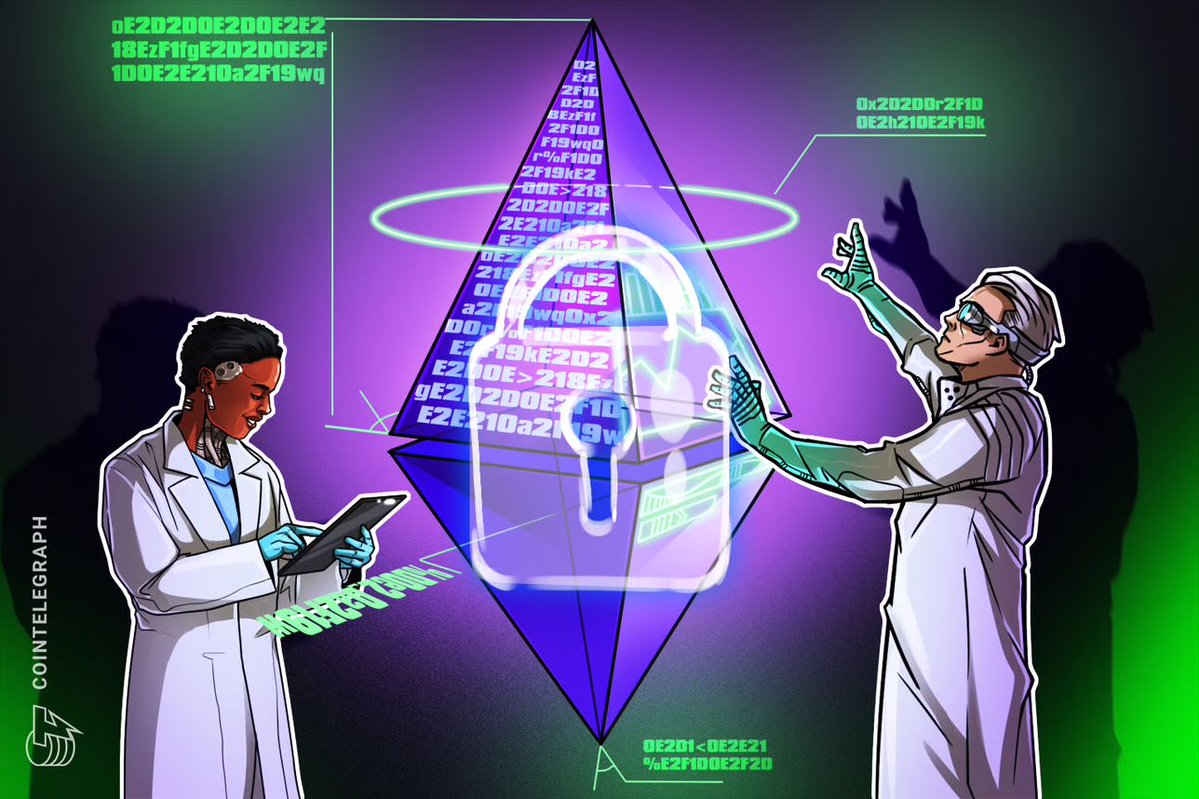
EIP-8105 is a blueprint for an encrypted mempool.
It changes the fundamental game: transactions would be submitted as encrypted blobs, indecipherable to anyone but the builder who wins the right to include them.
The payload only unlocks after the block is finalized.
The bots go blind.
This isn't about privacy for privacy's sake, it's about economic fairness.
The current system is a predator's paradise where the fastest link and the most aggressive algorithm win.
Retail users and honest institutions are perpetual prey.
Encryption at the protocol level flips the script, forcing competition back to block building efficiency instead of predatory sniping.
The hidden angle is the tectonic shift in power dynamics.
Builders become the new kingmakers, but their advantage shifts from information theft to pure technical prowess.
The entire MEV supply chain—searchers, relays, block builders—must reinvent their strategies overnight.
This could finally break the stranglehold of a few dominant players by creating a market where many builders can compete on a level, encrypted field.
The real fight for Ethereum's soul is about to move behind a veil.

English

Spot on. The liquidity fragmentation is the real pain point for merchants right now. But honestly, this forced consolidation might push PSPs to build smarter, data-driven liquidity routing rather than just relying on sheer agent density. It's a steep trade-off, but it might force the ecosystem to mature
English

@mrben_eth CBN’s push for exclusive agents + geo-tagging is about control and risk reduction, but it could raise costs for PSPs and limit agent mobility.
Merchants relying on flexible cash-in/cash-out might experience short-term liquidity fragmentation. What’s your take on the trade-off?
English

A new CBN rule is about to turn every mobile POS terminal in Nigeria into a digital prisoner of its location.
The mandate for geo-tagging all payment terminals is a direct strike against fraud and money laundering.
It pins each device to a single, verified coordinate.
The goal is to kill "terminal roaming," where a single device processes transactions across multiple states, a classic red flag for criminal flows.
But this dragnet doesn't just catch criminals.
It threatens to paralyze a legitimate, vital segment of the economy: the agent network.
Think of the market woman who moves her POS terminal from her main stall to a busier corner on market day.
Or the agent who serves a corporate client's office on weekdays but operates in a residential area on weekends.
Under the strictest interpretation, this adaptive, fluid form of entrepreneurship becomes a compliance violation.
The hidden battle isn't about security versus convenience.
It's about control versus organic growth.
A rigid, static map of financial access points fails to reflect the reality of Nigerian commerce, which is mobile, opportunistic, and relentlessly adaptive.
Forcing agents into fixed locations could stifle the very financial inclusion the system aims to support, cementing divides instead of bridging them.
Protecting the economy means protecting the legitimate agent's right to chase opportunity.

English

N25.85 billion vanished from Nigerian digital wallets last year.
That’s not a slow leak. It’s a hemorrhage. The scammers aren’t kids in a basement; they’re sophisticated operations hunting for the big score, the life-altering transaction.
This is the battlefield where fintechs like PalmPay are fighting. Their strategy isn’t just a stronger wall. It’s a smarter, faster immune system.
They’re deploying AI that doesn’t just flag a transaction, but reads the story behind it. A payment to a new merchant at 3 AM that’s 10x your usual amount? The system sees the plot. It cross references device IDs, location data, and behavioral patterns in milliseconds. If the story doesn’t add up, the transaction freezes.
But the real pivot is moving the fight upstream. Instead of just reacting to fraud, they’re trying to preempt the panic. Imagine trying to send N5 million and getting a mandatory 60 second cooling off period. A final, forced moment of clarity before your money moves. It’s friction with a purpose, designed to short circuit the scammer’s script.
The hidden angle here is the trust economy. For digital payments to truly scale and become the backbone of commerce, users need to feel something beyond convenience. They need to feel security. Every headline about a billion lost erodes that foundation. Fintechs are now realizing their most valuable asset isn’t their user base, but the trust of that base.
A secure platform is no longer a feature, it’s the entire product.
The war for Nigeria’s financial future is being fought one transaction at a time.

English

@Akintola_steve Even if your idea is the best you sure need some level of legal protection
English

Nairobi's gridlocked traffic is now hiding a fleet of mobile hospitals.
Zuri Health is deploying clinics inside buses stuck in the city's infamous jams. Two are fully solar-powered, self-contained units. They don't just offer basic checkups. They're equipped for diagnostics, dental procedures, and cervical cancer screening. This isn't a wellness van. It's an emergency room bypass.
The masterstroke is turning wasted time into a healthcare appointment. The target patient isn't in a remote village. They are the working professional who can't afford a six-hour clinic visit. They are in traffic right now. Zuri Health is meeting them there, turning a productivity sinkhole into a point of care.
This changes the entire economics of urban medical access. The biggest barrier isn't distance, it's time. By capturing patients during compulsory downtime, Zuri destroys the "I'm too busy" excuse. This model will force traditional clinics to ask a brutal question: if the patient won't come to us, why aren't we already going to them?
The future of urban healthcare is mobile, and it's idling in the lane next to you.

English

This is the single largest energy infrastructure project in African history, and it’s being built to bypass Europe’s front door.
Nigeria and Morocco are finalizing a $25 billion intergovernmental deal for a transcontinental gas pipeline that will change geopolitics.
The pipeline will stretch over 5,600 km along the West African coast, connecting Nigerian gas fields to Morocco and, crucially, onward to Europe.
This isn't just a pipeline. It's a direct challenge to Algeria's influence and Russia's energy stranglehold.
Algeria currently supplies Europe via the Trans-Mediterranean pipeline through Italy. This new Nigeria-Morocco line creates a rival southern route, controlled by a different alliance.
Morocco gains immense strategic leverage, transforming from an energy consumer into Europe's next major gateway. Nigeria finally gets a direct, stable outlet for its vast gas reserves beyond its troubled domestic market.
The hidden play is continental dominance. This pipeline will force every coastal nation between Nigeria and Morocco to pick a side, creating a new axis of political and economic power across West Africa.
It also makes Europe's pivot away from Russian gas permanent, locking in African suppliers for the next half century.
The ground beneath the global energy map is shifting, and the fault line runs from the Niger Delta to the Strait of Gibraltar.
One signature this year will start a chain reaction that redefines alliances on two continents.

English

Airtel is building a new cell site every single day in Nigeria, and it's still not enough.
They've added over 1,500 towers in three years, a frantic construction sprint pushing their total network past 17,000.
Yet the gap with MTN remains a chasm.
This isn't just a capacity war, it's a financial siege. Every new site is a multi-million dollar bet placed against a dominant opponent with deeper pockets and a larger subscriber base. Airtel isn't merely expanding, they are digging trenches in a landscape MTN already owns.
The hidden cost is in the spectrum. More towers require more airwave capacity to be effective. This buildout is a silent, multi-billion naira plea to the telecom regulator for a fairer share of the country's radio frequencies. Without it, this infrastructure blitz hits a ceiling of congestion.
MTN isn't being challenged on coverage anymore, they're being forced into a price war they never wanted.
The second-place player is buying its way to the negotiating table with concrete and steel.

English

@prince_of_web3 I feel like this is a huge opportunity for us to grow, all Verified account will be following back
English

Lagos just rewrote the rulebook for every property developer and hustler in Africa's most chaotic megacity.
The old system was a legendary graveyard of dreams.
You needed a thick file of paper plans.
You needed "connections" to navigate the labyrinth of agencies.
You needed months, sometimes years, and a budget for endless "facilitation."
Approval wasn't a process, it was a pilgrimage.
That era ended today.
The state government flipped the switch on a fully digital system called the Electronic Physical Planning Process System (EPPPS).
Now, every application for a building plan, from a bungalow in Alimosho to a skyscraper on Victoria Island, gets managed in a single digital pipeline.
Upload your documents.
Track the status in real time.
Get a digital permit.
The entire bureaucratic jungle has been mapped into code.
This isn't just about convenience, it's a direct assault on a multi-billion naira shadow economy.
The "man-know-man" consultants who made fortunes guiding people through the maze are now obsolete.
The middlemen in offices who delayed files for "consideration" have lost their leverage.
The state is cutting out the entire corruption supply chain by making the process transparent and traceable.
The hidden angle is a massive land grab for formalization.
Lagos is estimated to have over 70% informal construction.
By making the legal path frictionless, they're inviting a flood of projects out of the shadows and onto the tax roll.
Every approved plan is a property that can be properly assessed and taxed.
This digital platform is, first and foremost, a revenue generation weapon.
Expect a seismic shift in who gets to build and how fast.
Smaller developers without political capital now have a fighting chance.
Architects and engineers become more valuable than "fixers."
The speed of development across Lagos is about to accelerate violently.
A 20-year-old bottleneck just got deleted with one software update.

English

They’re not recruiting you. They’re robbing you.
The National Pension Commission just exposed a brutal scam targeting desperate job seekers.
Fraudsters are posing as PenCom officials, promising non-existent jobs to steal personal data and money.
This is a direct attack on your financial future.
The scam works because it preys on hope. In a tough economy, a government job offer feels like a lifeline. Scammers use fake appointment letters and official-looking communication to create urgency. They ask for "processing fees," "verification charges," or your Bank Verification Number and National Identity Number under the guise of onboarding.
Once they have that information, they own you. They can empty your accounts, take out loans in your name, or hijack your pension savings. The damage is permanent.
PenCom has made it clear: they never recruit through social media DMs or unsolicited emails. All legitimate openings are posted on their official website only. Any other channel is a trap.
This scam reveals a deeper vulnerability. Our personal data has become the new currency for theft, and trust in institutions is the primary weapon. The criminals understand the system better than most citizens do.
They are not just stealing your money today. They are stealing your security for tomorrow.
Protect your identity like it’s the last money you’ll ever have.

English

A single deal just rewired the entire nervous system of African literature.
For decades, the continent's greatest stories were locked in physical formats, trapped by distribution bottlenecks and international publishing gatekeepers. Readers in Lagos might find a book, but someone in Accra or Nairobi couldn't. The global audience was a distant dream.
Then the move.
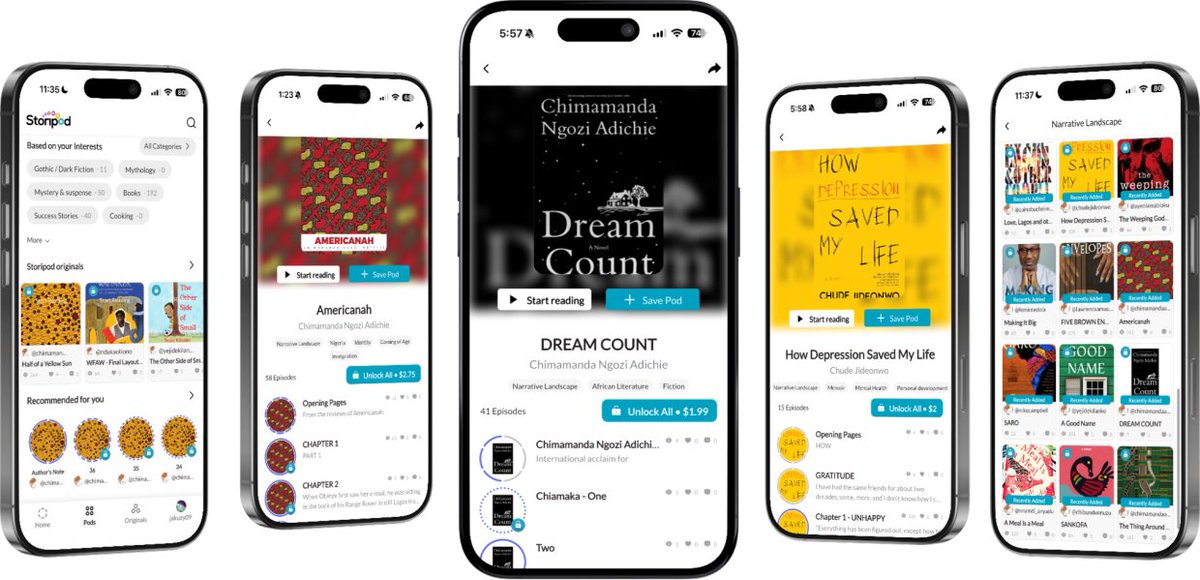
Chimamanda Ngozi Adichie's Lagos-based publisher cut a direct, digital distribution deal with Storipod. This isn't just putting PDFs online. This is a strategic bypass of the old, creaky supply chains that have controlled access for a century. Storipod gets the crown jewels of contemporary African fiction. Adichie's publisher gets a rocket ship to a global, digital-native audience. Both companies just turned a key in a lock everyone else was still trying to pick.
The hidden angle is a quiet declaration of digital sovereignty. Africa's storytelling power is no longer begging for a seat at the international publishing table. It's building its own table and setting its own terms. This deal is the blueprint. It proves that the value isn't in the physical book crossing a border in a shipping container, but in the story itself, traveling at the speed of light. Every other major African author and publisher is now looking at this model. The scramble to control digital distribution rights has just begun.
The gatekeepers didn't see the digital key turning until the lock clicked open.

English