Dano Seto Anbela
181 posts




@GeneralSonCast Ngeliat komen di ig rrq, yang nge hate pada di serang fans beliau 🤣
Indonesia

Dano Seto Anbela 리트윗함


@reyfearless @TxtdariHI Wkwkw dari jaman covid emang gapernah belajar.
Negara lain udh pada lockdown dan nutup penerbangan dari luar, eh kita malah sebaliknya 🤣.
Gabisa apa ya mereka ga nunggu parah dulu baru gerak tapi antisipasi sebelum itu menjadi parah
Indonesia

@TxtdariHI filipin dan vietnam dah kena dampak.
ini indonesia gaada tindakan preventif kah?
Indonesia

@hisanaburger @LambeSahamjja Kemarin Iran udh kasih 4 point buat mereka berhenti kirim rudal ke Israel. Salah satunya jangan pernah ganggu Iran lagi sama Amerika harus bener-bener cabut dari negara-negara Teluk. Dari 2 point ini aja agak sulit wkwk
Indonesia

@LambeSahamjja Aku awam, jadi pls jelasin kenapa mundur juga susah
Indonesia

intinya begini
Putin:
Gue tegasin ya. Kalau Israel pakai nuklir, Rusia bakal langsung balas nuklir ke Israel.
Netanyahu:
Jadi kalau gue pakai nuklir, malah gue yang hancur?
Putin:
Iya. Itu bukan senjata lagi, tapi jadi risiko buat lo sendiri.
Trump:
Situasinya udah beda sekarang. Ini makin bahaya dan susah dikontrol.
Netanyahu:
Kalau gue nggak serang lebih jauh, Iran makin berani. Tapi kalau gue nekat, bisa hancur juga.
Putin:
Makanya pikirin baik-baik. Sekarang semua ada konsekuensinya.
Intinya Israel lagi di posisi serba salah. Mau maju bahaya, mundur juga nggak gampang. Situasi lagi tegang banget.
Indonesia


@allfromme_ @KucengTerbanggg Si nyamuk nyedot spidol, dia ngira merah itu darah
Indonesia



Dano Seto Anbela 리트윗함

Dano Seto Anbela 리트윗함

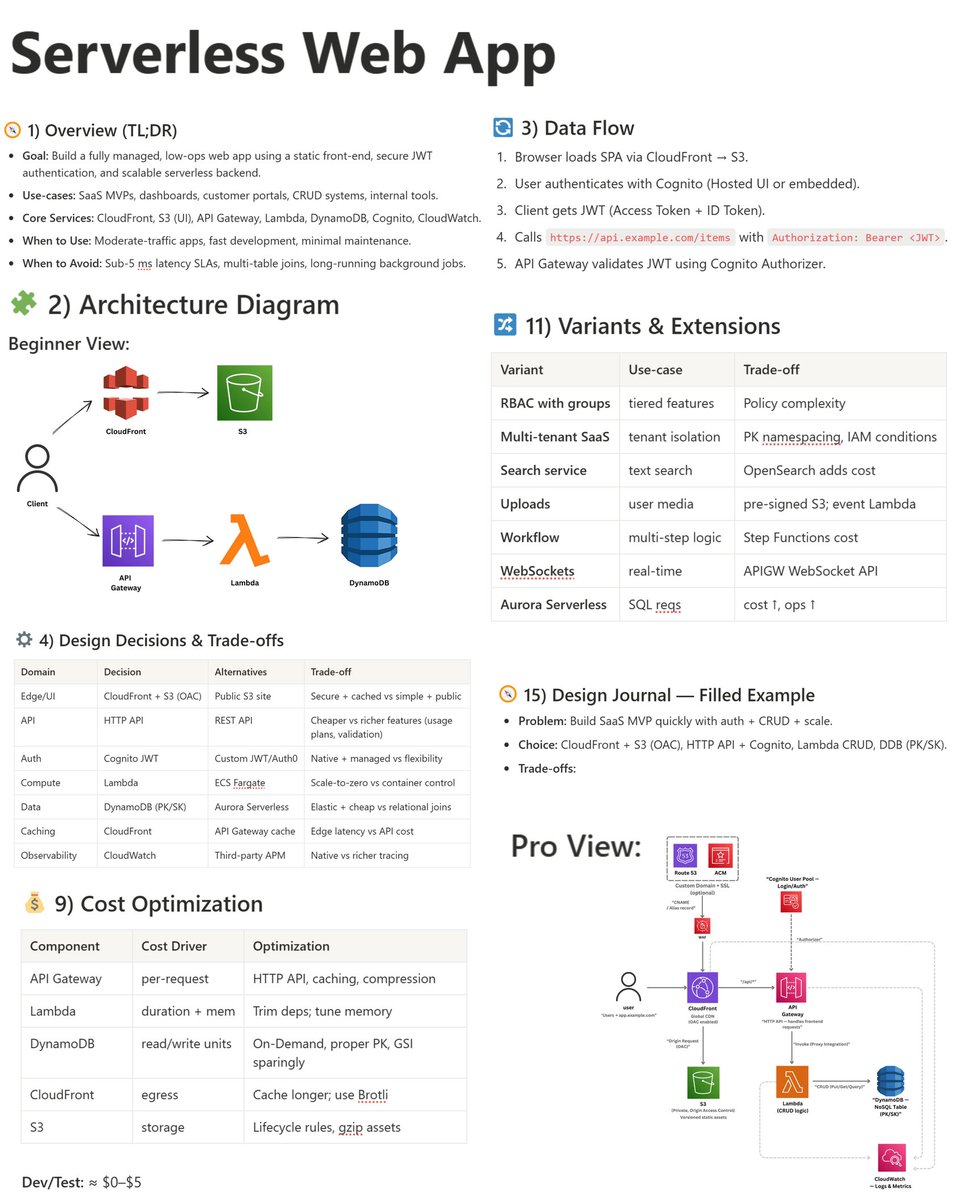
Clean Architecture
→ Clean Architecture is a software design approach that separates business logic from frameworks, databases, and external tools.
→ The core idea is independence — your application logic should not depend on UI, databases, or third-party services.
→ Dependencies always point inward, toward the business rules.
Analogy: A Castle with Protected Inner Chambers
→ Imagine a castle:
→ The inner chamber holds the king and royal secrets (core business logic).
→ The outer walls protect the castle and handle interactions with the outside world (UI, APIs, databases).
→ You can replace the gates or walls without touching the royal chamber.
That is how Clean Architecture protects your application core.
Architecture Layers (Outside → Inside)
→ Frameworks & Drivers Layer (Castle Walls)
→ Includes UI frameworks, databases, web servers, external APIs.
→ Examples: React, Spring Boot, Express, PostgreSQL.
→ Handles communication with the outside world.
→ Interface Adapters Layer (Guards & Translators)
→ Converts data between external formats and internal formats.
→ Contains controllers, presenters, gateways.
→ Makes sure the outside world can talk to the inner layers safely.
→ Use Cases Layer (Castle Operations Room)
→ Contains application-specific business rules.
→ Coordinates workflows and system behavior.
→ Example: CreateOrder, RegisterUser, ProcessPayment.
→ Entities Layer (Royal Chamber)
→ Holds core business rules and enterprise logic.
→ Completely independent of frameworks and tools.
→ The most stable and reusable part of the system.
Dependency Rule
→ Outer layers → depend on → inner layers
→ Inner layers → never depend on → outer layers
→ Business logic remains protected from technical changes.
Flow
→ User action → UI → Controller → Use Case → Entity
→ Result → Use Case → Presenter → UI
→ Infrastructure supports the flow but never controls it.
Benefits
→ Strong separation of concerns.
→ Highly testable business logic.
→ Easy to swap databases, UI frameworks, or APIs.
→ Long-term maintainability.
→ Encourages clean, scalable codebases.
Drawbacks
→ More abstraction and initial setup.
→ Requires discipline to enforce boundaries.
→ Can feel complex for small projects.
Best Practices
→ Keep business logic framework-independent.
→ Define interfaces in inner layers.
→ Implement details in outer layers.
→ Use dependency injection.
→ Treat tools and frameworks as replaceable plugins.
When to Use
→ Medium to large-scale applications.
→ Systems with complex business rules.
→ Long-term projects requiring maintainability.
→ Teams following domain-driven design principles.
📘 Mastering Software Architectures: From Monoliths to Microservices and Beyond
Learn Clean Architecture, Hexagonal Architecture, Onion Architecture, CQRS, MVC, MVVM, Event-Driven, Microservices, and more — with real-world analogies, diagrams, and best practices to help you design scalable and maintainable systems.
👉 codewithdhanian.gumroad.com/l/dtonpi

English
Dano Seto Anbela 리트윗함

Dano Seto Anbela 리트윗함

Dano Seto Anbela 리트윗함

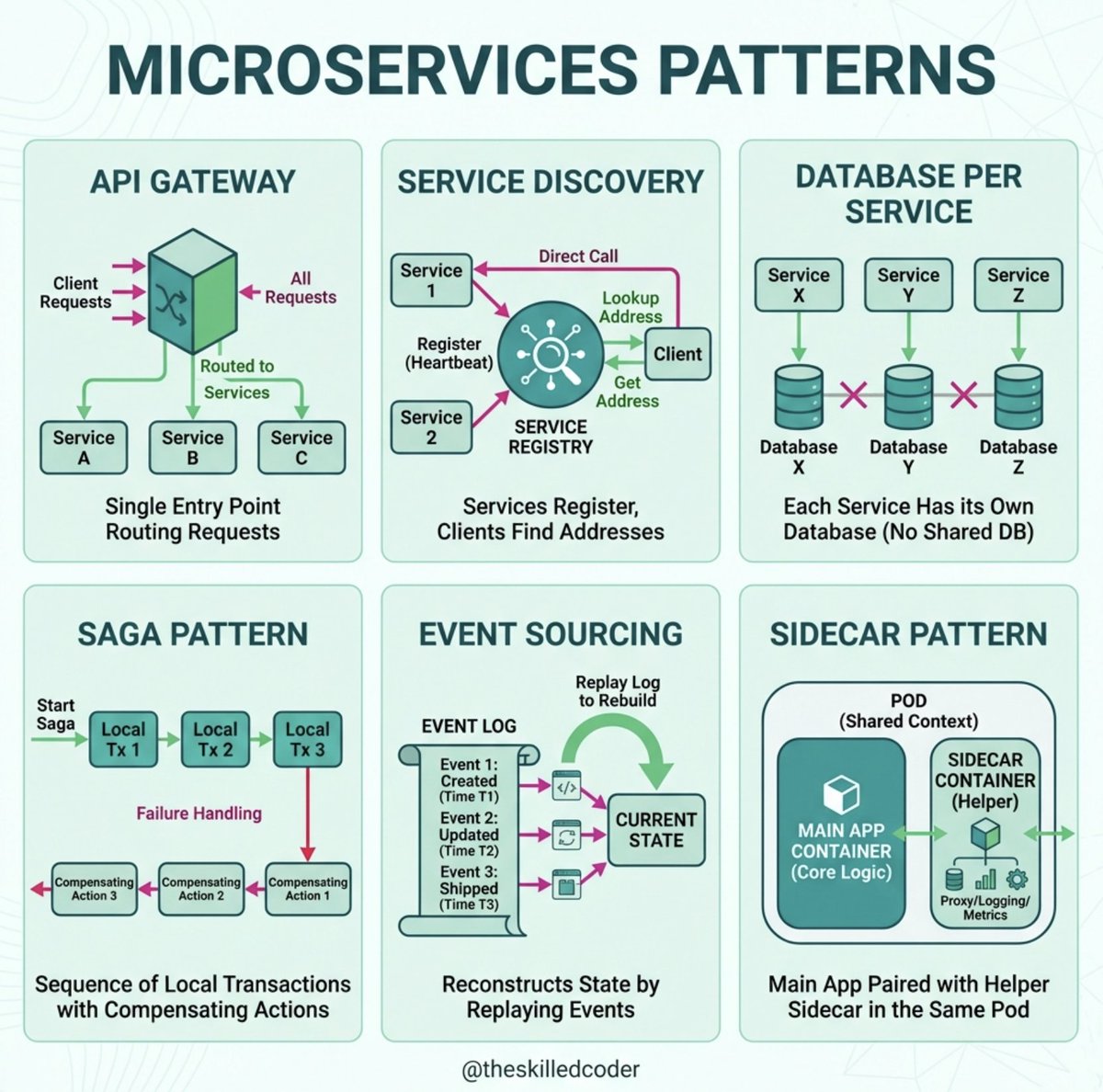
What is JWT and how it works?
JWT (JSON Web Token) is a compact, URL-safe token used to securely transmit information between a client and a server.
It is most commonly for authentication in modern web apps.
A JWT has three parts separated by dots: xxxxx[dot]yyyyy[dot]zzzzz
1. 𝐇𝐞𝐚𝐝𝐞𝐫: Contains the algorithm used for signing the JWT (e.g., HMAC SHA256 or RSA) and the token type (JWT).
2. 𝐏𝐚𝐲𝐥𝐨𝐚𝐝: Contains the "claims", statements about an entity (typically, the user) and additional data.
3. 𝐒𝐢𝐠𝐧𝐚𝐭𝐮𝐫𝐞: Used to verify that the sender and ensure the token hasn’t been tampered with. Generated by taking the encoded header, the encoded payload, a secret, and the algorithm specified in the header, and signing it.
How does it work?
1. The user logs in with credentials.
2. The server validates credentials and generates a signed JWT.
3. The server sends the JWT back to the client.
4. The client stores the JWT token (typically in localStorage or cookies).
5. For future requests, the client includes the JWT in the Authorization header.
Key Benefits:
- Statelessness: No need to store session information on the server, making APIs more scalable.
- Security: Digitally signed to prevent tampering.
- Compact: Small size allows for efficient transmission.
♻️ Repost to help others in your network

English
@GeneralSonCast SP1 minimal keluar lah pak GM. Agak deg2an itu game 1
Indonesia

Jangan pulang dulu, saya mau bicara
RRQ monyet@cahyanug_
thank god i got my teammates backing me up anjggg aowkaowkw
Indonesia
Dano Seto Anbela 리트윗함

Dano Seto Anbela 리트윗함

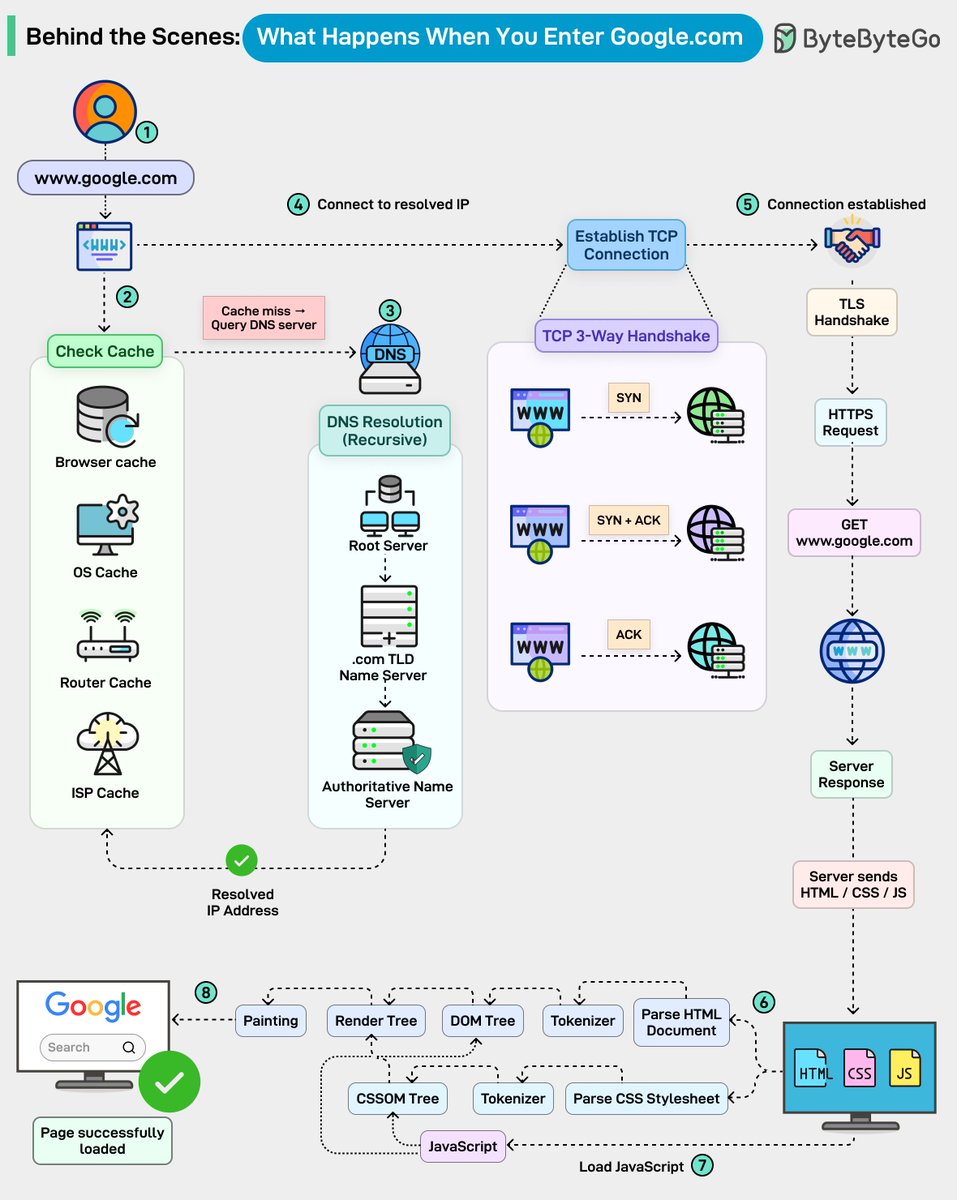
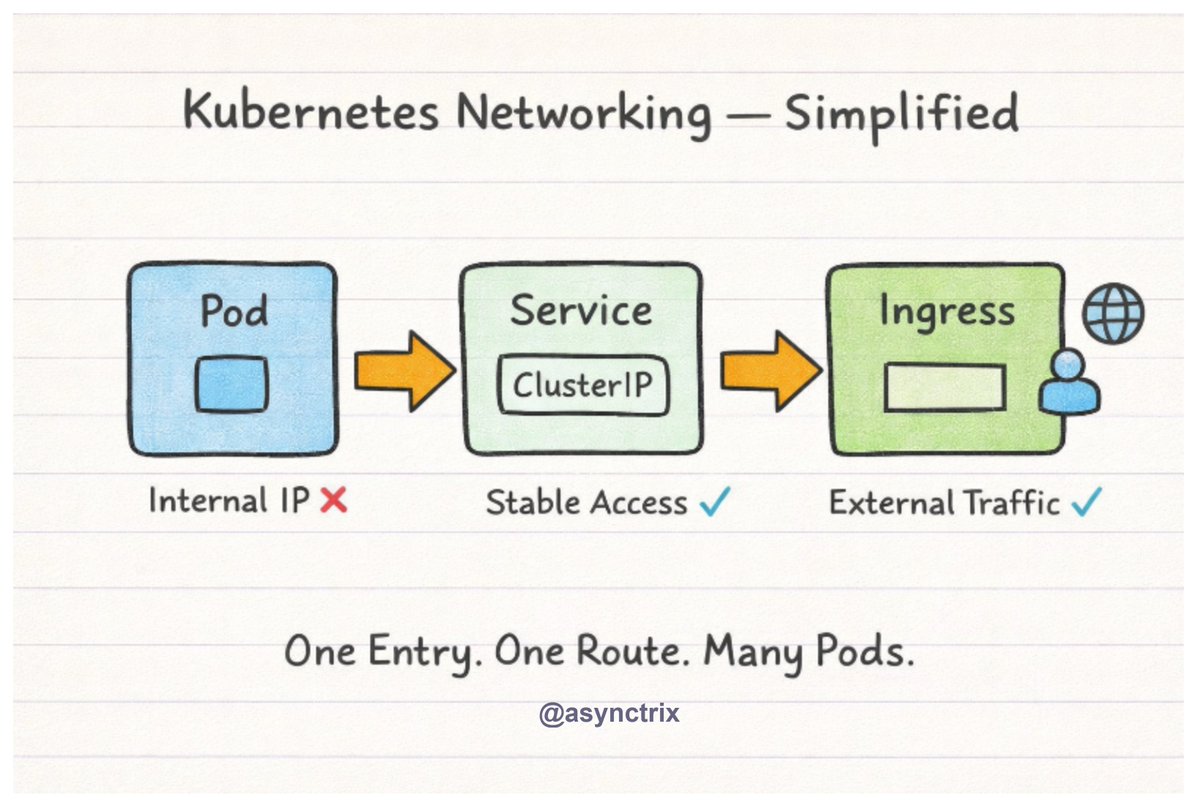
Kubernetes Networking Looks Complex ? 👇
But the flow is simple:
Pod → Service → Ingress
Internal → Stable → External
→ Pod runs your app (IP can change)
→ Service gives a stable virtual IP & load balances
→ Ingress exposes apps to the outside world
Once this clicks, everything else makes sense.
How does a request enter the cluster ? 👇
User → Ingress → Service → Pod
AsyncTrix@asynctrix
Kubernetes OOMKilled = The Most Misunderstood Error
Your Pod Didn’t Crash. Linux Killed It.
Your application didn’t throw an exception
The Linux kernel terminated it
Here's what OOMKilled actually means
Root cause
→ The container exceeded resources.limits.memory
→ The cgroup hard memory limit was breached
→ The Linux OOM Killer killed the process
→ Kubernetes only observed and reported the event
What typically happens
→Pod starts and runs normally
→ Pod starts and runs normallying
→ A memory allocation fails or memory pressure occurs
→ Linux OOM Killer kills the container process
→ Kubernetes reports it as Reason: OOMKilled
How to verify
kubectl describe pod
English





Dano Seto Anbela 리트윗함