Simone Rubinacci

41 posts

Simone Rubinacci banner
Simone Rubinacci

Simone Rubinacci

@simrubk

Statistical Genomics @FIMM_UH @broadinstitute

Helsinki, Finland 가입일 Haziran 2018
273 팔로잉553 팔로워
Simone Rubinacci 리트윗함
Veera Rajagopal 
Veera Rajagopal @doctorveera·
A new paper in @Nature from David Reich, @aliakbari23 and colleagues breaks the conventional understanding of recent human evolution. The field believed that strong selection in the recent past (~10,000 years) was rare, with few exceptions like the lactase persistence locus. In this paper, the authors challenge that belief, showing that we weren't looking at the problem right. Previous studies that looked for evidence of selection using ancient DNA addressed the problem cross-sectionally, asking if allele frequencies differed across populations more than what one would expect based on genetic drift and migration. Most arrived at the conclusion that population structure primarily explained the observed differences. Here, the authors addressed the problem longitudinally, accounting for when ancient individuals lived by explicitly modeling time as a variable in the analysis. It turns out doing it this way dramatically increases power, increasing the number of genome-wide significant selection signals by 20-fold! Looking at why accounting for the time variable led to such dramatic changes in results, the authors find that previous studies missed so much because selection often happened not on new variants leading to dramatic sweeps (the conventional model: new variant -> selection -> increase in frequency) but on already existing variants driven by transient environmental pressures. Many of these variants underwent reversals, selected up when a pressure existed, then purged when it disappeared or the trade-off cost became dominant. A great example is the TYK2 variant, where an allele boosting immunity was selected for thousands of years because it protected against TB, then got purged as TB endemicity declined and the autoimmune cost took over. The scale of what they found is striking: hundreds of loci showing strong selection in the past 10,000 years with a median selection coefficient of ~0.86%. This number is pretty big in evolutionary terms, meaning allele frequencies have been shifting by ~1% per generation in a consistent direction. Previous selection scans found a maximum of 20 loci, and this one finds hundreds. That isn't an incremental change. It fundamentally reframes our understanding of how common strong selection has been in recent human history. Some of the most striking findings come from polygenic selection, where hundreds of small-effect alleles were pushed in the same direction simultaneously. Polygenic scores based on large-scale GWAS of today predict recent negative selection for traits like body fat, waist circumference and schizophrenia, and positive selection for others like cognitive traits. One important caveat is that GWAS phenotypes are measured in industrialized societies today, and how well they capture what was actually being selected in ancient environments is debatable. For me personally, these findings have direct implications for drug discovery. When using human genetics to find drug targets, we often fixate on the benefit and risk profiles of variants visible today. But we need to be aware that a variant's benefit:harm ratio might be environmentally contingent, and could reverse when the wrong environment manifests. An evolutionary understanding of a variant's association with traits is therefore essential. The same logic applies, perhaps even more urgently, to embryo selection. Selecting embryos based on polygenic traits is humans making permanent, heritable decisions for their offspring with a narrow view of today's environment. The ancient DNA record now shows that cost-benefit landscapes flip over time. So, an embryo carrying man-made selections is carrying those changes into an unpredictable future environment. The broader takeaway is that human evolution didn't freeze in the last 10,000 years. We just lacked the tools and datasets to see its movement. The current findings are based on European populations. I am curious to see these analyses extended to other populations too, like South Asian, East Asian and African populations, which might be holding more surprises to blow our minds. Akbari et al. Nature 2026 nature.com/articles/s4158…
Veera Rajagopal  tweet media
English
21
215
1.1K
261.4K
Simone Rubinacci 리트윗함
AJHG
AJHG@AJHGNews·
📣New from Kumar et al! 📄MetaGLIMPSE: Meta-imputation of low-coverage sequencing data for modern and ancient genomes cell.com/ajhg/abstract/…
English
1
9
24
2.2K
Simone Rubinacci 리트윗함
Pradeep Natarajan
Pradeep Natarajan@pnatarajanmd·
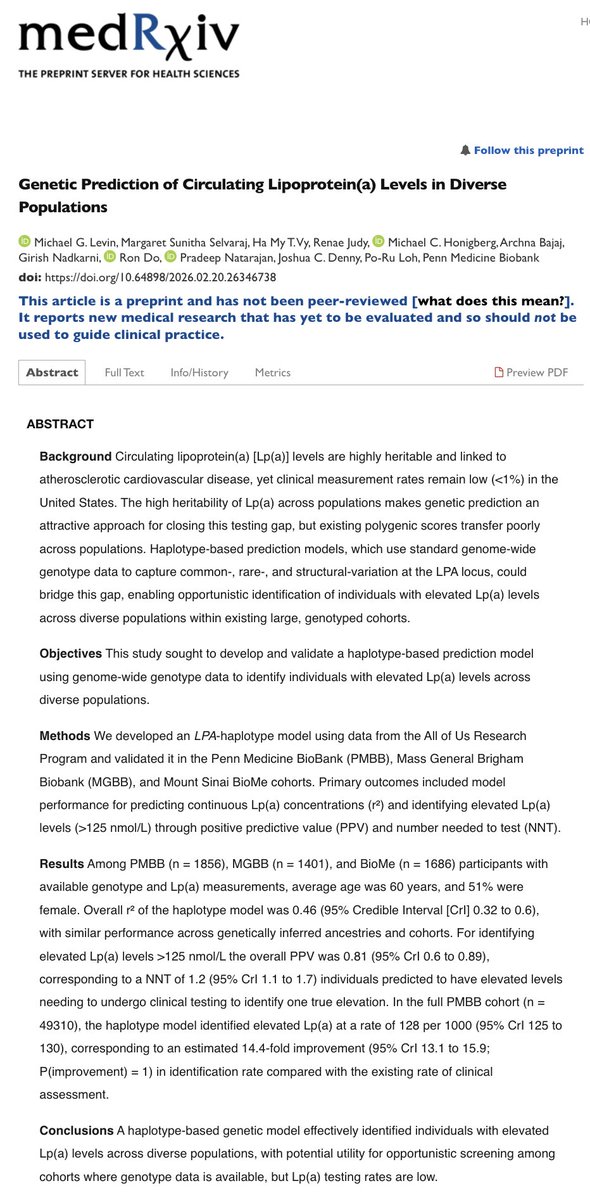
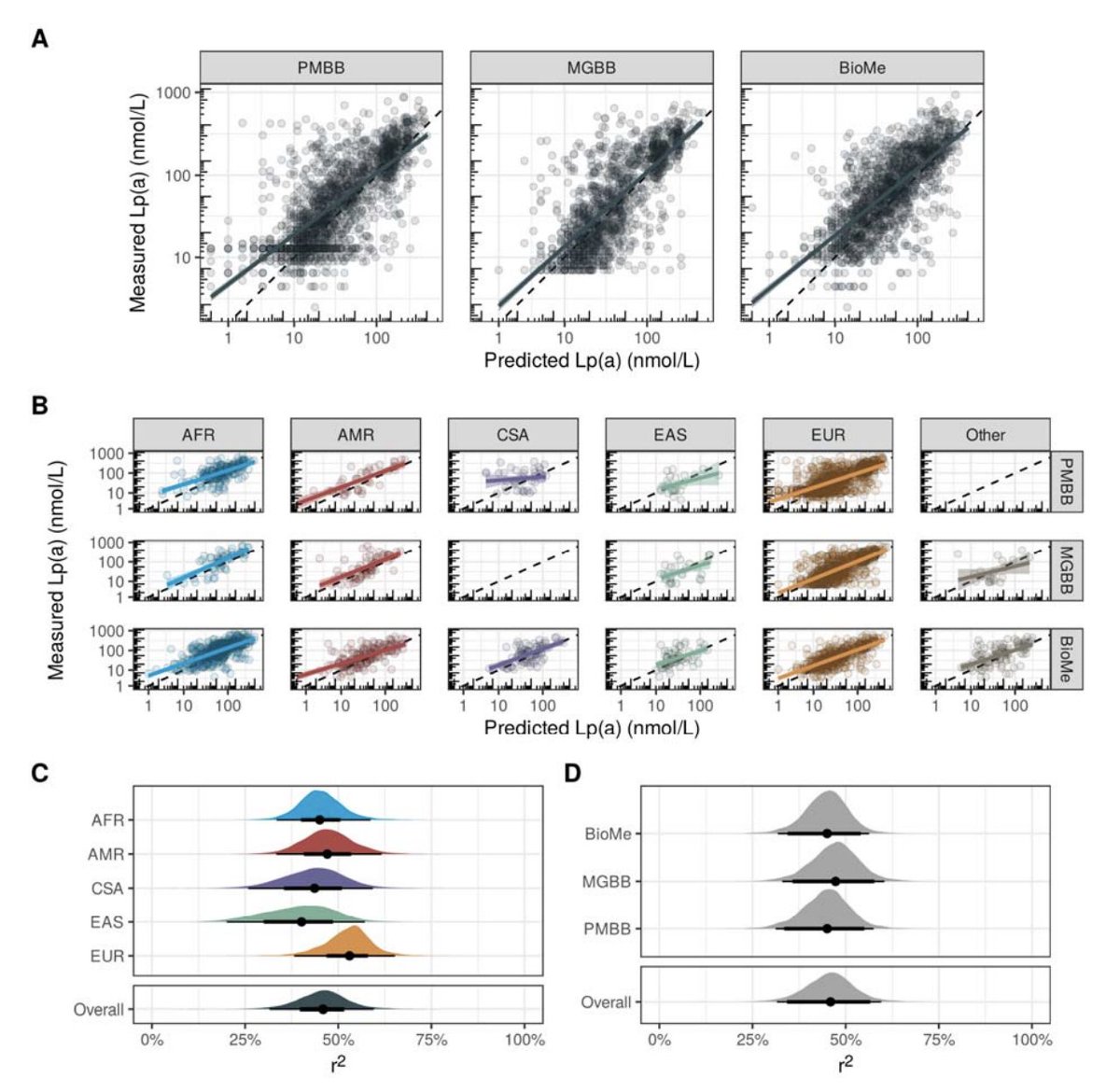
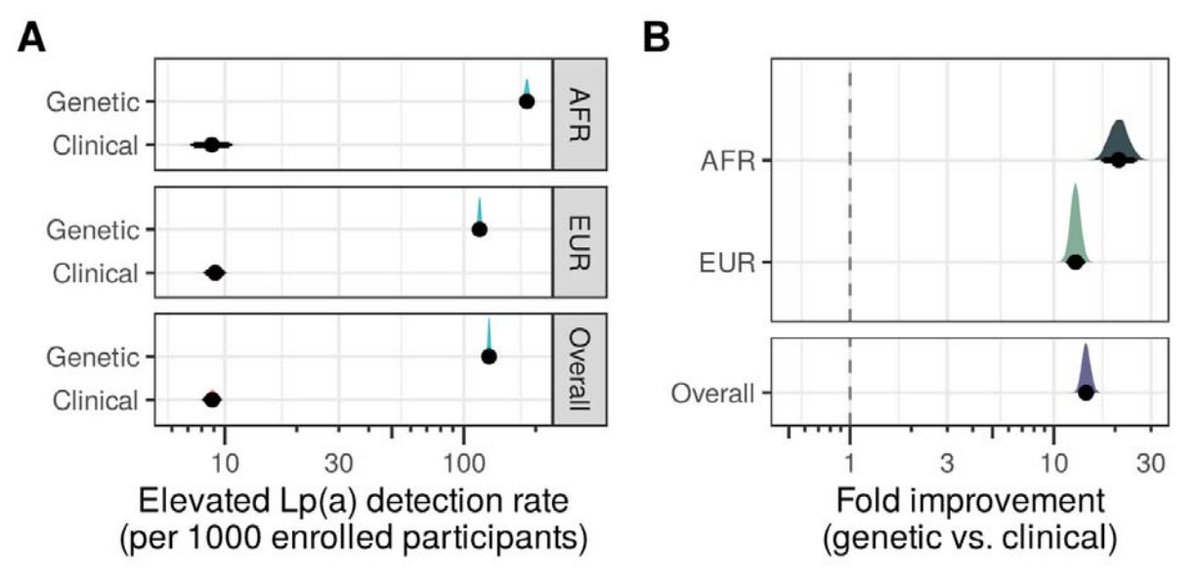
Delighted to collaborate with this exciting preprint led by @MGLevin & Po-Ru Loh, developing a novel LPA haplotype-based prediction model using @AllofUsResearch & validating in multiple biobanks. This substantially improves the identification of individuals with high Lp(a) across genetic ancestries who have been genotyped medrxiv.org/content/10.648… @medrxivpreprint
Pradeep Natarajan tweet mediaPradeep Natarajan tweet mediaPradeep Natarajan tweet mediaPradeep Natarajan tweet media
English
2
15
66
14.1K
Simone Rubinacci 리트윗함
Hilary Martin
Hilary Martin@hilsomartin·
I have an opening for a staff scientist or bioinformatician in my group at the Sanger Institute (closing date 24 March). Current projects focus on disentangling rare and common variant contributions to rare neurodevelopmental conditions and to neurodev and perinatal traits. 1/2
English
2
23
37
5.8K
Simone Rubinacci 리트윗함
nature
nature@Nature·
Nature research paper: Insights into DNA repeat expansions among 900,000 biobank participants go.nature.com/49KqLT6
English
0
27
110
16.3K
Simone Rubinacci 리트윗함
Robin Hofmeister
Robin Hofmeister@Rbn_Hfmstr·
🚨 Our parent-of-origin study is out in @Nature ! 🧬 Maternal and paternal alleles can have distinct — even opposite — effects on human traits, revealing a hidden layer of genetic architecture that standard GWAS miss. 🔗nature.com/articles/s4158… Highlights below!
English
5
106
322
32.2K
Andrea ganna
Andrea ganna@andganna·
@SebastianMayWi1 presented the work of the genCOST consortium at the plenary session at #ASHG24. this is the largest study comprehensively linking genetic variation to healthcare cost. ❤️health-economics
Andrea ganna tweet media
English
1
3
22
1.1K
Simone Rubinacci
Simone Rubinacci@simrubk·
@andganna Absolutely my pleasure! Thrilled to be part of such an amazing group of PIs! 🚀
English
0
0
1
230
Simone Rubinacci
Simone Rubinacci@simrubk·
@ShaiCarmi Only approved researchers within a specific UK Biobank project can see what is uploaded on the RAP within that project (in practice PIs create as many RAP projects as they want, managing access for their team). In that sense it should pretty similar security as a local cluster.
English
0
0
1
77
Shai Carmi
Shai Carmi@ShaiCarmi·
@simrubk I'm less of a fan of messing with the target data. But how much control does a user currently have on any data uploaded to the RAP? Are third parties able to see/modify the data? (That wouldn't solve the UKB access problem though).
English
1
0
0
95
Shai Carmi
Shai Carmi@ShaiCarmi·
This is a fantastic resource. But - it requires access to the UK biobank and uploading the target genomes to the RAP (iiuc). So not available to every researcher or dataset. Is there a way around this? E.g., is anyone developing a standalone imputation resource using UKB WGS?
Simone Rubinacci@simrubk

@ODelaneau 🧬 Introducing our latest release: Curated pipelines for genotype imputation using the 200k UK Biobank reference panel. Now, you can effortlessly impute SNP array & low-coverage WGS data! Check it out! srubinacci.gitbook.io/uk-biobank-imp…

English
1
3
17
6.6K
Simone Rubinacci
Simone Rubinacci@simrubk·
@ODelaneau 🧬 The SNP Array Pipeline. Covers the entire process from reference panel conversion to pre-phasing with SHAPEIT5 and imputation with IMPUTE5 – all packed into a single applet on the RAP!
English
2
0
1
235
Simone Rubinacci
Simone Rubinacci@simrubk·
@ODelaneau 🔬 The Low-Coverage Pipeline. Empowers imputation of your low-coverage BAM/CRAM files using GLIMPSE2! Stay tuned for some updates on GLIMPSE2, coming your way very soon.
English
0
0
2
162
Simone Rubinacci
Simone Rubinacci@simrubk·
@ODelaneau Our efforts have focused on improving the accuracy of imputation, specifically for rare variants while also addressing the computational challenges of making lcWGS scalable to the newest generation of reference panels. 🧬✨
English
0
0
0
60
Simone Rubinacci
Simone Rubinacci@simrubk·
@ODelaneau GLIMPSE2 uses a Gibbs sampler algorithm and incorporates features like sparse reference panel representation, sparse positional Burrows–Wheeler transform matching, and sparse HMM computations. These optimizations enable efficient imputation from large reference panels.
English
1
0
0
87