
Ted Alcorn

5.4K posts

Ted Alcorn banner
Ted Alcorn

Ted Alcorn

@TedAlcorn

Reporting on health + justice in @NYtimes, @NMinDepth, more. Teaching @columbiamsph & @NYUWagner. Bi-Nuevo: New Mexican in NYC.

가입일 Aralık 2015
2.4K 팔로잉3.4K 팔로워
고정된 트윗
Ted Alcorn
Ted Alcorn@TedAlcorn·
I built a dashboard to explore the last 25+ years of @nytimes coverage. 1.5B words, 2.2M articles, 26K reporters. It's fascinating to look at the world’s preeminent news organization not as daily stories but as patterns of attention, ebbing and flowing. tedalcorn.github.io/nyt/
English
33
298
1.5K
321.6K
Elon Musk
Elon Musk@elonmusk·
Universal HIGH INCOME via checks issued by the Federal government is the best way to deal with unemployment caused by AI. AI/robotics will produce goods & services far in excess of the increase in the money supply, so there will not be inflation.
English
20.5K
9.7K
89.8K
20.5M
Ted Alcorn 리트윗함
Joe Weisenthal
Joe Weisenthal@TheStalwart·
AI produces bad prose, but by itself, that's not fatal. Some badly written things may be worth reading. But we know AI is much better at bullshitting than humans. So once I clock that text is AI, I'll just stop reading cause I assign a higher % that I'm reading nonsense.
English
50
55
1.1K
53.9K
Ted Alcorn 리트윗함
Emily Green
Emily Green@emilytgreen·
Eternally proud of @_fredramos who pitched this story and worked on it for two years. Please take a few minutes to read and check out the spectacular photos. nytimes.com/2026/04/15/wor…
English
0
79
213
17.2K
Ted Alcorn
Ted Alcorn@TedAlcorn·
@MattZeitlin yeah well if you choose life in upside down world they're actually holding it under you, which isn't so bad.
English
0
0
1
33
Matthew Zeitlin
Matthew Zeitlin@MattZeitlin·
@TedAlcorn The incentives to do so are really bad, because the least epistemically humble will never do this and will hold it over the epistemically humble when they do
English
1
0
5
427
Ted Alcorn
Ted Alcorn@TedAlcorn·
I built a dashboard to explore the last 25+ years of @nytimes coverage. 1.5B words, 2.2M articles, 26K reporters. It's fascinating to look at the world’s preeminent news organization not as daily stories but as patterns of attention, ebbing and flowing. tedalcorn.github.io/nyt/
English
33
298
1.5K
321.6K
Ted Alcorn
Ted Alcorn@TedAlcorn·
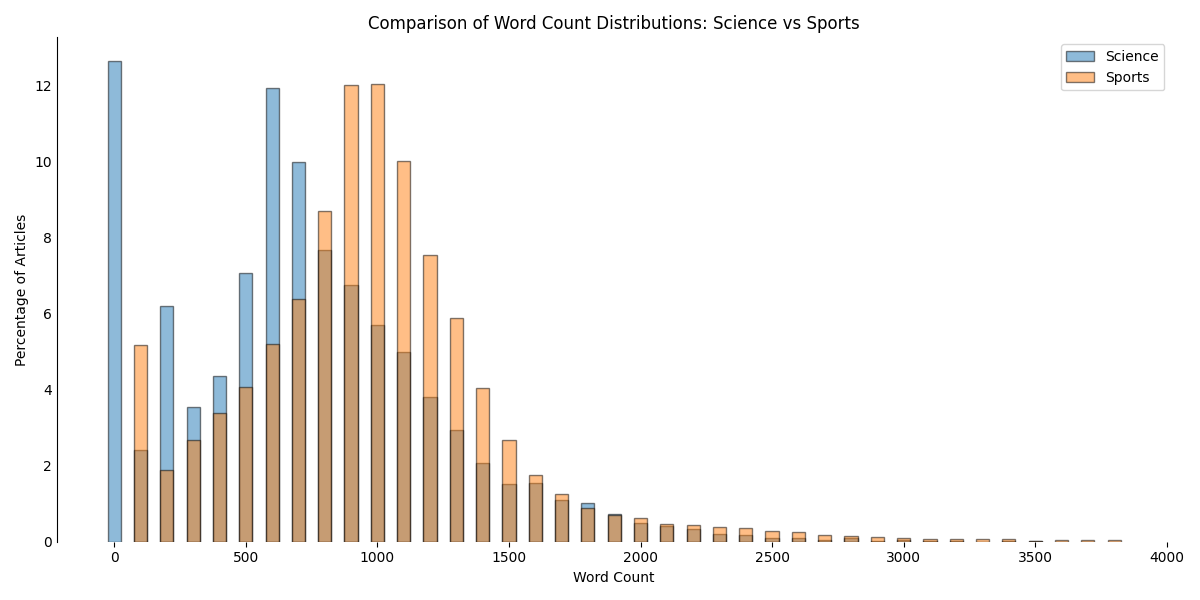
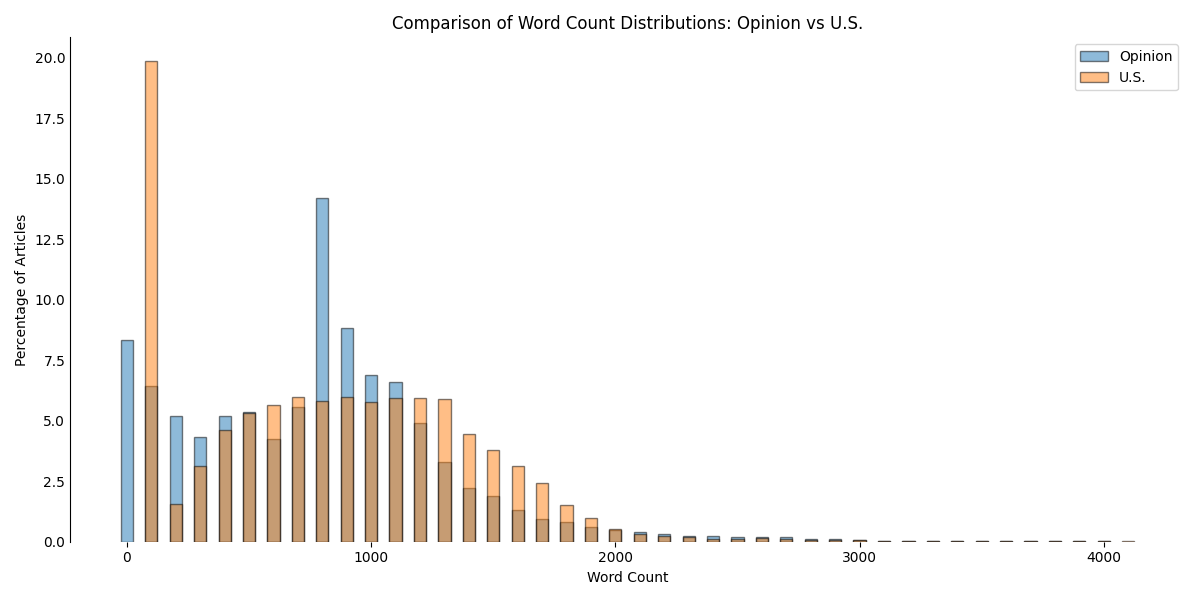
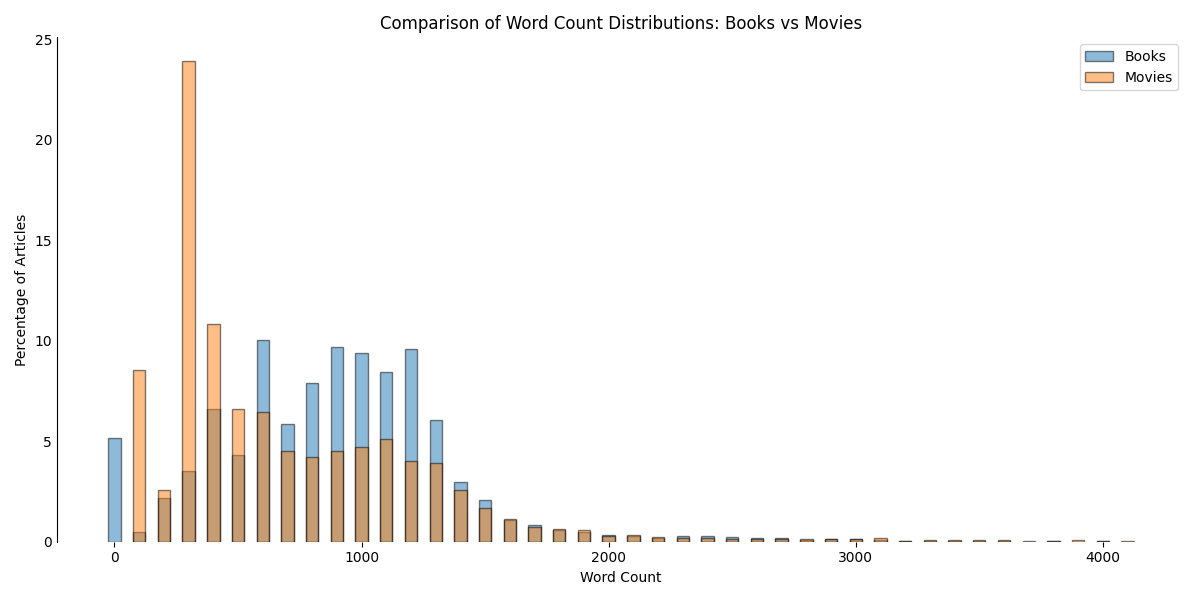
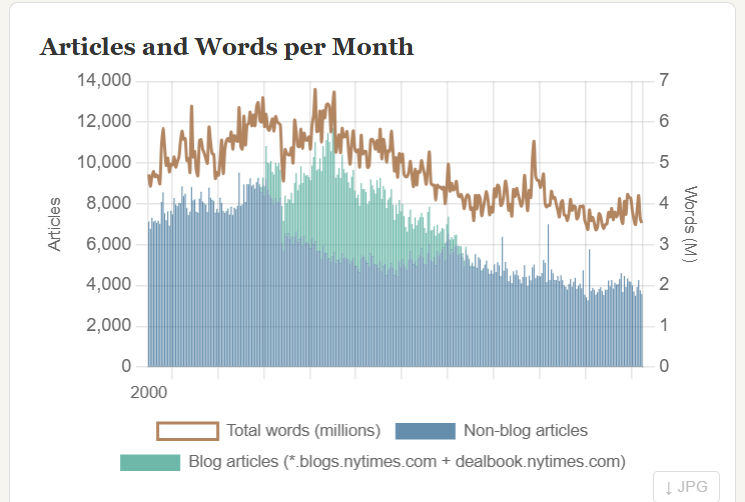
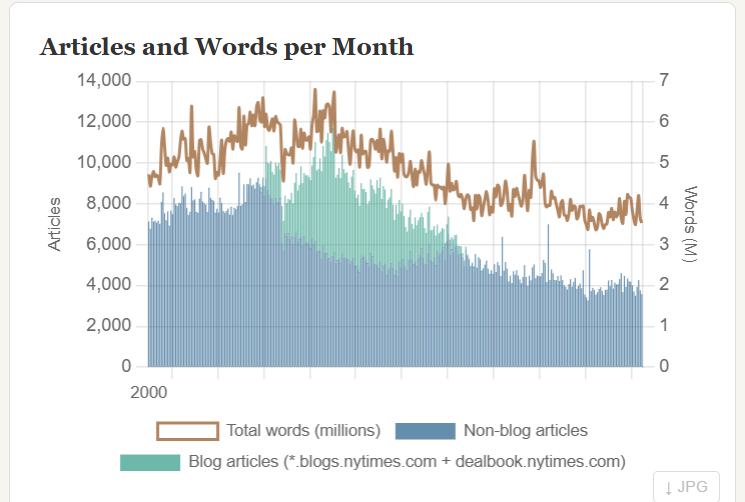
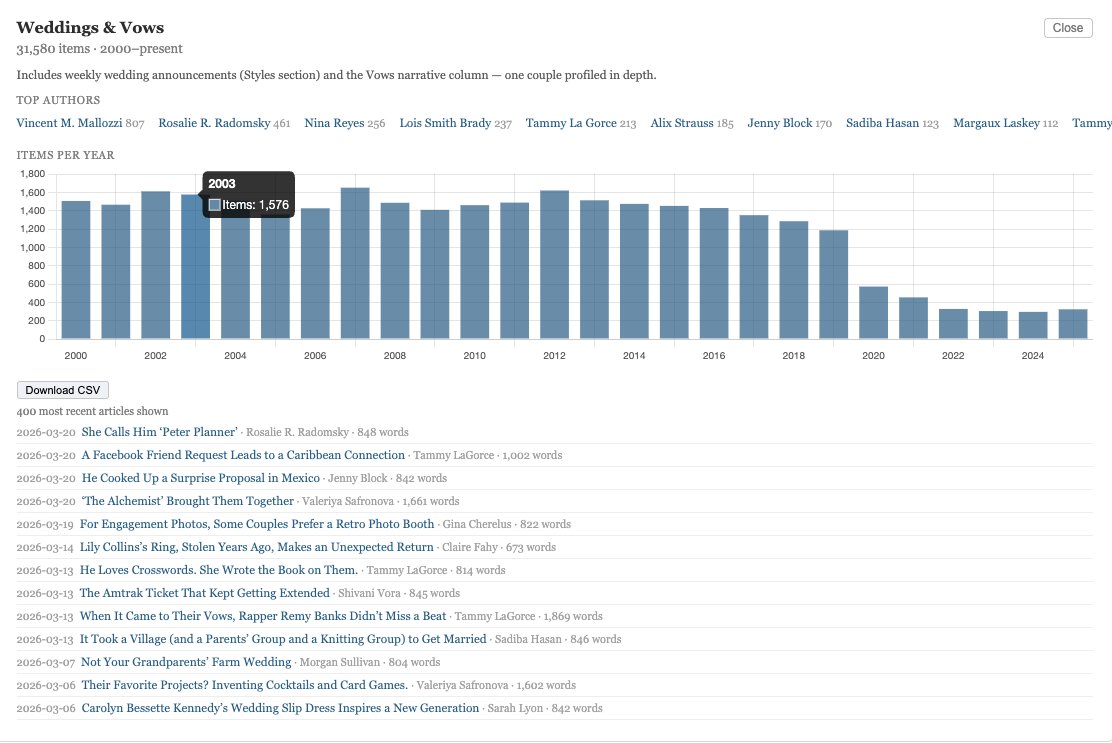
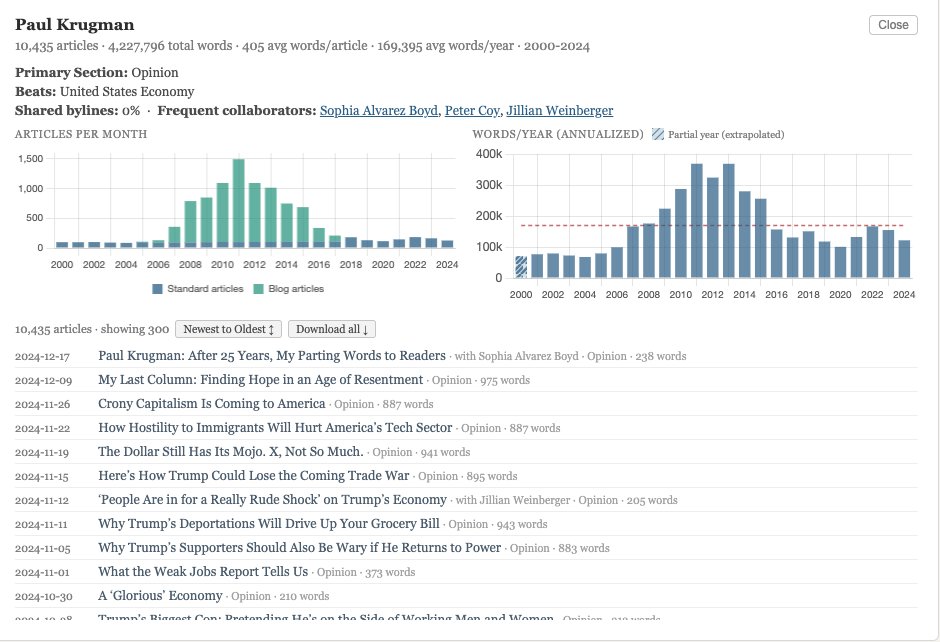
@TedMerz @jonathan_miller I added median words per article as well so you can see when outliers (long or short) are driving the average in one direction or another.
Ted Alcorn tweet mediaTed Alcorn tweet mediaTed Alcorn tweet mediaTed Alcorn tweet media
English
0
0
0
11
Ted Alcorn
Ted Alcorn@TedAlcorn·
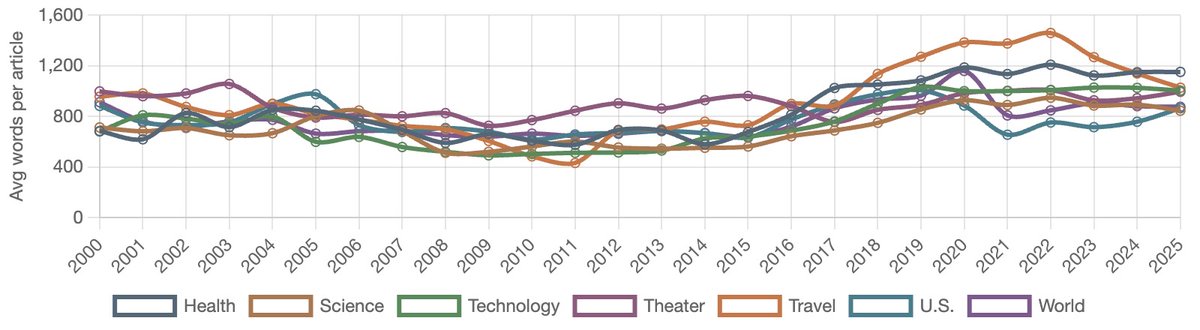
@TedMerz @jonathan_miller I added functionality tonight so you can look at average words / article for each desk. i am one to double older data because the types of articles archived in the API were changing but looking at desks with continuity, the trends are pretty consistent and subtle but clear.
Ted Alcorn tweet media
English
3
0
1
22
Ted Merz
Ted Merz@TedMerz·
Love the viral NYT analytic @TedAlcorn built. The biggest question it raises is why the average number of stories has declined 50% in the past two decades.
Ted Merz tweet media
English
1
0
4
460
Ted Alcorn 리트윗함
Ted Merz
Ted Merz@TedMerz·
The best story about The New York Times this week didn’t appear in the paper. In fact it wasn’t an article at all, but a web site created by a freelance journalist named Ted Alcorn. Alcorn tapped into the paper’s public API to create a dashboard that provides some extraordinary insights. The first was that over the past 25 years, the Times employed – at various times – a total of 26,000 reporters who wrote 1.5 billion words to produce 2.2 million articles. You can use the dashboard to drill down to see which beats, topics and people have been covered the most and how that coverage has fluctuated. A few examples of the kinds of things Alcorn cited that he noticed: ➡️Trump dominates headlines vs everyone ➡️Maggie Haberman has the most bylines recently ➡️India has been undercovered per-capita ➡️China coverage peaked around 2014 ➡️Iowa stories surge every four years Political partisans will mine the site for ammunition to argue the paper of record is pro THIS or anti THAT. But that debate misses larger truths unearthed counting the number of stories in so many ways over such a long time period. The volume provides a measure of attention largely independent of ideology. Whether a news story about Trump is positive or negative doesn’t change the fact it is about Trump. And the fact that a story was published about Trump reflects interest in hm. It’s not a perfect system, but at this scale, breath and consistency, there is probably no better public dataset to measure what is on everyone's mind. What Alcorn built – whether he realized it or not – was effectively a better version of Google Trends. Google Trends provides comparisons based on search but they don't give you the actual data. It's normalized so you get relative percentages and that limits the comparisons you can make. The Times archive comes from a single institution with a mostly consistent editorial policy over 25 years. That makes apples to apples comparisons possible. It’s a clean cohort in a world where good data is hard to find. It provides a useful signal for understanding how attention has shifted among countries, companies, or individuals. Times reporters jumped on the site when it appeared, mostly to see where they ranked on the leader board. Times editors will likely use the tool to better understand how coverage has shifted. Given its utility, it’s sort of insane that it took an outsider to build it. But in an open API world, the best analytics often are built by people outside the wall. Alcorn explained the difficulty of reconciling data: Categories shift and reporters change names. The same subject gets coded differently over time. Some Times reporters flagged bugs and suggested features. But so far the paper hasn’t commented on the project, which he cheekily called Below the Fold. Here is the link to the @tedalcorn site tedalcorn.github.io/nyt/
Ted Merz tweet media
English
6
52
196
48.6K
Ted Alcorn
Ted Alcorn@TedAlcorn·
@followthemani Just a note to say I added some more features, so when you look at the country coverage about India from the World desk that the uptick in 2012-14 was due to the brief formation of and dissolution of a NYT blog.
Ted Alcorn tweet media
English
1
0
1
38
Sriram Mani
Sriram Mani@followthemani·
So so good. Unbelievable job. Separately, very clear that its India coverage has not scaled up in proportion to the country's economic rise. Not a gotcha at all because it is their own data but hope that changes over time.
Ted Alcorn@TedAlcorn

I built a dashboard to explore the last 25+ years of @nytimes coverage. 1.5B words, 2.2M articles, 26K reporters. It's fascinating to look at the world’s preeminent news organization not as daily stories but as patterns of attention, ebbing and flowing. tedalcorn.github.io/nyt/

English

1
1
3
991
Ted Alcorn
Ted Alcorn@TedAlcorn·
@evanhill Integrated info on what articles appear to be published as blogs versus more traditional format, which explains some of his volume.
Ted Alcorn tweet media
English
0
0
1
29
Ted Alcorn
Ted Alcorn@TedAlcorn·
@evanhill I gather he would still be if he had his way. You can get even more detail by clicking on the reporter's name.
English
1
0
21
1.6K
Ted Alcorn 리트윗함
Agon Maliqi
Agon Maliqi@AgonMaliqi·
The New York Times is a U.S paper of record. This map - showing NYT coverage of world affairs by country (accounting for population size) in the past 25 years - is a good proxy of U.S foreign policy interests & priorities. The Western Balkans had comparatively outsized coverage.
Ted Alcorn@TedAlcorn

@AgonMaliqi Here is all years:

English
0
1
2
436