Sarah

27.5K posts

Sarah banner
Sarah

Sarah

@2flamey

Liberated woman. Socialist. Community artist. Creative / Promoter. Ambiguously dry, jaded, happy & kind. Founder @womengottalent

Midlands,UK Katılım Nisan 2011
1.3K Takip Edilen752 Takipçiler
Sarah retweetledi
Stephen Flynn
Stephen Flynn@StephenFlynnSNP·
Andy lad. Get off Starmer’s fence. You either accept the evidence before your own eyes, or you don’t. There is no ‘appear’ about it. Genocide. War crimes. Say it.
English
343
1.9K
5.9K
92.4K
Sarah retweetledi
#WOMENSART
#WOMENSART@womensart1·
'Backyard washing" by Pamela Grace, contemporary artist and printmaker living and working in Galloway, Scotland #WomensArt
#WOMENSART tweet media
English
9
237
1.5K
19.7K
Sarah retweetledi
Richard Burgon MP
Richard Burgon MP@RichardBurgon·
This extreme weather isn't a one-off. It's part of a dangerous new norm. The oil and gas companies fuelling the climate crisis - and driving up your energy bills - shouldn't be funding our politics. I've tabled an Amendment to ban oil and gas donations to political parties.
Richard Burgon MP tweet media
English
553
391
780
18.8K
Sarah retweetledi
#WOMENSART
#WOMENSART@womensart1·
Seascape by Alison Holt, contemporary textile artist who creates machine and hand embroidered artworks #WomensArt #SeaArtWeek 🌊
#WOMENSART tweet media
English
4
291
1.5K
18.2K
Sarah retweetledi
#WOMENSART
#WOMENSART@womensart1·
Jane Ormes, contemporary UK printmaker based in Bristol #WomensArt
#WOMENSART tweet media
English
10
321
1.8K
20.7K
Sarah retweetledi
𝓒𝓱𝓪𝓻𝓵𝓸𝓽𝓽𝓮
𝓒𝓱𝓪𝓻𝓵𝓸𝓽𝓽𝓮@charlotteukcity·
This is powerful!! The video strikingly illustrates the game of misinformation that’s being played by Nigel Farage & others. It shows who’s actually benefiting from it. Absolutely worth watching! Video sent to me by @nowayjomo
English
34
1.8K
3.6K
168.7K
Sarah retweetledi
Jeremy Corbyn
Jeremy Corbyn@jeremycorbyn·
What an absolute disgrace. A FIFA-certified referee being denied entry to the United States purely because he is Somali. The World Cup is meant to bring people together. This is racism, plain and simple. Shameful. bbc.co.uk/sport/football…
English
7.1K
23.4K
85.2K
1.5M
Sarah retweetledi
Jeremy Corbyn
Jeremy Corbyn@jeremycorbyn·
I am horrified that a car has been deliberately set alight outside the home of the family of Salma Yaqoob, a wonderful prominent anti-racist and peace campaigner in Birmingham. I hope the police take this shocking incident seriously. Sending my solidarity to Salma & her family.
English
725
2.6K
11.1K
393.8K
Sarah retweetledi
Thanos Angelopoulos
Thanos Angelopoulos@Th_Angelopoulos·
I call BS. The facts are these: Henry Nowak told officers he'd been stabbed. He told them he couldn't breathe. An officer replied, “I don't think you have, mate”. They dragged him along the ground and handcuffed him. He died before anyone called an ambulance. No DEI course teaches you to ignore a dying man. Officers have a duty to assess injured persons, call for medical assistance, and not take one party's word as gospel. They failed on all three. This is incompetence repackaged as ideological victimhood. “DEI made us feel certain ways” shifts anger from officers who let a teenager die onto a culture-war target. That's their defence strategy. Henry told them he was dying. They didn't listen. They didn't follow protocol. That's a conduct and skill problem, not a DEI problem.
English
126
182
2.6K
53.3K
Sarah retweetledi
Politics UK
Politics UK@PolitlcsUK·
🚨 NEW: Zack Polanski has called on the Government to introduce a maximum temperature cap in the workplace
English
656
563
14.6K
2.6M
Sarah retweetledi
Clive Lewis MP
Clive Lewis MP@labourlewis·
Westminster may finally be about to have the argument it has spent 40 years avoiding. If Andy Burnham returns to Parliament, the political class will know how to cover it. A leadership drama. Who is up, who is down, whether Keir Starmer can survive, whether Labour is once again turning inward. The familiar machinery of Westminster psychodrama will whirr into life. That framing misses the larger point. Burnham’s possible return matters not because of what it says about Labour’s leadership, but because of what it reveals about the British state: what it can still do, what it has forgotten how to do, and what kind of country it must become if it is serious about resilience. Britain is finally having a more serious conversation about national security. The Strategic Defence Review, the pivot back towards Europe, the recognition that hybrid warfare turns citizens, infrastructure and civic institutions into part of the front line: all of it marks a real shift in how the state thinks about its own survival. But at the centre of that conversation lies a question that the defence establishment, and most of Westminster, still does not want to answer. What kind of society do you need to be before resilience is possible? Finland is now the model everyone cites. Comprehensive security. Whole-of-society defence. Civilian preparedness woven into military planning. British strategists admire the Finnish system and ask how it might be copied. But the admiration stops short of the uncomfortable question: why does it work there? The answer is not geography or history or some mysterious quality of Finnish national character. It is structural. Nearly 80% of Finns say they would defend their country if attacked. In Britain, the figure is closer to 33%. That gap is not an accident. It exists because Finland has spent decades building a society in which people have a genuine stake in what they are being asked to defend. Energy is affordable. Housing is available. Public services function. Institutions command trust. The Nordic welfare state is not a sentimental add-on to Finnish security policy. It is the foundation of it. You cannot ask people to defend a country that does not work for them. Britain has spent 40 years building the opposite. The privatisation of essentials – energy, water, transport, housing – transferred wealth upwards from households to shareholders while making the basics of everyday life more expensive. The state, stripped of the tools to control costs at source, has been reduced to compensating after the fact. Out of every pound the Government spends on housing, 88p goes to subsidising private rents. Just 12p goes to building homes. When energy prices spiked in 2022, the Government spent £40bn in a single winter cushioning the blow, not because it had a resilient energy system but because it lacked one. Debt interest now consumes more than £100bn a year. Britain has the highest debt servicing costs in the G7: the compounding price of financing failure rather than eliminating it at source. This is what bond market dependency actually looks like. It is not an abstract fiscal condition. It is the consequence of a state that has been stripped of the supply-side tools that would let it cure the problems it now pays, indefinitely, to manage. And here is the paradox the Treasury refuses to confront. The countries that borrow most cheaply are often those that have retained the public investment model Britain abandoned. The spread between UK and Dutch borrowing costs has widened sharply not because markets fear public investment, but because they have lost confidence in a model that borrows to subsidise private failure while never addressing its causes. This is the connection Britain’s defence debate is missing. The familiar framing, that social spending is what must be sacrificed to meet the NATO target, is not merely politically toxic. It is strategically illiterate. Cutting the foundations of social cohesion to fund the hardware of national defence is self-defeating. You end up with planes and no pilots, submarines and no crew, an army that cannot recruit because the society it is meant to protect has stopped believing in itself. I think Burnham understands this. That is why his programme is more interesting than the leadership gossip suggests. What he has been building in Greater Manchester – public control of transport, expanded social housing, investment in the productive foundations of the city economy – is not a nostalgic rerun of postwar nationalisation. It is a proof of concept for a different kind of state. The Bee Network is the most visible example, but the argument behind it travels. A state that can shape markets is not condemned to subsidise their failures. A state that produces affordable energy through public generation does not need to spend tens of billions cushioning every price shock. A state with a serious public housebuilding programme does not need housing benefit to rise endlessly in line with private rents. A state that builds institutions people can see, use and trust begins to restore the civic confidence on which resilience depends. The real constraint on Britain is not money. It is capacity: the workers, institutions, supply chains and public purpose needed to turn national will into national renewal. Britain’s tragedy is not that it has run out of money. It is that after 40 years of hollowing out the state, it has made itself less able to act. Burnham’s critics will reach for the familiar warning. Borrow more, spend more, spook the gilt markets, repeat the Truss disaster. But this misunderstands both the problem and the opportunity. Bond markets do not have ideological preferences. They have functional ones. They prefer clarity, credible revenue streams, productive investment, and a state with a plan. What they punish is not public ambition but incoherence. A properly designed productive state programme would not be a leap into fiscal fantasy. It would be an attempt to end the much costlier fantasy that Britain can keep borrowing to compensate for broken markets while refusing to repair them. The defence conversation and the economic conversation need to become the same conversation. Finland did not build national resilience by choosing between welfare and security. It built resilience by understanding that they are inseparable: that a country in which the basics work, where people trust one another and the institutions around them, is one that can face danger with something more than anxiety. That is the deeper argument Burnham represents. Westminster will be tempted to treat him as a leadership story. It should resist the temptation. The question is not whether Burnham can return to parliament. It is whether Britain can return to the idea that the state should make life work. Because a country that cannot command the confidence of its people cannot truly defend itself.
English
540
807
3.6K
788.9K
Sarah retweetledi
Marina Purkiss
Marina Purkiss@MarinaPurkiss·
Dear Reform-voting ladies… Do you know you’re voting for a party that wants to: ❌ Scrap the Equality Act - your legal protection against workplace discrimination & unequal pay ❌ Kill the Online Safety Act - the law protecting you from revenge porn ❌ Vote AGAINST the bill to stop workplace sexual harassment ❌ Stack the party with anti-abortion politicians - some opposing termination even in cases of rape ❌ Push “pro-family” policies that put women back in the home I guess the question is… Do you hate immigrants more than you love your rights?
English
2.3K
5.6K
17.4K
613.4K
Sarah retweetledi
Politics UK
Politics UK@PolitlcsUK·
🚨 NEW: Reform UK’s Makerfield by-election candidate Robert Kenyon previously claimed women “can’t drive” and get abortions for “vanity purposes” to “shag anyone they want” He admitted: “I’m sexist, sorry but I am”
English
666
2.1K
15.4K
1.4M
Sarah retweetledi
#WOMENSART
#WOMENSART@womensart1·
House, 1993 by Rachel Whiteread #womensart
#WOMENSART tweet media
English
3
39
263
6.6K
Sarah retweetledi
Feargal Sharkey
Feargal Sharkey@Feargal_Sharkey·
You'll want to be sitting down for this bit. Water companies are currently £82.7 billion in debt, have paid themselves £85 billion in dividends, leak over a trillion of litres of water per year, dump sewage for almost 4 million hours per year, have been convicted of over 1,200 criminal acts since 1989 and an average of 35% of your bill goes on nothing but paying more interest and yet more dividends. And not a single company has ever lost their operating licence. 👇
Prem Sikka@premnsikka

Yorkshire Water and Northumbrian Water have nearly 200 criminal convictions between them. On 6 August 2024, Ofwat fined them £47m and £17m for sewage dumping. Fines not paid, will not be paid. Firms claim to have invested. No penalty for abusing laws leftfootforward.org/2026/01/public…


English
787
13.4K
28.2K
978.9K
Sarah retweetledi
#WOMENSART
#WOMENSART@womensart1·
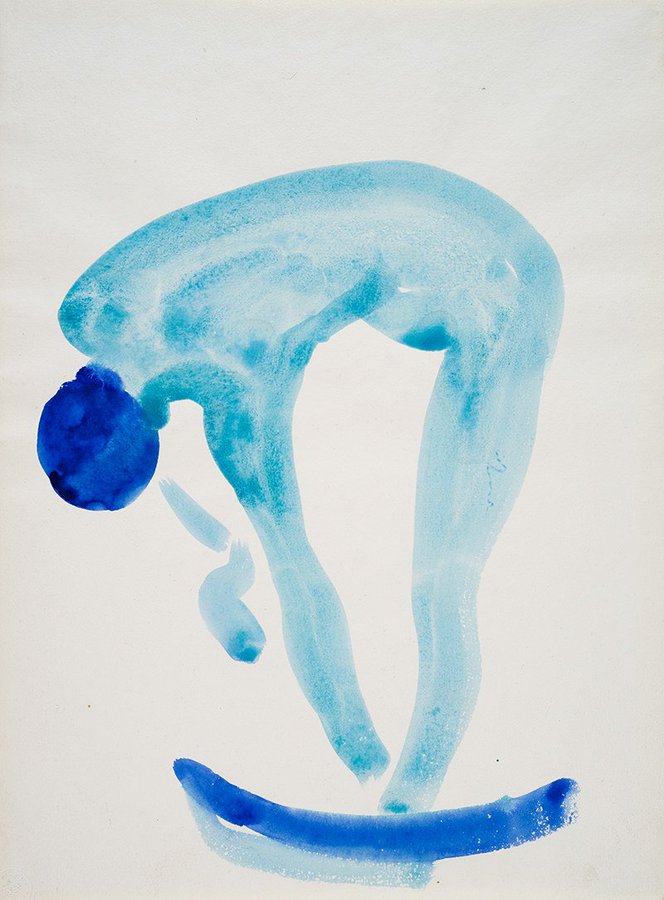
Nude Series, 1917, watercolor by Georgia O'Keeffe #WomensArt
#WOMENSART tweet media
English
5
206
1.1K
16.9K
Sarah retweetledi
The Left Bible
The Left Bible@theleftbible·
Nigel Farage secretly trousered £5 million in cash, and he didn’t want you to know. Since the media have barely covered it, let's make it go viral 👇
English
131
5.7K
8.7K
101.7K
Sarah retweetledi
#WOMENSART
#WOMENSART@womensart1·
Embroidery artist, illlustrator, book designer, potter, & suffragette Ann Macbeth (1875-1948), Glasgow Girl and leading member of the Scottish Arts & Craft movement #UnravellingWomensArt
#WOMENSART tweet media
English
2
149
743
9K
Sarah retweetledi
Richard Burgon MP
Richard Burgon MP@RichardBurgon·
Nigel Farage took £5 MILLION from a billionaire just before announcing his run to be an MP. But he didn’t declare it. Even though the rules are clear.   Another reminder of how close Farage is to the rich and powerful - despite his claim to speak for ordinary people.
English
822
1.2K
5.1K
105.7K