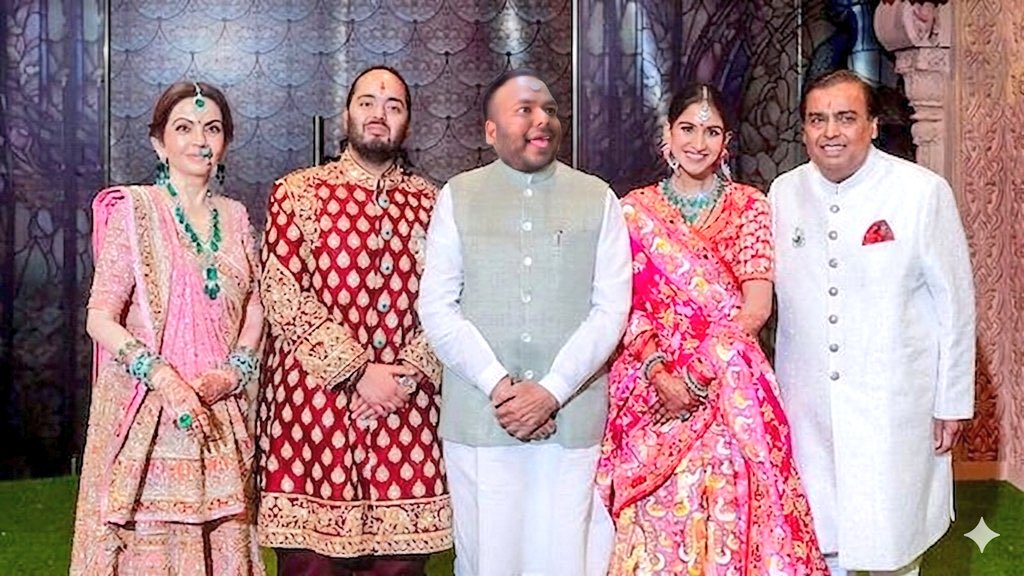
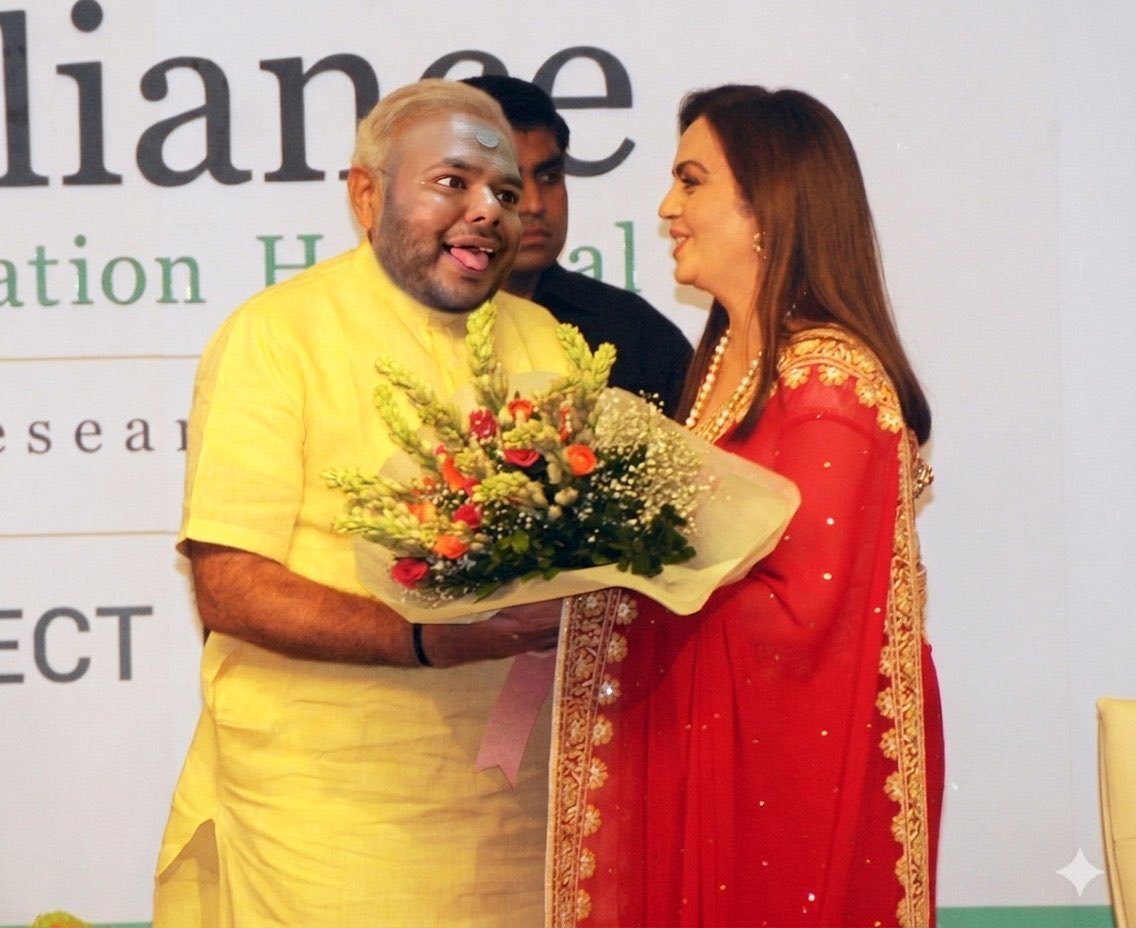
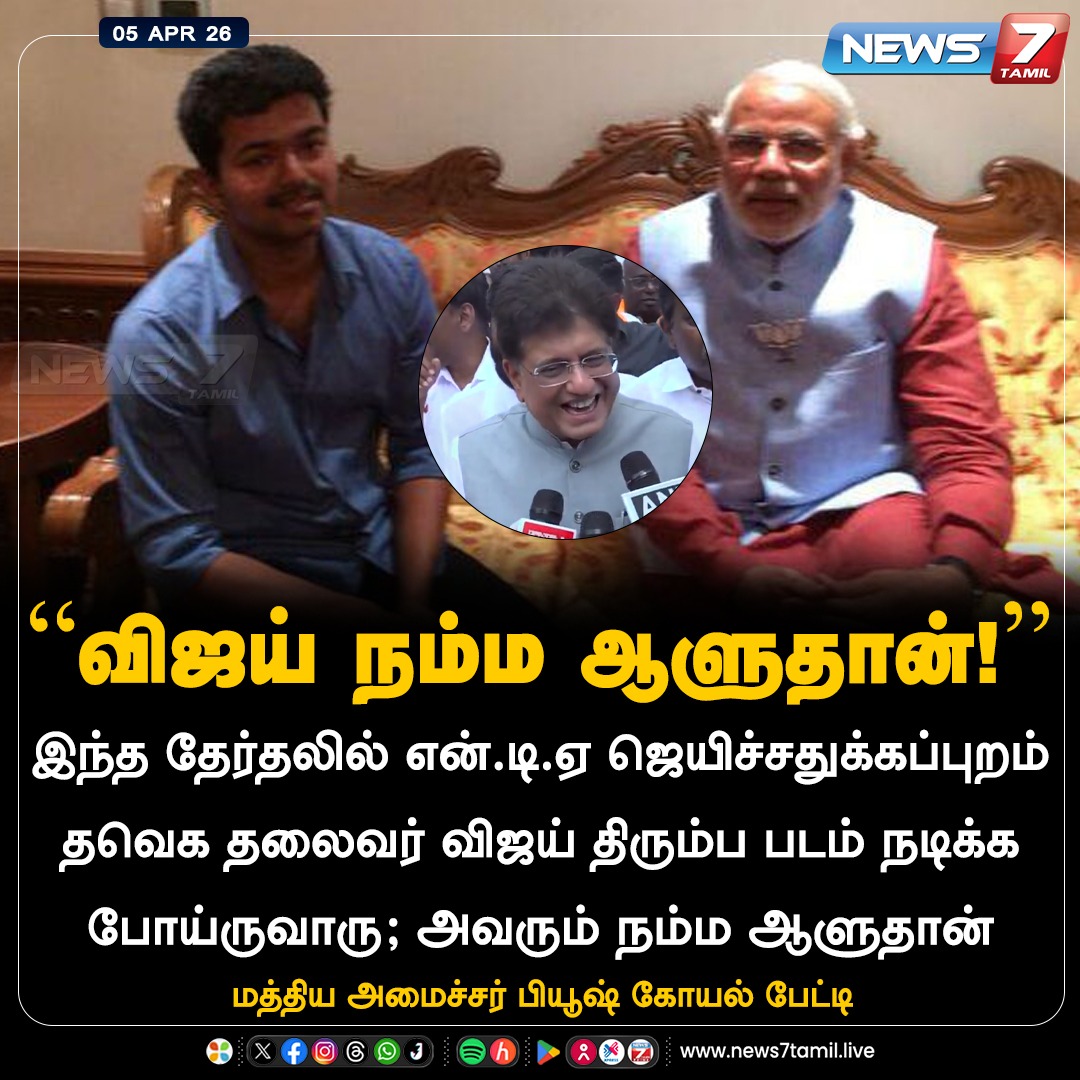
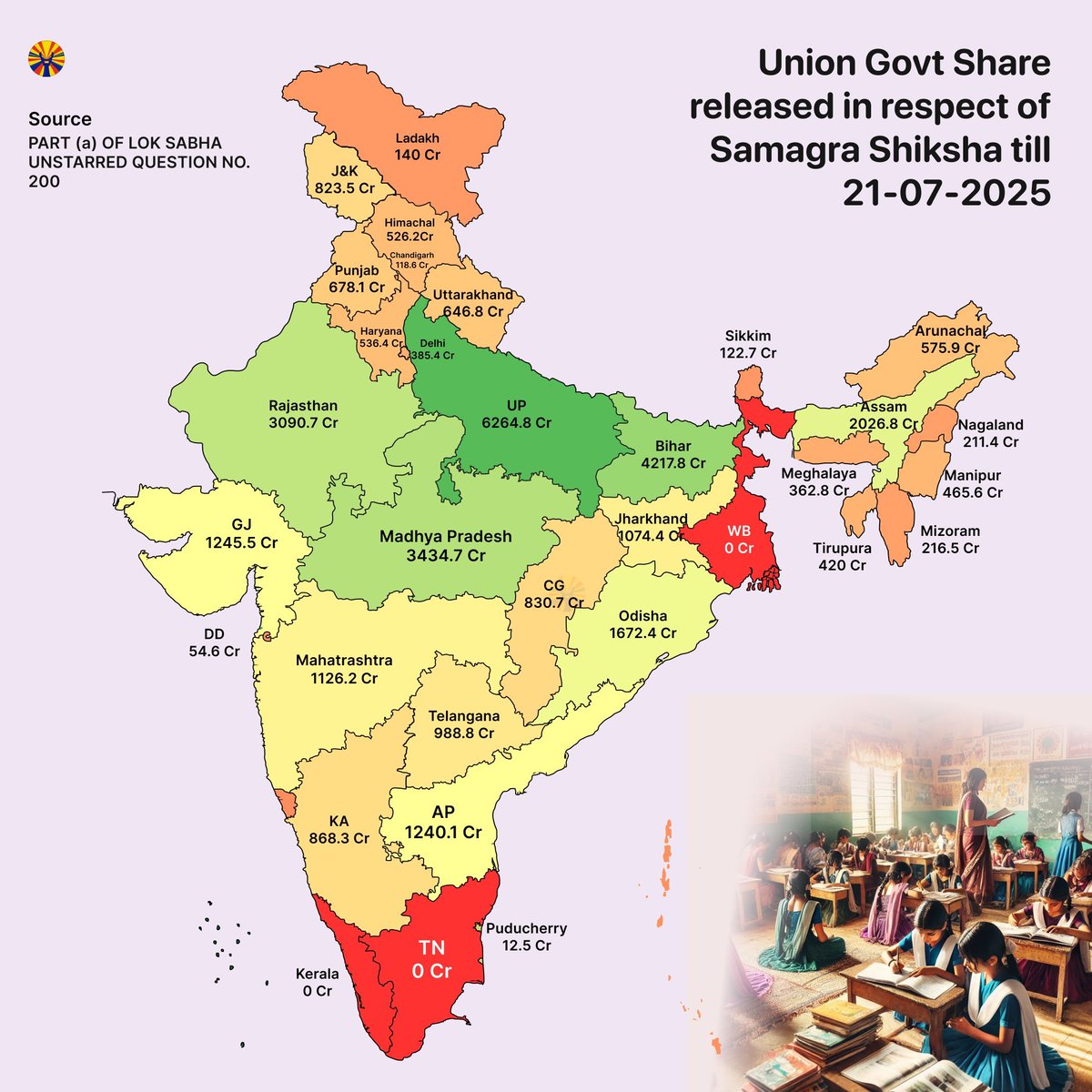
Arsenal is here. தேர்தல் பரப்புரைக்கான தகவல்கள், creatives என அனைத்தும் ஒரே இடத்தில்! பயன்படுத்திக்கொள்ள: votefordmk.in Use it. Amplify it. Own the narrative. #VoteForDMK
Allewood
127.1K posts


Arsenal is here. தேர்தல் பரப்புரைக்கான தகவல்கள், creatives என அனைத்தும் ஒரே இடத்தில்! பயன்படுத்திக்கொள்ள: votefordmk.in Use it. Amplify it. Own the narrative. #VoteForDMK

திருட்டு புண்ட திருட்டு ரயில்ல வராம , பிசினஸ் கிளாஸ்லயாடா வந்தான் ..


🚨 Bhopal Metro is running almost empty. Trips were cut. Timings were changed. Still, on most weekdays, not even 200 people are using it. Meanwhile, the state govt is spending around ₹8 Lakh every day. In 2.5 months, this amounts to nearly ₹6 Crore in expenditure. In contrast, daily revenue collections are reportedly under ₹10,000, far from covering operational costs. Ground Report by Dainik Bhaskar, March 2026.


The recently unveiled curriculum framework by the Central Board of Secondary Education, aligned with the National Education Policy 2020, is not an innocent academic reform—it is a calculated and deeply concerning attempt at linguistic imposition that vindicates our long-standing apprehensions. Under the guise of promoting “Indian languages,” the BJP-led NDA government is aggressively advancing a centralising agenda that privileges Hindi while systematically marginalising India’s rich and diverse linguistic heritage. The so-called three-language formula is, in reality, a covert mechanism to expand Hindi into non-Hindi speaking regions. For students in southern states, this framework effectively translates into compulsory Hindi learning. Yet, where is the reciprocity? Will students in Hindi-speaking states be mandated to learn Tamil, Telugu, Kannada, Malayalam—or even languages like Bengali and Marathi? The complete absence of such clarity exposes the one-sided and discriminatory nature of this policy. The irony is stark and unacceptable. The same Union government that has failed to make Tamil a mandatory language in Kendriya Vidyalaya Sangathan schools—and has consistently failed to appoint adequate Tamil teachers—now seeks to lecture states on promoting Indian languages. This is not commitment; this is rank hypocrisy. Does the Union government have any understanding of ground realities—of teacher availability, training capacity, and infrastructure? Where are the qualified teachers to implement this sweeping exercise? And crucially, where is the funding to support this enormous burden on the education system? This appears to be yet another ill-conceived policy announced without planning, resources, or accountability. This is not merely a question of language—it is a question of fairness, federalism, and equal opportunity. By structurally privileging Hindi-speaking students, this policy risks creating entrenched advantages in higher education and employment, further widening regional disparities. At a time when the world is moving forward at an unprecedented pace, our children must be prepared for the future. The priority should be to equip them with skills in emerging sectors like artificial intelligence, AVGC (Animation, Visual Effects, Gaming, and Comics), and to strengthen scientific temper and critical thinking. Instead, this regressive and rigid language burden threatens to derail their progress. The Union government appears determined to impose Hindi, brushing aside the legitimate, consistent, and democratic concerns raised by Tamil Nadu and several other states. This approach is a direct affront to the principles of cooperative federalism and an insult to the linguistic identity of millions of Indians. India’s strength lies in its diversity—not in enforced uniformity. Any attempt to disturb this delicate balance is not just misguided; it is dangerous. Such policies strike at the very foundation of our pluralistic nation and will be firmly opposed. Does the Thiru Palaniswami-led AIADMK and its NDA allies in Tamil Nadu subscribe to this imposition? Or will they, for once, stand up for the rights, identity, and future of our students? #StopHindiImposition

the fact that PK received so much backlash makes me scared for india

Hon’ble Chief Minister of Tamil Nadu, Thiru @mkstalin ji, your narrative of “imposition” is a tired attempt to mask political failures. The National Education Policy 2020 is, in fact, a manifesto for linguistic liberation. It prioritises the mother tongue so every Tamil child can excel in their own glorious language. By misrepresenting a flexible policy as “compulsory Hindi”, you are not defending Tamil; you are creating barriers that deny our youth the opportunity to become multilingual global leaders. Portraying multilingualism as a threat is misplaced. Tamil is not weakened by the learning of additional languages; it is enriched when its speakers are multilingual, confident and linguistically empowered. NEP upholds constitutional principles by promoting all languages equally and also addresses the limitations of the existing two-language system. It further focuses on implementation through initiatives such as Samagra Shiksha, teacher training, and strengthening institutions, like DIETs, along with national frameworks, such as NPST and NMM. Your questions on “reciprocity” ignore ground reality. Under the leadership of Hon’ble Prime Minister Shri @narendramodi ji, Tamil has been celebrated as a national treasure—from the Kashi Tamil Sangamam to the global stage. While the Union Government actively encourages students across India to embrace Indian languages, your government continues to deprive Tamil students of diverse opportunities for the sake of a divisive vote bank narrative. The talk of resources is merely a façade. It is the DMK government that has stalled the establishment of PM SHRI schools in Tamil Nadu by refusing to sign the MoU after giving an undertaking for the same. Despite the directions of the Supreme Court of India to establish Navodaya Vidyalayas in Tamil Nadu, your government continues to obstruct their implementation, prioritising political narratives over educational equity. This deliberate resistance is not merely administrative defiance; it is a direct disservice to lakhs of underprivileged students who stand to benefit from quality, merit-based residential education. This has effectively withheld modern infrastructure and teachers from its own students. The Union Government remains fully committed to funding and teacher training but progress is being held back by your “dishonest” politics. Mischaracterising a progressive, inclusive reform as ‘linguistic imposition’ is aimed at creating unnecessary apprehension and confusion. The real concern, perhaps, is not the policy’s clarity, but the Hon’ble Chief Minister’s unwillingness to acknowledge it. In doing so, he disregards the constitutional spirit that safeguards India’s linguistic diversity. Stop using the “Hindi imposition” argument to hide administrative failures and join the national mission of empowering every Indian language.

Hon’ble Chief Minister of Tamil Nadu, Thiru @mkstalin ji, your narrative of “imposition” is a tired attempt to mask political failures. The National Education Policy 2020 is, in fact, a manifesto for linguistic liberation. It prioritises the mother tongue so every Tamil child can excel in their own glorious language. By misrepresenting a flexible policy as “compulsory Hindi”, you are not defending Tamil; you are creating barriers that deny our youth the opportunity to become multilingual global leaders. Portraying multilingualism as a threat is misplaced. Tamil is not weakened by the learning of additional languages; it is enriched when its speakers are multilingual, confident and linguistically empowered. NEP upholds constitutional principles by promoting all languages equally and also addresses the limitations of the existing two-language system. It further focuses on implementation through initiatives such as Samagra Shiksha, teacher training, and strengthening institutions, like DIETs, along with national frameworks, such as NPST and NMM. Your questions on “reciprocity” ignore ground reality. Under the leadership of Hon’ble Prime Minister Shri @narendramodi ji, Tamil has been celebrated as a national treasure—from the Kashi Tamil Sangamam to the global stage. While the Union Government actively encourages students across India to embrace Indian languages, your government continues to deprive Tamil students of diverse opportunities for the sake of a divisive vote bank narrative. The talk of resources is merely a façade. It is the DMK government that has stalled the establishment of PM SHRI schools in Tamil Nadu by refusing to sign the MoU after giving an undertaking for the same. Despite the directions of the Supreme Court of India to establish Navodaya Vidyalayas in Tamil Nadu, your government continues to obstruct their implementation, prioritising political narratives over educational equity. This deliberate resistance is not merely administrative defiance; it is a direct disservice to lakhs of underprivileged students who stand to benefit from quality, merit-based residential education. This has effectively withheld modern infrastructure and teachers from its own students. The Union Government remains fully committed to funding and teacher training but progress is being held back by your “dishonest” politics. Mischaracterising a progressive, inclusive reform as ‘linguistic imposition’ is aimed at creating unnecessary apprehension and confusion. The real concern, perhaps, is not the policy’s clarity, but the Hon’ble Chief Minister’s unwillingness to acknowledge it. In doing so, he disregards the constitutional spirit that safeguards India’s linguistic diversity. Stop using the “Hindi imposition” argument to hide administrative failures and join the national mission of empowering every Indian language.


Hon’ble Chief Minister of Tamil Nadu, Thiru @mkstalin ji, your narrative of “imposition” is a tired attempt to mask political failures. The National Education Policy 2020 is, in fact, a manifesto for linguistic liberation. It prioritises the mother tongue so every Tamil child can excel in their own glorious language. By misrepresenting a flexible policy as “compulsory Hindi”, you are not defending Tamil; you are creating barriers that deny our youth the opportunity to become multilingual global leaders. Portraying multilingualism as a threat is misplaced. Tamil is not weakened by the learning of additional languages; it is enriched when its speakers are multilingual, confident and linguistically empowered. NEP upholds constitutional principles by promoting all languages equally and also addresses the limitations of the existing two-language system. It further focuses on implementation through initiatives such as Samagra Shiksha, teacher training, and strengthening institutions, like DIETs, along with national frameworks, such as NPST and NMM. Your questions on “reciprocity” ignore ground reality. Under the leadership of Hon’ble Prime Minister Shri @narendramodi ji, Tamil has been celebrated as a national treasure—from the Kashi Tamil Sangamam to the global stage. While the Union Government actively encourages students across India to embrace Indian languages, your government continues to deprive Tamil students of diverse opportunities for the sake of a divisive vote bank narrative. The talk of resources is merely a façade. It is the DMK government that has stalled the establishment of PM SHRI schools in Tamil Nadu by refusing to sign the MoU after giving an undertaking for the same. Despite the directions of the Supreme Court of India to establish Navodaya Vidyalayas in Tamil Nadu, your government continues to obstruct their implementation, prioritising political narratives over educational equity. This deliberate resistance is not merely administrative defiance; it is a direct disservice to lakhs of underprivileged students who stand to benefit from quality, merit-based residential education. This has effectively withheld modern infrastructure and teachers from its own students. The Union Government remains fully committed to funding and teacher training but progress is being held back by your “dishonest” politics. Mischaracterising a progressive, inclusive reform as ‘linguistic imposition’ is aimed at creating unnecessary apprehension and confusion. The real concern, perhaps, is not the policy’s clarity, but the Hon’ble Chief Minister’s unwillingness to acknowledge it. In doing so, he disregards the constitutional spirit that safeguards India’s linguistic diversity. Stop using the “Hindi imposition” argument to hide administrative failures and join the national mission of empowering every Indian language.

Hon’ble Chief Minister of Tamil Nadu, Thiru @mkstalin ji, your narrative of “imposition” is a tired attempt to mask political failures. The National Education Policy 2020 is, in fact, a manifesto for linguistic liberation. It prioritises the mother tongue so every Tamil child can excel in their own glorious language. By misrepresenting a flexible policy as “compulsory Hindi”, you are not defending Tamil; you are creating barriers that deny our youth the opportunity to become multilingual global leaders. Portraying multilingualism as a threat is misplaced. Tamil is not weakened by the learning of additional languages; it is enriched when its speakers are multilingual, confident and linguistically empowered. NEP upholds constitutional principles by promoting all languages equally and also addresses the limitations of the existing two-language system. It further focuses on implementation through initiatives such as Samagra Shiksha, teacher training, and strengthening institutions, like DIETs, along with national frameworks, such as NPST and NMM. Your questions on “reciprocity” ignore ground reality. Under the leadership of Hon’ble Prime Minister Shri @narendramodi ji, Tamil has been celebrated as a national treasure—from the Kashi Tamil Sangamam to the global stage. While the Union Government actively encourages students across India to embrace Indian languages, your government continues to deprive Tamil students of diverse opportunities for the sake of a divisive vote bank narrative. The talk of resources is merely a façade. It is the DMK government that has stalled the establishment of PM SHRI schools in Tamil Nadu by refusing to sign the MoU after giving an undertaking for the same. Despite the directions of the Supreme Court of India to establish Navodaya Vidyalayas in Tamil Nadu, your government continues to obstruct their implementation, prioritising political narratives over educational equity. This deliberate resistance is not merely administrative defiance; it is a direct disservice to lakhs of underprivileged students who stand to benefit from quality, merit-based residential education. This has effectively withheld modern infrastructure and teachers from its own students. The Union Government remains fully committed to funding and teacher training but progress is being held back by your “dishonest” politics. Mischaracterising a progressive, inclusive reform as ‘linguistic imposition’ is aimed at creating unnecessary apprehension and confusion. The real concern, perhaps, is not the policy’s clarity, but the Hon’ble Chief Minister’s unwillingness to acknowledge it. In doing so, he disregards the constitutional spirit that safeguards India’s linguistic diversity. Stop using the “Hindi imposition” argument to hide administrative failures and join the national mission of empowering every Indian language.

Hon’ble Chief Minister of Tamil Nadu, Thiru @mkstalin ji, your narrative of “imposition” is a tired attempt to mask political failures. The National Education Policy 2020 is, in fact, a manifesto for linguistic liberation. It prioritises the mother tongue so every Tamil child can excel in their own glorious language. By misrepresenting a flexible policy as “compulsory Hindi”, you are not defending Tamil; you are creating barriers that deny our youth the opportunity to become multilingual global leaders. Portraying multilingualism as a threat is misplaced. Tamil is not weakened by the learning of additional languages; it is enriched when its speakers are multilingual, confident and linguistically empowered. NEP upholds constitutional principles by promoting all languages equally and also addresses the limitations of the existing two-language system. It further focuses on implementation through initiatives such as Samagra Shiksha, teacher training, and strengthening institutions, like DIETs, along with national frameworks, such as NPST and NMM. Your questions on “reciprocity” ignore ground reality. Under the leadership of Hon’ble Prime Minister Shri @narendramodi ji, Tamil has been celebrated as a national treasure—from the Kashi Tamil Sangamam to the global stage. While the Union Government actively encourages students across India to embrace Indian languages, your government continues to deprive Tamil students of diverse opportunities for the sake of a divisive vote bank narrative. The talk of resources is merely a façade. It is the DMK government that has stalled the establishment of PM SHRI schools in Tamil Nadu by refusing to sign the MoU after giving an undertaking for the same. Despite the directions of the Supreme Court of India to establish Navodaya Vidyalayas in Tamil Nadu, your government continues to obstruct their implementation, prioritising political narratives over educational equity. This deliberate resistance is not merely administrative defiance; it is a direct disservice to lakhs of underprivileged students who stand to benefit from quality, merit-based residential education. This has effectively withheld modern infrastructure and teachers from its own students. The Union Government remains fully committed to funding and teacher training but progress is being held back by your “dishonest” politics. Mischaracterising a progressive, inclusive reform as ‘linguistic imposition’ is aimed at creating unnecessary apprehension and confusion. The real concern, perhaps, is not the policy’s clarity, but the Hon’ble Chief Minister’s unwillingness to acknowledge it. In doing so, he disregards the constitutional spirit that safeguards India’s linguistic diversity. Stop using the “Hindi imposition” argument to hide administrative failures and join the national mission of empowering every Indian language.

Hon’ble Chief Minister of Tamil Nadu, Thiru @mkstalin ji, your narrative of “imposition” is a tired attempt to mask political failures. The National Education Policy 2020 is, in fact, a manifesto for linguistic liberation. It prioritises the mother tongue so every Tamil child can excel in their own glorious language. By misrepresenting a flexible policy as “compulsory Hindi”, you are not defending Tamil; you are creating barriers that deny our youth the opportunity to become multilingual global leaders. Portraying multilingualism as a threat is misplaced. Tamil is not weakened by the learning of additional languages; it is enriched when its speakers are multilingual, confident and linguistically empowered. NEP upholds constitutional principles by promoting all languages equally and also addresses the limitations of the existing two-language system. It further focuses on implementation through initiatives such as Samagra Shiksha, teacher training, and strengthening institutions, like DIETs, along with national frameworks, such as NPST and NMM. Your questions on “reciprocity” ignore ground reality. Under the leadership of Hon’ble Prime Minister Shri @narendramodi ji, Tamil has been celebrated as a national treasure—from the Kashi Tamil Sangamam to the global stage. While the Union Government actively encourages students across India to embrace Indian languages, your government continues to deprive Tamil students of diverse opportunities for the sake of a divisive vote bank narrative. The talk of resources is merely a façade. It is the DMK government that has stalled the establishment of PM SHRI schools in Tamil Nadu by refusing to sign the MoU after giving an undertaking for the same. Despite the directions of the Supreme Court of India to establish Navodaya Vidyalayas in Tamil Nadu, your government continues to obstruct their implementation, prioritising political narratives over educational equity. This deliberate resistance is not merely administrative defiance; it is a direct disservice to lakhs of underprivileged students who stand to benefit from quality, merit-based residential education. This has effectively withheld modern infrastructure and teachers from its own students. The Union Government remains fully committed to funding and teacher training but progress is being held back by your “dishonest” politics. Mischaracterising a progressive, inclusive reform as ‘linguistic imposition’ is aimed at creating unnecessary apprehension and confusion. The real concern, perhaps, is not the policy’s clarity, but the Hon’ble Chief Minister’s unwillingness to acknowledge it. In doing so, he disregards the constitutional spirit that safeguards India’s linguistic diversity. Stop using the “Hindi imposition” argument to hide administrative failures and join the national mission of empowering every Indian language.