
Adam Chambers retweetledi

Poilievre says repair, not rupture, is the path forward for Canada–U.S.
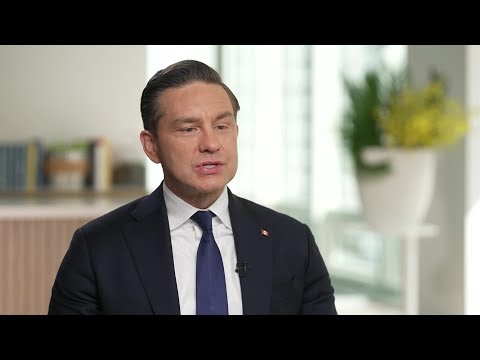
Pierre Poilievre’s trip to the United States this week was notable not only for its symbolism but for its substance. He used the occasion to mount a respectful yet firm challenge to Prime Minister Mark Carney’s thesis that the Canada–U.S. relationship has undergone an irreparable “rupture.”
That argument, first articulated by Carney at the World Economic Forum, has begun to shape Canadian public policy. It rests on the premise that Trump’s threats and provocations have fundamentally altered the bilateral relationship and therefore require Canada to rethink both its economic ties and its broader place in the world. The removal of tariffs on Chinese electric vehicles is one example of Carney’s rupture paradigm in practice.
Poilievre’s intervention amounts to a rejection of that premise. His argument isn’t that Trump’s actions or rhetoric are benign. He was clear in a series of interviews and speeches that they’re wrong and counterproductive. But he cautions against overinterpreting them or Trump’s presidency itself.
The Canada-U.S. relationship transcends a particular moment or president. It’s durably rooted in historic ties, a shared culture, and the overwhelming logic of mutually beneficial exchange.
In Poilievre’s New York City speech, he presented the relationship as a modern illustration of Adam Smith’s profound insights about the mutual gains from trade. Our exchange is voluntary, by and large free from government distortions, and genuinely positive sum. Even the power of the U.S. president cannot overcome the powerful diktats of these market forces.
Indeed, if anything, the current geopolitical context strengthens the case for closer co-operation. As the United States deepens its economic and strategic competition with China, Canada’s role as a stable, resource-rich, and proximate partner becomes more important. From critical minerals to energy to advanced manufacturing inputs, Canada is uniquely positioned to support American production and, in doing so, reinforce continental resilience.
The appropriate policy response, then, isn’t rupture but repair: a doubling down on the strengths that have made the relationship so successful.
This contrast between rupture and repair reflects two competing visions of Canada’s place in the world. Carney’s view leans toward diversification and distance. Poilievre’s is more grounded in realism—recognizing both the limits of Canada’s alternatives and the enduring advantages of continental integration.
As Poilievre put it plainly, the idea that Canada can meaningfully replace U.S. trade with other markets is unserious. History bears this out. The Trudeau government’s “Third Option” strategy in the 1970s sought to diversify away from the United States and ultimately failed. As a result, the Macdonald Royal Commission and subsequently Brian Mulroney’s government arrived at the inevitable conclusion that freer trade with the U.S. was ultimately in the interests of both countries.
Yet Poilievre’s position isn’t without political risk. Public opinion has markedly shifted over the past year. Polls now suggest that a majority of Canadians are open to walking away from the USMCA, driven by legitimate offence to Trump and a deeper strain of anti-American sentiment. In that environment, arguing for closer ties requires political courage.
But it’s also a test of leadership. The question isn’t simply what Canadians feel in a moment of rightful frustration, but what course best serves their long-term interests. On that front, Poilievre is making a necessary and serious argument.
As he emphasized in New York, the Canada–U.S. relationship will remain not only our most important bilateral partnership, but one of the most consequential economic and security relationships in the world. Both countries have a shared interest in ensuring that it endures well beyond Trump’s presidency.
Poilievre’s own political future may depend, in part, on whether he can persuade Canadians of that simple yet important truth: Even in difficult moments, friendship is better than rupture.
The Hub@TheHubCanada
.@Sean_Speer: Pierre Poilievre is doing his best to repair Canada–U.S. relations: The Weekly Wrap thehub.ca/2026/03/21/pie…
English