Alexander Morris

24 posts

Alexander Morris banner
Alexander Morris

Alexander Morris

@alexmorrisfm

Chief Executive Officer @ F/m Investments

Washington, DC Katılım Mart 2022
33 Takip Edilen23 Takipçiler
Alexander Morris
Alexander Morris@alexmorrisfm·
Good conversation at Exchange 2026 yesterday with Aisha Hunt and Roxanna Islam. A bit ironic to be at an ETF conference speaking about innovations in mutual funds and tokenized assets, one representing something that was last exciting 30 years ago, and the other just coming online now. @fminvestllc was the first to bring the dual share class to market just a few weeks ago, but we won't be the last by any stretch of the imagination. There's a very large pool of assets stuck in mutual fund land that we believe need what ETFs have to offer. We've also filed to tokenize ETF shares. Think of it as plumbing infrastructure enhancement, not “crypto” in the popular sense. Issuers would do well to pay attention, because digital-native platforms will tokenize your products whether you like it or not. Better to get there first on your terms. Our guiding principle with both has been to add features and liquidity without introducing new sources of arbitrage or confusion. Not every fund is a great fit for this, and legacy providers hoping for a tax arbitrage are going to find the operational lift heavier than they expect. The real hurdle ahead isn’t regulatory. It's commercialization. The traditional advice world and the digital-native experience are going to merge, and we need a full tool set to serve folks on the other side of that divide.
Alexander Morris tweet media
English
0
1
1
7
Alexander Morris
Alexander Morris@alexmorrisfm·
Just wrapped Future Proof Citywide in Miami Beach. I've been going since the early Huntington Beach days, when it was a scrappy collection of festival shacks on the sand. What they've built now stretches half a mile along the South Beach waterfront. We did a session with Dave Nadig where we talked about our tokenization efforts in a very real, very raw way. When I saw 25 or 30 chairs set up, I was nervous we'd be staring at empty seats, but every one was filled, people standing two and three deep on the beach. A CEO came up afterward and essentially said: Teach us. We filed the first-of-its-kind SEC application for tokenized ETF shares earlier this year, and the conversations at Future Proof confirmed this work resonates well beyond the crypto-native crowd. The advisors and allocators asking questions weren't just exhibiting curiosity. They wanted to know how to access it. AI in the advisory business was the other constant. A lot of advisors showed up wanting to know if AI is going to eat their lunch. Our honest answer: no. But the firms that figure out how to work alongside these tools will pull ahead. Heading to Exchange in Las Vegas next week to talk dual share classes and where ETF product design goes from here. If you're there, come find us.
English
0
0
1
20
Alexander Morris
Alexander Morris@alexmorrisfm·
If you're an advisor fielding client calls come Monday morning, there's been too much economic news this week to process in one sitting. I wanted to break down our perspective on the big moments and give you something to think through over the weekend. THE JOBS NUMBER ISN'T THE REAL STORY. February payrolls came in at negative 92,000, well below the consensus of positive 60,000. But the more telling number: since Liberation Day, the economy has created negative 20,000 net jobs. Growing economies create jobs. Whatever Liberation Day was supposed to accomplish for American workers, the numbers tell a different story. OIL IS IN THE ZONE THAT WORRIES US. We've said for months that $80 didn't concern us and $100 would. Brent is at $93 and the oil VIX is at its highest since COVID. Shipping through the Strait of Hormuz has effectively stopped. Trump offered naval escorts, which briefly eased prices, but insurers are canceling war risk coverage and tanker operators aren't moving. THIS IS WHAT EARLY-STAGE STAGFLATION LOOKS LIKE. I don't use that word lightly. But the ingredients are here: wages are rising, headline CPI is going to follow, energy is going to accelerate that, and the labor market is contracting. The classic response is to ditch equities that tend to contract and run to cash. That works. Park everything in a bank account that pays little loses to the “flation” bit. The short term treasury market will yield better. We also like to buy some insurance (short duration TIPS) and keep some chips on table (some duration). Just because the economy feels neutered doesn’t mean your portfolio should be. THE FED IS GOING TO SIT ON ITS HANDS. The FOMC meets March 17-18 and I hope they do nothing. The labor data makes a case for a cut, but short-term inflation is about to get worse because of energy and everyone knows it. With Powell's term expiring in May and no confirmed successor, there's no clear signal to act on. PRIVATE CREDIT: TROUBLE, BUT CONTAINED. BlackRock gated its $26 billion HPS fund. Blackstone raised its redemption cap. Blue Owl shut off redemptions entirely. We've been flagging this for years. Private credit meant a small number of people set the price, told you it was stable, and never had to answer to a market that might disagree. We haven't seen contagion into broader credit, but if you have clients in these products, have the conversation now. These markets are when advisors really earn their keep. Equities are down some but not crazy amounts. Spreads have widened, but not blown out. None of this is evidence you need to blow up your plan — this is the moment that proves why you built one. Diversified portfolios, meaningful allocation, and regular rebalancing actually work. If you've been doing this right, your clients are already positioned. Remind them.
English
0
1
1
11
Alexander Morris
Alexander Morris@alexmorrisfm·
The tariff regime we all spent the last year positioning around is gone. The one that replaced it over the weekend has a 150-day expiration date. What happens now? Last Friday the court ruled 6-3 that IEEPA doesn't authorize the president to impose tariffs. That invalidated the legal framework behind the 25 percent duties on Canada and Mexico, the reciprocal tariffs on virtually all trading partners, and the 145 percent cumulative rate on Chinese goods. The reasoning was straightforward: the Constitution gives Congress the tariff power, and two vague words in a 1977 emergency statute don't qualify as a delegation. Customs and Border Protection confirmed it will stop collecting IEEPA duties as of Tuesday morning. Within hours, the administration invoked Section 122 of the Trade Act of 1974 to impose a 10 percent global tariff. By Saturday that was 15 percent, the statutory maximum. No president has ever used Section 122 before, and it comes with a hard constraint: 150 days, then Congress has to act or the tariffs expire. So here's where we are. The old tariff regime is dead. A new one is already in place at a lower rate, on a different legal basis, with a built-in expiration date. For many countries this is actually a reduction. Brazil, Canada, China, India, Mexico and others all faced higher rates under IEEPA than they will under the 15 percent blanket. Some countries, like the UK and Australia, will see rates go up. The USTR has also announced accelerated Section 301 investigations on most major trading partners, which is the administration signaling it intends to build durable, country-specific tariff authority that can survive judicial review. The refund question looms over all of it. The court affirmed that IEEPA duties were collected without legal authority. Importers, including Costco and thousands of others, are already suing. We're talking about an estimated $133 billion in collected revenue. The administration has signaled refunds will happen but offered no mechanism. The president himself said it could take two to five years to sort out. What matters for markets right now is the 150-day clock. That's the window for Congress to either extend the Section 122 tariffs or pass new trade authority with the guardrails the court's ruling demands. The State of the Union Tuesday will likely be the administration's first major public push on that front. If you're positioning around trade exposure, you're really positioning around whether Congress acts before that clock runs out, and on what terms. One thing worth noting: Thomas' dissent argued Congress can delegate essentially unlimited power to the executive, even accidentally. That's one vote of nine, thankfully, but it's a position worth watching as these separation-of-powers cases keep coming. #Tariffs #marketcommentary
English
0
0
2
13
Alexander Morris retweetledi
Reuters
Reuters@Reuters·
Alexander Morris of F/m Investments says that when it comes to Fed policy, the unexpected strength of the January nonfarm payrolls report adds more importance to Friday’s CPI reading
English
1
4
7
19.1K
Alexander Morris retweetledi
ChatETF
ChatETF@chatetfapp·
F/m Makes TBIL Strategy Available as ETF and Mutual Fund 🚨Get all #ETF industry alerts on etfshelf.com F/m Investments launched a dual share class structure for its TBIL U.S. Treasury 3-Month Bill strategy, offering both ETF (TBIL) and mutual fund (TBFMX) access within a single portfolio. The move eliminates vehicle tradeoffs and marks the first live ETF-mutual fund structure under a modern SEC exemptive order. @fminvestllc
ChatETF tweet media
English
0
2
4
211
Alexander Morris
Alexander Morris@alexmorrisfm·
Today we launched the very first dual share class fund from an ETF issuer: TBIL's Treasury strategy is now available as both an ETF and a mutual fund — same portfolio, same holdings, same track record. For too long, investors have had to choose between the tax efficiency of an ETF or the platform access of a mutual fund. That's a false choice, and now it's an unnecessary one. The wrapper shouldn't dictate the investment. If you're an advisor holding TBIL, there's nothing you need to do. There's no disruption, only upside. If you have clients in retirement plans or on platforms where ETFs aren't available, they can now access the identical strategy through TBFMX. Over 100 firms filed for this same kind of relief. We got here first because we spent two years pushing through every operational and regulatory hurdle to make it happen. Someone had to go first, and we cared enough to do it. I've been calling this an industry win, and I mean it. We're at the front of the peloton right now, but others will follow. The real significance is what this proves: a simpler, more accessible investment ecosystem isn't theoretical. It's here, and we're building it with every product we create. hubs.la/Q042YNw40 -- This is for informational purposes only and is not a recommendation or solicitation to buy or sell any specific security.
English
0
1
1
25
Alexander Morris
Alexander Morris@alexmorrisfm·
DC, Rome or Avignon Kevin Warsh has a gilt-edged CV. Standford undergrad, Harvard lawyer, and some work at Harvard and MIT's business schools because I guess he was bored. His professional chops of similarly high karat: senior M&A post at Morgan Stanley, the White House to serve on the NEC, and finally appointed as the youngest Fed governor to serve. He was Bernanke's right hand during much of the GFC, his bridge to Wall Street. He's had a ringside seat to finance's most recent, fiercest battles. We will get into that ... next time. Now let's talk about his return path to the (newer, shinier) Eccles Building. In 12 U.S.C. Chapter 3, Sections 221-522, The Federal Reserve Act, Congress outlines the Fed's role, governance, and powers. Its composition: seven (7) governors serve fourteen (14 year) terms, of which a sitting governor is selected to a four (4) year chairmanship. Governors completing a 14-year term cannot be reappointed, but you can serve out a vacant term and then be appointed to a full 14-year term in your own right. You can be reappointed as chair as often as the foregoing allows you to serve on the Board, the President is willing to appoint you, and the Senate willing to confirm you. For its part, the Senate's Committee on Banking, Housing, and Urban Affairs vets Fed nominees sending approved ones to the Senate floor for simple majority approval. Here's the problem, President Trump's assailing Jay Powell has long irked many, but the President's criminal investigation seems to have finally crossed the line. At least Senator Tillis — on the Senate Banking Committee — announced he will hold up Warsh's confirmation until the criminal investigation is resolved. He could do just that, to which Trump's response was essentially "Tillis retires at the end of the year, I'll wait." What happens when a term's years are spent but there is no replacement? 242 has the answer -- the sitting governor stays until a replacement is confirmed as a "holdover". Indeed, Stephan Miran is currently a holdover, filling a vacancy in the term that expired January 31, 2026. Still with me? The code is silent on what happens when a Chair's four-year term expires. The best guidance we have is from a 1978 DOJ Office of Legal memo written for President Carter that determined (a) the Chair did not holdover (as a Governor does), (b) the President can appoint a temporary Chair, and (c) the Vice-Chair cannot be promoted to Chair as his or her duties as are limited to temporary absences, not vacancies. For the curious: Carter requested the opinion because after he appointed G. William Miller in 1978, Carter quickly determined Miller was ineffective, wanted to appoint Paul Volcker, but could not fire Miller from either the Board or Chair without the same Constitution issue Trump laments regarding Jay Powell. This opinion paved the way for Miller to resign to become Treasury Secretary and Volker assume the Chair. Appearance of Fed independence, check. But wait, there's more... the FOMC, the body that actually sets interest rates, selects its own Chair. By convention, and without exception, the Fed Chair has always been this. A Fed Schism could happen. Practically, avoiding all this trouble is in all parties' (and our) best interest. A deal should be worked out. If not, the image of an unfinished Eccles Building is all too perfect an allusion to the fabled Pont d'Avignon. Oh, and hat tip to Congress here. For a group renowned for its Byzantine structures and labyrinthine wording, they really outdid themselves here. Fun link: hubs.la/Q042cbjQ0 Link to OLC memo: hubs.la/Q042cgv30 Link to Federal Reserve Act: hubs.la/Q042cbX90
English
0
0
2
58
Alexander Morris
Alexander Morris@alexmorrisfm·
Gold broke 5,000 last week and looked like it was sprinting to 6,000. Now it's back under 5,000 after suffering its worst day ever, erasing over 20% from Thursday's high to Friday's low. Silver was worse. The headline "debasement trade" is getting scrubbed off terminals as fast as people can manage. No financial Newton has yet proved "financial gravity" exists, but any trader will tell you it does, and dense things fall fast. Metals breaking down is not new. As an inflation hedge in 2022, they completely unraveled. The catalyst here was President Trump's announcement that he would appoint Kevin Warsh as the next Fed chair. The metals market got the message immediately: reduced balance sheet, tighter policy, and greater rates modulation would likely result in asset price deflation. A more proactive Fed, driven by AI-fueled productivity gains. Change is a-coming. The knock on effect of the policy is less a slowing of capital appreciation and more a change to capital allocation in America. Coupled with statements about America distancing itself from Basel 3 -- a unified, international banking policy framework that has become encoded as pro-American status quo but anti-American banks -- will look to rehome capital across the spectrum, undoing some of its concentration in large cap stocks and a shadow / intermediary banking system (best known as private-equity and private-credit). Meanwhile, equities are whistling along. Some think it's past the graveyard. For the time being, ebullient feelings have been manifest as equity buoyancy. Certainly the plunge in metals is a good reminder that financial gravity applies to all, eventually.
English
0
0
1
215
Alexander Morris retweetledi
F/m Investments
F/m Investments@fminvestllc·
We filed an exemptive application with the SEC to record ownership of tokenized shares of $TBIL on a permissioned blockchain ledger. As our CEO @alexmorrisfm put it, “Tokenization is coming… The question is whether it happens inside the regulatory framework investors have relied on for 85 years.” Learn more > hubs.la/Q03_P8mg0
F/m Investments tweet media
English
1
1
2
70
Alexander Morris
Alexander Morris@alexmorrisfm·
It’s been really thrilling to see the reception to our SEC application to tokenize our ETF on a permissioned blockchain. The same CUSIP, same protections, and same ETF as what investors can buy on traditional markets, updated for 21st century investing. I'm a guy who wears an analog wristwatch and would go back to a flip phone if I could. But tokenization is coming to securities markets whether we file this application or not. The question is whether it happens inside the regulatory framework investors have relied on for 85 years, or without those protections entirely. We wanted to start that conversation from the most genuine place we could find. If you're interested in speaking to our team about this application and our implementation plans, reach out. hubs.la/Q03_Vkjw0 #ETF #Tokenization #RWA #TradFi #Blockchain
English
0
1
1
106
Alexander Morris
Alexander Morris@alexmorrisfm·
If you're an advisor, this was one of those weeks where you started Monday wondering what exactly you're supposed to tell clients. Sunday night the Fed Chair gave public remarks that felt one step away from holding up the Wall Street Journal as proof of life. By Monday morning, that story had already been overtaken by tariff news, which may or may not be reversed by the time you read this. Inflation is still running hot, though we've rebranded it as "affordability" because that sounds more like something we're working on. Venezuela remains unresolved. Iran is coming apart. Credit card interest rate caps are being floated that would probably just reduce credit availability rather than help anyone. And if you pull up the screens? Everything's fine. Stocks are up a little. The system is functioning. None of the metrics are flashing red. This is the strange position advisors find themselves in right now: the headlines suggest chaos, the numbers suggest calm, and clients are reading both. The lived experience of groceries and childcare and health insurance renewals tells people things are harder. The portfolio statement tells them things are fine. Those two stories aren't talking to each other. So what do you say? Probably something like this: central banking has always been an experiment—we're on America's fourth attempt—and we've built a remarkably resilient system. The friction between branches of government is the design, not a bug. We took a meaningful step this week toward something potentially different down the road. But there's no portfolio change required by any of this. Not yet.
Alexander Morris tweet media
English
0
1
1
14
Alexander Morris
Alexander Morris@alexmorrisfm·
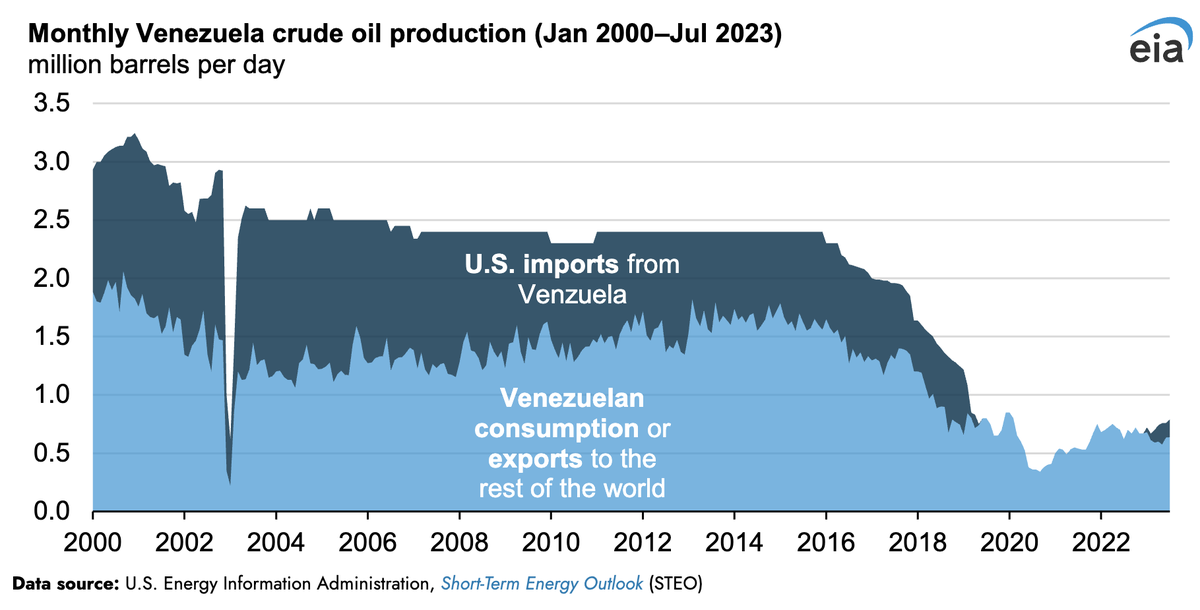
Markets have a funny way of telling you what matters. The weekend's events in Venezuela dominated headlines and raised profound debates about sovereignty and international norms. In response, the S&P crept closer to its December high. Gold and silver surged amid general uncertainty, but otherwise it was largely business as usual on the first real trading day of the year. Venezuela sits on the largest proven oil reserves on Earth, yet produces only about 900,000 barrels per day, less than a third of what it was pumping twenty years ago. If—and it's a significant if—American oil companies can actually rebuild that crumbling infrastructure, we could eventually see 2-3 million barrels per day flowing again. At current prices, the back-of-envelope math on recouping a $100 billion infrastructure investment looks surprisingly achievable. Chevron was up 10% in premarket trading on that possibility alone. The market isn't endorsing anything except the prospect of more supply eventually entering a market that may need it. But "eventually" is doing a lot of work in that sentence. The infrastructure needed to refine Venezuela's heavy, sour crude is in shambles. Even optimistic analysts are talking about a decade-long rebuild and hundreds of billions in investment before anyone involved sees meaningful output gains. For now, the actionable signal from Venezuela is the same as it was last week: there isn't one. The things that actually drive your portfolio day-to-day haven't changed: a ballooning debt problem, sticky inflation, and steady interest rates from the Fed. Markets have essentially said, "We'll believe the turnaround when we see the barrels."
Alexander Morris tweet media
English
0
1
1
19
Alexander Morris
Alexander Morris@alexmorrisfm·
There's a quote attributed to Twain (although odds are good he never actually said it), "It's not what we don't know that gets us in trouble, but what we know for certain that just isn't so." That was 2025 in a nutshell. We knew tariffs would roil markets. They came, they went, they came back, they had their day in court. Markets absorbed it. We knew an inverted yield curve signaled recession. It stayed inverted for years, then uninverted. No recession. We knew the economy was slowing. We knew labor was cracking. We know the Fed would be behind the curve. Yet inflation fears are down (even if inflation is not fully tamed) and still no recession. We particularly knew we could trust the data. Then the BLS head was sacked, and the shutdown impacted CPI calc just zeroed out the (40%) housing component. October’s job report will only be known to time immemorial, not us mere market mortals. Delete all the policy chaos, the tariff tantrums, the tweets, and the noise, and we probably arrive at the same place with a lot less angst. Equity is about at highs, bond markets that performed reasonably well, and a yield curve back to normal-ish. 2025 was a year of learning that our certainties aren't as sturdy as we think. A good lesson for as we tackle 2026 and beyond. Happy New Year!
English
0
0
1
12
Alexander Morris
Alexander Morris@alexmorrisfm·
We just received notice from the SEC that our petition to offer dual share classes—ETF and mutual fund shares within the same fund—will be granted as early as January 12, 2026. This relief, which we were the first ETF provider to request from the SEC, is a meaningful step toward giving advisors and investors more flexibility without forcing unnecessary tradeoffs. The structure of an investment product shouldn't limit who can benefit from it. Too many investors, especially those in retirement accounts, have been locked out of ETF innovations simply because of the wrapper. This forthcoming approval will change that. Grateful to The RBB Fund board for their support throughout this process. More details to come as we finalize specific plans. hubs.la/Q03YMgHY0
English
0
0
1
25
Alexander Morris
Alexander Morris@alexmorrisfm·
There's a phrase I come back to whenever we're discussing new products at @fminvestllc "It does what it says on the tin." Maybe it's because we spend so much time explaining what our ETFs actually do. Take our 2-year Treasury fund ( $UTWO). When you buy it, you own the current 2-year Treasury note. Not a basket of bonds with an average duration of 2 years. Not 90 different securities that hopefully add up to something similar. Just... the 2-year note. Turns out this is surprisingly rare in our industry. We launched our $TBIL fund a few years back. It holds one security, the current 3-month T-bill. When we explained this to people, the reaction was interesting. "That's it?" Yep, that's it. We're now at $8.5 billion in assets, so apparently sometimes simple works. I think there's something to this. Finance has gotten complicated, most often needlessly so. But there's a difference between complex (markets genuinely are) and complicated (what we've made them). The underlying mechanics of what most investors need aren't that complicated. Buy the thing you want to own. Hold it. Get the return it provides. We're seeing products now with 5x leverage, synthetic structures, options overlays... and look, markets will decide if these make sense. But for us, we keep coming back to this idea: give investors the portfolio building blocks they're actually looking for. If someone wants exposure to the 10-year Treasury, they shouldn't need a PhD to understand what they're buying. Simple products, well executed. It does what it says on the tin. Fund Disclosures $UTWO - hubs.la/Q03YnkTH0 $TBIL - hubs.la/Q03Ync-W0 #ETFs #Treasuries
English
0
1
0
90
Alexander Morris
Alexander Morris@alexmorrisfm·
Always a pleasure sitting down with @DavidNadig—one of the clearest thinkers in the ETF industry. In this conversation, we dig into a question we hear constantly: “Why should investors have to choose between the portfolio they want and the tax consequences they don’t?” Our Compoundr Series came from listening to advisors and building something simple, mechanical, and transparent. No shortcuts—just using the ETF structure the way it was designed to work. Grateful to David and ETF.com for taking the time to explore the idea and why investors are paying closer attention to tax drag in fixed income. Learn more about Compoundr here > fminvest.com/compoundr-etf-…
etf.com@etfcom

F/m Investment’s Alexander Morris pulls the curtain back on simplified compounding using ETF mechanisms, the investor benefits, and what asset classes the strategy is strongest in. Recorded @AstoriaAdvisors Macro Summit with @DaveNadig. $CPAG $CPHY etf.com/sections/confe…

English
0
0
2
43
Alexander Morris
Alexander Morris@alexmorrisfm·
The SEC apparently said no to 5x leveraged ETFs this week and our industry colleagues have asked for our view.... We’re not exactly heartbroken about it. A few years ago, we had the opportunity to get into the leveraged and inverse ETF business early. The economics were attractive. We passed. Our internal reasoning at the time was pretty simple: even if we executed perfectly—got the structure right, managed the risks properly, did everything by the book—we’d still end up hurting a meaningful number of our own clients. The math on these products is brutal over time. Daily rebalancing, volatility decay, and the compounding that works against you. Retail investors consistently underestimate how quickly things can go wrong. That’s not a regulatory argument. It’s a values argument. We just didn’t want to build a business where success for us meant confusion and losses for the people trusting us with their money. I don’t think anyone in asset management cheers for a regulator changing course. But there’s a difference between intervention and sanity. When you’re seeing 3x and 4x products create these outsized moves on what should be routine earnings misses—6 or 7% becomes 20 or 30%—and then retail piles in the next day to “buy the dip” that was artificially created in the first place, something’s broken. If investors really want that kind of leverage, the tools exist. Futures markets are right there. But wrapping it in an ETF and marketing it to accounts that probably shouldn’t be touching it? That’s a different thing. #SEC #LeveragedETFs #ETFs
Alexander Morris tweet media
English
0
0
0
24