
Alexandra et Xavier

2.3K posts

Alexandra et Xavier banner
Alexandra et Xavier

Alexandra et Xavier

@AlexetXavier1

Engineers 🤓 / Analyse de données / journalisme freelance Abonnez-vous à https://t.co/LKrtLocCXW pour recevoir nos analyses bi-mensuelles

France Katılım Kasım 2018
268 Takip Edilen81 Takipçiler
Alexandra et Xavier retweetledi

François Geerolf
François Geerolf@FrancoisGeerolf·
Jean-Luc Mélenchon a raison : le ratio dette/PIB compare un stock à un flux annuel. On devrait parler en années (1,2 année de PIB) plutôt qu’en % (120%), comme on le fait d’ailleurs pour le patrimoine. (8 années de PIB, pas 800%) Mais c’est tout de suite moins alarmant😉
Jean-Luc Mélenchon@JLMelenchon

La dette de la France est toujours présentée par rapport à une année de PIB : elle dépasserait ainsi les 100 % du PIB. C'est trompeur. Si on la rapporte au temps que dure un titre de dette, soit 8 ans, elle avoisine les 12-13 % du PIB. Les macronistes ont volontairement appauvri l'État en réduisant les rentrées fiscales des multinationales et des plus fortunés. Nous changerons de paradigme. #Melenchon2027

Français
100
197
876
75K
Alexandra et Xavier retweetledi
jasmine sun
jasmine sun@jasminewsun·
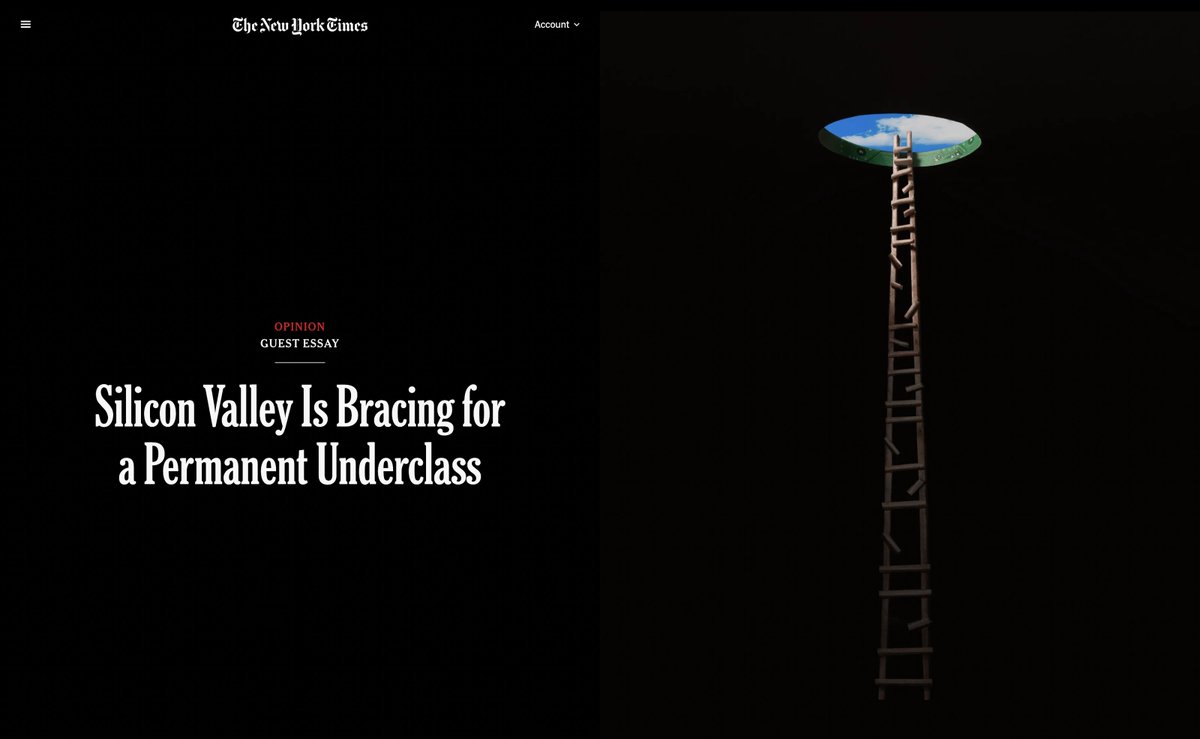
Most people I know in AI think the median person is screwed, and they have no idea what to do about it. I spent the last 3 months talking to dozens of researchers, economists, and policy experts about AI's impact on work; including reps from every frontier lab and several Congressional offices. Unfortunately, I was not reassured. The AI industry is raising the alarm, but can't change course. These companies' core business model relies on the disruption they are warning about: their faith in full automation only makes them go faster. Policymakers are waking up, but still paralyzed by data and debates. Econ wonks disagree on plenty, but even the limited scenario looks like a "painful transition" that will disempower millions of workers. But an "underclass" is not inevitable, but rather a societal choice — and one we can and should stop. Instead of waiting for impact, we should start planning now to support workers through AI disruption. Whether policymakers can assuage concerns about economic security may determine if we get to reap AI's gains at all. New from me for @NYTOpinion. I put a ton into researching what I think may be the biggest topic of the year, so hope you read it (gift link here!) nytimes.com/2026/04/30/opi…
jasmine sun tweet media
English
191
327
2.1K
532.7K
Alexandra et Xavier retweetledi
Michael Pettis
Michael Pettis@michaelxpettis·
My latest piece for Carnegie, in which I argue that the story of Chinese systematic overinvestment is fully consistent with the seemingly contradictory story of its technological achievements and great infrastructure. carnegieendowment.org/china-financia…
English
9
27
105
14.6K
Alexandra et Xavier retweetledi
Le Monde diplomatique 🖋
La presse officielle chinoise célèbre Yiwu, « supermarché du monde », érigée en exemple de développement. M. Xi Jinping invite chaque région à suivre la voie : partir de peu, exporter beaucoup. Fil en 6 points. ↓
Le Monde diplomatique 🖋 tweet media
Français
1
8
21
4K
Alexandra et Xavier retweetledi
François Geerolf
François Geerolf@FrancoisGeerolf·
Fake news et rationalité, très intéressant⤵️ «La rationalité authentique ne s'atteint pas seulement par une motivation pour la rationalité. Elle exige des principes de raisonnement et de brider les prétentions de l'ego, de se fier moins à ses certitudes, et davantage aux autres.»
Antoine Marie PhD@A_Marie_sci

Vous pensez qu'être « pro-rationalité » protège contre le partage de fake news politiques ? Nos données disent le contraire.

Français
2
9
23
3.6K
Alexandra et Xavier retweetledi
Hal Singer
Hal Singer@HalSinger·
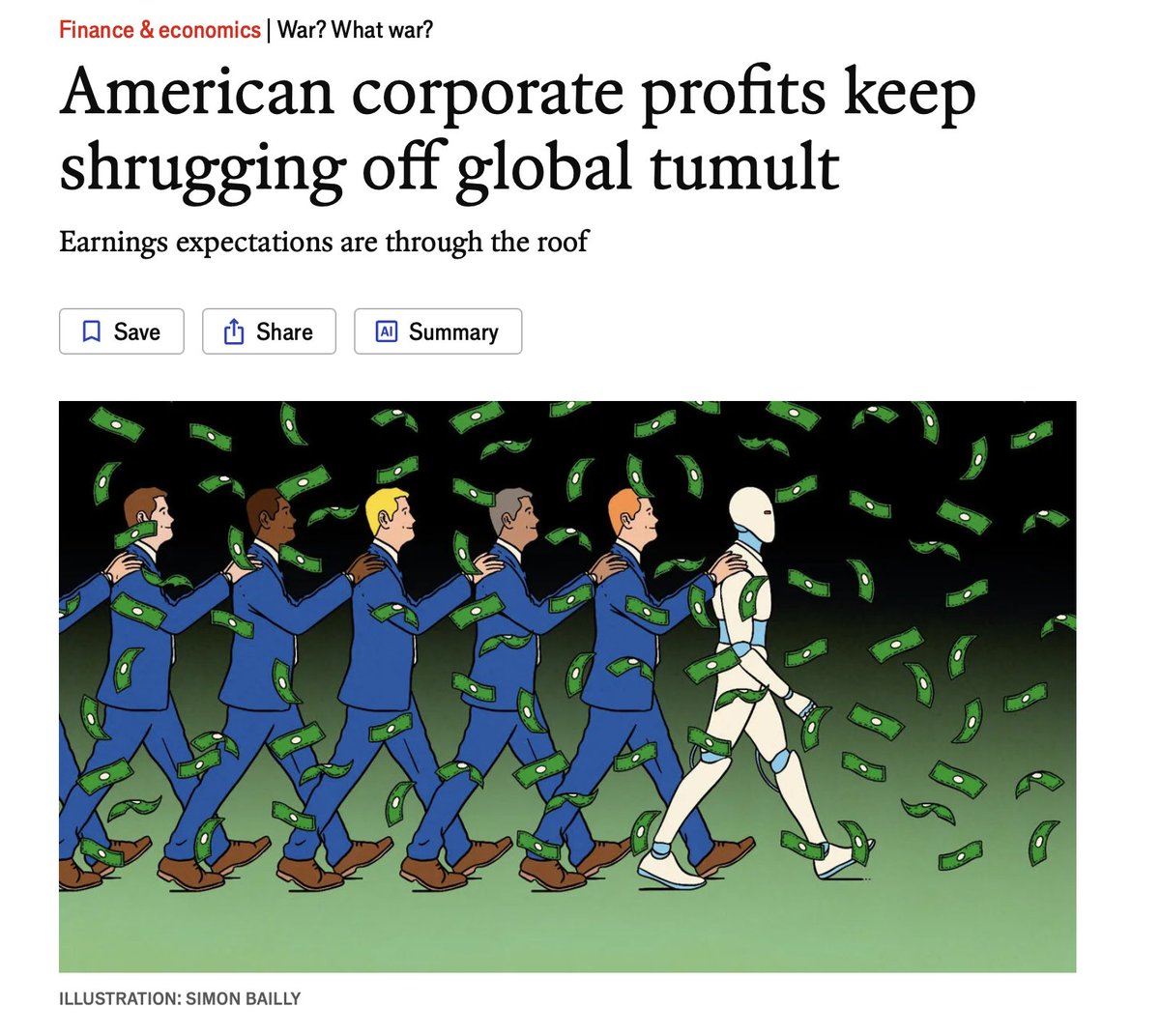
The mainstream business press can't understand how profits increase during supply shocks. They think profits are rising DESPITE the crisis--a real chin-scratching mystery. But the proper framing is that profits increase BECAUSE of the crisis. In the fog of war (or covid or any supply shock), companies tend to raise their prices by more than their costs increase, leading to higher margins. The only alternative explanation for rising profits is that margins remain fixed (i.e., companies are passing on 100% of any cost increase) but output increases. Yet there is no reason to believe (or any evidence in support of the proposition) that demand shifts out in a crisis. Heightened profits reflects opportunistic behavior (i.e., price-gouging), pure and simple.
Hal Singer tweet media
English
13
130
482
20.8K
Alexandra et Xavier retweetledi
Michael Pettis
Michael Pettis@michaelxpettis·
1/5 It's true that China was able to withstand the effects of the Iran war better than many other countries because it had stockpiled commodities. But it is a little silly, perhaps even a little orientalist, to say that it did so because of strategic thinking. bloomberg.com/news/features/…
English
37
58
340
107.1K
Alexandra et Xavier retweetledi
Michael Pettis
Michael Pettis@michaelxpettis·
Tordior is right. In the 1980s, the US and Europe encouraged Japanese investment because they thought it would bring the "Japanese" management style that explained Japan's manufacturing success. But Japanese manufacturers ended up being no more successful than local ones once they were no longer protected by unlimited cheap financing, an undervalued currency, compliant labor unions, and government overspending on logistics and transportation infrastructure. In fact by the late 1990s, when because of terrible debt burdens Japanese producers could no longer count on the factors that were the real secret of their international competitiveness, reformers in Europe and the US were no longer demanding that their businesses become more "Japanese" in order to succeed. It was now Japanese reformers who insisted that their businesses become more "American". The point is that Chinese manufacturing is not more competitive than European manufacturing because of some special Chinese sauce that can be sprinkled abroad as easily as it is sprinkled at home. It is more competitive because it is based in an economy in which its competitiveness is driven by intervention in the country's external accounts. That is not to say that there aren't individual sectors in which Chinese manufacturers are genuinely more efficient that Europeans, but these sectors only emerged after many years of substantial protection and support from the Chinese government. The point is that if foreign manufacturers are aggressively outcompeting EU manufacturers because of substantial direct and indirect subsidies, the EU has three options. First, do nothing and see its share of global manufacturing wither. Second, match the subsidies and risk seeing the EU's debt burden rise as quickly as China's. Or three, intervene in the external account by enough to neutralize the effect of foreign ontervention. All of this would probably be more obvious if the EU's biggest economy, Germany, hadn't once enjoyed (and still enjoys to some extent) many of the very advantages that now threaten it. Manufacturers in extremely competitive, surplus economies think that because they are more competitive globally, they must also be more efficient. In fact, as Japan's example overwhelmingly illustrates, the direct and indirect subsidies that made their manufacturers so globally competitive also undermined their efficiency to such an extent that, once they were eliminated, many of them, unable to compete, quickly went bankrupt.
Sander Tordoir@SanderTordoir

There is too much free lunching in the European debate on Chinese FDI. Those who oppose tougher trade measures tend to underline the need for more Chinese investment, but that’s a cop-out. The EU wont get the investment without strategic tariffs.

English
44
248
1.1K
105.3K
Alexandra et Xavier retweetledi
Michael Pettis
Michael Pettis@michaelxpettis·
Adam Tooze has a very good new Substack article on global imbalances. I discuss below where I (mostly) agree and disagree (more in emphasis than in substance), focusing especially on how imbalances are transmitted from country to country. @adam_tooze michaelpettis858496.substack.com/p/how-are-glob…
English
11
39
229
31.1K
Alexandra et Xavier retweetledi
Eduardo Garzón
Eduardo Garzón@edugaresp·
Ese indicador tiene un problema grave: no sirve para comparar países. Porque se calcula sobre un trabajador con salario medio, que es una variable muy afectada por la desigualdad. A mayor desigualdad, mayor salario medio, y por tanto mayor tributación de ese salario medio. No se están comparando salarios equivalentes por país.
Asociación de Inspectores de Hacienda del Estado@Inspectores_IHE

⁉️La cuña fiscal española no ha dejado de crecer desde 2000 (del 38,6% al 41,4%). 🔹La OCDE señala como factor clave la no deflactación del IRPF, que eleva la carga fiscal incluso cuando los salarios suben por debajo de la inflación. 🔹Suben impuestos más que salarios y cae el poder adquisitivo. 🔹🇪🇸 es el 10º país con mayor presión sobre el trabajo.

Español
14
11
55
6.5K
Alexandra et Xavier retweetledi
Brad Setser
Brad Setser@Brad_Setser·
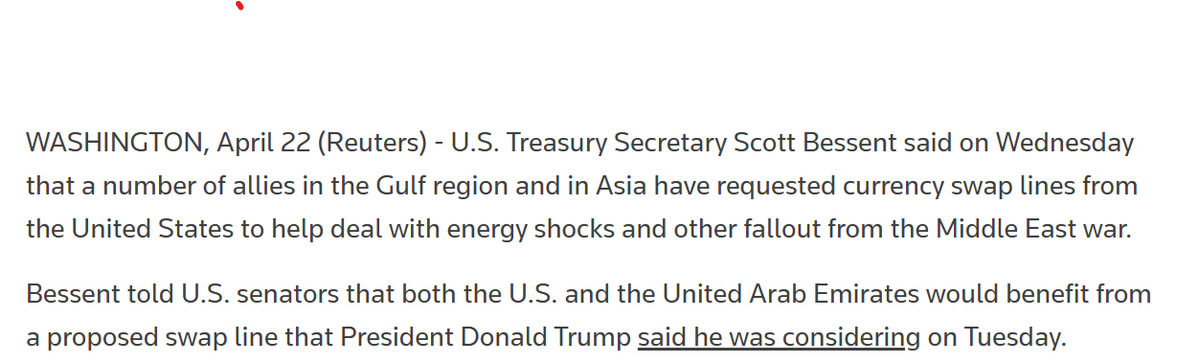
Amazing how fast the US has swung from hyping the "trillions" it was going to get from the oil sheiks and Asia ... to talking about providing those same countries with billions in bailouts (swaps ... ) 1/
Brad Setser tweet media
English
34
299
1.1K
149.7K
Alexandra et Xavier retweetledi
Michael McNair
Michael McNair@michaeljmcnair·
Maurice Obstfeld recently argued that the dollar's reserve role isn't a primary driver of US current account deficits. In my report I explain why you SHOULD blame US deficits on the role of the dollar, & why arguments to the contrary are deeply confused. @mcnai002/a-surplus-of-confusion-about-americas-deficits-cf375a68ff29" target="_blank" rel="nofollow noopener">medium.com/@mcnai002/a-su…
English
2
6
38
8.7K
Alexandra et Xavier retweetledi
Brad Setser
Brad Setser@Brad_Setser·
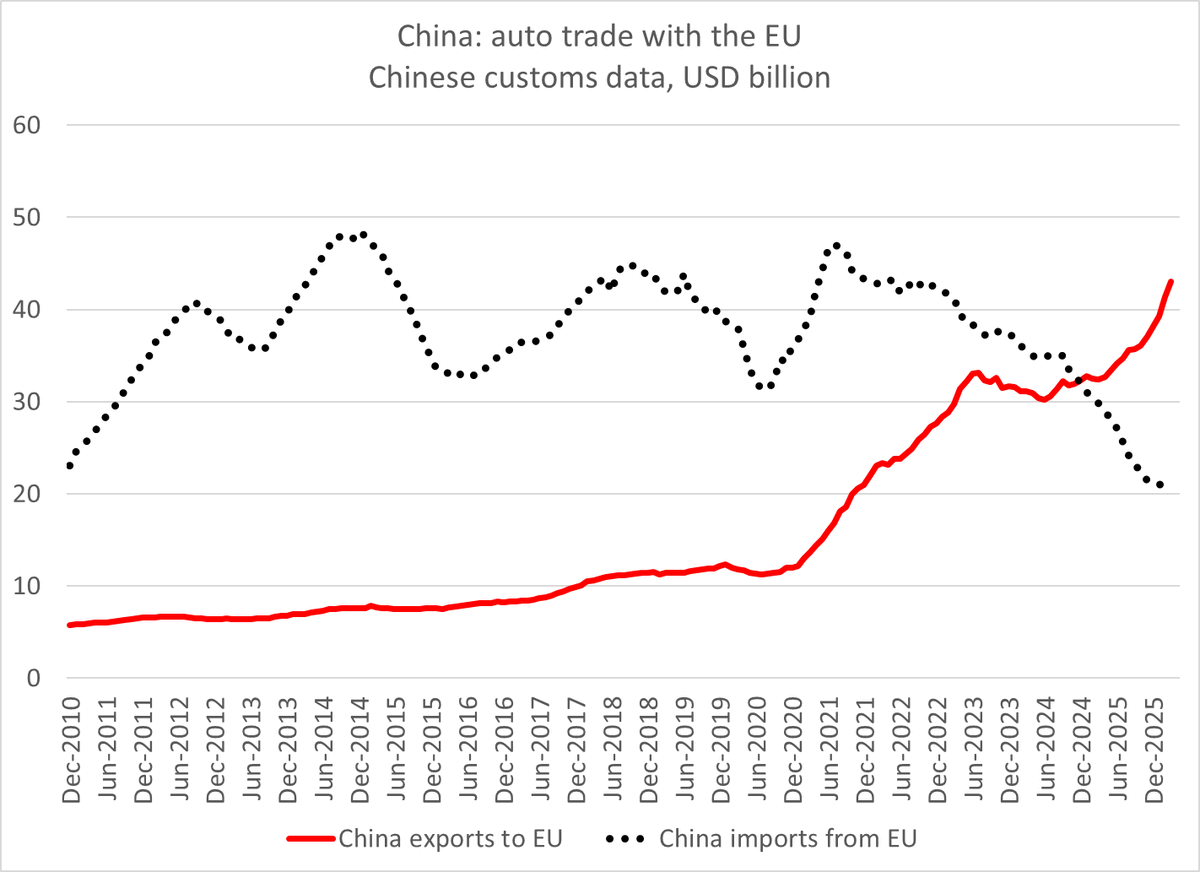
The second China shock isn't going to go away on its own, or with half measures -- China's auto exports to Europe, for example, have clearly reaccelerated (even with the narrowly targeted CVDs against battery electric imports) 1/
Brad Setser tweet media
English
15
33
185
45.5K
Alexandra et Xavier retweetledi
Steve Hall
Steve Hall@ProfHall1955·
For those doubting my recent post claiming that Milei is trashing his country and punishing his poorer citizens to clear the way for capitalists, here he is addressing them directly in his own words.
Steve Hall tweet media
English
19
143
288
5.9K
Alexandra et Xavier retweetledi
Morten N. Støstad
Morten N. Støstad@MortenStostad·
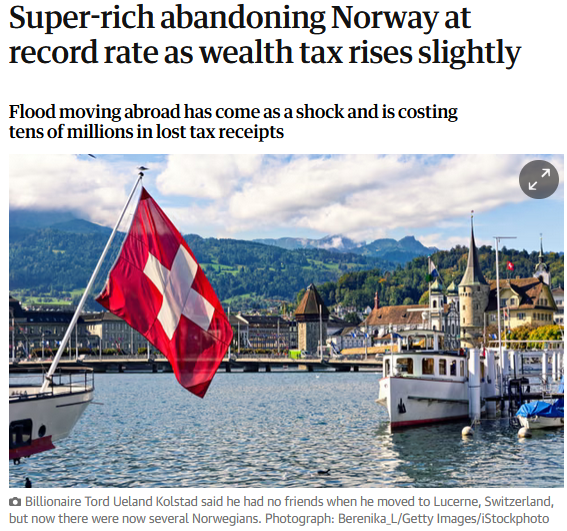
The Norwegian example is illustrative. In the last few years, our wealth tax received massive media attention, described by media outlets as leading to an "exodus" of the wealthy. But only ~1.7% of the ultra-wealthy actually left. Tax revenue boomed
Morten N. Støstad tweet mediaMorten N. Støstad tweet media
Laura Nahmias@nahmias

At CUNY event with @nycmayor, economist Gabriel Zucman, who pioneered research on global tax havens, says the idea that increased income taxes on the wealthy leads to outmigration is largely a "myth"

English
112
1.4K
5.1K
334.6K
Alexandra et Xavier retweetledi
François Geerolf
François Geerolf@FrancoisGeerolf·
Quand on lit vraiment le sondage, c’est presque l’inverse de ce qui est raconté👇 - 78% des Français veulent une baisse des taxes sur l’essence, - 62% un bouclier tarifaire. Les "aides pour tous les Français" après ces deux questions... ça couvre ceux qui n'ont pas de voiture ?😉
François Geerolf tweet media
Renaud Pila@renaudpila

Enfin. 52% de Français sondés par Elabe sont contre une aide de l’Etat à tous les Français suite à la hausse du prix de l’essence. Ils préfèrent des aides ciblées pr les professions les + impactées et les foyers modestes. L’opinion semble avoir intégré le surendettement français

Français
2
19
47
5.5K
Alexandra et Xavier retweetledi
Michael Pettis
Michael Pettis@michaelxpettis·
1/9 The Economist discusses the determination of South Korea's president, Lee Jae Myung, to expand RoK industrial policy aggressively. "His plan involves diverting capital from the housing market to... economist.com/finance-and-ec…
English
6
29
154
21.3K
Alexandra et Xavier retweetledi
ÉLUCID
ÉLUCID@elucid·
🗞 Inégalités mondiales : et si la misère était d'abord un choix politique ? Les 10 % les plus riches possèdent les trois quarts de toute la richesse mondiale. La moitié la plus pauvre presque rien👇️ elucid.media/analyse-graphi…
Français
10
183
255
16.7K