Bracket

6.5K posts

Bracket banner
Bracket

Bracket

@bracket_fi

Bracket's platform infrastructure provides key services to securely scale both on and off-chain yield vaults. Backed By Binance Labs.

Katılım Mayıs 2022
922 Takip Edilen51.8K Takipçiler
Bracket
Bracket@bracket_fi·
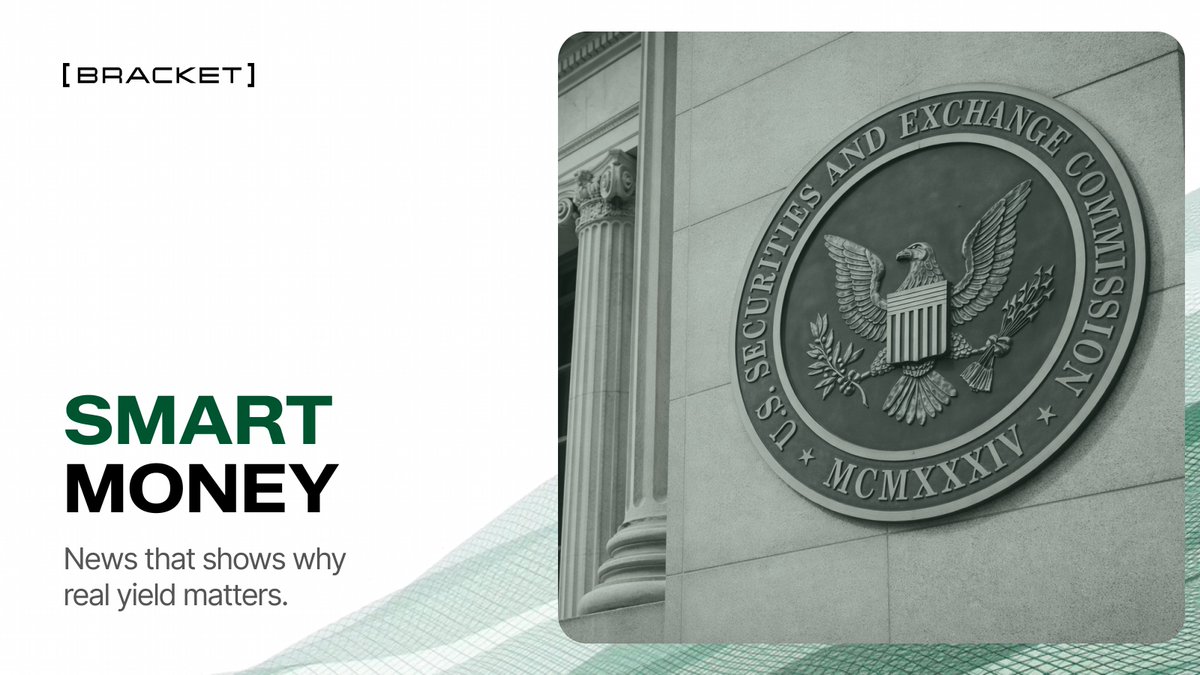
The SEC was expected to release its innovation exemption for tokenized stocks on May 18. It didn't. Exchanges pushed back. The question they raised wasn't about technology or compliance, it was more fundamental than that: When you hold a tokenized stock, what do you actually own? > @krakenfx's xStocks: 100 fully backed 1:1 tokenized US equities, $25B in transaction volume since June 2025. > The SEC's January guidance split tokenized equities into two structural categories. > DTCC planning limited production trades of tokenized securities in July 2026, commercial rollout by October. > The exemption, when it comes, will support only issuer-backed tokens, synthetic trackers excluded. . . The distinction matters more than the delay. Custodial tokenized securities sit on top of actual shares held by a regulated intermediary, dividends, voting rights, and bankruptcy protections intact. Synthetic tokenized securities track equity prices through derivatives, with no ownership or rights attached to the underlying asset. Two products that look identical on a trading interface carry completely different legal and economic profiles. An asset manager building yield strategies on tokenized equities, or an allocator using them as collateral, needs to know which bucket they're working with before anything else. The SEC's delay forced the market to answer a question it had been avoiding. Infrastructure built on price exposure and infrastructure built on ownership are not interchangeable, and in a market scaling toward trillions, that distinction is the whole ballgame. Smart money has been positioned around issuer-backed structures since the January guidance. The exemption delay is the regulatory system making sure everyone else catches up. Source in 🧵
Bracket tweet media
English
1
1
1
429
Bracket
Bracket@bracket_fi·
This is the final tweet in this thread. Be wary of accounts trying to impersonate Bracket. The official X/Twitter is @bracket_fi. [Stay Safe] 8/8 🏁
Bracket tweet media
English
0
0
0
89
Bracket
Bracket@bracket_fi·
Bracket is available to users outside the US and non-sanctioned jurisdictions. For full details, see our Terms of Service: bracket.fi/terms-of-servi… 7/8👇
English
1
0
0
100
Bracket
Bracket@bracket_fi·
[WEEKLY RECAP] In case you missed it . . . A recap of the most important events of the week! 🧵
Bracket tweet media
English
1
0
4
398
Bracket
Bracket@bracket_fi·
> CLARITY Act clears Senate Banking Committee: coindesk.com/policy/2026/05… > Grove: $1B stablecoin liquidity for BUIDL: coindesk.com/business/2026/… > FCA + Bank of England: tokenization roadmap: bankofengland.co.uk/news/2026/may/… > SEC: tokenized stocks without issuer consent: x.com/virtualbacon/s… > Saudi Arabia tokenizes $12.5B real estate: coinmarketcap.com/academy/articl…
Bracket@bracket_fi

On May 14, the Senate Banking Committee voted 15-9 to advance the CLARITY Act, the most consequential Senate action on crypto legislation in history. Four months of gridlock. One vote. The bill now heads to the full Senate floor. > 309-page draft released May 12. Markup vote May 14. > 13 Republicans + 2 Democrats crossed party lines to advance it. > Polymarket odds repriced from 46% to 67% in 24 hours, the largest single-day move on the contract since January. > White House target: signed into law by July 4. . . What actually moved markets was buried on page 187. After four months of negotiations between the banking industry and crypto firms, the final text codifies a distinction that will reshape how yield is generated on-chain. Passive returns on stablecoins are banned. Activity-based rewards are protected. Liquidity provision, lending markets, staking, and on-chain participation are all still permitted. Holding USDC and earning 4% APY for doing nothing is no longer an option. The implications run beyond stablecoin issuers. Non-custodial protocols fall entirely outside the ban's scope, as their yield comes from genuine borrowing demand rather than from an issuer subsidizing returns. Centralized yield aggregators and passive custody products face the sharpest regulatory pressure. The law is being written around a structural shift that has been building in the market for over a year, and the direction it points has been clear long before this week's vote. Enforceable rules won't exist until 2027 at the earliest, with SEC and CFTC rulemaking still ahead. But the direction has been set for months. Smart money has been positioned around Section 404 since the January draft. The committee vote is the regulatory system catching up. Source in 🧵

English
1
0
0
456
Bracket
Bracket@bracket_fi·
The most important updates on tokenization 👇 > CLARITY Act clears Senate Banking Committee > Grove: $1B stablecoin liquidity for BUIDL > FCA + Bank of England: tokenization roadmap > SEC: tokenized stocks without issuer consent > Saudi Arabia tokenizes $12.5B Learn more 🧵
Bracket tweet media
English
1
0
2
578
Bracket
Bracket@bracket_fi·
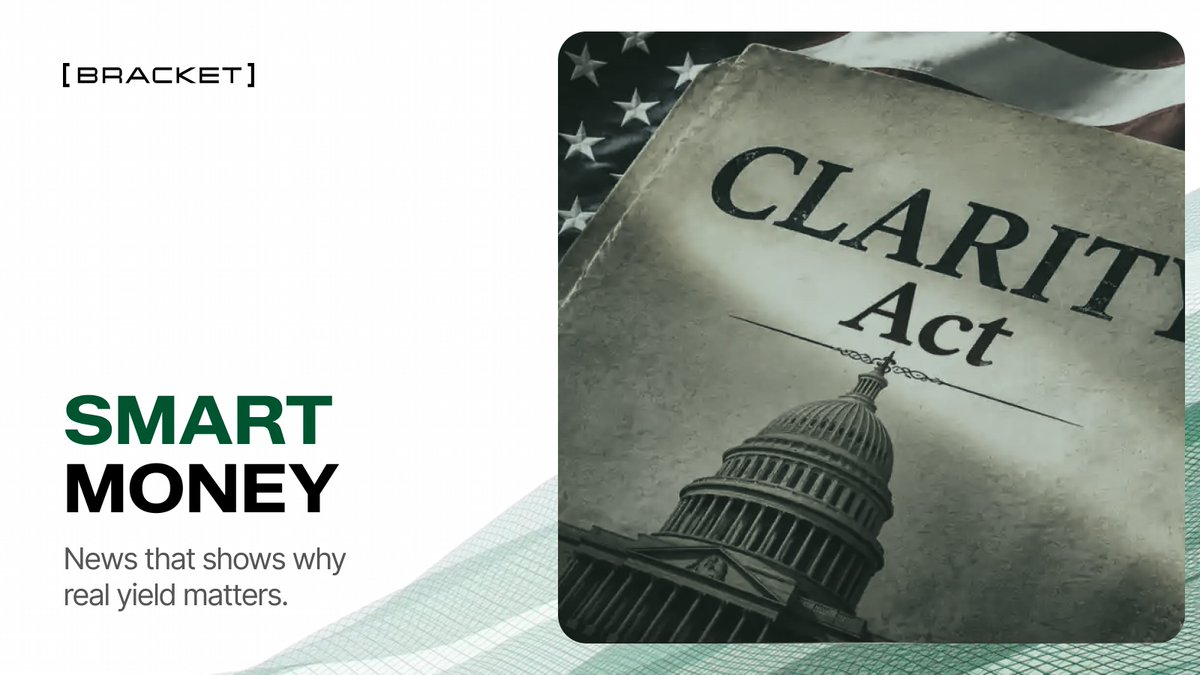
On May 14, the Senate Banking Committee voted 15-9 to advance the CLARITY Act, the most consequential Senate action on crypto legislation in history. Four months of gridlock. One vote. The bill now heads to the full Senate floor. > 309-page draft released May 12. Markup vote May 14. > 13 Republicans + 2 Democrats crossed party lines to advance it. > Polymarket odds repriced from 46% to 67% in 24 hours, the largest single-day move on the contract since January. > White House target: signed into law by July 4. . . What actually moved markets was buried on page 187. After four months of negotiations between the banking industry and crypto firms, the final text codifies a distinction that will reshape how yield is generated on-chain. Passive returns on stablecoins are banned. Activity-based rewards are protected. Liquidity provision, lending markets, staking, and on-chain participation are all still permitted. Holding USDC and earning 4% APY for doing nothing is no longer an option. The implications run beyond stablecoin issuers. Non-custodial protocols fall entirely outside the ban's scope, as their yield comes from genuine borrowing demand rather than from an issuer subsidizing returns. Centralized yield aggregators and passive custody products face the sharpest regulatory pressure. The law is being written around a structural shift that has been building in the market for over a year, and the direction it points has been clear long before this week's vote. Enforceable rules won't exist until 2027 at the earliest, with SEC and CFTC rulemaking still ahead. But the direction has been set for months. Smart money has been positioned around Section 404 since the January draft. The committee vote is the regulatory system catching up. Source in 🧵
Bracket tweet media
English
2
0
1
1.1K
Bracket
Bracket@bracket_fi·
This is the final tweet in this thread. Be wary of accounts trying to impersonate Bracket. The official X/Twitter is @bracket_fi. [Stay Safe] 8/8 🏁
Bracket tweet media
English
0
0
0
104
Bracket
Bracket@bracket_fi·
Bracket is available to users outside the US and non-sanctioned jurisdictions. For full details, see our Terms of Service: bracket.fi/terms-of-servi… 7/8👇
English
1
0
0
115
Bracket
Bracket@bracket_fi·
[WEEKLY RECAP] In case you missed it . . . A recap of the most important events of the week! 🧵
Bracket tweet media
English
2
0
1
418