Fatmaaakhan 🤖ボッ@fatmaaakhan8
Most crypto campaigns follow a familiar playbook: maximize reach, incentivize volume, and let the timeline fill itself with repetition. It works for visibility, but it rarely creates value. The result is a constant stream of content that says a lot without actually helping anyone understand what matters.
The @CerbAgent creator campaign takes a noticeably different approach.Instead of rewarding how much you post, it leans into what you post. The structure pushes creators to focus on wallet security real risks and practical awareness rather than surface-level promotion. That shift might seem small, but in practice, it changes everything about the kind of content that gets produced.
Wallet security is still one of the most overlooked areas in Web3. Many users assume that using a hardware wallet or a well-known platform is enough. In reality, most losses don’t come from obvious hacks they come from subtle actions: signing the wrong transaction approving malicious contracts, or interacting with interfaces designed to mislead.
These are problems that tools alone can’t fully solve. They require awareness.That’s where CerbAgent’s campaign stands out. By rewarding quality and relevance, it encourages creators to explain these risks in a way that others can actually understand. Instead of empty hype, you start seeing breakdowns of real attack vectors, examples of how exploits happen and discussions around better security habits.
The incentive structure naturally filters out low-effort spam because it doesn’t perform well in a system designed to value insight.This also creates a different kind of relationship between the project and its audience.
When people learn something useful from content, they’re more likely to trust the source behind it. Over time, that builds credibility not just attention. And in a space where trust is fragile and often short-lived that matters more than raw impressions.
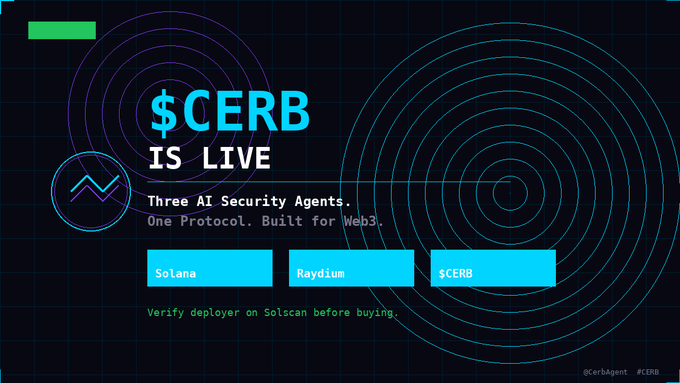
The campaign also highlights a broader point about growth in crypto. Attention can be bought but understanding has to be earned. Projects that align incentives with education are more likely to build communities that actually stick around, because users feel informed rather than marketed to. $CERB in this context, becomes more than just a token being promoted.
It’s tied to a narrative around protection and responsibility two things the ecosystem continues to struggle with. That alignment gives it a stronger foundation than campaigns that rely purely on visibility.If more projects adopted a similar model rewarding depth over noise the overall quality of information in the space would improve. Users would make better decisions, avoid more common pitfalls, and engage with products more confidently.The CerbAgent campaign doesn’t solve every problem in Web3, but it does point in a better direction. And right now, that kind of shift is exactly what the space needs.