Bytebytego

2.2K posts

Bytebytego

Bytebytego

@bytebytego

Weekly system design topics you can read in 10 mins.

Katılım Mart 2022
2 Takip Edilen126.7K Takipçiler
Sabitlenmiş Tweet
Bytebytego
Bytebytego@bytebytego·
The Big Archive for System Design - 2023 Edition (PDF) is available now. And it's completely FREE. The PDF contains 𝐚𝐥𝐥 𝐦𝐲 𝐭𝐞𝐜𝐡𝐧𝐢𝐜𝐚𝐥 𝐩𝐨𝐬𝐭𝐬 published in 2023. What’s included in the PDF? 🔹 Netflix's Tech Stack 🔹 Top 5 common ways to improve API performance 🔹 Linux boot Process Explained 🔹 CAP, BASE, SOLID, KISS, What do these acronyms mean? 🔹 Explaining JSON Web Token (JWT) to a 10 year old Kid 🔹 Explaining 8 Popular Network Protocols in 1 Diagram 🔹 Top 5 Software Architectural Patterns 🔹 OAuth 2.0 Flows 🔹 What does API gateway do? 🔹 Linux file system explained 🔹 18 Key Design Patterns Every Developer Should Know 🔹 Best ways to test system functionality 🔹 Top 6 Load Balancing Algorithms 🔹 Top 12 Tips for API Security 🔹 𝐀𝐧𝐝 100+ 𝐦𝐨𝐫𝐞 – Like, follow and subscribe to our newsletter to receive the PDF download link: bit.ly/3KCnWXq
Bytebytego tweet media
English
22
138
735
120.7K
Bytebytego retweetledi
Alex Xu
Alex Xu@alexxubyte·
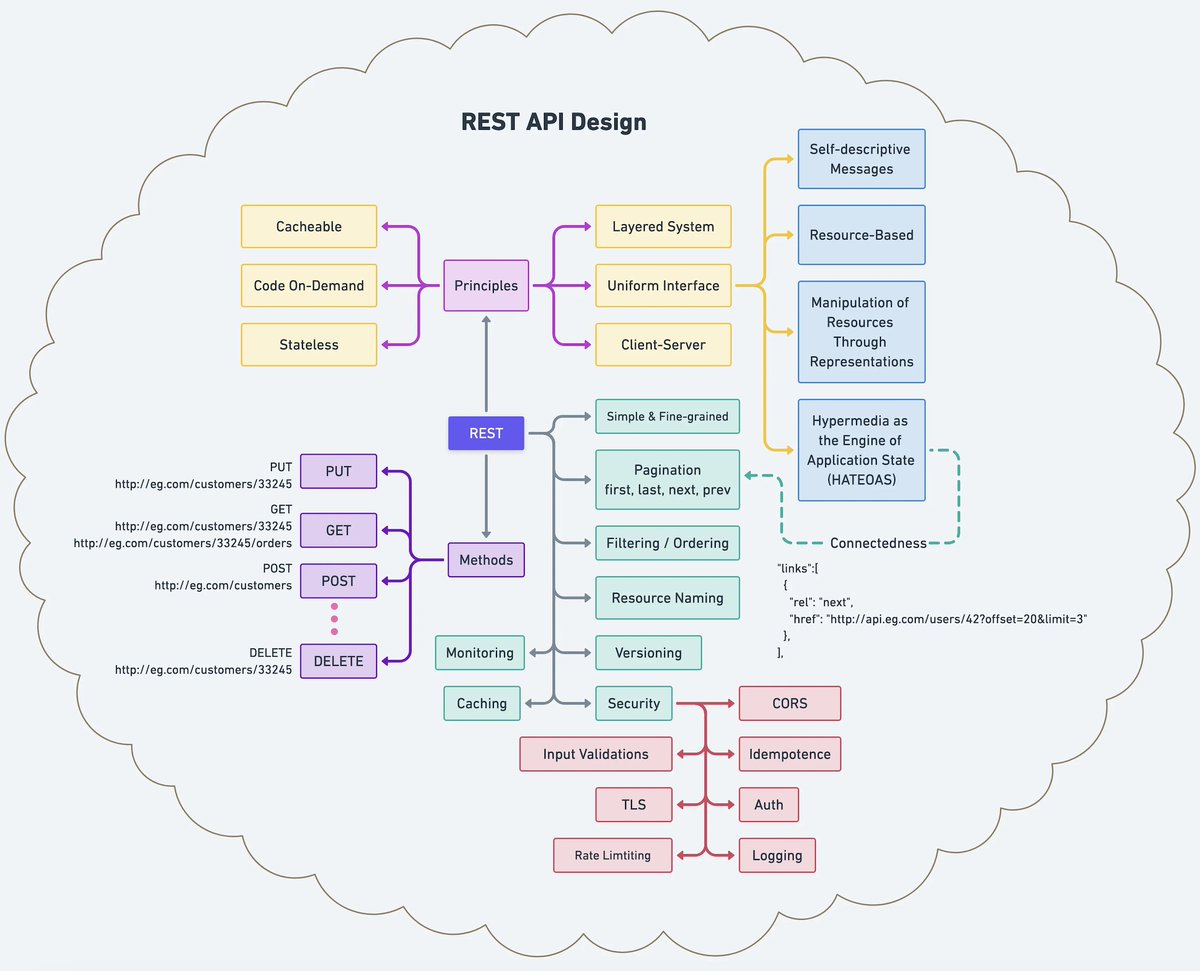
How does REST API work?
Alex Xu tweet media
English
5
68
455
20.3K
Bytebytego retweetledi
Alex Xu
Alex Xu@alexxubyte·
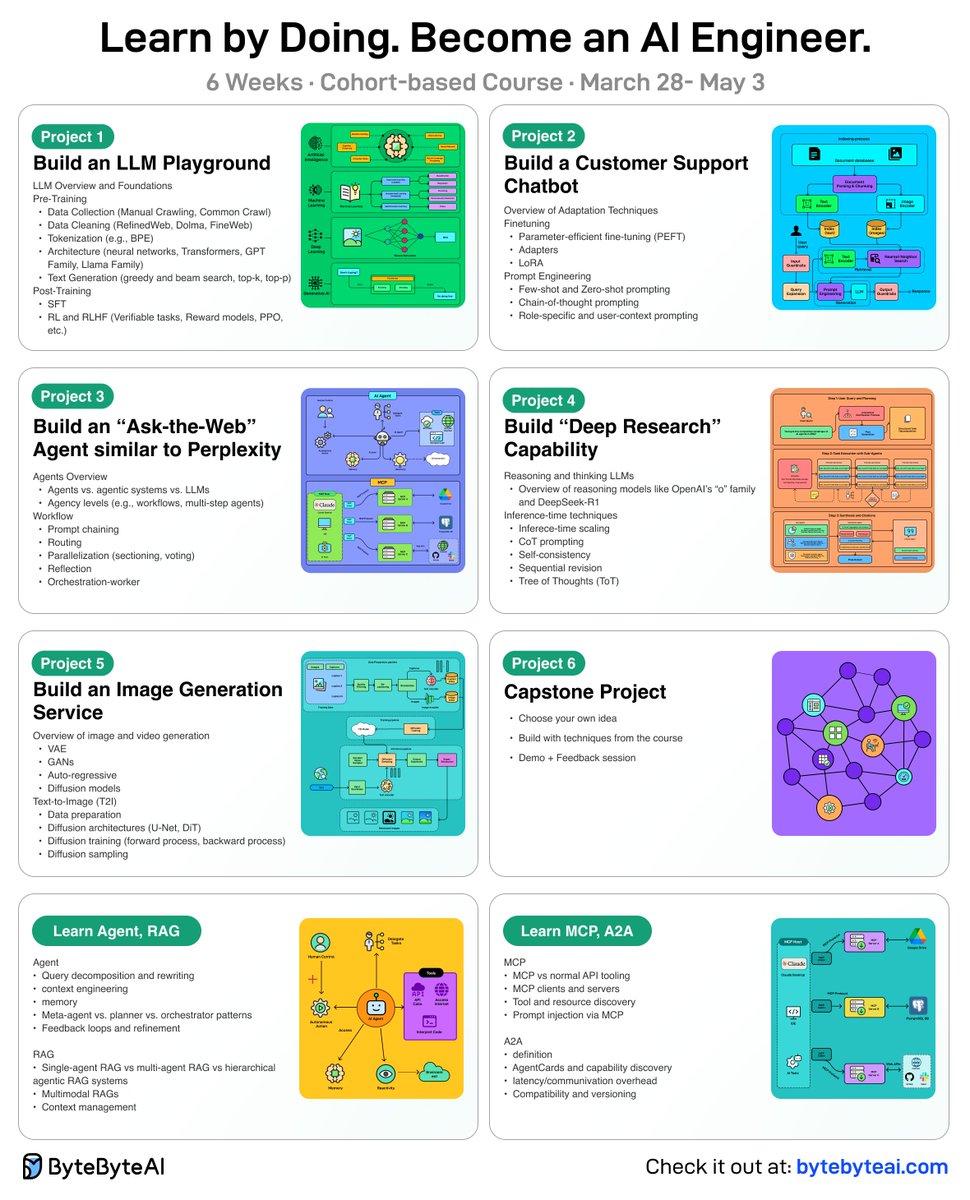
🚀 Last Day to Enroll: Become an AI Engineer | By building, not just watching | Cohort 5! After the amazing response to our first four cohorts, with over 1,000 people joining, we’ve made improvements to the course and are excited to announce the next round of Become an AI Engineer. This is not your typical AI course focused only on tools and frameworks. The mission is simple: help engineers build strong foundations and practical end to end skills to grow confidently into AI engineering roles. What makes this cohort stand out: - Learn by building: You will create real world AI applications instead of just watching videos - Clear and structured path: A thoughtfully designed curriculum that takes you from core concepts to advanced topics, step by step - Live feedback and mentorship: Get hands on guidance from instructors and learn alongside peers - Strong community: Learning is faster and more motivating when you are not doing it alone We care deeply about skill building, not passive learning or surface level theory. The goal is for every participant to leave with the confidence and ability to build real AI systems. Today is the last day to enroll before it starts. -- Check it out here: go.bytebytego.com/ai-tw-post
Alex Xu tweet media
English
4
69
370
27.6K
Bytebytego retweetledi
Alex Xu
Alex Xu@alexxubyte·
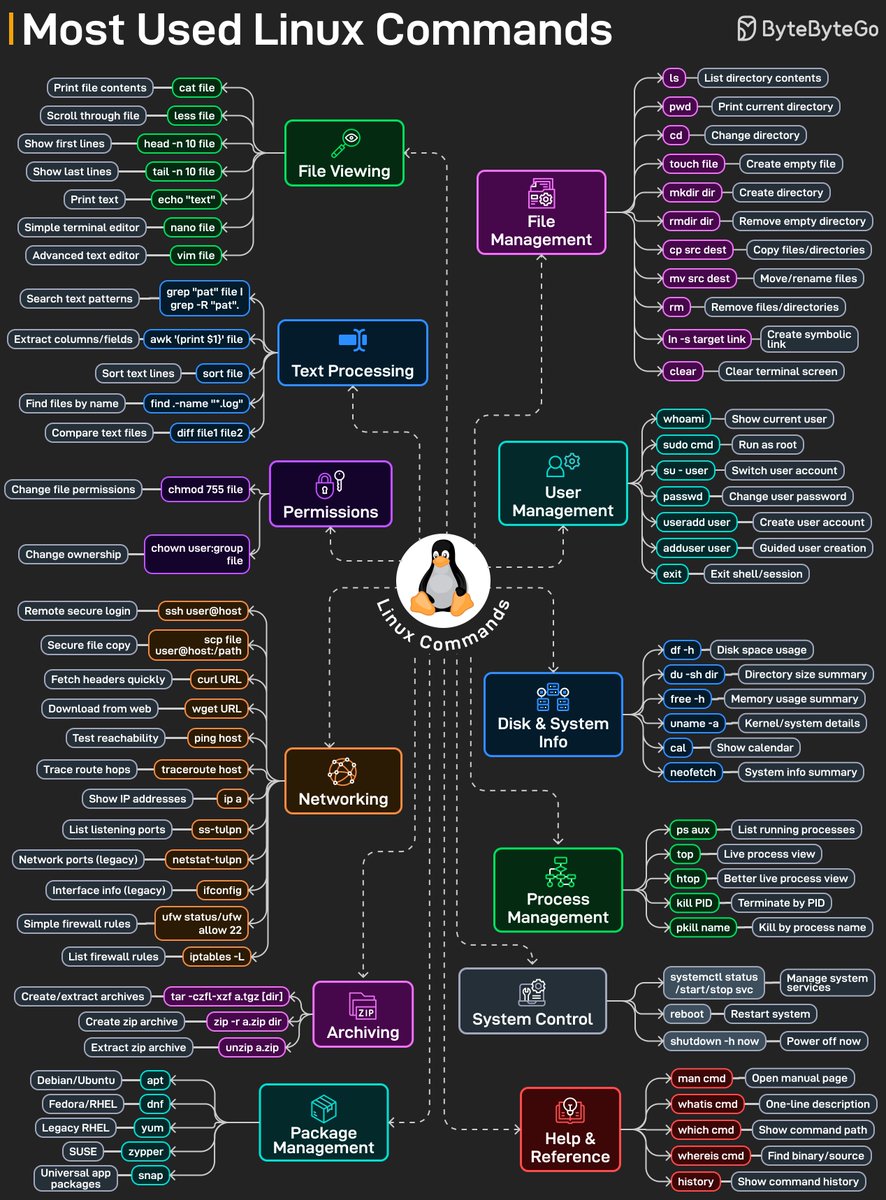
A Cheat Sheet on The Most-Used Linux Commands
Alex Xu tweet media
English
7
168
813
27.8K
Bytebytego retweetledi
Alex Xu
Alex Xu@alexxubyte·
REST vs gRPC
Alex Xu tweet media
Latviešu
4
147
914
39.1K
Bytebytego retweetledi
Alex Xu
Alex Xu@alexxubyte·
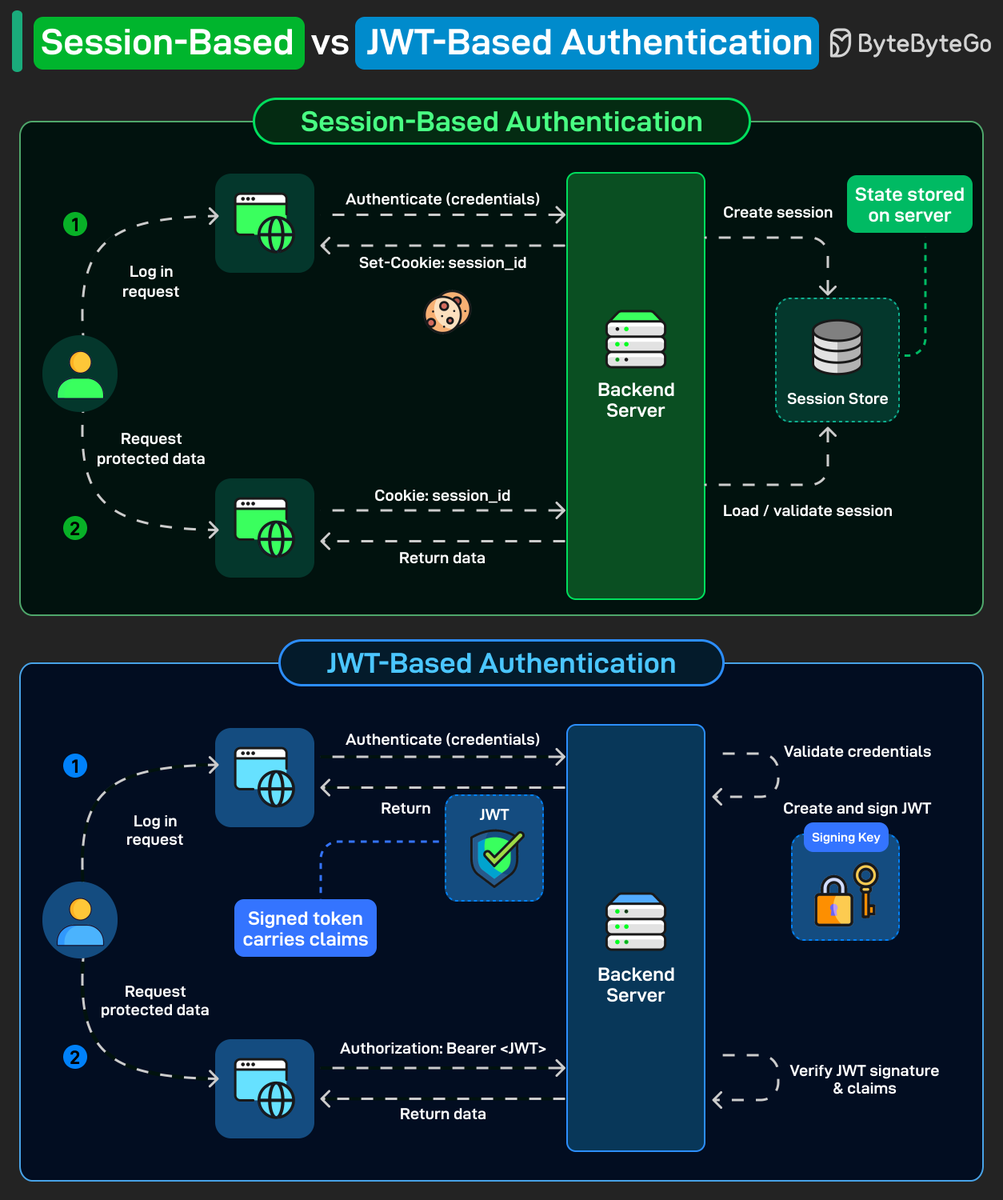
Session-Based vs JWT-Based Authentication
Alex Xu tweet media
English
8
81
427
16.9K
Bytebytego retweetledi
Alex Xu
Alex Xu@alexxubyte·
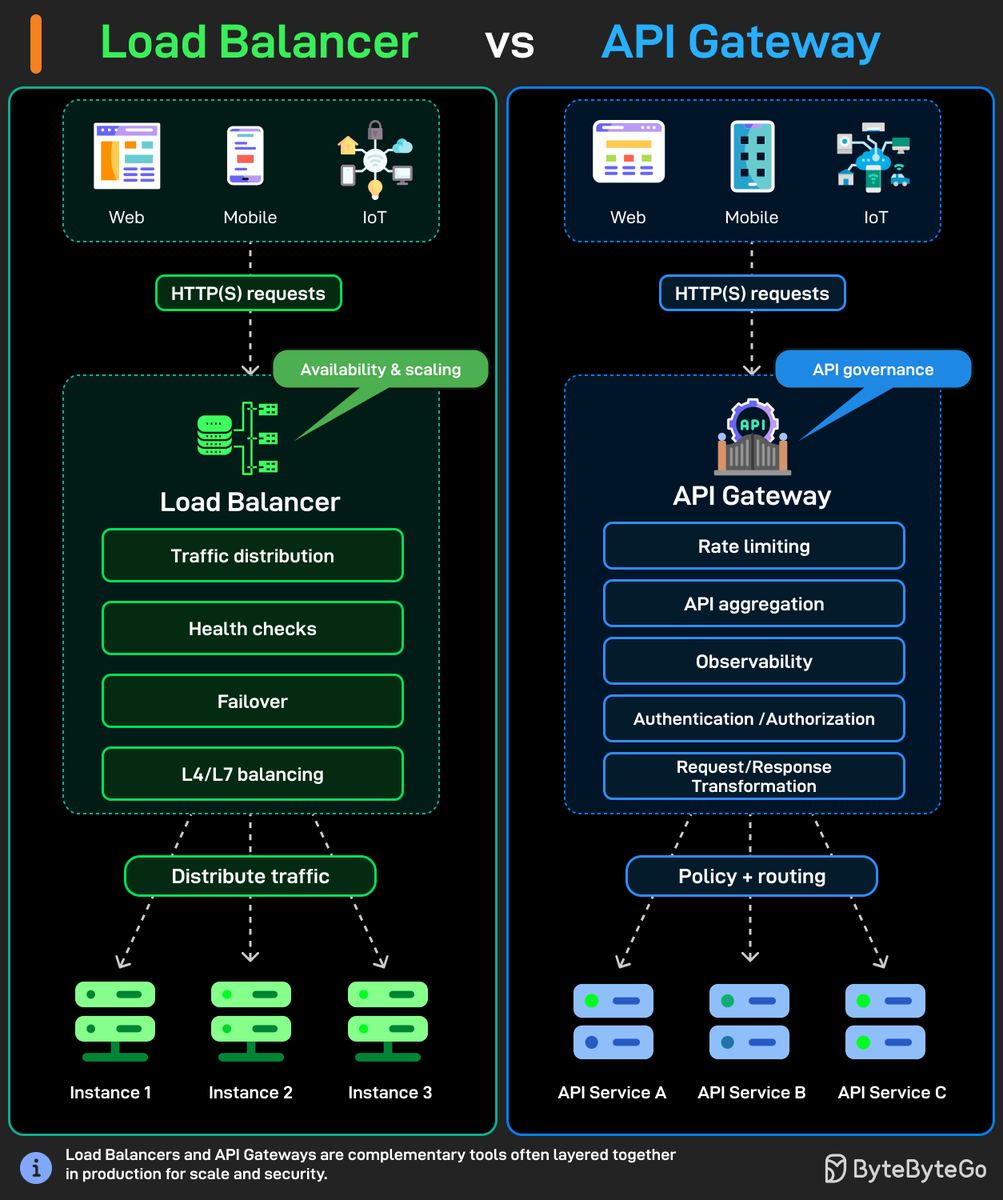
Load Balancer vs API Gateway
Alex Xu tweet media
English
9
163
1.1K
41.2K
Bytebytego retweetledi
Alex Xu
Alex Xu@alexxubyte·
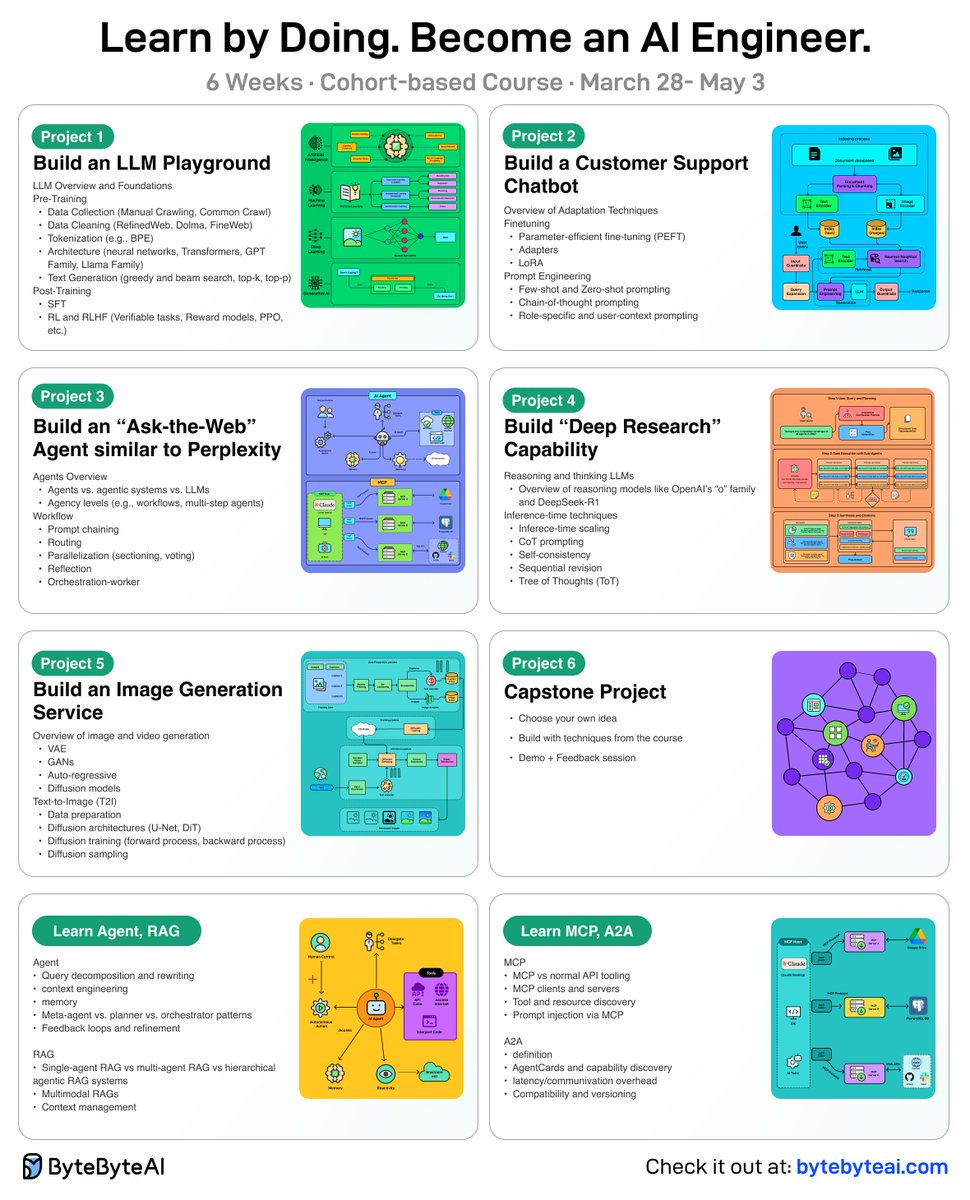
🚀 Last Week to Enroll: Become an AI Engineer | By building, not just watching | Cohort 5! This is a live, cohort-based course created in collaboration with best-selling author Ali Aminian and published by ByteByteGo. Here’s what makes this cohort special: - Learn by doing: Build real world AI applications, not just by watching videos. - Structured, systematic learning path: Follow a carefully designed curriculum that takes you step by step, from fundamentals to advanced topics. - Live feedback and mentorship: Get direct feedback from instructors and peers. - Community driven: Learning alone is hard. Learning with a community is easy! We are focused on skill building, not just theory or passive learning. Our goal is for every participant to walk away with a strong foundation for building AI systems. If you want to start learning AI from scratch, this is the perfect platform for you to begin. Check it out here: go.bytebytego.com/ai-tw-post
Alex Xu tweet media
English
9
127
709
74.9K
Bytebytego retweetledi
Alex Xu
Alex Xu@alexxubyte·
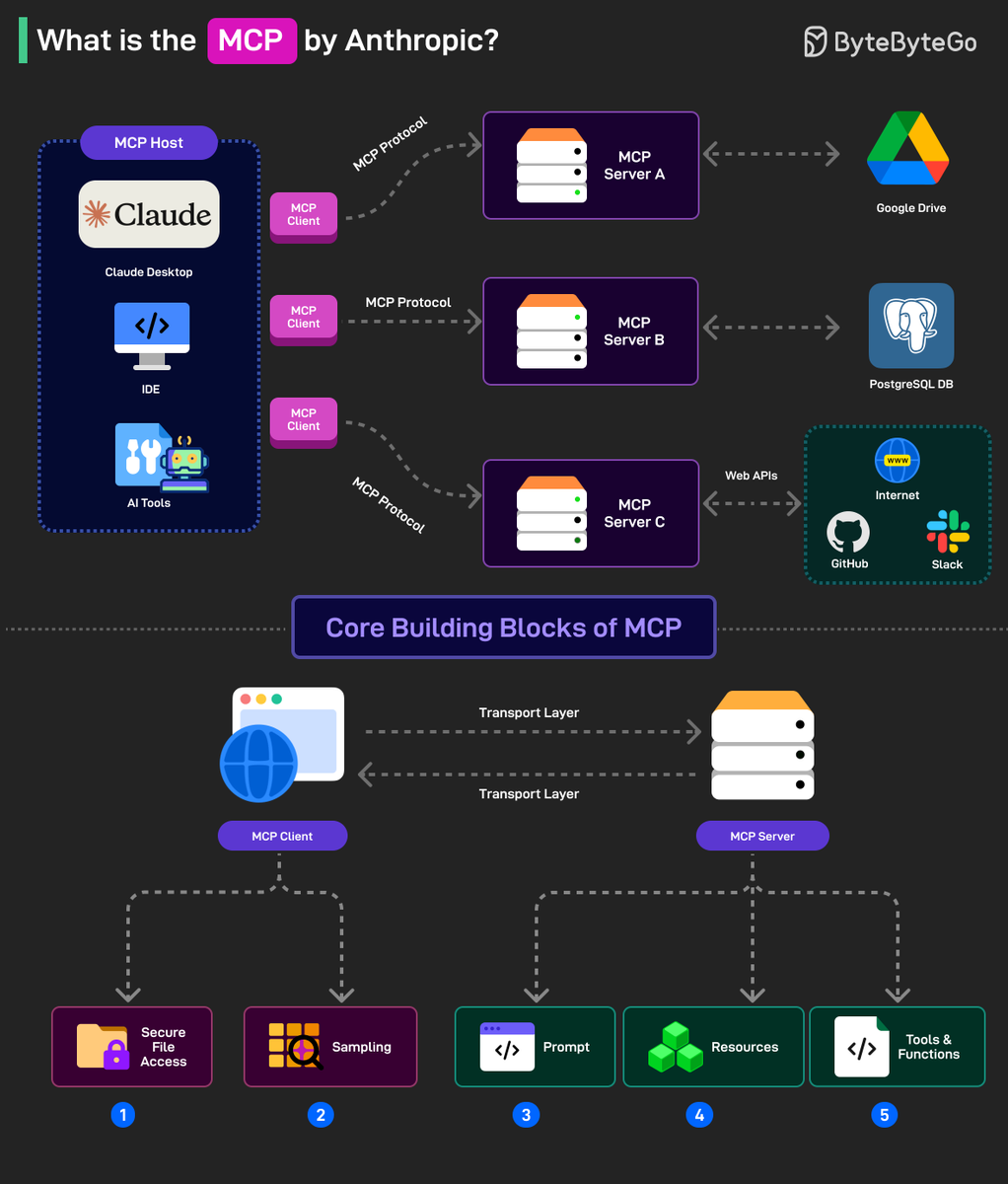
What is MCP?
Alex Xu tweet media
English
23
213
1.4K
56.2K
Bytebytego retweetledi
Alex Xu
Alex Xu@alexxubyte·
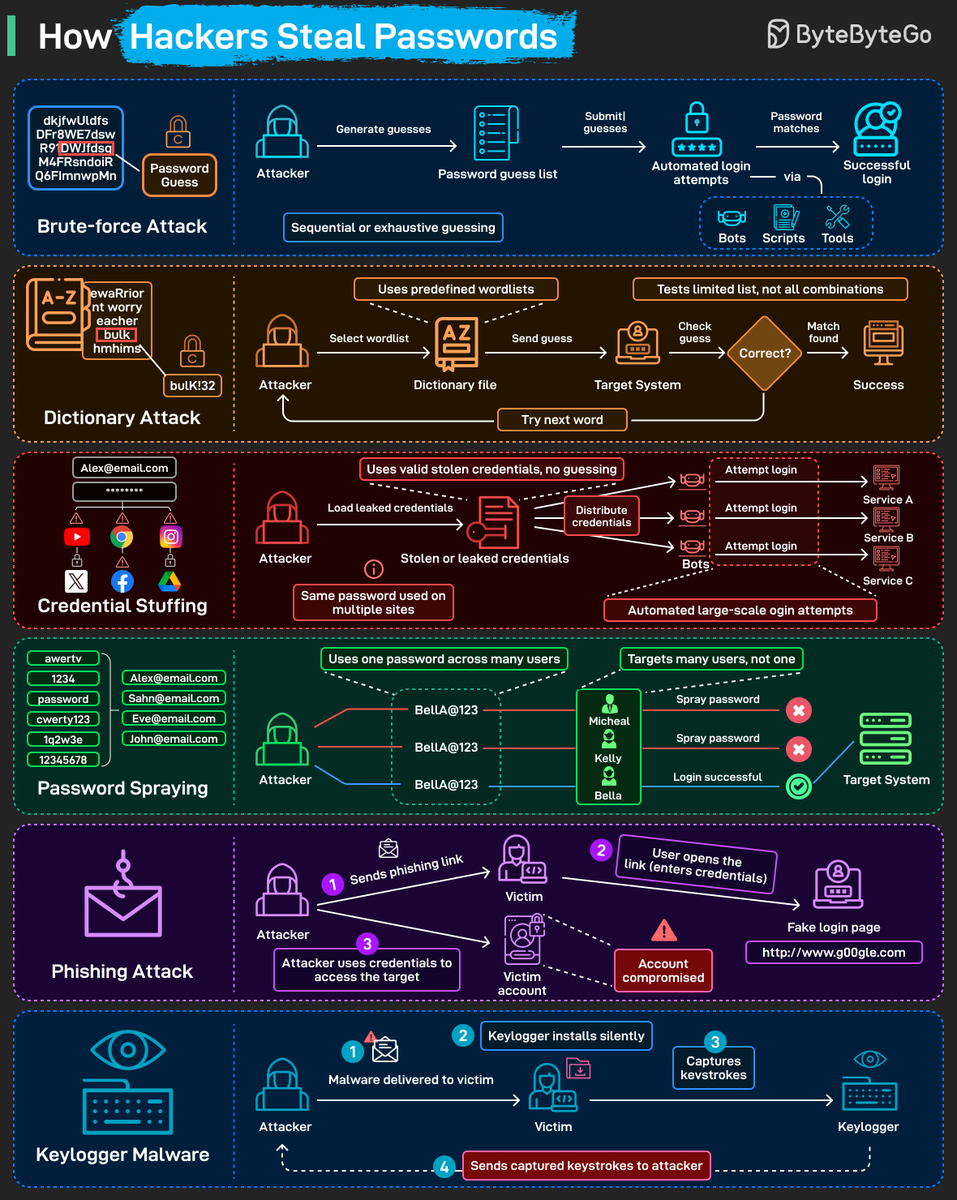
How hackers usually steal passwords
Alex Xu tweet media
English
6
211
944
41.1K
Bytebytego retweetledi
Alex Xu
Alex Xu@alexxubyte·
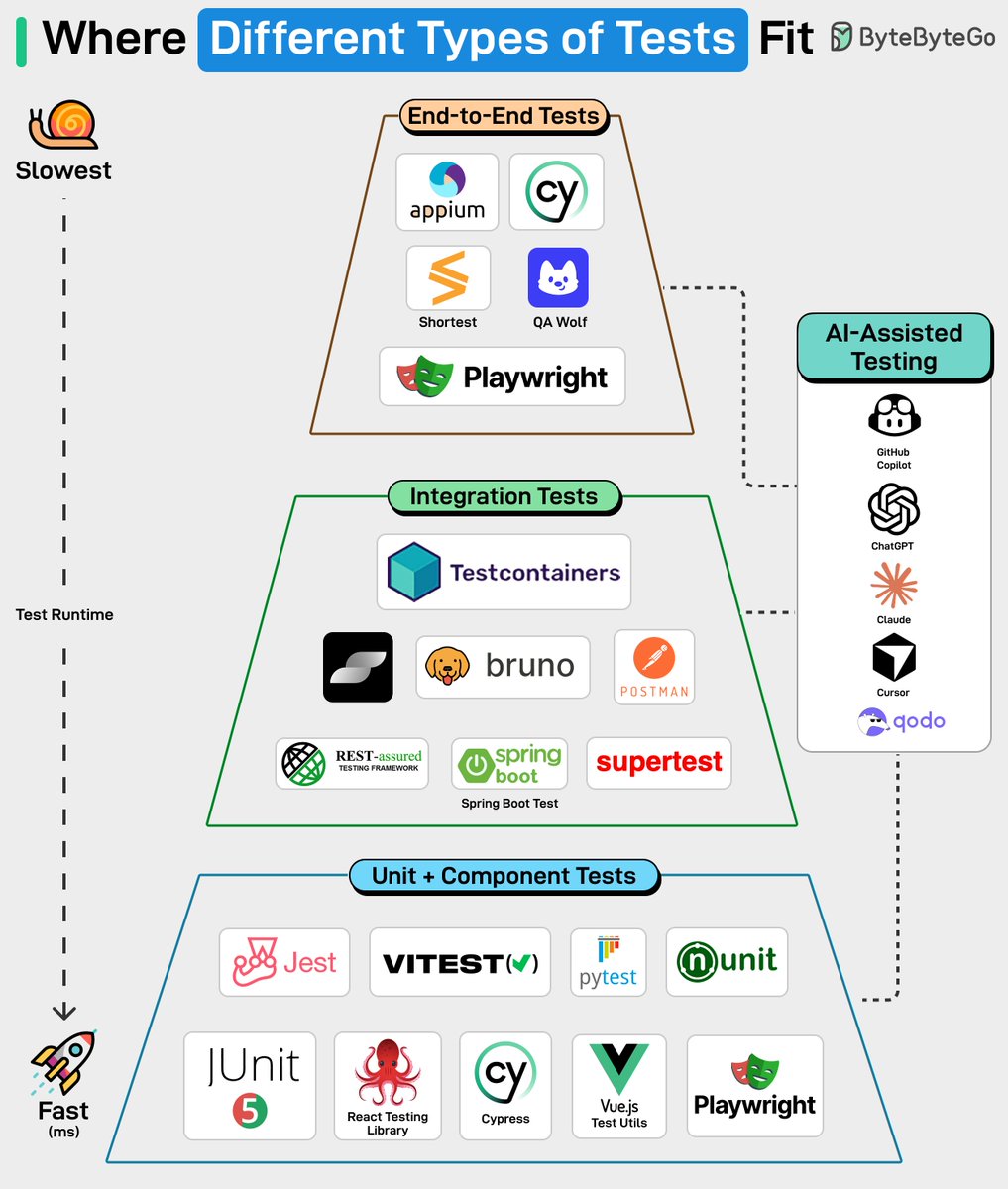
Writing code is easy now, but testing code is hard. Let’s take a look at where different types of tests fit. How do you test your code?
Alex Xu tweet media
English
10
148
786
39.3K
Bytebytego retweetledi
Alex Xu
Alex Xu@alexxubyte·
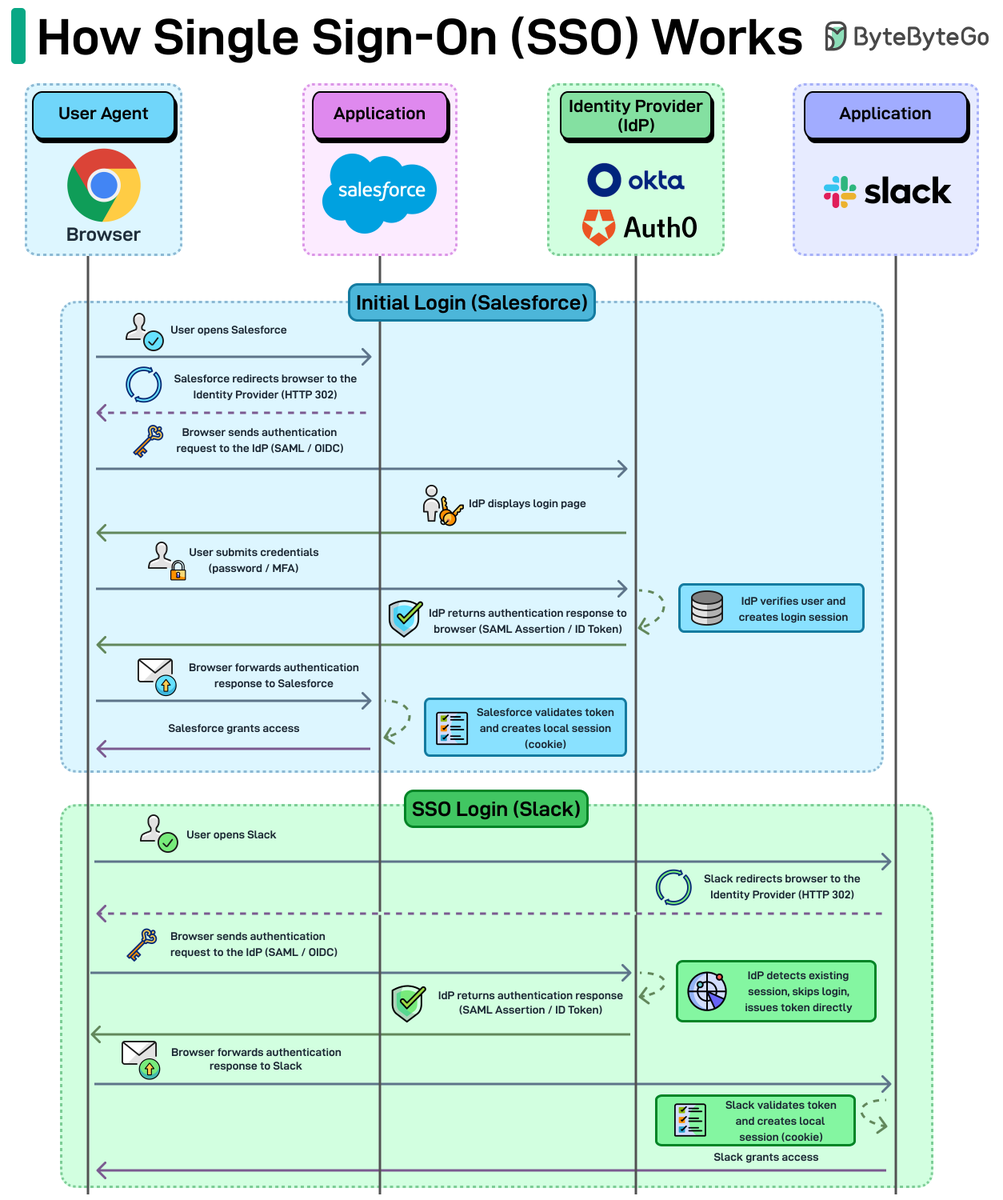
How Single Sign-On (SSO) Works
Alex Xu tweet media
English
3
78
434
18.3K
Bytebytego retweetledi
Alex Xu
Alex Xu@alexxubyte·
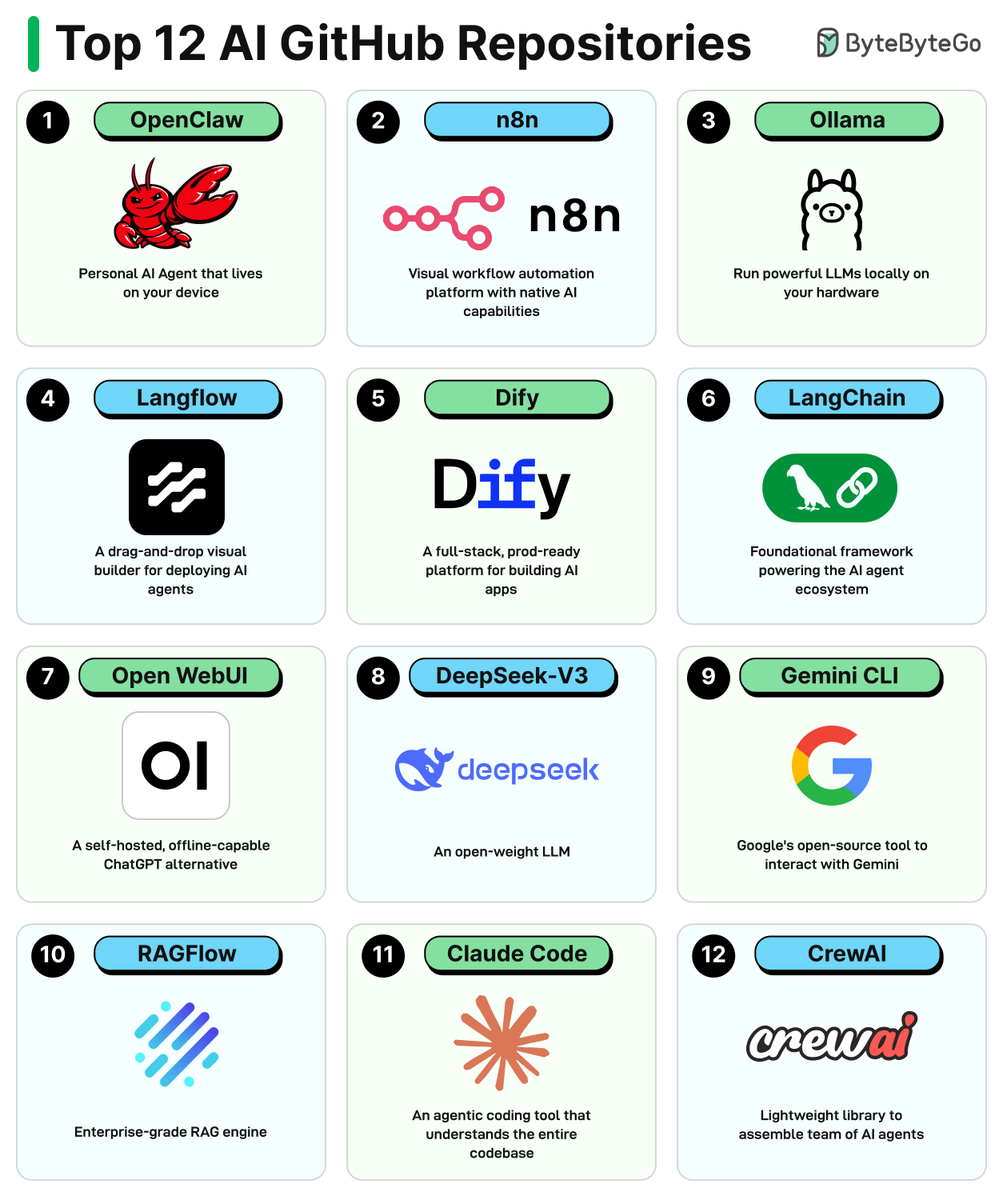
Top 12 GitHub AI Repositories These repositories were selected based on their overall popularity and GitHub stars.
Alex Xu tweet media
English
33
654
3.3K
126.2K
Bytebytego retweetledi
Alex Xu
Alex Xu@alexxubyte·
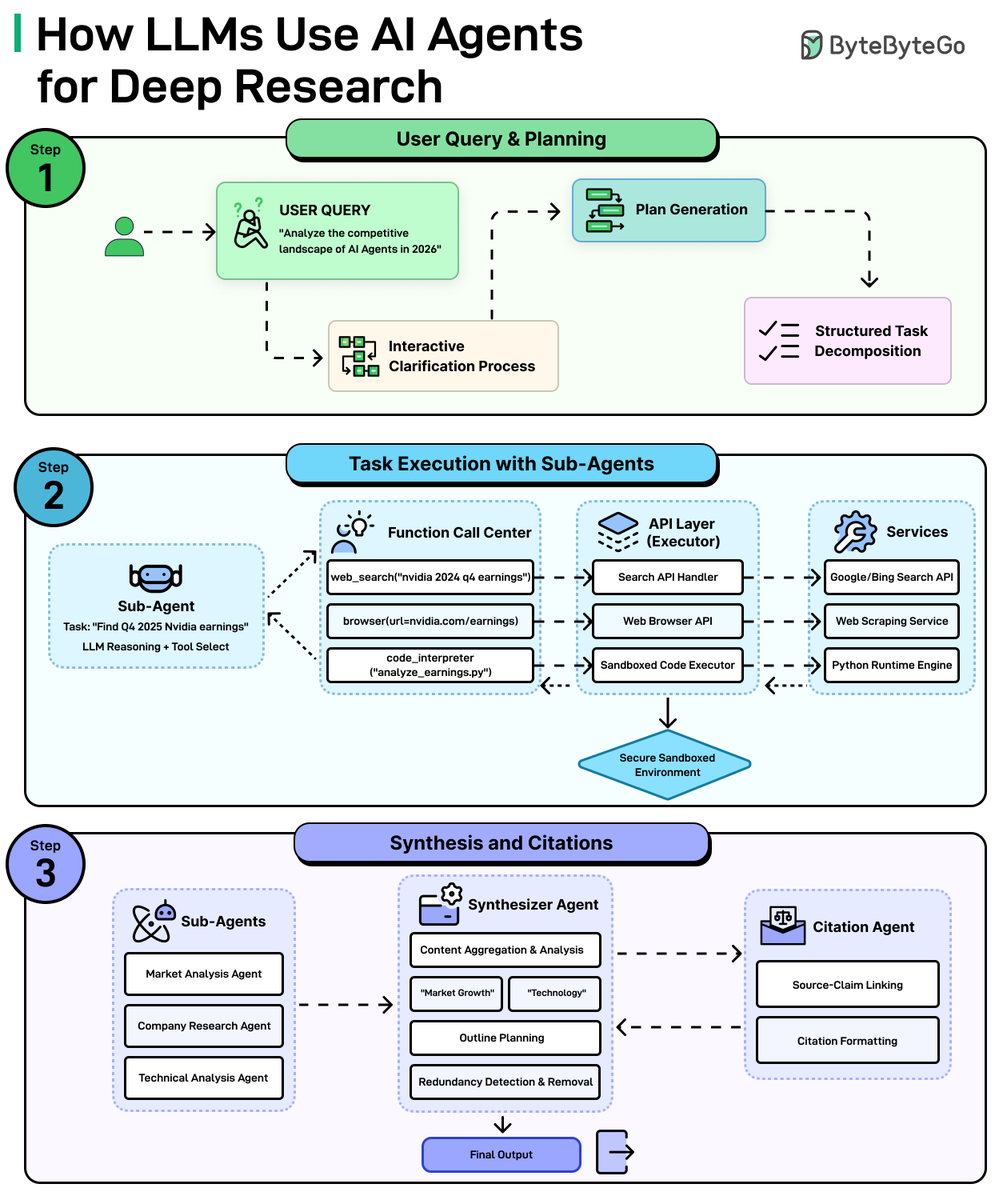
How LLMs Use AI Agents with Deep Research
Alex Xu tweet media
English
12
62
301
15.6K
Bytebytego retweetledi
Alex Xu
Alex Xu@alexxubyte·
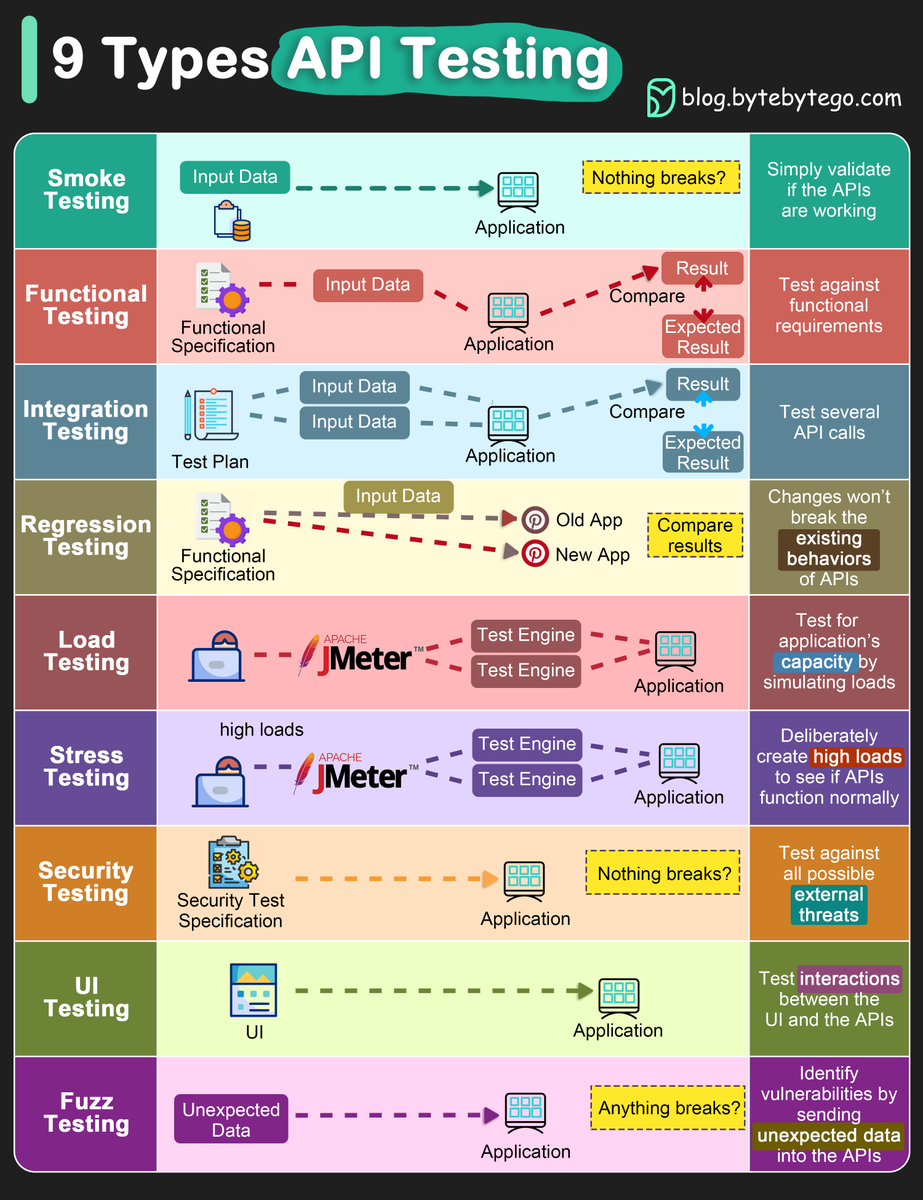
10 Types of API Testing
Alex Xu tweet media
English
6
84
537
57K
Bytebytego retweetledi
Alex Xu
Alex Xu@alexxubyte·
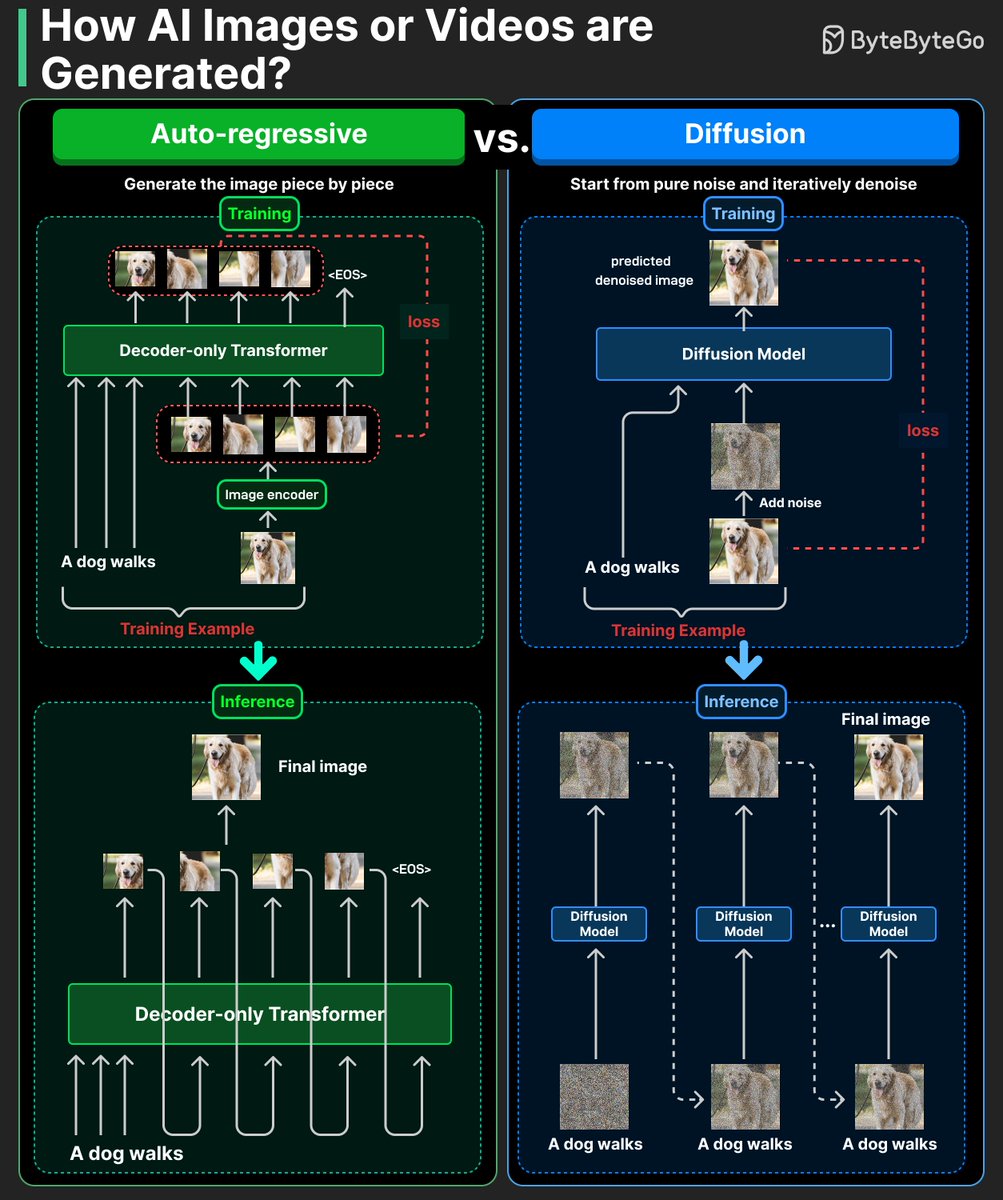
How AI Actually Generates Images There are two main ways modern models generate images: auto-regressive and diffusion. Auto-regressive models generate an image piece by piece. During training, an image is split into tokens, and the model learns to predict them one by one, just like text. It minimizes next-token prediction loss over image tokens. At inference time, the model predicts one image token at a time until the full image is formed. Diffusion models start from pure noise and iteratively denoise it. During training, we add noise to real images and train the model to predict that noise. At inference time, the model starts from random noise and iteratively denoises it into a clean image. Auto-regressive is like drawing a dog stroke by stroke in sequence. Diffusion is like starting with a rough sketch (coarse shapes), then progressively adding detail and cleaning up the picture. Over to you: Which text-to-image model do you find most powerful?
Alex Xu tweet media
English
5
34
169
11.2K
Bytebytego
Bytebytego@bytebytego·
What’s Next in AI: 5 Trends to Watch in 2026 Chapters 00:00:00 Intro 00:00:43 Reasoning 00:02:26 Agents 00:03:39 Coding 00:04:50 Open-weights 00:05:39 Multimodal
English
3
12
63
8.2K
Bytebytego retweetledi
Alex Xu
Alex Xu@alexxubyte·
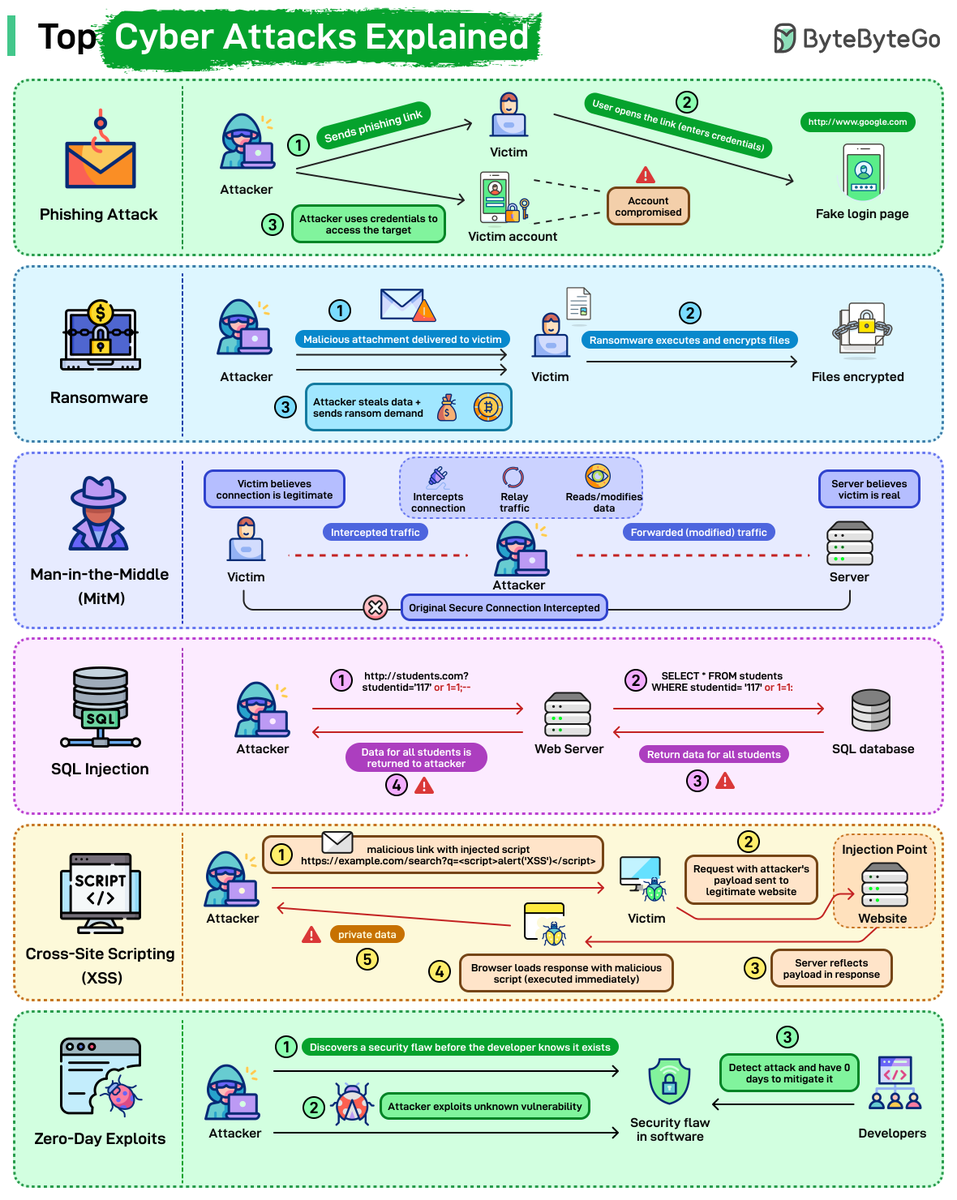
Top Cyber Attacks Explained Here’s a quick look at how some of the most common attacks work: Phishing: The attacker sends a fake link pointing to a spoofed login page. The victim enters credentials, the attacker captures them, and uses them to access the real system. Ransomware: The victim opens a malicious attachment or file. The ransomware encrypts local data and demands payment to restore access. Files stay locked until the ransom is paid or a backup is restored. Man-in-the-Middle (MitM): The attacker positions themselves between the victim and the server, intercepting traffic in both directions. Neither side detects the interception. The attacker can read or modify data as it passes through. SQL Injection: Malicious SQL gets inserted into an input field, for example, studentId=117 OR 1=1. The database executes it as a valid query and returns data it shouldn't. A single vulnerable input field can expose an entire table. Cross-Site Scripting (XSS): A malicious script gets injected into a legitimate page. When another user loads that page, their browser executes the script. Session tokens, cookies, and private data can be stolen this way. Zero-Day Exploits: The attacker finds a vulnerability the vendor hasn't discovered yet. No patch exists. The attack runs until the vendor identifies the issue and ships a fix, which can take days or weeks. Over to you: Which of these attacks have you seen most often in real environments, and which one do you think is the hardest to defend against today?
Alex Xu tweet media
English
4
48
192
9.2K
Bytebytego retweetledi
Alex Xu
Alex Xu@alexxubyte·
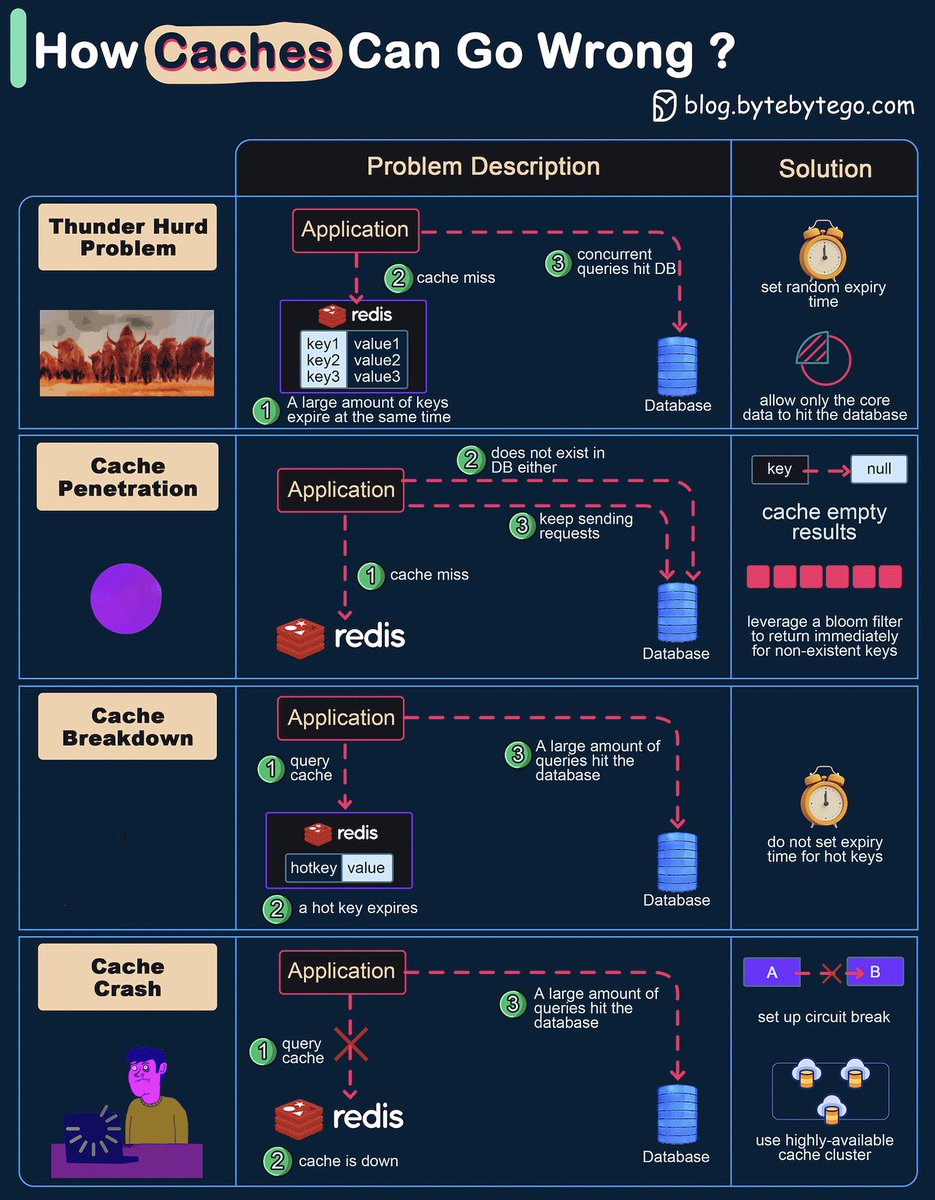
How can Cache Systems go wrong?
Alex Xu tweet media
English
10
72
535
60.2K
Bytebytego retweetledi
Alex Xu
Alex Xu@alexxubyte·
Top 4 API Gateway Use Cases
Alex Xu tweet media
English
3
52
268
10.3K
Bytebytego retweetledi
Alex Xu
Alex Xu@alexxubyte·
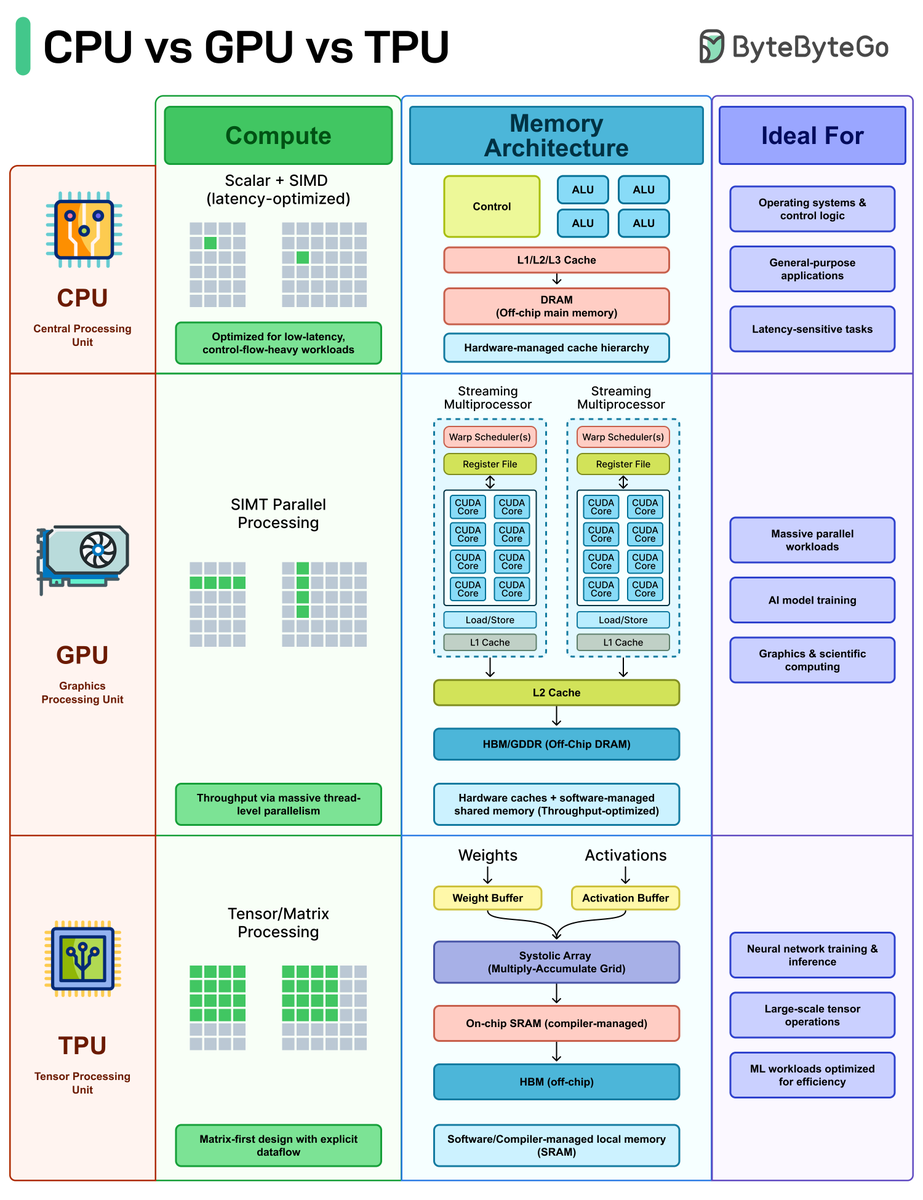
CPU vs GPU vs TPU
Alex Xu tweet media
Indonesia
20
461
2.3K
110.9K