Eljuli ham retweetledi
Eljuli ham
516 posts

Eljuli ham retweetledi

@BellsChain @BellscoinArabia Hey $Doge frens. Let’s play a little game. Who is $Doge’s daddy and what does he do? $Bells
GIF
English
Eljuli ham retweetledi


Eljuli ham retweetledi


Eljuli ham retweetledi


Eljuli ham retweetledi


Eljuli ham retweetledi
$bells sect is here to stay .
Your choice to get in and change your life .

English
Eljuli ham retweetledi

Native PoW memecoins aren't joke coins.
The label is lazy.
A coin that:
→ Has its own Layer 1 blockchain
→ Mines with real Proof of Work
→ Inherits hashpower through merged mining
→ Supports inscriptions and inscription-based token standards
That's not a joke. That's infrastructure.
$BELLS, $DOGE, and $PEP all secure with Scrypt PoW.
All three are merge-mined with Litecoin today - DOGE since 2014, $BELLS since the V3 activation in 2024, and $PEP through the same Scrypt merge-mining ecosystem.
All three support inscriptions and inscription-based token standards on their own chains - BEL-20 on $BELLS, DRC-20 on $DOGE, PRC-20 on $PEP.
The "joke coin" label was something other people put on these chains. The chains kept shipping.

English
Eljuli ham retweetledi
Eljuli ham retweetledi
@lowkeyfr $Bells is a life changer play , Dont Miss it.
I really think that you gonna like it .

English
Eljuli ham retweetledi

Eljuli ham retweetledi

Financial freedom isn’t a fluke; it’s about strategic positioning
Bellscoin.
$bells #bellscoin #bellringers
English
Eljuli ham retweetledi

Eljuli ham retweetledi
Eljuli ham retweetledi

Eljuli ham retweetledi

Eljuli ham retweetledi


Eljuli ham retweetledi


Eljuli ham retweetledi
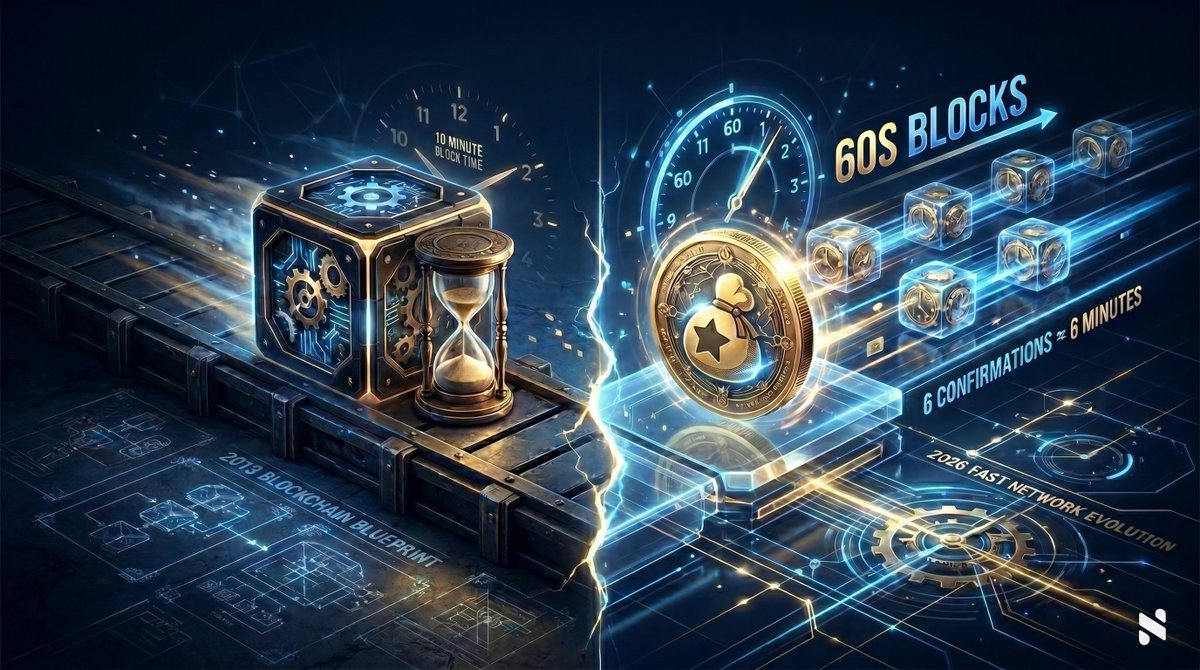
Bellscoin targets ~60-second block times. That choice was made in 2013.
What does an old design decision mean in 2026?
→ Faster confirmations, on average
Six confirmations on Bellscoin is roughly six minutes at target block time. On Bitcoin, roughly an hour. If you move small amounts often, the difference compounds.
→ More inscription throughput per hour, all else equal
More blocks per hour means more chances for inscriptions to land - the network tends to absorb new activity faster during normal load.
→ Faster fee dynamics, during normal load
On longer block-time chains, fee markets feel slow to react. On Bellscoin, congestion can clear faster under normal load - though low-fee transactions can still wait when fee pressure persists.
→ Smaller "stuck transaction" anxiety, for fee-competitive transactions
A transaction sitting in the mempool for an hour is one of the worst feelings in crypto. Faster blocks tend to mean fewer of those moments - as long as you're paying a competitive fee.
The tradeoff: shorter block intervals can increase stale-block and reorg risk, all else equal - propagation delays matter more when blocks come fast. Part of why "how many confirmations do I need" depends on what you're protecting.
A 2013 design choice. Still relevant.
English
Eljuli ham retweetledi