Franceenkp retweetledi
Franceenkp
93K posts

Franceenkp
@FranceenKP
Retired Science Writer, Journal Editor, Earth Science Professor. Veteran. Passion for Earth & Enviro Science, Global Development, Int'l Relations. No DMs please
Katılım Şubat 2013
2.6K Takip Edilen2.3K Takipçiler
Franceenkp retweetledi


Martyn Stewart has the last known recording of the now-extinct golden Panamanian frog. He says he is deeply worried about a catastrophic decline in wildlife populations around the world. cbsn.ws/4tpDcvc
English
Franceenkp retweetledi

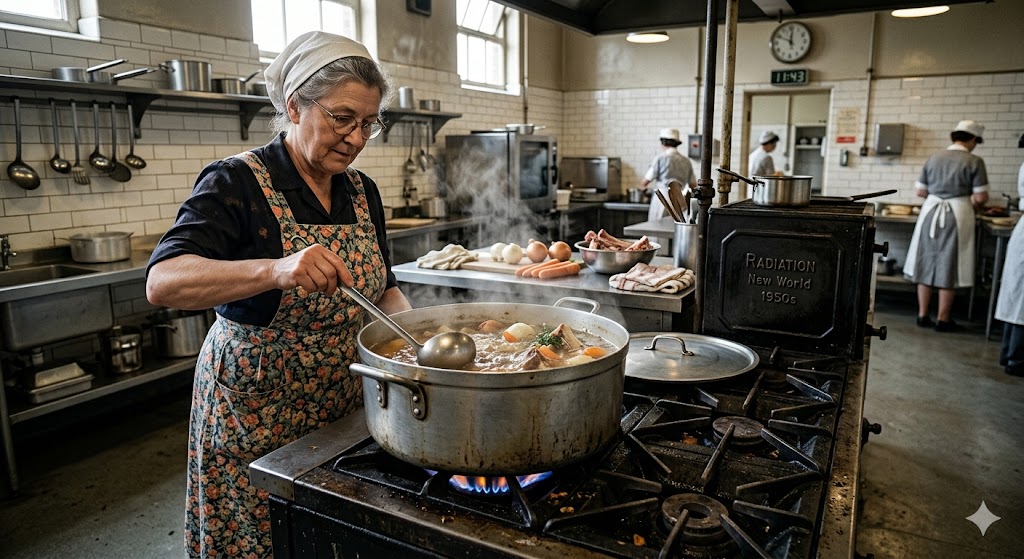
Every hospital in Britain had a stockpot on the stove until approximately the 1960s. Every workhouse before that. Every military mess. Every school kitchen. Every farmhouse. Every household that could afford bones, which was every household, because bones were the cheapest thing the butcher sold.
The stockpot ran continuously. Beef bones, pork bones, chicken carcasses, lamb shanks. The bones went in with water and were simmered for 12, 18, 24 hours. The broth that came out was the foundation of every soup, every stew, every gravy, every sauce.
Bone broth contains collagen, which breaks down into gelatin during cooking. Gelatin provides glycine and proline, essential for joint health, gut lining integrity, and connective tissue repair. It contains calcium, magnesium, phosphorus, and potassium leached from the bones. It contains glucosamine and chondroitin, now sold as joint supplements at £15 per bottle. It contains bone marrow, rich in fat-soluble vitamins A, D, and K2.
Your grandmother did not know the names of these compounds. She knew the broth kept the family well. She knew a bowl of broth settled the stomach when someone was ill. She knew the broth made the gravy and the gravy made the dinner and the dinner kept the children growing.
The broth was replaced by the stock cube.
The stock cube contains salt, maltodextrin, palm oil, yeast extract, flavouring, sugar, and colouring. It does not contain collagen, glycine, glucosamine, or any of the compounds the 24-hour broth provided. The stock cube is flavoured salt water.
The generation that grew up on the broth has joints. The generation that grew up on the stock cube has a glucosamine subscription and an orthopaedic appointment.
The supplement industry now sells, individually and at substantial markup, every compound the bone broth contained for free. Collagen powder: £25. Glucosamine tablets: £15. Bone broth itself, repackaged as a wellness product: £8 per serving from a company in Shoreditch with a minimalist label.
They have not discovered anything new. They have rediscovered what their grandmothers threw away.
The stockpot is still available. The bones are still at the butcher's. Water. Bones. Heat. Time.
The broth has been the broth for approximately 10,000 years.
The stock cube has been the stock cube for approximately 70.
The broth's track record is better.

English
Franceenkp retweetledi

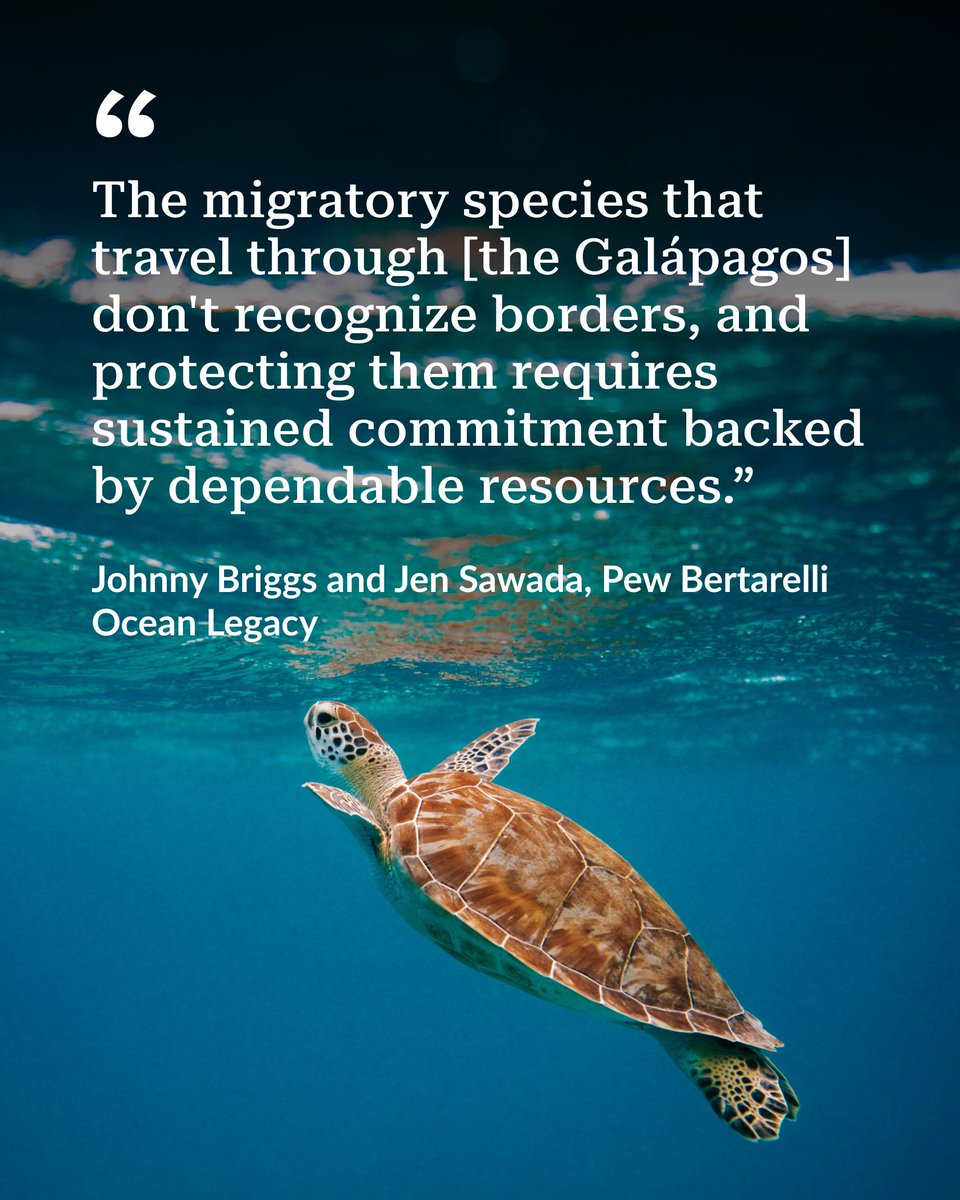
Progress: Over two years ago, Ecuador struck a deal that will generate millions of dollars to protect the waters surrounding the Galápagos Islands.
Those funds help reduce illegal fishing and support the region's marine life. pewtrsts.org/4lwXzmU
📸David Courbit/Unsplash

English
Franceenkp retweetledi

True leaders. Big, beautiful, and kind hearts.
Emma G. Fitzsimmons@emmagf
Mayor Zohran Mamdani and former President Barack Obama are at a child care center in the Bronx reading a book to preschoolers.

English
Franceenkp retweetledi

American science is shrinking.
A Post analysis found that, halfway through this fiscal year, the number of competitive grants awarded by the National Institutes of Health is down by more than half compared with the same period last year. wapo.st/3OgoHKV
English
Franceenkp retweetledi

“We’re losing some of the most precious species on Earth. I can go back to places that have been monitored over a period of 20 years, and the change is significant,” says naturalist Martyn Stewart. cbsn.ws/4tXTfjJ
English
Franceenkp retweetledi

In 1986, a five-year-old boy in India fell asleep on a bench at a train station while waiting for his older brother to come back. His brother never returned.
The boy wandered onto an empty train carriage, thinking his brother might be inside. He fell asleep again. When he woke up, the doors were locked and the train was moving. It didn’t stop for nearly two days. When it finally did, he was in Kolkata, nearly 1,500 kilometres from home. He was too young to know his surname, couldn’t read, and had no idea what his hometown was called.
He survived alone on the streets for weeks, sleeping under station benches and scavenging scraps of food, before eventually being taken to an orphanage and declared a lost child. No one could trace where he came from.
He was adopted by a couple from Tasmania, Australia, who gave him a loving home and a new life. His name became Saroo Brierley. He grew up on the other side of the world.
But he never forgot. He held onto fragments: the image of a bridge near a train station, a water tower, a neighbourhood layout, the faces of his family.
In his mid-twenties, he discovered Google Earth. He calculated the rough distance the train could have covered based on how long he remembered being on it, drew a circle on a map around Kolkata, and began searching along every railway line within that radius. Some weeks he spent 30 hours scanning satellite images of towns across central India, looking for landmarks that matched his childhood memories. His family in Australia didn’t even know. They thought he was just browsing the internet.
In 2011, after years of searching, he found it. A water tower. A bridge. A ravine past a station. It was a neighbourhood called Ganesh Talai in the city of Khandwa. He zoomed in and recognised the streets he had walked as a small boy.
He flew to India and walked through the town until he found his family’s home. The door was chained shut and he feared the worst. Then people came out. One of them led him to a woman down the road.
It was his mother. She had never stopped looking for him. After 25 years, they were standing in front of each other.
What he didn’t know until that moment was that his brother Guddu, the one he’d been waiting for at the station that night, had been struck and killed by a train. His mother had spent 25 years searching for both sons. She learned what happened to one. She never stopped praying for the other.
His story became the book “A Long Way Home” and was adapted into the film “Lion,” which received six Academy Award nominations.

English
Franceenkp retweetledi

BREAKING🚨 A man was choked to death by ICE guards and DHS hid his body at a military base to block the autopsy.
His name was Geraldo Lunas Campos. When the county medical examiner finally performed an autopsy, the conclusion was devastatingly clear: his death was ruled a homicide.
But here is the detail that should make your blood run cold.
When another man recently died at that exact same ICE facility, DHS didn't call the local medical examiner. Instead, they moved his body to a nearby U.S. Army base.
And that Army base is now flat-out refusing to release the results of the autopsy.
This was revealed by Senator Dick Durbin in a horrifying congressional hearing about the explosion of deaths in ICE custody under the Trump administration.
At least 17 people have already died in ICE custody in just the first three months of this year alone. Many of them died from easily treatable illnesses.
911 logs show ICE facilities are completely overwhelmed, ignoring basic human rights.
But moving a body to a military installation to dodge a local homicide investigation? That isn't just negligence. That is a coordinated, state-sponsored cover-up.
They are operating mass detention facilities with zero accountability. They are treating human beings like they are disposable. And when their guards cross the line, they use the full weight of the federal military apparatus to hide the evidence.
We are watching human rights abuses happen on American soil, funded by our tax dollars. We must demand the autopsy report.
Share this. Do not let them sweep these deaths under the rug.
English
Franceenkp retweetledi

East Africa's mountain gorillas have been endangered by habitat loss and poaching. But in some areas, numbers have started to recover...
🎧 bbc.in/4vxhsif
English
Franceenkp retweetledi

Road in Oman cuts through mountains ... 🇴🇲
This type of highway in Oman cuts through the rugged Hajar Mountains, one of the most geologically complex regions in the Arabian Peninsula.
To build roads like this, engineers must carve directly through solid rock, creating stepped cuttings along the slopes. These terraces are not just aesthetic, they help stabilize the mountainside, reducing the risk of rockfalls and erosion in an environment prone to extreme heat and occasional flash flooding.
Modern Omani highways are designed for both durability and speed, with multi-lane carriageways capable of handling long-distance transport across difficult terrain. Many of these projects were developed as part of Oman’s infrastructure expansion in the late 20th and early 21st centuries, connecting coastal cities like Muscat to interior regions that were once accessible only by rough tracks.
Despite the harsh conditions, these roads maintain high safety standards, including drainage systems, reinforced slopes, and wide turning radii to accommodate high-speed travel through mountainous areas.
Some mountain roads in Oman experience temperature swings of over 30°F (17°C) in a single day, requiring specialized asphalt mixes that can expand and contract without cracking.
© Reddit
#archaeohistories

English
Franceenkp retweetledi

Voyager is slowly going dark.
NASA has been forced to shut down one of Voyager 1’s science instruments to keep the legendary spacecraft alive.
After nearly 49 years of continuous operation, engineers have officially powered down the Low-Energy Charged Particle (LECP) sensor on Voyager 1, now located more than 15 billion miles from Earth.
The move was not due to instrument failure, but rather a deliberate survival strategy. The spacecraft’s plutonium-powered generators lose about four watts of electricity every year. By deactivating this instrument, mission controllers hope to prevent a critical power shortage that could cause the entire spacecraft to shut down permanently.
At this immense distance, communication is extremely challenging — it takes roughly 23 hours for a signal to travel one way between Earth and Voyager 1. Although the loss of the particle sensor ends that particular data stream, two other key science instruments remain active, continuing to send back valuable information from interstellar space.
NASA is now exploring even stricter power-saving measures to extend the mission as long as possible. This latest shutdown is expected to buy Voyager 1 at least one more year of operation, allowing humanity’s farthest-reaching explorer to keep sending data from the edge of the solar system and beyond.
The spacecraft may be fading, but its journey is far from over.

English
Franceenkp retweetledi

They promoted the man she trained and paid him double her salary. So at 45, she quit and built a billion-dollar empire instead.
In 1963, Mary Kay Ash sat at her kitchen table in Dallas, Texas, writing what she thought was a book.
She'd spent twenty-five years in direct sales. First at Stanley Home Products, then World Gift Company.
She'd built sales territories across forty-three states. She'd trained countless employees. She'd earned a seat on the company's board of directors.
None of it mattered.
Twice, she'd watched men she personally trained get promoted over her.
The second time, that man received double her salary.
"Those men didn't believe a woman had brain matter at all," she later said. "I learned back then that as long as men didn't believe women could do anything, women were never going to have a chance."
So she quit.
And she started writing down everything she'd learned.
The book was supposed to be advice for women navigating a business world that fundamentally didn't want them.
But as Mary Kay created two columns on her notepad—one listing everything wrong with her previous companies, one listing what a dream company would look like—she realized something.
She wasn't writing a book.
She was writing a business plan.
All she needed was a product.
For years, she'd been using a remarkable skin cream created by a woman whose father had worked with animal hides as a tanner. The formula had originated in that unlikely place.
Mary Kay bought the rights to it.
She had her product. She had her plan. And she had a partner—her second husband, George Hallenbeck, who had direct sales experience and would handle operations while she focused on products and people.
They invested their entire life savings: $5,000.
They set an opening date: September 13, 1963.
One month before launch, George died of a heart attack at the breakfast table while reviewing the final balance sheet.
Mary Kay was devastated.
Her lawyer told her to abandon everything immediately. Her accountant agreed—a 45-year-old widow had no business opening a cosmetics company.
Mary Kay opened it anyway.
On September 13, 1963, "Beauty by Mary Kay" opened in a small Dallas storefront.
Her youngest son, twenty-year-old Richard Rogers, stepped into the operations role George was supposed to fill.
Her oldest son, Ben Jr., had provided the crucial $5,000 investment.
The company started with one shelf of pink-packaged cosmetics and nine beauty consultants.
First-year sales: $198,154.
It was a beginning.
What made Mary Kay different wasn't just the products—though they were excellent.
It was the philosophy.
Mary Kay built her business on three principles: God first, family second, career third.
She believed women shouldn't have to choose between their families and their ambitions.
She created a model where mothers could work from home, set their own schedules, and earn based on effort rather than gender.
And she believed fiercely in recognition.
During her corporate years, Mary Kay had won a major sales contest at Stanley Home Products.
Her prize? An underwater flashlight.
An underwater flashlight—for one of the best performances of her career.
She vowed her company would be different.
Mary Kay created what she called "Cinderella Gifts"—rewards so luxurious that women would never buy them for themselves.
Diamond jewelry. Fur coats. All-expense-paid trips to Paris.
And eventually, the most famous prize of all.
In 1967, Mary Kay walked into a Cadillac dealership in Fort Worth, Texas, tired of getting cut off in traffic while driving her black car.
She pulled out her pale pink Mary Kay lip and eye palette and told the dealer: "I want a Cadillac this exact color."
They thought she was crazy.
They painted it anyway.
When Mary Kay drove that pink Cadillac around Dallas, something unexpected happened.
People noticed. Other drivers stopped cutting her off. Her sales consultants asked how they could earn one.
Mary Kay had an idea.
In 1969, she awarded the first five pink Cadillacs to her top-performing sales directors at the company's annual seminar.
The crowd went wild.
The pink Cadillac became the ultimate symbol—a "rolling trophy" that announced to the world what a woman had achieved.
General Motors eventually created an exclusive color called "Mary Kay Pink Pearl."
Today, approximately 4,100 pink Cadillacs cruise American roads—the largest commercial fleet of GM passenger cars in the world.
But the pink Cadillacs were just the most visible part of Mary Kay's philosophy.
The deeper principle was what she called the Golden Rule: treat others as you would want to be treated.
She applied it everywhere. She called her consultants her "daughters." She remembered their names, their families, their struggles.
"Pretend that every single person you meet has a sign around their neck that says 'Make Me Feel Important,'" she wrote. "Not only will you succeed in business, you will succeed in life."
The company grew exponentially.
By 1968, it went public. By 1983, sales exceeded $300 million. By the early 1990s, Mary Kay Cosmetics operated in nineteen countries and had been named one of the 100 Best Companies to Work for in America—three times.
There were setbacks.
The 1980s brought challenges as more women entered traditional careers and fewer were available for home-based sales. Between 1983 and 1985, the consultant force was cut in half.
In 1985, Mary Kay and her family took the company private again through a leveraged buyout.
It was controversial, but it allowed them to focus on long-term growth instead of quarterly earnings.
The strategy worked.
By the early 1990s, the company surpassed $1 billion in retail sales.
The company's symbol became the bumblebee—an insect that, according to aerodynamic theory, shouldn't be able to fly.
Its body is too heavy, its wings too small.
But it flies anyway.
Mary Kay loved that image. It represented everything she believed: that women could achieve the impossible if they simply refused to accept their limitations.
In 1996, at age 77, Mary Kay founded the Mary Kay Ash Charitable Foundation to combat domestic violence and cancers affecting women.
That same year, she suffered a stroke that limited her public activities.
She died on November 22, 2001—Thanksgiving Day, her favorite holiday.
At the time of her death, Mary Kay Cosmetics had more than 800,000 beauty consultants in thirty-seven countries.
The company had generated over $1.2 billion in sales.
More than 150 women had earned over $1 million in commissions.
Over 10,000 pink Cadillacs had been awarded.
Mary Kay Ash was worth an estimated $98 million.
But numbers don't capture what she actually built.
In 1999, Lifetime Television named her the "Most Outstanding Woman in Business in the 20th Century."
Baylor University called her the "Greatest Female Entrepreneur in U.S. History."
And countless women—women who had been told they couldn't, women who had been passed over and underpaid and underestimated—discovered they could build businesses, earn significant income, and drive pink Cadillacs.
All because a 45-year-old widow ignored her lawyer, ignored her accountant, and opened a small storefront in Dallas with $5,000 and a dream.
Mary Kay Ash proved something profound: the best response to being underestimated isn't anger or bitterness.
It's building something that gives other people the opportunities you were denied.
"My goal in life," she once said, "is to help other women achieve success. Because when you're successful, everyone around you is successful."
She didn't just break through the glass ceiling.
She built an elevator so others could rise with her.

English
Franceenkp retweetledi

Long before the world ever heard the name Obama, there was a curious young woman named Stanley Ann Dunham.
She was born in Wichita, Kansas, in 1942. Her family moved often, but she grew up mostly in Mercer Island, Washington, where she graduated from high school in 1960. Her classmates remembered her as the girl who questioned everything. She challenged teachers. She challenged norms. She challenged the idea that a girl's life was supposed to look like everyone else's.
At 18, while studying at the University of Hawaii, she fell in love with a Kenyan student named Barack Obama Sr. They married. She gave birth to a baby boy in Honolulu in August 1961 and named him after his father.
Most people would have stopped dreaming right there.
Ann was just beginning.
When her first marriage ended, she later married an Indonesian man named Lolo Soetoro, and in 1967 she moved to Jakarta with her 6-year-old son. Life in Indonesia was not easy. The country was poor. The language was new. The culture was foreign. Most young American mothers in her position would have been overwhelmed.
Ann fell in love with the place instead.
She enrolled in graduate school in anthropology and began walking straight into the villages that most development experts only studied from a distance. She sat beside blacksmiths at their forges in Javanese villages. She spent hours with women at their looms, watching them weave. She listened to mothers explain how they fed their families on almost nothing. She wrote it all down in notebooks that would one day fill a university archive.
And slowly, something important started forming in her mind.
At that time, the prevailing idea in global development was that poor countries stayed poor because of their "culture." Lazy traditions. Bad habits. Backward thinking. It was a cruel and lazy theory, but it was everywhere.
Ann looked at the people around her and saw the opposite.
She saw brilliant craftsmen who had been perfecting their trade for 1,200 years. She saw women running tiny businesses with astonishing discipline. She saw communities full of skill, intelligence, and effort. What they lacked was not character. What they lacked was capital. A small loan. A little trust. A fair chance.
So she spent the rest of her life trying to give it to them.
She joined the Ford Foundation in Jakarta and became their program officer for women and employment. She consulted for USAID. She worked in Pakistan with the Agricultural Development Bank. She spent years with Bank Rakyat Indonesia, helping to shape what would grow into one of the largest microfinance systems in the world. Tiny loans to rural women. Tiny loans to farmers. Tiny loans to weavers and blacksmiths and fish sellers. Loans that most banks thought were too small to bother with.
Those tiny loans changed millions of lives.
Women who had never held cash of their own started small businesses. They paid for their children's schools. They built up savings. They broke cycles of poverty that had lasted generations.
In 1992, at the age of 49, after 14 years of field research, Ann finally earned her PhD in anthropology. Her dissertation was over 1,000 pages long. One anthropologist called it a classic.
She also raised two extraordinary children. Barack, and his younger sister Maya, born in Jakarta in 1970.
In 1994, while working in Indonesia, Ann started to feel unwell. She returned to the United States and was diagnosed with cancer. She fought it for over a year. On November 7, 1995, just before her 53rd birthday, she passed away in Honolulu.
She did not live to see what happened next.
She did not live to see her son become a United States senator. She did not live to see him give the speech that made a nation pause. She did not live to see him win the presidency in 2008, or be sworn in as the 44th president of the United States.
But every value he carried into that office was hers.
The belief that every person deserves dignity. The belief that poverty is not a character flaw but a circumstance. The belief that small, steady, quiet work adds up to enormous change. The belief that the world gets better one village, one woman, one loan, one opportunity at a time.
Ann Dunham never sought fame. She sought understanding. She sought usefulness. She sought to be of service to the people most of the world had learned to ignore.
Some legacies are loud. Others, like hers, change the world quietly from a workshop in Java, one weaver and one blacksmith and one small loan at a time.
And sometimes, just sometimes, the quiet ones raise the people who will one day stand in front of the entire world and remind it of the lessons their mothers taught them long ago.

English