Oscar Gill-Lewis

2.5K posts

Oscar Gill-Lewis banner
Oscar Gill-Lewis

Oscar Gill-Lewis

@Gill_Lewis65

https://t.co/xSKr6MxZ1r https://t.co/nn7aXl6b6J

Katılım Kasım 2014
2.6K Takip Edilen191 Takipçiler
Oscar Gill-Lewis retweetledi
Ben Southwood
Ben Southwood@bswud·
I very slightly improved the architecture here: just a slight strengthening of the piers, put simple deco detailing on the spandrels (and recessed them a tad) and added a basic cornice. And I made it today’s weather. (I actually think these are OK as it is and better than 60% of what gets built, and we need the homes, but it’s fun to see how easy it is to improve these things.)
Ben Southwood tweet media
Benedict J Smith@BenedictSm55625

The people of Peckham didn’t want this and @lb_southwark protected their interests over those of a US multinational. This isn’t Nimbyism - people just want more humane homes.

English
26
16
338
52.3K
Oscar Gill-Lewis retweetledi
Mani Basharzad
Mani Basharzad@ManiBasharzad·
A deal with the Islamic regime would incentivise terror. You kill 40,000 of your own citizens, attack US allies and bases, close one of the world’s most important straits, and then get rewarded for your thuggish behaviour.
English
64
468
1.2K
16.8K
Oscar Gill-Lewis retweetledi
Joe Hill
Joe Hill@jo3hill·
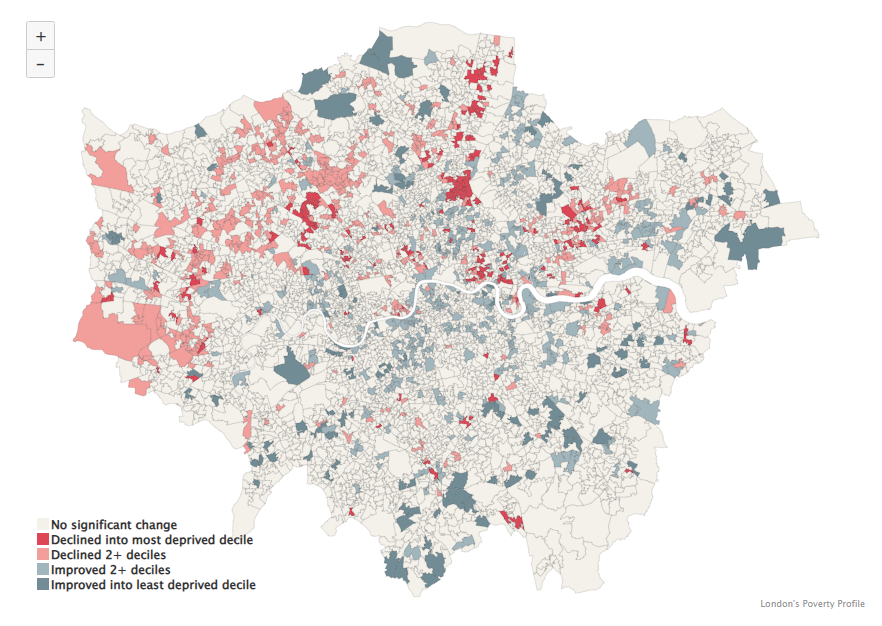
Interesting to see the changes in Index of Multiple Deprivation across London between 2019 and 2025 - broadly the increases in deprivation are all in North London. What could be causing this? trustforlondon.org.uk/news/deprivati…
Joe Hill tweet media
English
10
8
60
27.6K
Oscar Gill-Lewis retweetledi
Ben Southwood
Ben Southwood@bswud·
Is the government deliberately destroying the UK’s (previously quite impressive) hospitality industry because it thinks that doing so will cleverly raise average productivity?
Ben Zaranko@BenZaranko

Unemployment is up. Vacancies are down. The retail and hospitality sectors are shedding jobs. At the same time, there are encouraging signs of a productivity revival. Are these things related – and was this part of a deliberate government strategy all along? 🧵

English
16
11
117
18K
Oscar Gill-Lewis retweetledi
Noah Smith 🐇🇺🇸🇺🇦🇹🇼
Economists estimate that if Europeans used AC as much as Americans do, it would save up to 100,000 European lives EVERY YEAR. But I guess saving face on Elon Musk's social media app is more important than 100,000 lives.
Noah Smith 🐇🇺🇸🇺🇦🇹🇼 tweet media
Steve McCormick@Quasilocal

How can someone who markets himself as some kind of intellectual, with over half a million followers on here, post this same old silly misinformed take that gets posted a million times every summer

English
111
171
1.5K
203.1K
Oscar Gill-Lewis retweetledi
Robert Colvile
Robert Colvile@rcolvile·
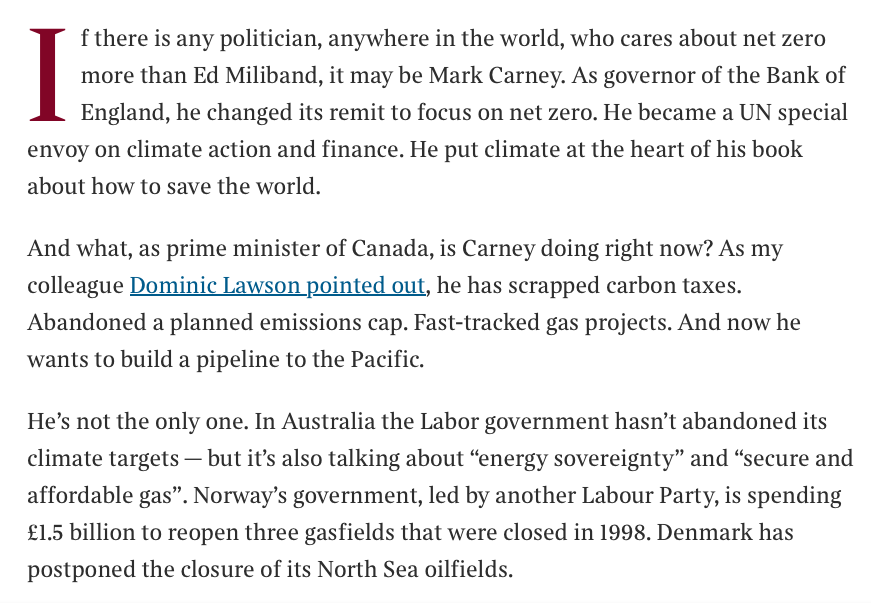
Australia. Denmark. Canada. Germany. Norway. Italy. Everywhere else is racing to shore up their energy supplies and cut consumption. And in Britain? Not a sausage. Me for @thetimes on how the world changed its mind - but Ed Miliband didn't. thetimes.com/comment/column…
Robert Colvile tweet media
English
16
182
476
19.5K
Oscar Gill-Lewis retweetledi
Anna Ridgway
Anna Ridgway@annaroseridgway·
Can we stop infantilising adults? I am 20 years old. Like most people my age, I know what is right and what is wrong. I can understand the consequences of my actions. Having the state coddle young adults does more harm than good.
Bernie@Artemisfornow

Oh great … Lammy wants criminals under the age of 25 to be treated as CHILDREN. So if a 24 year old sexually assaults someone, it’s because they are just a child and didn’t know any better. This is going to work out so well isn’t it? Utterly bonkers 🤡

English
1
2
16
558
Oscar Gill-Lewis retweetledi
Marian L Tupy
Marian L Tupy@Marian_L_Tupy·
We now live in a country where a family living on benefits in London can be better off than a household earning £70,000 per year, according to analysis by the Centre for Social Justice.
English
8
8
64
2.6K
Oscar Gill-Lewis retweetledi
Sam Dumitriu
Sam Dumitriu@Sam_Dumitriu·
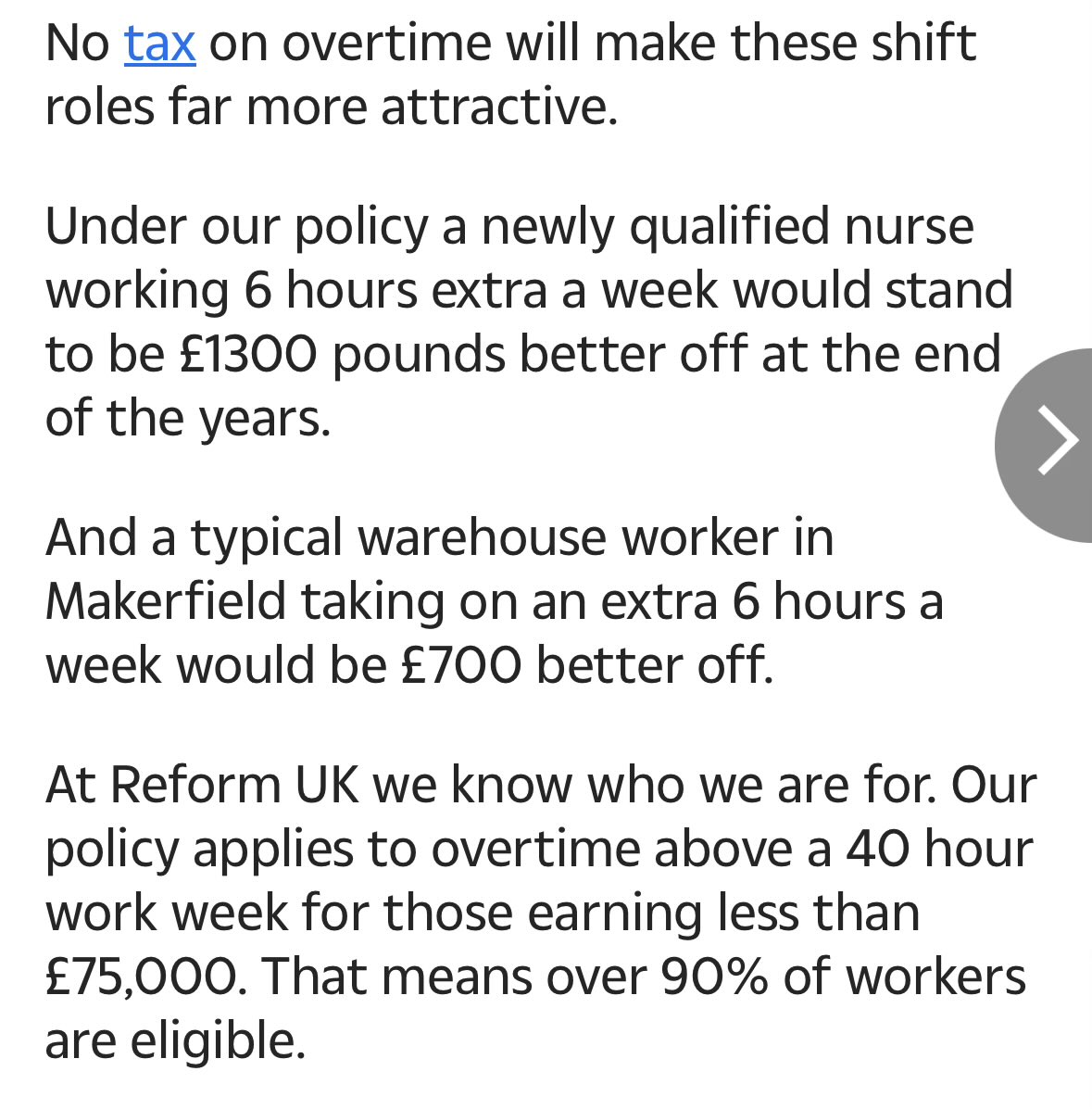
Reform have proposed abolishing tax on overtime for every worker earning less than £75k. My take: 1. This appears to be an import of Trump’s extremely dumb (but clearly popular) ‘no tax on tips’ policy. 2. If your aim is to boost growth and incentivise work, this isn’t a good use of £5bn. It’s a luxury policy in all honesty: can they honestly say £5bn couldn’t go further elsewhere (either in tax cuts, infrastructure investment, or just improving public services)? 3. This will likely create lots of avoidance opportunities. 4. There will also be genuine cases of unfairness. What about workers with second jobs? 5. This is likely to create a massive cliff-edge problem where taking an extra hour of overtime or getting a raise leaves someone thousands of pounds worse off.
Sam Dumitriu tweet media
English
51
35
256
62.3K
Oscar Gill-Lewis retweetledi
Ben Ramanauskas
Ben Ramanauskas@BenRamanauskas·
Stamp Duty isn't just a bad tax, it's the worst tax on the books. It's incredibly economically damaging and should be scrapped for everyone and every property.
James Cleverly🇬🇧@JamesCleverly

Rachel Reeves thought that bringing more homes into the Stamp Duty bracket would raise more tax. It didn’t Stamp Duty is a bad tax, it stifles mobility and punishes aspiration. @Conservatives will scrap it for primary homes. telegraph.co.uk/money/property…

English
15
45
563
63.1K
Oscar Gill-Lewis retweetledi
Matthew Bowles
Matthew Bowles@Matthew__Bowles·
The pushback to this tweet revealed how many people hear a large nominal figure and stop thinking proportionally. Tesco made about £3bn last year on roughly £70bn in revenue. On that scale, a £3bn profit is a remarkably thin return. My thoughts for the @spectator👇
Matthew Bowles tweet media
Matthew Bowles@Matthew__Bowles

Supermarkets have profit margins of between just 2% and 4%. Price caps have a long history of producing shortages, weaker supply and many empty shelves. Britain went down that path in the 1970s - it didn't end particularly well...

English
24
37
304
30.9K
Oscar Gill-Lewis retweetledi
Tom Harwood
Tom Harwood@tomhfh·
Extraordinary stats via @hwallop over on LinkedIn: "On average, people said pubs make a profit margin of 40%. Last year, JD Wetherspoon made 3.8 per cent. They thought supermarkets made 50% profit margins. Tesco’s margin last year was 4.3%, the highest in the industry. Aldi and Lidl run at 0.7%, according to the UK competition watchdog."
English
87
269
1.2K
145K
Oscar Gill-Lewis retweetledi
Ben Ramanauskas
Ben Ramanauskas@BenRamanauskas·
That's why it should be extended to all agricultural products. Should also lift the ban on chlorinated chicken and hormone treated beef. Give consumers greater choice and lower bills while forcing British producers to become more productive.
Paul Johnson@PJTheEconomist

Treasury quoted as saying plans on food tariffs would save consumers £150m per year. About 30m households. So a saving of 10p per week per household. Not to say it’s a bad policy. But the politics of giving impression it’ll make a noticeable difference? ft.com/content/3694c5…

English
1
4
34
2.5K
Oscar Gill-Lewis retweetledi
Sam Bowman
Sam Bowman@s8mb·
My thoughts on social housing and building in inner London: - Almost everyone who lives in social housing is a decent human being who is trying their best in often difficult circumstances. Among them are many retirees, kids, and people with disabilities. This must be the starting point for any serious thinking about housing in London. - London's job market is much stronger than that of the rest of the country. The median London wage is 25% more than the median English wage. The easier we make it for Britons to move to London, the richer they and the country will become. - Housing in inner London is extremely scarce and building rates are very low. In 2024–25, only 4,170 homes were started in London. London's housing target is 20x that and I think it's possible that we could build 100–150x that with the right reforms. - For now, we are in a roughly zero-sum game (which is one reason tensions are so high). We need to make this positive-sum by building more and by allowing voluntary exchanges of the existing housing stock. - There are about 450,000 socially rented homes in inner London. This is about one in three homes. About half of the 450,000 are occupied by lead tenants who are not working, either because they are retired (18%), disabled (13%), caring for someone else (7%), studying (2%), or unemployed/otherwise inactive (11%). - Social housing tenancies are basically tenancies-for-life, and can often pass down from parents to their children. They are close in practice to ownership, except that they cannot be sold. Ex-council flats in inner London are often worth £500,000 or more; there are many in extremely central parts of the city like Shoreditch, Soho and Farringdon that are worth even more than that. - Kicking people out of these homes against their will is, in general, morally bad and politically impossible. The public does not resent these people and would, rightly, find it appalling to turf them out of their homes against their will. - 'Gentrification' is a problem when it drives people out against their will by raising rents or other costs. It is primarily a problem caused by housing shortages. When housing supply can respond to new demand in an area, there is much less displacement of the people who live there. - Poor people do not like dirt, graffiti, crime, or derelict buildings, and many of their supposed champions have a patronising and somewhat dehumanising idea of what is in their interests. They do not want to live in unsafe, unpleasant areas any more than anyone else does. Change that makes places safer, cleaner and prettier without displacing existing residents is a good thing for everyone. - Large supermarkets are the cheapest places to buy food in London and allowing them to be built is the best way to protect people's access to affordable retail. - There are options that are good for tenants and good for people who wish to live in these central areas that do not push people out against their will. These are options that put tenants in control and give them a large share of the value created. At best, they reduce scarcity overall. - One is to make the social housing stock much more liquid by allowing social housing tenants to sell their tenancies into private ownership, keeping the returns to spend on a new property that is more suitable for their needs and the rest as savings. - Arguments against this that focus on the fact that many of the out-of-work people are blameless completely miss the point. For retirees, parents, and some people with disabilities, a home in a London suburb or a town other than London may be preferable to an apartment in inner London – more spacious, easier to access (eg, not up flights of stairs), and in a quieter neighbourhood. Existing schemes to allow people to trade their social home for a home by the seaside or in the country are hugely oversubscribed; this would unlock the entire private market to them. - Private owners already have the freedom to sell their home to who they want. That is one of the core benefits of private ownership. This extends that right to social tenants. - Another option is 'estate regeneration', where entire housing estates are rebuilt and existing tenants are given larger, newer homes built to modern standards and thousands of private units also added. Where tenants are given a vote on this, they consistently vote in favour (29/30 ballots have passed, often with enormous majorities and turnouts.) Hundreds of thousands of homes could be added in this way. - A vast amount of regulation also needs to be reversed – the Building Safety Regulator, second staircase rules, dual aspect rules, and others – in order to make building cheaper. Otherwise, we will find ourselves in a position where even if you get permission to build a home it is prohibitively expensive to do so. - Affordable housing requirements are a tax on new housing and almost certainly reduce the overall amount of homes that get built. Manchester has built thousands of new homes without them. Richard Leese, the Labour leader of the City Council, said "If we’d tried to impose 20% affordability on it, it wouldn’t have happened. We wouldn’t have got 20% affordable housing, we would have got nothing." - Many of the most vocal foes of new building in inner London are ideological opponents of private construction and cannot be reasoned or bargained with. Defeating them will involve a combination of targeted upzoning imposed by central government and the creation of hyperlocal mechanisms that allow the people who are most directly affected by new development to decide on it (eg, estate regeneration). The anti-building ideologues only win because normal people sympathise with them. - If we do not do not work to make the existing housing stock more easily transacted and building much easier, London will become hollowed out. Existing market-rate housing will be bid up by wealthy people who can afford it, and anyone on a middle income – let alone a low income who does not have a social home – will find it very difficult to live here, except in cramped houseshares when they are young. London should not be a city for only the very poor and very rich.
English
49
65
568
192.2K
Oscar Gill-Lewis retweetledi
Douglas Carswell🇬🇧🇺🇸
Britain 🇬🇧 is run by the economically illiterate. 🤪Price controls in supermarkets on Monday 🤡VAT tax cuts for leisure parks, but not for anything else on Wednesday 😜Capital Gains Taxes to match Income Tax on Thursday How much more of this can the country take?
English
46
238
1.2K
15.6K