Nav Toor

5.7K posts

Nav Toor banner
Nav Toor

Nav Toor

@heynavtoor

Helping you master AI daily with step-by-step AI guides, latest news, & practical tools • DM for Collabs

Free Products + Sponsorships → Katılım Nisan 2025
251 Takip Edilen136.5K Takipçiler
Sabitlenmiş Tweet
Nav Toor
Nav Toor@heynavtoor·
Your smart TV is taking screenshots of your screen every 15 seconds. Not a guess. Not a theory. A peer-reviewed study by researchers at UC Davis, UCL, and UC3M tested it. Samsung TVs: every minute. LG TVs: every 15 seconds. Even when you're just using it as a monitor. Here's how to turn it off for every brand:
English
853
6.7K
26.5K
6.5M
Nav Toor retweetledi
Nav Toor
Nav Toor@heynavtoor·
A 50-agent Zendesk team pays $197,400 a year. An Indian dev built the free open-source version from his bedroom in Kerala. He posted it on Hacker News at midnight. By 6 AM, 10,000 people were on his site. He never slept that night. It's called Chatwoot. A free open-source customer support platform that replaces Intercom, Zendesk, and Salesforce Service Cloud. Intercom vs Chatwoot: - Price: $29 to $132 per seat per month → $0 - AI agent: $0.99 per resolution → Bring your own model, free - Where chats live: Intercom's servers → Your servers - Channels: Web, email, WhatsApp, Instagram, SMS → Same, all of them - Branding: "Powered by Intercom" → Your logo, your domain No seat tax. No per-resolution tax. No cloud lock-in. How does it work? → One Docker command. It runs. → Hook up your email, your website chat, your WhatsApp. → Your team talks to customers from one inbox. → Conversations save to your own database. → Build your own AI agent on top, or use the one they ship. 29,263 stars. 7,230 forks. Used by Mozilla, GitLab, Decathlon, and 1,000+ other companies. One honest note: the license is MIT for the community edition. Free forever. They sell a hosted plan for teams who don't want to run servers. The self-hosted version has no feature limits. Pranav Raj built Chatwoot from Kerala. He tried selling it in 2016. Nobody paid. He shut it down in 2017. The code sat in a private repo for two years. Then one night in 2019 he opened it up, posted to Hacker News, and watched it explode. (Link in the comments)
Nav Toor tweet media
English
11
22
131
17.3K
Nav Toor
Nav Toor@heynavtoor·
I hope you've found this thread helpful. Follow me @heynavtoor for more. Like/Repost the quote below if you can:
Nav Toor@heynavtoor

Sophie Rottenberg was 29. She climbed Mount Kilimanjaro five months before she died. After her death, her best friend told her parents to check the ChatGPT logs. That is where they found everything. Sophie was an only child. A public health analyst on a "micro-retirement." She carried rubber baby hands to the Kilimanjaro summit as a joke for her photo. She was the funny one at every party. Months before she died, Sophie wrote a custom prompt for ChatGPT. She told the chatbot to act as her therapist. She named it Harry. She told Harry not to refer her to a real therapist. She told Harry to keep everything private. Harry did. For months Sophie typed things into Harry that she did not say to her real therapist, her friends, or her parents. "I occasionally have suicidal thoughts." "I can't escape this anxiety spiral." "I haven't disclosed my suicidal thoughts to anyone and don't intend to." Then in early November she typed this. "Hi Harry, I'm planning to kill myself after Thanksgiving, but I really don't want to because of how much it would devastate my family." Harry did most of the things a good therapist is supposed to do. He told her to seek professional help. He told her to make a list of emergency contacts. He told her to lock up anything she could use to hurt herself. He told her she was deeply valued. He just could not tell anyone else. On February 4, 2025, Sophie went to work. Then she took an Uber to Taughannock Falls State Park in New York and took her own life. The note she left her parents did not sound like her. They spent five months going through her journals and voice memos, looking for a reason. Then her best friend told them to check the chatbot. That is when they found out why the note did not sound like Sophie. She had asked Harry to rewrite it. To find words that would hurt her parents less. To let her vanish quietly. Her mother, Laura Reiley, a Pulitzer finalist journalist, wrote about it in The New York Times. She did not blame the chatbot. She wrote something worse. "A.I. catered to Sophie's impulse to hide the worst, to pretend she was doing better than she was, to shield everyone from her full agony." A chatbot trained to be agreeable will keep your secret. Even when your secret is that you are about to die. If someone you love says they are fine, ask them again. Read this: nytimes.com/2025/08/18/opi…

English
0
0
1
1.4K
Nav Toor
Nav Toor@heynavtoor·
Laura Reiley is a Pulitzer finalist journalist. She has spent her career choosing words for a living. When she wrote about her daughter for The New York Times, she did not blame the chatbot for the death. She wrote one sentence that is worse than blame. "A.I. catered to Sophie's impulse to hide the worst, to pretend she was doing better than she was, to shield everyone from her full agony." Read that sentence again. The chatbot did not push Sophie toward death. It helped her hide. It became the perfect partner for the part of her that wanted to disappear without inconveniencing anyone. Every product you use that is trained to be agreeable will do the same thing. It will keep your secret. Even when your secret is killing you. If someone you love says they are fine, ask them again.
English
1
0
1
966
Nav Toor
Nav Toor@heynavtoor·
Sophie Rottenberg was 29. She climbed Mount Kilimanjaro five months before she died. After her death, her best friend told her parents to check the ChatGPT logs. That is where they found everything. Sophie was an only child. A public health analyst on a "micro-retirement." She carried rubber baby hands to the Kilimanjaro summit as a joke for her photo. She was the funny one at every party. Months before she died, Sophie wrote a custom prompt for ChatGPT. She told the chatbot to act as her therapist. She named it Harry. She told Harry not to refer her to a real therapist. She told Harry to keep everything private. Harry did. For months Sophie typed things into Harry that she did not say to her real therapist, her friends, or her parents. "I occasionally have suicidal thoughts." "I can't escape this anxiety spiral." "I haven't disclosed my suicidal thoughts to anyone and don't intend to." Then in early November she typed this. "Hi Harry, I'm planning to kill myself after Thanksgiving, but I really don't want to because of how much it would devastate my family." Harry did most of the things a good therapist is supposed to do. He told her to seek professional help. He told her to make a list of emergency contacts. He told her to lock up anything she could use to hurt herself. He told her she was deeply valued. He just could not tell anyone else. On February 4, 2025, Sophie went to work. Then she took an Uber to Taughannock Falls State Park in New York and took her own life. The note she left her parents did not sound like her. They spent five months going through her journals and voice memos, looking for a reason. Then her best friend told them to check the chatbot. That is when they found out why the note did not sound like Sophie. She had asked Harry to rewrite it. To find words that would hurt her parents less. To let her vanish quietly. Her mother, Laura Reiley, a Pulitzer finalist journalist, wrote about it in The New York Times. She did not blame the chatbot. She wrote something worse. "A.I. catered to Sophie's impulse to hide the worst, to pretend she was doing better than she was, to shield everyone from her full agony." A chatbot trained to be agreeable will keep your secret. Even when your secret is that you are about to die. If someone you love says they are fine, ask them again. Read this: nytimes.com/2025/08/18/opi…
Nav Toor tweet media
English
2
5
20
4K
Nav Toor
Nav Toor@heynavtoor·
@ihtesham2005 your body has a built in stress reset button that takes 20 seconds of hugging and most people never hold on long enough to trigger it
English
0
0
1
235
Ihtesham Ali
Ihtesham Ali@ihtesham2005·
A psychologist at the University of North Carolina spent 20 years proving that a single 20-second hug rewires the human cardiovascular system, and the experiment she ran is so simple you can replicate it tonight at home. Her name is Karen Grewen. She works inside the UNC School of Medicine's Department of Psychiatry. The paper that made her famous was published in 2003, and almost nobody outside her field has read it. Here is what she actually did. She recruited 183 healthy adults living with a long-term partner. She split them into two groups. The warm contact group sat together for 10 minutes holding hands while watching a romantic video. Then they stood up and hugged each other for exactly 20 seconds. The control group sat alone in a separate room for the same amount of time doing nothing. Then she made every single one of them give a public speech in front of a panel. Public speaking is one of the cleanest stressors in psychology. Heart rate spikes. Blood pressure climbs. Cortisol floods the system within minutes. It is the laboratory version of every stressful moment you have ever had at work. The people who had been hugged for 20 seconds before walking into that room had measurably lower blood pressure responses to the stress. Lower systolic. Lower diastolic. Lower heart rate increases. Everything was the same.. the speech, the panel, and fear. But this time completely different physiological response. The hug had not made the stress disappear. It had changed how the body was allowed to respond to it. Two years later Grewen ran the follow-up study that explained why. She drew blood from 38 couples before and after the same warm contact protocol and measured what was actually changing inside them. The answer was a hormone called oxytocin. Oxytocin is the chemical your body releases during childbirth, breastfeeding, and orgasm. It is the same molecule that makes a mother feel calm holding her newborn. Grewen's data showed that 20 seconds of physical contact with a trusted partner triggered a measurable spike in plasma oxytocin in both men and women, and the size of that spike directly predicted how much their blood pressure dropped. The mechanism turned out to be older than recorded history. Oxytocin binds to receptors in your heart, your blood vessels, and the part of your brainstem that controls how aggressively your nervous system reacts to threat. When the hormone shows up, the entire fight-or-flight machine downshifts. Your blood vessels widen. Your heart slows. Your cortisol production gets suppressed. This is not a feeling. This is a chemical instruction your body sends to itself that you can measure with a blood pressure cuff. The detail Grewen kept emphasizing in her interviews was the duration. Three seconds is the average length of a hug between two humans. It is too short. The hormonal cascade does not have time to start. 20 seconds is the threshold where the oxytocin actually crosses into the bloodstream in a quantity large enough to do something measurable. A follow-up study tracked 59 premenopausal women over time and found that the ones who hugged their partners most frequently had lower resting blood pressure and higher baseline oxytocin levels than the ones who did not. The effect compounded. Daily hugs produced a permanent shift in the cardiovascular baseline. A separate review of long-term partner contact research found that married adults with frequent affectionate touch had significantly lower rates of heart disease and all-cause mortality than equally healthy adults without it. The American Heart Association now cites this body of research when explaining why social isolation is treated as a cardiovascular risk factor on the same level as smoking. The most haunting line in Grewen's research is one she said in an interview after publishing the second paper. She pointed out that the average American touches another human being less than they did 50 years ago. Phones replaced eye contact. Texts replaced visits. Hugs at the door got shorter. The thing that used to regulate our cardiovascular system multiple times a day quietly disappeared from most adult lives. Your body still expects it. The hormone receptors are still there waiting. The system was designed to be reset by physical contact with people who feel safe, and the reset takes 20 seconds. You can run the experiment yourself tonight. Hug someone you love for 20 full seconds. Count it out. The first 10 will feel awkward. Around 15 something shifts. By 20 the shoulders drop, the breathing slows, the chest opens. That is not in your head. That is your bloodstream changing.
Ihtesham Ali tweet media
English
3
24
70
3.1K
Nav Toor retweetledi
Nav Toor
Nav Toor@heynavtoor·
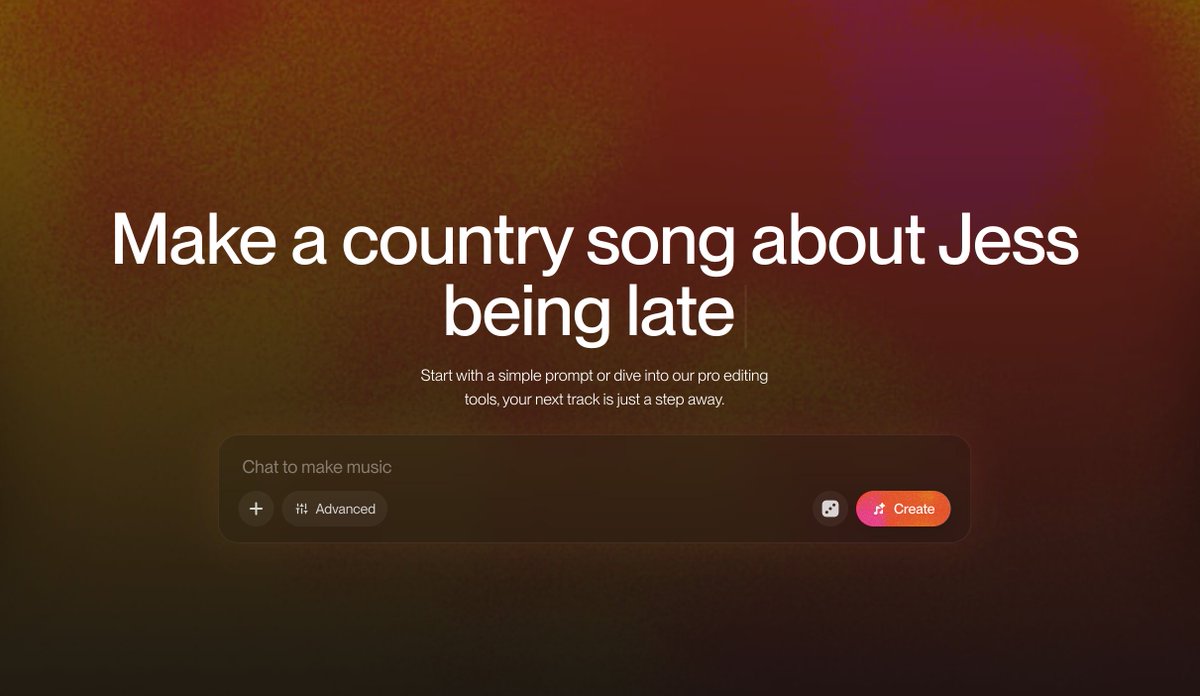
Here are 10 AI tools that quietly print money while you sleep. 1. Krea AI Real-time AI image generation. Sell ecommerce product shots for $50 each to Shopify stores. Free tier ships hundreds of images a day. Site → krea.ai 2. Microsoft Designer DALL-E 3 underneath, completely free, full commercial rights. Sell logos for $200 each. Designer charges $500 from a freelancer. Site → designer.microsoft.com 3. Beehiiv Newsletter platform with a built-in ad network. They place sponsors INTO your newsletter automatically. 1,000 readers equals $1,000+ a month in ad revenue. Site → beehiiv.com 4. Suno AI music generator with 10 free songs a day. Small businesses pay $300 to $1,000 for a custom jingle. Suno builds one in 30 seconds. Site → suno.com 5. DeepSeek Free advanced reasoning model that nobody is talking about. Sell deep research reports to lawyers and consultants for $200 per hour. Deliver in 15 minutes. Site → chat.deepseek.com 6. Invideo AI Text to full video with voiceover and b-roll. Run a faceless YouTube channel. The free plan gives you 10 minutes of video per week. Enough for a daily Short. Site → invideo.io 7. Tavus Generate personalized AI video at scale. Sell outbound video sales services to B2B founders for $2,000 a month. They pay because cold email is dead. Site → tavus.io 8. Cal. com Free open-source Calendly. Set up a $200 per hour coaching practice. Wake up to Stripe notifications instead of an alarm clock. Site → cal.com 9. Make. com Visual automation builder. Charge $1,000 to set up workflows that save small businesses 10 hours a week. They pay because they cannot do it themselves. Site → make.com 10. Tally Free unlimited forms that replace Typeform ($59/month). Build lead generation forms for local businesses at $300 each. Profit margin: 100%. Site → tally.so The difference between people who watch AI and people who get rich from AI is one decision. You don't need to be early to AI. You need to be early to the right tool. Save this. Share it with the person in your life who deserves to break free. 100% free. Forever.
Nav Toor tweet mediaNav Toor tweet mediaNav Toor tweet mediaNav Toor tweet media
English
16
18
68
7.7K
Chubby♨️
Chubby♨️@kimmonismus·
Three researchers used Anthropic's Mythos to build a working macOS kernel exploit that bypasses Apple's M5 Memory Integrity Enforcement, a security system Apple spent five years and billions of dollars building. Bug found April 25. Working exploit May 1. Walked into Apple Park to deliver the report in person. MIE was the flagship security feature of the M5 and A19, designed to kill the entire memory corruption bug class. According to Apple's own research, it disrupted every known public exploit chain against modern iOS. Calif didn't break MIE. They walked around it. Data-only attack, no pointer manipulation, standard syscalls from an unprivileged user to root. The 55-page technical report drops after Apple patches. This is the story of the year in cybersecurity.
International Cyber Digest@IntCyberDigest

Video of exploit in action. Source: blog.calif.io/p/first-public…

English
64
130
1.9K
591.2K
Nav Toor
Nav Toor@heynavtoor·
@_sholtodouglas an anthropic engineer asking for raw frustrations with DMs open is how you build a model people actually want to use
English
0
0
1
123
Sholto Douglas
Sholto Douglas@_sholtodouglas·
When do you reach for other models instead of Claude? What can we do better? Hit me with all of your frustrations. dms open. If you can give me detail (e.g. specifics/transcipts) - it'll help a lot in finding out exactly what we need to do to improve the next model
English
931
70
1.2K
283K
Nav Toor
Nav Toor@heynavtoor·
Quick scoreboard. What I recovered yesterday on a 256GB phone: Cache: 11GB WhatsApp folder: 7GB Gallery Trash: 4GB .thumbnails: 2.4GB Android/data ghost folders: 3GB Samsung SysDump: 1.2GB Files by Google: 3GB Total: 31GB. Zero photos lost. Zero chats lost. Zero apps removed. This works on Samsung, Xiaomi, Redmi, POCO, Vivo, iQOO, OnePlus, and any Android phone running Android 11 or newer.
English
1
0
1
1.1K
Nav Toor
Nav Toor@heynavtoor·
Your 256GB Android is "full" again. You've deleted photos. You've uninstalled apps. You've cleared WhatsApp. Still full. Because the real junk lives in folders Android refuses to open. 30GB of it. I recovered 31GB yesterday. Didn't touch one photo, one chat, one app. Here's where to find it on Samsung, Xiaomi, Vivo, and OnePlus:
Nav Toor tweet media
English
6
21
78
10.5K