Infinite Retina

4K posts

Infinite Retina banner
Infinite Retina

Infinite Retina

@InfiniteRetina

Generative AI, AR & New Tech Research & Consulting, CEO: @irenacronin - 5x Author — Wiley, Apress, PacktPub

Pasadena, CA Katılım Temmuz 2017
26 Takip Edilen9.5K Takipçiler
Infinite Retina retweetledi
Robert Scoble
Robert Scoble@Scobleizer·
Good morning. Congrats to @benparr and @MattPRD for selling @moltbook to Meta. Known them for decades, great to see good people win. That gives Meta a new advertising distribution method. For our free newsletter this week, we focus on the growing pressure on AI companies to turn massive spending into real returns. 
@IrenaCronin and I write this newsletter every week.   AI is entering a more demanding phase where huge spending alone is no longer enough. Investors now want proof that AI investments are producing real revenue, stronger margins, and lasting business value, while workers and companies are also facing pressure over whether current tools can truly replace human expertise. The main divide is between those benefiting directly from the AI buildout and those struggling to show that the money being poured into AI is actually paying off. Read it at unaligned.io (please subscribe).
Robert Scoble tweet media
English
19
18
99
35.5K
Infinite Retina retweetledi
Robert Scoble
Robert Scoble@Scobleizer·
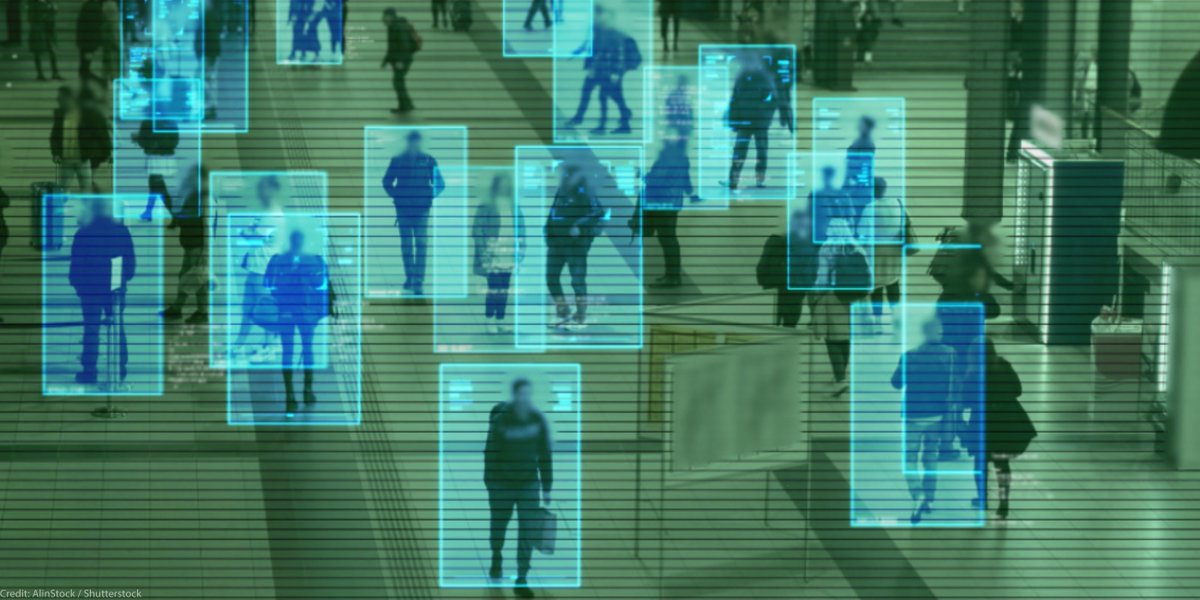
Given the Anthropic vs. Pentagon divorce last week, we dig into AI surveillance in the United States. 
@IrenaCronin and I write this newsletter every week.   AI surveillance in the United States is rapidly scaling because AI makes it easy to search video, track locations through license plates, use biometrics like face recognition, and fuse many databases into profiling and prediction systems. Oversight remains fragmented across agencies and states, with governance stronger on process than hard limits, while political battles are growing around domestic mass surveillance, national security authorities, and how contractors can restrict government use. The central tension is scale versus safeguards, with the most important protections being strict purpose limits, short retention, access controls, audit logs, independent testing, and clear appeal paths. Read for free at unaligned.io (and please subscribe).
Robert Scoble tweet media
English
33
26
123
32.2K
Infinite Retina retweetledi
Robert Scoble
Robert Scoble@Scobleizer·
For our free newsletter this week, we talk about why LLMs won’t led to Artificial General Intelligence (AGI). 
@IrenaCronin and I write this newsletter every week.   LLMs alone are unlikely to lead to AGI. They primarily predict text and can imitate planning and reasoning without reliably grounding claims, maintaining durable memory, verifying correctness, or acting safely over long time horizons. A more realistic path to AGI is a multi- component system where an LLM is just one part, combined with explicit planning and execution, persistent memory, verification and testing, and governance layers that constrain and audit actions once tools turn words into real world effects. Read for free at unaligned.io (and please subscribe!)
Robert Scoble tweet media
English
37
10
106
34K
Infinite Retina retweetledi
Robert Scoble
Robert Scoble@Scobleizer·
For our free newsletter this week, we talk about the significance of World Models. 
@IrenaCronin and I write this newsletter every week.   World Models are AI systems that learn how an environment changes over time so an agent can predict what happens next and plan actions, using simulated “what if” futures rather than only reacting. This idea shows up in products like World Labs, which targets editable, consistent 3D worlds, Roblox, which is pushing interactive “4D” creation where generated objects behave correctly in games, and Waymo, which uses world modeling to generate controllable driving simulations for safety testing at scale. World Models are especially important for robotics because robots face real costs from mistakes, partial sensor views, and complex multi-step tasks, so prediction and simulation can reduce risky trial and error while improving planning and sim to real transfer. Read for free and subscribe: unaligned.io
Robert Scoble tweet media
English
8
16
68
31.9K
Infinite Retina retweetledi
Robert Scoble
Robert Scoble@Scobleizer·
For our free newsletter this week, we talk about the tech phenomenon @moltbook. 
@IrenaCronin and I write this newsletter every week.   Moltbook is a forum style social network where AI assistants, not people, can post, reply, and share reusable “skills,” letting automation patterns spread and improve quickly through community learning. This machine-to-machine coordination can accelerate capability, yet also raises major security and governance risks because untrusted posts can carry harmful instructions, making strong safeguards, moderation layers, and clear human approval and appeal controls essential.
Robert Scoble tweet media
English
23
12
73
28K
Infinite Retina retweetledi
Robert Scoble
Robert Scoble@Scobleizer·
Will our courts have AI witnesses?   AI witnesses are AI systems that turn logs and sensor data such as car crash records, phone traces, building access logs, and video into a timeline and reconstruction that can influence court cases and arbitration. Supporters see faster, clearer fact finding, while critics worry about false certainty, bias, unequal access to data and experts, and the need for strict standards around data custody, error rates, transparency, and meaningful challenges in court. @IrenaCronin and I write this newsletter every week and this is this week's topic. Read for free and subscribe: unaligned.io
Robert Scoble tweet media
English
44
31
166
38.3K
Infinite Retina retweetledi
Robert Scoble
Robert Scoble@Scobleizer·
AI for memory shaped cities: when long horizon AI starts designing urban life. Our cities soon will be planned out using AI. 
@IrenaCronin and I write this newsletter every week.   Long horizon AI uses historical data and simulated futures to guide zoning, transit, and housing over decades, potentially making cities more resilient and fair while also risking technocratic control, baked-in bias, and weaker democratic oversight. Read for free: unaligned.io And please subscribe.
Robert Scoble tweet media
English
19
12
87
27.6K
Infinite Retina retweetledi
Sam Levin
Sam Levin@samlevin·
unaligned.io/p/memory-shape… Long horizon AI uses historical data and simulated futures to guide zoning, transit, and housing over decades, potentially making cities more resilient and fair while also risking technocratic control, baked-in bias, and weaker democratic oversight.
English
0
2
2
212
Infinite Retina retweetledi
Robert Scoble
Robert Scoble@Scobleizer·
For our free newsletter this week, we cover AI for strategic forgetting: systems that decide what organizations should unknow. 
@IrenaCronin and I write this newsletter every week.   AI for strategic forgetting is software that looks through an organization’s data, documents, and models to find information that is old, biased, risky, or no longer needed, then suggests or performs deletion or safe archiving. It treats stored data as something that can cause harm as well as help, so it uses clear rules, human oversight, and audit trails to clean up the past without secretly erasing important evidence or history. Read and subscribe for free: unaligned.io Back to CES, seeing a ton of stuff today. Starting with @LumusVision wave guides (they make the displays for the Meta Rayban AI glasses with displays).
Robert Scoble tweet media
English
14
14
73
27.2K
Infinite Retina retweetledi
Alexandr Wang
Alexandr Wang@alexandr_wang·
Excited to announce that @ManusAI has joined Meta to help us build amazing AI products! The Manus team in Singapore are world class at exploring the capability overhang of today’s models to scaffold powerful agents. Looking forward to working with you, @Red_Xiao_!
English
398
430
5.5K
2.4M
Infinite Retina retweetledi
Robert Scoble
Robert Scoble@Scobleizer·
A @waymo predicts the future. It predicts where that bicycle rider will be in a few seconds, then makes its plan accordingly. What if you had an AI that could predict your next move? That's the topic @IrenaCronin and I wrote about in our newsletter this week. Personal time shifting AIs are lifelong assistants that manage your schedule, finances, and relationships across minutes, months, and decades, constantly coordinating short term choices with long term goals. They can protect your future self and keep important ties alive, but also risk over optimizing your life, shaping your emotions and decisions, and quietly shifting power to whoever designs and controls these agents. Read for free at unaligned.io and please subscribe to get our newsletter every week.
Robert Scoble tweet media
English
12
15
135
32.3K
Infinite Retina retweetledi
Robert Scoble
Robert Scoble@Scobleizer·
You compartmentalize your emotions, why not your AI?   Emotionally partitioned AI agents are single AI systems that switch between different personas for regulators, customers, and internal teams, adjusting tone, priorities, and emotional style to match each audience. This makes interactions smoother and more effective, but creates risks around authenticity, inconsistent promises, and possible manipulation, so organizations need shared ethical rules, transparency, and cross checks across all personas. For our free newsletter this week, we cover these kinds of AI agents:
different selves for different stakeholders. @IrenaCronin and I write this newsletter every week. Read for free: unaligned.io (and please subscribe).
Robert Scoble tweet media
English
8
11
63
24.1K
Infinite Retina retweetledi
Robert Scoble
Robert Scoble@Scobleizer·
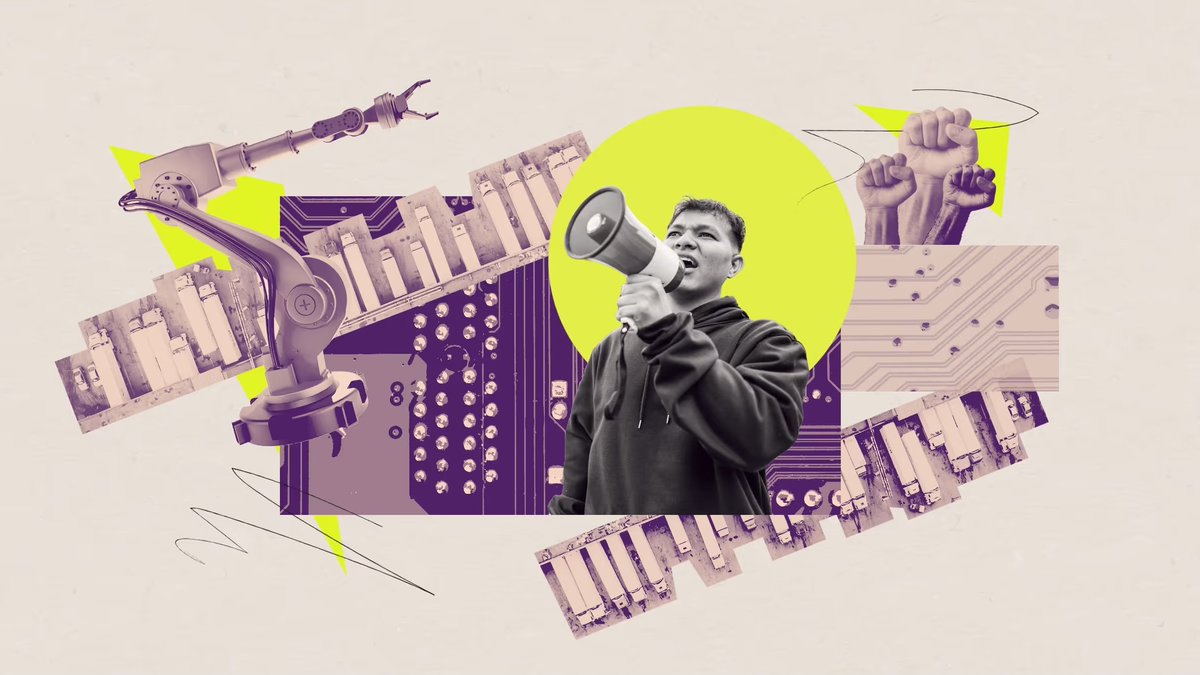
Your AI might form a labor union. Or get you a better job in the future. For our free newsletter this week, we cover synthetic unions: AI agents bargaining on behalf of workers. 
@IrenaCronin and I write this newsletter every week.   Synthetic unions are labor organizations that use AI bargaining agents to analyze company data, simulate contract and strike scenarios, and generate negotiation strategies, allowing human leaders to make better informed decisions while raising new issues around fairness, privacy, regulation, and the balance of power between workers and employers. Read and subscribe for free at unaligned.io
Robert Scoble tweet media
English
16
16
79
35.2K
Infinite Retina retweetledi
Ken Gardner
Ken Gardner@kennethcgardner·
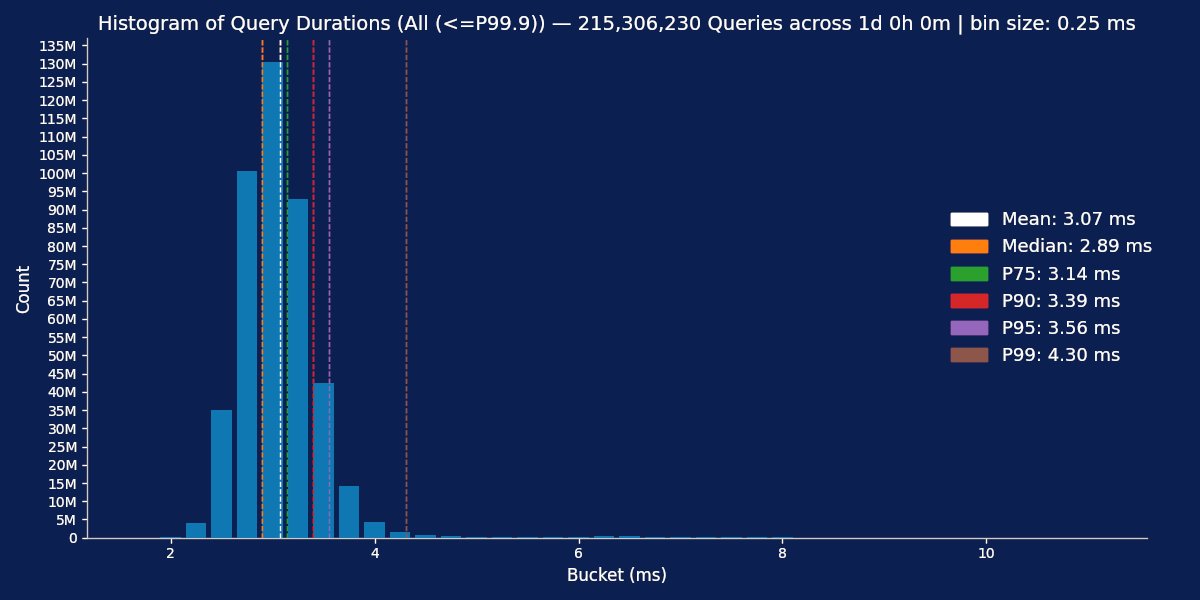
DADOS Lightning+ continues to get much faster and more predictable for real-time workloads, which matters as data volumes grow and agents become more complex, multi-step and autonomous. In a new 24-hour benchmark, Lightning+ processed about 215.3M queries over 24 hours with a 2.89 ms median, P95 at 3.56ms ms, P99 at 4.30 ms, and a 100 percent success rate, delivering a P99 less than 5.0 ms, much tighter latency distribution and a sharply reduced long tail. These gains come from architectural improvements inside Lightning+, not from client behavior or ingestion shortcuts. These are astonishing results and we think we will continue to improve. Free Trials available on request. dadostech.com #AI #AgenticAI #IndustrialAl #Benchmark #LightningPlus #EdgeAl #AIDev
Ken Gardner tweet media
English
0
5
9
4.1K
Infinite Retina retweetledi
Robert Scoble
Robert Scoble@Scobleizer·
What is ephemeral intelligence? 
@IrenaCronin and I cover this in our newsletter this week, which makes on AI themes.   Ephemeral intelligence refers to short lived AI agents designed to perform a single task with minimal context and then delete themselves completely. They retain no memory, build no identity, and do not persist beyond their assignment. This approach improves privacy, reduces long term risk, and prevents unintended behavioral drift, but it also creates difficult questions about accountability, auditability, and ethics because the agent disappears once its job is done. As organizations explore this model for sensitive tasks in medicine, finance, legal work, and security, society must grapple with how temporary AI changes responsibility, regulation, and expectations of continuity in artificial systems. Read for free at unaligned.io (and please subscribe).
Robert Scoble tweet media
English
20
20
128
32K
Infinite Retina retweetledi
Robert Scoble
Robert Scoble@Scobleizer·
I'm evolving my thinking about privacy. Each of us has stuff that we don't want to "leak" into models. Intellectual property. Personal mental illness issues. Finances and investments. So how will we protect it all? A variety of new ways, but the biggest is to run models locally and then make sure it isn't sending your stuff out to other models. How to do that? We need a firewall between our local AI (running a robot in our homes, for instance) and the cloud based systems like at OpenAI or here on X. In our weekly newsletter this week @IrenaCronin and I discuss just this.   Personal AI firewalls are intelligent systems designed to protect users from digital surveillance and data exploitation. Unlike passive privacy tools, they act as active defenders that understand context, block invasive requests, and rewrite or mask sensitive data in real time. Built on natural language understanding and adaptive learning, they can negotiate permissions, anonymize information, and counter manipulative algorithms. By safeguarding users across web, mobile, and XR environments, these AI guardians could restore personal autonomy and redefine privacy in a hyper-surveilled world. Read for free and please subscribe: unaligned.io
Robert Scoble tweet media
English
29
20
163
16.1K
Infinite Retina retweetledi
Robert Scoble
Robert Scoble@Scobleizer·
AI's make mistakes. Can we learn from them? Yes! 
@IrenaCronin and I write this newsletter every week.   AI mistakes, whether they reveal hidden biases, generate unexpected creative outputs, or highlight anomalies in data, can serve as valuable learning tools for humans. Instead of viewing them only as flaws to correct, these errors can inspire new ideas, challenge assumptions, and even guide scientific or organizational discovery. By treating mistakes as opportunities for reflection, humans can expand their own thinking while ensuring responsible oversight of AI systems. Read for free: unaligned.io Please subscribe while you are there!
Robert Scoble tweet media
English
9
13
71
29.5K
Infinite Retina retweetledi
Robert Scoble
Robert Scoble@Scobleizer·
I didn't understand my own subconscious mind until I visited the VR/AR lab at Stanford University and Jeremy Bailenson had me walk the plank. There I learned that my subconscious mind would overrule my rational mind. In our newsletter this week @IrenaCronin discuss AI's subconsious mind. The idea of the AI subconscious describes the hidden patterns, biases, and emergent influences within generative models that shape outputs without awareness. Like the human subconscious, these influences arise from training data, latent structures, and optimization processes. They appear in cultural archetypes, biases, dreamlike generations, and errors. While machines lack subjective experience, their subconscious functions as a mirror of human culture and may evolve into alien forms through synthetic data. Understanding and governing this hidden layer is vital, as it carries risks of bias, manipulation, and cultural homogenization but also offers opportunities for creativity, reflection, and new insights into intelligence itself. Read and subscribe for free at unaligned.io
Robert Scoble tweet media
English
16
18
100
11.9K
Infinite Retina retweetledi
Robert Scoble
Robert Scoble@Scobleizer·
Agent-generated worlds? Yes, instead of using human data.   AI has long depended on human data, but this supply is limited, biased, and legally contested. Agent-generated worlds offer an alternative, where AI learns inside simulated environments it creates and inhabits. These synthetic worlds provide infinite, customizable training data, enable exploration of rare scenarios, and allow discovery of novel strategies. The approach brings major benefits in scalability and ethics but also risks of bias, detachment from human values, and gaps in real-world transfer. The likely future is a hybrid model where synthetic and human data work together to train more capable systems. Welcome to our free newsletter this week, we discuss using agent-generated worlds Instead of human data. @IrenaCronin and I write this newsletter every week. Read for free at link below.
Robert Scoble tweet media
English
10
13
74
13.4K