Muthu Ramadoss retweetledi
Muthu Ramadoss
2.9K posts


Muthu Ramadoss
@IntelliBitz
Proprietor, Saradha Automobiles. Entrepreneur from Tamilnadu.
Chennai, Tamilnadu, India. Katılım Mart 2007
3K Takip Edilen1.3K Takipçiler

Muthu Ramadoss retweetledi

Suddenly, you're 5 years in with nothing to show for it. Then you turn the corner...and make back those 5 years of losses in 6 months.
This is the reality for most traders, me included. Years of mediocrity, breaking even, highs & lows, inconsistency...nothing working.
Years where nothing happens, then weeks where years happen. That's the power of compounding skills, experiences, and capital.
You’re delusional if you think you won’t have to pay market tuition...medical school is $500K, business mba is $200K, law school is $300K.
But you're just gonna waltz into the most competitive game in existence and beat the market in year one? or two?
Gotta pay the piper.
English
Muthu Ramadoss retweetledi

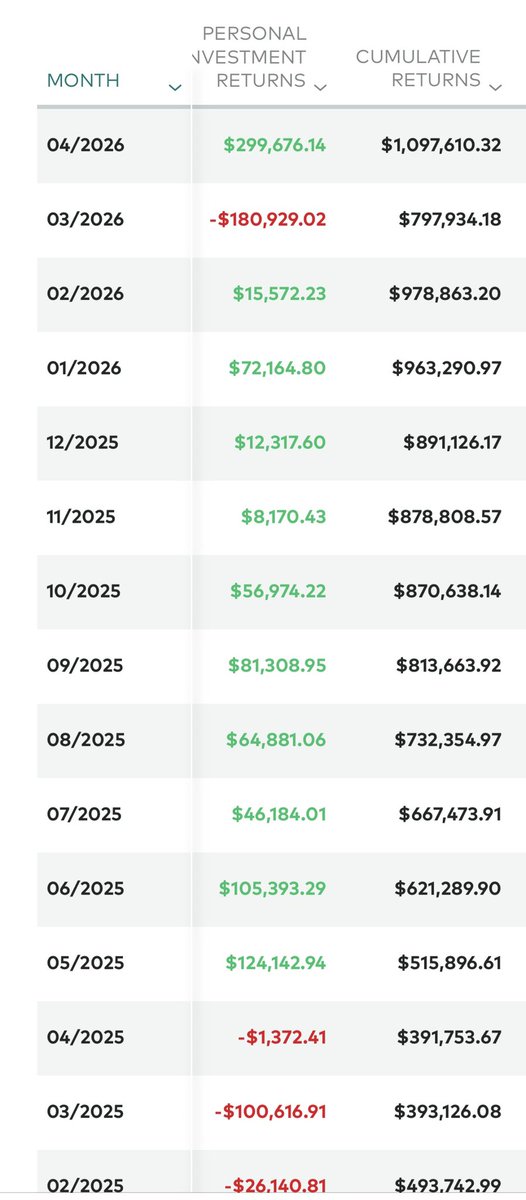
We closed March down ~$180,000 in our Taxable Brokerage 🔴
Most people would’ve paused. Questioned everything. Waited for “clarity.” As we have been sharing, we continued to do the same old boring stuff.
We kept buying. $2,500 every single week. No hesitation.
Then April hit…
In ONE month: +$299,676 🟢
Net 2 month impact: $120,000 🟢
From a “tough drawdown” to nearly a $300K gain in 30 days. Same portfolio. Same strategy. No changes. The best days don’t send us a calendar invite. They show up right after the worst ones. If you panic during the drop, you miss the rebound. And the rebound is where the money is made.
This is why we:
- Stay consistent
- Ignore the noise
- Dollar cost average
- Trust the system we built
Because timing this? Impossible. But being there for it? That’s a choice.
Zoom out: Cumulative returns now sitting at ~$1.1M
Not from guessing. Not from timing. From consistency and systematic approach. I can also assure you we will see more volatility and that may decrease substantially in the future as well. It’s expected. All part of the game.
Boring wins. Every time.
English
Muthu Ramadoss retweetledi
Turmeric kills cancer cells. Turmeric reduces arthritis pain. Turmeric clears brain fog. Turmeric heals your gut.
6,000 studies confirm it. Add black pepper. Absorption jumps 2000%.
English
Muthu Ramadoss retweetledi

what type of pump and dump are the market makers doing with big tech today after earnings 😂
$META worst day since October 2025
$MSFT back to $400
$AMZN quickest $14 reversal I’ve ever seen
$NVDA taken down below $200
looks like $GOOGL is the market’s favorite holding onto it’s +5%
pretty crazy swing from yesterday
English
Muthu Ramadoss retweetledi

A financial analyst turned $53,000 into $48 MILLION posting stock tips on Reddit from his basement. He nearly broke Wall Street doing it.
> In September 2019, Keith Gill was a 34 year old financial analyst at MassMutual earning a regular salary.
> Under the username DeepFuckingValue on Reddit and Roaring Kitty on YouTube, he posted a screenshot of a $53,000 bet on GameStop.
> A dying video game retailer that Wall Street had been shorting into the ground.
> Gill had spotted something. Hedge funds had borrowed and sold 140% of GameStop’s available shares.
> Mathematically impossible to cover without buying every share back at any price.
> For over a year, he was ignored. His posts were downvoted and mocked.
> Then in January 2021, Reddit’s WallStreetBets forum discovered his position and started buying.
> GameStop went from $4 to $483 in three weeks.
The short sellers were trapped. Every dollar the stock went up cost them more money.
> Melvin Capital lost 53% of its fund in one month and had to be bailed out with $2.75 BILLION. It shut down completely in 2022.
> Total hedge fund losses exceeded $20 BILLION.
> Roaring Kitty was streaming the entire thing live on YouTube from his basement, wearing a red bandana, drinking from a cat mug.
> By January 27 his $53,000 was worth $48 MILLION.
> Then Robinhood froze the buy button. The sell button still worked. The stock crashed within hours.
> Robinhood’s biggest customer was Citadel. Citadel had just bailed out Melvin Capital the same week.
> Congress called emergency hearings and subpoenaed Gill to testify. His entire opening line was five words. “I like the stock.”
> Hollywood made a movie about him called Dumb Money. Netflix made a documentary called Eat the Rich.
> He disappeared from the internet for three years.
> He returned in May 2024 with a single meme posted on X. GameStop pumped 50% on the news he was back.
> Days later he revealed he had quietly built a 5 million share GameStop position worth $180 MILLION during his silence.
> His net worth peaked at $289 MILLION.
> A guy in a basement saw what every hedge fund analyst on Wall Street had missed.
> He posted it for free on Reddit.
The system that called him an idiot ended up rewriting its own rules to stop him.
English
Muthu Ramadoss retweetledi

Been studying $BLOX mechanics deeply and wanted to share some observations.
The fund harvests roughly 50% annually from its options positions but only distributes 36%. That 14% buffer is what's keeping NAV roughly flat while BTC is down 40% from ATH. The options overlay is absorbing the drawdown in real time. Most holders don't realize this is happening under the hood.
What's interesting is that same buffer works differently depending on the regime. In a bear it's the shock absorber protecting NAV. In a bull it becomes genuine NAV accretion on top of the underlying appreciation. Same mechanism, completely different outcome depending on where we are in the cycle.
The fund is also adapting in real time. BHDG provides tail hedge protection. NGHT reduces daytime BTC volatility exposure. Credit spreads profit when the underlying declines, partially offsetting losses on the bull put book. These aren't random positions. They're building blocks of a more resilient fund.
Given that the fund's primary investment objective is capital appreciation with income as a secondary consideration, I fully expect yield compression over time. That's a feature not a bug. A sustainable 25% yield with contained drawdowns is worth far more than an unsustainable 40% yield that bleeds NAV every bear cycle.
If you're DRIPing through this bear you're buying shares at $15 that the cycle math has significantly higher. The boring weeks are the most productive ones.
English
Muthu Ramadoss retweetledi

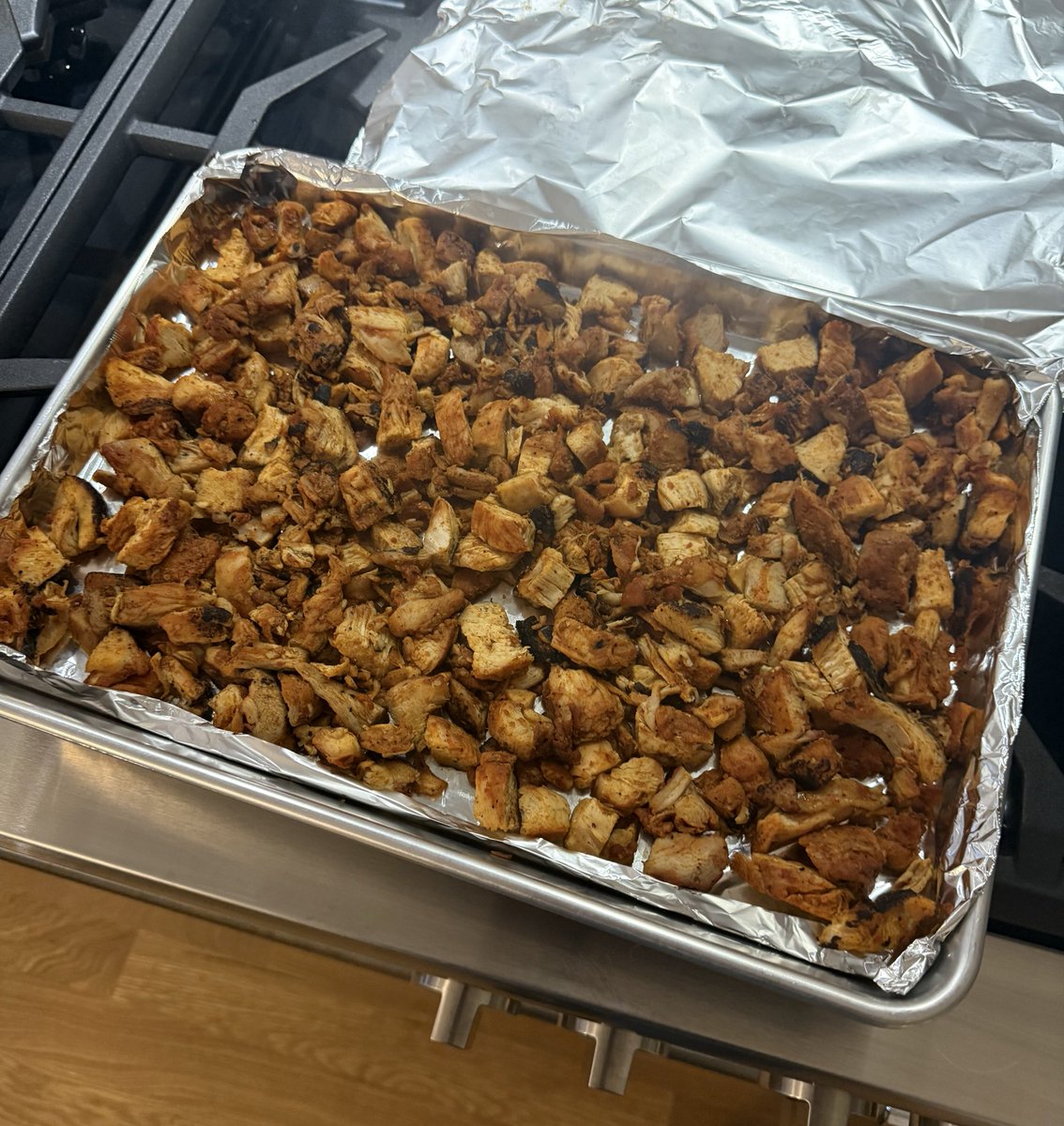
You get all this chicken at Costco for $12.
This would be $1000 at Chipotle
English
Muthu Ramadoss retweetledi

You're rolling losing options wrong.
Here's the right way to roll:
Step 1: Position losing with 7 days left
Step 2: Don't panic, don't close yet
Step 3: Check if stock still above strike
Step 4: Would you own this stock? Yes?
Step 5: Find same strike 30 days out
Step 6: Buy back current option first
Step 7: Sell new option 30 days out
Step 8: Collect net credit if possible
Step 9: New position resets the clock
Step 10: Repeat until profitable or assigned
Rolling isn't losing.
English
Muthu Ramadoss retweetledi

Attention dividend lovers.
You've been told dividends are the key to wealth.
You've heard Jack Bogle's famous quote about how reinvested dividends made up 95% of long-term stock returns.
But there's something most people miss.
THE BOGLE QUOTE
"A $10,000 investment in the S&P 500 Index at its inception in 1926 would have grown to about $33.1 million by the end of September 2007 with all dividends reinvested (10.4% compounded).
Without reinvesting dividends, the value would have been just over $1.2 million (6.1% compounded) — an astonishing difference of $32 million.
Over the past 81 years, reinvested dividend income thus accounted for about 95% of the long-term total return."
There you have it. Dividends are more important than stock price appreciation. Right?
Not so fast.
THE KEY WORD
Notice that Bogle used the word "REINVESTMENT" three times.
This reinvestment and the resulting return are responsible for almost the entire long-term total return of stocks.
You don't achieve this result if you invest in stocks and SPEND the dividend.
The critical feature Bogle pointed out is the advantage of REINVESTING dividends into stocks.
THE MISCONCEPTION
This makes a dramatic difference in the outcome.
But it does NOT prove that income funds or high-yield stocks are likely to deliver better returns.
You would have achieved a better result than Bogle's example if you had reinvested dividends into companies that earned a higher return than the index.
Or if companies simply retained and reinvested all earnings instead of paying a dividend — provided they could deploy the additional cash at a reasonable return.
THE BERKSHIRE EXAMPLE
This is illustrated by Warren Buffett's Berkshire Hathaway.
It has never paid a dividend in the 50+ years he's run it.
Buffett rightly concluded: If the return he could achieve by reinvesting funds at Berkshire was higher than the S&P 500 Index return, he would create better performance for investors by retaining and reinvesting all earnings.
You might think you could achieve the same result if Berkshire paid a dividend and you reinvested it.
Not if you pay income tax on your dividends.
Only the after-tax amount would be available for reinvestment.
THE TRUTH
It's not the dividend that matters.
It's not even just the reinvestment of the dividend.
It's the RETURN on the reinvested dividend that determines performance.
THE EXAMPLE
Company A: 20% return on capital. Pays no dividend. Reinvests 100% of earnings.
Company B: 20% return on capital. Reinvests 70% of earnings. Pays 30% as dividend (which investors spend or don't reinvest).
Company C: 10% return on capital. Reinvests 100% of earnings.
Result after 20 years:
Company A vastly outperforms both B and C.
Company B underperforms A (because 30% leaked out as dividends).
Company C underperforms both A and B (because lower return on reinvested capital).
THE LESSON
The return you achieve on reinvested earnings or dividends makes the BIGGEST difference.
Not the dividend itself.
If you spend the dividend or don't reinvest it, you underperform.
If the company can reinvest earnings at a high return, you DON'T WANT a dividend.
You want them to keep the cash and compound it.
THE PERFECT COMPANY
The perfect company:
– Earns a high return on capital (20%+)
– Reinvests 100% of earnings
– Pays no dividend
– Compounds your capital tax-free
Berkshire Hathaway. Google. Amazon (historically). Meta.
These companies created MORE wealth by NOT paying dividends.
Because they could deploy capital better than you could.
THE TAKEAWAY
Dividends aren't bad.
But they're not the goal.
The goal is COMPOUNDING.
And sometimes, the best way to compound is to let the company keep the cash and reinvest it at high returns.
Not send it to you as a dividend that gets taxed and then reinvested at lower returns.
Choose companies with high returns on capital.
Not high dividend yields.
Source: Terry Smith, Investing for Growth

English
Muthu Ramadoss retweetledi

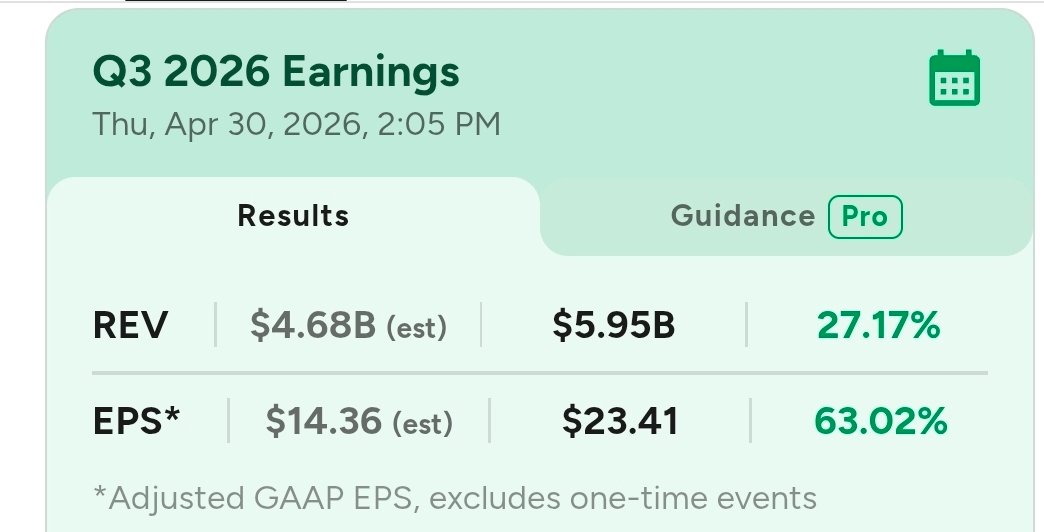
$SNDK Holy Shit
$23.41 EPS. 63% beat
$31.5 guided
The buyback math at this rate is almost absurd.
This is what a real earnings machine looks like
English
Muthu Ramadoss retweetledi

$500,000 with the 4% rule = $20,000 per year. That's poverty income.
$500,000 in $GPIQ = $52,500 per year
$500,000 in $TDAQ = $85,000 per year
$500,000 in $GIAX = $120,000 per year
Most people don't know that these funds exist. Don't be most people.
English
Muthu Ramadoss retweetledi

THIS IS UNBELIEVABLE.
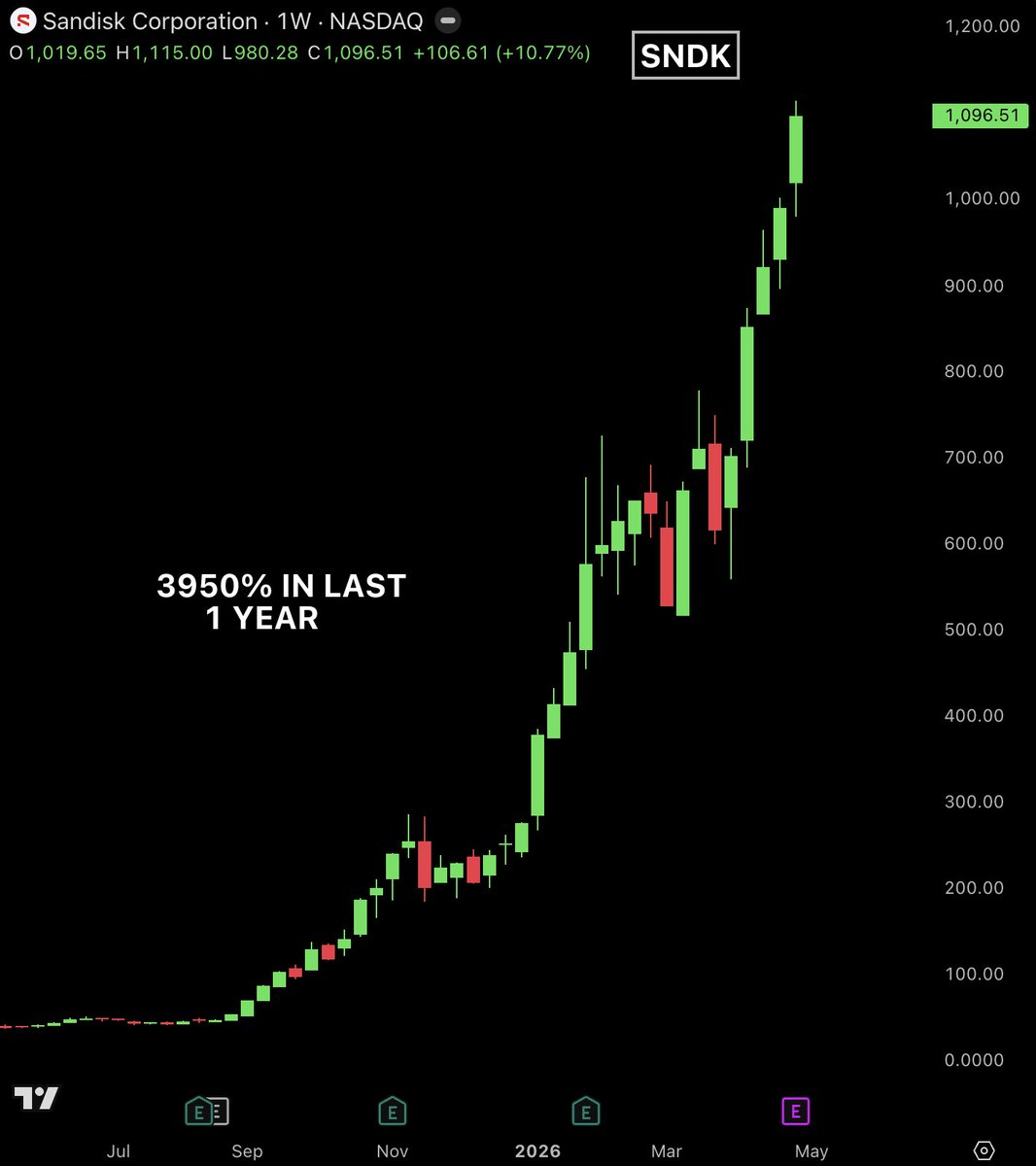
SanDisk just hit another all time high and is now up almost 4,000% in the last 1 year.
If you invested $50,000 in $SNDK last year, you would be sitting on $2,000,000 today.
SanDisk makes NAND flash memory chips and SSDs for AI data centers.
Every AI data center being built right now needs massive amounts of NAND storage. Supply cannot keep up with demand and SanDisk is one of the few companies that makes this chip at scale.

English
Muthu Ramadoss retweetledi

If I had to pick 10 stocks to hold until 2036, this would be my list:
1. $NVDA – NVIDIA (AI computing backbone)
2. $VRT – Vertiv (power & cooling for every AI data center)
3. $MP – MP Materials (rare earths – defense + EVs)
4. $LHX – L3Harris (defense & space communications)
5. $RKLB – Rocket Lab (space infrastructure)
6. $AMZN – Amazon (cloud + AI + logistics)
7. $PLTR – Palantir (AI for defense & enterprise)
8. $ETN – Eaton (grid & data center power management)
9. $CEG – Constellation Energy (nuclear + clean base load)
10. $AMD – AMD (the #2 AI chip player)
No hype. No lottery tickets. Just real companies building the AI, energy, defense, and space infrastructure of the next decade.
What would you add or remove?




English
Muthu Ramadoss retweetledi

i don't know who needs to hear this but:
a stock downtrending for 1 month is fine.
downtrending for 6+ months is not.
Your job isn't to buy as things keep falling. your job is to buy when behavior changes.
"by the time it changes it's already up 30%!"
so what. opportunity cost is real. sitting in a dead stock for 10 months averaging down and stressing every day versus being in cash or actual leaders? easy choice.
yes i had this exact issue. this is for everyone trapped in "value" stocks.
English
Muthu Ramadoss retweetledi

My go-to “SAFER” high-yield dividend ETFs 💰
Save this for later 🔖
$GPIX – 8%
$GPIQ – 10%
$JEPQ – 11%
$QDVO – 10%
$SPYI – 12%
$QQQI – 14%
$OMAH – 15%
$TDAQ – 17%
Which of these are in your portfolio? 📊👇
English
Muthu Ramadoss retweetledi

Muthu Ramadoss retweetledi
You need to put $60,000 down for a rental property. All that just to clear $200 per month in free cashflow per door.
Meanwhile.
$CHPY 60k = $2,000 per month
$KSLV 60k = $900 per month
$TDAQ 60k = $850 per month
$QQQI 60k = $700 per month
$OVL 60k = $525 per month
English
Muthu Ramadoss retweetledi

We’re going to experience the greatest wealth transfer over the next decade…10 stocks to own are:
1) AMD $AMD
2) NVIDIA $NVDA
3) Micron $MU
4) Taiwan Semi $TSM
5) Sandisk $SNDK
6) Google $GOOG
7) Robinhood $HOOD
8) Western Digital $WDC
9) Broadcom $AVGO
10) Microsoft $MSFT
English
Muthu Ramadoss retweetledi