Jennifer Sygo

5.3K posts

Jennifer Sygo banner
Jennifer Sygo

Jennifer Sygo

@JenniferSygo

Performance Dietitian, Cleveland Clinic Canada, Toronto Raptors, Athletics Canada. Lead Dietitian, Gymnastics Canada. PhD student. Mom. Lover of cereal.

Toronto Katılım Ekim 2011
783 Takip Edilen5.1K Takipçiler
Jennifer Sygo retweetledi
Carlos A. Monteiro
Carlos A. Monteiro@CMonteiro_USP·
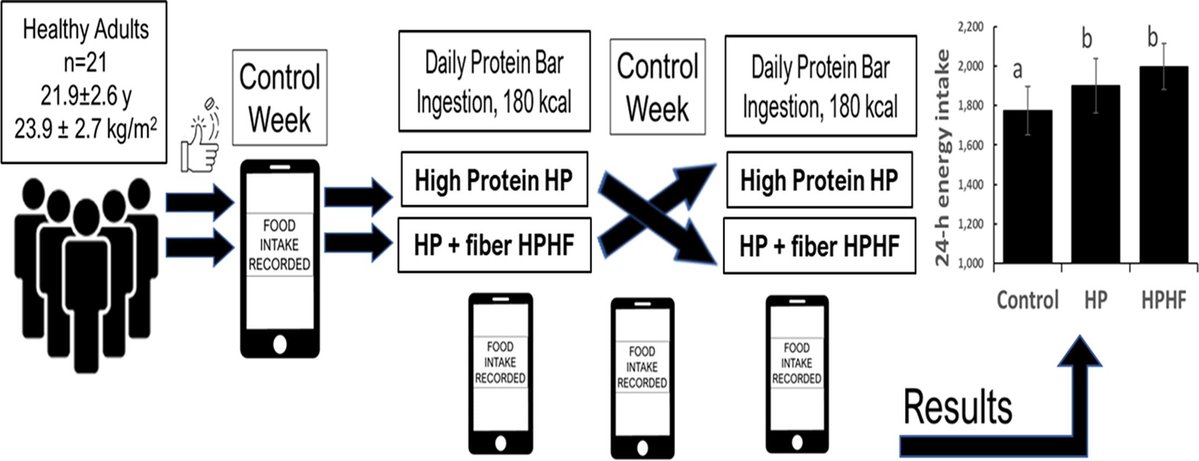
A crossover trial on protein-rich bars—an iconic UPF marketed for weight loss, with a global market nearing US$5 billion—found that adding one bar (180 kcal) to the usual diet for 7 days increased daily energy intake (by 10%) and body fat (3% in 7 days)🙀. #s0035" target="_blank" rel="nofollow noopener">sciencedirect.com/science/articl…
Carlos A. Monteiro tweet media
English
7
27
86
83.4K
Jennifer Sygo retweetledi
The Lancet
The Lancet@TheLancet·
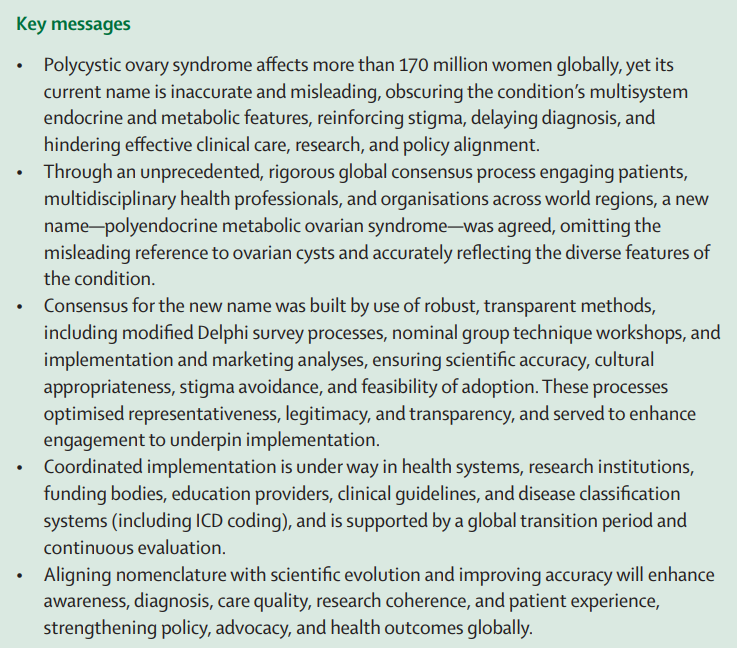
Experts reach consensus to rename polycystic ovary syndrome (PCOS), better reflecting the condition’s full health impacts. Find out more 👉 spkl.io/6011ACDWW @ESEndocrinology #ECE2026
The Lancet tweet media
English
23
560
1.2K
186.3K
Jennifer Sygo retweetledi
Stuart Phillips (he/him)
Stuart Phillips (he/him)@mackinprof·
How much “muscle” are people actually losing on Ozempic and other GLP-1 drugs? The first thing to understand: Lean mass is not the same thing as skeletal muscle mass. That distinction matters.
Jesse Morse, M.D.@DrJesseMorse

@mackinprof @MichaelAlbertMD First off do you really have he/him in your name? 🤣 Thats really all i need to know. But here’s the data to properly educate you

English
5
7
68
14.9K
Jennifer Sygo retweetledi
Brad Schoenfeld, PhD
Brad Schoenfeld, PhD@BradSchoenfeld·
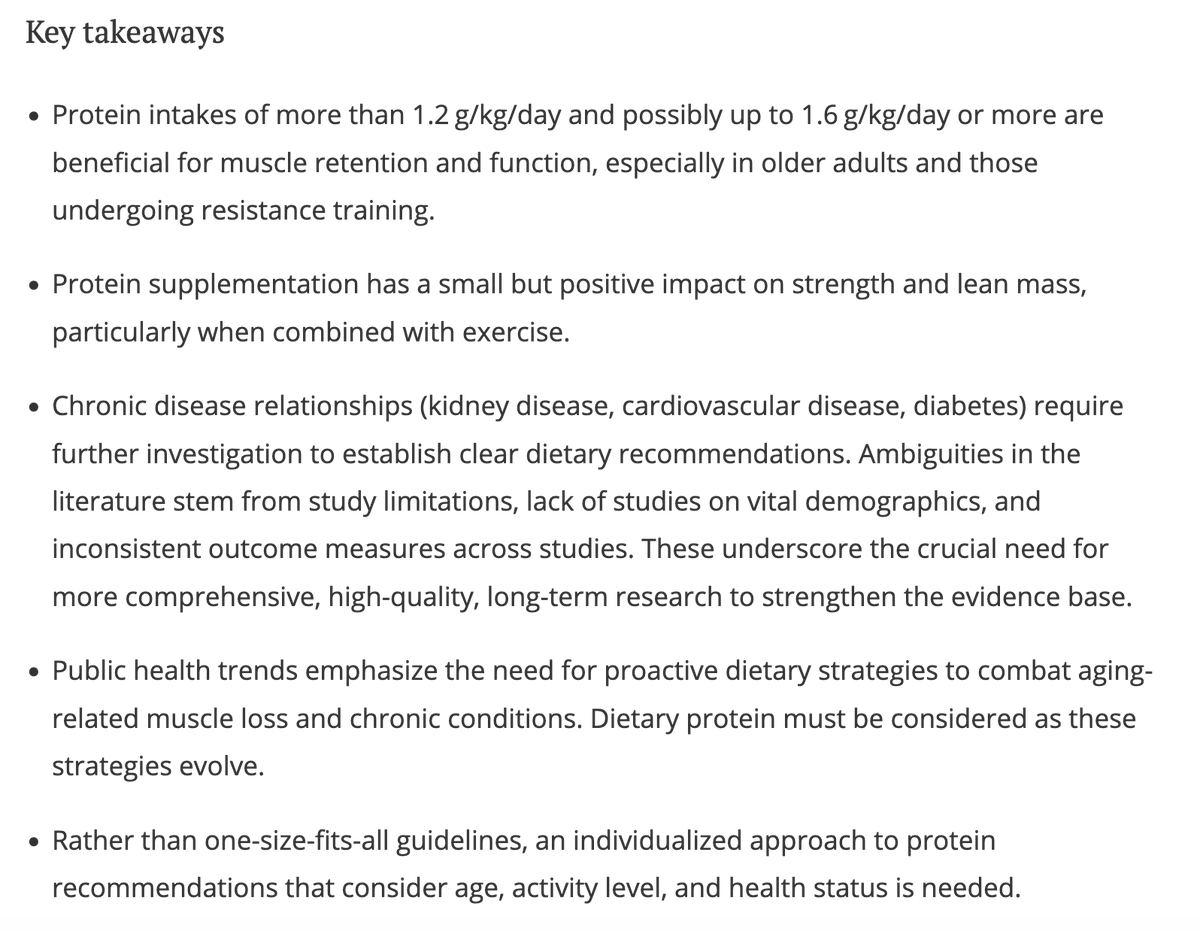
Findings from an expert panel on dietary protein needs: #d1e1435" target="_blank" rel="nofollow noopener">tandfonline.com/doi/full/10.10…
Brad Schoenfeld, PhD tweet media
English
4
21
105
7.8K
Jennifer Sygo retweetledi
Jonah Rosner | Elite Sport Scientist
Endurance athletes appear to need more protein on recovery days than on training days. Witard, Hearris, and Morgan reviewed a decade of metabolic studies in Sports Medicine (2025). The IAAO data (a modern method for estimating daily protein need) point to these targets in endurance-trained men: About 1.8 g/kg on a standard training day. About 1.95 g/kg on a low-carb training day. More than 2.0 g/kg on a recovery day. Habitual intake sits around 1.5 g/kg. The RDA for sedentary adults is 0.8 g/kg. Why recovery days run highest: endurance training damages contractile fibres, repair continues for over 24 hours after a session, and amino acids are oxidised as fuel during exercise (about 6% of total energy cost). The repair bill is paid after the work, not during it. Per-meal dose after a hard session: about 0.5 g/kg appears maximally effective for repairing contractile fibres. Roughly 35 g for a 70 kg runner, and about twice the post-strength dose. This is a single dose-response study with a wide CI (0.26 to 0.72 g/kg). Treat it as emerging. One caveat: no IAAO study has been done in female endurance athletes, and none in masters over 65. The 1.9 g/kg luteal-phase figure is extrapolated from team-sport data. Carbohydrate remains primary for endurance fuel. Protein supports recovery and adaptation alongside it. Huge thanks to Witard, Hearris, and Morgan for this work. Witard et al. (2025), Sports Medicine. doi.org/10.1007/s40279…
English
8
39
276
79.7K
Jennifer Sygo retweetledi
Michael Albert, MD
Michael Albert, MD@MichaelAlbertMD·
Two systematic reviews on GLP-1s and body composition. Same drug class. Same trial population. Opposite conclusions. Both correct. Plus a March 2026 paper that suggests the entire "GLP-1s destroy muscle" panic is mostly a measurement artifact. Here's the reconciliation 🧵
English
5
16
101
38K
Jennifer Sygo retweetledi
Steve Magness
Steve Magness@stevemagness·
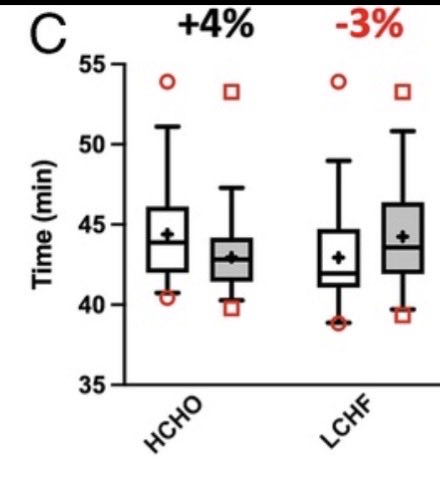
TIme for a rant. Why is it so hard to study performance in the lab? One major reason is that what feels like a massive improvement in the real world is hard to pick up in the lab. Take super shoes, you get a 3-4% boost in performance. Massive. You feel it on race day. But in the lab, even the largest single factor boost we get...it's hard to pick apart. Now, take it a step further to a still significant but smaller boost, say 1% from high carb fueling or bicarb or any other legitimate intervention... It's near impossible to get this to show up consistently in studies on a small number of amateur or moderately trained folks. Why? The variation in performance is too large. If you're a 6 minute miler, you don't run 6min ont he dot every time you race. On a great day, you run 6:00. On a good day, maybe 6:05. Average day 6:08. Bad day 6:15. Disaster? 6:25. Hopkins & Hewson (2001) studied the day variability of performance and basically found: Elite/world-class trained: ~1.5% Sub-elite well-trained: ~2.5% Recreational/amateur: ~4% The point is the variation in day to day performance is much larger than the intervention. For amateurs, its bigger than the single biggest performance breakthrough we've had in running (super shoes!). To counteract this, we try to use larger number of folks, but in exercise science that almost never happens because of recruiting, funding, and other constraints. So what you tend to get with small N studies is that most are statistically blind to any change under 3-4%. And yet...most of our interventions from fuel to bicarb to caffeine are all relatively small effects (0.5-2%) which are practically very significant, but hard to detect in the lab. That's why... performance in the real world tends to show what works. It's not perfect. But if you've got hundreds or thousands of elites and sub-elites taking bicarb and saying: "Hmm, I ran a bit faster in each race I used it this season..." It sticks around. One of the main reasons is athletes don't just test things in a one off study. They test it in training, key workouts, numerous races, etc. Compare notes with their training partners, etc. It's easier to surface a signal over that longer period. Again, it's not perfect. But what often happens is a new supplement, tool, tech shows up. Everyone tries it. For a brief period you don't quite know as there's a copycat nature...But if the performance boost is significant it stays. If it doesn't, it fades away. So when you see someone say, "Hey in this study of 14 amateur runners, taking carbs didn't improve performance..." the answer is almost always, ya because of day to day performance variation, you can't pick up the signal from the noise. Science is great. I love research. But don't overlook the natural trend of trial and error in the arena. It generally surfaces what has value.
English
11
17
213
32.5K
Jennifer Sygo retweetledi
CBC Olympics
CBC Olympics@CBCOlympics·
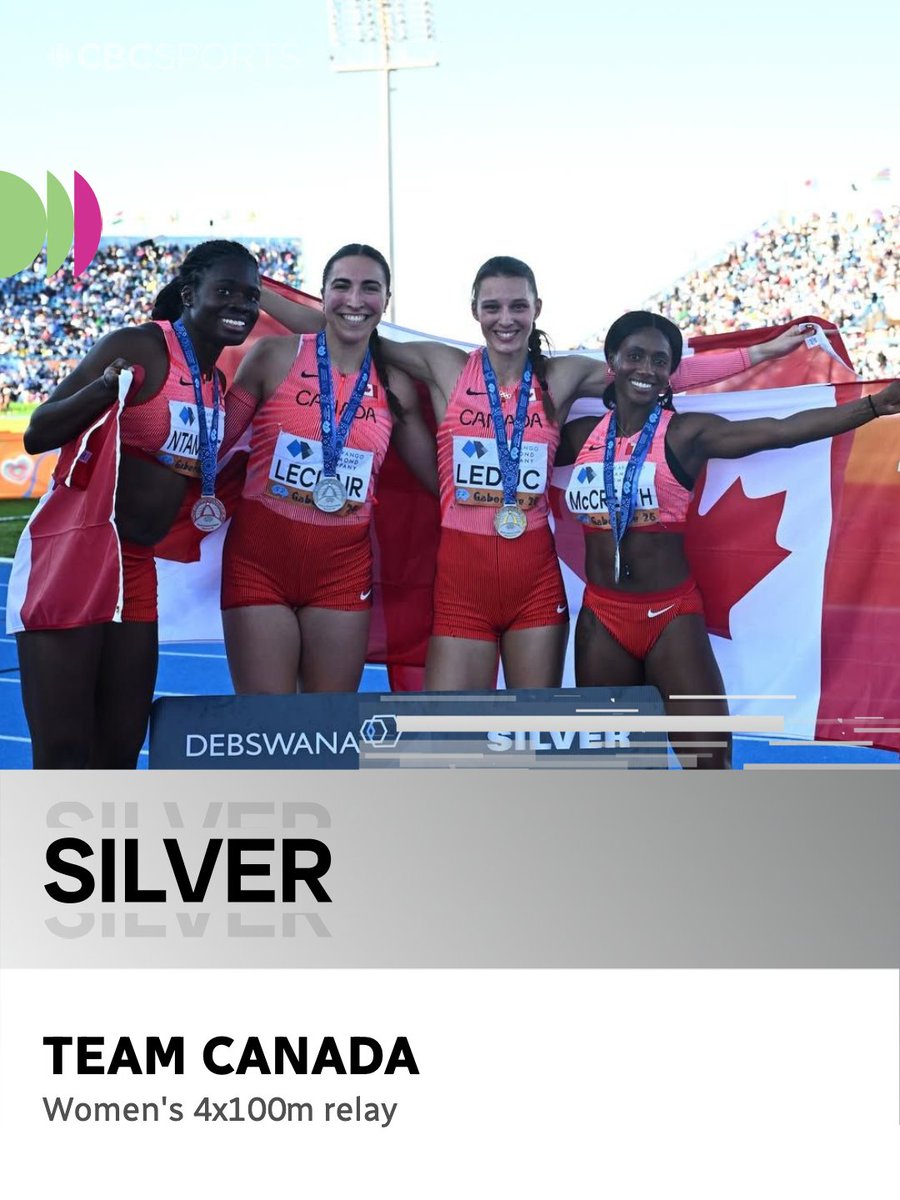
Shining in silver🥈🇨🇦 The Canadian women’s 4x100m relay team raced a time of 42.17 at the World Athletics Relays, earning a silver medal and breaking the national record👏
CBC Olympics tweet media
English
6
48
454
8.3K
Jennifer Sygo retweetledi
Devin Heroux
Devin Heroux@Devin_Heroux·
BRONZE FOR CANADA 🇨🇦 The Canadian women’s 4x400m relay team wins bronze at the World Relays. Brilliant running by Zoe Sherar, Lauren Gale, Jasneet Nijjar and Saskatchewan’s Savannah Sutherland surged to the line for third.
Devin Heroux tweet media
English
5
45
719
9.4K
Jennifer Sygo retweetledi
Devin Heroux
Devin Heroux@Devin_Heroux·
NATIONAL RECORD The Canadian women’s 4x100m relay break the national record to finish with a silver medal at the World Relays. Jamaica gold. Spain bronze. Sade McCreath, Audrey Leduc, Marie-Eloise Leclair and Donna Ntambue with a time of 42.17. Spectacular race.
Devin Heroux tweet media
English
17
118
1.2K
16K
Jennifer Sygo retweetledi
Devin Heroux
Devin Heroux@Devin_Heroux·
FIVE FOR FIVE Canada has qualified all five teams at the World Relay championships in Gabrone, Botswana. The mixed 4x400m just broke the national record to secure a spot at next year's world championships. Finals upcoming. Watch live here: cbc.ca/sports/olympic…
English
4
85
760
10.3K
Jennifer Sygo retweetledi
CBC Olympics
CBC Olympics@CBCOlympics·
Canada’s 4x100 mixed relay set a 40.08 world record in Gaborone, qualifying for the 2027 Worlds, this summer’s Ultimate Championships and Sunday’s final. The Canadian hold on the record was short-lived, as Jamaica ran to a time of 39.99 to win the day’s third heat.
English
5
38
342
15.4K
Jennifer Sygo retweetledi
Sportsnet
Sportsnet@Sportsnet·
RJ BARRETT HITS THE GO-AHEAD BUCKET IN OVERTIME TO SEND THE RAPTORS TO GAME 7 😱
English
4
46
500
24.7K
Jennifer Sygo retweetledi
Brad Schoenfeld, PhD
Brad Schoenfeld, PhD@BradSchoenfeld·
Our recently published meta-analysis found that animal-based proteins confer a modest advantage in stimulating muscle protein synthesis (MPS) compared to plant-based proteins (PMID: 42055214). At first glance, this might suggest a benefit to prioritizing animal protein for muscle building. However, the interpretation is more nuanced. The observed advantage of animal protein was largely confined to older adults, whereas younger individuals exhibited comparable MPS responses regardless of protein source. Although speculative, this discrepancy may be related to the lower leucine content typically found in plant-based proteins. In older adults, anabolic resistance appears to elevate the leucine threshold, meaning higher per-meal leucine intake is required to effectively stimulate MPS. Importantly, this limitation can be mitigated by increasing total protein intake or fortifying plant proteins with additional leucine (PMID: 34515966). A key limitation of the meta-analysis is that it assessed acute MPS responses rather than long-term changes in muscle mass. Nonetheless, when considered alongside recent longitudinal studies, the evidence suggests that both plant- and animal-based proteins can support similar muscular adaptations, provided total daily protein intake is sufficient (approximately 1.6 g/kg; e.g., PMID: 33599941). That said, older individuals may benefit from consuming slightly higher doses of plant protein or supplementing with leucine to optimize the anabolic response.
Brad Schoenfeld, PhD tweet media
English
6
31
164
12.6K
Jennifer Sygo retweetledi
Steve Magness
Steve Magness@stevemagness·
Mary Cain's new book "This is Not About Running," should be required reading for high school and college coaches and athletes. It's what happens when we allow the win at all costs mindset to take over, with no checks in place, in an environment that promoted craziness... It's a great read. And Cain doesn't hold back. We're all human. We all mess up. But there are far too many people in this sport who witnessed what occurred with Mary and others, who turned a blind eye because they wanted to win no matter what. They wanted their $$$ or prestige and were willing to do whatever it took to keep chasing that fragile dream. And many of these folks are still in the sport, acting like nothing happened. If you don't speak out, if we don't have folks say this isn't right, the cycle continues. More abuse and cheating follow. So hats off to Cain for speaking out. And shame on those who continue to hide, hoping that folks will just forget that they chose $$$ and status over doing the right thing. Go read Cain's book: This is Not About Running.
English
5
23
274
28.2K
Jennifer Sygo retweetledi
Brad Schoenfeld, PhD
Brad Schoenfeld, PhD@BradSchoenfeld·
Several years ago, a scholarly paper (PMID: 31897480) proposed that consuming high levels of protein (>1.6 g/kg/day) might lead to enlargement of internal organs such as the heart, liver, intestines, and kidneys. The author speculated that protein intake beyond what is needed for muscle-building could instead be redirected toward amino acid metabolism or stimulate growth in these organs. While that reasoning may sound logical, this does not appear to be the case in practice. A new study (PMID: 42044299) examined three groups of young individuals: enhanced bodybuilders, natty bodybuilders, and a control of recreationally active participants. Both groups of bodybuilders consumed high protein intakes (>2.5 g/kg/day), while the control group consumed around 1.4 g/kg/day. As expected, muscle mass was highest in the enhanced group, with natural bodybuilders displaying more muscle mass than controls. However, increased internal organ size was observed only in the enhanced bodybuilders, whereas natural bodybuilders and controls showed similar organ sizes. These findings indicate that a high protein intake alone does not appear to cause enlargement of internal organs in the absence of anabolic drug use. Instead, the observed organ growth is more likely associated with anabolic drug use. It’s important to note that this study is observational, meaning confounding factors cannot be fully ruled out and thus causality cannot necessarily be established. Even so, the results suggest that consuming relatively high amounts of protein does not, by itself, lead to increased internal organ size. pubmed.ncbi.nlm.nih.gov/42044299/
English
5
14
111
11.7K
Jennifer Sygo retweetledi
Jamie Whitfield, PhD
Jamie Whitfield, PhD@jwhitfie·
Maurten has issued a release outlining the 12 months of testing done with Sawe to run sub 2. This included stable isotope analysis for exogenous CHO oxidation, and doubly water to assess energy expenditure. The resultant 115 g/h strategy wasn't guess work - it was precision.
English
10
24
245
32.7K