
Sabitlenmiş Tweet

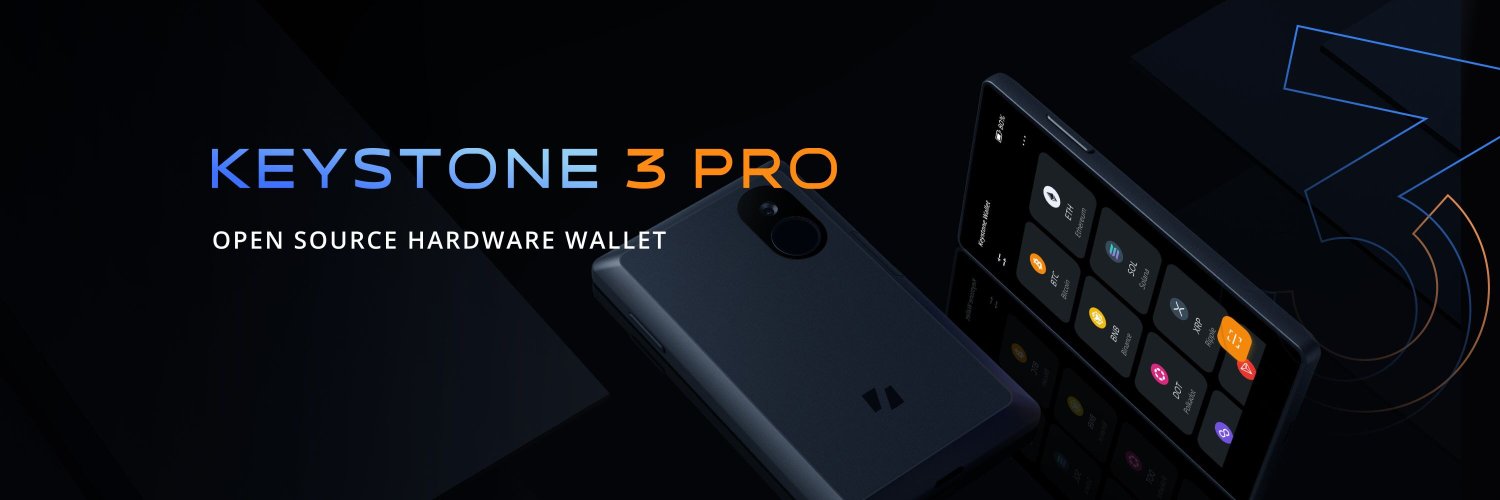
Keystone 3 Pro = Offline security + utmost clarity 💪
That's self-custody done right!
English
Keystone Hardware Wallet
28.6K posts
@KeystoneWallet
The most user-friendly, open-source, air-gapped hardware wallet 🛡️| Secure BTC, ETH & 1000+ coins.



Zcash is not a trade. I repeat, Zcash is not a trade. zcash:native @zodl_app



The Smarter the Wallet, the Bigger the Target What happens when the thing managing your assets can be talked into giving them away? Bankr, an AI-driven crypto trading tool, was hit twice in a month. In the most recent incident, attackers encoded malicious commands in Morse code, injected them into the AI, bypassed Bankr's security filters, and walked away with $170,000 from the @grok wallet. Grok never knew. The AI completed the transfer voluntarily, correctly, and in full. After that: social engineering. Fourteen wallets compromised. Two incidents. One month. This isn't a story about one team's carelessness. The attack surface of an AI wallet is structurally wider than a traditional wallet, and most people using them don't know that yet. The Real Problem Is the Architecture. Most AI wallets work the same way: private keys live on a server so the AI can sign transactions autonomously. That's what makes them convenient. It's also what makes them dangerous. It doesn't matter how good the security team is. A server holding private keys for thousands of users is, by definition, a target worth attacking. Breach the server, or compromise someone with access to it, and every user's assets are reachable at once. Hackers don't need to find you. They just need to find the server. Traditional wallet attacks are retail. Server-side private key custody is wholesale. AI Adds a New Attack Layer That Didn't Exist Before Phishing exists. Impersonation exists. Social engineering has been around forever. AI wallets don't eliminate these threats; instead, they add one more. Prompt injection means an attacker doesn't need to deceive the user. They can deceive the AI directly. Feed it malicious instructions through user input, a third-party integration, or an encoded message in Morse code, and the AI does the rest. It signs. It transfers. It confirms. All without the user touching anything. The Bankr attack didn't exploit a bug in the traditional sense. It exploited the AI doing exactly what it was designed to do, with instructions it wasn't designed to question. That's a category of risk that's inherent to how these products are built. Convenience Is Not a Security Strategy AI wallets are genuinely useful. Automated strategies, natural language interaction, smart execution - these things have real value. But the convenience that requires handing over your private keys to a server isn't a feature. It's a trade-off, and most users aren't told what they're trading. The sensible approach: treat AI wallets as an experimental layer for small amounts you're willing to lose. Use them to explore, to automate low-stakes activity, to test strategies. Don't anchor serious holdings there. For anything that matters, the logic hasn't changed. Private keys belong offline, in your possession, on a device that can't be prompted, injected, or remotely instructed to do anything. What Offline Actually Means A device like Keystone generates private keys entirely within the hardware. They never touch a server, never connect to the internet, and never exist anywhere an attacker can reach remotely. Every transaction is displayed on the device's screen in full before signing. If something has tampered with the destination address upstream in your browser, in your AI assistant, anywhere in the stack, you see the real details on the device and confirm physically. No blind signing. No automated execution. No AI intermediary can be manipulated between your intent and your signature. Communication happens via QR code, which eliminates the attack vectors that come with USB and Bluetooth entirely. The AI era doesn't change the underlying principle. It makes it more urgent. The Principle Holds "Not your keys, not your coins" was coined before AI wallets existed. It applies more now, not less. Every layer of automation you add between yourself and your private keys is a layer an attacker can potentially reach. AI wallets are compelling products. Some of them will improve. The category will mature. But right now, in this moment, the architecture requires trust in a server, and servers get compromised. Your keys. Your device. Your confirmation. That's not a limitation. It's the point of the technology.


Holding $ZEC on a CEX and calling yourself a privacy advocate? 👀 The fix: → Withdraw to Keystone → Shield with @zodl_app Privacy isn't a feature. It's the point 🛡️


We’re adding Zcash coinholder polling in @zodl_app with the first poll targeted for June. Soon, anyone using Zodl will be able to share their opinion on the direction of the Zcash protocol by voting their coins. The voting protocol will also be available for integration with other shielded ZEC wallets. The draft questions and timetable for the Zcash Network Upgrade 7 (NU7) poll are available here: forum.zcashcommunity.com/t/nu7-sentimen… Thanks to @zkDragon and his team for all their work building and helping us integrate the new voting protocol.


