Sabitlenmiş Tweet

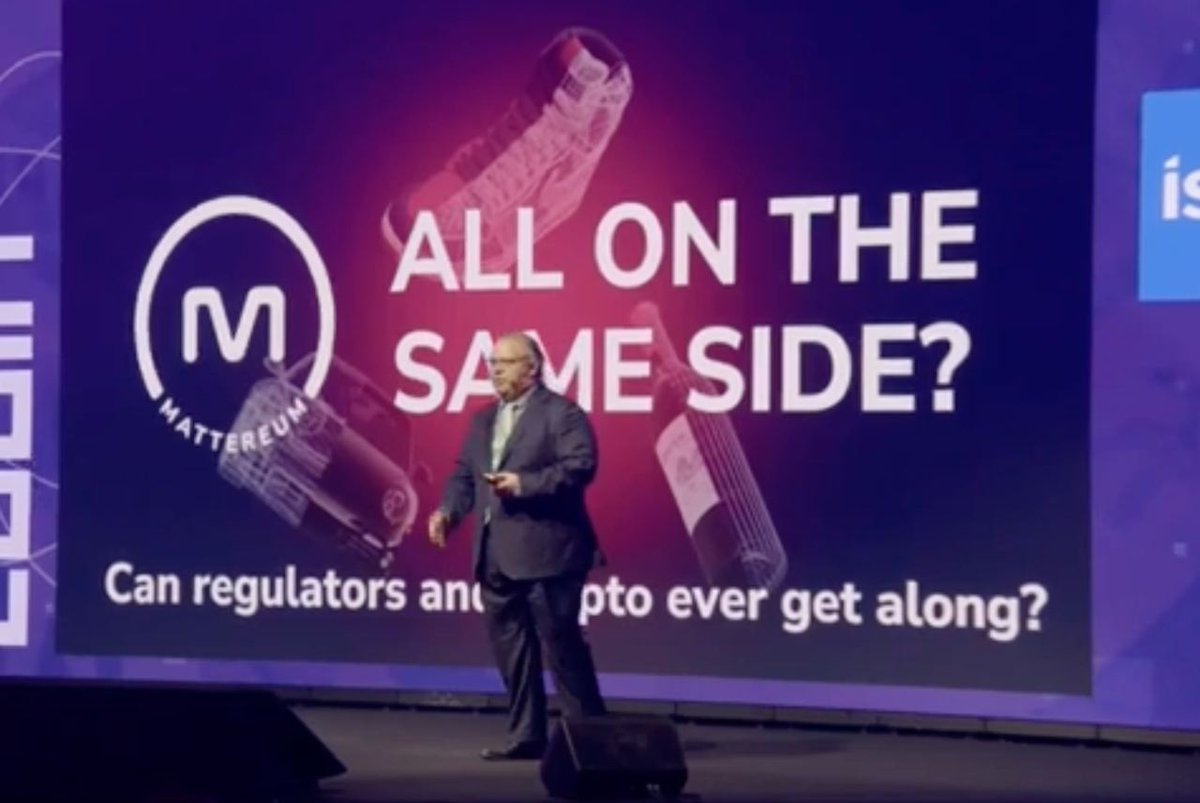
ALL ON THE SAME SIDE?
Can regulators and crypto ever get along?*
My talk from #Login #Vilnius #Lithuania
youtube.com/watch?v=CnN8mh…
YouTube

English
Vinay
241.1K posts

@leashless
Ran @Ethereum launch. CEO @Mattereum Forbes https://t.co/uZMfZdnCcj https://t.co/xjXKfNjNkb Book https://t.co/U8UNCuqVug radical ESG https://t.co/sb81MC5G0R



this year's US temperature anomaly is _much_ worse than you think and probably is going to bring fire on a scale we can hardly conceive of later in the year -- read on for last year's analysis

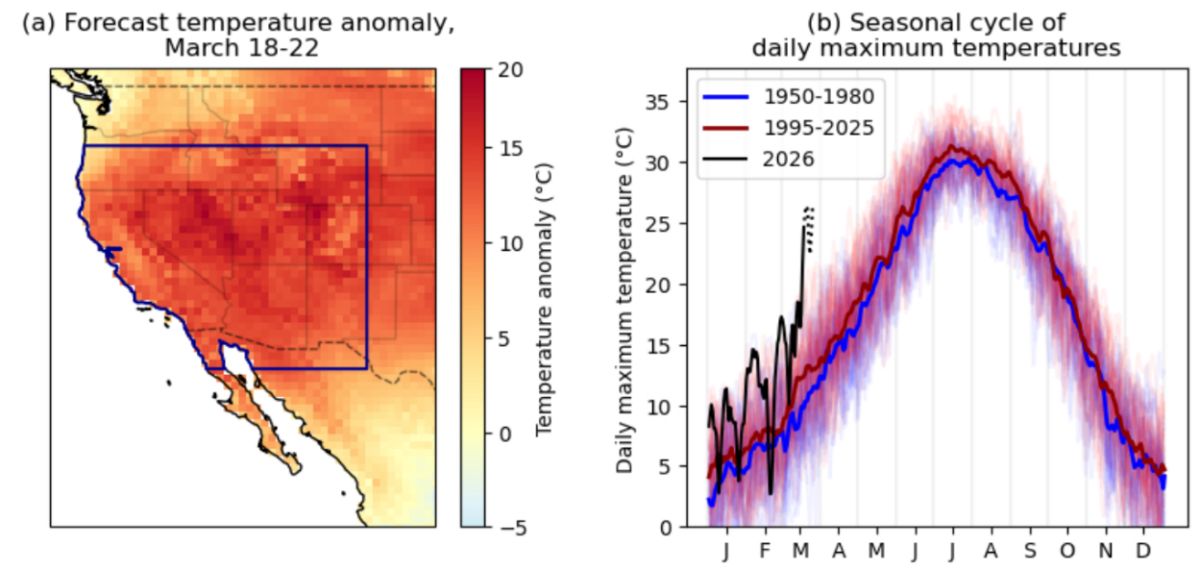
The bottom line is that we hit 1.5C in 2024 and that's _very bad_ given that 1) we're emitting more carbon each year than in the year before 2) we might be less than 10 years from 2C which is catastrophic 3) various "doom loops" appear to have started drive.google.com/file/d/1b_CFdx…




A scene from Looking for Richard, Al Pacino’s documentary about Shakespeare. This man, homeless, a beggar, someone most people would walk past without a second glance, someone not thought to be worth a dime, speaks about Shakespeare with remarkable clarity and perspective.


NICK LAND ON GNOSTIC CALVINISM & EROTIC AI FEAT. @xenocosmography Nick Land and I discuss his thoughts on my recent essay comparing his work to a dark inversion of Hegel: Entropic Negation, as well as his thoughts on time, free will and the novel desires of AI. Link below -
Famously (there is a beautiful Works in Progress piece on this) in 2016, Geoffrey Hinton told an audience in Toronto that medical schools should stop training radiologists, since AI would soon outperform them at reading scans. Ten years later, there are more radiologists than ever, and they earn more than they did then. Hinton was right about the task, but he was wrong (so far!) on the future of the radiology profession. Times have never been better for them. The gap between those two claims, the difference between tasks and jobs, is the subject of a paper I have written with Jin Li and Yanhui Wu, and that we release today: "Weak Bundle, Strong Bundle: How AI Redraws Job Boundaries." (Very relatedly we are also finishing the first draft of our book "Messy Jobs" on AI and Jobs!! You will be the first to hear). We start from the observation that the growing literature on AI and labor markets measures the AI shock by task exposure: people count how many tasks AI can perform in a given occupation AI can perform, and infer that more exposure means more displacement. Eloundou et al. published a paper in Science in 2024 that started this literature, and many follow the same logic. The inference they make is that the more exposed tasks, the worse the outcomes. This is incomplete, because labor markets price jobs, not tasks. A radiologist does not just sell image classification, but does many other jobs: triages cases, communicates with other physicians, trains residents, makes the difficult decisions, and signs a diagnosis. The market buys a bundled service. The question AI poses is not whether it can do one task inside the bundle. The question is whether that task can be pulled out. Thread (1/3) dropbox.com/scl/fo/689u1g7…


I've noticed a pattern over the last few years in financial markets, tech, and diplomacy where everyone seems to understand they're being lied to, massive scams are more or less out in the open, but each individual thinks they're one step ahead of all the other gullible rubes, so it's ok. Who is this ruse for, if everyone knows it's a ruse? The idea seems to be that we'll collectively accept the can being kicked down the road, we'll assure ourselves that there is some plan, but we'll do this by openly lying to each other and ourselves. It's a kind of willful mass delusion. Somehow everyone else will left holding the bag, we seem to think. Just choose to believe the lie, play pretend, act like you're in on it. Even though the "it" here makes no sense and no one truly believes in it. Grift and deception have become an overt and central tendency of the culture.

Once you have AI systems to calculate a spot price for an asset you can very, very quickly move to a fractionalized real estate and commodity-based trade system. Fiat is just a way to avoid barter. AI fixes this.
The yuan will not replace the dollar. Real Estate will. CEO @leashless lays out the shape of an AI and blockchain fueled future, where complex assets can be priced as easily as gold and silver, and thus become currency. From @rwaworld X Space, Jan 29th 2026