
MarE (xk) retweetledi
Over the years I’ve received some criticism—both masked and overt—about my extensive use of AI across my practice. I’ve tried to keep that criticism in perspective and not let it affect what I do. One benefit of being a bit older is that I’m better practiced at this kind of deflection. That said, I don’t think I’ve done a very good job of explaining why I’ve devoted so much time and energy to AI (and, before that, coding), beyond sharing my raw excitement and some of the worlds generated through those explorations.
A small case study might help. I’ll share one that is unfolding in real time.
My creative process—which I suspect is not all that different from many of yours—is about staying open to discovery and letting process largely yield output. What excites me most is learning, uncovering, and watching new understanding, skills, and synergies emerge. The final pieces are therefore less goals in themselves than evidence of the process. That is why, as is probably common among artists, I’m usually more focused on the next piece than on what was just made.
With charcoal or paint, there is a deeply explored material and aesthetic search space. Each mark can sometimes feel referential, especially after decades of absorbing art history. At the same time, these materials possess a visceral directness that exists on a somewhat different plane—one that I still find spiritually grounding and connective, and that continues to sustain my analog practice alongside the digital.
When I first began working with digital media in 1992, it wasn’t until I got to code that the process shifted from a somewhat detached skeuomorphism to something fundamentally generative and personally meaningful. Code seemed to hold the same emergent potential as a block of charcoal, but with a vastly less explored search space. It felt like fresh territory—open, expansive, and charged with possibility. The fact that it demanded deep study, retooling, and difficult technical problem-solving only made it more exciting for me. Many of you know what followed over the next 25 years or so: I became a creative coding evangelist, trying to convert other creatives—and even “normies”—to my new creative religion.
What many people probably didn’t see during that period were the constant roadblocks I kept hitting. I remember spending summer residencies at UCSB, isolated in an office, hammering away at the same blocks of code, trying to build something larger and more ambitious than the code studies many in the field were making. Those studies were hugely important and often opened the door to much deeper inquiry. But ambitious projects eventually led to massive codebases that were extraordinarily difficult for a solo creator to sustain. My number of restarts probably exceeded completed projects by 100 to 1. That was essentially my creative practice and research until about five years ago.
My first explorations with AI-enhanced coding and image generation through Stable Diffusion changed everything. For the first time, I had access to the kind of collaborative scaffolding I had been missing for decades. It felt like the culmination of a lifetime of creative coding research.
Now I’ll jump to the present.
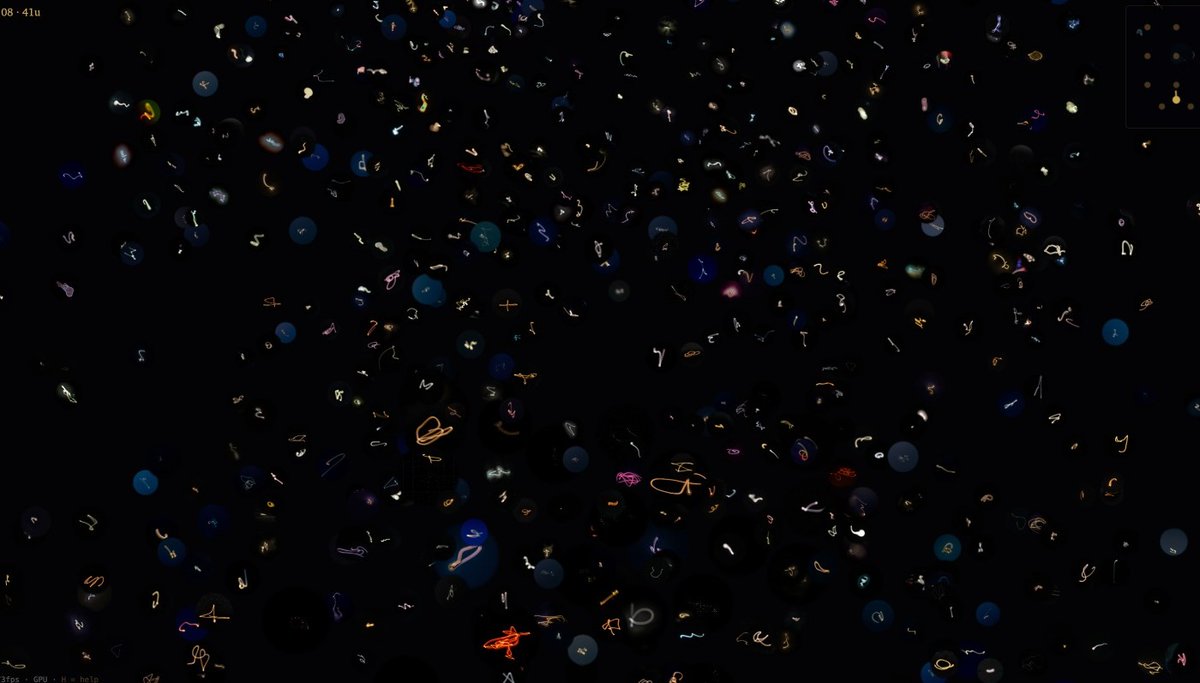
I’ve been building a project—originally for my own creative use, but soon to be released publicly—that includes a full-featured AI creative studio. It enables creators to generate images, video, 3D, code, and more, and then release collections of that work for sale on the blockchain through a range of minting dynamics. While developing the platform, I’ve also been generating bodies of creative work with it. As a result, the historical boundary between tools and the artifacts produced with those tools has, for me, almost completely dissolved.
Artists have always been tool builders. Historically, though, the tools were subordinate to the artifacts; artists created what they needed in order to express themselves. What has changed now is the sophistication, complexity, and generative power of the tools artists can create.
The technical roadblocks that shaped so much of my practice over the last few decades are now rapidly eroding. And with them, the last walls that kept me from more fully exploring, discovering, and ultimately expressing myself—and perhaps even realizing more of my creative potential. I look forward to sharing ijglabs.ai with this community in the coming months.
English