Mary Harper

8.1K posts

Mary Harper banner
Mary Harper

Mary Harper

@mary_harper

Journalist and author. Was BBC, now UN. London • Hargeisa • Mogadishu

Katılım Haziran 2009
3.4K Takip Edilen71.1K Takipçiler
Mary Harper retweetledi
Mohamed Muse Hasan
Mohamed Muse Hasan@musse408·
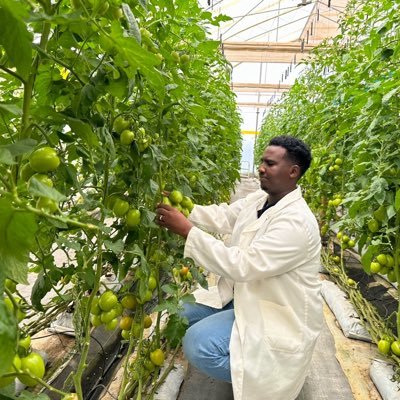
Today, we harvested 1,000kg of cucumbers from our farm in just one week. Each kg sells for $0.7 , This farm provides jobs for 10 Youth . I’ve realized that unemployment isn’t the real issue in our country what we need is investment and better utilization of our resources 🇸🇴🥬🥒🚜
Mohamed Muse Hasan tweet mediaMohamed Muse Hasan tweet mediaMohamed Muse Hasan tweet mediaMohamed Muse Hasan tweet media
English
18
56
346
23.7K
Mary Harper retweetledi
Arlaadi Media
Arlaadi Media@ArlaadiMnetwork·
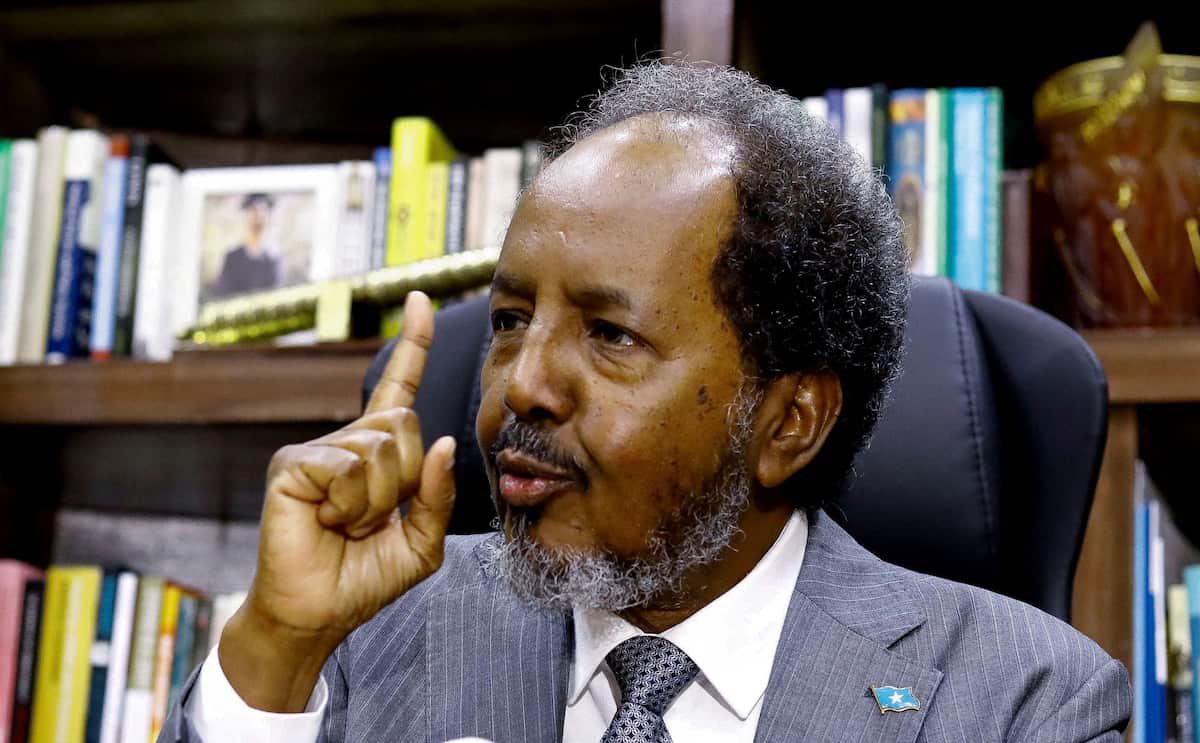
⚡️BREAKING: #Somalia's President @HassanSMohamud has voiced concerns regarding the influence some aides of President Donald Trump may have in advocating for #Somaliland's recognition as an independent nation. In a Washington Post interview, he emphasized the unity of #Somalia, stating, "Somalia is one. It became an independent state in 1960." Additionally, he urged President Trump not to withdraw American advisors assisting in the training of Somalia’s special forces and called for an increase in support to help combat #AlShabab during Trump’s administration. washingtonpost.com/opinions/2025/…
Arlaadi Media tweet media
English
5
3
14
14K
Mary Harper retweetledi
TheNewsHawks
TheNewsHawks@NewsHawksLive·
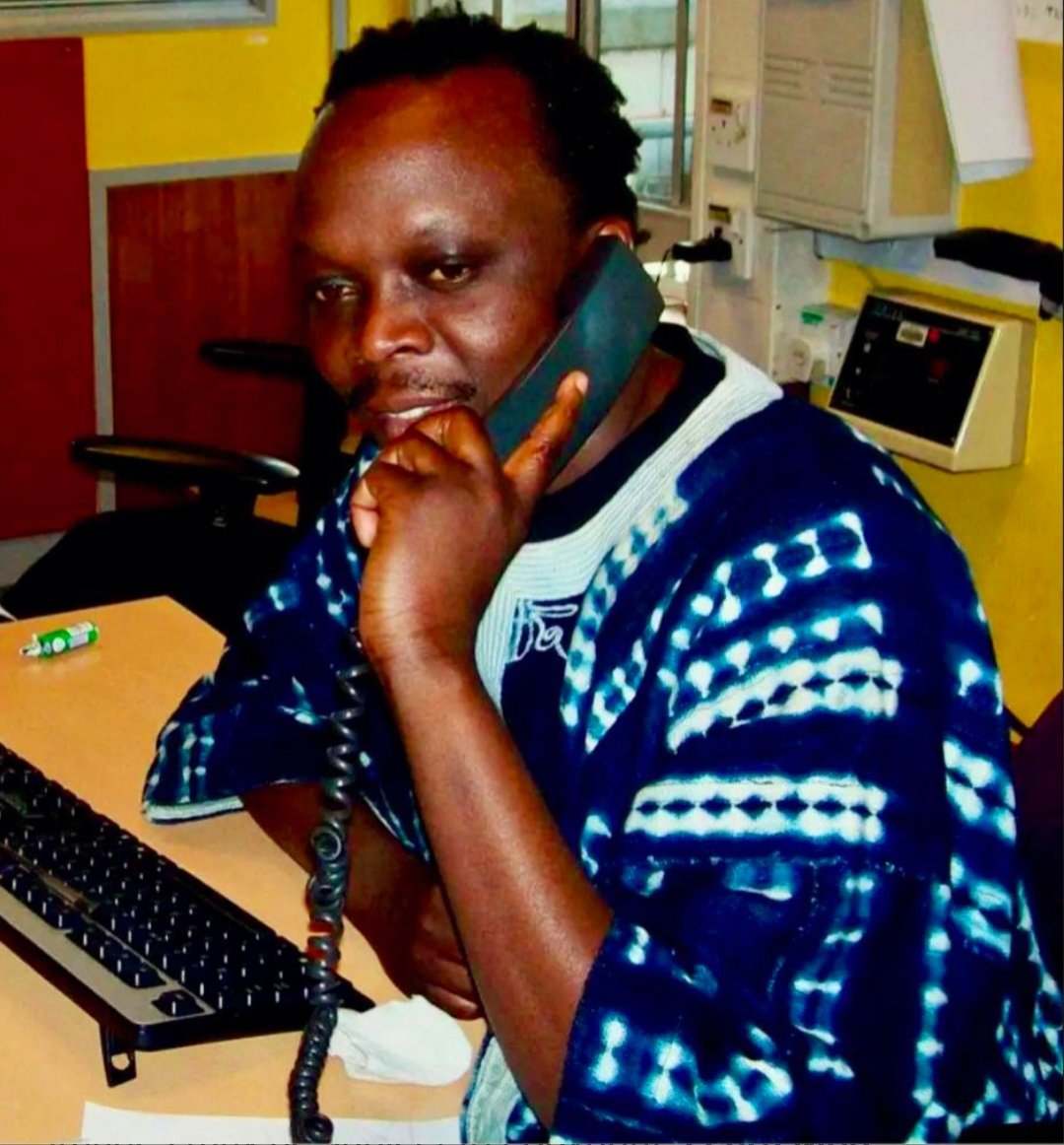
#Obituary LEWIS MACHIPISA: LIGHT SIDE OF THE FORCE 🔴Our dear departed colleague and personal friend Lewis Machipisa was a master of finding humour even in most mundane or dark moments. With a mischievous glint in his sharp eye and a smile, Lewis was like a court jester, always ready with a witty one-liner or a silly joke to defuse any tension. And his humour was never mean-spirited; it was always playful and light-hearted, writes BRIAN HUNGWE, a former BBC, SABC and Zimbabwe Independent journalist, now a lawyer based in Johannesburg, South Africa. IN another world, Lewis Machipisa, a Zimbabwean former BBC correspondent who died recently in London, could have won an Oscar for self-belief and banter. Often, he would say Denzel Washington, the American actor celebrated for his engaging and powerful performances, looked like him, not the other way round. He never had insecurity about his ability to make others laugh. Just 13 days after wishing Jesus Christ a happy birthday on his Facebook posting, expressing some impish gratitude to him for his turning water into wine, Machipisa passed on peacefully at his home in London. He was 52. Results of a post-mortem are still due. A Nigerian journalist noted that every time a teacher or a journalist passes on, a library is burnt. So Machipisa should see the glow of a large bonfire of untold stories and anecdotes. In stressful hostile environments, Lewis would light up the mood with his quick wit, levity and brevity. It was as if he believed in the Shakespearean logic that brevity is the soul of wit. He saw humour in the quirks and rhetoric as well as idiosyncrasies of politicians, making many a dull moment amusing; all part of his desire to remain positive in in life, calm and at peace - the light side of the force. Some great obituaries have already been written about him. More will perhaps follow. This is another contribution to capture his past, personality and exploits, the best way I knew and understood him. Harare Polytechnic Mass Communication department created many journalists who have gone on to excel in their careers at home, in the region and abroad. In a normal country, that illustrious school of journalism deserves to be developed and elevated into the country's largest and best media studies training institute at all levels. To date, it continues to nurture and churn some incredible scribes who have gone on to achieve great things. Lewis enrolled into the school of mass communication in 1991, and thereafter created many friends across the continent that had come to study there. His classmates said Lewis was the youngest in their journalism class, and the naughtiest; straight from an across-the-road school Allan Wilson School just next to Prince Edward to join media studies after completing his secondary school. The Harare Polytechnic school of journalism laid a solid professional foundation which helped him join the Inter Press Service, a global news agency headquartered in Rome, Italy, in 1992, opening the pathway to the BBC World Service in 2002. I later replaced him as the BBC correspondent in Zimbabwe in 2007, coming from the SABC and prior to that Zimbabwe Independent newspaper. Being naturally outgoing and extroverted, fellow journalist and family friend, Michelle Hakata thus described him: “He was a wonderful friend who gave without measure — whether through his boundless humour or his willingness to share that story, that anecdote. He loved his craft and poured his heart into many of the stories he told, He loved life.” Sharp and witty, he didn’t become a journalist by accident. It was a calling that led him into a trade that carries its own challenge, and hilarious moments. The tempestuous period that accompanied seizures of commercial farmlands in Zimbabwe in early 2000s presented a complex and complicated story for journalists. Commercial farms became conflict zones, and journalists were confronted with difficult and multifaceted political and socio-economic circumstances and tensions that carried deep-seated historical unresolved racial tensions. The ‘them’ versus ‘us’ racial divide and dichotomy was generated by the late former president Robert Mugabe and his regime to pressure local journalists to parrot his self-serving narratives on the emotive and divisive issue. The coverage of the issue became hostage to various forms of discourse and nationalistic contestations amid debate revolving around patriotism and justice. Journalists like Lewis and many others, including myself, who worked for foreign media organisations were viewed as unpatriotic. The local private media too was targeted for hostile treatment. Patriotism in media coverage of burning and contentious issues like the land reform programme is always hotly contested and slippery terrain. A thought-provoking topic! Patriotism, particularly defined by politicians, can be problematic for several reasons. Politicians often define patriotism in a way that serves their own narrow interests and political agendas, selectively focusing on and highlighting certain aspects of national identity, while ignoring or downplaying others. Their definitions can sometimes be tied to exclusionary forms of nationalism, which emphasise superiority of one's own nation or group over others. When politicians define patriotism, they often discourage critical reflection on their past mistakes or ongoing issues, instead promoting a simplistic, uncritical view of national identity and interest. As such, political leaders use it as a tool to manipulate public opinion, justify policies, or distract from failures. Further, it can sometimes be used to suppress dissenting voices or silence criticism, labelling those who disagree as "unpatriotic", while peddling false narratives. Politicians sometimes create false narratives about a nation's history, values, identity and interests, which can be used to control citizens, including journalists. Most Zimbabweans and some white farmers supported land reform, but disagreed with government's unstructured method, chaos and violence. Yet Mugabe and Zanu PF were rigidly unwilling to accommodate different perspectives, views and suggestions on the programme. Journalists who wrote what they did not want or held different views and interpretations were simply branded sellouts. That's the space in which Lewis reported during his long career. Yet it is essential to recognise patriotism can be a complex, multifaceted concept that goes beyond politicians' definitions. Critical thinking, nuanced discussion, and inclusive perspectives are necessary to promote a more thoughtful and insightful understanding of the national identity and interest around such issues land reform. Mugabe was opportunistic about it. Land was a historic grievance, but manipulated for political expediency and votes when his political career started faltering after 2000. It is interesting when Mugabe was later ousted from power through a coup in November 2017 by his own Zanu PF factional colleagues, he ended up backing the same opposition he had frantically labelled sellouts, while agreeing with the same journalists he called unpatriotic on some key issues. He was blinded by bitterness and vengeance to a point of throwing long-held views and principles out the window. Lewis stood by his reporting principles and editorial thrust until the very end. Former BBC Africa Deputy Editor Josephine Hazeley said: "Lewis was then a keen correspondent, keeping the continent and indeed the rest of the world informed by reporting on and explaining a range of issues in late President Robert Mugabe's Zimbabwe." Journalism carries its own challenges and psychological scars. Early 2000s, Lewis went into some bouts of stress and depression when he learnt that he was declared persona non-grata at state institutions because of his ‘unpatriotic’ reporting. Such stress was usually evident whenever he downed several bottles at the National Press Club, The Quill, in central Harare. “Saka vanoda kuti ndiite sei, (so, what do they want me to do),” he would mumble to himself and colleagues close to him. Harare’s Quill Club was his drinking hole after some important news coverage. It carried in its culture heated marathon political debates, which often lasted late into the morning. Around 2002, a cabinet minister walked into the club, and begun chastising Lewis and myself for reporting falsehoods. A heated political debate ensued, with others joining the fray late into the night. The following day, Amos Mwendiwendira, the barman, reminded us that we had told the minister that he was talking crap. Lewis accused me of saying it. I would never have said it, and I accused him of having said it instead. The minister probably he took it in his stride as an opposition activist, Julius Magarangoma had arrived and taken the debate further, fueling heated exchanges. The following week – the minister walked back into the Quill – and we engaged him as if nothing had happened the previous week. Testing waters, Lewis requested an interview for the following day, which was granted. Afterwards with a grin, I remember him saying: “Asi tombofarisa (we tend to get too excited)", referring to our no-holds-barred attacks. Lewis was sarcastic and yet carried empathy. One late Saturday afternoon early 2000, he found me alone at the Quill Club, and was quick to assume something was wrong. I joked that I was nursing a terrible heartbreak after breaking with my loved one. He laughed – and took me to some Jazz music session at the Rooftop, a Harare Club. He advised – "it’s on me today, don’t worry; I am here to deal with your heartbreak." Every drink he that would get for me was accompanied by a sarcastic question: ‘Hungwe, ndati kari sei ka heartbreak, ha,” and laughed. Though I deliberately looked miserable to spice things up, I never told him it was a joke. I don’t regret my deceptive posture. It got me drinks galore for free. It’s not difficult to understand why his Facebook postings and daily conversations were animated, especially if they involved love, marriage, soccer, social idiosyncrasies and politics. His mischief and sarcasm was especially lucid on matters of the heart. He once posted on Facebook: “So people post saying they are in a relationship, what exactly should we do with that?. It never stops us. Thank you.” And another message for those that occasionally opts for Dutch courage: “…So guys here’s a tip from me for today. That crush you have been hesitating to say u love them, say it today. If it’s negatively responded. Just smile and say 'Gotcha, it’s April Fools Day… who’s fooling a who, who’s fooling a fooling a fool who'…. Sing." Yet he provided amusing advice to those engagig new relationships: “Before you enter into a new relationship, please request a transfer letter from the ex… too many contract lies going around.” But he didn’t hesitate to provoke tensions and suspicions in existing marriages: “If your woman starts to workout out of nowhere, you about to be single bro. Good morning.” In his news writings, there was some occasional spontaneity, and creativity. BBC senior producer Lucy Flemming said: “As all his colleagues will tell you, he was serious about his journalism - and was a great interviewer, polite and rigorous. He could also be playful. I remember him laughing at a journalist for coming to a press conference at a state building, Munhumutapa, wearing a jacket and tie. 'What point are you trying to make, just wear your t-shirt, jeans, be cool, simple like me', he said with a playful smile. I don’t remember that self-confidence and wit earning him enemies." He refused to take things too seriously. Lewis found joy in everyday situations, and laughed at himself too. When an Equatorial Guinea public servant’s shenanigans with married women in the office found its way into the public sphere, I knew Lewis would post something on Facebook. It didn’t take long: "Just sharing with you the good news. My girlfriend has been posted to work in Equatorial Guinea. I will join her in a few months.” He left it there. After some early 2000s tensions with the state, the BBC invited him to London to escape the pressure of a political turf that had created an almost impossible mission for him to operate. It was a relief to a mind bothered enough. At the BBC Broadcasting House bar early 2012, former BBC Africa Editor Mary Harper recalled to me her first meeting with Lewis in Zimbabwe, when they were engaging him for a job. “He was sober, shy, and ordered a soft drink,” she recalled. “He was wearing very smart clothes and had a short smart haircut. I didn’t recognise him when he came to the BBC!." I couldn’t also remember what had happened to his dreadlocks, yet he never ascribed seriously to Rastafarianism. When I mentioned this first encounter with Mary, he laughed, and requested that I tell her that with the benefit of hindsight, he should have gone for whisky on that day. But his lesson was, never drink beer in your first meeting with a potential boss, never, you can be easily misjudged. Lewis felt obliged to make others laugh or feel happy, and he ‘weaponised’ humour to diffuse tensions, and in part as a defence mechanism to avoid confronting problems or difficult situations. He certainly didn’t struggle with balance between being funny and crossing boundaries or offending others, neither did he fear being not being taken seriously or seen as a joke. Later, at the BBC once he had settled himself in, he once called a female colleague, whose name I can’t remember – or received a phone call while on the BBC desk. Having realised the colleague’s voice, with a hastily manufactured story coloured with a perfect Sierra Leonean accent, he advised her he was a child soldier, was traumatised and had come to London for an interview. He narrated this tale to me at the BBC Focus newsroom, his eyes almost teary with laughter. He told her he was recruited into the war at a tender age of 12, smoked ganja, killed many people, carried grenades, went to the frontline, climbed mountains, now he was a tormented soul, but wanted to tell his story. When the colleague fell for it, he says he took further advantage, and went on and on. After the depressed, overwhelmed and concerned colleague requested if she could do anything for him, he says he realised he had gone too far, and burst into laughter. That earned him nickname ‘child soldier.’ His attitude was we need to create light moments in journalism because the business is stressful: it can very easily break you down, he would say. Lewis could easily balance humour with sincerity, while allowing for deeper reflection and connections with others. Social media platforms tend to bring out the worst in people. I have for the past eight years retreated from that minefield. But Lewis turned Facebook into some exciting playground that captured his fears, anxieties, excitement, and despair, inadvertently illuminating his deep inner feelings, and psychological outlook. On his Facebook on November 28 2023 posting, he satirically wrote: “Guys do you know that I am really, really a fantastic human being." He was indeed, a simply a decent human being, with his own social flaws just like all of us. For him, nothing was sacrosanct, even the Bible was not spared. I don’t remember Lewis going to church. BBC’s Lucy Flemming said: “Machipee’s cheeky humour never left him - no matter the ups and downs - and his gravelly laugh was a mainstay 'in da house' - at the Focus on Africa and Network Africa office - while his witty ripostes to group emails would cheer you up when logging on for a dreary night shift." In one message as the BBC bade farewell to Bush House, he wrote: “Came to you as a young, handsome, non-swearing Seventh Day Adventist. I am still handsome, but the rest…. ah well.” He was born on the same day with Lucy Flemming, whom he called ‘twinny.” She said: “Just after he arrived in London from Zimbabwe in 2003 at Bush House, home to the BBC World Service, we descended to the bar after Focus on Africa came off air - and with his passport still in hand we discovered we were twins. We used to say: 'Born same day, same city, same time, same country, same year, different hospitals - of course'." He certainly had a conscience, and sought to be fair, never judgmental. I don’t know how many times he teased Jesus Christ and wine, and chastised what he perceived were false biblical stories, despite his being a self-proclaimed Seventh Day Adventist. He routinely provided provocative rhetorical Facebook questions that bordered on blasphemy. “Would it be a sin to steal a bible?,” he once asked, before making another quizzical post; “Ok guys let’s start. Which bible story you doesn’t believe? I will go first. Lot’s wife turned into salt.” Such posts would obviously attract great responses, and he was quick with comebacks or retorts in a humorous way. Lewis created stereotypes of almost everything. He once posted that: “People who eat medium-rare cooked meat think they are intelligent. Rubbish.” And another: “People who know how to use chopsticks think they’re special.” He called my late Chenai wife, ‘MuTutsi’. When she inquired why she earned such a funny name, he burst into that hysterical laughter, with his gravelly unrestrained voice remarked: “Your only crime is that you are slim, tall and beautiful, go get your passport from Kagame and call Kigali home.” Lewis had that extraordinary social licence to tease people. Often, he was extremely difficult to locate. His mobile contacts kept changing almost every four months. But you would find him on Facebook, and talk for hours. First, he would enquire about my family, and then slide into politics. When he later went through a divorce, and remarried, and again lost his wife, he became disturbed. It hurt him. Perhaps, after self-introspection on love and family matters, he asked on Facebook: “Do you know people who had a white wedding believe they are going to heaven. Not fighting.” Another hilarious redundant posting was: “The biggest cause of divorce is marriage. Go argue with your friends.” There are moments I felt he needed some therapy. We could have done more as colleagues to help him as he appeared to lose it sometimes. It is such situations that force one to take a hard look in the mirror. Hindsight is never a perfect route to escape culpability. There is absolutely nothing to be gained. Ordinarily, after spending big during the festive season people walk into the New Year broke. He was relentless in reminding people of their misery, and in a thought-provoking manner make postings that captured their misery. He once asked on his Facebook: “Guys please I genuinely want to ask how many days are in January,” and added another: “What is the opposite of January before making an attempt at capturing how terribly broke society can be", and the superstitions that abound: “Guys, is it true that a cash machine eats up half of your salary? Asking for a kazen (cousin).” It was Comfort Mbofana, who posted some moment when he, Lewis, and a friend, broke into a dance listening to a Sankomota cassette at an office along Harare’s Mazoe Street in the early 1990s. Mbofana, a Zimbabwean DJ and Radio Manager, remembers that Lewis and a friend looked so sophisticated and cool, as they danced. That was Mbofana’s introduction to the phenomenal Lesotho jazz outfit, Sankomota. That Sankomota cassette disappeared. Mbofana says Lewis asked him to steal the cassette. Almost two-and half-decades later, in another Facebook posting, he unapologetically and emphatically proclaimed Sankomota is the best musical group in the world. Perhaps, that explains why he wrote: “I think it's illegal to fall in love with a woman who doesn’t know jazz. Run away fast.” We both shared the same tastes of music, and Sankomota’s beautifully soothing jazz textures. Mbofana said: “Over the years, Lewis and I had so many halcyon days of mischief right into our adulthood - details of which will follow us into our graves.” Well Lewis, there is a chance you will be quizzed in heaven why you stole that Sankomota cassette. No worries, Mbofana has since confessed and all is forgiven. While at it, Lewis pass very warm regards to Frank Leepa, Tshepo Tshola (The Village Pope), and the rest of the Sankomota group that perished much earlier in that 1996 heart-breaking accident. You will still have fun that side. Stanley Kwenda and Innocent Chofamba Sithole, together with your wonderful friends from the BBC, are playing a key role in making sure you go to your final resting place. We remain grateful to them. Flemming says she has listened to a talk you once gave in which you offered advice to budding Zimbabwean reporters - in a nutshell you said: “Be brave; don't take the brown envelope… don’t do tribal reporting.” Flemming says such messages neatly sum up the shock and sadness his BBC family feel. Fare thee well my friend. You played your part very well and created great memories. You will be always be remembered as a good journalist and great guy.
TheNewsHawks tweet media
English
4
2
5
4.8K
Mary Harper
Mary Harper@mary_harper·
Happy New Year to those who celebrate it 🐍🪵🎆
Mary Harper tweet media
English
1
0
1
954
Mary Harper
Mary Harper@mary_harper·
@dhoorebbc Congratulations father and son! Good luck at secondary school Yaqub!
English
0
0
1
252
M.M. Dhoore
M.M. Dhoore@dhoorebbc·
A decade picture - 2015-2025 with my son: the first day of reception at primary school and now in year 9 at secondary school.
M.M. Dhoore tweet mediaM.M. Dhoore tweet media
English
32
9
327
18.7K
Mary Harper retweetledi
Bilan Media
Bilan Media@MediaBilan·
On this #WorldMigrationDay, we highlight the difficult journeys of Raha and Mostapha-two migrants who took dangerous paths to Europe in search of a better life. Their stories shed light on the harsh struggles many face while seeking safety and opportunity.#Somali
English
1
2
4
3K
Mary Harper retweetledi
Bilan Media
Bilan Media@MediaBilan·
A robot named Garaad was recently unveiled in Mogadishu! Watch more about Garaad and what it’s capable of. ⬇️ #Tech #Innovation #Somalia
English
0
1
4
1.3K
Mary Harper retweetledi
Bilan Media
Bilan Media@MediaBilan·
Shukri Aabi, a journalist in Mogadishu, was assaulted while covering a story on land disputes. Bilan media had an exclusive interview with her, watch the full interview on our YouTube Chanel. youtu.be/peim-8ynwG4 #PressFreedom #Journalism #Somalia
YouTube video
YouTube
English
0
3
3
1.1K