Cassie Randall 🇨🇦 retweetledi
Cassie Randall 🇨🇦
2.7K posts

Cassie Randall 🇨🇦
@MsRandalll
Working to mold honourable guardians of our future by teaching art and technology in the Niagara Region. 🇨🇦
St. Catharines, Ontario Katılım Ağustos 2014
869 Takip Edilen196 Takipçiler
Cassie Randall 🇨🇦 retweetledi

Ontario to cut length of teachers’ college from two years to one theglobeandmail.com/canada/article…
English
Cassie Randall 🇨🇦 retweetledi

A community college professor taught the same study skills lecture for 30 years, and the video quietly became one of the most watched educational recordings on the internet.
His name is Marty Lobdell. He spent his career as a psychology professor watching students fail not because they were lazy, but because nobody had ever taught them how their brain actually works under the pressure of learning something hard.
The lecture is called "Study Less Study Smart." Over 10 million views. Passed around in Reddit threads, Discord servers, and university study groups for over a decade. And the core insight buried inside it has been sitting in cognitive psychology research for years, waiting for someone to explain it in plain language.
Here is the framework that completely changed how I think about effort.
Your brain does not sustain focus the way you think it does. Studies tracking real students found that the average learner hits a wall somewhere between 25 and 30 minutes.
After that, efficiency doesn't just decline. It collapses. You're still sitting at your desk, still looking at the page, but almost nothing is going in.
Lobdell illustrated this with a student he knew personally. She set a goal of studying 6 hours a night, 5 nights a week, to pull herself out of academic probation. Thirty hours of studying per week. She failed every single class that quarter.
She wasn't failing because she lacked effort. She was failing because she had confused time spent near books with time spent actually learning. The 25-minute crash hit her at 6:30pm every night. She spent the next five and a half hours sitting in the wreckage of her own focus and calling it studying.
The fix sounds almost too simple. The moment you feel the slide, stop. Take five minutes. Do something that actually gives you a small reward. Then go back. That five-minute reset returns you to near full efficiency. Across a six-hour window, the difference is not marginal. It is the difference between thirty minutes of real learning and five and a half hours of it.
The second thing he taught destroyed something I had believed about how memory actually works.
Highlighting feels productive. Going back over your notes and recognizing everything feels like knowing. But recognition and recollection are two completely different cognitive processes, and your brain is very good at making you confuse them.
You can see something you've read before and feel completely certain you understand it, even when you couldn't reconstruct a single sentence from memory if the page were blank.
He proved this live in the room. He read 13 random letters to his audience. Almost nobody could recall them. Then he rearranged the same 13 letters into two words: Happy Thursday. The whole room got all 13 without effort.
Same letters. Same count. The only thing that changed was meaning.
The brain stores meaning. Not repetition. The moment new information connects to something you already understand, the retention changes entirely.
This is what the cognitive psychology literature calls elaborative encoding, and it is the mechanism underneath every effective study technique.
The third principle was the one that hit me hardest, and the one almost nobody applies.
Lobdell cited research showing that 80 percent of your study time should be spent in active recitation, not passive reading. Close the material. Say it back in your own words.
Teach it to someone else, or to an empty chair if no one is around. The struggle of retrieval is where the actual learning happens. Reading your notes again is watching someone else do the work.
His parting line has stayed with me longer than almost anything else I have read about learning.
He told the room that if what he shared didn't change their behavior, they hadn't actually learned it. It would just live in their heads as something they had heard once and felt good about.
He was right. And most people leave every lecture exactly like that.
The students who remember everything aren't putting in more hours.
They stopped confusing the feeling of studying with the fact of it.
English
Cassie Randall 🇨🇦 retweetledi

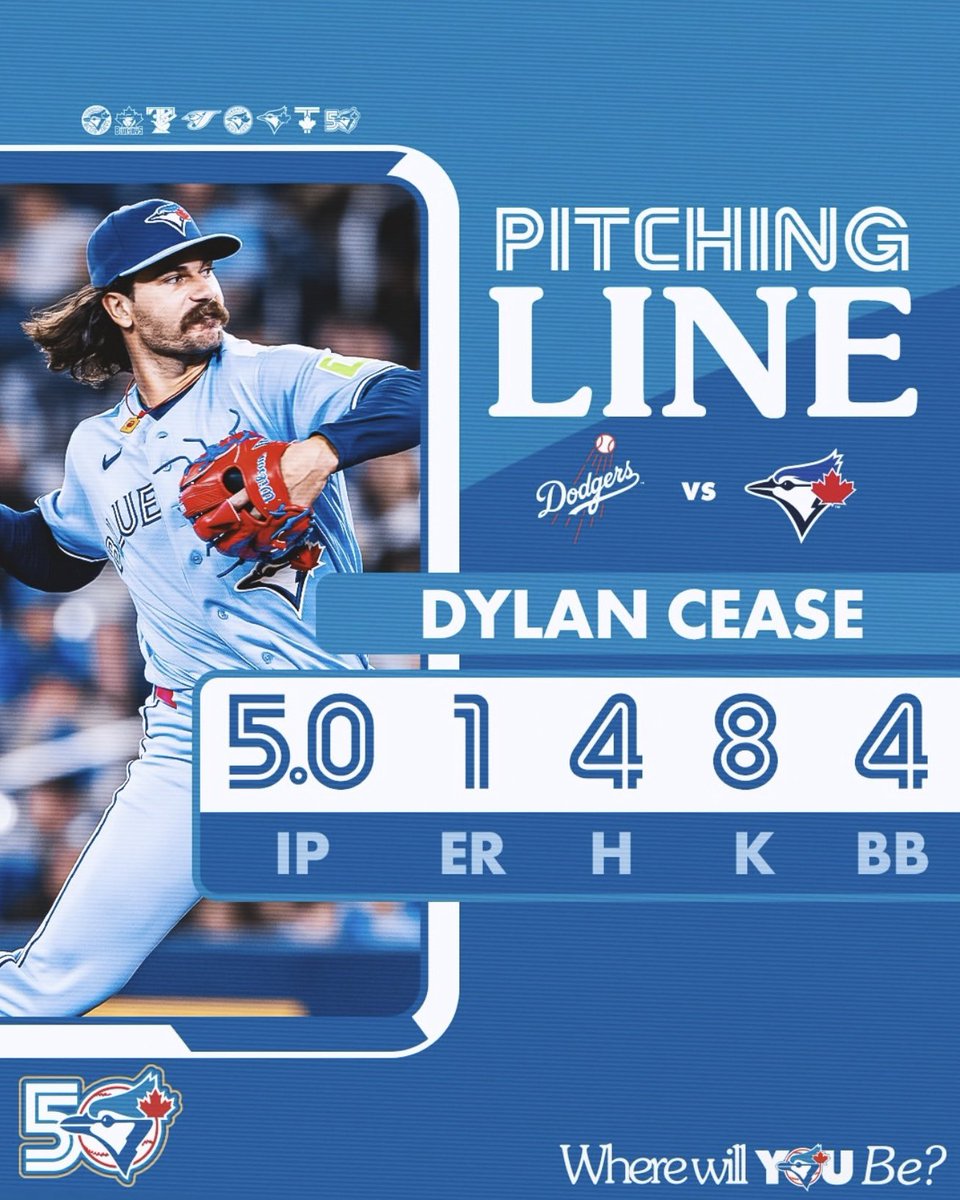
Dylan Cease’s 26 strikeouts are the most through a pitcher’s first 3 games in franchise history! #BlueJays50

English
Cassie Randall 🇨🇦 retweetledi

Montreal bagel at @fairmountbagel
📍Montreal, Canada 🇨🇦
Explore Canada: tasteatlas.com/canada
The Montreal bagel is a dense, imperfect ring of dough. Eastern European Jewish immigrants brought the recipe to Canada in the early 1900s, and the bakeries that opened back then still use the exact same manual method today. The dough is rolled by hand into an uneven circle with a wide hole, leaving no room for a thick, fluffy center.
Bakers drop the raw dough into a rolling boil of honey-sweetened water. This step locks in a distinct sweetness and turns the exterior into a sticky trap for seeds. Once coated entirely in sesame or poppy, the bagels are lined up on long, narrow wooden boards and shoved straight into a glowing wood-fired oven. The bakers constantly feed the fire and shuffle the boards, working fast in the intense heat.
They emerge blistered and smelling of wood smoke. The honey-water bath creates a hard crust, while the open flames char the outer layer of seeds. Underneath that crunch, the dough is tight, heavy, and chewy. Bakeries like Fairmount operate 24 hours a day, pulling fresh batches from the ashes constantly. Locals grab them hot in a brown paper bag to eat plain right on the street, or slice them open to hold a heavy smear of cream cheese and thick cuts of cured salmon.
English
Cassie Randall 🇨🇦 retweetledi

Umm @KITKAT is not messing around anymore guys 😳
KITKAT@KITKAT
Regarding recent press coverage
English
Cassie Randall 🇨🇦 retweetledi

An astronaut on Artemis II is wearing a badge on his flight suit tht represents the Anishinaabe seven sacred teachings! The astronaut Canadian & the badge was designed by artist Henry Guimond in consultation w/ David Courchene of the Sagkeeng First Nation. ictnews.org/news/canadian-…
English
Cassie Randall 🇨🇦 retweetledi

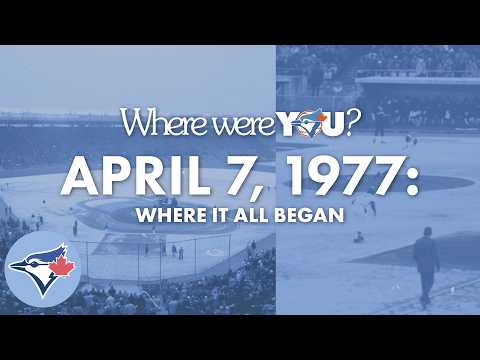
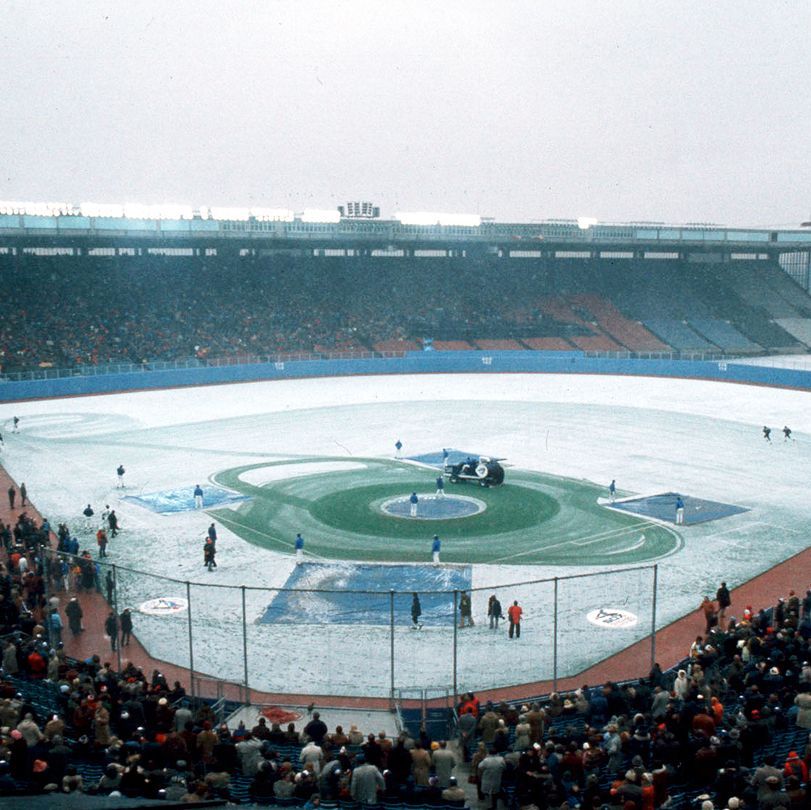
On this day in 1977...it all began ❄️
"Where Were You" Moment. The first game in franchise history: youtu.be/YNJQgZIQjUA

YouTube
English
Cassie Randall 🇨🇦 retweetledi

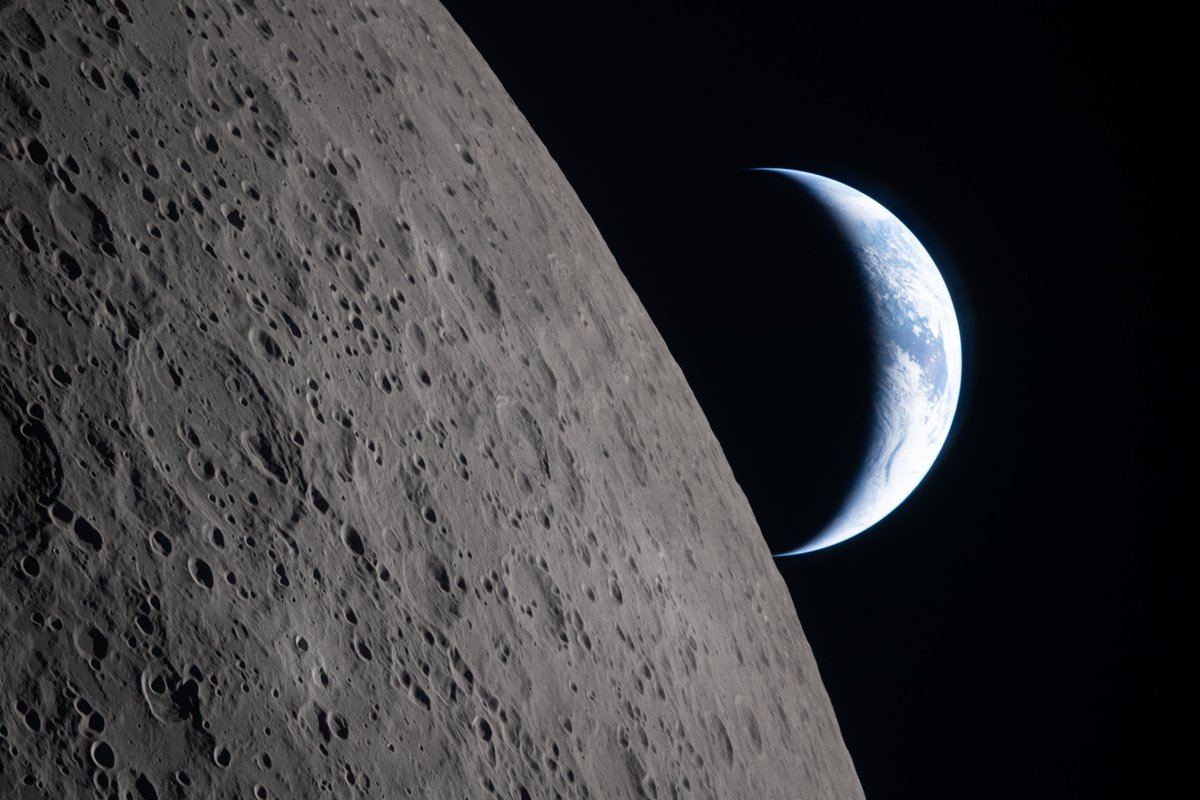
Hello, Moon. It’s great to be back.
Here’s a taste of what the Artemis II astronauts photographed during their flight around the Moon. Check out more photos from the mission: nasa.gov/artemis-ii-mul…


English
Cassie Randall 🇨🇦 retweetledi

Nutella just got the most badass free ad in maybe human history.
A jar of it floated across the camera on the Artemis II livestream, halfway to the Moon, completely unbothered.
All it took was zero gravity and a very good brand moment.
Mario Nawfal@MarioNawfal
🇺🇸 NASA'S Artemis II crew has broken the Apollo 13 record for the farthest human spaceflight, which was set over 50 years ago. Apollo 13’s record was 248,655 miles away from Earth, Artemis II hit the 248,656-mile marker as it flew past the moon at nearly 2,000 mph. Their new distance record is expected to end up around 252,757 miles. Source: NY Post
English
Cassie Randall 🇨🇦 retweetledi