NinjaNPify

442 posts

NinjaNPify banner
NinjaNPify

NinjaNPify

@NPify

NinjyNinjy

Katılım Şubat 2015
185 Takip Edilen18 Takipçiler
NinjaNPify retweetledi

ฮ.นกฮูก(สีส้ม)
คลิปไวรัล! แฉคนอินเดียแห่ใช้รถเข็น "ลัดคิวขึ้นเครื่อง" เผยไฟลต์หนึ่งมีคนอินเดียใช้แผนนี้ไปแล้ว 80% ล่าสดมีวิดีโอไวรัลจากผ้ใช้ X ชาวจีน เผยภาพโดยสารคิวยาวในสนามบินดูเหมือนเป็นชาวอินเดียทีนั่งรถเข็น ขณะที่เจ้าหน้าที่กําลังช่วยเหลือโพสต์ดังกล่าวอ้างว่าผู้โดยสารอินเดียบาง รายใช้บริการรถเข็นเพื่อเข้าถึงสิทธิพิเศษ เช่น การขึ้นเครืองก่อนกําหนด และการสนับสนุนแบบend-to-end โดยระบว่าแม้กระทั่งนักบินชาวอินเดียบางคนก็ใช้ประโยชน์จากบริการนี้ ข้อความภาษาจีนตาม Hindustan Times ระบุว่า "ห้องรับรองผู้โดยสารขาออกสําหรับเส้นทางสหรัฐฯ-อินเดียเต็มไปด้วยผู้โดยสารอินเดียในรถเข็น เนื่องจากอ้างว่าเป็นผู้โดยสารที่ ทุพพลภาพได้รับสิทธิพิเศษ การขึนเครืองและ การขนส่งแบบ full-service บางเส้นทางมี สัดส่วนผัโดยสารทีทุพพลภาพสูงถึง 80%"
ไทย

23
641
576
428.9K
NinjaNPify retweetledi
non aesthetic things
non aesthetic things@PicturesFoIder·
I thought bro was doing a whole lot of nothing until I saw the paper float 😧
English
962
10.4K
147.1K
16.6M
NinjaNPify retweetledi
Alex Xu
Alex Xu@alexxubyte·
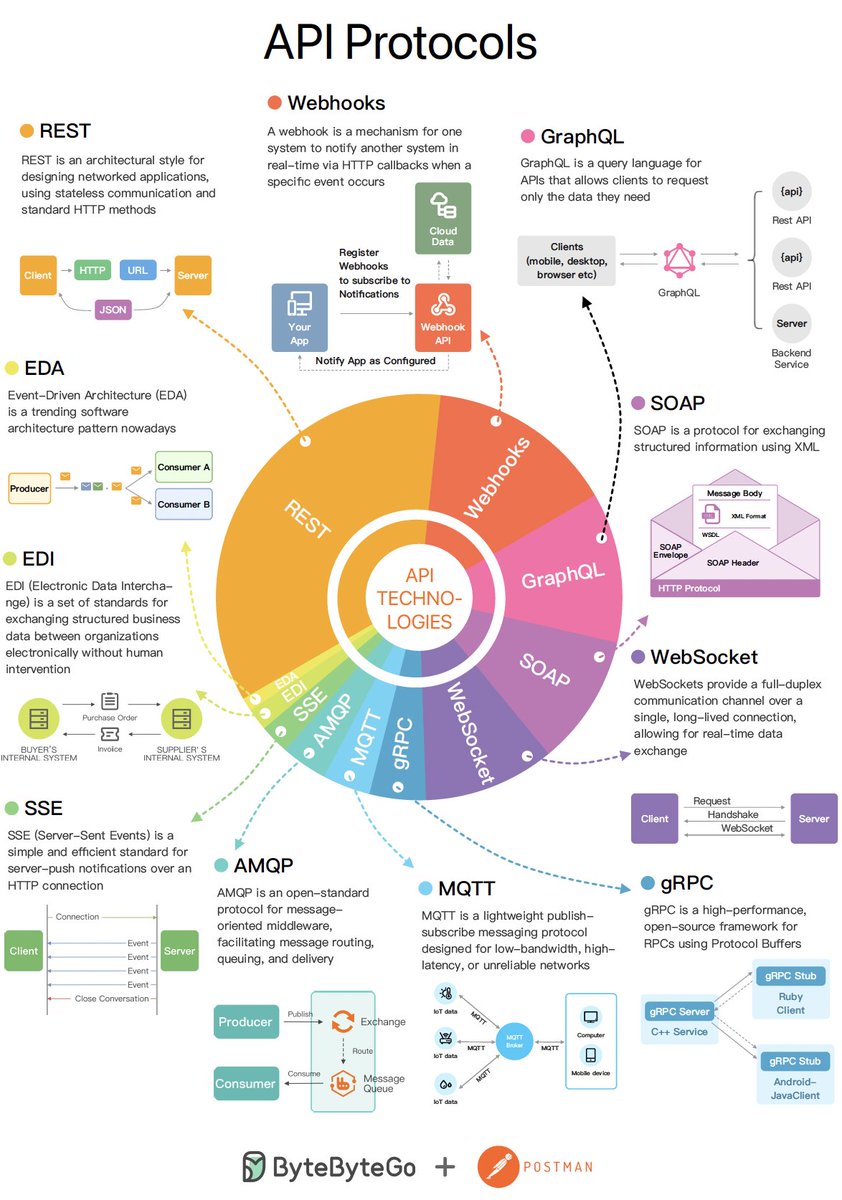
The Evolving Landscape of API Protocols
Alex Xu tweet media
English
20
442
2.5K
379.7K
NinjaNPify retweetledi
Phone Wallpapers
Phone Wallpapers@PhoneWaIlpapers·
Phone Wallpapers tweet media
ZXX
396
11.6K
183.8K
21.5M
NinjaNPify retweetledi
Vala Afshar
Vala Afshar@ValaAfshar·
Do not take your good health for granted. Be selfish about your health.
Vala Afshar tweet media
English
30
2.5K
11.6K
2.2M
NinjaNPify retweetledi
Ibn Hayal
Ibn Hayal@helpfulai·
I have surfed the web for 3 years. Here are 8 wild websites to check out. Don't skip them!
Ibn Hayal tweet media
English
73
256
1.4K
509.5K
NinjaNPify retweetledi
The Culturist
The Culturist@the_culturist_·
Yesterday, Rome turned 2,777 years old. You know the Colosseum already — so these are its lesser-known wonders... 🧵 1. Andrea Pozzo's "3D" ceiling:
The Culturist tweet media
English
407
11.1K
103.8K
17.5M
NinjaNPify retweetledi
The Culturist
The Culturist@the_culturist_·
This is what American cities looked like a century ago. Everything you see here was demolished. Why? This is what happened... (thread) 🧵
The Culturist tweet media
English
1.1K
9K
82.2K
27.7M
NinjaNPify retweetledi
Historic Vids
Historic Vids@historyinmemes·
Mysterious hole found in bison skull supposedly from 40,000 years ago
English
647
2K
20K
10.9M
NinjaNPify retweetledi
Morbid Knowledge
Morbid Knowledge@MorbidKnowledge·
Footage of Adolf Hitler at the 1936 olympics where he is thought to be high on drugs. Author Norman Ohler claims that Hitler relied heavily on a mixture of cocaine and opioids. “Hitler needed those highs to substitute [for] his natural charisma, which ... he had lost in the course of the war," Ohler said.
English
3.6K
5.6K
53.5K
33.3M
NinjaNPify retweetledi
Alex Xu
Alex Xu@alexxubyte·
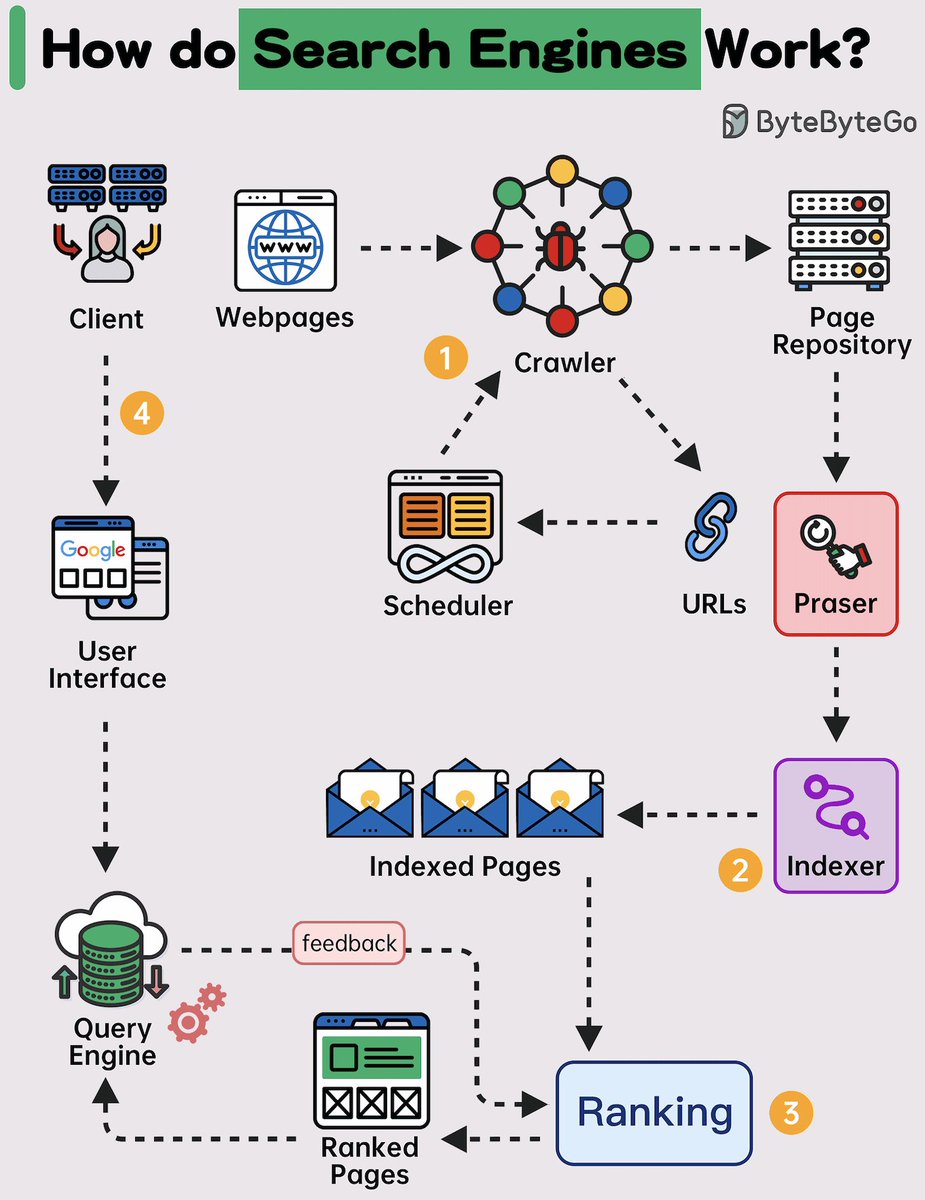
How do Search Engines Work? The diagram below shows a high-level walk-through of a search engine. ▶️ Step 1 - Crawling Web Crawlers scan the internet for web pages. They follow the URL links from one page to another and store URLs in the URL store. The crawlers discover new content, including web pages, images, videos, and files. ▶️ Step 2 - Indexing Once a web page is crawled, the search engine parses the page and indexes the content found on the page in a database. The content is analyzed and categorized. For example, keywords, site quality, content freshness, and many other factors are assessed to understand what the page is about. ▶️ Step 3 - Ranking Search engines use complex algorithms to determine the order of search results. These algorithms consider various factors, including keywords, pages' relevance, content quality, user engagement, page load speed, and many others. Some search engines also personalize results based on the user's past search history, location, device, and other personal factors. ▶️ Step 4 - Querying When a user performs a search, the search engine sifts through its index to provide the most relevant results. -- Subscribe to our weekly newsletter to get a Free System Design PDF (158 pages): bit.ly/3KCnWXq
Alex Xu tweet media
English
5
184
723
41.4K
NinjaNPify retweetledi
Elon Musk
Elon Musk@elonmusk·
Watch the super hot plasma field grow as Starship re-enters the atmosphere!
English
9.3K
30.1K
285.1K
57.6M
NinjaNPify retweetledi
Alex Xu
Alex Xu@alexxubyte·
There are over 1,000 engineering blogs. Here are my top 9 favorites: - Netflix TechBlog - Uber Blog - Cloudflare Blog - Engineering at Meta - LinkedIn Engineering - Discord Blog - AWS Architecture - Slack Engineering - Stripe Blog Over to you - What are some of your favorite engineering blogs? -- Subscribe to our weekly newsletter to get a Free System Design PDF (158 pages): bit.ly/3KCnWXq
GIF
English
9
307
1.5K
112.2K
NinjaNPify retweetledi
Censored Men
Censored Men@CensoredMen·
🇮🇱🇱🇧 Israel bombed this Lebanese man's house while he was on TikTok live. Israel defends itself by bombing civilian homes in Lebanon. twitter.com/Kahlissee/stat…
English
2.6K
53.1K
202.8K
22.2M
NinjaNPify retweetledi
Historic Vids
Historic Vids@historyinmemes·
In the Netherlands, a resident made a gate with the illusion of ordinary doors
English
655
10.3K
244.7K
38.6M
NinjaNPify retweetledi
Sahn Lam
Sahn Lam@sahnlam·
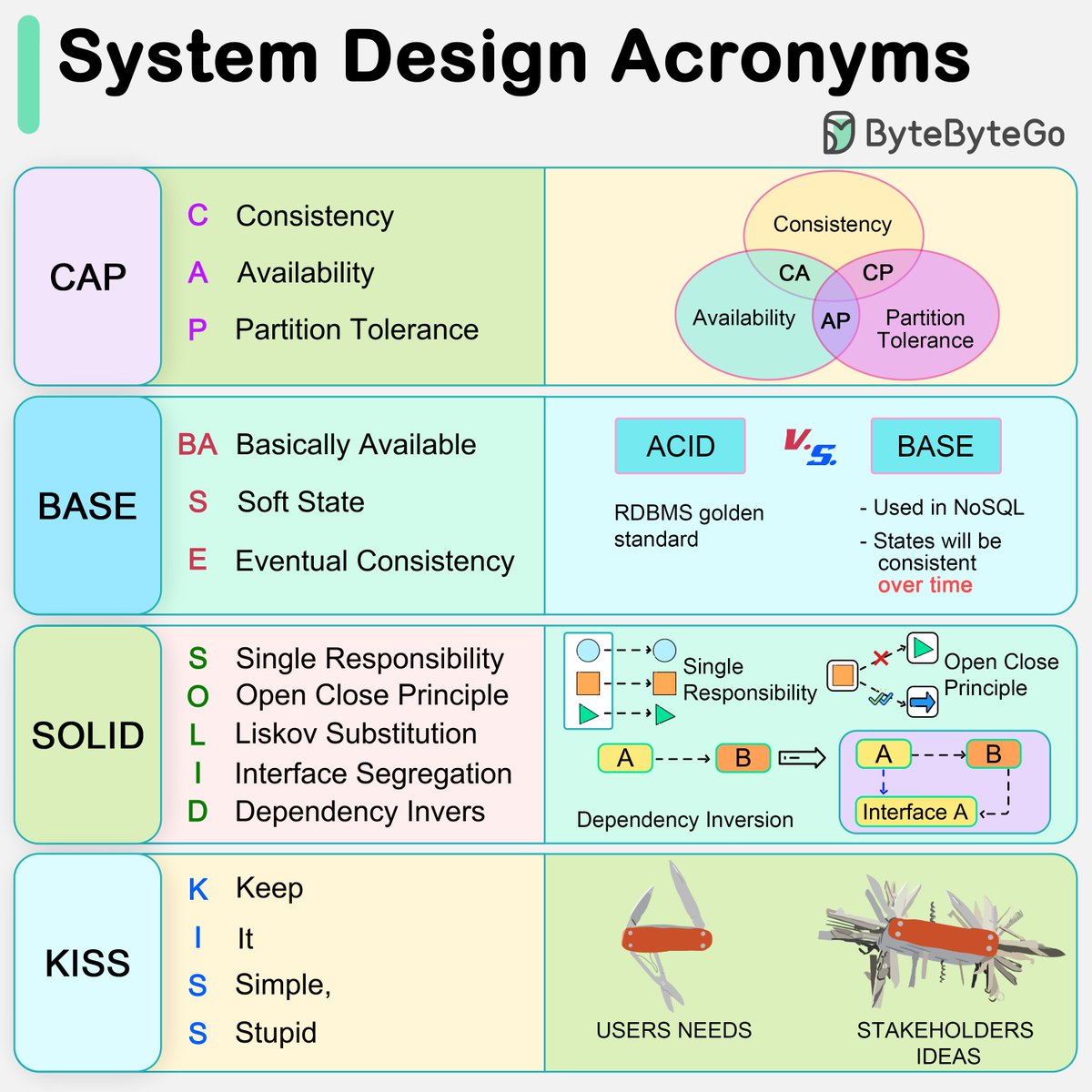
CAP, BASE, SOLID, KISS - What do these acronyms mean? The diagram below explains the common acronyms in system design. Read to the end for my favorite not in the diagram. 🔹 CAP The CAP theorem states that any distributed data store can only provide two of the following three guarantees: - Consistency - Every read receives the most recent write or an error. - Availability - Every request receives a response. - Partition tolerance - The system continues operating during network faults. However, this theorem was criticized as too narrow for distributed systems. We shouldn’t use it to categorize databases. Network faults inevitably occur in distributed systems, which must address this. You can read more in "Please stop calling databases CP or AP" by Martin Kleppmann. 🔹 BASE The ACID (Atomicity-Consistency-Isolation-Durability) model used in relational databases is too strict for NoSQL databases. The BASE principle offers more flexibility, choosing availability over consistency. Eventual consistency means system states will be consistent over time. 🔹 SOLID The SOLID principle is quite famous in OOP. It has 5 components: - SRP (Single Responsibility Principle) - Each unit of code has one responsibility. - OCP (Open/Closed Principle) - Code is open for extension but closed for modification. - LSP (Liskov Substitution Principle) - Subclasses substitute their base classes. - ISP (Interface Segregation Principle) - Expose interfaces with specific responsibilities. - DIP (Dependency Inversion Principle) - Use abstractions to decouple dependencies. 🔹 KISS "Keep it simple, stupid!" is a design principle noted by the U.S. Navy in 1960. It states that systems work best when kept simple. And now, for my favorite acronym: 🔹 YAGNI (You Aren't Gonna Need It) YAGNI serves as a developer's reality check. It advises against adding features or code based on guesses about future utility. Instead, it encourages focusing on current necessities, avoiding unnecessary work and keeping things simple. Over to you: What is your favorite acronym? – Subscribe to our weekly newsletter to get a Free System Design PDF (158 pages): bit.ly/496keA7
Sahn Lam tweet media
English
4
150
629
29.4K
NinjaNPify retweetledi
Historic Vids
Historic Vids@historyinmemes·
The moment he closed a $1 billion deal
English
1.8K
14.3K
232.7K
43.8M
NinjaNPify retweetledi
Alex Xu
Alex Xu@alexxubyte·
15 Ways to Tidy Your Code I recently finished the book "Tidy First" by @KentBeck . It's an absolute masterpiece, and I strongly recommend it to others. In the first part, it provides 15 ways to tidy your code. 1. Guard Clauses 2. Dead Code 3. Normalize Symmetries 4. New Interface, Old Implementation 5. Reading Order 6. Cohesion Order 7. Move Declaration and Initialization Together 8. Explaining Variables 9. Explaining Constants 10. Explicit Parameters 11. Chunk Statements 12. Extract Helper 13. One Pile 14. Explaining Comments 15. Delete Redundant Comments In the second and third parts, it delves deeply into the tidying process and theory. It's a short book, and I read it cover to cover, taking only about 2 hours (bonus). If you are interested, you can check out the book here: amazon.com/Tidy-First-Per…
Alex Xu tweet media
English
7
122
529
52.6K