Nakamoto Matrix

664 posts

Nakamoto Matrix banner
Nakamoto Matrix

Nakamoto Matrix

@nakamotomatrix

BTC meta-realm membership inscribed on 798 Nakamoto rare sats. exclusive access to 3D, AI, and crosschain tools #BWA

Bitcoin Katılım Kasım 2024
205 Takip Edilen624 Takipçiler
Sabitlenmiş Tweet
Nakamoto Matrix
Nakamoto Matrix@nakamotomatrix·
I don't know who needs to here this but...... Nakamoto Matrix is the ONLY Bitcoin-native digital land asset that combines true self-custody with live, interactive functionality and CROSS-CHAIN reach, withOUT bridges, withOUT wraps, withOUT relinquishing custody.
English
2
7
12
1.8K
Nakamoto Matrix
Nakamoto Matrix@nakamotomatrix·
☀️GM Question: What does the future hold? Answer: Whatever capable people build. Truly that simple 🫡
Nakamoto Matrix tweet media
English
0
1
1
43
💀
💀@LaCryptCompte2X·
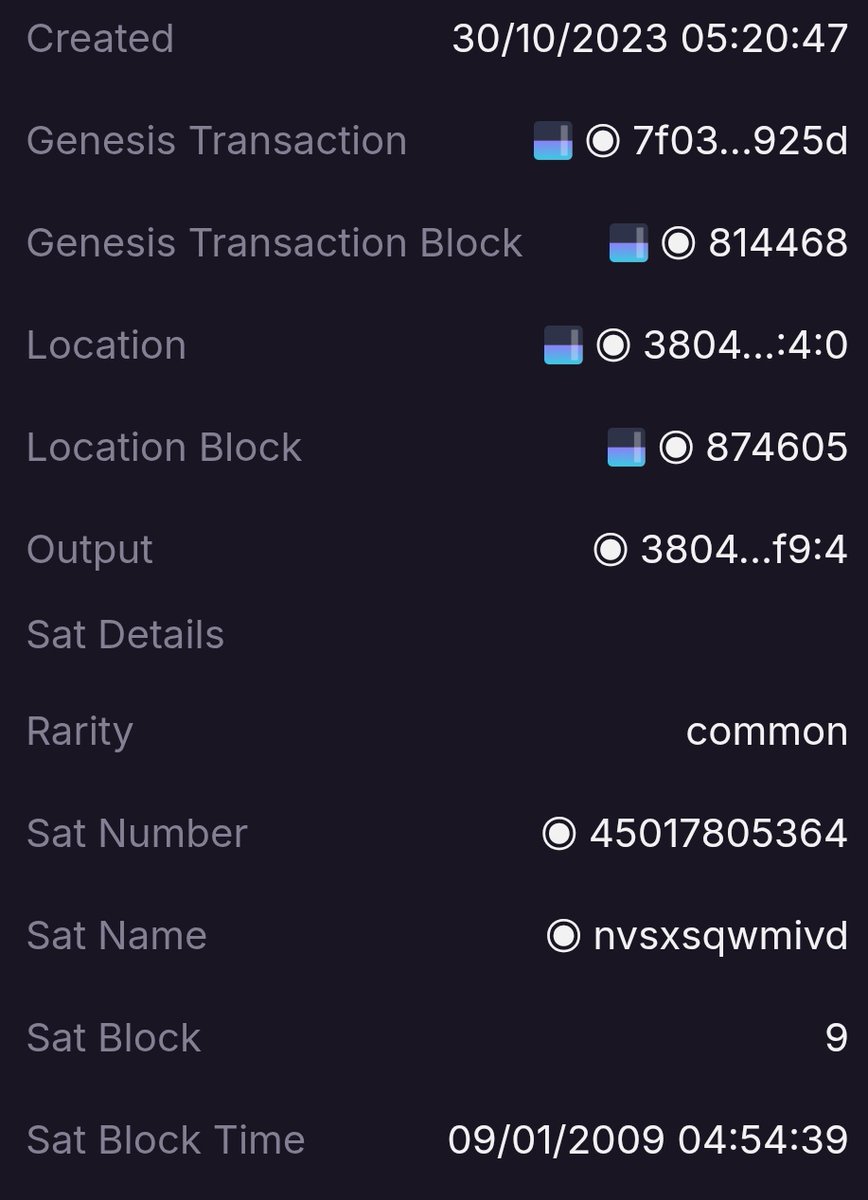
Can we specify a important detail I love to add after a reminder of the profound thought that can be attributed to the designers of @OnChainMonkey ? Each genesis is registered on a sat number whose terminology is its #, which has not been done in any other collection. 🐵🟧
💀 tweet media💀 tweet media
SPIRIT🌎ZERO🇺🇸@SPIRITZERO

☀️GM. Wow, talk about waking up to hilarity on CT. Someone claimed that Inscription 20219 does not contain what is needed to define a collection. By what standard does it fail to do that? That statement alone reveals they do not understand what Inscription 20219 actually is. So let’s explain it like everyone is five. Inscription 20219 is not just another NFT in the set. It is the root canonical parent inscription for the @OnChainMonkey collection. How so? Inside that single inscription: • The full metadata dataset for all 10,000 monkeys is stored • Trait definitions and mappings exist for the entire collection • Each monkey’s attributes are indexed from that dataset • The later monkey inscriptions reference that root data So instead of putting redundant metadata in 10,000 separate inscriptions, OCM compressed the entire dataset into one canonical parent inscription. That inscription acts as the authoritative data container for the collection. Why was this design used? @huuep and the OCM team were thinking systemically, not just about how marketplaces display collections. On chain efficiency Instead of duplicating large JSON files 10,000 times, the metadata is stored once. Canonical source of truth All monkeys derive their metadata from the same inscription, eliminating inconsistencies. Fully on chain dataset The collection definition is literally embedded in Bitcoin. Deterministic referencing Each monkey can be derived from the dataset rather than needing its own full metadata payload. To assume that a collection must include things like • collection name • item count • attributes • traits inside every individual inscription is a misunderstanding of both on chain and off chain architecture. That assumption comes from later marketplace requirements, not from what Bitcoin or the Ordinals protocol actually requires. Why? Marketplaces were forced to require off chain metadata because far too many inscriptions had no parent/child structure and no verifiable on chain reference point linking them to a collection. Ordinals itself does not enforce a specific collection schema. So OCM used a self reliant and self defining dataset anchoring design combined with a parent child architecture instead of a per inscription metadata architecture. Think of it like a database. Instead of storing the same information 10,000 times, OCM created a master table. Same information. Much cleaner architecture. Craftsmanship. Another way to understand this is to think about a library. A library does not store the entire catalog inside every single book. Instead, the library has one master catalog that contains the information for every book in the system. The catalog defines the collection. Each book simply exists within that catalog structure. Inscription 20219 works the same way. It acts as the master catalog for the entire OnChainMonkey on-chain collection. All 10,000 monkeys are defined by the dataset stored in that single inscription. So instead of repeating the same metadata inside 10,000 separate inscriptions, the dataset lives once and the monkeys reference it. Inscription 20219 already defines the collection because it contains the entire metadata dataset for all 10,000 monkeys. So the claim that it “does not include what is needed for a collection” is simply based on misunderstanding how the dataset was structured. The collection definition and rule set are the parent inscription itself by intentional design. This can be realized if you know what you are looking at. Now let’s go one level deeper because this touches something most of the Ordinals ecosystem still has not fully processed. OCM’s design with Inscription 20219 is actually closer to how serious on chain systems will likely be structured long term, while most current collections follow what is essentially a marketplace convenience model. By not repeating metadata 10,000 times, OCM stored the entire dataset once. So the dataset itself becomes the collection definition. This is much closer to how real software systems store structured data. You store the dataset once and reference it. Developers understand this because it mirrors how real databases and software systems are built. Normalized data structures and reference based systems are foundational principles of scalable software architecture. Why does this matter for Bitcoin? Bitcoin is not optimized for repeated data storage. Every byte matters. The OCM approach aligns with a more protocol respectful philosophy. Store canonical data once and reference it deterministically. This is the same principle used across modern database architecture. This matters if collections scale to • 100,000 items • 1 million items • dynamic datasets The naive model becomes extremely wasteful. Why do many people misunderstand this? Because the Ordinals ecosystem evolved marketplace first, not protocol first. Marketplaces needed something easy to parse, so they normalized the idea that off chain metadata is good enough. Collection name Item count Attributes Traits But marketplaces and speculative trading platforms do not define infrastructure. Infrastructure is defined by protocols and systems that operate independently of marketplace preferences. Markets may become loud. Traders may become passionate. Speculation may grow large. None of those things determine how underlying systems are designed. Facts remain facts. And the fact is that Bitcoin and the Ordinals protocol do not require the marketplace metadata conventions that many people now assume are standard. OCM built something closer to a true on chain data architecture. Why is Inscription 20219 powerful? Inscription 20219 effectively acts as • the collection manifest • the dataset container • the trait registry • the source of truth Instead of scattering the collection definition across thousands of files. So when someone says: “It does not contain what a collection needs” they are usually thinking in terms of marketplace schema, not data architecture. From a systems perspective, OCM’s approach is actually more elegant. Having an experienced understanding of the bigger picture is exactly why Danny Yang inscribed the entire Ordinals protocol was such an important move. He clearly understands a systems level principle. Definitions should live on chain, not in off chain indexers. OCM collections follow the same philosophy. The dataset lives on Bitcoin. Not on • OpenSea style APIs • marketplace databases • centralized metadata servers Another important point to consider is that future Ordinals stacks will likely include AI indexers and protocol crawlers. Those systems will prefer structured canonical data sources such as dataset parent inscriptions that derive assets because they are easier to parse deterministically. Architectures like this are not just cleaner. They are closer to how serious on chain systems will actually be built. Which means OCM’s design may age far better than the typical collection format people currently believe is “standard”. Because real systems are built around architecture and infrastructure, not marketplace conventions.

English
2
1
9
276
Nakamoto Matrix retweetledi
SPIRIT🌎ZERO🇺🇸
SPIRIT🌎ZERO🇺🇸@SPIRITZERO·
I’m picking up what you’re putting down. 🫡 I think the reaction you got yesterday came down to framing more than substance. Your final paragraph of this article expresses your core point very clearly: “Parent-child is a powerful provenance primitive but it is not a canonical collection standard. Markets require determinism…” That’s an accurate and coherent position. But the way the argument was structured made it sound (imo) like parent-child itself was being attacked, rather than ordinals experiencing an absence of a deterministic collection schema. Those are two different things. Some don’t understand that Parent-child was never designed to define supply, closure, or canonical membership. It encodes lineage. That’s its job. If the real issue is that markets need a way to deterministically compute collection membership from onchain data alone, then the gap isn’t in the linkage primitive. The gap is in how collection rules are declared. Right now, indexers often act as de facto registries. That’s the dependency layer you’re highlighting. But that’s separate from whether parent-child works as intended. If anything, this seems less like “parent-child isn’t a standard” and more like “we haven’t agreed on a clear, inscribed collection rule format.” The Ordinal protocol already includes a metadata field. A parent inscription can declare supply, closure, criteria, and membership rules in structured form. That shifts determinism from indexer consensus to immutable onchain declaration. So the confusion seems to be about layers: •Parent-child handles provenance •Inscription data defines rules •Indexers handle discovery One other thing that may be contributing to the confusion is the phrase “collection standard” itself. That doesn’t have to mean a single mechanism that does everything. It can be a category that contains multiple standards operating at different layers. Parent-child can be considered one collection-layer standard because it defines provenance. A structured metadata declaration could be another because it defines supply and membership rules. Those don’t compete, they stack. One thing that may help clarify this discussion further is separating where rules are declared from where they’re enforced. When the Ordinals protocol code was inscribed on-chain by @huuep, that wasn’t about adding enforcement at the Bitcoin consensus layer. It was about anchoring definitions and making the reference point durable, immutable, and accessible to anyone building on top of it. Collection rules can work the same way. A parent inscription can declare supply, closure, and membership logic in structured metadata. That declaration lives onchain. Marketplaces and indexers can then implement enforcement on the backend by validating against those declared rules. Protocol design and standard creation are about clearly defining what is declared onchain. Enforcement is a separate layer. Bitcoin has historically focused on minimal primitives and deterministic validation, while higher layers decide what they accept or reject. That nuance matters when we talk about “standards,” because not every standard is meant to be an enforcement mechanism, some are structured declarations that other systems validate against. When those layers are kept distinct, the discussion becomes much clearer. I hear you. 🫡 This topic reminds of what I brought up awhile back regarding the need for a digital asset taxonomy. These undervalued and overlooked topics will not go away as the entire digital tokenized value space advances.
GIF
English
0
2
9
150
Nakamoto Matrix retweetledi
SPIRIT🌎ZERO🇺🇸
SPIRIT🌎ZERO🇺🇸@SPIRITZERO·
☀️GM ”Tokenization” 2026 Which? Tokenization as Representation: asset → wrap it → issue a token → manage via platform. Saturated enterprise vendor territory. Tokenization as Execution Authority: Asset that contains operational capability. That’s a different asset layer.
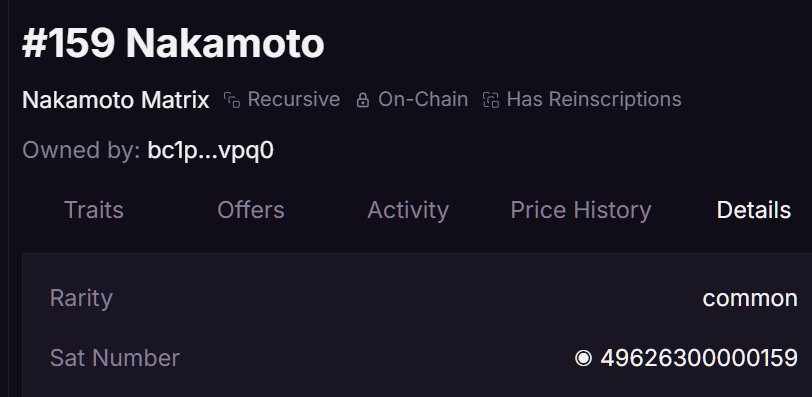
Nakamoto Matrix@nakamotomatrix

I don't know who needs to here this but...... Nakamoto Matrix is the ONLY Bitcoin-native digital land asset that combines true self-custody with live, interactive functionality and CROSS-CHAIN reach, withOUT bridges, withOUT wraps, withOUT relinquishing custody.

English
0
1
2
59
Isabel Foxen Duke⚡️
Isabel Foxen Duke⚡️@isabelfoxenduke·
Any Bitcoiners going to ETHDenver this year? If so, hit me up. I've got you covered in BTC events.
English
12
1
22
1.1K
Nakamoto Matrix
Nakamoto Matrix@nakamotomatrix·
Some are imagining the future landscape. Some already have self custodial ownership of multi-functional components that will exists as utilitarian instruments for the emerging transformative digital landscape and UGC economy.
Wes Roth@WesRoth

"Software Engineering Will Be Automatable in 12 Months," Anthropic CEO Dario Amodei predicts that AI models will be able to do 'most, maybe all' of what software engineers do end-to-end within 6 to 12 months, shifting engineers to editors.

English
1
6
10
516
Chapy
Chapy@ChapyDesign·
The most important systems are rarely seen. They’re referenced, relied on, and quietly essential. Ordinals are beginning to move there.
English
1
0
5
124
Elon Musk
Elon Musk@elonmusk·
One of the dumbest things ever
Elon Musk tweet media
English
5.1K
19.1K
285.4K
26.1M
Nakamoto Matrix retweetledi
SPIRIT🌎ZERO🇺🇸
SPIRIT🌎ZERO🇺🇸@SPIRITZERO·
Some Bitcoin inscriptions are already beyond today’s models, and most can’t yet see the inevitable end of the “limited function” asset era. Ordinals are becoming self-custodial, trustless engines — enabling executable, multi-network performative utility. Real builders.....build.
Nakamoto Matrix@nakamotomatrix

I don't know who needs to here this but...... Nakamoto Matrix is the ONLY Bitcoin-native digital land asset that combines true self-custody with live, interactive functionality and CROSS-CHAIN reach, withOUT bridges, withOUT wraps, withOUT relinquishing custody.

English
0
2
4
99
Nakamoto Matrix retweetledi
SPIRIT🌎ZERO🇺🇸
SPIRIT🌎ZERO🇺🇸@SPIRITZERO·
In this specific context it refers to the video content that demonstrates a Bitcoin inscription itself directly interacting with an EVM smart contract. So a Bitcoin network asset interacting with Ethereum network. "cross-chain" In "this" example the inscription holder is as trustlessly as known possible accessing and signing the EVM transaction to claim a token and receive it in their eth wallet. This inscription is designed to utilize bitcoin as an authentication instrument in order to trustlessly enable cross-network (cross-chain) access to more robust functionality options and capabilities offered by ethereum networks' smart contracts. The most significant aspect of this function that many don't recognize immediately, is that this is achieved without the use of a multi-sig wallet framework or ANY 3rd party exposure. This is an entirely self custodial action. Another significant aspect to highlight is, by using this inscription authentication key method, one also reduces the exposure of one's public key which is the Achilles heel regarding the Quantum computing threat. Obviously there can be many customized use cases with this model. Big picture is Bitcoin ownership assets as the foundation for sovereign digital frameworks. That to me is real digital tokenized value rooted from the only decentralized network on the planet.
English
0
2
7
147
Nakamoto Matrix retweetledi
SPIRIT🌎ZERO🇺🇸
SPIRIT🌎ZERO🇺🇸@SPIRITZERO·
Ask every single person who hosts spaces and sit on panels talking about Bitcoin, Ordinals, digital assets, ownership, cross-chain interoperability, and the trajectory of the digital landscape, to explain to you what this cross-chain functionality proof of concept demonstrates.
Nakamoto Matrix@nakamotomatrix

I don't know who needs to here this but...... Nakamoto Matrix is the ONLY Bitcoin-native digital land asset that combines true self-custody with live, interactive functionality and CROSS-CHAIN reach, withOUT bridges, withOUT wraps, withOUT relinquishing custody.

English
4
3
10
377