Alex Spokoyny

5.3K posts

Alex Spokoyny

Alex Spokoyny

@organomimetic

Dad. Chemist and whiskey aficionado. Professor and Department Chair at UCLA. Boron, nano, bioconjugation, medicinal/bio inorganic chemistry. Personal Account.
Los Angeles, CA Katılım Nisan 2016
2.2K Takip Edilen5.6K Takipçiler
Alex Spokoyny retweetledi
UCLA Chem & Biochem
UCLA Chem & Biochem@uclachem·
🥳Congratulations to our current graduate and undergraduates, and alumni who have received prestigious 2026 National Science Foundation (@NSF) Graduate Research Fellowships (GRFP) and Honorable Mentions! chemistry.ucla.edu/news/2026-nati…
UCLA Chem & Biochem tweet media
English
0
1
16
1.1K
Muhammad Jbara
Muhammad Jbara@JbaraM90·
I’m delighted to share that I’ve been promoted to Associate Professor with tenure! This would not been possible without the support of my amazing family &incredible colleagues, mentors, collaborators over the years, as well as the dedication of my exceptional students &postdocs!
English
20
3
89
3.6K
Alex Spokoyny
Alex Spokoyny@organomimetic·
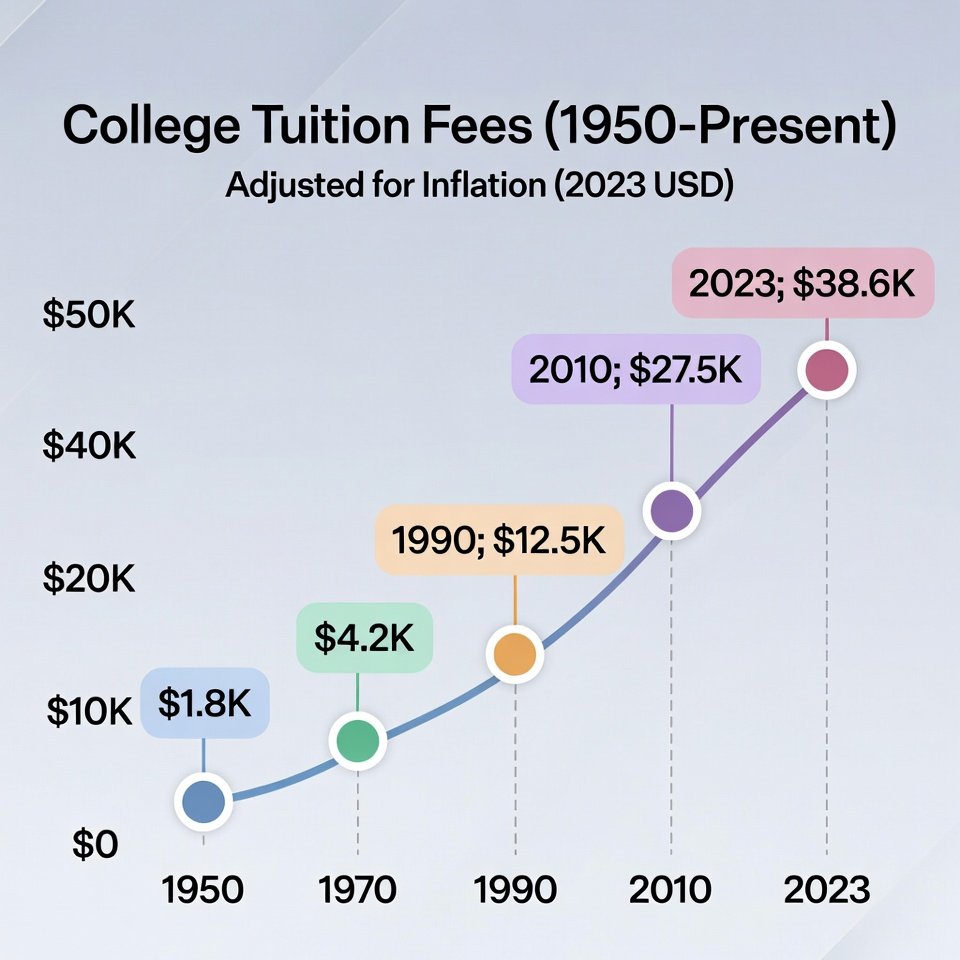
Significant portion of the increases here (bringing up the average) are due to public universities. And these have increased their tuition largely due to states not funding student FTEs at the same level as they did in 1960s (there was no tuition to attend UCLA back then, for example and state subsidized each in-state student). It’s variable and dependent state by state of course, but at least in CA, prop 13 has screwed things up big time for higher ed and changed the way things work money-wise.
English
1
0
7
660
Handre
Handre@Handre·
College tuition has exploded 1,200% since 1980 while wages rose just 213%. In 1963, a student could work a minimum-wage summer job and pay for a full year at the average public university. Today, that same job covers roughly one month of tuition. The culprit isn't corporate greed or underfunding. It's government intervention distorting every price signal in higher education. Federal student loans created artificial demand that universities exploited ruthlessly. When government guarantees endless credit to teenagers with zero income or assets, colleges face no market constraint on pricing. Why charge $3,000 per year when students can borrow $30,000? The money flows regardless of educational quality or job prospects. Universities responded predictably: they jacked up prices and hired armies of administrators to capture this guaranteed revenue stream. Easy credit always inflates asset prices, whether houses in 2005 or degrees today. Free market economists warned this would happen, just as they predicted the housing bubble. When you subsidize demand without increasing supply, prices skyrocket. Colleges simply absorbed every dollar of increased lending capacity into higher tuition, fancy dorms, and bloated bureaucracies. The 1950s model worked because students paid real prices with real money; either their own or their parents'. This created immediate feedback between cost and value. If Harvard charged too much, students went elsewhere. Today, that price mechanism is completely severed. Students don't feel the true cost until years later when loan payments hit, and by then universities already pocketed the cash. Every additional dollar of federal aid generates roughly 60 cents of tuition increases. The government created this monster, feeds it annually through increased lending limits, then acts shocked when colleges behave exactly like the rent-seeking cartels they've become.
Handre tweet media
English
175
635
1.6K
107.8K
Alex Spokoyny
Alex Spokoyny@organomimetic·
Lol, or they could just fix their horrible digital interface so reviewers don’t have to suffer through it. Last time it took me a solid 10 minutes just to recover my password to log in.
European Research Council (ERC)@ERC_Research

The number of grant applications is rising sharply. Our capacity for their evaluation isn’t. ERC President Maria Leptin explains why stricter resubmission limits are being introduced for 2027 calls and what this mean for applicants. link.europa.eu/xF7kjc

English
0
1
15
2.3K
Alex Spokoyny retweetledi
Muhammad Jbara
Muhammad Jbara@JbaraM90·
Organic chemistry has contributed markedly to advancing protein engineering; in our recent report, we show its potential in catalysis, functional studies, and drug development. nature.com/articles/s4200…
English
0
6
23
1.8K
Alex Spokoyny retweetledi
Ash Jogalekar
Ash Jogalekar@curiouswavefn·
Having worked at both of the companies that developed this medicine, I can say that it is a great example of both academic and industrial research being leveraged over a long timeline into benefits for patients in fighting a cruel, untreatable disease. Greg Verdine originally developed the idea at his Harvard lab and then his team developed it further into a proof of concept (“molecular glues”) at Warp Drive Bio in Cambridge. The idea was to take a naturally occurring protein, have a small molecule bind to it, and then use the other face of the molecule to sequester a cancer protein called KRAS which is overexpressed in a variety of cancers, effectively so that the small molecule acted as a glue between the two proteins and took them out of circulation. This was the “discovery” part. Then Revolution Medicines in Redwood City acquired Warp Drive Bio, and took the drug to the finish line by improving its properties like solubility and metabolic stability and making sure it was effective and safe. This was the “development” part and involved a lot of animal and human studies. The whole thing was spread out across two companies which leveraged their unique strengths, hundreds of scientists and employees and more than 15 years of research and development. It makes as strong a case as any for sustained long-term funding of both academic and industrial research.
Anirban Maitra@Aiims1742

🚨🚨🚨 RASOLUTE-302 Ph3 is POSITIVE "Daraxonrasib demonstrated a median OS of 13.2 months versus 6.7 months for chemotherapy, with a hazard ratio of 0.40 (p < 0.0001)".... WOW! AMAZING news for patients with #PancreaticCancer The RAS Revolution is ON!! ir.revmed.com/news-releases/…

English
6
28
223
22.6K
Alex Spokoyny retweetledi
TAE Life Sciences
TAE Life Sciences@taelifesciences·
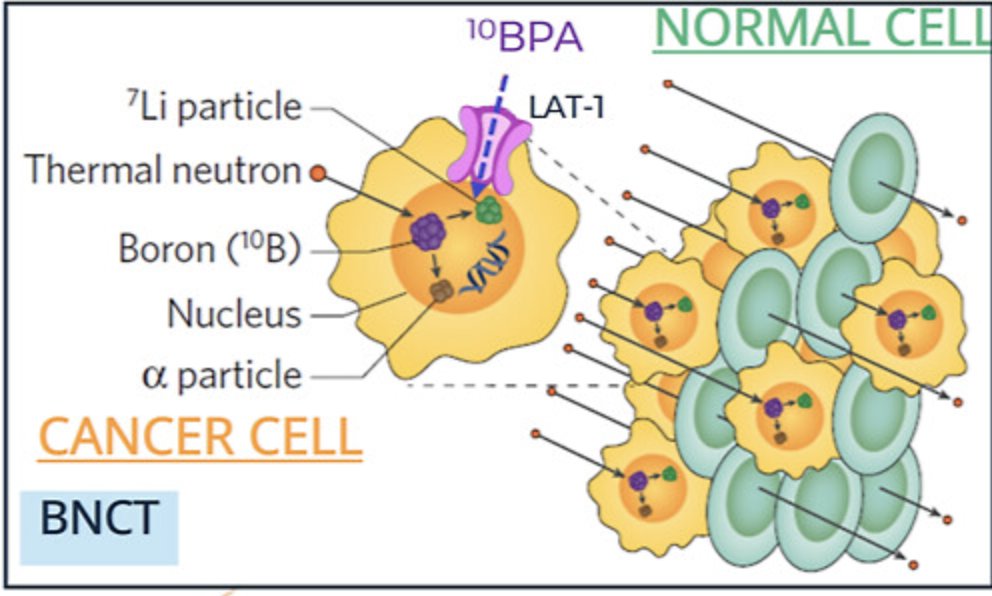
We’re proud to share new research showing BNCT’s potential to deliver durable tumor control while also activating the body’s own immune response. A meaningful step forward in expanding treatment options for patients who need it most. 🔗 Read more: lnkd.in/ggzaNSzj
TAE Life Sciences tweet media
English
0
6
8
480
Alex Spokoyny retweetledi
UCLA Chem & Biochem
UCLA Chem & Biochem@uclachem·
On March 31, the King of Sweden presented Prof. David Eisenberg with the 2026 Gregori Aminoff Prize in Crystallography at the ceremony in Stockholm! Congrats Prof. Eisenberg! Learn more: chemistry.ucla.edu/news/david-eis…
UCLA Chem & Biochem tweet media
English
0
1
12
512
Alex Spokoyny
Alex Spokoyny@organomimetic·
"Early career editorial" boards are such a strange concept. If the goal is to get meaningful input from early career scientists, then include them on the actual editorial board. Creating a separate “early career board” feels more like a symbolic gesture than real inclusion, basically a kid’s table version of governance.
English
1
0
16
1.2K