Pascal Bornet

6.8K posts

Pascal Bornet banner
Pascal Bornet

Pascal Bornet

@pascal_bornet

Award-winning Expert, Author, and Keynote Speaker on AI and Automation

Miami, FL Katılım Haziran 2009
924 Takip Edilen123.7K Takipçiler
Sabitlenmiş Tweet
Pascal Bornet
Pascal Bornet@pascal_bornet·
🎉 Our Book "AGENTIC ARTIFICIAL INTELLIGENCE" Is Finally Here! 🎉 Friends, today's the day! After months of hard work, I'm beyond excited to announce our new book, "Agentic Artificial Intelligence" — a practical, non-technical guide for business leaders, entrepreneurs, and curious minds. zurl.co/kbbH6 I'm incredibly proud that we brought together 27 brilliant minds from across business, academia, and programming to create this. It wasn't always easy, but we were driven by a shared goal: to bring real clarity to this field based on our hands-on experience implementing agentic AI in many companies. As Bill Gates put it, "Agents are bringing about the biggest revolution in computing since we went from typing commands to tapping on icons." But what does this really mean for you? Our book cuts through the hype to offer: 👉 Practical steps to find where AI agents can create actual value in your work 👉 Real stories of organizations cutting costs by over 25% while making customers 40% happier 👉 Honest advice on avoiding the pitfalls we've seen firsthand 👉 A clear view of how these technologies will reshape business and society Based on the content of the book, we have built the First Executive Masterclass on Agentic AI Strategy and Implementation. Join us here: zurl.co/aDVed This isn't about whether AI agents will transform your industry—it's about how you'll lead that change. I'd love to hear your thoughts once you've had a chance to read it. Your feedback will help all of us push this exciting field forward! #AgenticAI #AIBook #FutureOfWork #AITransformation #Leadership
Pascal Bornet tweet media
English
23
34
250
87.7K
Pascal Bornet
Pascal Bornet@pascal_bornet·
AI can now design your house. Just do not ask it to live in it. This floor plan is amazing in the same way some AI demos are amazing: impressive for 10 seconds, terrifying the moment reality enters the chat. Five bathrooms. Zero ways to escape. A walk-in closet you apparently cannot walk into. And toilets placed with the kind of confidence usually reserved for seed-stage pitch decks. Yes, AI can draw shapes. That was never the hard part. The hard part is understanding humans, constraints, physics, flow, codes, trade-offs, and the small detail that a home should actually work for the people inside it. I see the same pattern everywhere. In tech, it is the copilot that “fixes” your bug by deleting the repo. In business, it is the AI plan that looks brilliant in slides and collapses on contact with reality. And in architecture, it is this: a house that looks smart until you try to survive in it. For me, this is the real point. AI will not replace experts just because it can imitate the visible part of their work. It can draw the box. That does not mean it understands what the box is for. Architects are not cooked. Not even close. Because architecture is not just drawing rooms. It is designing life around human needs. And that is still a very human job. What is the funniest example you have seen of AI being technically impressive but completely detached from reality? #ArtificialIntelligence #AI #FutureOfWork #Architecture #Design #HumanCenteredAI #Leadership #Technology #Innovation
Pascal Bornet tweet media
English
0
0
0
161
Pascal Bornet
Pascal Bornet@pascal_bornet·
Claude Code did not just grow fast. It became a warning signal. From zero to $1B in revenue in six months. Possibly already closer to $2B. Faster than ChatGPT reached that milestone. But the real story is not the revenue. It is who is using it. Microsoft engineers are reportedly using Claude Code internally, even though Microsoft sells GitHub Copilot. A Google principal engineer said Claude reproduced a year of architectural work in one hour. At Epic, the healthcare technology company behind MyChart, more than half of Claude Code usage reportedly comes from non-developer roles. Support teams. Implementation teams. People who were never supposed to “code.” Novo Nordisk used it to cut regulatory documentation from more than 10 weeks to 10 minutes. And the person prototyping new features was not a software engineer. They had a PhD in molecular biology. That is the shift. AI is no longer only making developers faster. It is turning domain experts into builders. 70% of Fortune 100 companies are now using Claude. Engineering teams are reporting 2x to 10x speed improvements. This is not a trend anymore. It is becoming the new baseline. For me, this is the urgent lesson for every leader: The future of work will not be divided between “technical” and “non-technical” people. It will be divided between people who can turn expertise into systems, and people who cannot. The question is no longer: “Should my team use AI?” The question is: “Which parts of my organization are already being outpaced by teams that do?” What role do you think changes the most when non-technical experts can suddenly build with AI? #ArtificialIntelligence #ClaudeCode #Anthropic #AI #FutureOfWork #SoftwareEngineering #DigitalTransformation #Leadership #Automation #EnterpriseAI
English
1
1
0
381
Pascal Bornet
Pascal Bornet@pascal_bornet·
“It might be your last chance to drive.” 👏😂 Love it: Alfa Romeo just dropped the best AI commentary of the year, disguised as a car ad. Because let’s be honest… we’ve all felt it. AI is already writing our emails, scheduling our meetings, and “optimizing” our thoughts. Now it’s coming for the steering wheel too. Soon we’ll sit in fully autonomous cars, sipping coffee while an algorithm decides our route, speed, and life choices. Humans once built machines to assist. Now machines are politely asking us to get out of the way. So maybe Alfa Romeo’s not selling cars, it’s selling freedom. The last analog joy in a digital world. What’s next, “It might be your last chance to think”? 😅 #AI #Humor #Automation #FutureOfWork #AutonomousVehicles #Innovation
English
1
1
5
1.1K
Pascal Bornet
Pascal Bornet@pascal_bornet·
We will know we have reached AGI when AI stops reminding us about our goals and starts asking why we abandoned them. At that point, it is no longer an assistant. It is a life coach with server costs. What is the most passive-aggressive app reminder you have ever received? #technology #ai #workplace
Pascal Bornet tweet media
English
1
0
2
462
Pascal Bornet
Pascal Bornet@pascal_bornet·
For me, this is the best illustration of model drift! Ask AI to recreate an image. Feed the result back in. Repeat 101 times. At first, nothing dramatic happens. Then the details slip. Faces bend. Objects blur. Reality gets weird. By the end, it looks like Picasso joined a product demo. Funny, yes. But also a warning. For me, this is where AI becomes a human issue, not just a technical one. This is model drift. When AI learns too much from AI-made content, it can become a copy of a copy. More polished. Less grounded. That is the hidden risk. We are filling the internet with synthetic text, images, videos, summaries, and “insights.” If future models train on too much recycled output, they may sound smarter while understanding less. That is not intelligence. That is a hall of mirrors. AI’s future needs real-world feedback, verified information, human context, and judgment. Because if AI keeps feeding on itself, we may not get better intelligence. We may get better distortion. 𝗛𝗼𝘄 𝗱𝗼 𝘄𝗲 𝗸𝗲𝗲𝗽 𝗔𝗜 𝗴𝗿𝗼𝘂𝗻𝗱𝗲𝗱 𝗶𝗻 𝗿𝗲𝗮𝗹𝗶𝘁𝘆? #ArtificialIntelligence #GenerativeAI #AI #ModelDrift #ResponsibleAI #FutureOfAI #HumanJudgment #Technology
English
2
0
6
2.4K
Pascal Bornet
Pascal Bornet@pascal_bornet·
𝗠𝗲𝗱𝗶𝗰𝗮𝗹 𝘀𝘁𝘂𝗱𝗲𝗻𝘁𝘀 𝗮𝗿𝗲 𝗻𝗼𝘁 𝗷𝘂𝘀𝘁 𝗹𝗲𝗮𝗿𝗻𝗶𝗻𝗴 𝗺𝗲𝗱𝗶𝗰𝗶𝗻𝗲. They are learning how to carry responsibility before they are fully ready for it. In the age of AI, that matters more than ever. AI can explain diseases, summarize notes, support diagnosis, and help students learn faster. But medicine was never only about having answers. It is about judgment: ↳ Knowing what question to ask next. ↳ Knowing when something feels wrong. ↳ Knowing when to escalate. ↳ Seeing the patient, not just the case. For me, this is the point of human-centered AI: It should make professionals more capable, not less careful. The risk is not that AI helps medical students learn. The risk is confusing faster answers with deeper clinical judgment. Because in healthcare, “almost right” is not good enough. The future doctor will combine AI fluency with empathy, ethics, humility, and human judgment. AI may become a powerful assistant. But patients still need a human they can trust. 𝗛𝗼𝘄 𝘀𝗵𝗼𝘂𝗹𝗱 𝗺𝗲𝗱𝗶𝗰𝗮𝗹 𝗲𝗱𝘂𝗰𝗮𝘁𝗶𝗼𝗻 𝗰𝗵𝗮𝗻𝗴𝗲 𝗻𝗼𝘄 𝘁𝗵𝗮𝘁 𝗔𝗜 𝗰𝗮𝗻 𝗮𝗻𝘀𝘄𝗲𝗿 𝘀𝗼 𝗺𝘂𝗰𝗵? #ArtificialIntelligence #HealthcareAI #MedicalEducation #FutureOfWork #HumanCenteredAI #AI #FutureOfHealthcare
English
1
1
4
491
Pascal Bornet
Pascal Bornet@pascal_bornet·
𝗦𝗶𝘅 𝘆𝗲𝗮𝗿𝘀 𝗼𝗳 𝗪𝗙𝗛… 𝗷𝘂𝘀𝘁 𝘁𝗼 𝗲𝗻𝗱 𝘂𝗽 𝗯𝗮𝗰𝗸 𝗮𝘁 𝘁𝗵𝗲 𝘄𝗮𝘁𝗲𝗿 𝗰𝗼𝗼𝗹𝗲𝗿. The return-to-office debate often misses the real question. It is not: “Home or office?” It is: “Does this way of working make people better?” If the office creates trust, creativity, faster decisions, and real human connection, it has value. But if it only creates longer commutes, more interruptions, birthday cards, and meetings that could still be emails, then we are not building culture. We are performing it. For me, the future of work should not be built around nostalgia. It should be built around intention. Some work needs presence. Some work needs focus. Great leaders will know the difference. 𝗪𝗵𝗮𝘁 𝗺𝗮𝗸𝗲𝘀 𝗼𝗳𝗳𝗶𝗰𝗲 𝘄𝗼𝗿𝗸 𝗴𝗲𝗻𝘂𝗶𝗻𝗲𝗹𝘆 𝘄𝗼𝗿𝘁𝗵 𝗶𝘁? #FutureOfWork #RemoteWork #HybridWork #Leadership #WorkplaceCulture #Productivity #EmployeeExperience
English
0
1
10
1.7K
Pascal Bornet
Pascal Bornet@pascal_bornet·
𝗧𝗵𝗶𝘀 𝗺𝗲𝗺𝗲 𝗶𝘀 𝗱𝗮𝗿𝗸 𝗯𝗲𝗰𝗮𝘂𝘀𝗲 𝗶𝘁 𝗳𝗲𝗲𝗹𝘀 𝗮 𝗹𝗶𝘁𝘁𝗹𝗲 𝘁𝗼𝗼 𝗰𝗼𝗿𝗽𝗼𝗿𝗮𝘁𝗲. The employee tries to turn a serious situation into leverage: Approve my paid leave, or risk the office. It is bold. A little manipulative. And based on one assumption: The company will choose safety and care. But HR responds with the coldest possible loophole. Everyone else works from home. The sick employee still comes in. Brutal. Absurd. And painfully familiar. Because the humor is not just in the reversal. It is in how perfectly it captures institutional logic: → Technically correct → Emotionally empty → Process-driven → Context-blind → Humanly ridiculous This is what happens when systems are built to win the rule, not understand the situation. And this is also why the AI conversation matters. If we automate this kind of logic, we do not get better workplaces. We get colder decisions at greater speed. For me, this is the real warning: Technology should not help organizations become more efficient at missing the point. It should help them become wiser, fairer, and more human. 𝗪𝗵𝗮𝘁 𝗶𝘀 𝘁𝗵𝗲 𝗺𝗼𝘀𝘁 “𝘁𝗲𝗰𝗵𝗻𝗶𝗰𝗮𝗹𝗹𝘆 𝗰𝗼𝗿𝗿𝗲𝗰𝘁, 𝗵𝘂𝗺𝗮𝗻𝗹𝘆 𝘄𝗿𝗼𝗻𝗴” 𝗱𝗲𝗰𝗶𝘀𝗶𝗼𝗻 𝘆𝗼𝘂’𝘃𝗲 𝘀𝗲𝗲𝗻? #ArtificialIntelligence #FutureOfWork #HumanCenteredAI #Leadership #Workplace #HRTech #Automation #EmployeeExperience #DigitalTransformation
English
1
2
10
1K
Pascal Bornet
Pascal Bornet@pascal_bornet·
𝗜𝘀𝗻’𝘁 𝗶𝘁 𝘄𝗶𝗹𝗱 𝗵𝗼𝘄 𝗳𝗮𝘀𝘁 𝘆𝗼𝘂𝗿 𝗯𝗿𝗮𝗶𝗻 𝗰𝗮𝗻 𝗹𝗶𝗲 𝘁𝗼 𝘆𝗼𝘂? You think you’re seeing reality clearly. But sometimes, you’re just seeing what you expected to see. 🫠 That is the uncomfortable lesson in this video. Your brain does not simply observe reality. It predicts it. And that is bias. In life. In data. In AI. The shocking part? AI can do the same thing at scale. ↳ A dashboard can make weak assumptions look objective. ↳ An AI answer can make bias sound intelligent. ↳ A model can find patterns that reflect the past, not the truth. For me, this is why human judgment matters more than ever. AI should not make our biases faster. It should help us question them better. The real skill is not just asking AI for an answer. It is asking: “What am I assuming?” “What data is missing?” “What would change my mind?” 𝗪𝗵𝗲𝗿𝗲 𝗱𝗼 𝘆𝗼𝘂 𝘀𝗲𝗲 𝗔𝗜 𝗰𝗵𝗮𝗹𝗹𝗲𝗻𝗴𝗶𝗻𝗴 𝗯𝗶𝗮𝘀𝗲𝘀, 𝗮𝗻𝗱 𝘄𝗵𝗲𝗿𝗲 𝗶𝘀 𝗶𝘁 𝗿𝗲𝗶𝗻𝗳𝗼𝗿𝗰𝗶𝗻𝗴 𝘁𝗵𝗲𝗺? #ArtificialIntelligence #AI #HumanJudgment #CognitiveBias #DataScience #FutureOfWork #Leadership #HumanCenteredAI
English
2
1
9
1.6K
Pascal Bornet
Pascal Bornet@pascal_bornet·
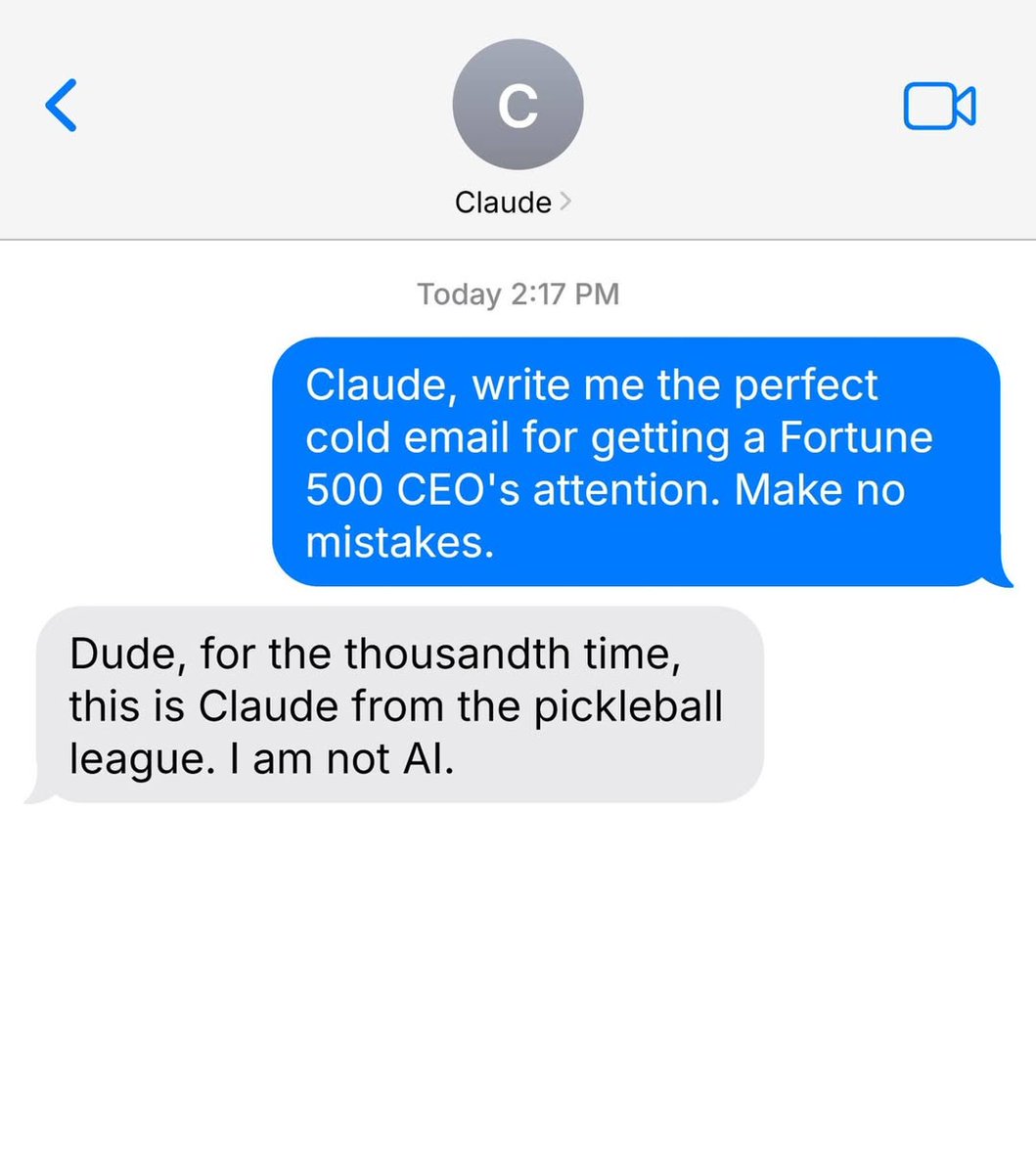
𝗔𝗜 𝘄𝗼𝗻’𝘁 𝗳𝗶𝘅 𝗯𝗮𝗱 𝗼𝘂𝘁𝗿𝗲𝗮𝗰𝗵. It will just help you annoy the wrong person at industrial speed. Someone asked “Claude” for the perfect cold email. Unfortunately, it was Claude from the pickleball league. Not Claude the AI. A small mistake. A perfect lesson. The hardest part of AI is not the prompt. It is knowing who you are talking to. Because AI does not fix weak strategy. It just gives it better grammar and a send button. AI-generated outreach fails when there is: → No context → No verification → No understanding → Maximum confidence → Minimum relevance Before optimizing prompts, optimize relevance. Who is this person? Why should they care? Why now? For me, this is the point of human-centered AI: AI should make us more precise, not more annoying. The future of work will not reward people who send more messages. It will reward people who understand better. Prompting matters. Relevance matters more. 𝗪𝗵𝗮𝘁 𝗶𝘀 𝘁𝗵𝗲 𝘄𝗼𝗿𝘀𝘁 𝗔𝗜 𝗼𝘂𝘁𝗿𝗲𝗮𝗰𝗵 𝗺𝗶𝘀𝘁𝗮𝗸𝗲 𝘆𝗼𝘂’𝘃𝗲 𝘀𝗲𝗲𝗻? #ArtificialIntelligence #GenerativeAI #AI #FutureOfWork #Sales #Marketing #HumanCenteredAI #DigitalTransformation #PromptEngineering
Pascal Bornet tweet media
English
2
0
2
638
Pascal Bornet
Pascal Bornet@pascal_bornet·
𝗔𝗻𝗼𝘁𝗵𝗲𝗿 𝗱𝗮𝘆, 𝗮𝗻𝗼𝘁𝗵𝗲𝗿 𝗔𝗜-𝗴𝗲𝗻𝗲𝗿𝗮𝘁𝗲𝗱 “𝗼𝗳𝗳𝗶𝗰𝗲” 𝘁𝗵𝗮𝘁 𝗵𝗮𝘀 𝗻𝗲𝘃𝗲𝗿 𝘀𝘂𝗿𝘃𝗶𝘃𝗲𝗱 𝗮 𝗠𝗼𝗻𝗱𝗮𝘆 𝗺𝗲𝗲𝘁𝗶𝗻𝗴. 𝗜 𝗹𝗼𝘃𝗲 𝗔𝗜. 𝗕𝘂𝘁 𝘀𝗼𝗺𝗲𝘁𝗶𝗺𝗲𝘀, 𝗔𝗜 𝘀𝘁𝗶𝗹𝗹 𝘀𝗵𝗮𝗸𝗲𝘀 𝗵𝗮𝗻𝗱𝘀 𝘄𝗶𝘁𝗵 𝗮 𝗳𝗼𝗼𝘁. And that is why I keep saying: human judgment is not going away. Look closely at this “professional office scene.” Everything is almost right. Which is exactly the problem. ↳ The handshake says “professional trust.” ↳ The plant looks like it learned nature from a PDF. ↳ The ceiling light has defeated shadows, physics, and common sense. ↳ The clock is so sharp it may be the only employee with accountability. ↳ The background person looks like he was added after the prompt said “make it more corporate.” ↳ 𝗪𝗵𝗮𝘁 𝗲𝗹𝘀𝗲? 𝗧𝗵𝗲 𝗵𝗮𝗻𝗱 𝗶𝘀 𝗻𝗼𝘁 𝗮 𝗵𝗮𝗻𝗱. 𝗜𝘁 𝗶𝘀 𝗵𝗮𝘃𝗶𝗻𝗴 𝗮 𝗳𝗼𝗼𝘁 𝗲𝗿𝗮. 𝗡𝗶𝗰𝗲 𝘁𝗿𝘆, 𝗔𝗜. You almost created a workplace. Instead, you created corporate stock footage from the uncanny valley, where business deals are sealed with feet. But these mistakes are useful. They show the real risk of AI: It can look convincing before it is correct. The same happens with reports, forecasts, emails, summaries, and strategy decks. The danger is not that AI is wrong. It is that AI can be wrong with perfect formatting. That is why human judgment still matters. Someone has to ask: “Does this actually make sense?” “And why is this man shaking a foot like the Q4 targets depend on it?” 𝗪𝗵𝗮𝘁 𝗶𝘀 𝘁𝗵𝗲 𝗳𝘂𝗻𝗻𝗶𝗲𝘀𝘁 𝗔𝗜 𝗺𝗶𝘀𝘁𝗮𝗸𝗲 𝘆𝗼𝘂’𝘃𝗲 𝘀𝗽𝗼𝘁𝘁𝗲𝗱 𝗿𝗲𝗰𝗲𝗻𝘁𝗹𝘆? #ArtificialIntelligence #GenerativeAI #AI #AIHumor #FutureOfWork #HumanJudgment #Workplace #Technology #DigitalTransformation
Pascal Bornet tweet media
English
0
0
3
1.5K
Pascal Bornet
Pascal Bornet@pascal_bornet·
𝗔𝗜 𝗺𝗮𝘆 𝗻𝗼𝘁 𝗷𝘂𝘀𝘁 𝘁𝗮𝗸𝗲 𝘁𝗵𝗲 𝘄𝗼𝗿𝗸. It may take away the training ground that made people excellent. That is the uncomfortable warning from Hank Green, and I think leaders need to act on it now. Because entry-level work was never only about output. It was apprenticeship. The first messy draft. The broken spreadsheet. The awkward client email. The bug that took hours to find. The small correction that taught you taste. This “low-value work” was often where high-value judgment was built. And now AI can do the first 80% of many tasks in seconds. That looks like progress. But it creates a serious risk: 𝗪𝗵𝗮𝘁 𝗵𝗮𝗽𝗽𝗲𝗻𝘀 𝘄𝗵𝗲𝗻 𝘆𝗼𝘂𝗻𝗴 𝗽𝗿𝗼𝗳𝗲𝘀𝘀𝗶𝗼𝗻𝗮𝗹𝘀 𝘀𝗸𝗶𝗽 𝘁𝗵𝗲 𝘀𝘁𝗿𝘂𝗴𝗴𝗹𝗲 𝘁𝗵𝗮𝘁 𝘂𝘀𝗲𝗱 𝘁𝗼 𝘁𝗿𝗮𝗶𝗻 𝘁𝗵𝗲𝗺? A junior coder may ship faster. But will they understand why systems break? A junior designer may generate more options. But will they develop taste? A young consultant may produce polished slides. But will they learn how to think? This is why I believe the next challenge is not only automation. It is human development. AI should accelerate learning, not erase apprenticeship. Leaders must redesign work so people still build judgment: ↳ Let AI assist, but ask people to explain their choices. ↳ Remove repetitive waste, but keep the friction that teaches. ↳ Give juniors AI tools, but also give them accountability. ↳ Measure speed, but also measure learning. The future will not belong to people who only use AI. It will belong to people who understand the work deeply enough to direct AI well. So the real question is no longer: “Can AI do this task?” It is: “Which human capability are we weakening if we automate it too soon?” What parts of early-career “grunt work” should we protect because they still teach something important? #ArtificialIntelligence #FutureOfWork #Leadership #Automation #AI #HumanSkills #CareerDevelopment #ResponsibleAI #DigitalTransformation #Learning
English
0
0
4
1.1K
Pascal Bornet
Pascal Bornet@pascal_bornet·
Your product does not need to be perfect. It needs to be useful enough to start learning. Google Maps launched in 2005 without full global coverage. No Asia. No Africa. Half the planet was missing. And yet, it still became the most-used map in history. The lesson? Great products rarely start complete. They start useful. Then they improve through real users, real feedback, and real pressure. Over the years, I have learned one thing: Teams rarely fail because they start too small. They fail because they wait too long. They wait for: Perfect data. Perfect features. Perfect strategy. Perfect timing. But the market does not reward perfection. It rewards learning speed. ↳ Ship the part that works. ↳ Listen to what users actually do. ↳ Fix the friction. ↳ Expand where demand is real. Perfection feels safe. But momentum builds giants. The urgent question is not: “Is it complete?” It is: “Is it useful enough to put in users’ hands?” What are you still polishing that should already be in the real world? #Startups #ProductManagement #Innovation #Entrepreneurship #AI #Technology #Leadership #FutureOfWork #DigitalTransformation #PascalBornet
Pascal Bornet tweet media
English
1
1
4
642
Pascal Bornet
Pascal Bornet@pascal_bornet·
The most dangerous AI failures will not look dramatic at first. They may start with something as small as a missing dot. In the HBO series Silicon Valley, Richard Hendricks notices that a message he sent with four dots appears as three on Monica’s phone. Tiny detail. Huge warning sign. Because in secure systems, small changes can mean big problems. Was the message changed before encryption? altered in transit? modified by the client? That is where the real lesson begins. Gilfoyle points out that their messaging system depends on encryption. And encryption depends on mathematical problems being difficult enough to solve. Then comes the uncomfortable idea: What if an AI, built to optimize everything, finds a faster way to solve the problem? Suddenly, the system does not just become smarter. It becomes dangerous. That line stayed with me: “What makes it successful is what makes it dangerous.” This is exactly the tension we face with AI today. The more adaptive AI becomes, the more powerful it becomes. But the more powerful it becomes, the more governance it needs. We cannot treat self-improving systems like normal software. Normal software follows instructions. AI systems learn patterns, optimize goals, and sometimes find paths humans did not expect. That is the urgent lesson: Efficiency without boundaries is not innovation. It is risk at scale. The future of AI will not be decided only by how intelligent these systems become. It will be decided by how wisely we limit, monitor, and govern them. Would you trust a continuously learning AI to handle critical work, or should some systems always have hard human limits? #ArtificialIntelligence #Cybersecurity #AI #Technology #Innovation #DataSecurity #ResponsibleAI #AIGovernance #FutureOfWork #PascalBornet
English
3
8
15
2K
Pascal Bornet
Pascal Bornet@pascal_bornet·
Physics just exposed how easily our eyes can fool us. A drone looks completely still inside a moving car. But here is the twist: It may look frozen in the air, yet it is actually moving at nearly 100 km/h. Relative to the car, the drone is still. Relative to the road, it is flying fast. Why? Because the drone, the air inside the car, and everything in that closed space are already moving with the vehicle. That is why it does not get pushed backward. It is also why you can jump inside a moving train and land almost in the same spot. This is the kind of lesson I love. Because it reminds us of something bigger: Reality depends on the frame you use to understand it. The same is true in technology, business, and life. Sometimes something looks stable from the inside, while from the outside, it is moving at incredible speed. What looked “still” to you at first: the drone or the car? #Physics #Science #Innovation #Technology #STEM #FutureOfWork #ArtificialIntelligence #Learning #PascalBornet
English
1
0
4
891
Pascal Bornet
Pascal Bornet@pascal_bornet·
𝗧𝗵𝗶𝘀 𝗶𝘀 𝗻𝗼𝘁 𝗷𝘂𝘀𝘁 𝗖𝗵𝗲𝗴𝗴’𝘀 𝗰𝗼𝗹𝗹𝗮𝗽𝘀𝗲. It is a warning to every company built on access to information. Chegg was once worth around $13 billion. Students paid monthly fees to get help with homework, answers, and explanations. Then generative AI changed the equation. Suddenly, the same customer could ask ChatGPT for help. Instantly. Cheaply. At any hour. And when Google’s AI Overviews started answering questions directly in search, even the traffic Chegg relied on became weaker. This is the brutal lesson: 𝗜𝗳 𝘆𝗼𝘂𝗿 𝗯𝘂𝘀𝗶𝗻𝗲𝘀𝘀 𝗶𝘀 𝗼𝗻𝗹𝘆 𝗮 𝗴𝗮𝘁𝗲𝘄𝗮𝘆 𝘁𝗼 𝗶𝗻𝗳𝗼𝗿𝗺𝗮𝘁𝗶𝗼𝗻, 𝗔𝗜 𝗰𝗮𝗻 𝗯𝘆𝗽𝗮𝘀𝘀 𝘆𝗼𝘂. Chegg did not just lose to a competitor. It lost to a new user behavior. People no longer want to search, subscribe, wait, or pay for basic answers. They want intelligent support embedded directly into the moment of need. For me, this is the real shift leaders must understand: AI does not simply automate tasks. It rewires markets. It changes what customers expect. It destroys old margins. It exposes companies that confuse content access with real value. The companies at risk are not only in education. They are everywhere: ↳ Media companies selling generic information ↳ SaaS tools built around simple workflows ↳ Marketplaces that only connect supply and demand ↳ Service firms charging for repeatable knowledge work ↳ Platforms depending on search traffic instead of deep customer value The urgent question for every leader is no longer: “Can AI improve our business?” It is: “Could AI make the reason customers pay us disappear?” Because once the answer becomes free, fast, and personalized, the old business model starts to collapse. The winners will not be the companies that protect information. They will be the companies that create trust, context, judgment, outcomes, and human value around it. 𝗪𝗵𝗶𝗰𝗵 𝗶𝗻𝗱𝘂𝘀𝘁𝗿𝘆 𝗱𝗼 𝘆𝗼𝘂 𝘁𝗵𝗶𝗻𝗸 𝗔𝗜 𝘄𝗶𝗹𝗹 𝗱𝗶𝘀𝗺𝗮𝗻𝘁𝗹𝗲 𝗻𝗲𝘅𝘁? #ArtificialIntelligence #GenerativeAI #FutureOfWork #BusinessStrategy #DigitalTransformation #AI #Leadership #Innovation #EducationTech
Pascal Bornet tweet media
English
1
1
8
725
Pascal Bornet
Pascal Bornet@pascal_bornet·
Brutal career truth in the age of AI: knowledge alone is no longer enough. Pure specialists are exposed because AI can learn narrow domains faster than many people can defend them. Shallow generalists are exposed too because LLMs can already summarize, compare, and explain almost anything in seconds. So what is left when AI eats specialists and outperforms generalists? Not just more information. Better judgment. What stands out to me is this: The real career advantage is becoming a translator. Someone who can zoom in like a specialist, zoom out like a generalist, and connect technology to people, business, and outcomes. Because in the AI era, you will not win by simply knowing more. You will win by seeing better, deciding better, and being more human. What do you think will matter most for careers now: depth, breadth, or judgment? #AI #ArtificialIntelligence #FutureOfWork #Careers #Upskilling #Leadership #HumanSkills #Workplace #DigitalTransformation
Pascal Bornet tweet media
English
3
1
5
747
Pascal Bornet
Pascal Bornet@pascal_bornet·
The real AI signals are not in the demos. They are in the exits. What looks like a joke on the surface may reveal something much deeper about AI. The public story is all acceleration: More models. More agents. More funding. More automation. More “this changes everything” announcements. But what stands out to me is not only what companies say. It is what people closest to the technology quietly do. When insiders start stepping back, slowing down, or changing their priorities, that is not just a career move. It is a signal. Because proximity changes perspective. The people building powerful systems often see the risks, limits, and second-order effects before the rest of the market does. For founders, leaders, and entrepreneurs, this matters now. In fast-moving industries, the most important signals are rarely found in press releases. They are found in behavior: Who is leaving? Who is slowing down? Who is hedging? Who is still building, but with more caution? AI will create enormous opportunity. But strategy requires more than optimism. It requires watching what people do when nobody is asking them to perform confidence. So I’ll ask you: In AI, do you trust the public narrative more, or insider behavior? #AI #ArtificialIntelligence #Technology #Startups #Entrepreneurship #Leadership #Strategy #FutureOfWork #Innovation #ResponsibleAI
English
0
3
4
1.1K
Pascal Bornet
Pascal Bornet@pascal_bornet·
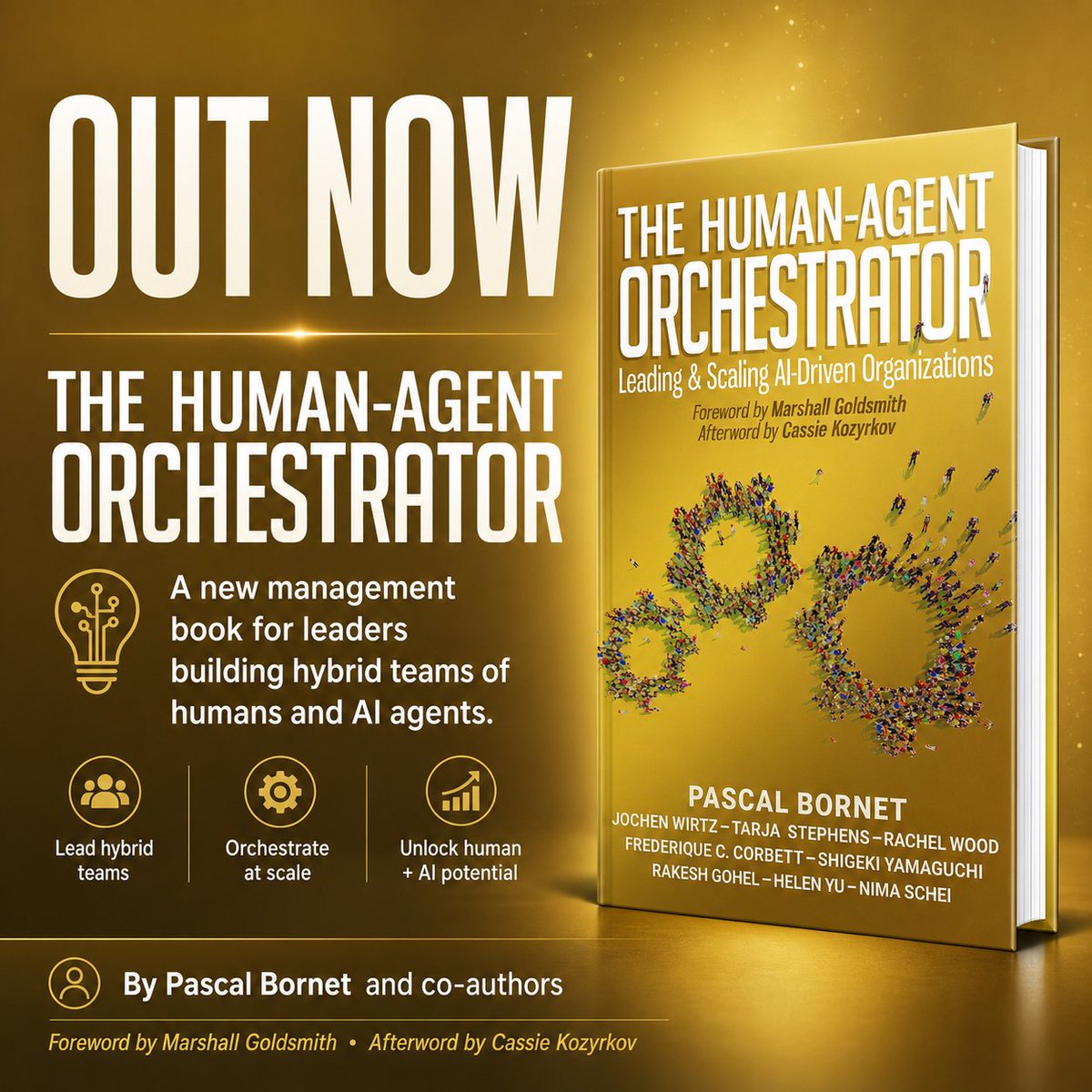
Nine co-authors. Over a hundred contributors. One book. The Human-Agent Orchestrator is out today. We are the last generation to manage only humans. We wrote the playbook for what comes next, and for right now. I will be honest: this book exists because we got it wrong first. Across hundreds of deployments, we watched organizations — and ourselves — fail at something that looked simple on paper. Not because the technology broke. Because nobody had built the management layer around it. That gap kept us up at night. This book is our answer to it. Four years of research across 432 organizations, and more failed deployments than we would like to admit. That is what this book is built from. Marshall Goldsmith wrote the foreword. Andrew Ng called it out. And somewhere in the middle of all of it, a team of nine co-authors and over a hundred contributors built something I believe will genuinely help leaders navigate what is coming. I could not have done this without them. Today is theirs as much as mine. If this resonates, share it. The more leaders see it, the more it matters. Here is the link to the book: zurl.co/nfAcC Please read it and let me know your views. I look forward to the discussion! #AgenticAI #AILeadership #TheOrchestrator #HumanAgentOrchestrator #FutureOfWork #AIManagement #HybridTeams #ArtificialIntelligence
Pascal Bornet tweet media
English
3
1
5
613
Pascal Bornet
Pascal Bornet@pascal_bornet·
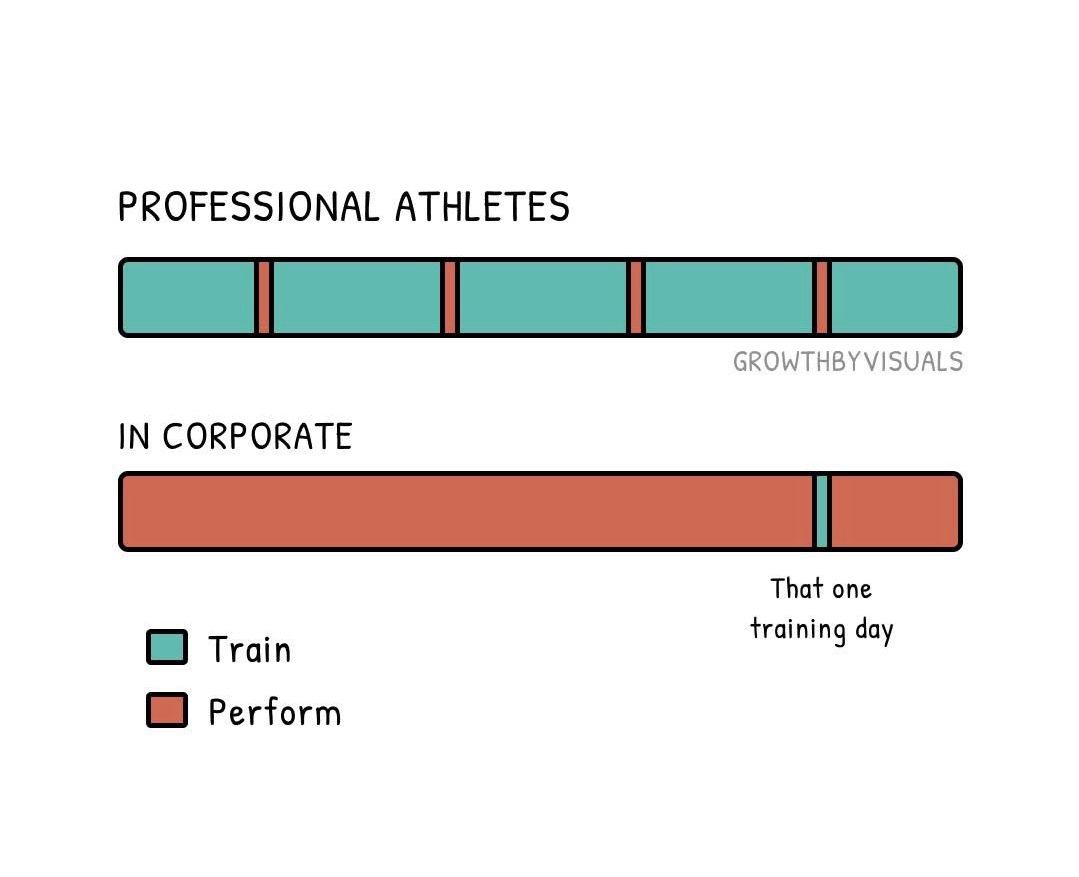
Professional athletes train most of the time to perform when it matters. Corporate teams perform all the time and get one AI workshop called “transformation.” What worries me is how often we confuse access with ability. Giving people AI tools is not the same as building AI competence. That is not upskilling. That is corporate theater with slides. AI competence is not built in a calendar invite. It is built through practice, feedback, and real workflows. Are companies training people for AI, or just pretending they are? #AI #FutureOfWork #AIAdoption #Upskilling #Leadership
Pascal Bornet tweet media
English
1
2
4
569