Pinnacle Digest

26.2K posts

Pinnacle Digest banner
Pinnacle Digest

Pinnacle Digest

@pinnacledigest

Helping investors decode geopolitics, tech, and natural resources through a macro lens. Weekly interviews with bold thinkers in venture capital and hard assets.

Not financial advice! Katılım Ekim 2009
185 Takip Edilen2.5K Takipçiler
Sabitlenmiş Tweet
Pinnacle Digest
Pinnacle Digest@pinnacledigest·
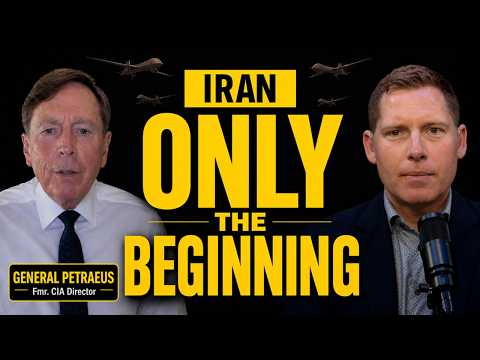
Could the Iran war trigger a far bigger global crisis and speed up the age of autonomous warfare? In this interview, General David Petraeus explains why the Strait of Hormuz remains a critical red line, why the current ceasefire is still fragile, and how autonomous warfare could reshape the future of conflict. 📢 This video is sponsored by iTrustCapital. Pinnacle Digest is compensated by iTrustCapital for this sponsorship and may also receive a commission if viewers sign up and fund a new account using our link below. 👉 Learn more about opening an IRA account with iTrustCapital here: itrustcapital.com/go/pinnacle-di… General David Petraeus joins us at a moment of extraordinary tension in the Middle East. In this conversation, the retired four-star general and former CIA Director breaks down why the U.S. blockade response was necessary, the two major red lines that must be resolved in negotiations with Iran, and why restoring freedom of navigation through the Strait of Hormuz is so critical to global markets. We also discuss whether China could be pulled deeper into the conflict, the strategic risks of escalation involving major powers, how energy and fertilizer markets are being disrupted, and why Petraeus believes the real future of war is being revealed not in Iran, but in Ukraine. He explains how drones, unmanned systems, and autonomous warfare are changing the battlefield at extraordinary speed and why the next five years could be decisive for military power. Links Referenced by General Petraeus: America’s Success Against Iran May Prove a Distraction Ukraine gives us a preview of the future of warfare. Our leaders would be wise to learn its lessons. wsj.com/opinion/americ… The Autonomous Battlefield And Why the U.S. Military Isn’t Ready for It foreignaffairs.com/middle-east/au… 🧠 About General David Petraeus General David Petraeus is a retired U.S. Army four-star general and former Director of the CIA. He previously commanded U.S. Central Command and is widely known for leading the surge strategy in Iraq. With decades of experience across Iraq, Afghanistan, and the broader Middle East, Petraeus remains one of the most respected voices on war, geopolitics, and military strategy. CHAPTERS 00:00 - Intro 2:25 - Why the Iran Blockade Was the Right Call 6:57 - Iran’s Red Lines and the Fragile Ceasefire 11:28 - Energy, Fertilizer and Global Market Risks 13:58 - How Elections Shape Wartime Decisions 16:57 - Can Iran’s Nuclear Program Be Verified? 18:22 - Could China Be Pulled Into the Conflict? 25:03 - Why the Future of War Is in Ukraine 29:34 - The Rise of Autonomous Warfare 39:33 - General Petraeus’ Final Message on Iran #DavidPetraeus #autonomousweapons #IranMassacre#IranWar#middleeast #geopolitics #straitofhormuz #china #ukrainewar #drones #militarystrategy
English

0
0
0
247
Pinnacle Digest
Pinnacle Digest@pinnacledigest·
How AWESOME is your portfolio?! Jared Dillian says most investors are still thinking about diversification the wrong way. The creator of the AWESOME Portfolio argues that 80% stocks is a lot, while a 20% gold allocation is not nearly as extreme as many people think. In this clip, Dillian explains why investors should consider having meaningful exposure to commodities, why he uses gold as a proxy for the broader commodity complex, and why his diversified portfolio approach outperformed the S&P 500 last year. His new book, The Awesome Portfolio: A Simple, Stress-Free Approach to Investing, is available for preorder now and is expected to be published September 8, 2026. Watch the full interview for Dillian’s complete breakdown on 40% gold, the AWESOME Portfolio, his $10,000 gold target, recession risk, stocks, commodities, energy, real estate, Latin America, and the U.S. dollar: youtube.com/watch?v=HDIC01… Preorder Jared Dillian’s new book here: jareddillianmoney.com/weekly/the-awe… #JaredDillian #gold #Commodities #investingtips101 #portfoliostrategy #stockmarkettrader #wealthbuilding #AwesomePortfolio #pinnacledigest #macroinvesting 👉 This content is for informational purposes only and does not constitute financial advice. 👉 If you enjoy our content, don’t just watch - be in the know. Subscribe to Pinnacle Digest’s weekly newsletter for bold insights on markets, money, and commodities: pinnacledigest.com Disclaimer: The content in this video must not be construed as tax, legal, insurance, financial advice, or other & may be outdated or inaccurate. This video does not provide a complete overview of the subject matter discussed. Pinnacle Digest, including its video commentators, are not a registered broker-dealer or financial advisors. Before investing in anything, consult your financial advisor, tax advisor, and other relevant industry professionals.
YouTube video
YouTube
English
0
0
1
25
Pinnacle Digest
Pinnacle Digest@pinnacledigest·
James Lavish says inflation has quietly forced millions of responsible investors into a dangerous corner. Leave money in the bank, and purchasing power melts away. Put it in the market, and maybe you can keep up. Want to beat inflation by more? Investors are starting to reach further out along the risk curve, from stocks to ETFs to crypto and beyond. But Lavish warns that as this mindset becomes consensus, more and more North Americans are pouring excess savings into passive ETFs. And if those ETFs crash at the wrong moment, the fallout could be catastrophic. This clip is from our full interview with James Lavish, where he explains why inflation, passive investing, and rising systemic risk may be setting investors up for one of the most dangerous moments in modern markets. Watch the full podcast for his complete warning on ETFs, inflation, and the hidden risks building beneath the surface. youtube.com/watch?v=ZRj5R7… #JamesLavish #ETFs #Inflation #StockMarket #investingtips101 #MarketCrash #PassiveInvesting #RiskAssets 👉 This content is for informational purposes only and does not constitute financial advice. 👉 If you enjoy our content, don’t just watch - be in the know. Subscribe to Pinnacle Digest’s weekly newsletter for bold insights on markets, money, and commodities: pinnacledigest.com Disclaimer: The content in this video must not be construed as tax, legal, insurance, financial advice, or other & may be outdated or inaccurate. This video does not provide a complete overview of the subject matter discussed. Pinnacle Digest, including its video commentators, are not a registered broker-dealer or financial advisors. Before investing in anything, consult your financial advisor, tax advisor, and other relevant industry professionals.
YouTube video
YouTube
English
0
0
1
61
Pinnacle Digest
Pinnacle Digest@pinnacledigest·
Investing lessons from Wrigley Field…
English
0
0
0
31
Pinnacle Digest retweetledi
Doug Casey's International Man
Doug Casey's International Man@intlmandotcom·
The 10-year Treasury yield is perhaps the most important financial benchmark in the global fiat system, as it drives valuations and market trends worldwide. It is widely—and erroneously—regarded as the risk-free rate of return. The 10-year Treasury yield can be thought of as a key barometer of the US dollar-based fiat system—a critical measure akin to its beating heart. Bond yields move inversely to bond prices. When bond prices fall, bond yields rise. A rising 10-year Treasury yield signals trouble for the US dollar because it means investors are selling Treasuries, which pushes up the US government’s borrowing costs. That is why the 10-year Treasury yield is a major pain point for the US government. The 10-year Treasury yield was 3.97% when the war started. Now it is around 4.60%, an increase of roughly 63 basis points. I expect the 10-year Treasury yield to keep climbing over the coming weeks and months—until it forces the Fed’s hand. At that point, the intervention will be sold as “stability,” but the mechanism will be familiar: suppress yields by debasing the currency. At today’s debt levels, every 1 basis point increase in the government’s average borrowing cost adds roughly $3.9 billion in annual interest expense. So a 63 bps rise is not trivial—it translates to nearly $250 billion in additional yearly interest costs, materially widening a 2025 budget deficit that was already around $1.8 trillion. Higher yields mean the US government must pay tens or even hundreds of billions more in interest on its debt. At the same time, the global economy faces even greater added costs because Treasury rates serve as the benchmark for borrowing worldwide. That is not an insignificant move. However, given all the headwinds I have discussed, I suspect the 10-year Treasury yield is headed much higher because investors will demand higher yields to compensate for rising inflation. Further, if Hormuz remains closed, drastically higher oil prices are all but certain. Higher energy prices mean higher prices across the economy and higher official inflation rates, which means investors will demand still higher yields to compensate. The problem is that interest on the federal debt is already over $1.2 trillion and is now the second-largest item in the budget. The US government cannot afford yields going much higher because the interest expense would push it toward bankruptcy. I am not sure how—or even if—the US government can manage this situation. Something has to give, and we will not have to wait long to find out what. The Iran war may prove to be more than another foreign policy disaster. It could be the trigger that exposes the fragility of the entire dollar-based financial system.
English
237
677
3.3K
1.6M
Pinnacle Digest
Pinnacle Digest@pinnacledigest·
General David Petraeus outlines what may become the two defining red lines in the Iran crisis. The first is the Strait of Hormuz. Petraeus explains that the Strait must be re established as an international waterway, where all ships have the right to transit freely, without harassment, blockade, or taxation. With recent reports that Iran has moved to charge ships for passage through Hormuz, and shipping disruptions still weighing on global energy markets, the Strait has become more than a regional chokepoint. It is now a test of whether the world’s most important oil transit route remains open to international commerce. The second red line is Iran’s remaining nuclear material. Petraeus discusses reports that Iran still holds uranium enriched to 60 percent, a level close to weapons grade if further enriched. President Trump has stated that Iran will have no right to further enrichment and must give up its remaining material under verified conditions with the IAEA. Petraeus notes there are several possible ways to address this, including dilution, removal from the country, and international verification. In this interview clip, General Petraeus breaks down why the Strait of Hormuz and Iran’s enriched uranium stockpile remain central to any lasting deal, and why both issues must be resolved before the region can move toward stability. This is not just about Iran. It is about oil, nuclear proliferation, global shipping, military deterrence, and whether the rules that govern international trade and security can still be enforced. Watch the full podcast with General Petraeus to learn more about the Iran War, drones, and the future of war via the rise of autonomous weapons systems: youtube.com/watch?v=ZDyBqc… #GeneralPetraeus #IranWar#StraitOfHormuz #NuclearDeal #MiddleEast #OilPrices #Geopolitics #IAEA #NationalSecurity 👉 This content is for informational purposes only and does not constitute financial advice. 👉 If you enjoy our content, don’t just watch - be in the know. Subscribe to Pinnacle Digest’s weekly newsletter for bold insights on markets, money, and commodities: pinnacledigest.com Disclaimer: The content in this video must not be construed as tax, legal, insurance, financial advice, or other & may be outdated or inaccurate. This video does not provide a complete overview of the subject matter discussed. Pinnacle Digest, including its video commentators, are not a registered broker-dealer or financial advisors. Before investing in anything, consult your financial advisor, tax advisor, and other relevant industry professionals.
YouTube video
YouTube
English
0
0
0
72
Pinnacle Digest
Pinnacle Digest@pinnacledigest·
Everyone is screaming inflation. New Fed Chair Warsh is saying AI could crush it. If he’s right, the Fed could cut rates without lighting the economy on fire again.
English
0
0
0
47
Pinnacle Digest
Pinnacle Digest@pinnacledigest·
Cobalt is no longer just a battery metal. It is becoming a geopolitical weapon. The Democratic Republic of Congo produces nearly 80% of the world’s cobalt, giving the country enormous leverage over the minerals powering electric vehicles, batteries, defense systems, aerospace, and the global energy transition. After cobalt prices collapsed to multi-year lows, Congo suspended exports in 2025. Then it followed with strict export quotas. The impact was dramatic. Cobalt prices have surged sharply since the ban, with cobalt metal recently trading around $26 per pound, or roughly $57,000 per metric ton. Now Congo is going even further. The country is targeting a mining security force that could reportedly reach 20,000 guards by 2028, designed to protect key mining areas, reduce illegal mining, stop smuggling, and ensure smoother production of one of the world’s most strategic minerals. This is about more than cobalt. It is about control. Congo does not want to remain only a primary supplier of natural resources while foreign buyers, smugglers, and outside powers capture the real value. It wants a larger share of the extraction, processing, security, and supply chain surrounding the minerals that will power the future. The big questions now are simple: Who controls the minerals that control the future? And if those countries are too politically unstable, are there miners operating in more politically friendly nations? #cobalt #congo #criticalminerals #batterymetals #mining #geopolitics #Commodities #ResourceNationalism #EVSupplyChain #energytransition 👉 This content is for informational purposes only and does not constitute financial advice. 👉 If you enjoy our content, don’t just watch - be in the know. Subscribe to Pinnacle Digest’s weekly newsletter for bold insights on markets, money, and commodities: pinnacledigest.com Disclaimer: The content in this video must not be construed as tax, legal, insurance, financial advice, or other & may be outdated or inaccurate. This video does not provide a complete overview of the subject matter discussed. Pinnacle Digest, including its video commentators, are not a registered broker-dealer or financial advisors. Before investing in anything, consult your financial advisor, tax advisor, and other relevant industry professionals.
English
0
0
0
52
Pinnacle Digest
Pinnacle Digest@pinnacledigest·
General David Petraeus explains why President Trump faces a difficult but urgent challenge: if the U.S. is going to strike a new nuclear agreement with Iran, it has to be stronger than the deal Trump withdrew from in 2018. The original Obama-era Iran nuclear deal, known as the JCPOA, restricted Iran’s uranium enrichment, capped its stockpile, and expanded inspections in exchange for sanctions relief. But Trump’s central criticism was that the deal included sunset clauses, meaning key restrictions would eventually expire. One major JCPOA milestone was October 18, 2025, when the UN Security Council framework tied to the deal was set to terminate. Petraeus argues that any new agreement must go further. The problem is that Iran is unlikely to willingly give up what it sees as its right to enrich uranium. That is the heart of the standoff: Trump wants a better deal than Obama got, while Tehran wants to preserve future enrichment rights. Recent reporting has described enrichment, sanctions relief, and the removal or dilution of highly enriched uranium as central sticking points in the negotiations. In this clip, General Petraeus breaks down the high stakes of the next Iran deal, why sunset clauses matter, and why uranium enrichment may determine whether diplomacy succeeds or fails. Watch the full podcast with General Petraeus to learn more about the Iran War, drones, and the future of war via the rise of autonomous weapons systems: youtube.com/watch?v=ZDyBqc… #davidpetraeus #IranWar#trump #irannucleardeal #jcpoa #uraniumenrichment #geopolitics #middleeast #nucleardeal 👉 This content is for informational purposes only and does not constitute financial advice. 👉 If you enjoy our content, don’t just watch - be in the know. Subscribe to Pinnacle Digest’s weekly newsletter for bold insights on markets, money, and commodities: pinnacledigest.com Disclaimer: The content in this video must not be construed as tax, legal, insurance, financial advice, or other & may be outdated or inaccurate. This video does not provide a complete overview of the subject matter discussed. Pinnacle Digest, including its video commentators, are not a registered broker-dealer or financial advisors. Before investing in anything, consult your financial advisor, tax advisor, and other relevant industry professionals.
YouTube video
YouTube
English
0
0
0
82
Pinnacle Digest
Pinnacle Digest@pinnacledigest·
General David Petraeus explains why the Iran War is quickly becoming an energy story for Americans. Crude oil is a global market. When supply is threatened in the Middle East, Brent rises, WTI follows, and the impact can reach the gas pump fast. Prices across the U.S. are now soaring and the CPI rising 3.8% year over year in April - the highest since 2023. With oil back above $101 per barrel, Petraeus explains why fuel, fertilizer, and global trade routes are under pressure. He also points to one major U.S. advantage: natural gas. America has some of the lowest-priced pipeline gas in the world, giving it a strategic edge. But Petraeus warns the U.S. still needs more LNG liquefaction capacity to fully capitalize on it. This is an oil shock, an inflation story, and a national security warning all at once. This video is for informational and educational purposes only and should not be considered investment advice. Watch the full podcast with General Petraeus to learn more about the Iran War, drones, and the future of war via the rise of autonomous weapons systems: youtube.com/watch?v=ZDyBqc… #davidpetraeus #IranWar#oilprices #wtimd #brentcrude #gasprices #lng #naturalgas #inflation #geopolitics 👉 This content is for informational purposes only and does not constitute financial advice. 👉 If you enjoy our content, don’t just watch - be in the know. Subscribe to Pinnacle Digest’s weekly newsletter for bold insights on markets, money, and commodities: pinnacledigest.com Disclaimer: The content in this video must not be construed as tax, legal, insurance, financial advice, or other & may be outdated or inaccurate. This video does not provide a complete overview of the subject matter discussed. Pinnacle Digest, including its video commentators, are not a registered broker-dealer or financial advisors. Before investing in anything, consult your financial advisor, tax advisor, and other relevant industry professionals.
YouTube video
YouTube
English
0
0
1
118
Pinnacle Digest retweetledi
David Sacks
David Sacks@DavidSacks·
Back-of-envelope numbers for 1 gigawatt data center: All-in Capex: ~$50 bn Enterprise revenue generated: ~$25-30 bn/year Electricity cost: $1-2 bn/year ~2 year payback. The boom is real.
English
581
951
12.6K
2.3M
Pinnacle Digest retweetledi
Aaron Hoddinott
Aaron Hoddinott@aaronjhoddinott·
Mark Carney has a majority now. For his “elbows up” supporters, that means no more excuses. He has the power. So now we find out what he actually believes. pinnacledigest.com/blog/canadas-c…
English
0
1
0
48