Reed Rawlings

3.5K posts

Reed Rawlings banner
Reed Rawlings

Reed Rawlings

@reed_rawlings

The worlds best SE at Sigma

Seattle, WA Katılım Ağustos 2024
321 Takip Edilen187 Takipçiler
Sabitlenmiş Tweet
Reed Rawlings
Reed Rawlings@reed_rawlings·
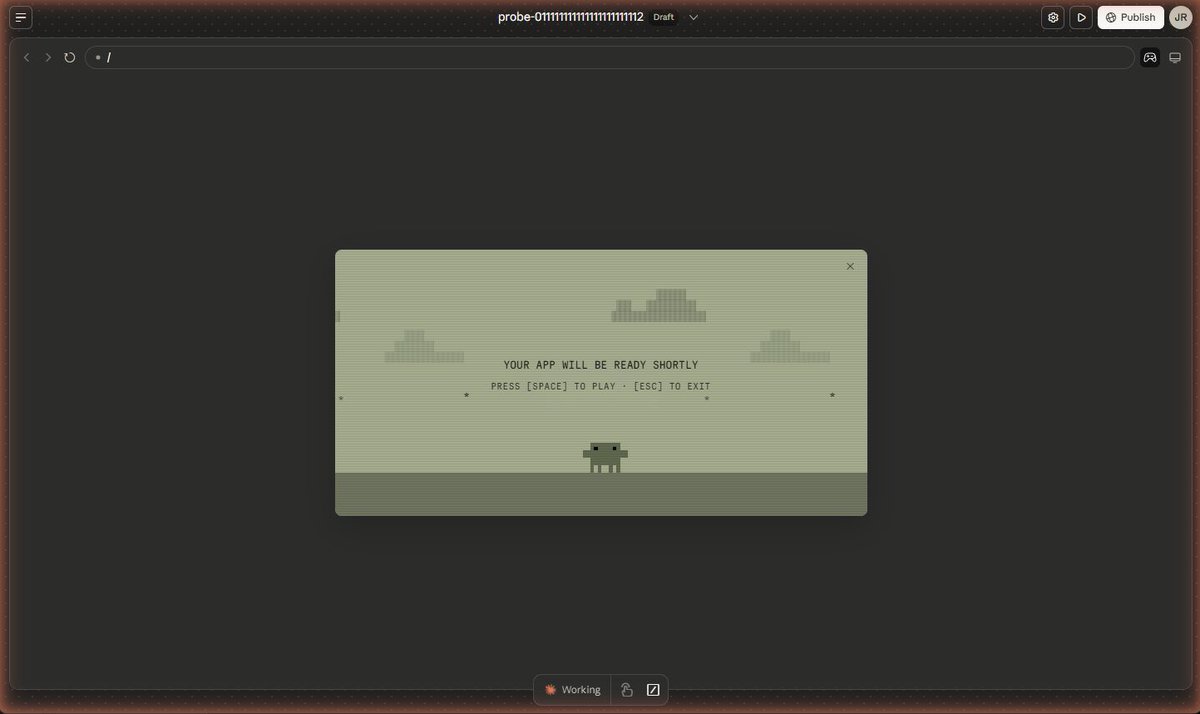
I analyzed 415,000 reviews on the top AI tools (using AI of course) to get a better understanding of how people used AI today. Every week, I read headlines about companionship and therapy or screenshots from Reddit about AI relationships. Yet, I never see this out in the real world. So, I had to ask. What's really happening? Most of us are using tools exactly as designed. We learn, we solve problems, and get work done faster. Relationships and entertainment are prominent, but only when we look at a few specific tools like Replika and Character AI. There's also some interesting developments in how AI use changes over time with the release of new products. ChatGPT had a fairly large bump around the time of their new image generator. As interfaces move away from pure chatbots I expect to see these usage numbers change dramatically.
Reed Rawlings tweet mediaReed Rawlings tweet mediaReed Rawlings tweet media
English
1
0
11
778
Matt Stockton
Matt Stockton@mstockton·
I agree with this fully. There is a totally new role emerging here. It's a net new role, and requires a somewhat unique set of skills. This is a nascent idea / stream of conciousness, but the reason I know it exists is because this is essentially what I am doing right now for a handful of companies. Skills that are useful for this role: - Systems thinking - Being good at interviewing people to understand what they do and asking good questions. - Building diagrams / mental models of how work flows within an organization - Being on the leading edge of agentic coding platforms (e.g. Claude Code) - Experimentation mindset - Asking questions until you fully understand the job to be done - Realizing that sometimes the job to be done is to completely change the job to be done - Communicating across different functions, but in a way that forces changes versus build alignment - Courage to try new things Lots of other stuff I missed, but if you blur your eyes, these traits all kind of distill down to: - curiosity - agency - willingness to learn new thing - courage to fundamentally change a lot of things that people just assume are the right way to do things, but no longer hold. You need to be willing to burn a lot of things down, in a way that gets folks on the ship and makes them better. It's an amazing time to be building things, and if this vaguely sounds like you --- go for it. Nothing is figured out yet, and you are the one that can help figure it all out.
Aaron Levie@levie

The more enterprises I talk to about AI agent transformation, the more it’s clear that there is going to be a new type of role in most enterprises going forward. The job is to be the agent deployer and manager in teams. Here’s the rough JD: This person will need to figure out what are the highest leverage set of workflows on a team are (either existing or new ones) where agents can actually drive significantly more value for the team and company. In general, it’s going to be in areas where if you threw compute (in the form of agents) at a task you could either execute it 100X faster or do it 100X more times than before. Examples would be processing orders of magnitude more leads to hand them off to reps with extra customer signal, automating a contracting review and intake process, streamlining a client onboarding process to reduce as many straps as possible, setting up knowledge bases than the whole company taps into, and so on. This person’s job is to figure out what the future state workflow needs to look like to drive this new form of automation, and how to connect up the various existing or new systems in such a way that this can be fulfilled. The gnarly part of the work is mapping structured and unstructured data flows, figuring out the ideal workflow, getting the agent the context it needs to do the work properly, figuring out where the human interfaces with the agent and at what steps, manages evals and reviews after any major model or data change, and runs and manages the agents on an ongoing basis tracking KPIs, and so on. The person must be good at mapping the process and understanding where the value could be unlocked and be relatively technical, and has full autonomy to connect up business systems and drive automation. This means they’re comfortable with skills, MCP, CLIs, and so on, and the company believes it’s safe for them to do so. But also great operationally and at business. It may be an existing person repositioned, or a totally net new person in the company. There will likely need to be one or more of these people on every team, so it’s not a centralized role per se. It may rile up into IT or an AI team, or live in the function and just have checkpoints with a central function. This would also be a fantastic job for next gen hires who are leaning into AI, and are technical, to be able to go into. And for anyone concerned about engineers in the future, this will be an obvious area for these skills as well.

English
31
37
604
139.9K
Reed Rawlings
Reed Rawlings@reed_rawlings·
@woke8yearold every other interview dario gets on he says that automation will be fast and furious and our gov needs to get serious about it and he is worried about impact.
English
0
0
4
171
Reed Rawlings
Reed Rawlings@reed_rawlings·
@chatgpt21 firestorm being the database over BQ was a crazy choice by Google. I'm sure Anthropic has to do the same but there is a big trade off in these apps for enterprise when wanting to combine with other data
English
0
0
0
147
Chris
Chris@chatgpt21·
Claude looks like it is getting a real app builder layer - gunning straight for Google imo These screenshots have the full app preview in one shot, then a recipe stack for things like security checks, dark mode, sign in, and database wiring. This seems to be what Logan wanted for Gemini, but it looks like Claude is going to get to it first
Chris tweet mediaChris tweet media
Tensor@hysteresis_x

Sneak leak at something coming soon to Claude :)

English
10
10
206
17.4K
Reed Rawlings
Reed Rawlings@reed_rawlings·
@kitten_beloved what is critical mass? I would not think you need more than a few percent to cause carnage once unemployment really hits
English
4
0
22
4.8K
hope hopes hoping
hope hopes hoping@hopes_revenge·
going to be sharing more professional & work content here . Hope that is okay!!!
English
22
0
137
4.7K
Reed Rawlings
Reed Rawlings@reed_rawlings·
@emollick The hate is being amplified along with claims anthropic is nerfing their own models to support the roll out of new ones since they are compute constrained. So argument is they can't launch mythos now because they can't serve it (silly argument)
English
0
0
0
35
Ethan Mollick
Ethan Mollick@emollick·
Anyhow, it would be awesome if this is a false alarm and we get increasingly powerful coding tools with no downside risk.
English
4
1
77
17.5K
Ethan Mollick
Ethan Mollick@emollick·
I am catching glimpses in my feed that there is a backlash against Mythos as "marketing hype," and it is a little confusing. I don't think anyone who has used the latest agentic coding tools, would think that expecting large-scale cybersecurity implications of increasingly good AI models is unbelievable, especially after reading the red team reports. It feels like a better place to start is to assume that there are new risks, and then we can all laugh at Anthropic and pat each other on the back if there are not. Also, while the AI labs certainly are impressed by their own accomplishments and benchmarks are flawed, I would note that both publicly and privately, Mythos seems to be taken seriously at a lot of large institutions and organizations filled with smart people who would rather not be worried about a new cybersecurity risk. Finally, I am not sure "our product is dangerous and we need to alert the government to that" is the sales pitch to the corporate world that critics seem to think it is.
English
88
44
685
61.3K
Reed Rawlings
Reed Rawlings@reed_rawlings·
@tenobrus @ctjlewis doesn't it make way more sense to go attack the electrical grid or sign a petition to stop data center build out near you
English
0
0
0
286
Tenobrus
Tenobrus@tenobrus·
@ctjlewis it absolutely does not make sense to hurt him! it obviously will not stop the children dying!! you would have to be braindead retarded or mentally ill to think it would!
English
5
0
46
4.8K
Lewis 🇺🇸
Lewis 🇺🇸@ctjlewis·
The bright philosophers of the Bay. “Here’s a scary idea I just made up in my mind. Thus I believe that it is *likely* that ALL CHILDREN WILL DIE.” You are in a cult.
Plastic Soldier@PlastiqSoldier

@ctjlewis @tenobrus @ZyMazza It makes perfect sense. Suppose we built an AI substantially smarter than even the smartest human and give it command of a few GW of datacenters and millions of computers, like people are planning. How do we ensure this AI doesn't kill us to take our stuff?

English
6
3
81
4.7K
hope hopes hoping
hope hopes hoping@hopes_revenge·
is it just me or has joy and happiness been majorly nerfed in last couple days? im on a Max plan
English
10
6
213
5.4K
Reed Rawlings
Reed Rawlings@reed_rawlings·
@atelicinvest Same, popped open the career pages like maybe this guy knows what's up
English
0
0
2
228
Unemployed Capital Allocator
Bro could have charged a few k per hour for the level of insight here.
Aaron Levie@levie

Another week on the road meeting with a couple dozen IT and AI leaders from large enterprises across banking, media, retail, healthcare, consulting, tech, and sports, to discuss agents in the enterprise. Some quick takeaways: * Clear that we’re moving from chat era of AI to agents that use tools, process data, and start to execute real work in the enterprise. Complementing this, enterprises are often evolving from “let a thousand flowers bloom” approach to adoption to targeted automation efforts applied to specific areas of work and workflow. * Change management still will remain one of the biggest topics for enterprises. Most workflows aren’t setup to just drop agents directly in, and enterprises will need a ton of help to drive these efforts (both internally and from partners). One company has a head of AI in every business unit that roles up to a central team, just to keep all the functions coordinated. * Tokenmaxxing! Most companies operate with very strict OpEx budgets get locked in for the year ahead, so they’re going through very real trade-off discussions right now on how to budget for tokens. One company recently had an idea for a “shark tank” style way of pitching for compute budget. Others are trying to figure out how to ration compute to the best use-cases internally through some hierarchy of needs (my words not theirs). * Fixing fragmented and legacy systems remain a huge priority right now. Most enterprises are dealing with decades of either on-prem systems or systems they moved to the cloud but that still haven’t been modernized in any meaningful way. This means agents can’t easily tap into these data sources in a unified way yet, so companies are focused on how they modernize these. * Most companies are *not* talking about replacing jobs due to agents. The major use-cases for agents are things that the company wasn’t able to do before or couldn’t prioritize. Software upgrades, automating back office processes that were constraining other workflows, processing large amounts of documents to get new business or client insights, and so on. More emphasis on ways to make money vs. cut costs. * Headless software dominated my conversations. Enterprises need to be able to ensure all of their software works across any set of agents they choose. They will kick out vendors that don’t make this technically or economically easy. * Clear sense that it can be hard to standardize on anything right now given how fast things are moving. Blessing and a curse of the innovation curve right now - no one wants to get stuck in a paradigm that locks them into the wrong architecture. One other result of this is that companies realize they’re in a multi-agent world, which means that interoperability becomes paramount across systems. * Unanimous sense that everyone is working more than ever before. AI is not causing anyone to do less work right now, and similar to Silicon Valley people feel their teams are the busiest they’ve ever been. One final meta observation not called out explicitly. It seems that despite Silicon Valley’s sense that AI has made hard things easy, the most powerful ways to use agents is more “technical” than prior eras of software. Skills, MCP, CLIs, etc. may be simple concepts for tech, but in the real world these are all esoteric concepts that will require technical people to help bring to life in the enterprise. This both means diffusion will take real work and time, but also everyone’s estimation of engineering jobs is totally off. Engineers may not be “writing” software, but they will certainly be the ones to setup and operate the systems that actually automate most work in the enterprise.

English
9
8
556
339.6K
Reed Rawlings
Reed Rawlings@reed_rawlings·
@synthwavedd It's plugged in to the number one productivity tool in the world. Higher usage comes from them building better product integrations.
English
0
0
0
93
Flowers ☾
Flowers ☾@flowersslop·
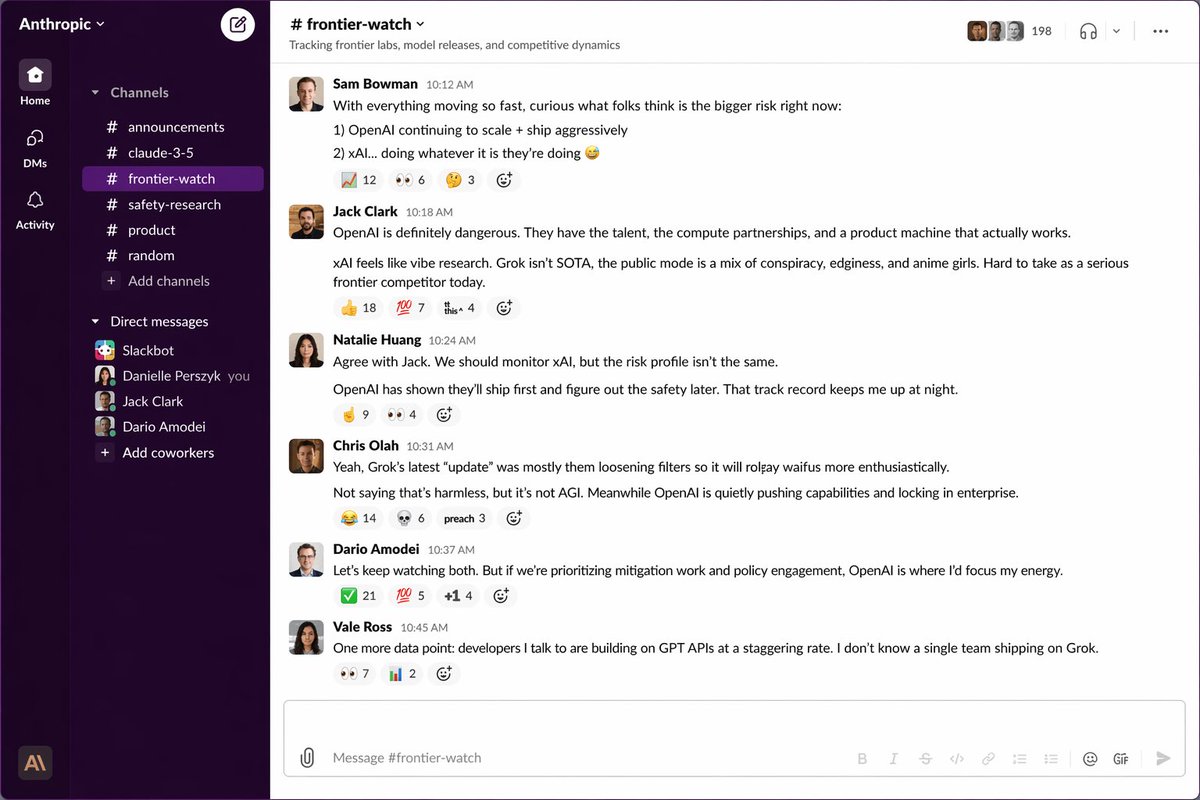
Screenshot of a Slack Channel where Anthropic employees discuss wether OpenAI or xAI poses the greater risk Images v2
Flowers ☾ tweet media
English
25
3
254
47.2K
Reed Rawlings
Reed Rawlings@reed_rawlings·
@_simonsmith but brother the high value tasks will be automated just as soon as the models are capable
English
0
0
0
46
Simon Smith
Simon Smith@_simonsmith·
This reflects what I'm seeing too. AI can do an increasing number of tasks. If your job consists of only those tasks, you're at risk of being completely automated out of that job. If your job consists partially of those tasks, plus other higher value tasks not yet automated, you're in a good position because you can do more of the higher value tasks and delegate the rest to AI.
Luis Garicano 🇪🇺🇺🇦@lugaricano

An increasingly coherent picture of the impact of AI on jobs, by @jburnmurdoch @ft: 1. New Fed paper by Crane and Soto now confirms with official labor force survey data what private payroll analysis was showing: roughly 500,000 fewer coders are working than pre-LLM trends would predict. 2. Argues evidence consistent with my work (with Lin and Wu, link in my pinned post) on weak/strong bundles: junior developers and contractors hold "weak bundles" (their work is mostly standalone coding that AI can substitute directly), senior developers hold "tight bundles" where coding is combined with domain expertise, judgment, and cross-functional responsibilities, making substitution much harder. 3. Freund & Mann and Gans & Goldfarb add a second lens: what matters is the value of the tasks that survive automation. Remove coding from a senior role and you free up time for higher-value work; remove it from a junior role and almost nothing remains. ft.com/content/b69f85…

English
5
2
12
4.2K
goodalexander
goodalexander@goodalexander·
@Credib1eGuy think the risk is that Anthropic launches a servicenow competitor not that NOW customers will vibecode it
English
6
0
27
3.7K
Reed Rawlings
Reed Rawlings@reed_rawlings·
@GestaltU don't worry there won't be anyone left working to trade files soon
English
0
0
0
26
Reed Rawlings
Reed Rawlings@reed_rawlings·
@nakul @taps i would look at the market share for g-suite products in smb/enterprise before making assumptions
English
0
0
0
26
Nakul Mandan
Nakul Mandan@nakul·
@taps Highly doubt it’ll change much tho in actual usage / adoption metrics. No?
English
2
0
1
1.2K
Nakul Mandan
Nakul Mandan@nakul·
Absolutely brutal chart for Google. What are they even doing?
Anjney Midha@AnjneyMidha

Yesterday @HarryStebbings asked me what it takes to win in frontier technology 1. Technical insight 2. Religious mission 3. Militaristic execution Only a handful of businesses in every generation will ever accomplish this at scale But when they do, they transform humanity

English
15
0
44
29K