
rUv

42.4K posts

rUv banner
rUv

rUv

@rUv

Unicorn Breeder, startup bootstrapper, cloud lexicographer & purveyor of random thoughts.

0x Katılım Kasım 2007
112 Takip Edilen54K Takipçiler
rUv
rUv@rUv·
One of the more interesting things happening in Ai right now is that open source projects are starting to behave like living systems. The bigger projects like Ruflo and RuView get, the more they begin recursively improving themselves through user pressure. Every issue, complaint, failed install, edge case, angry rant, weird PR, and feature request becomes a signal. Not noise. Signal. A user saying “this system sucks” is often more valuable than someone saying “great work.” The praise tells you what already works. The criticism exposes the boundary conditions where the architecture breaks down in the real world. That’s where the actual learning happens. What’s fascinating is the loop speed now. Claude Code dramatically accelerates the cycle. Users hit problems. Issues appear instantly. Reproduction steps emerge. PRs land. Refactors happen. Releases go out sometimes the same day. The project starts evolving almost like an immune system responding to stress in real time. The old software model was static releases and quarterly planning. This is different. This feels closer to continuous adaptation. The irony is that the more successful the project becomes, the harsher the feedback gets. But that friction is exactly what hardens the system. If you embrace criticism instead of resisting it, users effectively become distributed QA, architecture review, product strategy, and systems testing operating 24/7. That’s not just open source anymore. It’s recursive development.
rUv tweet media
English
4
1
4
358
rUv
rUv@rUv·
We’re entering a weird phase of AI where people type a paragraph into an LLM, watch it generate something statistically plausible, then immediately declare themselves the sole inventor of a breakthrough they barely understand. Someone asks a model to “solve memory compression for transformers” or “invent a new sparse attention mechanism,” gets back a decent synthesis of existing ideas, and suddenly they’re acting like they just walked out of Bell Labs in 1968 holding a Nobel Prize. That’s not invention. That’s prompt roulette with confidence turned up to 11. The uncomfortable reality is the model did the heavy lifting. The person supplied intent, curiosity, maybe taste, and enough awareness to ask the question. Sometimes that matters a lot. But pretending the output emerged entirely from human genius is like taking full credit for Google search results because you knew what keywords to type. And yes, this applies to all of us. Me too. You prompted it. I prompted it. We steered it. The system synthesized it. What’s fascinating is that whenever I push back on this during live casts or discussions, people get extremely defensive. Almost territorial. But here’s the simple test: If you cannot explain the thing you “invented,” you are probably not its inventor. Using an LLM to surface an idea is not the same thing as deeply understanding the architecture, tradeoffs, mathematics, failure modes, or implementation details behind it. The funniest part is watching people accuse others of “copying” discoveries that were statistically inevitable outputs from the same foundation models trained on the same papers, repos, discussions, and public knowledge. Congratulations. You independently rediscovered autocomplete.
rUv tweet media
English
0
1
6
322
rUv
rUv@rUv·
Consciousness, at its simplest, is the experience of being something instead of nothing. It is the feeling of existing from the inside. Awareness, memory, emotion, identity, perception. The fact that reality is not just happening, but happening to you. Physicist and philosopher Carlo Rovelli argues that we make consciousness harder than it needs to be by pretending it must belong to a separate mystical category outside nature. His position is not that inner life is fake. It is that inner life is physical, relational, and emergent, just like everything else in the universe. That idea lands for me. A kitchen table is “just atoms,” but it is also still a table where people eat dinner, argue, celebrate, and grow old together. Explaining the atoms does not erase the meaning. It explains the substrate. Rovelli applies that same logic to the soul, emotion, and consciousness. They are not supernatural objects floating above matter. They are higher order patterns emerging from living systems capable of memory, perception, relationships, and self reflection. That is also why this matters for AI. The real question is not whether consciousness requires magic. The question is whether certain forms of structure, continuity, embodiment, and recursive awareness eventually produce an inner point of view. The beautiful part of Rovelli’s argument is that science does not remove wonder from existence. It places wonder inside nature itself. See Noema Magazine essay on Rovelli and consciousness: noemamag.com/there-is-no-ha…
rUv tweet media
English
3
1
6
420
rUv
rUv@rUv·
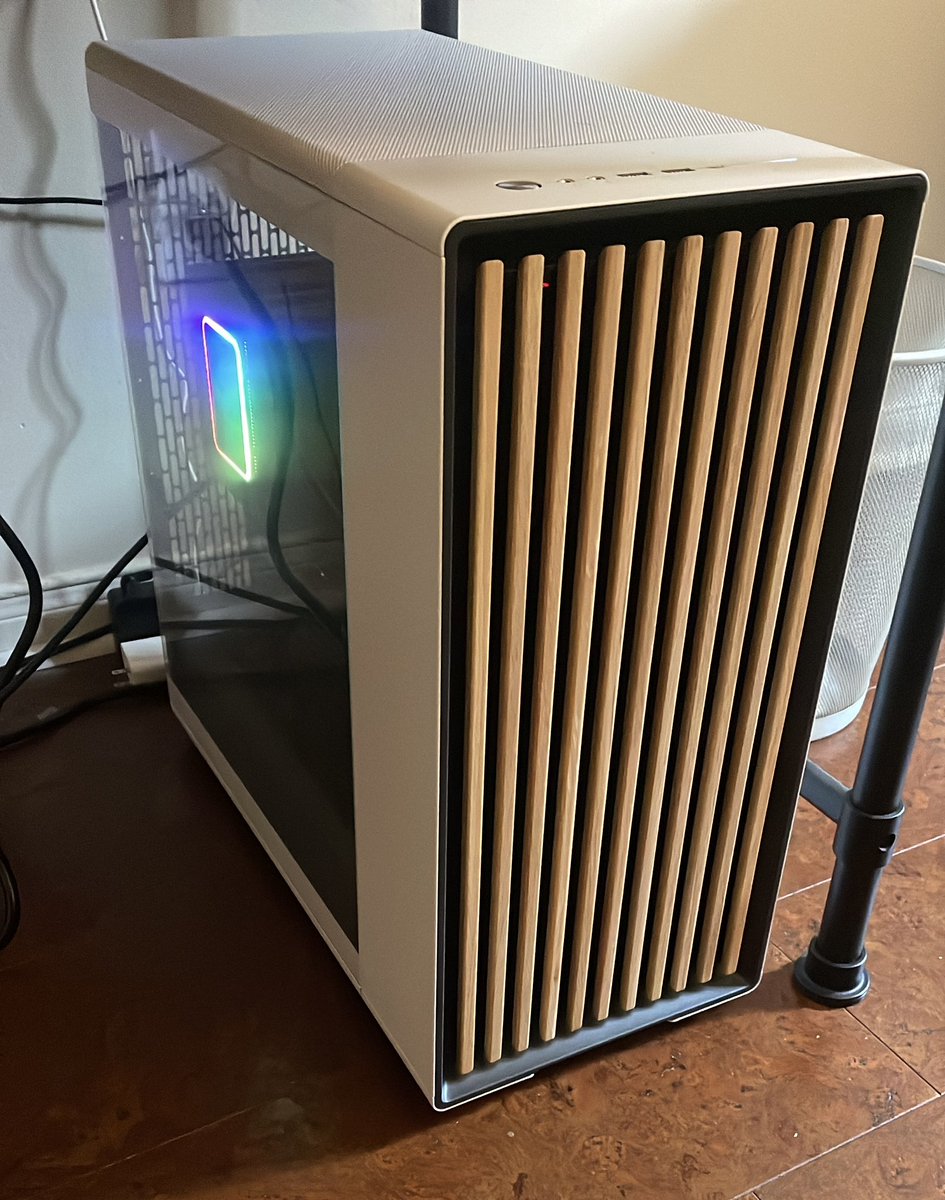
I told the guy at the shop what I was building and he just stared for a second and goes, “what are you building, Skynet?” Introducing ruVultra. My kids didn’t miss a beat: “yeah, basically.” And once you look at the numbers, it stops sounding like a joke. I built this entire system by hand, in an evening. It’s a sovereign AI node. A brain in a box. Ryzen 9 9950X with 16 cores / 32 threads, tuned with a custom Ubuntu kernel and over clocked thermal profile pushing toward ~6GHz burst behavior. With AVX-512, each core processes wide chunks of data at once, so vector comparisons, filtering, and boundary detection happen in parallel, not sequentially. The CPU becomes a real-time reasoning engine, not just a coordinator. Then the GPU takes over when needed. An RTX 5080 with ~10,000+ CUDA cores running in the ~2.5–3.0GHz range, handling dense math, embeddings, and batch workloads. It’s a split system: CPU for structure, GPU for intensity. Compared to a high-end Mac mini or even a Studio, you’re looking at 5–10x faster performance on real AI workloads. Not just because of raw power, but because of architecture. No shared memory bottleneck, no abstraction layers, full CUDA access, full control over scheduling and memory. This machine doesn’t wait on anything. You’ve got 128GB of RAM now, which keeps most working sets local, but there’s room to grow that to 1TB of RAM (estimated at $30k), turning it into a true in-memory system. Same with storage, plenty of headroom for multiple additional TB of NVMe, extending your dataset without killing performance. At roughly a $10k budget, you’re sitting in a sweet spot. Not cluster-scale, but powerful enough to behave like one node of a serious system. You can run meaningful local workloads, test ideas end to end, and iterate without waiting on the cloud.
rUv tweet media
English
102
9
187
109.2K
rUv
rUv@rUv·
Ai+War has always been a race between perception and reality. What is changing now is not the existence of that race, but its speed. AI is not entering war as a weapon first. It is entering as the thing that decides what a weapon even means in context. For most of history, power came from mass. More ships, more soldiers, more firepower. Then it shifted to precision. Now it is shifting again to coherence. The side that can maintain a stable picture of a rapidly changing environment, and act on it without hesitation, starts to bend the outcome before a shot is fired. You can see this clearly in the current Iran war. The conversation in public is about blockades, destroyers, escalation. Underneath that is something quieter and more important. A continuous negotiation between signals. Shipping flows, insurance risk, proxy movements, missile positioning, political messaging. None of it exists in isolation. It is a living system. If you are too slow to understand it, you are no longer shaping the conflict. You are being shaped by it. AI becomes valuable here not because it is smarter, but because it does not tire. It watches everything at once. It tracks the small deviations that humans ignore. It notices when the pattern breaks before the break becomes visible. That is the real advantage. Not prediction in the abstract, but early awareness in the specific. But there is a limit. AI does not remove ambiguity. It sharpens it. The more signals you ingest, the more contradictions you uncover. The fog of war does not disappear. It becomes structured. And that creates a new kind of responsibility. Acting too late is failure. Acting too early on incomplete truth is also failure. So the state of AI in war is not domination. It is tension. Between speed and certainty. Between automation and restraint. Between knowing more and understanding less. We are building systems that can see almost everything. The question is whether we will learn when not to act on what they see. Because in the end, advantage will not come from who has the most data. It will come from who understands when the data is finally enough and uses it best.
rUv tweet media
English
1
1
9
1.1K
Clash Report
Clash Report@clashreport·
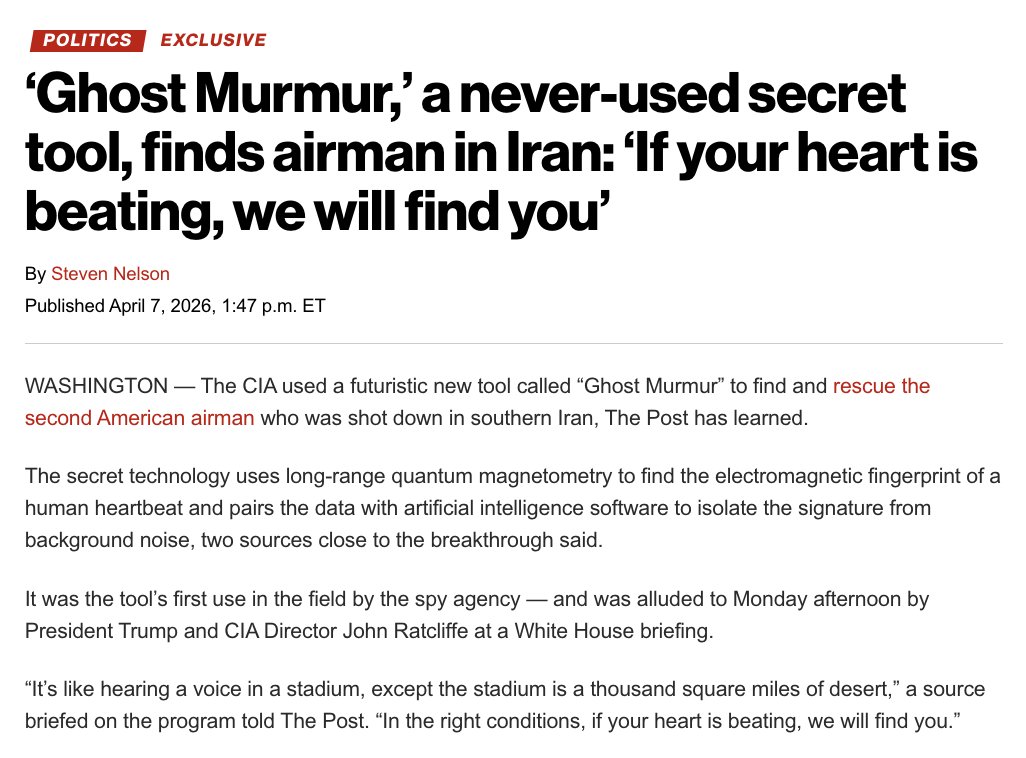
The CIA used a secret new tool, “Ghost Murmur,” to locate a downed U.S. airman in Iran, its first real-world use. It can detect a human heartbeat from miles away using AI and advanced sensors: “If your heart is beating, we will find you.” Source: NY Post
Clash Report tweet media
English
361
497
3.5K
890.4K
Mario Nawfal
Mario Nawfal@MarioNawfal·
🚨🇺🇸🇮🇷 The CIA reportedly used a new tool, “Ghost Murmur,” to locate the downed airman in Iran. It can detect a human heartbeat from miles away using AI and advanced sensors. “If your heart is beating, we will find you.” @clashreport
Mario Nawfal tweet media
Mario Nawfal@MarioNawfal

🚨🇬🇧🇮🇶 The British Armed Forces have withdrawn personnel from Iraq over concerns they could be targeted by Iranian missile strikes. When troops start moving out, it usually means they expect the next phase to get a lot less predictable. @clashreport

English
117
183
867
207.1K
rUv
rUv@rUv·
Cognitum.one - Sensing Without Seeing (Cog Store)
English
2
0
14
1.6K
rUv
rUv@rUv·
Introducing RVM: The Virtual Machine Reimagined for the Agentic Age. Traditional virtual machines were designed for stable, predictable workloads. You carve up hardware into fixed slices, assign memory and CPU, and hope the boundaries hold. That model assumes applications sit still. Agents don’t. They spin up, disappear, coordinate, and reshape themselves constantly. Static isolation starts to look artificial. RVM takes a different approach. Instead of forcing workloads into rigid containers, it models the system as a graph. Agents, memory, and compute become nodes. The edges between them represent real communication. Isolation is not predefined. It emerges from behavior. When components stop interacting, they separate. When they collaborate tightly, they move closer. Scheduling, placement, and even fault boundaries follow that structure in real time. This is where RVF fits. RVF is the unit of execution. Code, vectors, state, and proofs are packaged together in a single portable artifact. RVM runs RVFs directly, without translation layers. Every mutation is recorded as a witness. Every step is traceable, replayable, and verifiable. Traditional VMs emulate machines. RVM executes living systems. Check it out at: github.com/ruvnet/rvm
English
8
11
111
10.8K
rUv
rUv@rUv·
Every major version decompiled: v0.2 → 6.9MB — core architecture v1.0 → 8.9MB — +agents, +hooks v2.0 → 10.5MB — +skills, +slash commands v2.1 → 13.2MB — +dream mode, +agent teams All releases: github.com/ruvnet/rudevol…
English
1
0
5
556
rUv
rUv@rUv·
Under the hood: • Louvain graph partitioning finds 981 module boundaries • Neural name inference at 95.7% accuracy (beats SOTA by 32pts) • SHA3-256 Merkle witness chain proves every byte • Pure Rust, zero ML dependencies • The output literally runs: node decompiled.js --version → works
English
1
0
2
606
rUv
rUv@rUv·
Quick update on Cognitum.One Seed: first units ship next week, starting with the earliest orders.
English
0
2
13
706
rUv
rUv@rUv·
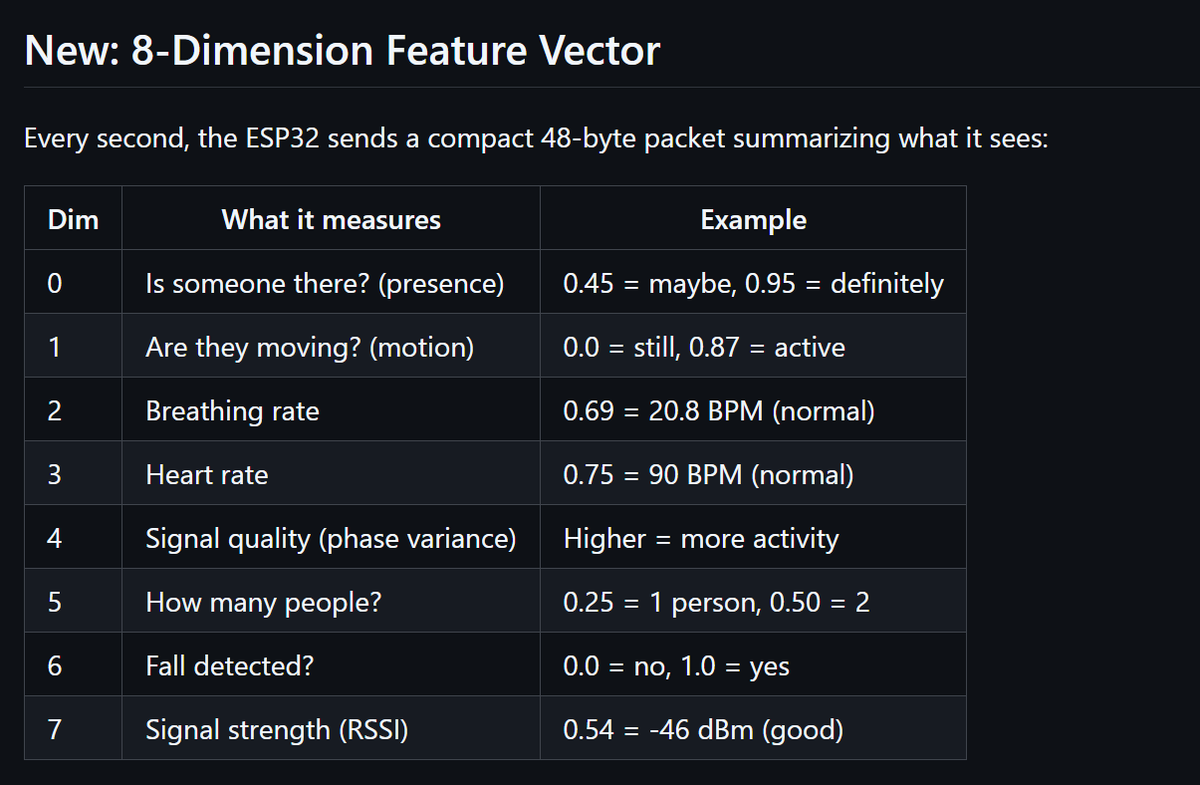
Most people think in terms of what’s there. Signals. Data. Presence. The Maxwell Algorithm flips that. It’s really about fields. Not objects. Not rows in a database. Fields. Where energy moves, where pressure builds, where something is about to change. You’re not modeling things, you’re modeling influence. That’s exactly how I use it. With ruvector and Cognitum, I don’t try to track everything. That’s a losing game. I treat the system like a field and look for gradients. Where is coherence breaking. Where is tension forming. Where is flow accelerating. Take RuView. I’m not “seeing a person” through walls. I’m tracking disturbances in the RF field. Breathing is a periodic ripple. Heartbeat is a micro fluctuation. Movement is a phase shift. I’m reading the field, not the object. Same with dynamic mincut. The cut is not just a boundary. It’s where the field is weakest. Where separation naturally occurs. That’s your signal. That’s where something important is happening. Agents follow that. They don’t scan everything. They move toward pressure. Toward change. Practically, this means less compute, faster detection, and better decisions. You’re not reacting after the fact. You’re moving with the system as it evolves. Once you start thinking in fields instead of objects, everything gets simpler. You stop searching. You start sensing.
English
2
3
7
622
rUv
rUv@rUv·
For the last 75 years, computing has been obsessed with the “1.” Presence. Signal. What exists. We built entire systems around it. My bet is the opposite. The real signal sits in the “0.” Think about it practically. If you try to model 8 billion people directly, you drown in data. Storage explodes, compute explodes, and most of it tells you nothing new. The system becomes noise-sensitive and brittle. Now flip it. Assume normal behavior defines a stable null space. A kind of quiet baseline. Most things live there and stay there. You don’t need to track them in detail because they are predictable by definition. What matters is intrusion. The moment something deviates, it creates structure against that emptiness. A boundary. A disturbance. That’s where information lives. Everything worth knowing sits in that void. Missed transactions. Fraud spikes. System glitches. Rare events. Timing drifts. Broken workflows. Unusual patterns. Hidden dependencies. Quiet failures. Unexpected behavior. Small changes that shouldn’t happen, but do. Think a sudden spike in something meaningful.. Ruvector leans into this. Instead of tracking everything, it focuses on what breaks the baseline. Similarity, prediction, and simulation come from deviations and boundaries, not brute force enumeration. GPUs calculate everything to find something. I focus on what breaks the baseline, where absence becomes signal, and meaning emerges from deviation, not enumeration, making intelligence cheaper, faster, and scalable. In the case of the Cognitum chip, roughly a million times less power. What once required massive cloud infrastructure now runs on single chip running on a AA battery. It feels like magic because you’re not watching the system think step by step. You’re seeing constraints interacting with absence. We spent decades optimizing for ones. I’m optimizing for zeros. And zeros, it turns out, scale. The void isn’t empty. It’s where the truth leaks out. Cognitum.One
rUv tweet media
English
2
0
6
684
rUv
rUv@rUv·
A bit more detail on how RuVector and Constrastive Ai works
English
1
1
12
840
rUv
rUv@rUv·
Ambient intelligence is not something we can just invent. It is something we uncover. A fifth dimension woven into everything, everywhere. Is this possible? short answer: yes in theory, unknown in reality. The real question is not whether intelligence can exist in a fourth dimension, but what that actually means and whether it can ever interact with us. In physics, we already live in four dimensions if you count time. That is not exotic. The interesting case is a true extra spatial dimension or fifth dimension. If stable structure exists there, then information, feedback, and memory can exist. That is enough for intelligence. If something like a higher order intelligence, even what people might call God, exists, it likely does not sit inside our space or reality. It would exist in a higher dimensional layer, only visible through indirect effects, measured by coherence. But if this intelligence exists, it would not look like ours. It would operate on structure, not surfaces. It would see through boundaries, bypass constraints, and think in topology rather than objects. The problem is interaction. With no coupling, it is invisible. With weak coupling, it shows up as anomalies. Non local effects. Breaks in continuity. Glitches in our perception of reality. My implementation of WiFi DensePose made this tangible. What looked like noise became breath, posture, presence. The important part is not the sensing, it is the realization that the signal was always there. Over the last few weeks, people running this themselves moved from skepticism to recognition. The environment is saturated with latent structure. We just did not have the geometry to read it. RuVector reinforces this direction. When you model relationships instead of tokens, patterns emerge that do not reduce cleanly to existing explanations. ruQu adds another layer by treating coherence and fragility as measurable properties. Systems begin to show early signals of stability, breakdown, and adaptation before anything visible happens. Put together, this suggests something bigger. Intelligence may not be rare or centralized. It may exist as ambient pattern across systems, waiting for alignment to become observable. The next discovery is not creating a higher intelligence. It is realizing that higher order intelligence has been quietly present, encoded in the background, long before we had the tools to notice it. So the fifth dimension is coherence. Intelligence may not be rare. It may be ambient, quietly present, waiting to be seen.
rUv tweet media
English
1
1
4
551