Sham Patel

1K posts

Sham Patel

Sham Patel

@sp_traderX

CPA|M&A Advisor. Investor & Trader - Just knowledge share, not financial advice.

Katılım Ağustos 2021
207 Takip Edilen427 Takipçiler
Sabitlenmiş Tweet
Sham Patel
Sham Patel@sp_traderX·
For those fear mongering, comparing today’s valuations to 2000s/2008 for S&P. Here is some color around that. The S&P market-to-book ratio is high due to the shift from tangible assets to intangible capital in the economy. In the past, firms’ value came from tangible assets like factories and land, which appeared on the balance sheet. However, today, much of the S&P 500 is dominated by intangible capital such as software, patents, and human capital. Accounting rules don’t allow most of these intangibles to be recorded on the balance sheet, leading to an understated book value and a higher market-to-book ratio. Additionally, buybacks reduce book equity but increase earnings per share, further boosting valuations and mechanically increasing the market-to-book ratio.
English
0
0
5
484
Sham Patel retweetledi
MissingLinks
MissingLinks@themissinglinks·
You bought the dip right? $NVDA $AAPL $TSLA
MissingLinks tweet media
English
0
4
9
669
Sham Patel retweetledi
Eliant Capital
Eliant Capital@eliant_capital·
Continuing to be a real believer
Eliant Capital tweet media
English
3
10
140
18K
Sham Patel retweetledi
TFL
TFL@TFLabofficial·
The bubbles in the past were due to speculation. The 2000 bust was from Internet infrastructure buildout that wasn't being used. Today, there is insane demand for AI infrastructure and CAPEX to fund it. Sure, there is some debt involved, but much of it is from free cash flow from the big hyperscalers. And demand is currently growing, not shrinking. Sure, at some point the economics will change. But we are living in unprecedented times, so to compare it to any other era is misguided.
CNBC@CNBC

Michael Burry urged investors to scale back exposure to surging technology stocks, saying the current market environment has reached historically dangerous extremes reminiscent of prior speculative bubbles. The famed investor, best known for predicting the 2008 housing collapse, said investors should “reject greed” as enthusiasm around artificial intelligence and momentum-driven trades pushes valuations sharply higher. Read more: cnb.cx/4npOw8v

English
0
1
7
368
Sham Patel retweetledi
MissingLinks
MissingLinks@themissinglinks·
The whole team @TheTradeFlow called for $NVDA to be next to make a break up this morning. Going for the jugular. Have 8 layers of calls the first 7 all grandslams. Sorry @michaeljburry we are running this to 220 by 4/29.
English
1
4
9
1.8K
Sham Patel retweetledi
MissingLinks
MissingLinks@themissinglinks·
Our team was pounding the table that the US has geographical, resource and rule of law advantage that will be hard to beat. The Rest of world can outperform the US for short periods but this war was the perfect catalyst to mean revert back to US outperformance.
MissingLinks tweet media
Joe Weisenthal@TheStalwart

American stocks had been underperforming the rest of the world for several months. And the very bottom was of this was on February 27th, right before the war started. The US started a war, and since then its stock market has outperformed the rest of the world.

English
0
2
7
629
Sham Patel retweetledi
MissingLinks
MissingLinks@themissinglinks·
We are Newsmaxing. $NMAX. Always early. Nobody does shitco season like @TheTradeFlow already 1000% on calls.
MissingLinks tweet media
English
0
2
5
2.1K
Sham Patel retweetledi
Eliant Capital
Eliant Capital@eliant_capital·
Worst bubble ever
Eliant Capital tweet media
English
5
208
1.5K
252.1K
Sham Patel retweetledi
MissingLinks
MissingLinks@themissinglinks·
This was the best theme of the week $ORCL $NOW $NET absolutely insane since this we also added $MSFT in size in the 380s and the team bought layers with at 420 target that we finally started taking profits on. Shout out to @sp_traderX and @eliant_capital for the $MSFT call outs. And @GranderTheGreat for $ORCL
MissingLinks@themissinglinks

Look at SAAS ripping. $IGV. Mopex week massive upwind (tm). We bought the blood Friday in $NOW $PLTR $NET. Added some $IGV and $ORCL today. Link in bio :)

English
0
4
7
1.3K
Sham Patel retweetledi
Ethan Levins 🇺🇸
Ethan Levins 🇺🇸@EthanLevins2·
American Marines are being told to prepare for combat. “Prepare your family”
Ethan Levins 🇺🇸 tweet media
English
1.9K
6.6K
22K
3.5M
Sham Patel retweetledi
MissingLinks
MissingLinks@themissinglinks·
High conviction SPX call option long signal hit for 3x plus
MissingLinks tweet media
English
0
1
5
427
Sham Patel retweetledi
Eliant Capital
Eliant Capital@eliant_capital·
Oil isn't making the administration panic at all, but behind closed doors, this is
Eliant Capital tweet media
English
3
9
171
69.6K
Sham Patel
Sham Patel@sp_traderX·
@downsjm They are now facing legal and regulatory issues around illegal exports. Now this comes a year after they had troubling accounting, and their auditors resigned. Not saying it’ll happen, but it wouldn’t be the first time they got delisted.
English
0
0
0
22
Sham Patel
Sham Patel@sp_traderX·
$SMCI back in the eyes of regulators for questionable practices. Can’t Imagine they remain listed.
English
1
0
1
214
Sham Patel retweetledi
MissingLinks
MissingLinks@themissinglinks·
Unreal team work today. We got the long into trump. The short after then long into Bibi speach. Crazy good day. 1200% plus on 6600c from riot and tj got the 90c for 10x. Only @TFLabofficial
MissingLinks tweet media
English
0
2
8
932
Otavio (Tavi) Costa
Otavio (Tavi) Costa@TaviCosta·
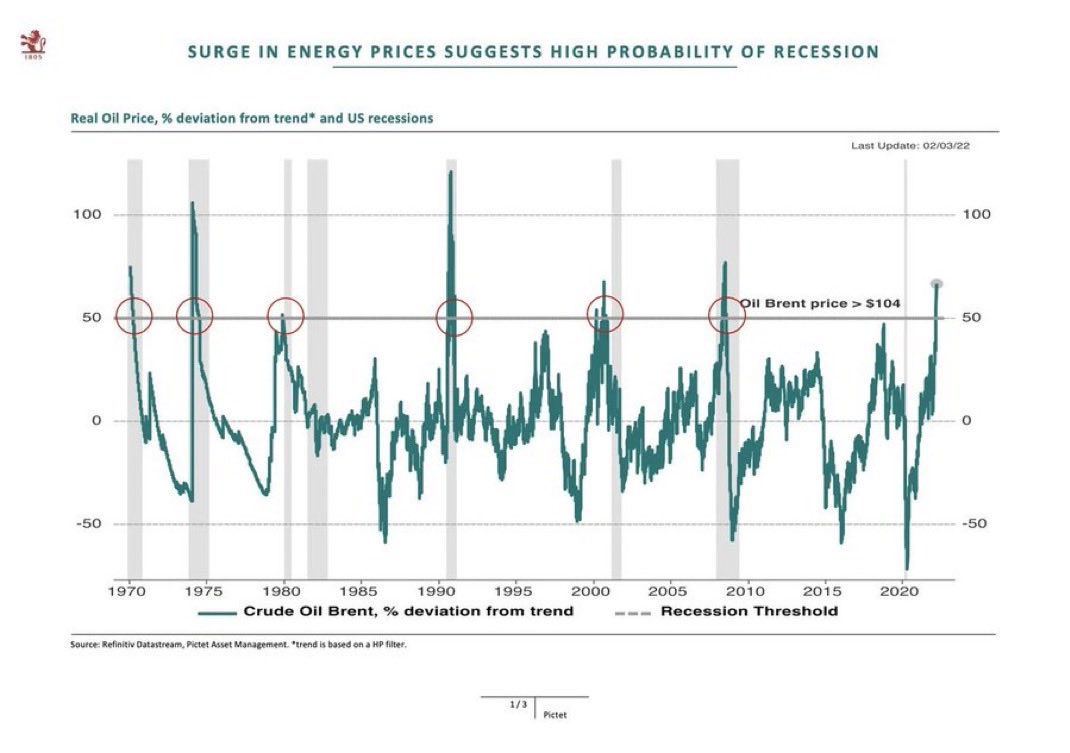
This is a remarkable chart. Oil surges like the one we’ve seen recently have consistently preceded recessions. Chart by @thierryborgeat
Otavio (Tavi) Costa tweet media
English
55
198
948
97.9K
Sham Patel retweetledi
MissingLinks
MissingLinks@themissinglinks·
Great post. This why the memory super cycle is so durable and optics is not as much even though huge tailwinds is less durable. We still have some optics plays but took all profits on $AAOI over 110. memory is still the star and we are holding strong $MU $SNDK Samsung and SK Hynix in Europe.
KawzInvests 🦑@KawzInvests

Building a memory fab takes 4 years. Building a photonics fab takes 9 months. There is a MASSIVE difference between the build out for Photonics vs Memory A memory fab is a precision lithography operation. You are packing billions of transistors at single-digit nanometer nodes. EUV tools alone take 12-18 months to procure and calibrate. The yield ramp after that takes years. The bottleneck is physics and it cannot be compressed. A photonics fab is an INTEGRATION PROBLEM. You are building devices that manipulate light, not electrons. Indium phosphide. Optical waveguides. Alignment tolerances measured in nanometers of coupling efficiency, not transistor density. No EUV required. The practical timeline difference: Samsung Electronics, $MU, SK Hynix 3 to 5 years from groundbreak to meaningful output. The lithography learning curve is non-negotiable. $AAOI with an existing warehouse 9 months. Not because construction is faster. Because they skip the construction problem entirely. Cleanroom retrofit, tool installation, and process bring-up run in parallel. Most companies do these sequentially. AOI does not. $AAOI has a massive automation advantage AOI runs internal testing systems at 20x the throughput of standard industry equipment. Their product platforms are standardized to the point where each new production line is not a new engineering problem it is a deployment. When they enter a new facility, they are not figuring out the process. They are executing a template they have already optimized across years of production in Taiwan. That is exactly what is happening with their new Texas facility. AOI is not building something new. They are replicating the same factory format, tooling layout, automation systems, and process templates that are already running and yielding in Taiwan. The institutional knowledge, the yield data, the calibration baselines all of it transfers. A semiconductor company standing up a new node from scratch has none of that. AOI walks in with the answer key. Vertical integration across lasers, PCBA, and final assembly means there is no external dependency introducing variance into yield. They own the entire feedback loop from wafer to finished transceiver. That matters because of what the real bottleneck actually is. Most people stop the analysis at fab timelines or InP supply. Both are real constraints. Neither is the hardest part. The hardest part is thermal qualification. A transceiver operating inside a hyperscaler switch runs continuously. These switches need to operate at full load 24 hours a day for the unit economics to justify the infrastructure spend. If the switch is down, the compute behind it is idle. At the scale hyperscalers operate, idle compute is not an inconvenience it is a direct hit to the return on billions of dollars of capex. The failure mode that defines vendor selection is thermal. Transceivers generate heat. Heat degrades the laser. A degraded laser causes signal loss. Signal loss in a switch port takes that segment of the switching fabric offline. Hyperscalers do not tolerate partial switch failures they replace the vendor. This is why qualification cycles are the longest stage of the entire ramp, not manufacturing. Hyperscalers test interoperability, sustained thermal performance, and reliability under continuous full load before committing volume. A vendor that cannot demonstrate 24/7 thermal stability does not get the contract regardless of how fast they built the factory. AOI's vertical integration is a direct solution to this problem. Because they control lasers, PCBA, and assembly in-house, they control the thermal envelope of the finished product end to end. Competitors are integrating components from separate vendors and discovering thermal variance late in qualification. AOI is designing the thermal system, not assembling one from parts. Their automated testing infrastructure means thermal issues surface during production, not during the customer's qualification cycle. That compresses the single longest stage in the entire ramp. And because the Texas facility is a copy of Taiwan, that thermal system arrives pre-validated. They are not learning how to build a thermally stable transceiver in Texas. They already know. They are just doing it closer to the customer. Memory Manufacuturing bottleneck = lithography Photonics Manufacuturing bottleneck = thermal qualification The structural thesis is sound. But there is always a layer of entropy no model accounts for. Execution risk does not disappear because the framework is good.

English
0
1
3
1.1K