Shashi Bellamkonda

265.1K posts

Shashi Bellamkonda banner
Shashi Bellamkonda

Shashi Bellamkonda

@shashib

Smiles are free & priceless. Marketing Research, #B2B, #AI Tech Analyst, CXO Advisor, SaaS Revenue, Growth & #AI #martech #marketing, #ai implementation #AR

Washington DC, MD, VA, USA Katılım Mart 2007
28.8K Takip Edilen32.1K Takipçiler
Sabitlenmiş Tweet
Shashi Bellamkonda
Shashi Bellamkonda@shashib·
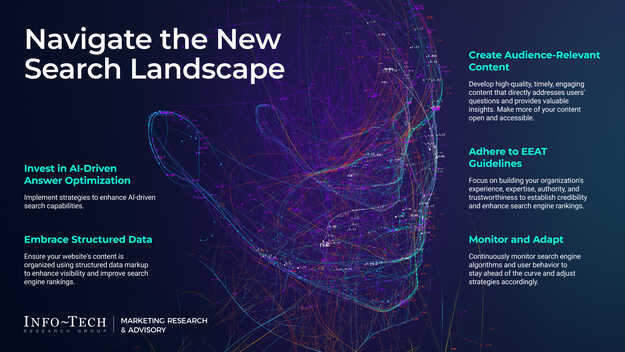
AI Search is Rewriting the Rules. Is Your Marketing Strategy Ready to Play? 🤔 The way customers find information online is undergoing a seismic shift, thanks to AI-powered search like Google's AI Mode and other generative models. As someone who's navigated the marketing tech maze for years, this feels like one of the more significant disruptions. Staying visible requires more than just tweaking keywords; it demands a fundamental rethink. Understanding how AI changes search visibility is the first step to adapting. Our latest research at Info-Tech Research Group, "Stay Relevant in the Era of AI-Powered Search," dives into the practical implications and strategies needed now. Key Considerations (Based on the Research): 1. Beyond Keywords: AI understands intent and context. Focus shifts towards addressing complex user queries conversationally. 2. E-E-A-T is Paramount: Expertise, Experience, Authoritativeness, and Trustworthiness are becoming even more critical signals for AI. How are you demonstrating yours? 3. Content Diversification: AI pulls from various sources. Think articles, videos, structured data, forum discussions. Is your content mix ready? 4. Zero-Click Threat: AI often provides direct answers, potentially reducing clicks. How will you adapt your goals and measurement? Thank you to experts who were instrumental in helping me in this research Raj Khera, Kathleen Devilbiss, Janet Driscoll Miller, Mark Alves and my other friends. This way of information gathering impacts SEO, content strategy, and even how we measure success. What's the single biggest challenge you foresee (or are already facing) with AI impacting your search visibility? Share your thoughts in the comments below! 👇 Adapting to the AI search era isn't just about staying current; it's about ensuring your brand remains discoverable and relevant. Download your copy of my research for the Info-Tech Research Group here: infotech.com/research/ss/st… #AISearch #SEO #DigitalMarketing #ContentStrategy #MarketingStrategy #SGE #AI #TechTrends #Marketing #CMO
Shashi Bellamkonda tweet media
English
3
7
20
5.5K
Shashi Bellamkonda
Shashi Bellamkonda@shashib·
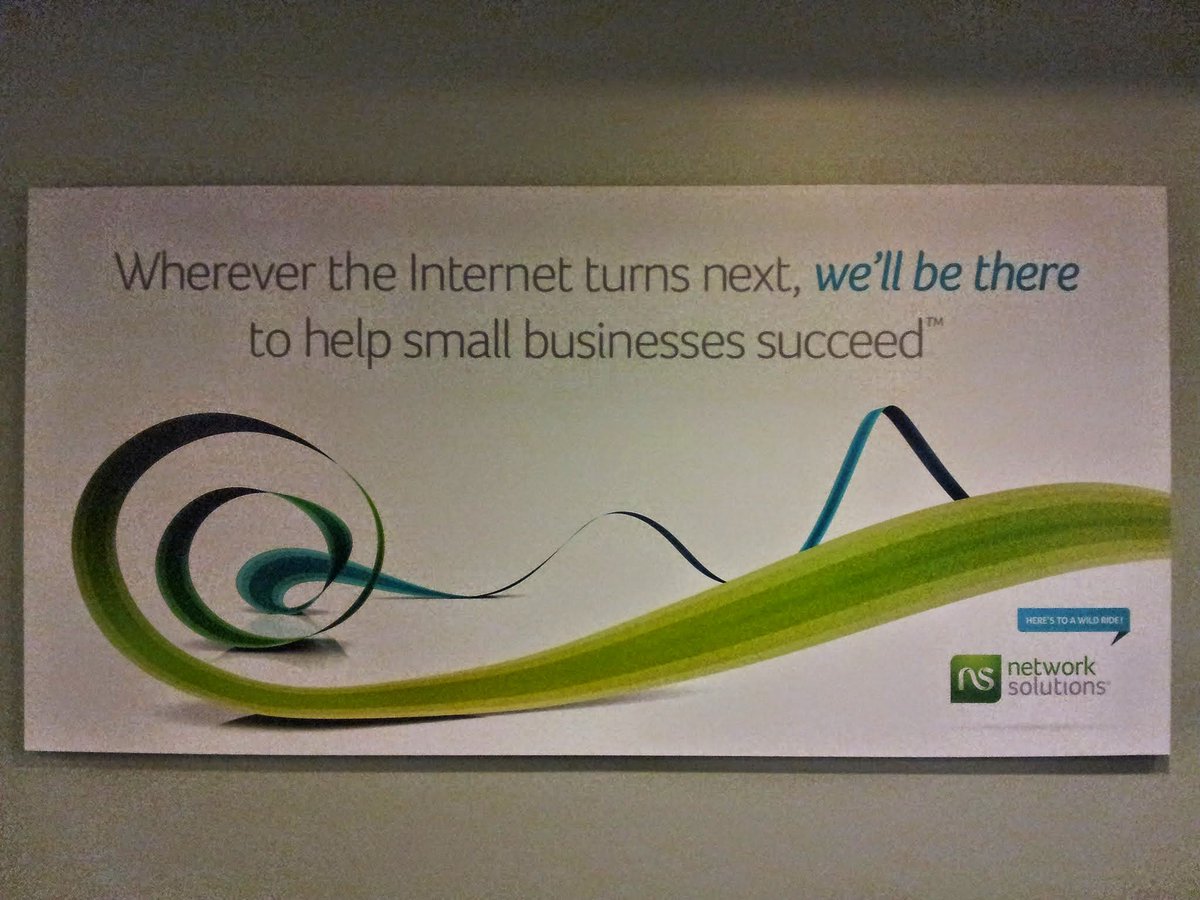
In 2001 I took a support call from a woman in tears. She had built a Bruce Lee fan site and the images had stopped showing. We fixed it together, one HTML tag at a time. Another call that week was from a trucking company. Before anyone called it a platform, they had figured out that a website could show drivers which freight loads were available near them in real time. A third caller wanted to get paid online. She had found CCNow and PayPal and just needed help adding the HTML. I had just joined Network Solutions, which Verisign had recently acquired. We were building support systems to scale, implementing Siebel, figuring out how payment infrastructure worked. What I was actually doing, though I did not have the words for it then, was helping ordinary people understand that a domain name connected to everything they were trying to build. None of those callers were thinking about infrastructure. They were thinking about their businesses. But underneath everything was a single shared system that let any machine find any other machine. And the fight over who would own that system was already underway. That fight is starting again. Last week the Linux Foundation announced DNS-AID, an open source project that extends the same Domain Name System to AI agent discovery. Agents finding agents, using the same infrastructure your browser uses to find websites. The founding members include GoDaddy, Cloudflare, Equinix, and CSC. Companies I watched grow up during and after the domain name era. They are not joining this project for altruistic reasons. If every AI agent needs a domain name to be discoverable, every new agent deployment is a potential registration. Same business model. New customer. VeriSign is not in the coalition yet. But on their Q1 2026 earnings call, the CEO said they have capacity ready for AI agent traffic and teased new high-assurance security services. The company that processed over 600 billion DNS queries daily and held .com and .net at 100% availability for nearly 29 years knows exactly what it means when a new class of internet-connected entity needs a permanent address. I wrote about what this means for enterprise technology leaders at the link below. But the part that stays with me is simpler. The woman with the Bruce Lee fan site did not know she was participating in the commercialization of internet infrastructure. She just wanted her images to load. The enterprises deploying AI agents right now are in the same position. The infrastructure choices are being made around them, and the business model implications will not be obvious until it is too late to change them. Full post: shashi.co/2026/05/the-ph… #AI #DNS #AgentAI #NetworkSolutions #DomainNames #EnterpriseAI #TechHistory
Shashi Bellamkonda tweet media
English
2
0
3
76
Shashi Bellamkonda retweetledi
Steve Burns
Steve Burns@SJosephBurns·
Warren Buffett said: "It took Noah 20 years to build an ark. And people said he was being silly because the skies were beautiful. And of course, the whole time, he looked stupid - until it started raining. You can spend a long time building an ark while everybody else is out there enjoying the sun."
Steve Burns tweet media
English
18
98
634
29.8K
Shashi Bellamkonda
Shashi Bellamkonda@shashib·
AWS rebuilt 97% of its enterprise search engine from scratch. Not to add features. Because AI agents broke the economics of the old one. Agents don't use software the way humans do. They fire hundreds of search queries in seconds, then go completely silent for hours. That burst-idle pattern destroyed the cost model of infrastructure designed for smooth, human-paced demand. Cisco's WAN research found the same thing at the network layer earlier this month: agent workloads generate 450% more traffic per task than humans. The pattern shows up everywhere infrastructure was sized for people, not machines. AWS's response: separate storage from compute entirely, scale to zero when idle, spin back up in seconds. 20x faster autoscaling. Up to 60% lower cost versus provisioned clusters. The question worth asking before your next infrastructure review: which other systems in your stack are still sized for human traffic patterns? Full analysis, including plain-language explainers for non-technical readers: shashi.co/2026/05/agent-… #EnterpriseAI #CloudInfrastructure #AIAgents #AWS #CIOInsights
English
1
0
1
93
Shashi Bellamkonda
Shashi Bellamkonda@shashib·
40% of a data center's power budget goes to cooling. Before compute. Before networking. The thermal bill comes first. That number has barely moved in years, because the heat generated by faster chips has nowhere to go except into increasingly elaborate physical infrastructure. Chillers. Liquid cooling loops. Real estate chosen for ambient temperature. The thermal constraint quietly governs where AI gets built and how much of the power bill is spent before a single model runs. A research team at the The University of Tokyo just published something worth paying attention to. They built a switching device, the fundamental unit that flips a bit between 0 and 1, that operates 1,000 times faster than conventional silicon while generating minimal additional heat. The device held its state without continuous power and ran consistently across more than a billion switching cycles. The paper is in Science. The prototype chip target is 2030. Commercial scale is further still. But the assumption underlying hundreds of billions in current data center investment, that speed and heat are permanently coupled, now has a credible scientific challenge on the record. The decisions being made in 2028 and 2029, as the current buildout wave completes, may arrive at a different set of options than today's do. I wrote about what this means for infrastructure planning, why the invisible physical plant is the binding constraint on AI scale, and where the supply chain bottleneck actually sits. shashi.co/2026/05/faster… #DataCenter #AIInfrastructure #EnterpriseIT #CIO #CTO #Semiconductor
Shashi Bellamkonda tweet media
English
0
0
0
45
Shashi Bellamkonda
Shashi Bellamkonda@shashib·
🚨 Excited to announce that I’ll be speaking at Info-Tech LIVE 2026 in Las Vegas! I’m honored to join this premier IT leadership event as a speaker and look forward to sharing insights with fellow technology leaders. 📍 The Bellagio, Las Vegas 📅 June 9–11, 2026 Event link: infotech.com/events/las-veg… I’ll be participating in 3 panels and have already scheduled several one-on-one sessions with tech members. I’m especially looking forward to connecting with Analyst Relations and marketing leaders attending as special guests. If any friends in the media are interested in attending, please reach out to Trisha Beausart for details.linkedin.com/posts/activity… The list of people I’m excited to see is way too long to tag everyone here — but I’m genuinely looking forward to catching up with so many of you in person. Whether we have a meeting booked or not, come say hello! See you in Vegas! 🎲 #InfoTechLIVE #ITLeadership #LasVegas #TechConference #InfoTechResearchGroup
Shashi Bellamkonda tweet media
English
1
1
2
109
Shashi Bellamkonda
Shashi Bellamkonda@shashib·
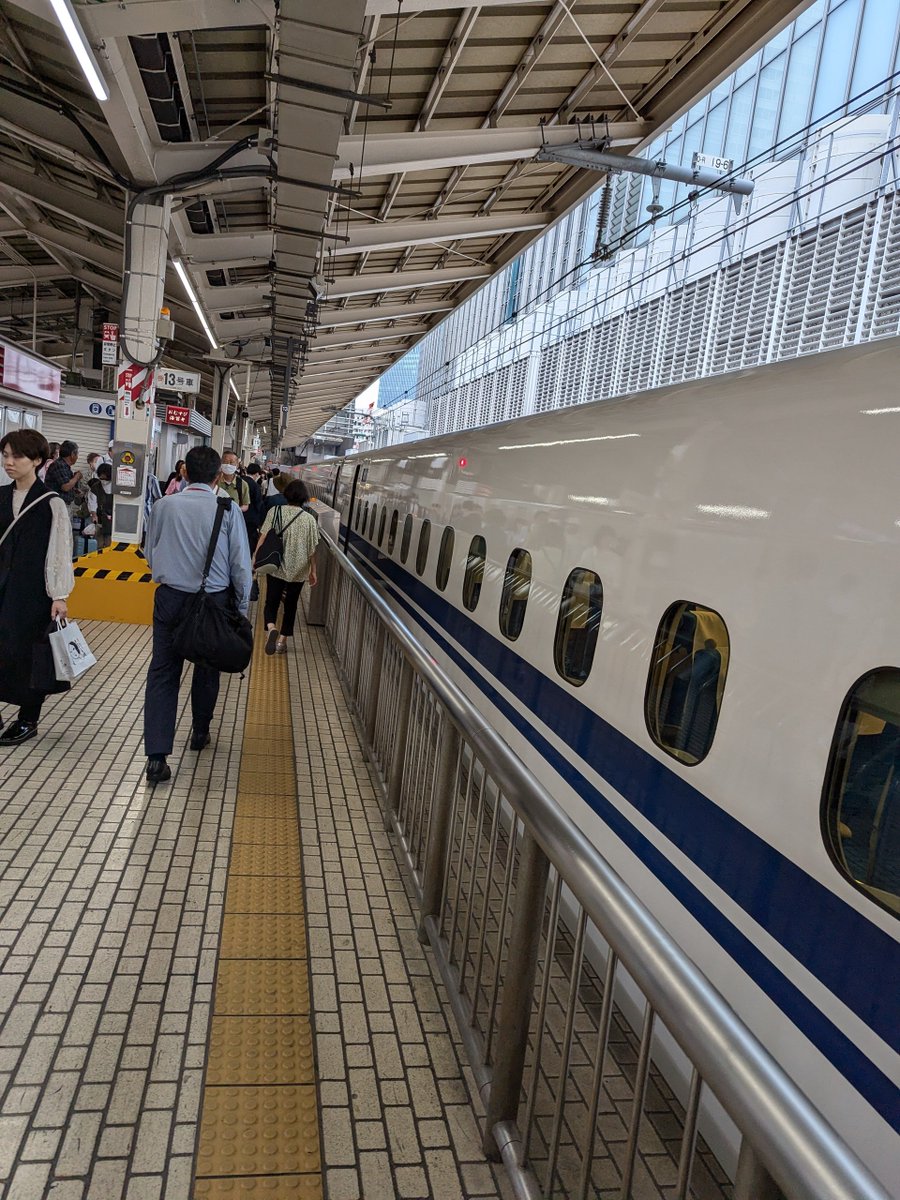
Japan is not a market that waits to be discovered. Visited in 2024. Tokyo to Hakone. We took light bags for the day and handed off our luggage at the ryokan. It arrived at the next hotel before we did. The airport limousine bus to Haneda left on the exact second. Nobody on that platform walked slowly. They moved like superheroes. That precision is not a technology story. It is a culture story. So when Amazon announced it is now moving packages on the Shinkansen bullet train network in Japan, my first reaction was not surprise. It was recognition. Japan built one of the world's most reliable logistics systems long before anyone called it a supply chain. My friend @jeffbarr has been evangelizing @awscloud in Japan for years. He understood early that Japan does not adopt technology for novelty. It adopts it when it makes something that already works, work better. Amazon found that. Good for them for recognizing it. If you have never been to Japan, go. Not for the technology. For the standard it sets for how a society can organize itself around precision, care, and quiet excellence. Read my full analysis at shashi.co/2026/05/what-a… #Japan #AWS #Amazon #Logistics #Shinkansen #Travel #SupplyChain
Shashi Bellamkonda tweet mediaShashi Bellamkonda tweet mediaShashi Bellamkonda tweet mediaShashi Bellamkonda tweet media
English
0
2
2
151
Shashi Bellamkonda retweetledi
Tom Peters
Tom Peters@tom_peters·
One of the best examples is the quality of a hotel’s housekeeping crew.
English
4
4
13
1.7K
Shashi Bellamkonda
Shashi Bellamkonda@shashib·
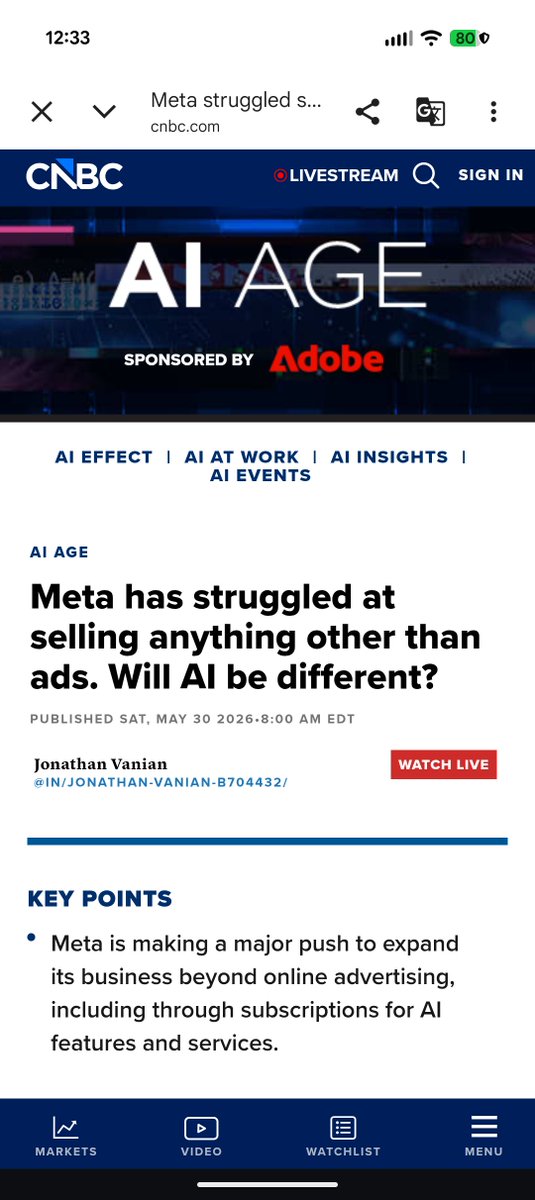
It is rare for me to be quoted on a front page story on CNBC . It was great to speak to Jonathan Vanian about Meta's entry to Enterprise AI infrastructure. Can they do it? Read 👇 cnbc.com/2026/05/30/met… Thanks to all my friends who read this and sent me the links.
Shashi Bellamkonda tweet mediaShashi Bellamkonda tweet media
English
0
1
2
53
Shashi Bellamkonda
Shashi Bellamkonda@shashib·
Eating my oatmeal on this sunny Saturday morning and my mind wandered back to the pandemic chip shortage. Remember when you couldn't buy a car? Not because factories closed, but because a tiny semiconductor was missing. Dealers had empty lots. People paid over sticker. Used car prices went insane. A supply chain nobody thought about suddenly affected everyone. This morning I was reading about BYD launching its own in-house 4nm autonomous driving chip, the Xuanji A3, and that memory came rushing back. BYD clearly remembered too. They already build their own batteries, their own motors, their own software. Now they own the chip. One less supplier that can hold them hostage. And here's the thing, this isn't just a car company story. Think about: - The packaging machines in a food plant - The imaging equipment in a hospital - The sorting systems in a warehouse All of them run on embedded chips. All of them are one supply shock away from the same problem car buyers faced in 2021. BYD's answer was to own the silicon. Most companies can't do that. But the question is worth asking on a quiet Saturday morning over oatmeal: do you know where your compute comes from, and what happens if that supply chain sneezes? Wrote up the full analysis if you want something to read with your coffee: shashi.co/2026/05/byds-x… Happy Saturday everyone! #EnterpriseStrategy #Semiconductors #SupplyChain #AIInfrastructure #VerticalIntegration
English
0
0
1
63
Shashi Bellamkonda
Shashi Bellamkonda@shashib·
This photo was taken on August 14, 2004. That is my face on a Times Square billboard. I had no idea what came next. Neither did the billboard. I grew up in India where exam scores carried an existential weight. Ninety minutes at a desk felt like they would decide your entire life. Tragically, that pressure still costs young people their lives today. The system taught a dangerous lie: that a single grade defines your permanent value. It doesn't. I started my career in front of a Timex Sinclair ZX81 with no idea what to type. I taught myself Lotus 123 and WordStar. I moved from tech support to program management, product management, social media, PR, CMO, and eventually industry analyst. Every single shift came with a cold knot of anxiety in the stomach. What I have learned is this: anxiety lives in the gap between the unknown and your readiness to face it. The only thing that closes that gap is preparation. Not confidence -- preparation. Confidence comes after. When you commit to being a lifelong learner, the unknown stops being a threat. It just becomes something to study. If you are staring down a career pivot or a terrifying first step today, look back at how many things you once knew nothing about and eventually figured out. You have done this before. Your capacity to learn is the only job security that actually holds. What was your ZX81 moment -- the thing you had to learn from zero that you now cannot imagine not knowing? More thoughts here readythoughts.com/2026/05/the-an… #LifelongLearning #CareerPivot #Mindset #PersonalGrowth #Resilience
Shashi Bellamkonda tweet media
English
0
1
3
112
Shashi Bellamkonda
Shashi Bellamkonda@shashib·
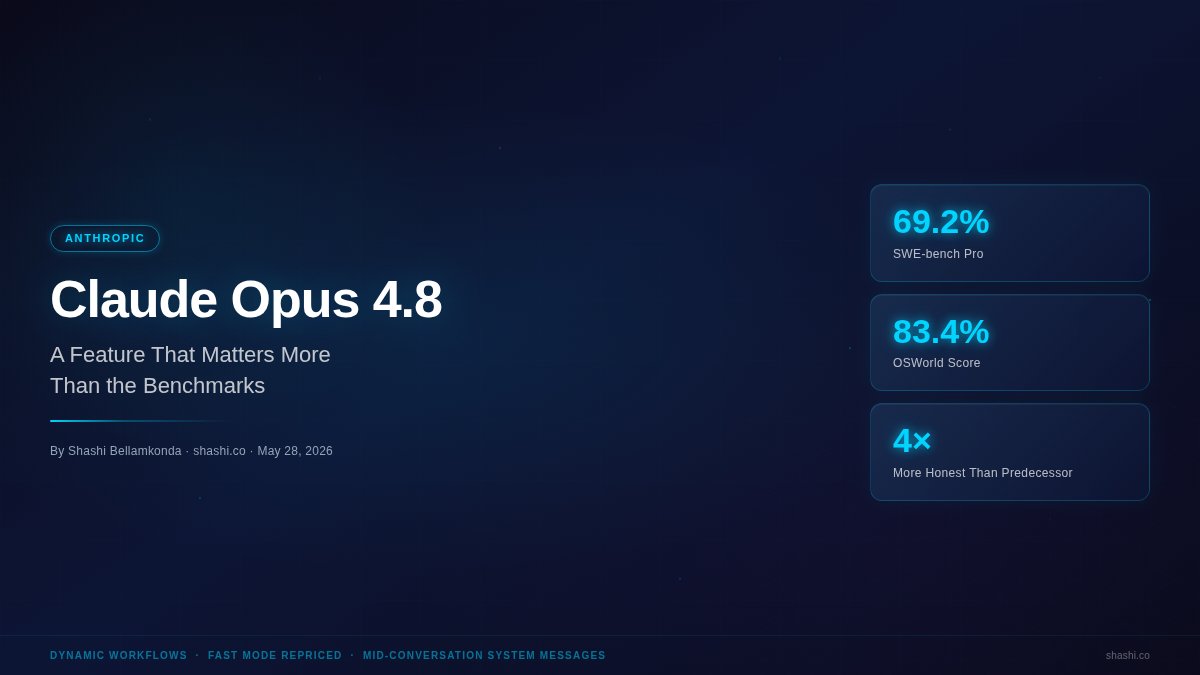
I get a lot of vendor briefings. Most follow the same script: benchmarks, customer quotes, availability, pricing. Harold Jackson at Anthropic sent something different yesterday. Claude Opus 4.8 was in the subject line. In the notes was a detail that stopped me. The model is four times less likely than its predecessor to let its own code flaws pass without flagging them. Not four times faster. Not four times cheaper. Four times more likely to tell you it got something wrong. That is a shift for anyone who has watched an agentic AI confidently march toward the wrong answer, it matters more than SWE-bench scores. We are going to see a lot of model announcements. Most will lead with cool things you can do. Many will cite a benchmark that means nothing to most users. Pay attention to this one. The customers using it early are saying the same thing in different words. Shopify's engineers say the model pushes back when a plan isn't sound. Harvey, which builds AI for lawyers, says it is the first model to hit a meaningful accuracy threshold for real attorney work. Databricks says it tackles deeper questions faster and handles documents, diagrams, and unstructured content their previous model could not. Dynamic Workflows in Claude Code can now coordinate hundreds of AI agents working in parallel on the same problem. A massive software rewrite that would normally take a team months was completed in eleven days, with almost everything working correctly on the first pass. If your company has old systems that need modernizing, that is the number to notice. It also just got significantly cheaper to run at speed. Two and a half times faster, at a third of the previous cost. The math changes when AI stops being expensive to run quickly. And there is a signal above all of this. Mythos Preview, a model class above Opus, is already in limited release for cybersecurity work under Project Glasswing. General availability is expected in weeks. Most enterprise evaluation cycles run longer than that. Full analysis: #gsc.tab=0" target="_blank" rel="nofollow noopener">shashi.co/2026/05/claude… #Anthropic #EnterpriseAI #ClaudeCode #AgenticAI #AI
Shashi Bellamkonda tweet media
English
1
0
3
85