Samir Khan

51 posts

Samir Khan

Samir Khan

@stats_samir

Stats PhD student at Stanford, formerly at UChicago, interested in causal inference and social science applications

Katılım Temmuz 2021
129 Takip Edilen193 Takipçiler
Samir Khan retweetledi

John Cherian
John Cherian@jjcherian·
Large language model validity via enhanced conformal prediction methods Excited to share my work with Isaac Gibbs (@iswgibbs) and Emmanuel Candès arxiv.org/abs/2406.09714. Question: how can we provide practical and rigorous validity guarantees for LLMs? (1/12)
English
1
14
88
19.8K
Samir Khan
Samir Khan@stats_samir·
See the arXiv draft for more theoretical results, simulations showing how our bounds can be used to inform experimental designs, and comparison of complete randomization vs. Bernoulli randomization! arxiv.org/abs/2405.07979
English
0
0
1
173
Samir Khan
Samir Khan@stats_samir·
More broadly, these results suggest that rather than asking “what is a good estimator for a Bernoulli design” or “what is a good design for an IPW estimator” we should be asking “what are good estimator/design pairs”
English
1
1
2
348
Samir Khan
Samir Khan@stats_samir·
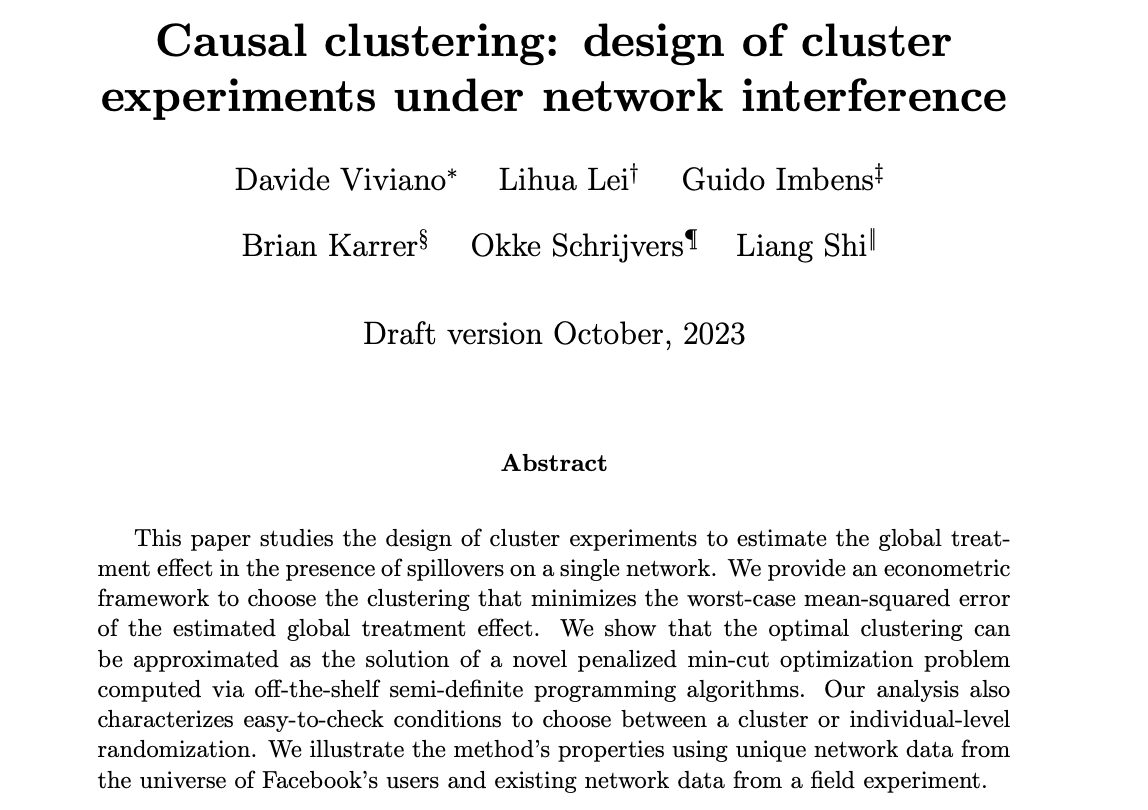
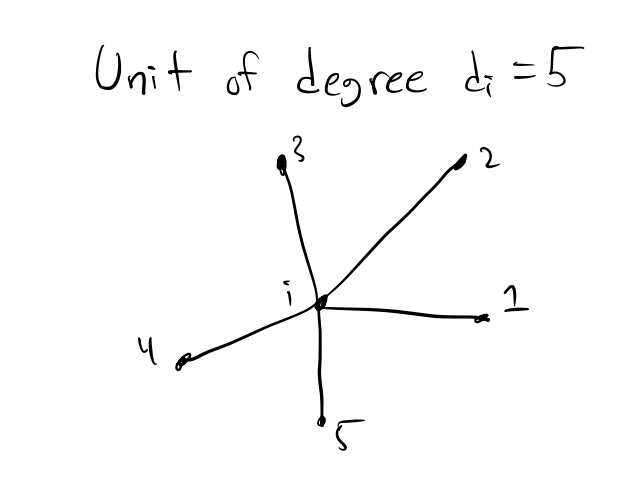
Excited to share new work with @jugander, Matt Eichhorn, and Christina Lee Yu on combining experimental design and outcome modeling for causal inference under network interference arxiv.org/abs/2405.07979
Samir Khan tweet media
English
1
6
19
3.1K
Samir Khan retweetledi
Martin Saveski
Martin Saveski@msaveski·
[Please RT] I’m recruiting PhD students to work with me at @UW! I’m looking for students passionate about using computational methods to study how social platforms can be reimagined to enable better conversations, bridge political divides, and reduce the spread of misinfo. >>>
English
3
140
277
58.2K
ky
ky@kylefbutts·
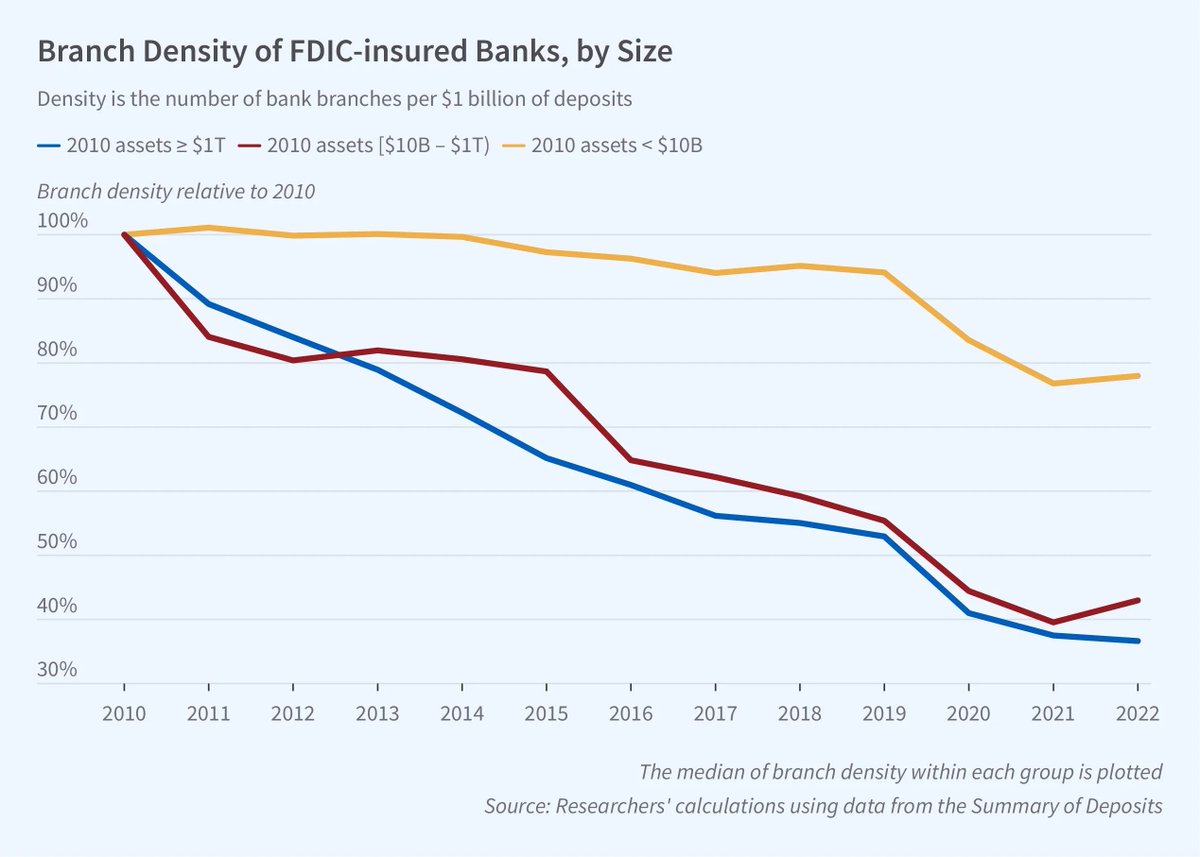
I'm on the job market and can't let myself get distracted by dumb open source ideas, but it would be really cool to have an easy way in ggplot to put the legend like this and the y-axis label like this. NBER graphs always are 👨🏼‍🍳🤌🏼
ky tweet media
English
3
3
39
15.4K
Samir Khan
Samir Khan@stats_samir·
A thread about CUPAC/CUPED - the tl;dr is that "CUPAC" is nearly equivalent to G-computation/Oaxaca-Blinder/imputation methods with a somewhat unusual choice of imputation model doordash.engineering/2020/06/08/imp… 1/10
English
5
9
63
15.5K
Vincent Arel-Bundock
Vincent Arel-Bundock@VincentAB·
@stats_samir A trivial tip: The Lin strategy does not require centering; it only facilitates interpretation. Taking the slope of the uncentered model is equivalent. In this example, it's basically a wash, but the 2nd approach may be more convenient when there are lots of covariates:
Vincent Arel-Bundock tweet media
English
1
0
12
15.7K
Samir Khan
Samir Khan@stats_samir·
So CUPAC is intimately connected to certain other methods for ATE estimation in experiments, and these connections also suggest possible extensions of/improvements to CUPAC drawing on the literature around those other methods, 10/10
English
0
0
0
403
Samir Khan
Samir Khan@stats_samir·
Similarly, it models Y_i(1) by taking the non-parametric model for Y_i(0), and learning Y_i(1) as a linear transformation of Y_i(0) on the experimental data - note that this relies on Y_i(1) being an approximately linear function of Y_i(0) 9/10
English
1
0
1
433