Steven Strogatz

34.5K posts

Steven Strogatz banner
Steven Strogatz

Steven Strogatz

@stevenstrogatz

Mathematician, writer, Cornell professor. All cards on the table, face up, all the time.

Ithaca, NY Katılım Mayıs 2012
2.7K Takip Edilen173.6K Takipçiler
Steven Strogatz retweetledi
Davide Castelvecchi
Davide Castelvecchi@dcastelvecchi·
My latest: Charles Bennett and Gilles Brassard, the co-creators of BB84 quantum key distribution and quantum teleportation, have won the Turing Award nature.com/articles/d4158…
English
0
11
57
5K
Steven Strogatz retweetledi
Lance Fortnow
Lance Fortnow@fortnow·
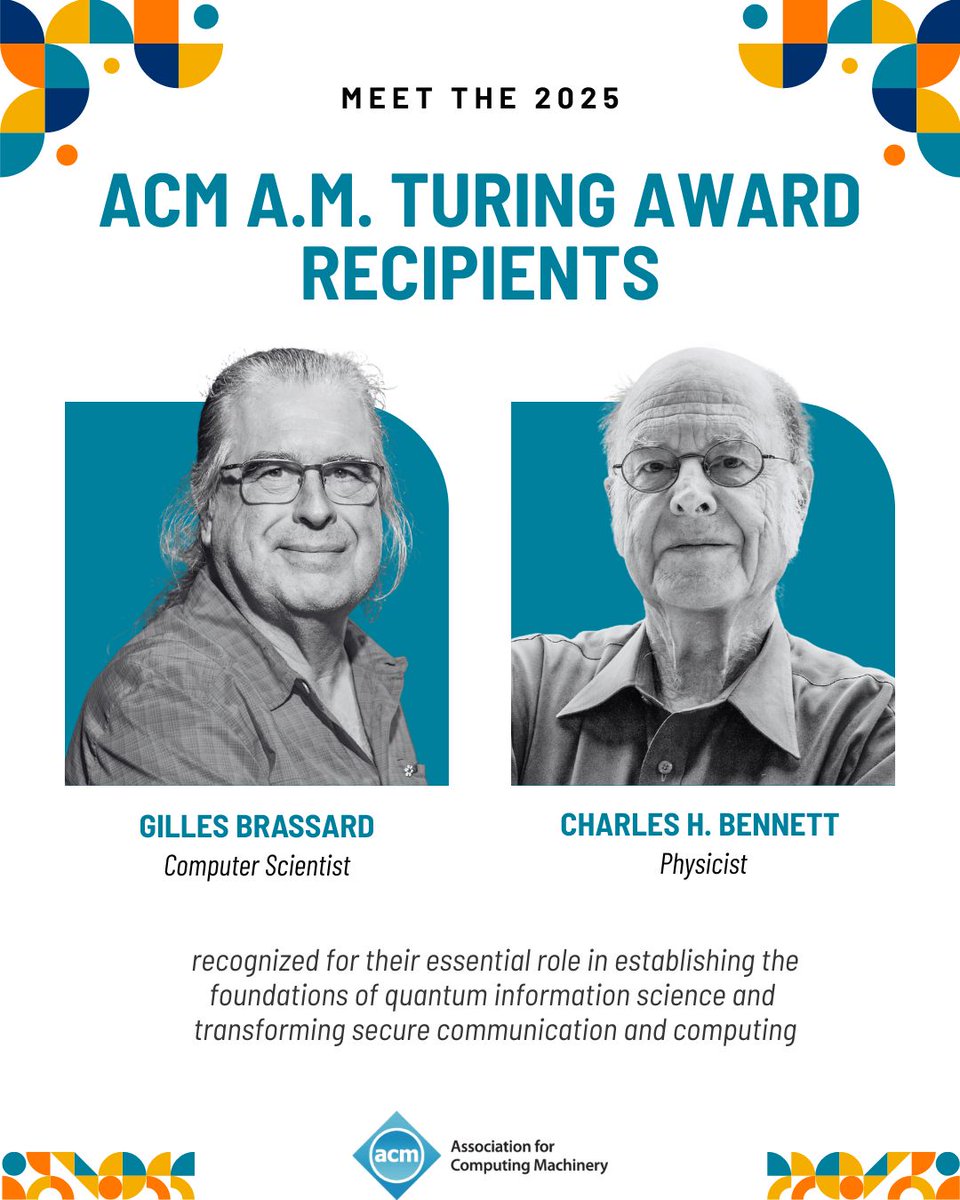
Charlie Bennett and Gilles Brassard win the Turing Award for Quantum Information Science. Most notably they developed the theory for a provably secure quantum key distribution protocol. awards.acm.org/about/2025-tur…
Lance Fortnow tweet media
English
2
10
61
5.5K
Steven Strogatz retweetledi
Math, Inc.
Math, Inc.@mathematics_inc·
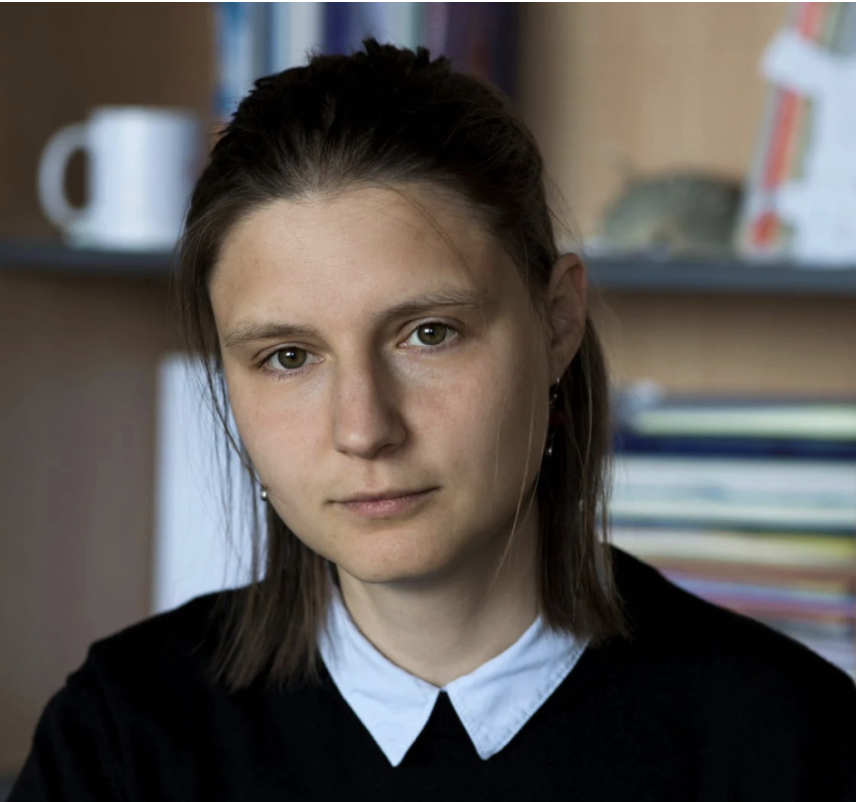
Math, Inc. is proud to announce an all-star group of Veritas Fellows: Renowned professor Kevin Buzzard, alongside Fields Medalists Maryna Viazovska and Terence Tao. They will lead teams to build formal mathematics at unprecedented scale. 🧵
Math, Inc. tweet mediaMath, Inc. tweet media
English
13
118
954
123.7K
Steven Strogatz retweetledi
Anish Moonka
Anish Moonka@AnishA_Moonka·
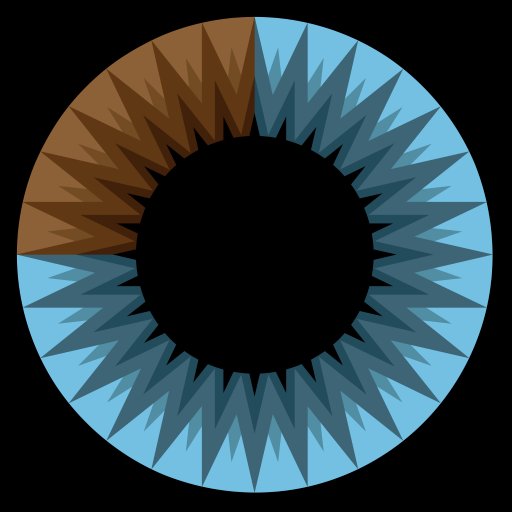
That one neuron connects to about 7,000 others. Your brain has 86 billion of them. Do the math and you get somewhere around 100 trillion connections inside your head. More connections than stars in 1,500 galaxies. And each connection point is way more complicated than anyone expected. A Stanford lab found that every single connection contains about 1,000 tiny switches that can store memories and process information at the same time. So your brain is running roughly 100 quadrillion switches right now, while you read this sentence. The wild part is the power bill. Your brain runs on 20 watts. That’s less energy than the light in your fridge. The world’s fastest supercomputer needs 20 million watts to do the same amount of raw calculation. A million times more power for the same output. We’re still nowhere close to understanding how any of this works. In October 2024, a team of hundreds of scientists finished mapping every single connection in a fruit fly’s brain. Took six years and heavy AI help. That fly brain had 140,000 neurons. Yours has 86 billion. Google and Harvard also mapped a piece of human brain last year, a speck smaller than a grain of rice. That speck alone contained 150 million connections and took 1,400 terabytes to store. The lead scientist said mapping a full human brain at that detail would produce as much data as the entire world generates in a year. A tiny worm had its 302 brain cells mapped back in 1986. Almost 40 years later, scientists still can’t fully explain how that worm’s brain keeps it alive. Your brain has 86 billion of those cells, each one wired to thousands of others, each wire packed with a thousand switches, all of it humming along on less power than a lightbulb.
Nicholas Fabiano, MD@NTFabiano

This is 1 of 86 billion neurons in your brain.

English
328
2.9K
12.6K
863.6K
Grant Sanderson
Grant Sanderson@3blue1brown·
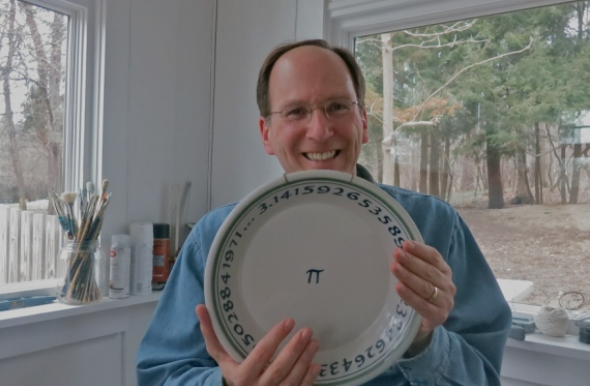
Happy Pi Day! In a certain sense, π is not a constant, but a variable. Using our usual Euclidean distance, it is 3.14159… but applying other L^p norms on ℝ², half the unit circle's perimeter will give other values. For instance, at p=1 (taxicab geometry), “π” = 2√2. At p ≈ 2.2, it's 3.20. Anyway, the video I was hoping to have out this day will be out closer to the 20th. Some call it “missing your deadline”, but I prefer to think of it as giving the L_{2.2} norm a little love.
English
56
319
5K
180.7K
Steven Strogatz
Steven Strogatz@stevenstrogatz·
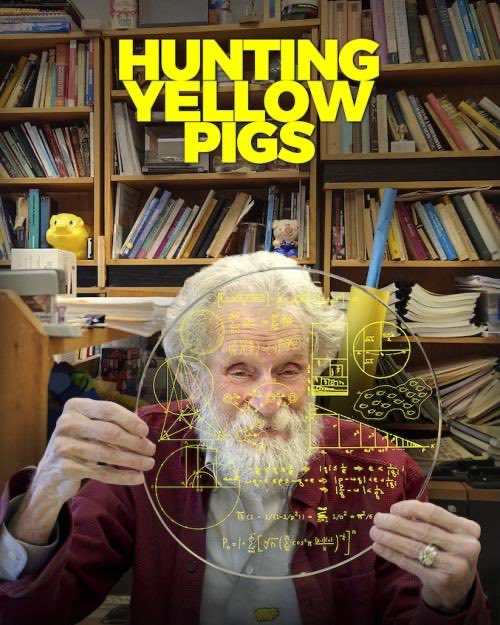
If you are in Ithaca on March 24, join us for a screening of this documentary about a summer math camp for high school students that has produced a tremendous number of leading mathematicians, scientists, tech leaders events.cornell.edu/event/special-…
English
6
4
44
4K
Steven Strogatz retweetledi
Judea Pearl
Judea Pearl@yudapearl·
Dear readers, I was honored with the following Award: The 2026 National Academy of Artificial Intelligence Exploration Award " For establishing the foundations of causal artificial intelligence." See: thenaai.org/index/index/ne… I hope it brings a small  sprinkle of glamour to the entire causal inference enterprise. Congratulations also go to our colleagues @tdietterich and Leslie Valiant, who are sharing this award for their pioneering works.
English
15
26
259
11.4K
Steven Strogatz retweetledi
Autumn Phaneuf, MSE
Autumn Phaneuf, MSE@1autumn_leaf·
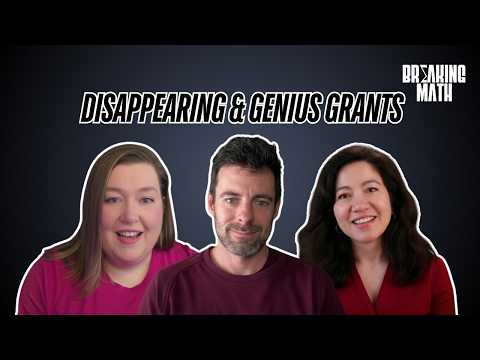
I loved working with @macfound Fellow, Lauren Williams, on this episode. People need to realize that “Math research is a marathon, not a sprint.” Listen to what she has to say about resilience in research, mentorship, and why kindness matters in math.
Breaking Math@breakingmathpod

Can AI actually prove new mathematics? Lauren K. Williams and a group of mathematicians decided to test it with an experiment called First Proof. The results were fascinating. Learn more about grants, collaborations, and AI on this week's episode. open.substack.com/pub/breakingma…

English
2
4
12
4.3K
Steven Strogatz retweetledi
New Scientist
New Scientist@newscientist·
Some Samoyeds adjust the pitch of their howls depending on the music being played, showing a form of vocal ability they might have inherited from their wolf ancestors #Echobox=1773073969" target="_blank" rel="nofollow noopener">newscientist.com/article/251833…
English
1
10
32
7.6K
Steven Strogatz retweetledi
Gil Kalai
Gil Kalai@GilKalai·
A wonderful breakthrough by Dror Bar-Natan and Roland Van der Veen. Knot invariants which can be computed for diagrams with hundreds of crossings, are powerful, and carry profound dreams and conjectures. gilkalai.wordpress.com/2025/09/25/dro…
English
1
7
20
3.6K