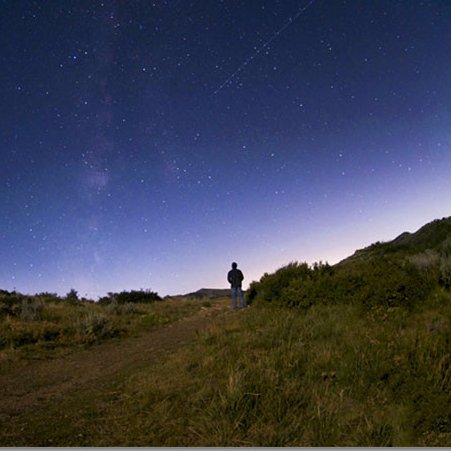
Hedefi 1 milyon zeytin ağacı dikmek olan ve "Ağaç Adam" lakabıyla tanınan doğa dostu, şu ana kadar toprakla buluşturduğu 27 bin fidanla hedefine adım adım yaklaşarak örnek bir vatanseverlik sergiliyor.
In Japan, children clean their own schools.
Every day. After lunch.
About twenty minutes.
Classrooms.
Hallways.
Toilets.
Not because the schools are too poor
to hire someone.
Because in 1947, this country decided
that cleaning your own space
is part of becoming a person.
The cleaning rag
is on the school supply list.
Right next to the pencils.
Egypt teaches it now.
So does Indonesia.
So does Mongolia.
Think about the last time
you watched a seven-year-old
mop a floor without complaining.
Japan does that
in every elementary school
in the country.
Not as punishment.
As education.
Good morning @JHBWater. Thousands of litres of drinking water, tens of thousands of Rand. Just pouring down Anerley Road into Oxford Road. For at least five days.
Tres personas quedan atrapadas en una isla: un empresario, un trabajador y un político.
El empresario construye una red para pescar.
El trabajador recoge madera y hace fuego.
El político organiza reuniones para discutir cómo repartir el pescado.
La primera semana sobreviven bien:
el empresario pesca 30 peces,
el trabajador cocina y mantiene el refugio,
y el político promete que pronto todos tendrán igualdad.
La segunda semana, el político propone una nueva regla:
“Es injusto que uno tenga más peces que otro. A partir de ahora, todo se repartirá por igual.”
El empresario acepta a regañadientes.
El trabajador también.
La tercera semana, el empresario deja de esforzarse tanto:
“¿Para qué pescar 30 si terminaré con la misma cantidad?”
Pesca 10.
La cuarta semana, el trabajador deja de trabajar horas extra:
“¿Para qué mantener el fuego toda la noche si da igual cuánto aporte?”
Trabaja menos.
Mientras tanto, el político sigue dando discursos sobre solidaridad y justicia social.
La quinta semana ya casi no hay comida.
La isla entra en crisis.
Y el político convoca otra reunión para debatir quién es el culpable.
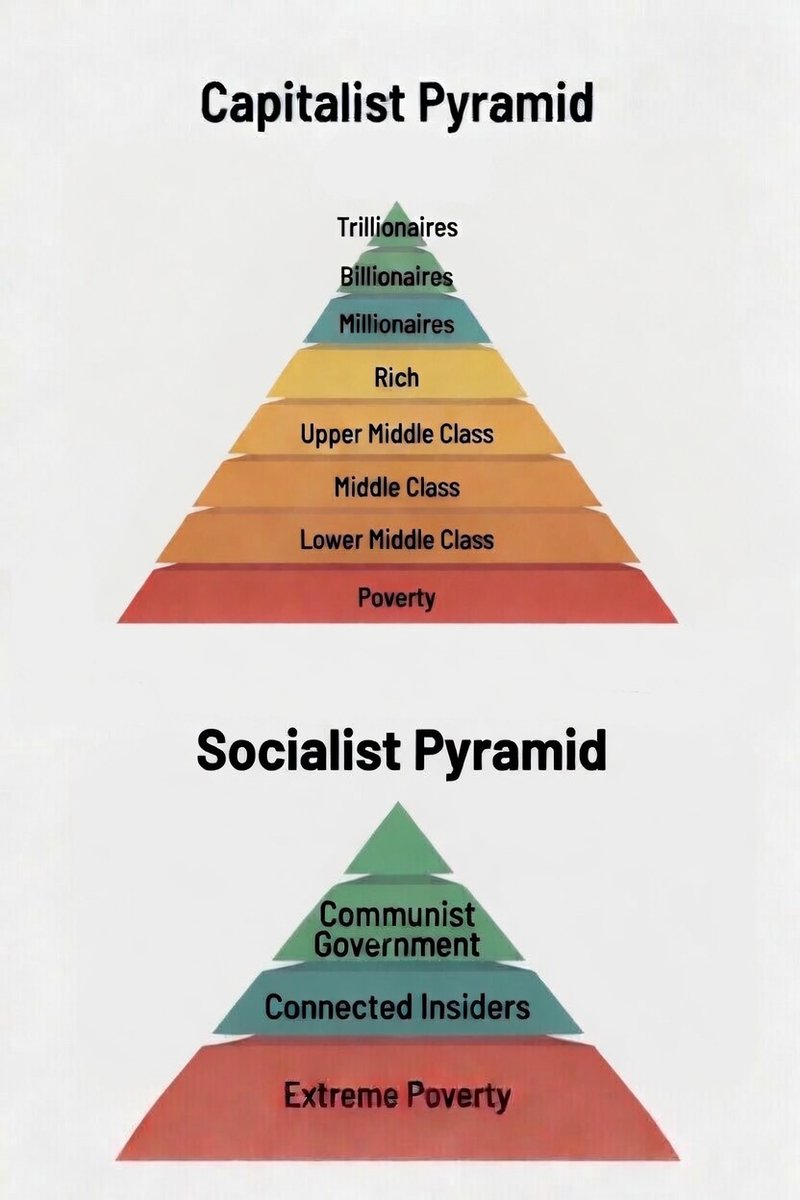
Y así, amigos, es como muchas veces colapsan los sistemas donde se castiga al que produce y se premia al que solo administra discursos.
Sold as a 13-year-old child bride in Iran, she was raped and tortured by her Muslim husband. Now safe in America, she devotes her life to warning the West about Islam.
Share this story widely.
Vorster understood...
What actually stands out in this segment is that the previous government knew exactly how many foreigners were in SA and their country of origin.
Let that sink in.
Water lamps are sustainable, portable lanterns that generate electricity from saltwater or fresh water mixed with salt.
These eco-friendly devices use ionization to provide up to 45 days of light, making them ideal for emergency situations and off-grid, coastal communities.
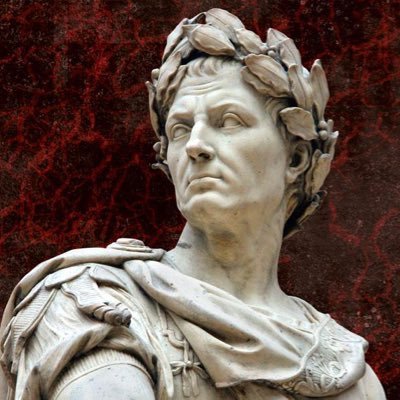
In 458 BC, Rome was on the brink of collapse.
An invading army had trapped the Roman consul and his legion in a mountain pass. Panic spread through the city. The Senate did the only thing they could think of:
They sent messengers to find a 60-year-old farmer plowing his field.
His name was Lucius Quinctius Cincinnatus. He had once been a senator, then lost his fortune paying his son's bail. Now he worked his own four-acre plot just to feed his family.
When the Senate's envoys arrived, they found him sweating behind a plow. They asked him to put on his toga so they could deliver an official message.
The message: Rome was making him dictator. Absolute power. Total command of the army. No checks. No oversight. No term limit.
He accepted.
Within 16 days, Cincinnatus had raised an army, marched out, surrounded the enemy, and forced their surrender. The republic was saved.
He had legal authority to rule for six months. He could have stayed. He could have expanded his power. He could have done what every other ruler in human history did when handed unlimited control.
Instead, he resigned on day 16.
He took off the toga, walked back to his farm, and finished plowing the field he'd left half-done.
Twenty years later, when Rome faced another crisis, they called him back. He was 80 years old. He took command, crushed the conspiracy, and resigned again, this time after just 21 days.
He died poor. On his farm.
2,200 years later, when George Washington was offered a kingship after winning the American Revolution, he refused and went home to Mount Vernon. The reason he was hailed as "the American Cincinnatus" is because Europeans literally could not believe a man who had won would willingly give up power.
King George III, on hearing Washington would resign rather than rule, said: "If he does that, he will be the greatest man in the world."
The lesson isn't that Cincinnatus was humble.
The lesson is that for most of human history, the people most qualified to lead were the ones who didn't want to. And the moment a society starts rewarding those who chase power instead of those who flee from it is the moment the republic begins to die.
Cincinnati, Ohio is named after him.
Most people who live there have no idea why.
the AirMarker SOS balloon
a compact Swiss rescue device that inflates instantly with helium, rises up to 45m on a tether, flashes for visibility, and can stay airborne for up to 3 days to help rescuers locate people in remote areas.