#StopTheRot Campaign

2K posts

#StopTheRot Campaign

#StopTheRot Campaign

@stoptherot_uk

An @OpenBritainHQ campaign to make democracy work for you.

Stamford, England Katılım Haziran 2015
856 Takip Edilen72.2K Takipçiler
#StopTheRot Campaign retweetledi
APPG for Fair Elections
APPG for Fair Elections@FairElectionsUK·
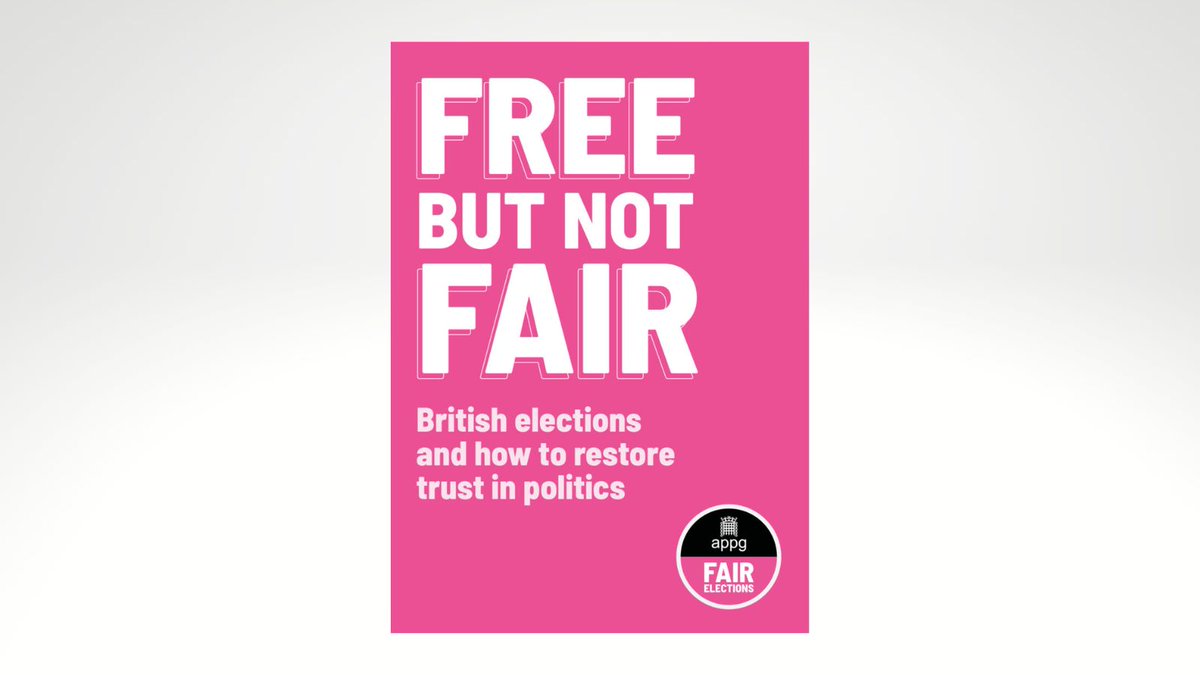
🚀 The APPG will launch its report on Monday evening, backed by senior political figures 💡 We hope you find it interesting & useful 🔗 fairelections.uk/free-but-not-f… 🧵 Follow us for upcoming threads, setting out each element of the report's findings and recommendations 7/7
APPG for Fair Elections tweet media
English
0
10
21
6.7K
#StopTheRot Campaign retweetledi
APPG for Fair Elections
APPG for Fair Elections@FairElectionsUK·
🪜 As a first step, the government should establish a National Commission for Electoral Reform in 2025 ⚖️ It should recommend a fair & democratic system where every vote counts equally 🙋‍♀️And allow citizens, alongside experts, to evaluate the options & propose a way forward 6/7
English
2
6
12
3.3K
#StopTheRot Campaign retweetledi
APPG for Fair Elections
APPG for Fair Elections@FairElectionsUK·
💥 Cross-party MPs call for a 'National Commission for Electoral Reform' 📰 Report by the new All-Party Parliamentary Group for @FairElectionsUK out now! 📈 New group has over 100 members and is backed by senior Labour and Conservative figures 🧵 1/7 theguardian.com/politics/2024/…
English
3
70
91
34.7K
#StopTheRot Campaign retweetledi
Mark Kieran - Democracy Activist
I'm old enough to remember when the right-wing media used to lose their shit because Labour leaders wore THEIR OWN clothes! (Foot and Corbyn both vilified for failing to wear designer suits and hand-made shoes.)
English
2
15
68
4.2K
#StopTheRot Campaign retweetledi
Mark Kieran - Democracy Activist
Interesting point, Cap’n. Three thoughts: 1. If enough people vote for Farage, they deserve to be represented in Parliament. That’s democracy, right? 2. Parliament is EXACTLY the right place to shine a light on Farage’s specious claims. He can’t avoid hard questions there in the way he can on his own TV shows. 3. Both 1 and 2 above would stop him playing the victim card and thereby make it much less likely that he’d be able to hoodwink his way into government by exploiting the weaknesses in FPTP. I don’t fear having fascists in Parliament; I just don’t want them anywhere near government. 👍
English
5
7
16
2.6K
#StopTheRot Campaign retweetledi
APPG for Fair Elections
APPG for Fair Elections@FairElectionsUK·
📢 The All-Party Parliamentary Group for Fair Elections is established Our goal is to deliver clean & fair elections where all votes count 🗳️ Replacing First Past the Post with PR 💷 Eliminating dark money from politics 📰 Countering disinformation 1/2 bylinetimes.com/2024/09/10/mps…
English
14
111
155
31.4K
#StopTheRot Campaign retweetledi
Mark Kieran - Democracy Activist
Mark Kieran - Democracy Activist@MarkKieranUK·
Sort of, Stephen. Over 80% of Labour members voted in favour at Labour’s 2022 Conference but thus far Starmer has not taken action. The Party’s formal position recognises that FPTP is a major problem but says there is not yet consensus on what should replace it. That’s the job now…kick off the process of working out what that replacement should be. 👍
English
1
8
6
4.5K
#StopTheRot Campaign retweetledi
Mark Kieran - Democracy Activist
Mark Kieran - Democracy Activist@MarkKieranUK·
🚨 50 days left for PM @Keir_Starmer to show he wants fair elections! We've written to demand action on Proportional Representation. Why? Because: ✅ Every vote should count 🗳️ Parliament should truly represent the people 🤝 We need less division and more cooperation in politics Read & RT to make your voice heard! #FairElections #ProportionalRepresentation
Mark Kieran - Democracy Activist tweet media
English
33
347
302
24.8K
#StopTheRot Campaign retweetledi
Mark Kieran - Democracy Activist
Mark Kieran - Democracy Activist@MarkKieranUK·
I’m not a superstitious guy but, when I noticed that Page 666 of the most recent Register of Members’ Interests lists a donation made to Liz Truss by The Heritage Foundation, I did pause…just for a moment.
Liz Truss@trussliz

What happened last night was not funny. Far-left activists disrupted the event, which then had to be stopped for security reasons. This is done to intimidate people and suppress free speech. I won't stand for it. Would we see the same reaction if the activists were far-right?
English
5
15
32
8.4K
#StopTheRot Campaign retweetledi
Mark Kieran - Democracy Activist
Mark Kieran - Democracy Activist@MarkKieranUK·
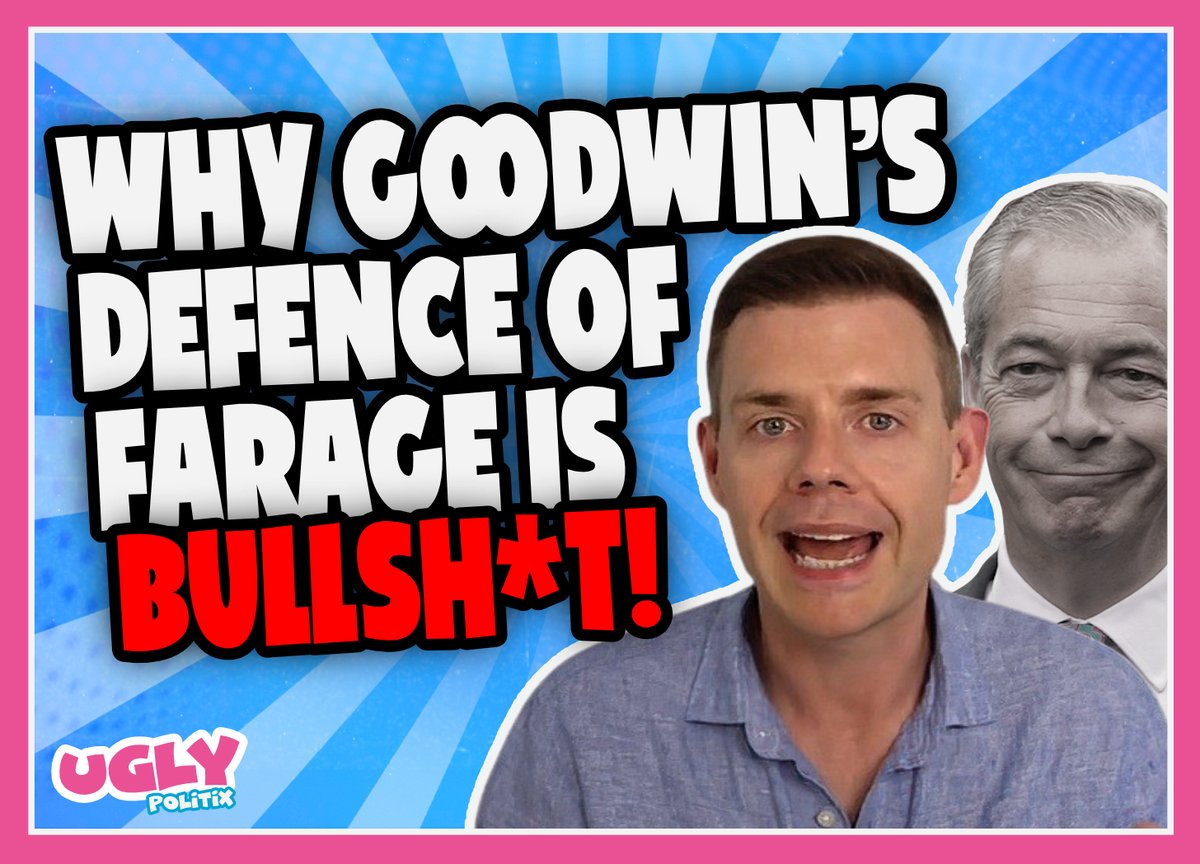
Today, in the wake of recent riots, right-wing cheerleader, Matt Goodwin, has published a fawning defence of Nigel Farage, in which he claims it is entirely unreasonable to link Farage to the sickening violence recently carried out by mindless thugs in towns and cities across the country. Typically, Goodwin sees the widespread use of the label ‘Farage riots’ as some kind of grand conspiracy by the woke left. I’m going to tell you why that’s all just so much bullshit. The fundamental problem with Goodwin’s argument is that he fails to recognise the immense responsibility that comes with political leadership. Farage may not have been the sole cause of the riots, but his inflammatory rhetoric and divisive politics have played a significant role in creating an atmosphere where such violence can thrive. The Power of Words Almost always when Farage Fanboys like Goodwin jump to the defence of their hero, they praise him for "telling it like it is," but this oversimplifies the complex role of political discourse in shaping society. As a prominent public figure, Farage's words carry weight far beyond mere personal opinion. When he speaks of "truth being withheld" or draws comparisons with events like the Black Lives Matter protests, he's not just voicing concerns - he's potentially lighting matches in a tinderbox of social tensions. The defence that Farage is merely reflecting public sentiment ignores the sinister feedback loop of political influence that the far-right use so slyly. Yes, he may be tapping into existing frustrations, but he's also amplifying and shaping them. This is not neutral commentating; it's active participation in moulding public opinion. The Dangers of Oversimplification Goodwin argues that Farage has consistently warned about the consequences of certain policies. However, this framing glosses over the reductive nature of Farage's approach. Complex issues like immigration, multiculturalism, and economic disparity cannot be boiled down to simple cause-and-effect relationships. By doing so, Farage offers his supporters emotionally gratifying but intellectually bankrupt solutions to multifaceted problems. This oversimplification is not just inaccurate - it's dangerous. It fosters an "us vs. them" mentality that can escalate social tensions and make constructive dialogue practically impossible. When Farage points to immigrants or "elites" as the source of all woes, he's not solving problems; he's just creating scapegoats. The Responsibility of Leadership Goodwin's sycophantic article paints Farage as a lone voice of reason in a sea of misguided elites. This Mills & Boon narrative conveniently ignores the sober responsibilities that come with being a political leader. It's not enough to simply point out problems or voice grievances; true political leadership involves proposing viable solutions and working towards social cohesion. Instead, Farage's brand of politics seems more interested in stoking divisions than bridging them. His approach undoubtedly wins votes - and drives donations - but at what cost to the fabric of society? A leader's job isn't just to reflect the anger of a portion of the electorate - it's to forge that frustration into constructive change. The Echo of History It’s impossible to discuss Farage's rhetoric without acknowledging its historical echoes. The language of nationalism, of a pure identity under threat, of shadowy elites working against the common people is not new. It has been used throughout history by divisive and often highly destructive political movements. When anyone suggests Farage might be ideologically aligned with any such movement, Goodwin and Co project theatrical levels of umbrage. But Farage’s failure categorically to distance himself from the far-right - and his close relationship with Donald Trump - is telling. In times of social strain, responsible leaders must be acutely aware of how their words might be interpreted or misused and take reasonable steps to avoid that. The Polarisation Problem Perhaps the most damaging aspect of Farage's approach is its contribution to the increasing polarisation of British society. By framing issues in stark, binary terms, he (and Goodwin) make it harder for people of differing views to find common ground. This polarisation doesn't just affect political discourse - it seeps into communities, workplaces, and even families. Goodwin argues that Farage is more in tune with the country than his critics. But which country? The Britain of Farage's rhetoric seems to be one of perpetual grievance and irreconcilable differences, where compromise is weakness and nuance is naivety. Whereas, the Britain I know has a much more sophisticated, nuanced and optimistic view of the issues Farage obsesses over. Conclusion: The Path Forward None of this is to say that the concerns voiced by Farage and his supporters are entirely invalid. Issues of immigration, national identity, and economic fairness are real and deserve serious attention. However, the manner in which these concerns are voiced and addressed matters immensely. What Britain needs now is not more divisive rhetoric, but leaders who can acknowledge complexities, promote understanding across divides, and work towards solutions that benefit all of society. Farage's approach, whilst politically effective in the short term, ultimately deepens the very rifts that led to the recent violent unrest. As we move forward, it's crucial to recognise that political leaders bear responsibility not just for their direct actions, but for the social climate they help create. Farage, personally, may not have started the riots, but his words and actions have contributed to a political environment where such events become more likely. It's time for a politics that unites rather than divides, that seeks to solve problems not just identify scapegoats. Only then can we hope to address the real issues facing British society without descending into chaos and recrimination. Until then, don’t be taken in by Goodwin’s bullshit fanboy fiction. [Published today on Open Britain's Ugly Politix Substack channel. For more like this, sign-up for a free subscription on Substack.]
Mark Kieran - Democracy Activist tweet media
English
1
7
15
4K
#StopTheRot Campaign retweetledi
Mark Kieran - Democracy Activist
Mark Kieran - Democracy Activist@MarkKieranUK·
Farage's Fall in the Polls - Temporary Setback or the End of an Era? In the wake of the July 2024 general election, Nigel Farage's political fortunes have taken a dramatic turn. The man who has set his sights on being Prime Minister by 2029 has seen his popularity plummet in recent days, leaving some wondering whether this marks the end of his influence on the UK's political landscape. But it would be premature – and extremely unwise – to write off Farage as a spent force in British politics. It’s definitely not the end of his era. A recent YouGov poll paints a stark picture of Farage's current standing. His favourability ratings have nosedived, with even traditional Leave voters turning their backs on the Reform UK leader. The poll, conducted on 7 August, revealed that 47% of people, including around 30% of Conservative and Leave voters, believe Farage bears a great deal or fair amount of responsibility for the recent far-right riots that swept across the UK. This dramatic shift in public opinion comes just weeks after Reform UK's relatively strong showing in the general election, where they secured 14.3% of the total vote. While this vote share translated to only five parliamentary seats due to the vagaries of the first-past-the-post system, it initially seemed to cement Farage's position as a central player in British politics. The main catalyst for Farage's falling stock appears to be his poor response to the widespread riots linked to far-right extremism. The public's swift and severe judgement reflects a growing weariness with divisive rhetoric and a desire for unity in the face of social unrest. Farage's attempts to distance himself from figures like Tommy Robinson have fallen flat, with many viewing his disavowals as too little, too late. Moreover, Farage's close association with Donald Trump and his focus on international connections seem to have alienated some domestic supporters. His participation in a high-profile London fundraiser for Trump on 11 June, and subsequent plans to support Trump's presidential campaign, raised justified questions about his commitment to addressing constituency issues in Clacton. Farage's current predicament highlights the volatile nature of populist politics. The same anti-establishment sentiment that fuelled his rise can quickly turn against him when public mood shifts. Balancing anti-establishment rhetoric with the need to distance himself from extremism is a delicate act, and Farage appears to have lost his footing on this tightrope. Despite these setbacks, there are several reasons why it would be unwise to take your eye off Farage. Most obvious among these is his remarkable ability to bounce back from political setbacks. From his seven failed attempts to enter Parliament to his post-Brexit political exile, Farage has repeatedly shown an ability to reinvent himself and his message. His decision to lead Reform UK after years of staying on the sidelines is just the latest example of his political resilience. But, more fundamentally, the conditions that fuelled Farage's rise still largely exist. Dissatisfaction with mainstream politics remains high, and the issues that Farage has championed – from immigration control to economic populism – continue to resonate with a significant portion of the electorate. As long as these underlying frustrations persist, there will be space for Farage in British politics. One of Farage's greatest strengths is his media acumen. He has a knack for crafting soundbites and generating headlines, skills that allow him to maintain a platform even without elected office. His adeptness with social media ensures he can continue to reach and influence his base directly, bypassing traditional media filters. Political fortunes often hinge on unforeseen events. Future political or economic crises could provide opportunities for a surge. Farage has historically been adept at capitalising on moments of national uncertainty or dissatisfaction. Brexit is the most prominent example, but it is not the only one. Any future crisis that aligns with his narrative could see him pounce and regain lost ground. Despite his recent fall in popularity, Farage retains a loyal core of supporters. This base, however diminished, provides a foundation from which to launch future political endeavours. The surge in Reform UK membership to 65,000 just a month after the election demonstrates that there's still a constituency for Farage's brand of politics, albeit a small minority of the country. Farage's potential for resurgence has implications that extend beyond his personal political fortunes. It speaks to the enduring appeal of populist politics in the UK and the challenges facing mainstream parties in addressing the concerns that fuel this appeal. Moreover, the issues that Farage has championed – from immigration to sovereignty – remain contentious topics in British politics. Even if Farage himself fades from the scene, these issues are likely to continue shaping political discourse, with constant potential to bring him back into the spotlight. Whilst Nigel Farage is undoubtedly facing one of the most challenging periods of his political career, it would be hasty to assume this means he will be disappearing from British politics. His track record of resilience, coupled with his media savvy and the enduring appeal of his core message to a significant minority, suggests that his dream of one day taking the keys to Number 10 may not be over. As the new Labour government navigates these turbulent political waters, it will be crucial to engage seriously with the issues Farage represents, rather than dismissing him or his supporters. Only by addressing the root causes of political disaffection can we hope to build a more stable and inclusive democracy. Farage's current decline may offer a respite, but it should not be mistaken for a resolution of the deeper political and social divisions he has both highlighted and exploited throughout his career. While those issues remain, Farage will be with us, whipping up populist fury and pushing his specious “solutions”. [Published today on Open Britain's Ugly Politix Substack channel. For more articles like this, follow me here on X or sign-up for a free subscription on Substack.]
Mark Kieran - Democracy Activist tweet media
English
1
4
9
4.3K
#StopTheRot Campaign retweetledi
Mark Kieran - Democracy Activist
Two-tier policing? Might as well claim there's 'two-tier weather.' Musk and his minions oversimplify a complex, dynamic system with countless interconnected factors. Real-world policing, like meteorology, defies binary labels. Proper discussion, not shite soundbites…please! 😫
Elon Musk@elonmusk

Chef’s kiss 🤌 @CommunityNotes

English
0
5
8
4.8K
#StopTheRot Campaign retweetledi
Mark Kieran - Democracy Activist
Lies and Riots: Britain's Broken Information Environment is Destroying Democracy by Matt Gallagher, Open Britain As Mark said in his piece yesterday, the violent and racially motivated riots we have witnessed in recent days didn’t just come out of nowhere. For years, our print and television media peddled hateful rhetoric about migrants, Muslims, and asylum seekers. Our de-regulated online environment has now proven to be even more dangerous. This government urgently needs to take action. Fear-mongering about “swarms”, “invasions,” and “illegal marauders” has been commonplace in the British press for years now. So are the repeated Farage-inspired lies about migrants and Muslims, from “no-go” areas to plots to bring about Sharia law in the UK. The Murdoch and Rothermere papers have, for years, offered sympathetic coverage to divisive demagogues who exist only to spread division and hate. Nigel Farage and his ilk are platformed uncritically, with no mention made of their violent remarks or harmful and racist claims. Charlatans like Matt Goodwin and Douglas Murray are given bylines and editorials to spew noxious lies, blaming all of our problems on society’s most marginalised and peddling conspiracies about a “woke” and nefarious enemy within. Our press system has served to radicalise and misinform, steering people away from real discussions about pertinent issues (which is what democracy is all about) and towards senseless hatred and violence. The digital space has only exacerbated this problem. Our online space, supposedly the “town square” upon which we’re to assemble and debate the issues of our time, has increasingly become dominated by a radical minority of right-wing agitators. Beginning on “alternative” platforms like Telegram, Parler, and Gab, conspiracies and lies permeate into the mainstream, particularly on Elon Musk’s “X”. Julie Ebner, who heads up Oxford University’s Violent Extremism Lab, explained it well to The Guardian: “You see this chain reaction in these alternative news channels, where disinformation can spread so quickly and can mobilise people to take the streets – who are then prone to using violence because there’s this anger and these really deep emotions that are, of course, being amplified. And then, from these alternative outlets, it’s carried on to X or on to the mainstream social media platforms.” That’s exactly how these race riots began. A false claim about the identity of the Southport murderer was amplified by dodgy fringe news outlets online, and eventually picked up by major right-wing influencer accounts like Andrew Tate, Tommy Robinson, and Laurence Fox. It very quickly extended beyond Southport, with right-wing thugs, beer cans in hand, descending on UK towns and cities around the country. It’s not even a new phenomenon. The attacks on the US Capitol on January 6th 2021 started in much the same way, as did the right-wing copycat attack on Brazil’s centre of government in 2023 and the xenophobic riots that erupted in Germany back in 2018. The UK’s information environment, as it stands, is not compatible with real democracy. Everyone needs to exist in a basic shared reality, and the siloing effects of disinformation and conspiracies are undermining our ability to see the world in the same way. It’s putting jet fuel behind the worst elements of our traditional press, creating a political environment ripe with anger and hostility but devoid of meaningful debate. We had an opportunity, with the Conservatives’ Online Safety Act, to create new and bold regulations that would reign in the dangerous business model of big tech. That regime was ultimately watered down to basically nothing, leaving the Act a complicated mess that largely allows tech giants to self-regulate. Keir Starmer must see these riots as a wake up call, and legislate on the disinformation eating away at our democratic process. People need to be able to properly understand the issues impacting their lives, not get so swept up in the delusions of terminally online hate-mongers that they harm innocent people and destroy our communities. Technology has the power for both great good and great evil. We could build a digital democracy that’s fit for the challenges of the 21st century. Until we do, though, we’re going to continue to see far-right extremism and violence, and fail to have the meaningful political debates we so desperately need. [end] If you agree with this article, please repost and follow for more. [Published today on Open Britain's Ugly Politix Substack channel. For more articles like this, follow me here on X or sign-up for a free subscription on Substack.]
Mark Kieran - Democracy Activist tweet media
English
2
8
15
4.9K
#StopTheRot Campaign retweetledi
Mark Kieran - Democracy Activist
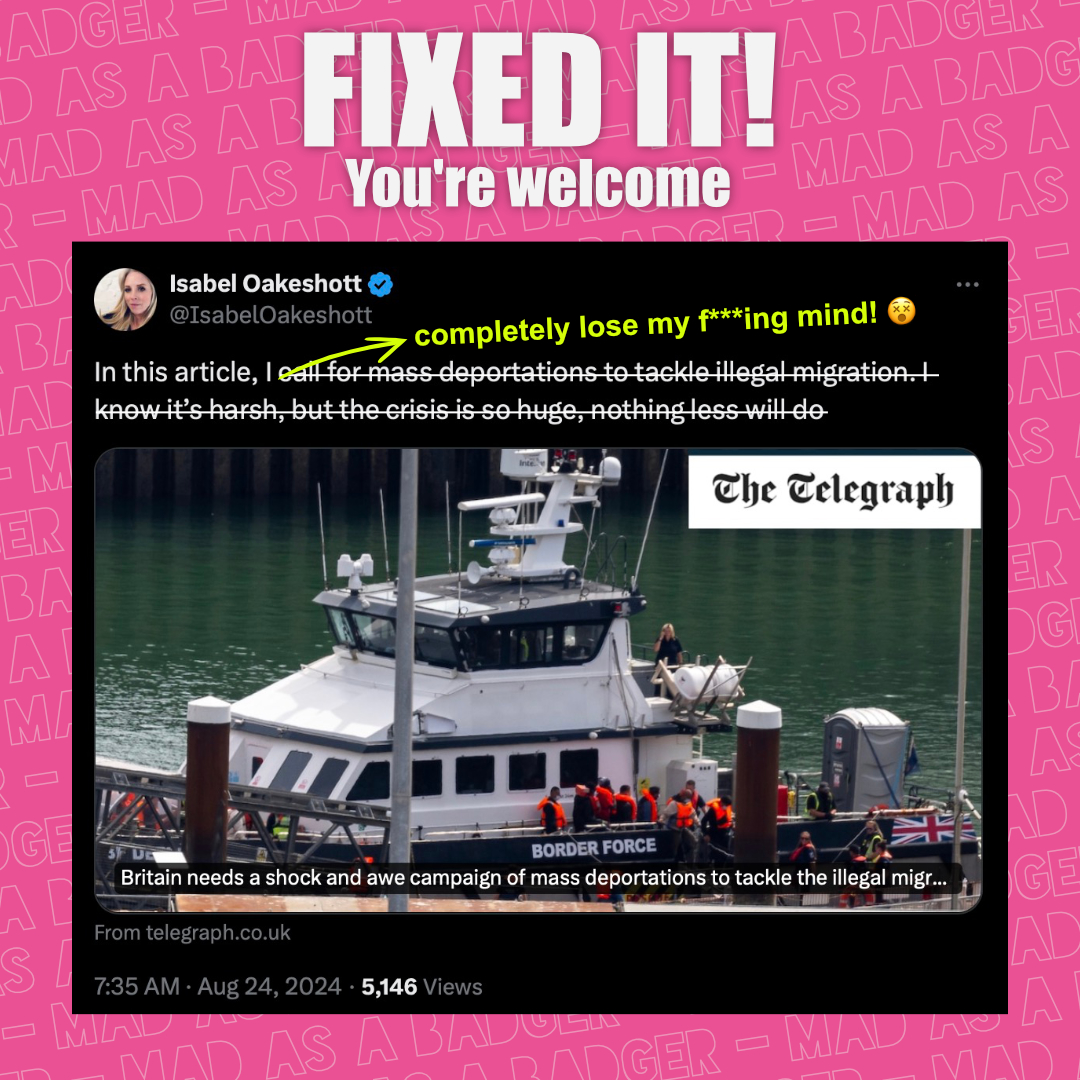
Oakeshott's Distraction Tactics There's a More Obvious Cause of Britain's Current Unrest! Isabel Oakeshott's recent piece on the conditions in Leeds' Harehills area paints a grim picture of social deprivation in modern Britain. The squalor she describes is indeed shocking and unacceptable in a wealthy nation like ours. However, her attempt to link these longstanding issues to recent right-wing violence is misguided at best and disingenuous at worst. Social deprivation is not a new phenomenon in the UK. For generations, pockets of extreme poverty have existed alongside areas of great wealth. This inequality is a stain on our society and absolutely must be addressed. But to suggest that these conditions are the primary driver of recent far-right unrest is to fundamentally misunderstand – or willfully misrepresent – the true causes of this violence. The anger we're seeing on our streets has a much more obvious source: it is the result of decades of manufactured outrage, carefully cultivated and misdirected towards outsiders by right-wing journalists and politicians. Oakeshott herself has been a key player in this dangerous game, using her platform to stoke fears about immigration and promote a destructive Brexit agenda devised by wealthy elites far removed from the realities of life in places like Harehills. It's a cruel irony that those most affected by austerity and economic mismanagement are being encouraged to blame their misfortunes on immigrants and asylum seekers, rather than on the policies and politicians truly responsible for their plight. The Brexit project, championed by Oakeshott and her circle, has only exacerbated these issues, leading to economic instability and further social division. While Oakeshott wrings her hands over the conditions in Leeds, she conveniently ignores her own role in creating the toxic atmosphere that has made such violence possible. Her close ties to the Reform Party and its predecessors, as well as her history of controversial and often dubious reporting, make her an unlikely champion for the downtrodden. Let's be clear: the social issues Oakeshott describes are real and urgent. They demand immediate attention and action from our government. But the solutions to these problems must not be shaped by the ideas driving violent thugs on our streets, nor by the rhetoric of disingenuous far-right journalists or the political opportunists in Reform UK. Instead, we need a comprehensive approach that addresses the root causes of inequality and social deprivation. This means investment in education, healthcare, and social services. It means creating real economic opportunities in neglected communities. And crucially, it means fostering a sense of shared identity and common purpose, rather than divisive narratives that pit different groups against each other. Oakeshott's article, with its emotive descriptions and carefully chosen anecdotes, may resonate with some readers. But we must look beyond such surface-level analysis to understand the true dynamics at play. The rage we're seeing is not a natural consequence of poverty or immigration. It's a carefully cultivated product, nurtured by those who stand to benefit from social division and political upheaval. As we work to address the very real issues of deprivation and inequality in our society, we must also confront the toxic narratives that have brought us to this point. Only by rejecting the politics of division and embracing a truly inclusive vision for Britain can we hope to build a society that works for all its citizens, regardless of their background or circumstances. The children of Harehills deserve better – not just cleaner streets and better opportunities, but a future free from the poisonous ideologies that threaten to define their lives before they've even begun. It's time for journalists like Oakeshott to take responsibility for their role in creating our current crisis, rather than using it as fodder for yet more divisive rhetoric. If you like this article, please consider reposting it and following me to get more. [Originally published on the Ugly Politix channel on Substack. For more articles like this, follow me here on Twitter/X or sign-up for a free subscription on Substack.]
Mark Kieran - Democracy Activist tweet media
English
45
202
493
32K
#StopTheRot Campaign retweetledi
Mark Kieran - Democracy Activist
From Rabble-Rouser to Representative Nigel Farage's Failure to Rise to the Challenge of Constructive Governance Nigel Farage, the perennial outsider of British politics, has finally achieved his long-held ambition of becoming a Member of Parliament. After seven unsuccessful attempts, Farage secured a resounding victory in Clacton, winning 46.2% of the vote (turnout: 58.7%). This electoral success should mark a pivotal moment in his political career – a transition from provocateur to lawmaker. However, early indications suggest that Farage is struggling to adapt to the responsibilities that come with his new role. The position of MP is one of public service, demanding a commitment to ALL constituents (not just those who voted for you) and constructive participation in the legislative process. Yet, Farage's actions since taking his seat on July 9th raise serious questions about his priorities and his understanding of the role. The first words he spoke in Parliament, rather than outlining a vision for the nation or paying gracious tribute to the people of Clacton for choosing him as their MP, reverted to type with a jibe about Brexit and former Speaker John Bercow. This provoked groans from fellow MPs and set a tone more reminiscent of his days as a political outsider than a serious legislator. More concerning is the apparent lack of engagement with his Clacton constituents. A month on from his election, I can find no reports of Farage opening a constituency office, holding local meetings, or conducting surgeries – fundamental activities for any MP serious about representing their electorate. Instead, Farage found time to visit his old friend Donald Trump at the Republican National Convention in the United States. This jaunt across the Atlantic, presumably to pursue a potential role in a future Trump administration, speaks volumes about where Farage's true interests lie. This behaviour suggests that Farage views his parliamentary seat not as a means to serve his constituents but as a platform to further his own political brand and international ambitions. It's a stark betrayal of the trust placed in him by the people of Clacton and a dereliction of his duties as an MP. But that is not the most disturbing aspect of Farage’s performance so far. As Neil Basu, the former head of counter-terrorism policing, pointed out, Farage’s failure quickly to denounce far-right violence is particularly troubling. As an elected representative, Farage has a responsibility to promote social cohesion and stand against extremism. His silence on this issue is deafening and potentially dangerous. The irony of Farage's situation is hard to ignore. He has long railed against the political establishment, yet now finds himself a part of it. This presents him with a unique opportunity to effect change from within the system he has so vociferously criticised. However, rather than seizing this chance to prove his critics wrong and demonstrate his ability to govern constructively, Farage appears content to continue his role as a political gadfly. This behaviour is not just a disservice to his constituents; it undermines the very foundations of our representative democracy. It feeds into a cynical narrative that politicians are self-serving and out of touch, further eroding public trust in our institutions. The rise of Reform UK underscores the public’s current dissatisfaction and appetite for political change in Britain. However, change should not come at the cost of effective governance and responsible representation. Farage and his colleagues have a duty to translate their populist promises into workable policies and to engage constructively with the parliamentary process. As we reflect on Farage's early performance as an MP, we must also consider the system that has allowed this situation to arise. Our first-past-the-post electoral system often rewards divisive figures who can mobilise a passionate minority, rather than consensus-builders who can unite a broad coalition. This is why the call for electoral reform, ironically one of Farage's own campaign promises, is more crucial than ever. A more proportional system would encourage politicians to appeal beyond their base and work collaboratively, rather than relying on populist tactics and divisive rhetoric. It would also ensure that the diversity of political views in the country is more accurately reflected in Parliament. In conclusion, Nigel Farage's early days as an MP serve as a cautionary tale. They remind us of the importance of holding our elected representatives to account and demanding that they fulfil their responsibilities to their constituents and the country (to us!). As voters, we must insist on a higher standard of conduct and problem-solving from all our MPs, regardless of their political stripe. Farage now has a choice. He can continue down his current path, using his position to grandstand and pursue personal ambitions, or he can rise to the challenge of constructive governance. The people of Clacton, and indeed the entire nation, deserve nothing less than his full commitment to the job they have elected him to do. It's time for Nigel Farage to decide: will he be a representative of the people, or merely a rabble-rouser in a new arena? [Originally published on the Ugly Politix channel on Substack. For more articles like this, follow me here on Twitter/X or sign-up for a free subscription on Substack.]
Mark Kieran - Democracy Activist tweet media
English
1
8
9
3.9K