Sabitlenmiş Tweet
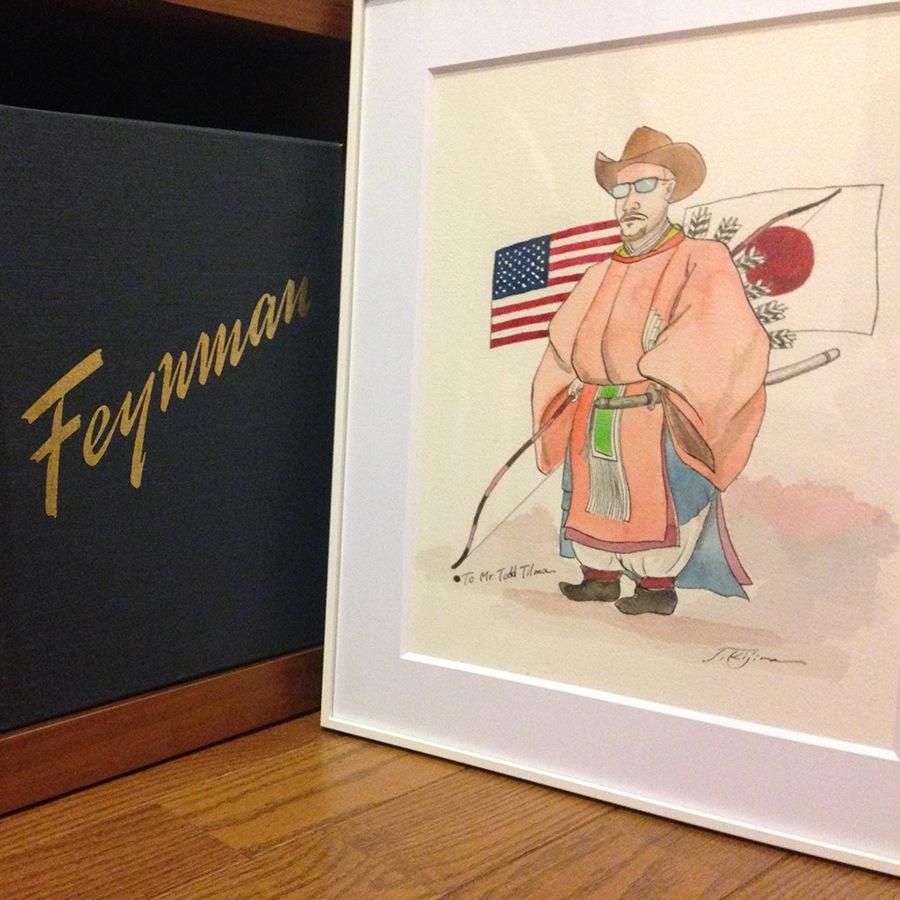
Why am I a mathematical physicist?
Because.
Any sufficiently advanced mathematical physics formula is indistinguishable from magical runes...
GIF
Musashino-shi, Tokyo 🇯🇵 English
照間トッド / Todd Tilma
28.8K posts
@TilmaLabs
引退した物理学者. Purveyor of finely crafted mathematical physics formulas for fun & profit. 日本の歴史と文学オタク. Old metalhead/cyberpunk. 猫たちの召使. Clinically depressed.
ANNOUNCEMENT: WE’RE SAVING SCIENCE! We’re often told that science is “self-correcting.” But that’s not really true. Science doesn’t correct itself like a thermostat adjusting the temperature in your house. Science is a human institution run by human beings. And human beings are vulnerable to career incentives, groupthink, moral fads, political pressure, and fear. And when those forces capture academic journals, peer review stops being a filter for bad ideas and starts becoming more of a credentialing system for fashionable nonsense. This isn’t exactly new. In 1996, the physicist Alan Sokal managed to publish a totally gibberish article in the journal Social Text full of trendy postmodern jargon. His point was simple: if you flatter the ideological commitments of certain academic editors, nonsense can pass as real scholarship. Two decades later, @ConceptualJames, @HPluckrose , and @peterboghossian pulled off the “grievance studies” hoax, placing over a half dozen absurd papers in peer-reviewed journals. One paper used dog parks to analyze rape culture and queer performativity. Another rewrote parts of Mein Kampf in the language of feminist theory. The problem wasn’t just that fake papers got published. It was that they were completely indistinguishable from the real thing. And today, the problem is even worse. We now have serious SCIENCE journals publishing papers about feminist lesbians marrying brine shrimp. We have disturbing papers that aim to “queer” and sexualize infants. We have scholarship on “lesbian-queer-trans-canine relationalities” and “trans-dog intimacies.” But while Clown World papers are concerning because it makes a complete mockery of academia, the same broken, ideologically captured system is also publishing research in legitimate science and medical journals that pushes sex and gender pseudoscience, relies on deeply flawed data, and influences policies on the medical transition of children and young adults. That’s not funny. That affects real people. It affects medicine. It affects law. It affects children. And when critics try to respond, they often discover there’s no serious mechanism for correction. Submitted Letters to the Editor often go completely ignored. Contrary evidence is rejected without comment. As a result, the best critiques are often relegated to personal blog posts, social media threads, or newspaper op-eds, while the original paper remains in the literature wearing the armor of “peer review.” That is untenable. So Kevin McCaffree, editor-in-chief of Theory and Society (@Theory_Society), and I decided to do something about it. Today, in the Wall Street Journal, we announced a first-of-its-kind article type called “Peer Review.” The idea is simple: publication should be the beginning of academic scrutiny, not the end of it. A Peer Review article can critique a paper from any scholarly journal. It can address problems with methods, evidence, logic, definitions, theory, or interpretation. But it has to focus on the claims and arguments, not personal attacks. Submissions are capped at 2,500 words and go through a straightforward merit review instead of endless gatekeeping and ideological screening. We ask just one basic question: Is this critique coherent, serious, reasonable, or even popular enough to deserve scholarly attention? If yes, it gets published. And the authors of the original paper get a built-in right of reply, so readers can see the critique and the response in a legitimate academic venue. That’s how science is supposed to work. Science becomes self-correcting only when real people build the mechanisms that allow correction to happen. That’s what we’ve done. Now it’s time for academics to use it. Read our announcement on the @WSJ below. 🔗wsj.com/opinion/a-way-…

実家で母親と住んでた間じゅう、自分の誕生日が年1嫌いと思い込まないと生きていけないような仕打ちを誕生日に毎年されてて、去年友達が盛大に祝ってくれて初めて「私ずっと祝われたかった…!」って気付けて、今年も絶対に祝って貰いたいので、皆さん5/28(木)は何卒どうかよろしくお願い致します…
科学の進歩は、どこまでAIで予測できるか? 最先端のAIにより未来の科学的成果を予測する能力を検証する論文が、オックスフォード大学、スタンフォード大学、@Allen_AI などの研究者との共著で発表されました。Sakana AIのリサーチサイエンティスト山田祐太朗が共同著者として参加しています。 arxiv.org/abs/2605.22681 seanwu25.github.io/CUSP-Science/ 本研究では、AIの科学予測能力を評価するベンチマーク「CUSP」を提案し、4,760件の科学イベントを用いて検証を行いました。その結果、現在の最先端モデルは有望な研究方向を見分けることはできる一方で、それが実現するか、いつ実現するかの予測は難しいことが分かりました。また、これらの限界は学習データの量だけでは説明できないことも示されています。 この結果から改めて分かるのは、科学は依然としてオープンエンドな営みであり、最先端のAIをもってしても、その発展の方向性を予測することは難しいということです。AIは科学の進歩を予言する存在ではなく、人間と共にその探索を進める協働者として最も力を発揮するでしょう。 さまざまなAIと人間の創造性が組み合わさることで、科学はこれからも予想できない方向に展開していくはずです。Sakana AIも、山田が開発者として携わってきたAI Scientistをはじめ、科学の発展に資するAI開発に努めていきます。














新宿ゴールデン街も外国人で埋め尽くされている。オーバーツーリズムにも程がある。西洋人が多い景色を国際化と感じる人もいるかもしれないが、むしろしっくりくるのは「植民地化」という言葉。