

tonyolendo.eth
5.5K posts

tonyolendo.eth
@tonyolendo
Co-founder @vifi_labs | ex: @0xPolygon @coordinape| DAOs: @developer_dao @web3afrika | Kenyadadian 🇰🇪 🇹🇹
Katılım Ocak 2011
3.6K Takip Edilen5.1K Takipçiler
“I need this.”
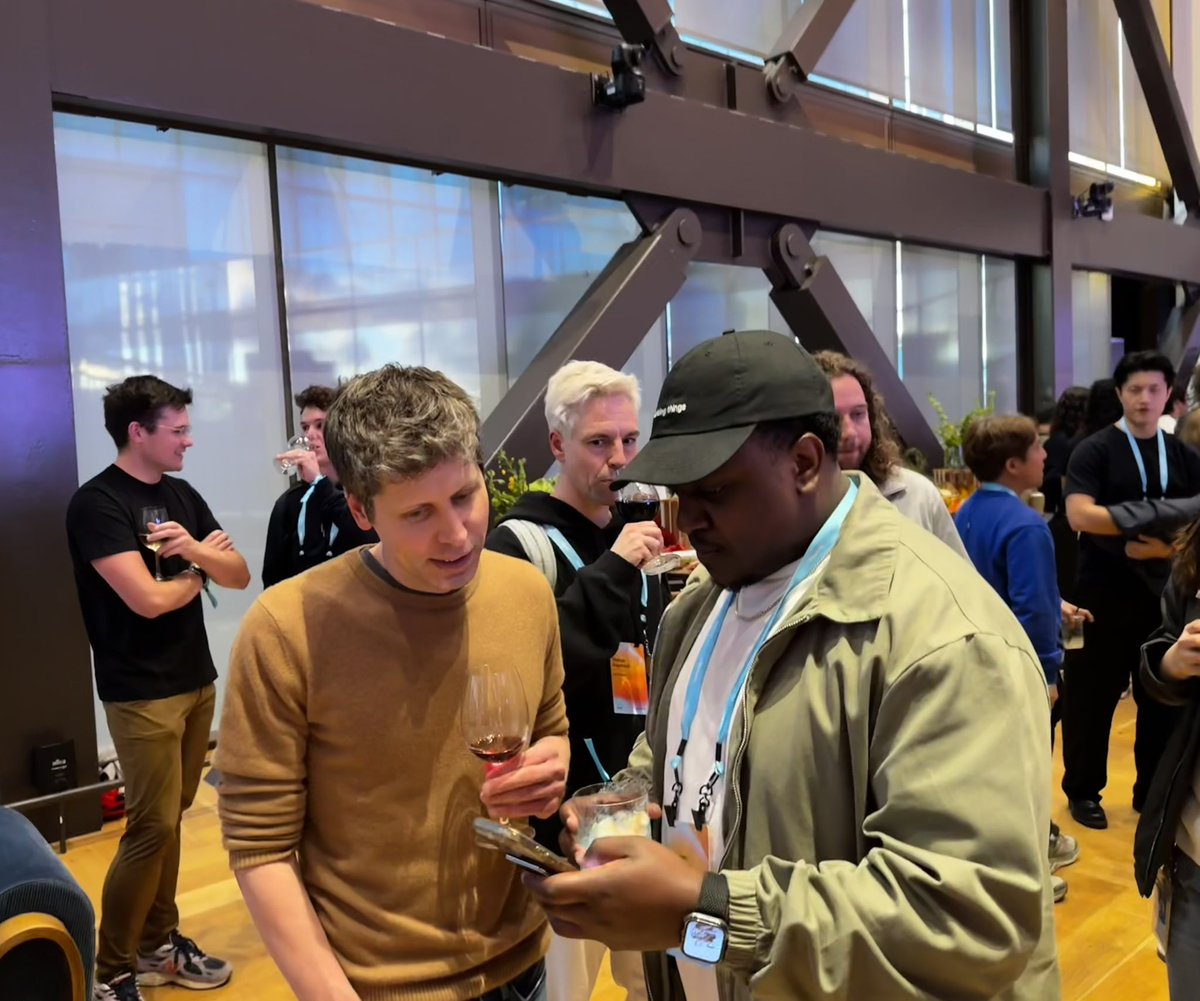
Hearing @sama say that about the spoiler intelligence platform we’re building at Nargis.xyz was hard to put into words.
It was one of the most motivating moments I’ve had as a founder.
Out of thousands of applicants, I’m grateful GPT-5.5 selected me to attend, and thankful to everyone at OpenAI who worked incredibly hard to make this private event happen.
It was a blessing to be in that room, make new friends, and meet so many incredible founders and operators building the future.
I left even more convicted about what we’re building. Now it’s time to fire up Codex and get back to work.
English
So unfortunate. Thanks for all you’ve done for the African ecosystem. You’ve been a source of strength and inspiration to many. You have made such a HUGE sacrifice for Base which I hope you can one day talk about but all this is good karma. It will all work out in the end. Godspeed!
English

tonyolendo.eth retweetledi
Coinbase did not just fire 14% of its workforce due to AI!
They fired the "pure managers", cutting down the people-manager role that built most corporate ladders for the last 50 years. This role no longer exists at Coinbase!
Leaders will have 15+ direct reports, which previously were capped at 6 direct reports. This would have been impossible without the help of AI in the past
Coinbase is testing a new model, "one person teams," where a single person is the engineer, the designer, the PM, and a pod of one with agents.
Coinbase is testing a new model of revolutionary companies thanks to AI! The news headlines sound scarier than the reality might be, but both companies and humans have to adapt. The AGI future is near!
Brian Armstrong@brian_armstrong
This is an email I sent earlier today to all employees at Coinbase: Team, Today I’ve made the difficult decision to reduce the size of Coinbase by ~14%. I want to walk you through why we're doing this now, what it means for those affected, and how this positions us for the future. Why now Two forces are converging at the same time. We need to be front footed to respond to both. First, the market. Coinbase is well-capitalized, has diversified revenue streams, and is well-positioned to weather any storm. Crypto is also on the verge of the next wave of adoption, with stablecoins, prediction markets, tokenization, and more taking off. However, our business is still volatile from quarter to quarter. While we've managed through that cyclicality many times before and come out stronger on the other side, we’re currently in a down market and need to adjust our cost structure now so that we emerge from this period leaner, faster, and more efficient for our next phase of growth. Second, AI is changing how we work. Over the past year, I’ve watched engineers use AI to ship in days what used to take a team weeks. Non-technical teams are now shipping production code and many of our workflows are being automated. The pace of what's possible with a small, focused team has changed dramatically, and it's accelerating every day. All of this has led us to an inflection point, not just for Coinbase, but for every company. The biggest risk now is not taking action. We are adjusting early and deliberately to rebuild Coinbase to be lean, fast, and AI-native. We need to return to the speed and focus of our startup founding, with AI at our core. What this means To get there, we are not just reducing headcount and cutting costs, we’re fundamentally changing how we operate: rebuilding Coinbase as an intelligence, with humans around the edge aligning it. What does this mean in practice? - Fewer layers, faster decisions: We are flattening our org structure to 5 layers max below CEO/COO. Layers slow things down and create coordination tax. The future is small, high context teams that can move quickly. Leaders will own much more, with as many as 15+ direct reports. Fewer layers also means a leaner cost structure that is built to perform through all market cycles. - No pure managers: Every leader at Coinbase must also be a strong and active individual contributor. Managers should be like player-coaches, getting their hands dirty alongside their teams. - AI-native pods: We’ll be concentrating around AI-native talent who can manage fleets of agents to drive outsized impact. We’ll also be experimenting with reduced pod sizes, including “one person teams” with engineers, designers, and product managers all in one role. In short: AI is bringing a profound shift in how companies operate, and we’re reshaping Coinbase to lead in this new era. This is a new way of working, and we need to leverage AI across every facet of our jobs. To those who are affected I know there are real people behind these decisions — talented colleagues who have poured themselves into this company and our mission. To those of you who will be leaving: thank you. You’ve helped build Coinbase into what it is today, and I am sincerely grateful for everything you've done. All impacted team members will receive an email to their personal account in the next hour with more information, and an invitation to meet with an HRBP and a senior leader in your organization. Coinbase system access has been removed today. I know this feels sudden and harsh, but it is the only responsible choice given our duty to protect customer information. To those affected, we will be providing a comprehensive package to support you through this transition. US employees will receive a minimum of 16 weeks base pay (plus 2 weeks per year worked), their next equity vest, and 6 months of COBRA. Employees on a work visa will get extra transition support. Those outside of the US will receive similar support, based on local factors and subject to any consultation requirements. Coinbase prides itself on talent density. Our employees are among the most talented people in the world, and I have no doubt that your skills and experience will be highly sought after as you pursue your next chapters. How we move forward To the team that is staying, I know this is a difficult day. We’re saying goodbye to colleagues and friends you've been in the trenches with. But here’s what I want you to know as we move forward together: Over the past 13 years, we have weathered four crypto winters, gone public, and built the most trusted platform in our industry. We’ve made it this far by making hard decisions and by always staying focused on our mission. This time will be no different – nothing has changed about the long term outlook of our company or industry. And most importantly, our mission has never been more important for the world. Increasing economic freedom requires a new financial system, and we’re building it. The Coinbase that emerges from this will be more capable than ever to achieve our mission. Brian
English
tonyolendo.eth retweetledi

Stablecoins are actually super cypherpunk.
CT has broken your brain on this.
The idea that anyone at any time, with just a mobile phone, can hold and send dollars instaneously to anyone in the world, no KYC, no nothing--that was literally the cypherpunk dream.
English
@jarrodwatts Layer 2 Ethereum scaling solution with no PMF and sick tokenomics. Run it!!!
English

I now have:
· $10,000 of Cursor credits
· 10x Codex rate limits
gotta use them both within the next month
what do i build?
English

62.9% of all stablecoin transactions are B2B payments.
Not DeFi speculation. Not crypto trading. Not retail purchases.
Business paying business.
Supplier invoices. Vendor payments. Cross-border contractor payouts. Platform-to-seller settlements. Treasury-to-subsidiary transfers. The boring, high-frequency, high-volume backbone of global commerce —> running on stablecoin rails because the alternative is 3–5 day SWIFT settlement at 5–7% cost.
When people say stablecoins aren't ready for enterprise, I send them this number. The enterprise didn't wait for permission. It migrated quietly, to the corridors where the cost differential was undeniable first —> India-US, Nigeria-UK, Latin America cross-border —> and it's expanding from there.
The finance team running the migration didn't file a press release. They just stopped using SWIFT for the corridors where stablecoins were faster and cheaper. The 62.9% is the result of thousands of those quiet decisions.
The remaining 37.1% is being decided right now. As GENIUS Act implementation finalizes. As Circle CPN makes bank-to-bank settlement accessible without crypto on the balance sheet. As Mastercard and SWIFT add stablecoin settlement to infrastructure that touches every enterprise that processes payments.
62.9% is not a market share number. It's a confirmation that the enterprise thesis has already played out in the segment with the most acute need. The rest of the market is next.
English

@gaganghotra_ @tonyolendo once told me - the agency business is the most healthy when the founder and operating team is most stressed.
Couldn’t agree more.
English

never met a SEO/marketing agency owner who is like even 3 out of 10 level happy with their work/life 🙂
English
We just enabled Cygent on the @ViFi_Labs GitHub and Slack and it’s just amazingly useful. The workflows are seamless, advice is good. 10/10 would recommend!!! Good work @PatrickAlphaC
Cyfrin Audits@cyfrin
Your newest AI security engineer has just arrived. Cygent isn't just an AI bug scanner; it learns your codebase, works alongside your team, and writes the PRs to fix them. - Finds bugs - Gets on calls - Schedules tasks - Proactive security advice All in your chat interface 🧵
English
tonyolendo.eth retweetledi
a16z is right about the direction: stablecoins aren’t a crypto niche anymore — they’re becoming a settlement layer beneath global finance. The stack they map (issuance → connectivity → liquidity → apps → credit) is real.
But the map looks different from Africa. Not because the thesis is wrong — but because the constraints are different, and constraints shape markets.
Africa is where the hardest parts of the stack are already being stress-tested.
🧵Here are less explained dynamics of stablecoins in Africa:
a16z crypto@a16zcrypto
English
@brian_armstrong People’s lives are priced in their local currency, that wont change. We need onchain FX swap venues that appropriately price USD to non-USD value. Not trying to clout chase, we’ve been building this and we’d love to see more DeFi builders try as well x.com/ViFi_Labs/stat…
English

It might start by people exchanging locally (cost comes down for that over time). But it will end with people accepting stablecoins and avoiding the FX altogether.
Kind of like this meme but for stablecoins.
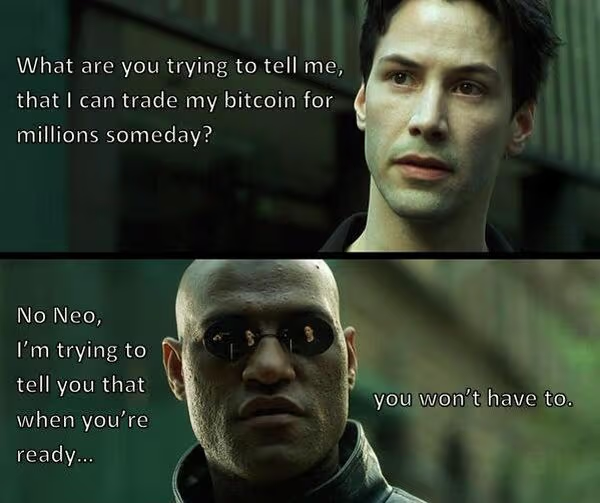
Sheel Mohnot@pitdesi
How can stablecoins reduce remittance fees to zero? makes no sense to me whatsoever. The bulk of remittances $ is migrant workers sending money to family, from US->Mexico, US->India, Gulf->India Stablecoins can make the money-movement leg much cheaper/near-zero but that isn't the bulk of the cost! You still need cash-out, FX, compliance/KYC, fraud controls, customer support, and distribution. When I send money to my cousin in a village in India, there is nothing he can do with USDC. He needs to get the money out into INR and that last mile is where most of the cost lies. Stablecoins can make remittances much cheaper but nowhere near zero.
English
@jessepollak @pitdesi Just another reminder that there are no FX swap venues that match the parallel market. Swapping non-USD stablecoins for USD stablecoins has remained inefficient. Current emerging market pools are sub-$200k for a reason. That’s why we’re building x.com/ViFi_Labs/stat…
English

user sends a dollar stablecoin to their family
family converts that to their local currency stablecoin
family offramps that local stablecoin 1:1
should be basically 0% fees at every step because stablecoin issuers are incentivized to grow float so provide 1:1 onramps and the FX is onchain and incredibly capital efficient
jesse.base.eth@jessepollak
non-USD stablecoins up only on @base 20+ currencies supported with more every week
English

How can stablecoins reduce remittance fees to zero?
makes no sense to me whatsoever.
The bulk of remittances $ is migrant workers sending money to family, from US->Mexico, US->India, Gulf->India
Stablecoins can make the money-movement leg much cheaper/near-zero but that isn't the bulk of the cost!
You still need cash-out, FX, compliance/KYC, fraud controls, customer support, and distribution.
When I send money to my cousin in a village in India, there is nothing he can do with USDC. He needs to get the money out into INR and that last mile is where most of the cost lies.
Stablecoins can make remittances much cheaper but nowhere near zero.
Brian Armstrong@brian_armstrong
An estimated $60 billion was spent on remittance fees in 2025. This could be almost zero with stablecoins.
English

I started building this on a random weekend just simply wondering if I could pull it off
You can just do things and see them all the way to a release
Money didn’t just need a wallet, it needed Motion
The Movement@movement_xyz
Move is for money. Money needs a wallet. That's why we're launching Motion Wallet, a self-custodial, Movement-native wallet built from the ground up for moving money across the Movement ecosystem. v1.0 is live now and ready for you.
English
tonyolendo.eth retweetledi

ViFi, in simple terms, is an exchange for USD and non-USD stablecoins.
“A lot of African businesses and economies are constrained by liquidity. If I want to move $1M today, I often need banking relationships and prior notice. These constraints around fiat movement are what ViFi is solving.”
The idea is simple. If you have local currency stablecoins and a DEX that allows seamless movement in and out of USD positions, you unlock real global liquidity.
@tonyolendo explains @ViFi_Labs in simple terms.
oxpampam.eth@Oxpam_pam
Builders Block EP.12 : @tonyolendo - “FX will play a central role in unifying the global financial system”. Tony Olendo is a fintech entrepreneur, software developer, and blockchain strategist focused on building financial infrastructure for emerging markets. He is the co-founder of @ViFi_Labs , a protocol developing capital-efficient foreign exchange markets for stablecoins, and Chairman of the Virtual Asset Chamber of Commerce, where he works with policymakers on digital asset regulation across Africa. Timestamps: 0:00 Introduction 2:11 What you’ll walk away with from this conversation 4:25 Background story: Kenyadadian 10:57 Education and career journey 15:15 What he understood about life early on that others didn’t 21:40 Why he transitioned into crypto while in a stable job 24:18 Joining DeveloperDAO 28:47 Building relationships and networks that last 31:51 Mindset shift from developer to founder 36:46 Explaining ViFi in simple terms 39:36 Technical deep dive: single-sided liquidity and synthetic tokens 42:52 Non-USD stablecoins and their role 48:01 Onchain FX and why it matters 53:34 Finding and choosing a co-founder 56:31 Acquiring OneRamp: what led to the decision 1:01:46 What changed after funding and lessons on fundraising 1:06:17 Advocating for crypto in Kenya with regulators and policymakers 1:11:00 The bill and its current progress 1:12:41 A belief about crypto/startups that others may disagree with 1:18:15 The impact of stablecoins in local economies 1:21:42 What success looks like, balancing work and family, and Tony’s retirement number 1:24:00 Biggest lessons from building ViFi and a final insight 1:24:21 - Break the Block (Rapid Fire) * if you had fresh capital today, which African startup would you invest in and why (@ultramarketsxyz) * Feedback on a developer tool he uses (@blockopsx) youtu.be/uWdeu_YHA0c?si…
English

Had a Jane Street interview in 2014
End of round 5. Interviewer says "round 6 will find you."
Three weeks. Nothing.
I'm in line at the Trader Joe's on 14th. Line snakes past the frozen aisle, the way it always does. I'm holding a bag of orange chicken and a four-pack of cold brew concentrate.
Guy in front of me is in a Patagonia vest over a quarter-zip. Not turning around. Inching his cart forward every 30 seconds.
Picks a box of something out of his own cart. Holds it up over his shoulder without turning around.
"Ant on a corner of this box. Walks to the opposite corner along edges. How many shortest paths."
"Six."
"Now in 4 dimensions."
I think. Tesseract. One edge per dimension, any order.
"4!. Twenty-four."
"Confidence."
"0.85."
"Correct on both counts."
Offer Monday. $69k base (which I'm told is a 'cultural fit discount'). No bonus. No equity. No relocation. They will, however, allow me to name one (1) colocated server in their NY4 cage.
I take my time. This is the only thing I'm being given.
I submit "Steve." Already a Steve.
I submit "Steve2." Discouraged naming pattern.
I submit "Steven." Confusing with Steve.
I submit "Big Steve." Big Steve exists in NY5.
I submit "my Steve."
Approved.
Two weeks into onboarding, IT pings the eng channel: "my Steve is down." Three engineers respond at once asking which Steve. The thread spirals. Someone clarifies: "it's named 'my Steve.'" Someone replies "yes but whose." A VP joins the thread: "is this a possessive or a proper noun." Nobody knows. A meeting is called.
The meeting is titled "re: my Steve." Nine engineers attend. The first ten minutes are spent establishing whether the meeting title refers to the server or to a Steve belonging to the meeting organizer. The meeting organizer is named Devesh. Devesh does not know a Steve.
Offer rescinded Friday. Reason listed in the email as: "Introduced ambiguity into production naming taxonomy. Unrecoverable."
I'm no longer allowed in the building. I am also, somehow, no longer allowed in the Trader Joe's on 14th. The doors don't open for me. I have tested this six times. The orange chicken is still in there. Three bags deep on the shelf, frozen, waiting. I think about it every day.
Deedy@deedydas
Jane Street made ~$40B in 2025 with 3,500 employees, a ~2x from the year before. At ~65-70% profit margin, that's $8M profit / employee, the highest for a 1000+ ppl company. High-frequency trading continues to be the most efficient money making engine. I want to share an old story about my Jane Street interview in 2014. Jane Street was known for hiring a lot of math, physics and CS olympiad winners from top universities and putting them through many rounds - including, for trading roles, a gauntlet of mental math. It was my 6th interview and my final round and I recall being asked "What is the next day after today in DD/MM/YYYY where all the digits are unique?" They'd toy with you and say "You can use a pencil and paper, if you want" but you knew that was an instant no. Painstakingly and as quickly as I could, I came to an answer. "How confident are you that this is correct on a 0-1 probability scale?" the interviewer said. "0.95", I blurted out, not fully knowing how to answer that. "Are you sure?" After thinking harder for a few more seconds, I realized I could've flipped the digits around to get a closer date. I gave the interviewer my answer. It was correct. "0.95 huh?" he chuckled. That's when I knew I failed. Note: fwiw, other companies that come close in efficiency are - Tether ($90M+ profit/emp) - Hyperliquid ($80M+ profit/emp) and on revenue: - Valve ($50M/emp) - OnlyFans ($37M/emp) - Craigslist ($14M/emp) - Anthropic ($12M/emp, run rate) - OpenAI ($8M/emp, run rate) For comparison, Nvidia is very efficient at scale and is $4.4M/emp.
English
@TomolaGroup It’s not just the business they trust. It’s Dangote as well.
English

Dangote Fertiliser just raised $750 million from international investors through a 5-year Eurobond priced at 7.75%. Bank of America and JP Morgan arranged the deal.
To put that in context, Nigeria’s own government issued a Eurobond in November 2025 at 8.75% and 9.5%. A private company from Nigeria just borrowed cheaper than the federal government. On its first ever bond issuance.
That tells you everything about how much international investors trust this business. Cement. Refinery. Crude oil production. Fertiliser. And now tapping global capital markets at rates governments can’t match.
English
tonyolendo.eth retweetledi


tonyolendo.eth retweetledi

VCs be like “show me something no one has done before” shows them
“yeah… but has anyone validated this before?”
English
Anyway, CROPS… 😭😭😭😭
Superteam@superteam
dear founders, extend your runway with superteam black apply now
English

Kid: So daddy, what happened when you got stuck on a bug before AI?
Dad: We'd go this site called Stack Overflow and ask absolute strangers for help
Kid: And then what?
Dad: The package maintainers would ask you "why would you do that?". Then you'd respond but the maintainer would say "working as intended" and send a link to the exact same documentation you shared earlier.
Kid: Then what would happen?
Dad: You'd join these god-awful daily meetings called standups where you'd be asked about the bug, but you have no update. Maybe work on something else in the meantime. The package maintainers would have closed your issue by and declared it a feature, not a bug. You then have to reopen it, contest it or paste a full stack trace that would log everything.
Kid: Wow, then what daddy?
Dad: You'd keep searching and find another issue that's EXACTLY like yours, you'd follow OPs thread only to find he said "solved it, thanks" but wouldn't post the actual fix and the maintainer says "glad it worked".
Kid: So no solution yet?
Dad: No, but it's day 3 of standup and you're avoiding eye-contact with the senior dev while searching LinkedIn for open positions but eventually you don't go on that date, lock in and go read all the documentation afresh, log everything and fix it yourself.
Kid: amazing, and you'd update your post with the fix right?
Dad: um...
English