The Veesler Lab

1.3K posts

The Veesler Lab banner
The Veesler Lab

The Veesler Lab

@veeslerlab

Pathogen entry into cells, host immune responses & vaccine design: structural biology, protein design, virology & immunology @HHMINEWS @UWBiochemistry

Seattle, WA Katılım Ekim 2014
862 Takip Edilen6.2K Takipçiler
The Veesler Lab retweetledi

Patrick Hsu
Patrick Hsu@pdhsu·
Today in @ScienceMagazine, we report a new DNA editing technology to seamlessly write massive changes into the right place in the human genome. The reason gene editing hasn't transformed human health is that current gene editing technologies like CRISPR are very limited. The problem with CRISPR is that it cuts up your DNA, and then hopes that unreliable cellular DNA repair will make the wanted edit. @geochurch famously called it genome vandalism. More precise versions of CRISPR only edit less than 100 bases - often only a single base. Therefore, it's not suited to make large changes safely. However, most diseases are not the result of mutations in one location. Instead, their causes are spread all across the 3 billion base pairs in the genome. We found bridge RNAs in bacterial “jumping genes” that allow us to make safe and arbitrary changes (insert, cut out, or flip) to every nucleotide within (up to) a 1 million bp sequence in your DNA. In the paper, we show that we can correct the disease-causing DNA repeats that cause Friedreich's ataxia (which is a rare neurological disease). The same approach could be applied to Huntington’s and other repeat expansion disorders. At @arcinstitute, we're working towards a full Turing machine for biology. Evo, our DNA foundation model, helps us design the optimal healthy DNA sequences. And Bridge recombination gives us the ability to seamlessly write these changes into the right place in the genome. This work was a wonderful collaboration with my @arcinstitute cofounder @SKonermann and led by the indefatigable @ntperry13, alongside our amazing bridge editing team: @BartieLiam @dhruvakatrekar @Gabogonzalez515 @mgdurrant @james_jw_pai @AlisonFanton Juliana Martins Masa Hiraizumi @chiaroscurale @hnisimasu
Patrick Hsu tweet mediaPatrick Hsu tweet media
Patrick Hsu@pdhsu

What if we could universally recombine, insert, delete, or invert any two pieces of DNA? In back-to-back @Nature papers, we report the discovery of bridge RNAs and 3 atomic structures of the first natural RNA-guided recombinase - a new mechanism for programmable genome design

English
76
668
3K
664.3K
The Veesler Lab retweetledi
Gupta Lab
Gupta Lab@GuptaR_lab·
Incredibly honoured to be taking up an exciting new chair of Global Health here at Cambridge and co-directorship of the Hong Kong Jockey Club Global Health Institute based out of Hong Kong in partnership with HKU and International Vaccine Institute (IVI). @HKU_SPH @Cambridge_Uni
English
11
9
39
4.5K
The Veesler Lab
The Veesler Lab@veeslerlab·
Thank you to everyone involved and for reading! 6/6
English
1
1
16
747
The Veesler Lab
The Veesler Lab@veeslerlab·
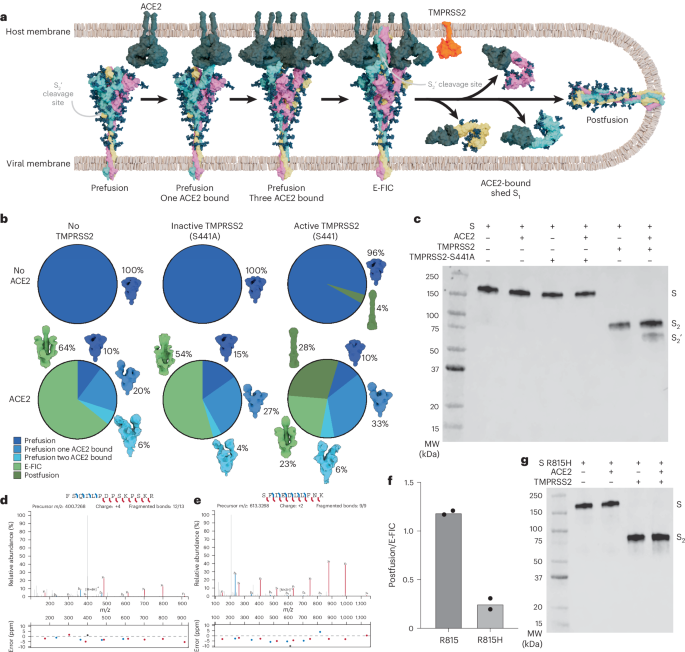
We found that even an antibody targeting the S N-terminal domain (S2L20) and preventing the receptor-binding domain from closing promotes S ratcheting and fusogenic triggering! 5/6
The Veesler Lab tweet media
English
1
6
13
1.2K
The Veesler Lab
The Veesler Lab@veeslerlab·
Excited to share our latest work elucidating the mechanisms of coronavirus entry into cells! Led by @Dr_MattMcCallum on our side in collaboration with Huan Yan's lab (TaiKang Center for Life and Medical Sciences) nature.com/articles/s4158… 1/5
English
3
36
115
11.4K
The Veesler Lab
The Veesler Lab@veeslerlab·
Thank you to the whole team and collaborators! 7/7
English
0
0
5
410
The Veesler Lab
The Veesler Lab@veeslerlab·
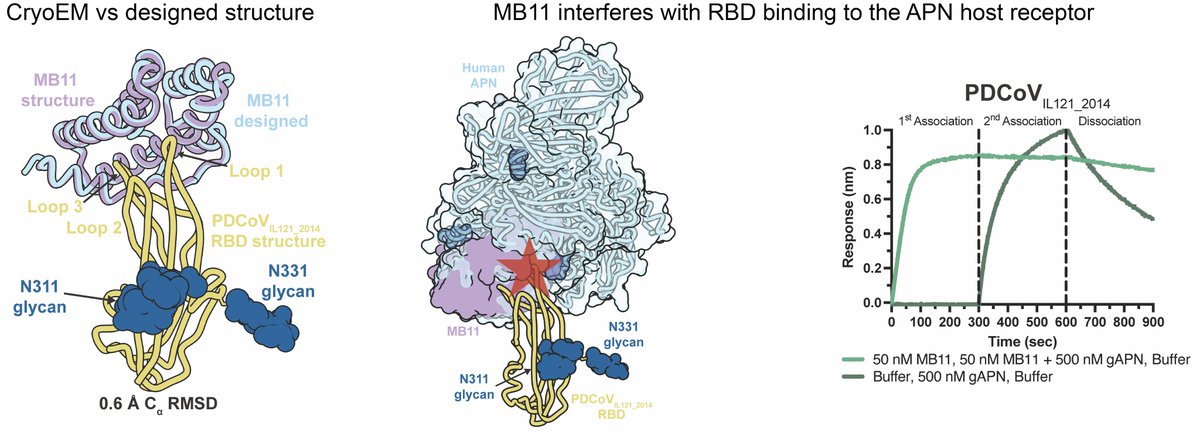
Collectively, these data indicate that receptor interference is a primary mechanism of PDCoV neutralization, inform immunity against deltacoronaviruses and will guide the design of vaccines for swine & human populations 6/7
The Veesler Lab tweet media
English
1
2
5
583
The Veesler Lab
The Veesler Lab@veeslerlab·
The peer-reviewed version of our study describing monoclonal antibodies (mAbs) inhibiting porcine deltacoronavirus, which jumped to humans multiple times recently, is now online 1/7 sciencedirect.com/science/articl…
English
1
11
31
2.4K