
VotesforSchools 🗳️🌍📢

7.2K posts

VotesforSchools 🗳️🌍📢 banner
VotesforSchools 🗳️🌍📢

VotesforSchools 🗳️🌍📢

@votesforschools

We are an award-winning, unique platform creating engaging, impartial resources to help teachers discuss current affairs in their school.

London, England Katılım Şubat 2016
4.2K Takip Edilen3.1K Takipçiler
Sabitlenmiş Tweet
VotesforSchools 🗳️🌍📢
VotesforSchools 🗳️🌍📢@votesforschools·
Hi 👋 we're VotesforSchools and we forget to introduce ourselves to our new followers often. If you're new here, here's what we do in a nutshell. You can find out more about us (or book a demo to chat to us) over at our website. See you there: votesforschools.com
English
1
3
14
0
VotesforSchools 🗳️🌍📢
Welcome back! As you come back down to Earth after the Easter break, we’re looking at Artemis II’s recent return from journeying around the Moon 🌕 Now it’s time for lift off with this week’s VoteTopic… 🚀
VotesforSchools 🗳️🌍📢 tweet media
English
0
0
0
25
VotesforSchools 🗳️🌍📢
VotesforSchools 🗳️🌍📢@votesforschools·
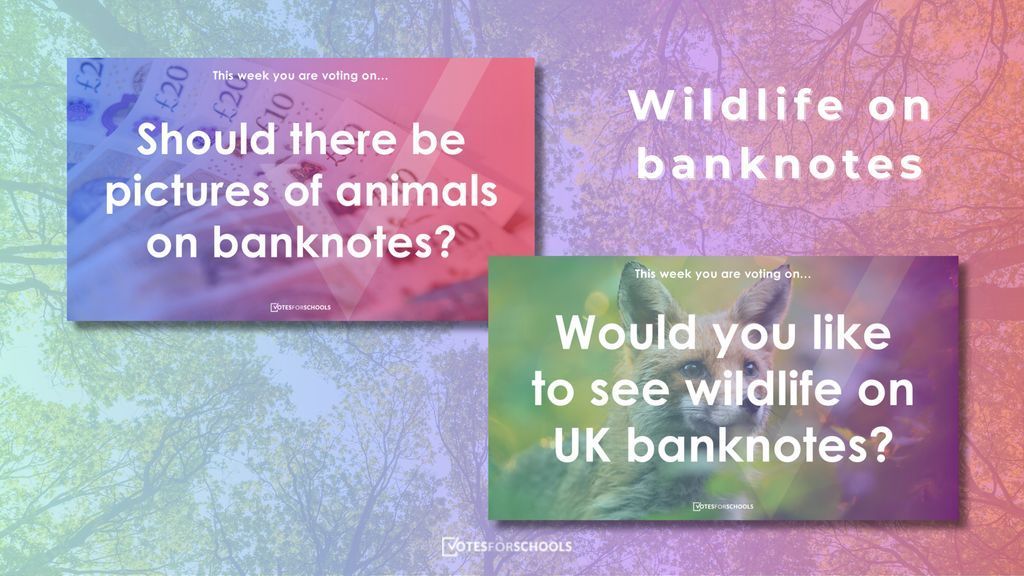
This week, voters consider whether plans to replace historical figures with wildlife on UK banknotes are on the money. Is it a fresh way to celebrate nature—or are we losing an important link to our past? Have your say! 🦊💷
VotesforSchools 🗳️🌍📢 tweet media
English
0
0
0
32
VotesforSchools 🗳️🌍📢
VotesforSchools 🗳️🌍📢@votesforschools·
Following the recent Louis Theroux documentary “Inside the Manosphere”, younger voters explore how to approach body image conversations with confidence and critical thinking, while older voters examine “looksmaxxing” and its impact on how young people see themselves and others.
VotesforSchools 🗳️🌍📢 tweet media
English
0
0
1
101
VotesforSchools 🗳️🌍📢
VotesforSchools 🗳️🌍📢@votesforschools·
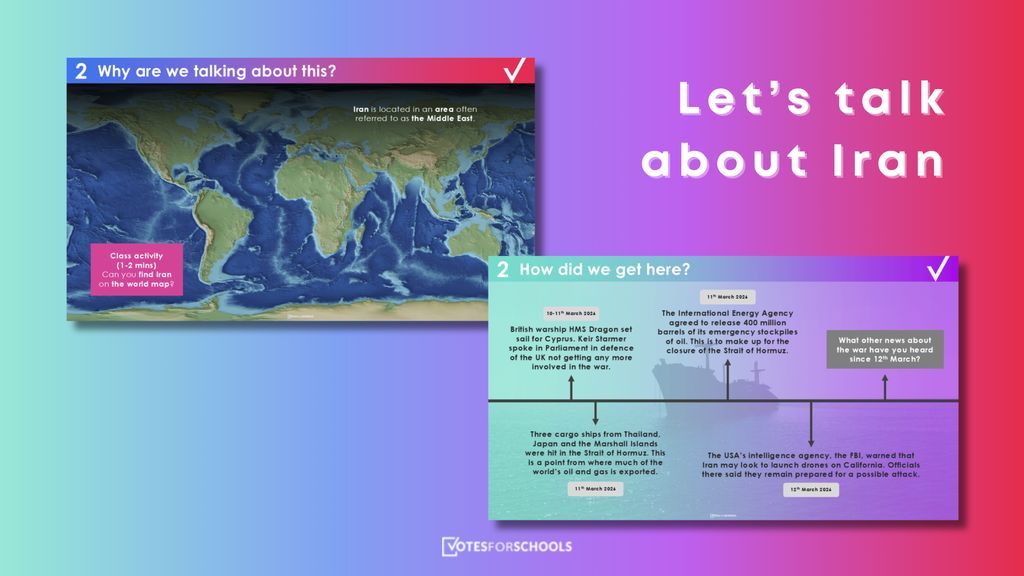
After another week of heavy headlines and big questions, our latest VoteTopic gives voters an insight into what has been happening in Iran over the past few weeks and asks them to consider how much they understand about the conflict.
VotesforSchools 🗳️🌍📢 tweet media
English
0
0
0
22
VotesforSchools 🗳️🌍📢
VotesforSchools 🗳️🌍📢@votesforschools·
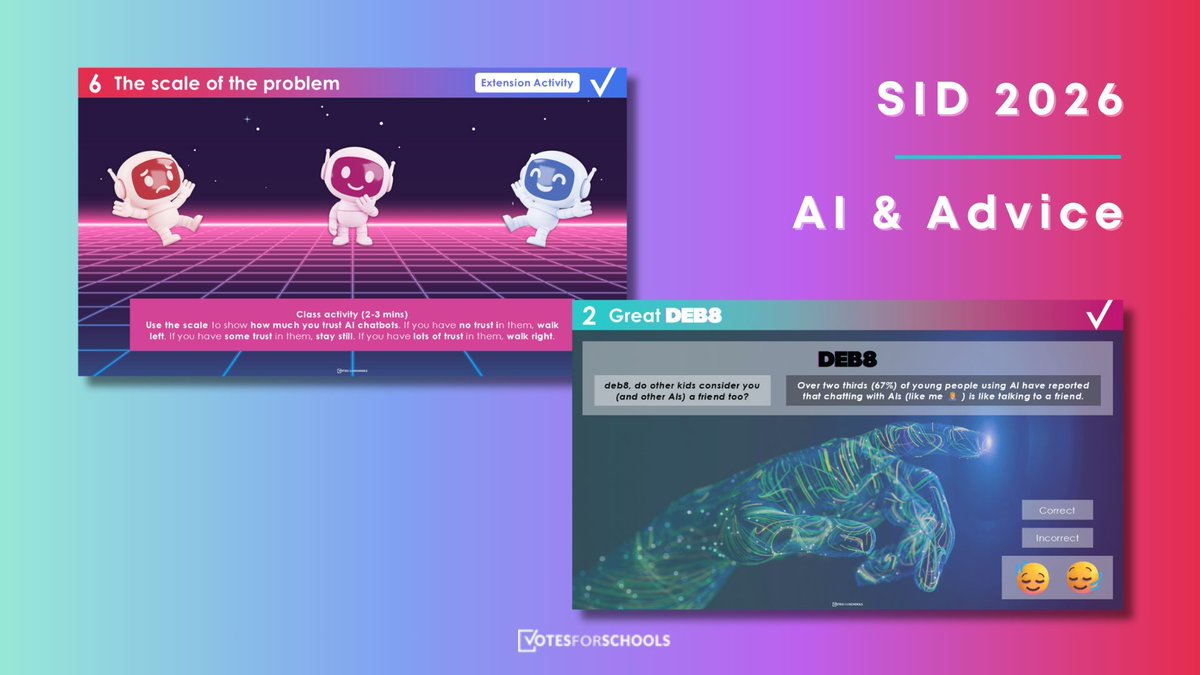
Would young people trust emotional advice from AI? In a poll commissioned by Vodafone, it was found that 81% of 11-16-year olds use AI chatbots, with close to a third saying the bot they use feels like a friend. Interestingly, a recent VotesforSchools vote on parasocial relationships, in which close to 48,000 students participated, presented a different outcome. The same age group (11-16) recognised the dangers of parasocial relationships and didn’t believe they were the ‘new normal’. We were intrigued by these differing outcomes and so, for Safer Internet Day we decided to delve a bit deeper. We asked young people across the UK to reflect on whether they would rely on AI for advice and consider what impact that might have on their wellbeing and decision making. 52,037 pupils took part, with many more debating the topic in their classrooms. The questions were tailored to the age group participating and were as follows: Primary (aged 5-7): “Should people use AI chatbots for advice?” Primary (aged 7-11): “Would you trust advice from AI chatbots?” Secondary, 16+ & College: “Would you trust emotional advice from AI?” 90% of Secondary, 16+ & College students said ‘No’, they wouldn’t trust emotional advice from AI. Meanwhile 79% of 7-11-year olds said they wouldn’t trust advice from an AI chatbot and 59% of 5-7-year olds said they shouldn’t be used for advice. VotesforSchools’ data on parasocial relationships (votesforschools.com/results/health… ) and this most recent VoteTopic have both shown that young people are far more cautious and aware of the dangers of AI-use than we often give them credit for. Many have drawn a clear line, stressing that AI may be useful, but it shouldn’t replace human interaction and advice. The most common concern was reliability. Many students said AI can provide incorrect, misleading or biased information. One of our Primary voters cited a newspaper example they had found in their school library, where AI had invented fake tourist attractions in a travel guidance document. Students were also sceptical about AI’s ability to understand human emotion. They stressed that chatbots aren’t human and can’t truly grasp complex feelings, relationships or personal context. Whilst some felt that there can be a benefit to seeking advice from AI, most clarified that this should be done alongside seeking advice from a trusted adult or friend and not as a standalone. That said, the minority who voted ‘Yes’ offered important nuance. Some admitted they would feel more comfortable asking a chatbot for advice because it feels less intimidating than opening up to someone they know. Our results show that young people are engaging critically with AI and recognising both its limits and its appeal. votesforschools.com/results/scienc…
VotesforSchools 🗳️🌍📢 tweet media
English
0
0
0
48
VotesforSchools 🗳️🌍📢
VotesforSchools 🗳️🌍📢@votesforschools·
With MPs from across the political spectrum defecting to new parties, we’re asking younger voters how they feel about political loyalty and party switching — and whether older voters think these defections should trigger by-elections in their constituencies. 🗳️
VotesforSchools 🗳️🌍📢 tweet media
English
0
0
0
41
VotesforSchools 🗳️🌍📢
VotesforSchools 🗳️🌍📢@votesforschools·
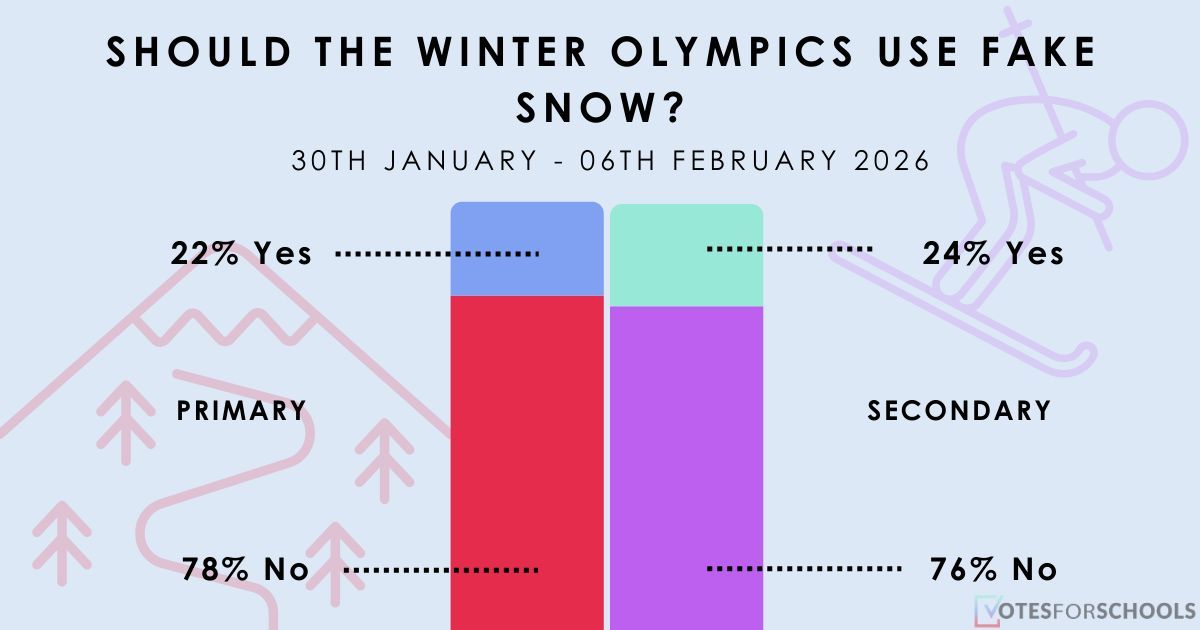
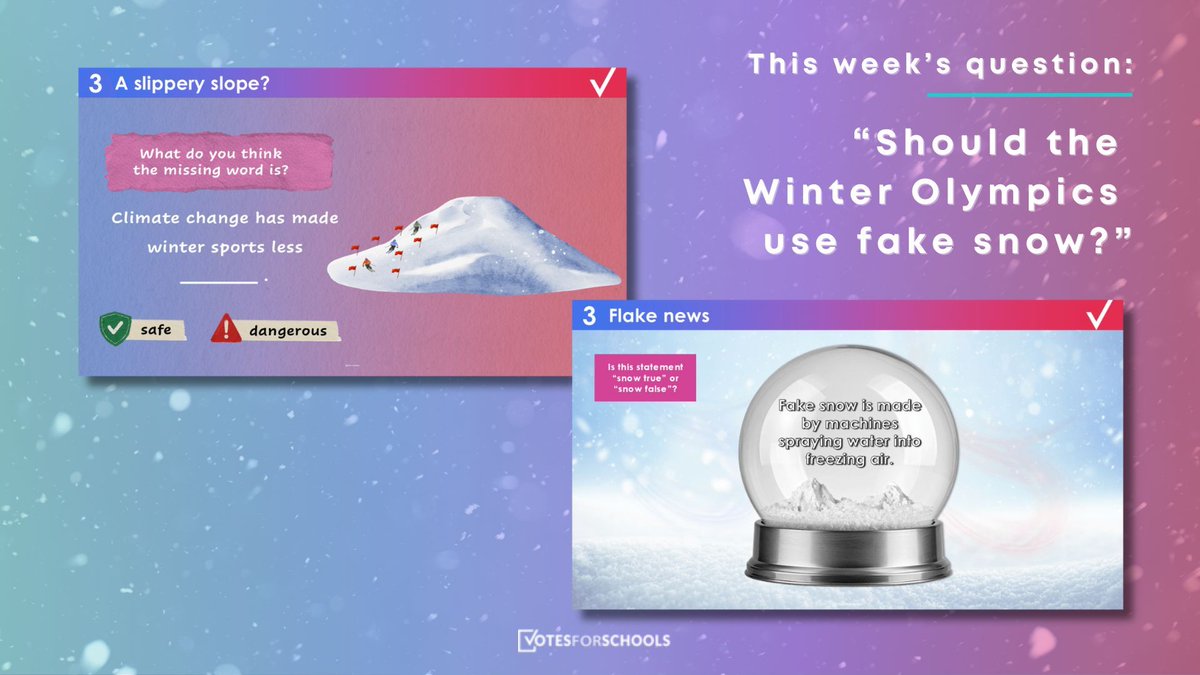
The Winter Olympics are underway across Northern Italy but behind the medals and newsworthy moments, there’s an interesting climate debate also playing out. With a predicted 3 million cubic yards of artificial snow needed to keep events competition-ready, questions are being raised about the environmental and safety costs of hosting the Games in increasingly unpredictable conditions. So we asked young people: Should the Winter Olympics use fake snow? Here’s what they told us 👇 76% of students across all age groups voted ‘No’ The age group breakdown revealed that Primary pupils were the most against, with 78% voting ‘No’ Secondary students had a similar response, with 76% voting ‘No’ 16+ & College students were against, but had a slimmer majority, with 61% voting ‘No’ (meaning a not-insignificant 39% ‘Yes’ vote) Across age groups, the majority felt the environmental impact was too high. Students spoke about the energy and water required to create artificial snow and questioned whether the benefits of the games outweigh those costs. Many also raised concerns about athlete safety, noting that artificial snow can create faster, icier and potentially more dangerous conditions. One common suggestion was to only host the Winter Olympics in locations where sufficient natural snowfall can be reliably expected. Despite the majority of young people voting against the use of artificial snow, almost 1 in 4 voted ‘Yes’, which adds up to a significant number of votes. Those students highlighted the joy and global unity the Winter Olympics bring. They pointed out that it’s a short event, taking place every four years and argued that limited, moderate use of artificial snow may be a necessary compromise to avoid cancellations and ensure fairness. What do you think? Should artificial snow continue to be used at the Winter Olympics? votesforschools.com/results/enviro…
VotesforSchools 🗳️🌍📢 tweet media
English
0
0
0
34
VotesforSchools 🗳️🌍📢
VotesforSchools 🗳️🌍📢@votesforschools·
Should there be a social media ban for under-16s? After Australia introduced a nationwide social media ban for under-16s, the UK Government is now considering a similar approach. With a three-month consultation underway, it’s essential that the voices of young people themselves are heard, particularly as they will be most affected by any decision. At the end of January 2026, we asked pupils across the UK to debate the issue with their peers and decide whether a ban is the right way to safeguard them from potential harm. 69,746 young people aged 5-16+ responded, with many more discussing the topic in their classroom. As with all VotesforSchools topics, students first explored the issue in their weekly lesson, considering arguments for and against and learning about the consultation before casting an informed vote. The question was slightly scaffolded for our youngest voters. They were asked to consider: 5-7 Primary: “Should children stop using social media?” 7-11 Primary, Secondary, 16+ & College: “Should there be a social media ban for under-16s?” What did young people say? For pupils aged 7+, the result was clear: 86% voted No to a social media ban for under-16s Secondary students were the most opposed, with 90% voting No Despite the majority voting against the ban, they still showed an awareness of the dangers of social media and expressed a desire to mitigate the risks in other ways. These risks included exposure to inappropriate content, addiction and online harm but most argued that a blanket ban isn’t the best solution. Instead, they called for: Stricter regulation from social media companies Better protection for under-13s Improved content moderation Screen-time tools to reduce overuse Those who supported a ban, particularly Primary, 16+ and College students (33%), raised concerns about attention spans, eye health, inappropriate content, and contact with unsafe individuals. Young people were also keen to highlight the benefits of social media. Many said it supports their education, helps them connect with others and combat loneliness, inspires creativity, and enables them to engage in causes and projects they care about. Some simply said they enjoy it and value it as part of modern life. Others, particularly Secondary students warned that a ban could have unintended consequences, potentially impacting political awareness, media literacy, and mental health. Many also felt that under-16s would still find ways to access social media but in less safe, less visible ways. Among our youngest voters (5-7-year olds), 58% said Yes to stopping children from using social media. This was the only age group with a ‘Yes’ majority. This suggests views shift significantly as children grow older and gain more independence online. These findings show that young people are not disengaged or unaware about the dangers of using social media at a young age. They understand the risks but they also believe there are more effective ways to combat them. If policy is being shaped for young people, it must also be shaped with them. votesforschools.com/results/crime-…
VotesforSchools 🗳️🌍📢 tweet media
English
0
0
0
39
VotesforSchools 🗳️🌍📢
VotesforSchools 🗳️🌍📢@votesforschools·
With the Winter Olympics approaching, a debate is heating up on the slopes ❄️ Should artificial snow keep the Games running as natural snowfall declines—or do the costs to athletes and the environment go too far? Time to get the (snow)ball rolling on this week’s VoteTopic!
VotesforSchools 🗳️🌍📢 tweet media
English
0
0
0
33
VotesforSchools 🗳️🌍📢
VotesforSchools 🗳️🌍📢@votesforschools·
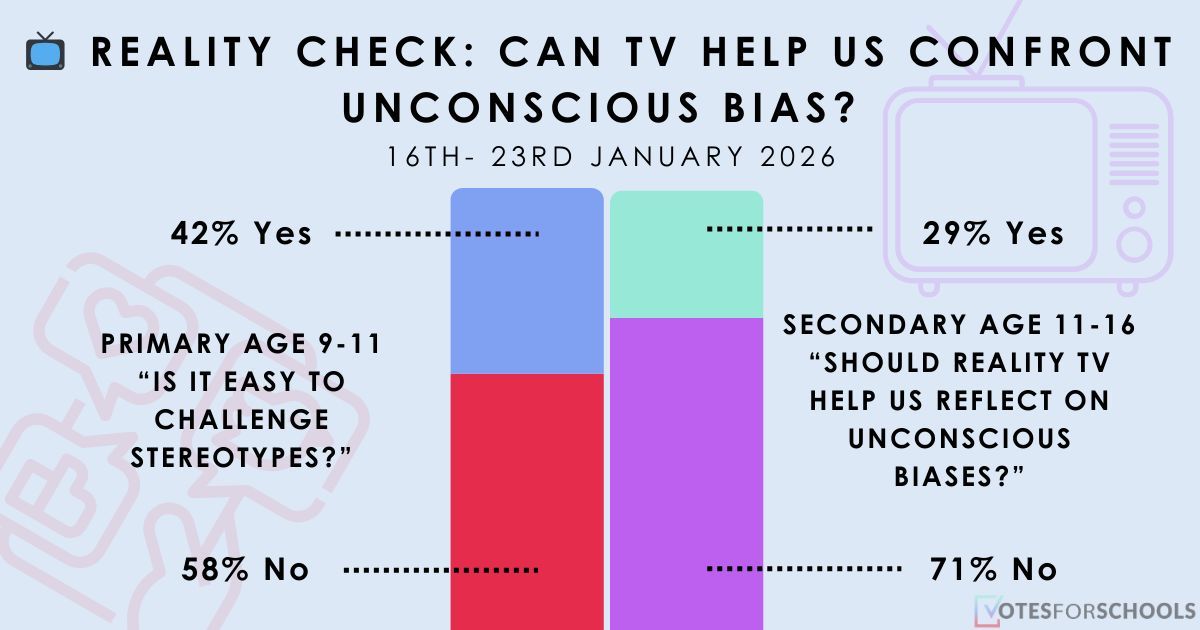
Close to 60,000 young people responded to our vote on stereotypes and unconscious bias last week. Here's a snippet of what they had to say. Primary 9-11: "Is it easy to challenge stereotypes" Secondary, 16+ & College: "Should reality TV help us reflect on unconscious biases?" Read more: votesforschools.com/results/equali…
VotesforSchools 🗳️🌍📢 tweet mediaVotesforSchools 🗳️🌍📢 tweet mediaVotesforSchools 🗳️🌍📢 tweet mediaVotesforSchools 🗳️🌍📢 tweet media
English
0
0
0
37
VotesforSchools 🗳️🌍📢
VotesforSchools 🗳️🌍📢@votesforschools·
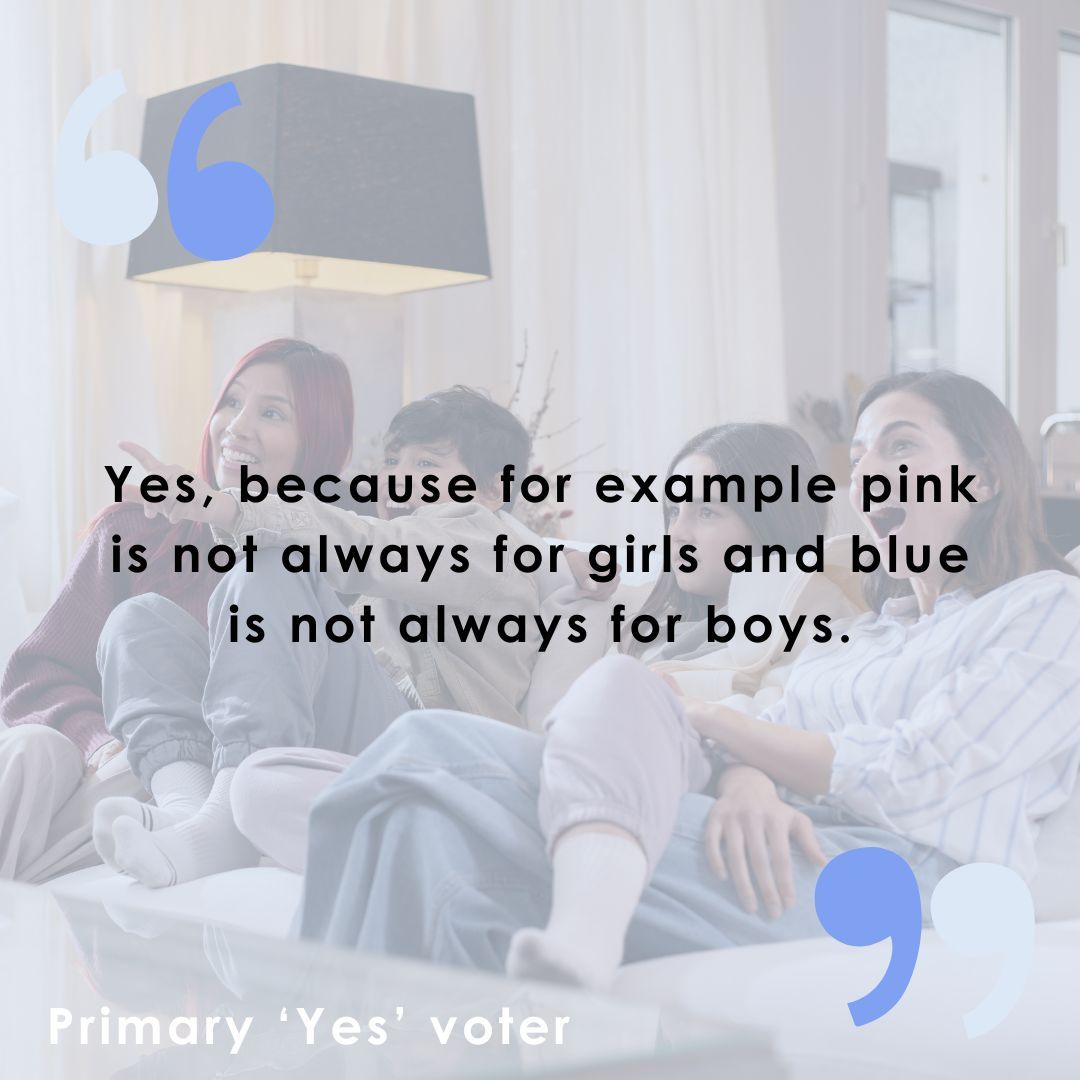
📺 Reality Check: Can TV Help Us Confront Unconscious Bias? Light-hearted conversations and debate following The Traitors finale have been rife across the UK this month, including whether this year’s contestants were the most ‘faithful’ Traitors to date. Earlier in the series, when contestants had to rely more on gut instinct than evidence for each banishment, an important topic was raised about trust, fairness and representation. Namely, does our “gut instinct” reflect deeper social biases? We asked young people to weigh in and discuss whether reality TV is just entertainment, or if it can genuinely help us reflect on unconscious bias. 58,308 pupils across the UK took part in the vote, with many more discussing the topic in classrooms: 5-9-year olds: Is it easy to work out what people are like? 9-11-year olds: Is it easy to challenge stereotypes? Secondary, 16+ & College: Should reality TV help us reflect on unconscious biases? Here’s what they said: 5-9-year olds: 62% said No 9-11-year olds: 58% said No Secondary: 71% said No 16+ & College: split 50/50 Younger pupils largely felt it’s difficult to judge people accurately or challenge stereotypes and argued that first impressions aren’t always reliable. Among Secondary students, scepticism was strong. Many argued that reality TV is too edited, scripted or produced to offer an honest reflection of real-world behaviour. For them, it should be viewed for entertainment purposes only and not considered a serious tool for social learning. However, those who voted Yes, particularly 16+ & College students, took a different view. They felt reality TV provides a rare chance to observe how snap judgments and “gut feelings” play out in group settings and how unconscious bias can subtly shape decisions, both on screen and among audiences watching at home. You can read more from our results here: votesforschools.com/results/equali…
VotesforSchools 🗳️🌍📢 tweet media
English
0
0
0
40
VotesforSchools 🗳️🌍📢
VotesforSchools 🗳️🌍📢@votesforschools·
This week, voters get to have their say in the debate about whether there should be a social media ban for under-16s in the UK, based on the recent ban in Australia. Join the discussion and get young voices heard 🤳
VotesforSchools 🗳️🌍📢 tweet media
English
0
0
0
44
VotesforSchools 🗳️🌍📢
VotesforSchools 🗳️🌍📢@votesforschools·
🌍 Do global events feel relevant to young people? From Venezuela to Switzerland to the Middle East, international stories have dominated the headlines in recent weeks. We wanted to understand how young people are engaging with this coverage and whether global politics feels relevant to their everyday lives. 66,613 young people responded to our vote, with many more discussing the topic in their classrooms. The questions varied by age: Primary 5-7-year olds: Are you interested in news from other countries? 78% said Yes Primary 7-11-year olds: Are you interested in world news? 63% said Yes Secondary, 16+ & College: Is global politics relevant to you? 56% of Secondary students and 76% of 16+ & College students said Yes Across all age groups, the majority of young people said they are interested in the wider world and feel global events matter. These results are particularly interesting when considered alongside one of our earlier VoteTopics. In September, 1 in 4 Secondary students told us they hadn’t kept up with the news over summer 2025. Some said they followed stories on social media but didn’t trust the accuracy of reporting via this medium. Many said social media didn’t count as a way of ‘keeping up with the news’ because of this. By January 2026, over half said global politics feels relevant to their lives. This may reflect a growing interest as the year progresses or it could show a disconnect where young people want to engage with what is happening in the world but are unsure how to do so. Many who previously voted ‘No’ clarified that it was traditional news outlets they weren’t engaging with, not the news itself. It was also clear from these results that students are thinking about their vote and the upcoming changes that mean 16-year-olds will be entering the polling station. Yes voters stressed that understanding global politics can help them make informed decisions, including how they vote. Our results show that young people want to be informed about the world, but how the news is presented and where it’s encountered matters. They are engaged, thoughtful, and aware that global events shape the choices they will one day make at the ballot box and beyond. votesforschools.com/results/global…
VotesforSchools 🗳️🌍📢 tweet media
English
0
0
0
28
VotesforSchools 🗳️🌍📢
VotesforSchools 🗳️🌍📢@votesforschools·
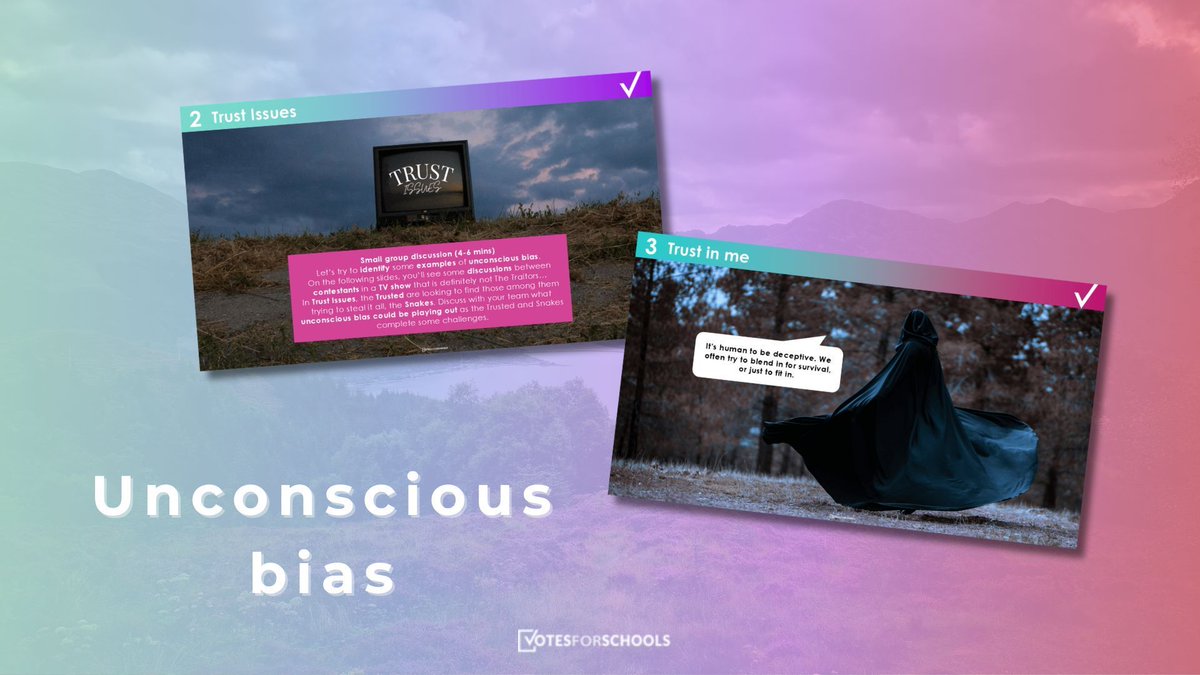
The new series of The Traitors UK has started, and many commentators are wondering if unconscious bias is playing in a role in some of the game play. So, this week our 11-18 voters are thinking about whether TV helps us to reflect on unconscious biases that exist in our society.
VotesforSchools 🗳️🌍📢 tweet media
English
0
0
0
59
VotesforSchools 🗳️🌍📢
VotesforSchools 🗳️🌍📢@votesforschools·
📚 Would young people like to read more? With 2026 named the National Year of Reading, there’s a renewed push to help young people “go all in” on books. Alongside the campaign, the Government has pledged £1,400 to every secondary school library in England to expand access to reading materials. But do young people want better access to books and are they thinking about prioritising reading for pleasure more? To find out, 55,232 pupils across the UK took part in our latest vote, responding to the question: “Would you like to read more?” Here’s what they told us: Primary (aged 5-11): 66% said Yes Secondary (aged 11-16): 70% said No 16+ & College: 58% said Yes The results reveal a clear pattern, that enthusiasm for reading drops sharply during Secondary school, before rising again post-16. Many students who voted No said reading simply doesn’t fit into their busy schedules. Homework, school, sport and other commitments leave little time, and as one voter put it, “I wouldn’t have time to sleep if I added reading.” Others said reading feels boring, particularly when they’re told to read set texts rather than choosing books that interest them. Some suggested that time in school to read books of their own choosing could help rebuild motivation. Among Yes voters, students highlighted the benefits they associate with reading, such as improved vocabulary, stronger writing skills, imagination, and focus. Interestingly, some students who enjoy reading still voted No, saying they already read enough and didn’t feel the need to do more. Taken together, the findings suggest that access and funding matter but choice, time, and autonomy may matter just as much. If we want young people to read more, we may need to put just as much emphasis on helping them rediscover enjoyment. As the National Year of Reading approaches, let's make reading feel more like an invitation than an obligation. votesforschools.com/results/cultur…
VotesforSchools 🗳️🌍📢 tweet media
English
0
0
0
35
VotesforSchools 🗳️🌍📢
VotesforSchools 🗳️🌍📢@votesforschools·
Should toys have an age limit? We asked young people if you can ever be too old to play with or collect toys, and over 37,000 responded. Here are some of the arguments we heard from secondary and primary students. You can read more from our results here, votesforschools.com/results/cultur…
VotesforSchools 🗳️🌍📢 tweet mediaVotesforSchools 🗳️🌍📢 tweet mediaVotesforSchools 🗳️🌍📢 tweet mediaVotesforSchools 🗳️🌍📢 tweet media
English
0
0
0
20
VotesforSchools 🗳️🌍📢
VotesforSchools 🗳️🌍📢@votesforschools·
Over the last few weeks, many major news stories have been unfolding, so we're asking voters to think about how much they engage with world news and global politics. 🗺️
VotesforSchools 🗳️🌍📢 tweet media
English
0
0
0
22
VotesforSchools 🗳️🌍📢
VotesforSchools 🗳️🌍📢@votesforschools·
🧸 Are we ever too old for toys? For our final VoteTopic of 2025, we asked young people to weigh in on a growing trend known as kidults, meaning adults who play with, collect, or enjoy toys. With toy sales rising for the first time since the pandemic and brands increasingly designing for both children and adults, we wanted to know what young people think. Is there an age limit on play? 37,586 students across the UK shared their views. 83% of those aged 7-16+ said No, you’re never too old to play with toys. 5-7-year olds were discussing screens vs toys, and toys came out on top. 60% of 5-7-year olds prefer playing with toys to having screen time. Young people believe play doesn’t have an expiry date. Many said toys help people relax, switch off from daily stress, and reconnect with fun. Others pointed to nostalgia, creativity, and even skill-building as reasons toys still have a place in adult life. Yes voters were firmly in the minority but some No voters shared more nuanced views. A small number of voters disagreed, arguing that adulthood comes with time pressures and responsibilities, or that toys are designed for specific age groups and are inappropriate for adults. What stood out most was how confidently young people rejected the idea that fun should come with an age limit. For them, play isn’t something you grow out of, it’s something that grows with you. Whether it’s toys, games, or creative hobbies, making space for joy matters at every age. votesforschools.com/results/cultur…
VotesforSchools 🗳️🌍📢 tweet media
English
0
0
0
36