We Don't Have Time

45.7K posts

We Don't Have Time banner
We Don't Have Time

We Don't Have Time

@WeDontHaveTime

Welcome to the world's largest media platform for climate action 💚⚠️ Join us and we'll plant a tree 🌳 #WeDontHaveTime to wait!

GLOBAL Katılım Kasım 2016
128.8K Takip Edilen127K Takipçiler
We Don't Have Time retweetledi
fj
fj@gecko39·
Vanuatu’s Legal Battle Against Climate Superpowers Heads To The UN 24MAY2026 Ingmar Rentzhog forbes.com/sites/we-dont-… Ingmar Rentzhog is the CEO and founder of We Don’t Have Time. On May 20, the United Nations General Assembly is expected to vote on a resolution led by Vanuatu responding to the International Court of Justice’s landmark 2025 advisory opinion on climate change. The vote will not create new binding climate law overnight. But it could do something almost as important: help move climate responsibility from political promise to legal accountability. The final text of the resolution seeks to give effect to the ICJ’s advisory opinion through coordinated global follow-up. It also reaffirms that international law, including human rights law, the law of the sea and customary international law, applies to state conduct on climate change. That is why this vote matters. For three decades, global climate politics has been dominated by voluntary pledges, delayed promises and carefully worded agreements that too often allow the largest emitters to move at the pace they find convenient. Vanuatu is now asking a different question: what if climate action is not only a political choice, but a legal duty? That question changes the battlefield. Politics can delay but law can create big consequences over time. Vanuatu, home to just over 300,000 people, has contributed almost nothing to the climate crisis. Yet it is among the first nations on Earth being forced to confront what runaway warming actually means: stronger cyclones, rising seas, damaged homes, saltwater moving into freshwater, forced relocation and the unbearable possibility that entire cultures may be pushed away from the places that made them. But Vanuatu is not only a victim of the climate crisis. It may also become one of the countries that changes the legal future of climate responsibility. From A Classroom In Port Vila To The World’s Highest Court The story began not in Washington, Brussels or Beijing, but with Pacific law students at the University of the South Pacific in Port Vila. They asked a simple question: what if the world’s highest court clarified what states are legally required to do about climate change? That question travelled from a classroom in Vanuatu to the International Court of Justice in The Hague. … On July 23, 2025, the ICJ delivered its advisory opinion on the obligations of states in respect of climate change. icj-cij.org/sites/default/… … The Court’s opinion was not a direct order forcing governments to close coal mines the next morning. But it was historic. Reuters reported that the Court said countries must act collectively against the “urgent and existential threat” of climate change, and that failure to meet climate obligations could expose states to legal action from countries suffering climate-related damage. … Top UN court says treaties compel wealthy nations to curb global warming reuters.com/sustainability… … The opinion also made clear that countries are responsible for regulating companies under their jurisdiction or control. This is the foundation Vanuatu is now trying to build upon at the UN. The May 20 resolution is not legally binding in itself. It reportedly does not create new legal obligations. But that is not the point. The point is that the world’s highest court has already stated that climate obligations exist under international law. A strong vote at the UN General Assembly would help move that legal reality from courtrooms into diplomacy, from theory into institutional follow-up, and from moral language into political pressure. In other words, the vote does not make climate responsibility real. The ICJ has already done that. The vote asks whether governments are willing to act as if it matters. Why The Superpowers Are Worried A small island state has forced the world’s superpowers and fossil fuel economies to negotiate over the legal consequences of climate harm. Even compromise language shows that Vanuatu has moved the fight onto terrain where the fossil fuel economy is uncomfortable. If the resolution were meaningless, no one would care whether it passed. And if Vanuatu wins the vote, even on compromise language, the consequences could be much larger than many people understand. First, it could strengthen climate litigation around the world. Courts are already dealing with a growing wave of climate cases. A UN General Assembly resolution welcoming and helping operationalize the ICJ opinion would give judges, lawyers, vulnerable countries and civil society another tool to argue that governments must cut emissions, regulate polluting industries and prevent climate harm. Second, it could make fossil fuel expansion legally riskier. The ICJ opinion strengthens the argument that states must regulate private actors under their jurisdiction or control. That matters because fossil fuel companies do not operate in a legal vacuum. They receive permits, subsidies, infrastructure, diplomatic support and political protection from states. If states have legal obligations to prevent significant climate harm, then continuing to enable fossil fuel expansion becomes harder to defend. Third, it could shift the language of climate diplomacy. For years, governments have spoken about ambition. Ambition sounds noble, but it is optional. Obligation is different because it implies responsibility. Responsibility implies consequences. Vanuatu is trying to move the world from climate ambition to climate accountability. The legal counterpart to the political momentum That shift is not happening in isolation. Just weeks before the upcoming UN vote, 57 countries gathered in Santa Marta, Colombia, for the first international conference focused specifically on transitioning away from fossil fuels. The meeting, co-hosted by Colombia and the Netherlands, brought together countries representing roughly half of the global economy and helped form a “coalition of the willing” for the clean energy transition. It did not produce binding commitments, but it showed something important: the countries prepared to move beyond promises are beginning to organize. Vanuatu’s UN resolution can be seen as the legal counterpart to that political momentum. Santa Marta asked how countries can practically transition away from fossil fuels. V anuatu is asking what happens when they refuse to act despite knowing the harm. One process builds the road forward. The other strengthens the legal case for why the journey cannot be optional. The Human Reason This Matters The legal debate is technical. The reason behind it is not. In a powerful report for the Swedish science magazine Forskning & Framsteg, researcher and author Victor Galaz travelled to Vanuatu and Fiji to document what is already at stake. He reports from Port Vila, where Vanuatu is still recovering from a devastating 7.3 magnitude earthquake in late 2024, after being hit the previous year by two major tropical cyclones within just 48 hours. Galaz reports that 64% of the country’s GDP was wiped out during those hours. In a country of just over 300,000 people, disasters of that scale are not only emergencies. They are national shocks. This is what climate injustice looks like. Those least responsible are hit first, those most responsible keep delaying, and those already facing the consequences are told to be patient. But patience is a luxury that disappears when your land is disappearing. In the same report, Galaz interviews Vanuatu’s climate minister Ralph Regenvanu, who says climate change is his country’s national security issue and a question of survival. Regenvanu also makes clear that Vanuatu will not withdraw its UN resolution, despite pressure and despite painful compromises in the text. That sentence should echo far beyond the Pacific. For Vanuatu, climate change is national security. Soon, it will be national security for everyone. Rising seas will not stop at island borders. Heat will not spare wealthy cities. Crop failures, water stress, infrastructure damage, insurance collapse and forced migration will not remain problems of the poor. Vanuatu is among the first to face the full force of this new reality, but it will not be the last. The Pacific slogan has long been: “1.5 to stay alive.” For too long, many in the rich world heard it as a plea from distant islands. But it was never just a plea. It was a planetary warning. This Is Also About Markets For business leaders and investors, the May 20 vote should not be dismissed as symbolic diplomacy. Vanuatu’s Legal Battle Against Climate Superpowers Heads To The UN 24MAY2026 Ingmar Rentzhog forbes.com/sites/we-dont-… Ingmar Rentzhog is the CEO and founder of We Don’t Have Time. Legal risk is financial risk.
English
1
5
5
365
We Don't Have Time
We Don't Have Time@WeDontHaveTime·
"Biodiversity is not just an environmental issue; it is a financial imperative." 🍃 The sectors that damage biodiversity the most often rely on it the most. SPP and Storebrand explain how active ownership could change that. Read the full article now app.wedonthavetime.org/posts/06de5fe5…
English
0
3
2
540
We Don't Have Time
We Don't Have Time@WeDontHaveTime·
UN backs historic World Court climate crisis ruling 💪 Vanuatu's campaign to hold major emitters legally accountable for climate change received a major boost this week after the UNGA backed a landmark climate resolution linked to last year's ICJ ruling app.wedonthavetime.org/posts/a97eacba…
English
0
3
4
334
We Don't Have Time
We Don't Have Time@WeDontHaveTime·
17-year-old Yanin Tangkaravakoon fr. Thailand has been named as the Oceania & Southeast Asia Winner of The Earth Prize 2026 🌏 Her solution creates artificial nests from upcycled materials for hornbills while working to reduce poaching & deforestation 🕊 app.wedonthavetime.org/posts/fe79f602…
English
1
6
12
429
We Don't Have Time retweetledi
We Don't Have Time
We Don't Have Time@WeDontHaveTime·
"What gets measured gets managed." 🎯 Prof. Edward Maibach (@GeorgeMasonU) warns at #SantaMarta: we've only recently measured the health toll of fossil fuels. It’s the leading preventable cause of death and can't be ignored. 🩺 Watch more: 👇 #MakeScienceGreatAgain
English
1
13
10
896
We Don't Have Time
We Don't Have Time@WeDontHaveTime·
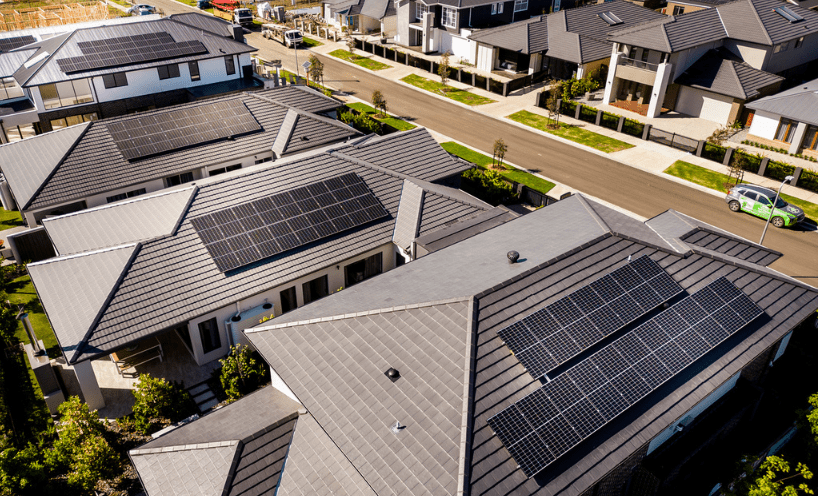
3 climate innovations worth watching from our latest #MoveTheMoney event ☀️ Solar heat for industry 🏢 Rooftop solar with 0 upfront cost ♻️ Plastics made from agricultural waste Proof that the best climate solutions reduce emissions & make economic sense app.wedonthavetime.org/posts/12513767…
We Don't Have Time tweet media
English
0
2
5
385
We Don't Have Time retweetledi
Jim Cavet🍉🆘🇵🇸🕊️
@WeDontHaveTime #HADA actively promotes tissue repair while remaining fully biodegradable, breaking down in soil <48 hours. Designed using accessible, locally sourced ingredients, solution is scalable & environmentally sustainable. #GlobalSouthYouth leading way yet again
English
0
2
3
507
We Don't Have Time
We Don't Have Time@WeDontHaveTime·
17-year-old Helena do Rego of Puerto Rico has been named as the North America Winner of The Earth Prize 2026🌎 Her solution transforms sargassum seaweed into a biofabric designed for short-use items to tackle marine pollution & textile waste🌿 Vote now 👇 app.wedonthavetime.org/posts/7cb5f992…
English
0
2
4
270
We Don't Have Time retweetledi
We Don't Have Time
We Don't Have Time@WeDontHaveTime·
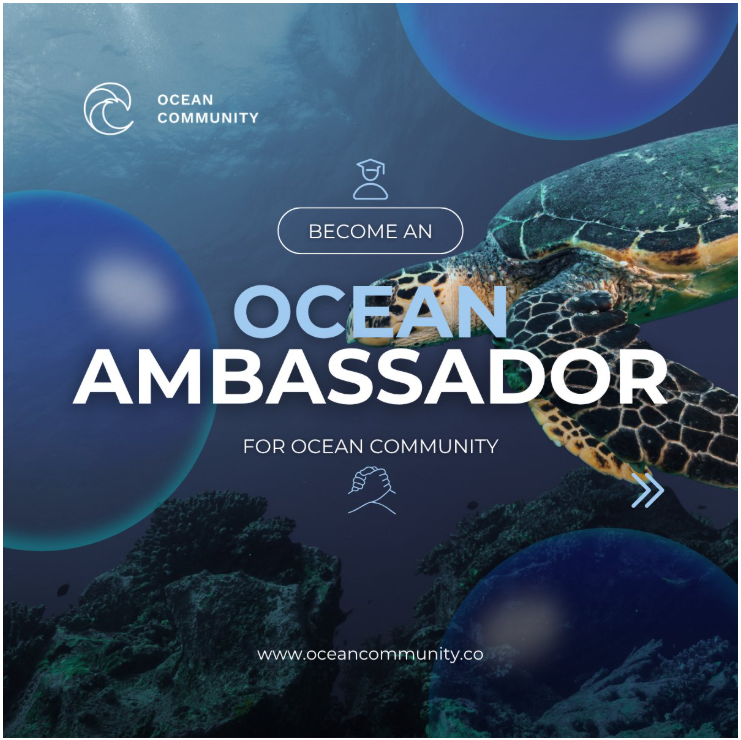
Are you a student and an ocean lover?🌊💙 Join Ocean Community as an OC Ambassador and become a powerful voice for our blue planet! Connect your university to global innovation and lead the way toward healthier oceans. Learn more on @WeDontHaveTime: app.wedonthavetime.org/posts/b68536f0…
We Don't Have Time tweet media
English
1
13
13
999