

ZEROBASE
1.6K posts
ZEROBASE
@zerobasezk
Proving Network for Real Yield https://t.co/Y71G4wo3H9 CA: 0xfab99fcf605fd8f4593edb70a43ba56542777777
ZK Katılım Kasım 2021
85 Takip Edilen63.9K Takipçiler
ZEROBASE Weekly 4.6-4.12
ZBT performed strong last week. Drawing on data from major trading platforms, ZBT moved within a weekly range of $0.0958 to $0.1211.
Liquidity conditions stayed robust throughout the period, with the average top-of-book bid-ask spread holding steady at an exceptionally tight 0.45%.
Bid-ask spreads remained consistently narrow, demonstrating sustained order-book depth and highly efficient price discovery.
Crypto market showed tentative signs of stabilization and modest recovery this week, shaking off some of the prior period’s selling pressure.
Total market capitalization climbed from around $2.40T back toward the $2.51T level, while Bitcoin advanced from roughly $68,800 early in the week to an intraday high above $73,500 before consolidating in the $70,700–71,200 zone by Sunday — a net gain of about 4–5% from its weekly low.
ETH tracked a similar path, rising from near $2,140 to trade around $2,190–2,220.
Derivatives data reflected this improved tone: total open interest expanded modestly to the $114–119B range (up roughly 2–4% week-over-week), 24-hour liquidations eased into the $200M–$350M band, and funding rates on major pairs such as BTC/USDT flipped mildly positive, indicating a shift away from the previous bearish bias.
Macro headwinds persisted, however.
Ongoing geopolitical tensions in the Middle East, combined with upcoming CPI prints and lingering concerns over sticky inflation, continued to keep the Federal Reserve in a cautious stance.
Despite these pressures, the market demonstrated resilience as institutional flows began to reappear.A notable bright spot came from Bitcoin spot ETFs, which recorded strong inflows — highlighted by a single-day $471 million intake on April 6, the largest in over a month — underscoring sustained institutional conviction.
Earlier regulatory clarity from the SEC and CFTC also continued to provide a supportive backdrop.
In summary, the week marked a cautious rebound in both spot prices and derivatives positioning, even as the Crypto Fear & Greed Index remained locked in Extreme Fear territory.
While the broader risk-off environment has yet to fully dissipate, improving ETF momentum and technical stabilization suggest the market may be finding a firmer footing heading into the second quarter.
English
Six of Switzerland’s biggest banks — UBS, PostFinance, Sygnum, Raiffeisen, Zürcher Kantonalbank (ZKB), and BCV — have joined forces with Swiss StableCoin AG to test a new stablecoin fully pegged to the Swiss franc.
Running inside a regulated sandbox, the project is exploring real-world blockchain uses tied to the national currency, from faster payments to more efficient settlements.
This move is more than a pilot — it signals that major banks are no longer watching crypto from the sidelines. They are actively shaping it.
In an industry long dominated by decentralized projects like USDT and USDC, the entry of established financial institutions brings credibility, stronger compliance, and the potential for mainstream adoption.
Switzerland’s proactive stance also highlights a growing global race: while the U.S. Treasury Secretary Scott Bessent is urging Congress to pass the Clarity Act to keep digital-asset innovation at home, European and Asian hubs are moving quickly to attract capital and talent.
Stablecoins are evolving from speculative tools into serious infrastructure for global finance. Bank-backed, fiat-pegged versions could reduce volatility risks and bridge TradFi with DeFi more smoothly.
Yet success will depend on clear regulation — exactly what both Switzerland and the U.S. are now racing to deliver.
As stablecoins continue to mature, bank-led initiatives like Switzerland’s highlight how established financial institutions are actively shaping the future of digital money.
Reuters@Reuters
From why Scott Bessent is pressing Congress over a digital assets bill, to Cambodia's new cybercrime law, here’s a roundup of all the crypto stories this week reut.rs/3NQhOQk
English
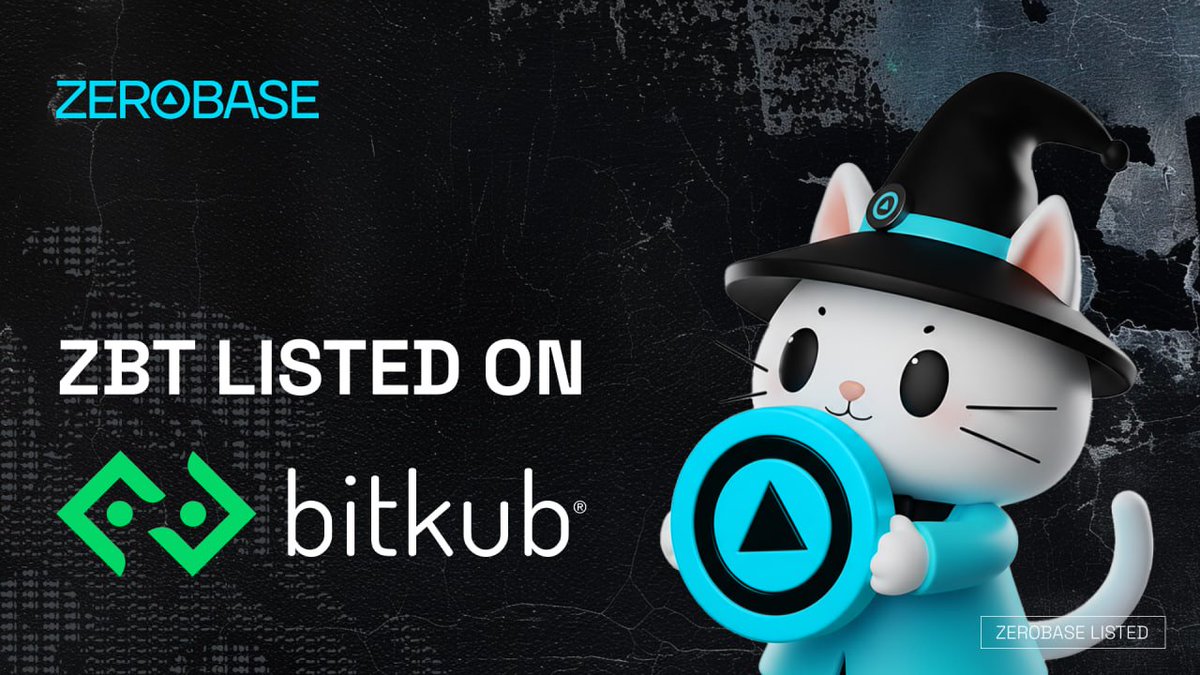
Sawasdee Thailand.
$ZBT is now live on Bitkub, Thailand’s top exchange.
ZEROBASE’s powerful ZK tech has arrived in Southeast Asia.
Big welcome to our wonderful Thai community.
Our journey is just getting started.
Trade $ZBT here: bitkub.com/market/ZBT
English
On the evening of April 7, 2026 local time, U.S. President Donald Trump announced a preliminary two-week ceasefire agreement with Iran (mediated by Pakistan and others, with Iran committing to reopen the Strait of Hormuz).
Geopolitical tensions eased abruptly, market risk appetite rebounded sharply, and risk assets rallied across the board. Crypto Market Leads the Rally: Bitcoin surged nearly 5%, hitting a three-week high of $72,700 before holding steady above $71,000.
Ethereum, Solana, and other major coins rose 3%-6% in tandem. Total crypto market capitalization jumped about 3.4% in 24 hours, reclaiming the $2.47 trillion level.
Traders noted that reduced conflict risk should ease energy prices and further support risk-on sentiment.U.S. Stock Futures Also Strong: Dow Jones, S&P 500, and Nasdaq 100 futures opened up 1.8%-2.2%.
Tech and growth stocks led the gains, with crypto-related names like Coinbase also climbing.
Oil prices fell sharply, with Brent crude briefly dropping below key psychological levels. Analysts say that while the ceasefire is only “preliminary” and lasts two weeks, it has been enough to boost market confidence.
If it evolves into a longer-term peace deal, the upward momentum in risk assets could continue. Investors are now watching closely for compliance and follow-up negotiations.
Financial Times@FT
Trump and Iran announce two-week ceasefire that will open Strait of Hormuz ft.trib.al/86ZqUSF
English
ZEROBASE Weekly 3/30~4/6
ZBT registered a weekly trading range of $0.0735 to $0.1079. Liquidity conditions remained robust throughout the week, with the average top-of-book bid-ask spread consistently maintained at an exceptionally tight 0.45%.
The order book exhibited persistently narrow spreads, underscoring strong market depth and efficient price discovery.
Crypto market saw moderated volatility this week after the prior period’s heavy deleveraging.
Total Open Interest hovered around $104–106B with a slight weekly contraction of ~1–2%, while 24h liquidations remained elevated but less extreme, frequently ranging between $200M–$300M.
Funding rates stayed mixed-to-neutral on major pairs like BTC/USDT, signaling a pause in the previous bearish bias.The market showed tentative signs of stabilization after last week’s selloff.
Total crypto market capitalization recovered modestly into the $2.35T–$2.44T range. Bitcoin bounced from around $66,700 early in the week to trade above $69,000 by Sunday — posting roughly a 3–4% gain from its weekly low (with an intraday high near $70,200).
ETH mirrored the move, rising from approximately $2,023 to hover near $2,100–$2,150.
Geopolitical tensions in the Middle East and persistent sticky inflation data continued to weigh on risk assets.
Hawkish Fed signals, elevated oil prices, and cautious PCE/consumer sentiment releases kept macro sentiment guarded, with the Crypto Fear & Greed Index remaining deep in Extreme Fear territory (mostly 9–14).
On the brighter side, regulatory clarity from prior weeks continued to provide underlying support, while Bitcoin spot ETFs recorded mixed but overall modestly positive flows in the first days of April (following March’s strong $1.32B monthly inflow — the first positive month of 2026).
Ether ETFs also showed relatively steady performance.
Overall, the week reflected a cautious recovery attempt amid ongoing deleveraging signals and persistent Extreme Fear sentiment.
Classic risk-off rotation persists, but technical stabilization and steady institutional flows offer some medium-term encouragement.
English
ZEROBASE is teaming up with Binance Pay launching a C2C payment incentive campaign!
Starting now, users can send $ZBT instantly to friends via Binance Pay’s C2C feature with:
0 gas fees
Instant settlement in seconds
Exclusive token rewards
This initiative is designed to unlock real-world utility for $ZBT and accelerate its adoption in everyday payment scenarios.
With an expected reach of over 1 million users, this marks a major step forward in bringing digital assets closer to daily use.
The future of payments is fast, seamless, and powered by ZEROBASE × Binance Pay.
Binance@binance
Don’t slip up on this one! Win up to 2,000 $ZBT @zerobasezk on your first send. Get in on the action via Binance Pay today! Send now 👉 app.binance.com/pay-activity/c…
English
European crypto asset manager CoinShares announced its Nasdaq listing through a merger with U.S. SPAC firm Vine Hill Capital.
The new entity, CoinShares PLC, will begin trading on April 1 under ticker CSHR.
The $1.2 billion deal includes $50 million from institutional investors.
Already listed on Nasdaq Stockholm, CoinShares manages $6 billion in AUM via structured products, funds, a U.S.-listed Bitcoin ETF, and on-chain services.
Revenue comes mainly from stable management fees. CEO Jean-Marie Mognetti noted that Europe’s AUM is strong, but the U.S. market remains largely untapped. The listing will supply the “equity currency” for faster expansion.
He added that a bear market is ideal for service-focused firms like CoinShares. This marks another milestone in the 2025 crypto IPO wave.
Despite Bitcoin’s 40% drop from its October peak and Middle East tensions, CoinShares’ move signals strong confidence: leaders are attracting long-term capital with resilient models instead of waiting for a bull market.
For the crypto sector, the listing delivers three benefits: it boosts institutional confidence in cycle-resistant AUM models, attracting more traditional funds and pensions to crypto ETFs and on-chain products; it unlocks financing and M&A opportunities, serving as a blueprint for European and Asian peers; and it proves sector maturity, helping reverse recent crypto-stock weakness and paving the way for more listings.
In short, this reflects crypto’s shift toward institutionalization and globalization. With the U.S. as the world’s largest addressable market, the success could drive deeper integration and stronger valuations across the ecosystem.
Short-term volatility is expected, but the long-term confidence boost is significant.
CNBC@CNBC
Crypto asset manager CoinShares to begin trading on Nasdaq through SPAC merger cnbc.com/2026/03/31/cry…
English
April 4, Shanghai, ZEROBASE Golf Cup.
Swing into elegance.
Join ZEROBASE, Enjoy ZEROBASE Life.
Tee off:luma.com/vz5u62u7

English
ZEROBASE Weekly 3/23~3/29
ZBT traded between $0.0661 and $0.0746 during the week. ZBT experienced positive volatility, opening the week near $0.0688 and closing around $0.0739 with good performance.
Crypto derivatives market experienced notable volatility and deleveraging last week.
Total Open Interest stabilized around $105–106B (slight weekly decline of ~0.4–0.6%), while 24h liquidations frequently spiked above $300M during the pullback, with longs bearing the brunt (long liquidations often 70%+ of daily totals).
Funding rates turned mildly negative on major pairs like BTC/USDT, reflecting bearish sentiment.
The crypto market surrendered the previous week’s advances as hawkish macro signals and lingering geopolitical risks weighed heavily: total market capitalization pulled back from roughly $2.51T peak to around $2.3T, while Bitcoin climbed briefly above $71K early in the week before retreating to the $66,000–66,800 zone by Sunday — an approximately 6–8% drop from its weekly high.
ETH mirrored the move, declining roughly 5–7% to hover near $1,970–2,010.
Economic releases continued to underscore sticky inflation and policy caution: fresh PCE and consumer sentiment data reinforced stagflation concerns, with the FOMC’s prior hawkish tilt (fewer rate cuts expected in 2026) still casting a shadow.
Geopolitical uncertainty around Iran added further risk-off pressure.
On the brighter side, crypto-specific tailwinds persisted — including the landmark SEC/CFTC joint statement classifying major assets (BTC, ETH, SOL, XRP etc.) as digital commodities and ongoing progress on stablecoin yield legislation.
ETF flows flipped more negative: Bitcoin spot ETFs recorded net outflows of roughly -$268M for Mar 23–27 (early small inflows wiped out by heavy redemptions mid-to-late week), while Ether ETFs showed relatively resilient but still mixed performance.
Overall, the week highlighted continued deleveraging in derivatives, with the market entering Extreme Fear territory. Classic risk-off rotation, but regulatory foundations remain solid for the medium term.

English
Tether, issuer of the world’s largest stablecoin USDT (market cap ~$184 billion), has hired KPMG—one of the Big Four accounting firms—to perform its first-ever full independent financial statement audit.
The move, confirmed via a Financial Times report, is explicitly designed to support Tether’s push into the US market.For years, Tether faced criticism over reserve transparency.
It previously relied only on limited quarterly attestations from smaller firms and paid a $41 million CFTC fine in 2021 for misleading claims about full dollar backing.
A comprehensive KPMG audit will now cover assets, liabilities, reserves, internal controls, and risk systems—delivering the highest global standard of assurance.The timing is strategic. The audit aligns with upcoming US regulations, such as the GENIUS Act, which require rigorous oversight for foreign stablecoin issuers.
Tether has already paused up to $20 billion in fundraising plans pending the results and engaged PWC to strengthen internal systems.This marks a major credibility boost.
With ~60% market share, Tether now directly competes with Circle’s more-regulated USDC (audited by Deloitte).
The audit is expected to ease institutional adoption, improve banking partnerships, and support potential future financing or listings.Skeptics will await the final report, but the engagement signals Tether’s shift from crypto’s regulatory gray zone to mainstream finance.
For users and investors, it could herald a new era of transparency and stability in the stablecoin sector.
Financial Times@FT
Tether hires KPMG as auditor ahead of US expansion ft.trib.al/d9C56rz
English
On March 24, 2026, the stablecoin market faced a sharp sell-off. Circle, issuer of USDC, saw its stock plunge nearly 20 percent in a single day—its worst performance since listing—while Coinbase dropped around 9 to 10 percent.
The trigger was twofold: Tether’s announcement that it had hired a Big Four accounting firm for its first full independent audit of USDT reserves, and the release of the latest draft of the Clarity Act, which severely restricts passive yields on stablecoins.
The Clarity Act, a compromise bill from Senators Thom Tillis and Angela Alsobrooks, builds on the 2025 GENIUS Act.
It bans platforms, exchanges, and service providers from offering any passive interest, yield, or equivalent rewards simply for holding stablecoins.
Only activity-based incentives—tied to actual transactions, payments, or platform usage—will be allowed.
Regulators aim to position stablecoins as payment and settlement tools rather than interest-bearing deposit substitutes, addressing banks’ concerns about massive deposit outflows.
At the same time, Tether—the world’s largest stablecoin with roughly $184 billion in market value—revealed it had signed a contract with a Big Four auditor for a comprehensive financial-statement audit.
This goes well beyond its previous quarterly attestations and directly challenges the transparency advantage long held by fully audited USDC.
The market reaction was immediate: investors saw Tether closing the credibility gap while the new rules threaten yield-driven business models.
DeFi platforms and exchanges offering “hold-and-earn” products will need to restructure, putting short-term pressure on user retention and revenues.Nevertheless, the long-term outlook is strongly positive.
Together, regulatory clarity and rising transparency standards remove major adoption barriers.
While passive yields are curtailed, stablecoins are poised to mature into mainstream digital infrastructure for cross-border payments, treasury, and programmable finance.
What started as a crypto-native experiment is becoming regulated, trusted infrastructure—and these developments may mark the industry’s coming of age.
CNBC@CNBC
Circle heads for its worst day on record as stablecoin rival Tether announces audit milestone cnbc.com/2026/03/24/cir…
English

@zerobasezk Korean only? Ever though about creating an English forum?
English
Join ZEROBASE Naver Cafe today and unlock exclusive rewards.
The event runs from March 23 to March 29 and every user who joins will receive special rewards.
To participate simply join the cafe and introduce youself.
Become an early member of the ZEROBASE Naver Cafe, grow with us, and earn your rewards.
Cafe Link: cafe.naver.com/zerobasezk
지금 바로 ZEROBASE 네이버 카페에 가입하고 특별한 보상을 받으세요!
이벤트는 3월 23일부터 3월 29일까지 진행되며, 가입하시는 모든 분께 특별한 보상을 드립니다.
참여 방법은 간단합니다. 카페에 가입하시고 자기소개를 남겨주세요.
ZEROBASE 네이버 카페의 초기 멤버가 되어 함께 성장하고, 보상도 받으세요!
카페 링크: cafe.naver.com/zerobasezk

English
ZEROBASE Weekly (Mar 16–22, 2026)
Based on data from primary platforms, ZBT traded between $0.067186 and $0.079501. Overall liquidity remained healthy. With the average top-of-book spread maintained at an extremely low level of 0.45 percent. Spreads stayed tight, with the average top-of-book spread at just 0.45%.
The crypto market delivered strong gains last week even as the macroeconomic backdrop grew more challenging: total market capitalization advanced from roughly $2.36 trillion to over $2.5 trillion, while Bitcoin climbed from the mid-$66,000 zone to above $74,000.
This performance highlighted an emerging decoupling from equities, with BTC increasingly acting as a geopolitical safe-haven asset.
Economic releases were mixed yet mostly reflected pre-Iran-shock conditions: February CPI stayed at 2.4% YoY (core eased to 2.5%), January PCE improved to 2.8%, and consumer sentiment dropped to 55.5 as higher gasoline costs reinforced stagflation worries.
On the positive side, crypto-specific tailwinds remained solid — including closer SEC/CFTC collaboration on digital assets, meaningful progress on stablecoin yield legislation, and BlackRock rolling out its first staked ETH ETF.
ETF flows hit their strongest level in months: Bitcoin spot ETFs logged their first fully green week since late September with +$763 million net inflows, Ether ETFs added +$161 million, and every sector closed higher.
For this week(3.23), Crypto surrendered the previous week’s advances as a hawkish FOMC and heightened geopolitical risks overshadowed landmark regulatory wins: the total market cap topped $2.51 trillion on Tuesday, with BTC briefly hitting $75,800 before retreating to ~$68,700 by Sunday — an roughly 8% drop from its weekly peak.
The SEC and CFTC released a groundbreaking joint statement classifying 16 major crypto assets (including BTC, ETH, SOL, and XRP) as digital commodities, while senators reached a tentative deal on stablecoin yield — a major step forward for the CLARITY Act.
The FOMC kept rates unchanged at 3.50-3.75% but adopted a notably hawkish stance: 14 of 19 members now expect just one cut or fewer in 2026, and the Fed lifted its PCE inflation projection to 2.7%. The BOE, ECB, and BOJ also held policy steady on Thursday, all citing uncertainty around the Iran conflict.
ETF flows flipped negative toward week-end: Bitcoin spot ETFs ended with a modest +$93 million net (early gains wiped out by three consecutive days of outflows post-FOMC), while Ether ETFs recorded roughly -$60 million, including the biggest single-day Ether redemption in over a month.

English

@zerobasezk 선생님, 중국인 아니셨습니까!? 네이버카페 모집을 하시네요. 부모님 친구 지인 까지 전부 가입 시키겠습니다.
한국어
ZEROBASE retweetledi

EthCC[9] is made possible by the generous support of our sponsors.
Thank you @zerobasezk for supporting us this year as a PEARL sponsor!
Proving Network for Real Yield
💙❤️🩵
zerobase.pro

English
How about Crypto?Going up or going down?
Asian stock markets opened mostly lower on Friday, extending a global sell-off triggered by escalating tensions from the Iran conflict and surging energy prices.
The downturn followed another negative session on Wall Street, where investor risk aversion intensified amid fears of prolonged Middle East hostilities and their ripple effects on global energy supplies.
The Dow Jones Industrial Average closed down 0.44% at 46,021.43 points. The S&P 500 fell 0.27% to 6,606.49, while the Nasdaq Composite slipped 0.28% to 22,090.69.
In early Asian trading, Australia’s S&P/ASX 200 index declined 0.27%. Hong Kong Hang Seng index futures traded around 25,312 points, below the previous close of 25,500.58.
South Korea’s Kospi index bucked the broader trend, rising nearly 1%, with the smaller Kosdaq gaining 0.94%.
Japanese markets were closed for a public holiday, although related futures edged up about 0.2%.
The primary catalyst for the sell-off is the intensifying Iran-related conflict. Tit-for-tat strikes have targeted critical energy infrastructure, most notably an Iranian attack on Qatar’s world-largest liquefied natural gas (LNG) facility.
QatarEnergy CEO Saad al-Kaabi confirmed that the assault has destroyed approximately 17% of the country’s LNG export capacity, with disruptions expected to last three to five years.
Energy prices reacted sharply.
Brent crude futures rose 1.18% to $108.65 per barrel after briefly surpassing $119 earlier in the session. U.S. West Texas Intermediate (WTI) crude stood at $96.14, while American gasoline prices hit near four-year highs.
Precious metals also moved violently, with gold and silver dropping as much as 5% and 10% respectively before partially recovering.U.S. President Donald Trump sought to reassure markets by stating there would be no deployment of American ground troops in the region.
Israeli Prime Minister Benjamin Netanyahu indicated that Israel would not repeat attacks on Iranian energy facilities.
A group of major allies—including Britain, France, Germany, Canada, and Japan—issued a joint statement pledging to help secure safe navigation through the Strait of Hormuz.
The Federal Reserve kept interest rates unchanged this week, but Chair Jerome Powell warned that the Middle East hostilities have created “high uncertainty” for the global economic outlook.
Analysts caution that until there is greater clarity on the duration and intensity of the conflict, energy-driven inflation pressures and widespread risk aversion are likely to keep financial markets volatile in the coming weeks.
CNBC@CNBC
Asia markets set to track Wall Street losses as Iran war fuels risk-off sentiment cnbc.com/2026/03/20/asi…
English
The U.S. SEC must be exhausted these past couple of days, having issued a flurry of announcements regarding crypto in rapid succession.
The U.S. Securities and Exchange Commission has engaged with crypto assets for over a decade, primarily applying the Supreme Court’s Howey test to determine if they fall under federal securities laws.
This approach often meant issuers faced permanent compliance obligations even after fulfilling their promises.
Before 2025, the SEC relied heavily on enforcement actions rather than a tailored framework.
To address these concerns and public input, the Commission issued this interpretation.
It provides clearer guidance on crypto assets, complements ongoing Congressional efforts for a comprehensive market structure, and is joined by the CFTC to ensure consistent treatment under the Commodity Exchange Act.
The interpretation establishes a coherent token taxonomy and clarifies when non-security crypto assets become or cease to be subject to investment contracts.
It also addresses the securities law implications for protocol mining, protocol staking, wrapping non-security assets, and certain airdrops. Crypto assets are classified into five categories:Digital commodities are not securities.
Their value derives from the functional operation of a decentralized blockchain system and supply-and-demand dynamics, not from the managerial efforts of others. Digital collectibles are not securities.
These represent digital artwork, music, videos, game items, memes, characters, or trends intended for collection or use. Digital tools are not securities.
They provide practical utility such as memberships, tickets, credentials, titles, or identity badges.Stablecoins that meet the GENIUS Act definition are not securities.
These are payment stablecoins issued by licensed issuers. Digital securities (tokenized securities) are securities.
These are traditional financial instruments recorded on blockchain networks.
A non-security crypto asset becomes subject to an investment contract when an issuer induces investment through promises of essential managerial efforts that purchasers reasonably expect will generate profits.
Such representations may come from various sources and must be sufficiently detailed.However, the investment contract terminates once the issuer fulfills its promises or fails to do so, after which the asset is no longer treated as a security.
The interpretation also confirms that protocol mining, protocol staking, wrapping of non-security crypto assets, and many airdrops do not involve the offer or sale of securities under the Howey test.
U.S. Securities and Exchange Commission@SECGov
TODAY 🚨: The Commission issued an interpretation that clarifies the application of federal securities laws to crypto assets. This is a major step to provide greater clarity regarding the Commission’s treatment of crypto assets. Read the release here: ow.ly/XhhV50YvxvO
English