Al Hakam

15.7K posts

Al Hakam banner
Al Hakam

Al Hakam

@AlHakamWeekly

Est. 1897 • Relaunched 2018 • The English weekly newspaper for Ahmadi Muslims around the world.

London, England Katılım Ocak 2018
10 Takip Edilen35.3K Takipçiler
Sabitlenmiş Tweet
Al Hakam
Al Hakam@AlHakamWeekly·
📢 LATEST: 𝗠𝘂𝘀𝗹𝗶𝗺 𝗻𝗮𝘁𝗶𝗼𝗻𝘀 𝗺𝘂𝘀𝘁 𝘄𝗮𝗸𝗲 𝘂𝗽 𝗮𝗻𝗱 𝘂𝗻𝗶𝘁𝗲! During his Friday sermon, delivered on 13 June 2025, Hazrat Mirza Masroor Ahmad, Khalifatul Masih V (aa), warned of the escalating global conflict, particularly in the Middle East, and admonished the Muslim world for its disunity and lack of spiritual focus, and said: “At this time, I also wish to comment on the current state of the world, as I often do, and to urge you to continue to pray. The chances of the war spreading are continuing to increase. Pray to Allah the Almighty that He may safeguard us from its devastation, for Israel has now attacked Iran, and this state of war has taken a perilous turn. “These people, the Israeli government, will now seek to harm every Muslim nation, one after the other. The Muslim nations, however, are asleep; they are engrossed in their own development and other priorities and have no realisation of what is to come. Muslims have neither righteous deeds to their credit as before, nor do they pay any heed to prayer. In such a state, they cannot even begin to imagine the extent of the ruin that will then befall them. “May Allah the Almighty grant them the wisdom to pay heed to this and to strive to establish their own unity. They should not be saying, ‘This is such and such a sect’ or ‘That is another sect, so we will not help them’. All these nations are in peril, for الکفر ملّة واحدة – that is, all those who disbelieve have become a single nation – and Muslims must now also become an امّة واحدة (a single, united Community). Their salvation lies only in this; there is no other way. “May Allah the Almighty protect every innocent and oppressed person from immense suffering. We ought to pay far greater attention to our prayers. May Allah the Exalted grant us the ability to do so.” Amin.
Al Hakam tweet media
English
36
314
552
27.6K
Al Hakam
Al Hakam@AlHakamWeekly·
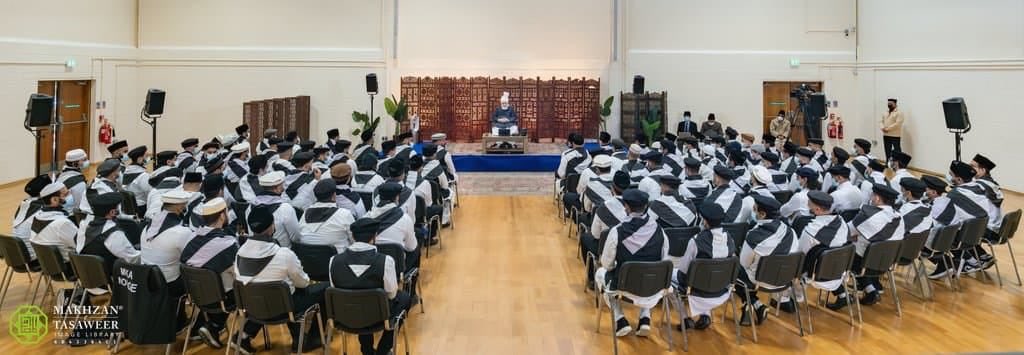
All praise belongs to Allah that having completed seven years at Jamia Ahmadiyya, you now stand prepared to enter the field as missionaries. You embark upon this responsibility with the conviction that you are entrusted not only with the task of tarbiyat, but also with the duty of tabligh. You enter this field with the understanding that you have dedicated your lives, and that you remain available, 24 hours a day, for the service of the Jamaat. Without this mindset, one cannot become a truly beneficial member for the progress of the Jamaat. This is the standard expected of you by the Jamaat, by the Khalifa of the time and in fulfilment of the solemn pledge you have made with God Almighty. Always remember that nations which progress are those that remain conscious of their weaknesses. Therefore, do not assume that mere praise signifies completion of your task. Rather, strive to attain those standards that genuinely make you worthy and ensure that your efforts yield righteous and lasting outcomes. You must consistently evaluate yourselves: have you utilised all your abilities to achieve the noble purpose for which you have dedicated your lives? Every Ahmadi proclaims the pledge of giving precedence to faith over worldly pursuits, and it is incumbent upon you to embody this principle. The standards of missionaries must be higher than those of others so that you may serve as true role models. Regularly assess your worship, your prayers, and your remembrance of Allah, for only when these standards improve will your work be blessed. Never attribute success to your own abilities, but express gratitude to Allah. Arrogance is deeply detested and requires constant vigilance. Particular attention must be given to the five daily prayers, congregational worship, Tahajjud and consistency in durood and istighfar. Devote yourselves to the study of the Holy Quran and the writings of the Promised Messiah (as), for within them lies your life and success. Strengthen love and brotherhood, uphold righteousness, guard against doubts, and refine both your knowledge and moral conduct. Only through a living relationship with Allah, practical example, and sincere passion for Islam can you truly fulfil your mission and become beneficial members of the Jamaat. Tap on the link in bio to read the full report 👆
Al Hakam tweet mediaAl Hakam tweet media
English
1
20
45
736
Al Hakam
Al Hakam@AlHakamWeekly·
On 19 April 2026, Khuddam from Majlis Khuddam-ul-Ahmadiyya Norway were blessed with a mulaqat with Hazrat Mirza Masroor Ahmad, Khalifatul Masih V (aa) at Islamabad, Tilford, UK. Righteous spouses and reunion in the Hereafter A question was asked about whether, if one spouse passes away before the other, that spouse later comes to know of the other’s death. Huzoor (aa) explained that if one spouse has entered Paradise and the other has also lived righteously and enters Paradise, then they will meet in the next world and will come to know of one another. However, if one spouse was righteous and entered Paradise while the other was sinful and was punished, then the matter would be different. Allah may inform the righteous spouse of the other’s state, but the sinful spouse would not be with them. Huzoor (aa) therefore said that both husband and wife should strive to perform good deeds so that both may enter Paradise and be reunited there. Explaining global crises to children through faith A parent asked how the current global situation could be explained to young children in a way that was reassuring and rooted in faith and how children could best be prepared for the future. Huzoor (aa) advised that children should be told that when people in earlier ages became corrupt and turned away from Allah, divine punishments came upon them. The Holy Quran and history mention various peoples who were destroyed through earthquakes, storms, winds and other calamities because they rejected Allah and became immersed in wrongdoing. Huzoor (aa) said that in the time of the Holy Prophet (sa), such natural calamities did not come in the same way; rather, the opponents of Islam were tested through wars and Islam was granted victory while the enemy was destroyed. He explained that if, in the future, wars come to an end, Allah may still test people through other means, as happened to earlier peoples, including earthquakes, rain, fire and other forms of calamity. Huzoor (aa) said that children should therefore be taught always to bow before Allah, seek His protection and pray for His mercy. Through this, one may be saved from the punishments and calamities that came upon earlier peoples. Tap on the link in bio to read the full report 👆
Al Hakam tweet mediaAl Hakam tweet media
English
1
19
48
982
Al Hakam
Al Hakam@AlHakamWeekly·
How much time do you give to your phone? Have you ever really thought about it? We often don’t realise how effortlessly our devices distract us from our daily responsibilities, from the people we love and from moments that deserve our full attention. Think about how many times someone has been speaking to you while you were glued to a screen. It’s so common now that we hardly notice it, yet it happens all the time. But there’s a deeper question here: does it get in the way of your relationship with God? As Muslims, our declaration of faith is the proclamation that there is only one God and that He alone is worthy of worship. Yet when the time for worship comes, where are we? Are we physically, mentally and spiritually present? Or are our hearts occupied by the “idols” of our time: our phones, our screens and our constant distractions? The things around us aren’t idols in the traditional sense, but anything that takes priority over God, anything that steals our attention and devotion, becomes an idol in practice. And sometimes these everyday habits slowly haul us away without us even noticing. A common theme that we find in the Quran regarding idols is that they neither benefit nor hear; they are simply idle and powerless. In this article, I shall highlight this idleness of idols by looking at various passages where the Quran describes them and how the prophets of Allah stood against idol worship. Whether it was the people of ‘Ad, the people of Thamud or even the people of Midian, each community had fallen into idolatry. The Quraish themselves worshipped hundreds of idols in and around the Ka‘bah... Tap on the link in bio to read the full article 👆
Al Hakam tweet mediaAl Hakam tweet media
English
2
20
52
884
Al Hakam
Al Hakam@AlHakamWeekly·
For some years now, a claim has been circulating, particularly among English-speaking Muslims: that Allah can be referred to as “She” or addressed alternately with various pronouns in order to correct patriarchal distortions. This claim has both a scholarly form and a popular form, yet it has not found its way into Arabic, Urdu, Turkish or Malay discourse, though it has found adherents within the English-speaking diaspora. Allah is neither male nor female. Allah is not a physical being, has no gender, and does not fall into any category in which gender is meaningful. “There is nothing whatever like unto Him.” “He begets not, nor is He begotten.” Scholars have been in agreement on this since the early days of the Islamic tradition. When a Muslim woman says, “Allah is beyond gender”, she is repeating a tenet of faith more than a thousand years old. The point of contention lies in what can be inferred from this. The argument claims that since no human pronoun does justice to the Transcendent, Muslims may address Allah as “She” or alternate forms. The traditional view takes the opposite stance: since language already reaches its limits, we adhere more carefully to what revelation has given. Grammatical gender in Arabic is not the same as English. The masculine form is unmarked and functions as the default, while the feminine is marked. Huwa for Allah is the only option Arabic offers for not attributing a specific gender. Using hiya assigns a specific feminine reference where none existed. Referring to Allah as hiya is more anthropomorphic, not less. The apparent symmetry between “He” and “She” does not exist in the language of revelation. What is presented as theological insight is, in fact, an artefact of translation into English. The masculine form of address is the expression chosen by revelation. The principle of tawqif applies: the names and forms by which Allah may be addressed are known only through what revelation has authorised. “Call upon Allah or call upon Rahman… His are the most beautiful names.” It is not left to us to figure this out for ourselves. The connection between rahma and rahim tells us something about divine mercy, that it surpasses the deepest biological intimacy, but it does not render the divine essence feminine. To argue otherwise collapses into likening the Creator to creation. Correcting false images of God does not justify revising the revealed form. Tafsir interprets what a verse says; pronoun substitution alters how believers address Allah. If every pronoun assigns gender incorrectly, then alternating between them does not solve the problem. The conclusion is humility within revealed language. The pain beneath this proposal may be real. Yet reimagining Allah is not the solution. The answer lies in guiding to Allah as He has revealed Himself, Whose mercy “encompasses all things”, Who is closer than the jugular vein, and Who presents women as examples for all believers. A woman who switches from huwa to hiya imagines God in anthropomorphic terms; she has merely reversed the image. Behind this debate lies a deeper question: whether one accepts Allah as He has revealed Himself or reshapes revelation to fit one’s categories. Islam means submission – allowing language and devotion to be shaped by revelation. The dispute is not over pronouns, but over whether the forms of invocation given in the Quran and Sunnah are within our power to revise. The Promised Messiah (as) said: “We neither add to, nor remove anything from the Shariah… We accept everything that has come to us….” Tap on the link in bio to read the full article 👆
Al Hakam tweet mediaAl Hakam tweet media
English
1
33
65
1.5K
Al Hakam
Al Hakam@AlHakamWeekly·
The structural connection between interest-based debt and warfare is not new. Islamic thought identified it with remarkable clarity long before modern data could confirm it. “O ye who believe! fear Allah and relinquish what remains of interest, if you are believers. But if you do it not, then beware of war from Allah and His Messenger; and if you repent, then you shall have your original sums; thus you shall not wrong, nor shall you be wronged”. (2 : 279-280) Hazrat Khalifatul Masih IV (rh) addressed these verses directly and his interpretation cuts to the heart of the argument presented here. The verses, he explained, are not a call to arms against usurers, nor a prophecy of Muslims fighting those who hold interest-based ideologies. It is a statement of economic law: those who persist in interest-based systems will inevitably be drawn into wars as a direct consequence and it is through those wars that destruction reaches them. The divinely ordered system governing economic life operates by this logic and no society that defies it escapes the consequences. (Khutbat-e-Tahir, Vol. 2, p. 173, Friday Sermon, 25 March 1983) In other words, the scripture does not treat interest as a minor moral fault but as a mechanism that inevitably breeds large-scale violence once it becomes the foundation of public finance. The argument is straightforward: when governments can borrow vast sums at interest, wars that would otherwise be financially impossible suddenly become easy to launch and easy to prolong. Instead of having to raise taxes immediately and face public resistance, states tap into “cheap” loans, delaying the true cost of war into the future. During the conflict, citizens do not fully feel the burden; only after the guns fall silent do they discover that they have inherited enormous national debts, with interest stretching across generations. Without such interest-based loans, many governments would hesitate to start long, devastating wars, and even if they entered them, they would be forced to seek peace far earlier, as their treasuries would empty and their populations would rebel against the cost. Seen through this lens, the events of 2026 are not an accident but a textbook example. Because interest-bearing credit is available on a massive scale, the United States can add $200 billion in new war spending with the stroke of a pen, knowing that repayment will be spread over decades in the form of invisible interest charges. The same financial logic applies to other belligerents, including Israel, which approved a $12.5 billion defense budget boost for 2025-2026 amid ongoing multi-front operations. With the total 2026 military spending reaching $49.8 billion according to the Defense Budget Project, these costs mirror the same debt-fuelled escalation pattern seen in the US. What looks like “easy money” in the short term becomes a heavy chain of obligations in the long term, bending future generations under the weight of debt repayment. This is precisely the dynamic that Islamic teachings warned against: a credit system that enriches a small financial elite, enables wars far beyond what societies would otherwise tolerate, and then traps entire nations in a cycle of debt, interest and recurring conflict. US annual interest bill: $1.04 trillion (Treasury Q1 FY2026) Defence spending pre-Iran conflict: $839 billion (CBO 2025 baseline) Additional war budget: $200 billion (White House FY2026 supplemental request) Resulting total obligation with 4% interest: ~$440 billion by 2056 (PGPF Interest Tracker) Financial sector profits: ~$240 billion interest + $2-4 billion underwriting fees GDP/Growth distortion: nominal expansion through debt-financed spending, masking long-term insolvency Tap on the link in bio to read the full article 👆
Al Hakam tweet media
English
3
39
57
862
Al Hakam
Al Hakam@AlHakamWeekly·
‘𝗦𝘁𝗿𝗶𝘃𝗲 𝘁𝗼 𝗮𝗰𝗵𝗶𝗲𝘃𝗲 𝘁𝗵𝗲 𝗽𝗶𝗻𝗻𝗮𝗰𝗹𝗲 𝗼𝗳 𝘆𝗼𝘂𝗿 𝗰𝗵𝗼𝘀𝗲𝗻 𝗽𝗮𝘁𝗵’ On Sunday, 26 April 2026, at approximately 5 pm local time, Hazrat Mirza Masroor Ahmad, Khalifatul Masih V, may Allah be his Helper, presided over the UK Waqf-e-Nau Ijtema 2026 at Islamabad, Tilford, UK. Huzoor (aa) said: As waqifeen-e-nau, you hold a unique distinction that you are part of a group of people whose parents, prior to your birth, made a sacred vow to dedicate your lives to the service of the Jamaat. And then, having reached maturity, you have independently chosen to renew this bond. In this way, you have transformed that parental pledge into your own lifelong mission... Those who willingly renew the pledge must strive with complete sincerity to fulfil it, recognising that the standard of devotion which is expected of a waqf-e-nau exceeds that of other Ahmadis... The Promised Messiah (as) emphasised that his followers must manifest the highest moral standards and etiquette at all times. A person must never allow their emotions to overpower their speech or conduct, nor must they ever let them incite them to injure the feelings of others. He further explained that Allah desires for those who have associated themselves with him to be beacons of moral excellence for others to emulate. Therefore, as waqf-e-nau, you must not only manifest such morals yourself, but also become catalysts for the reformation of others, too. While every Ahmadi must strive for this, the responsibility for waqifeen-e-nau is greater. As you have not only accepted the Promised Messiah (as) but also vowed to stand on the frontlines of service and to give precedence to your faith over all worldly matters. If you fail to uphold your basic duties, the world will rightly wonder as to how it is that you claim to prioritise your faith but the standard of your worship remains poor, as well as your conduct. People will dismiss your claims as hollow and insincere. It is your duty to set a compelling, powerful example for others so they are naturally inclined toward you. Furthermore, the Promised Messiah (as) instructed that our belief in the oneness of God (tawhid) must be unshakable. A true believer must be so confident in Allah’s power that it instils within him a fear that he must never commit an act that may displease Him. When the world looks in your direction, they should know that the followers of the Promised Messiah (as) are those who exhibit superior morals and are consumed by the awe of Allah’s greatness and mercy. The Promised Messiah (as) said that his followers must excel in righteousness and taqwa. Every action must be governed by these two things. This is a theme, Huzoor (aa) said, that he often addresses in his Friday Sermons. The Promised Messiah (as) taught that taqwa is the essence of Islamic teachings and fundamental to our faith. Allah the Almighty commands us about the importance of taqwa in the Holy Quran on over one hundred occasions. The Promised Messiah (as) taught that righteousness requires our words and deeds to exist in complete harmony. If this is not the case, it means hypocrisy has entered our hearts, and we do not fear displeasing Allah. Tap on the link in bio to read the full summary 👆
Al Hakam tweet media
English
1
29
72
743
Al Hakam
Al Hakam@AlHakamWeekly·
𝗧𝗿𝘂𝗲 𝗽𝗲𝗮𝗰𝗲 𝗮𝗻𝗱 𝗰𝗼𝗻𝘁𝗲𝗻𝘁𝗺𝗲𝗻𝘁 𝗹𝗶𝗲 𝗶𝗻 𝘁𝗵𝗲 𝗻𝗲𝗮𝗿𝗻𝗲𝘀𝘀 𝗼𝗳 𝗔𝗹𝗹𝗮𝗵 On Saturday, 25 April 2026, shortly after 5pm local time, Hazrat Mirza Masroor Ahmad, Khalifatul Masih V, may Allah be his Helper, presided over the UK Waqifaat-e-Nau Ijtema 2026 at Islamabad, Tilford, UK. Huzoor (aa) said: By the grace of Allah, nearly 40 years have passed since Waqf-e-Nau scheme was launched. Many of you are now in their 20s or 30s, and many have become mothers to a new generation. Now an even greater responsibility rests upon your shoulders. You should not only live up to your pledge and act according to Islamic teachings, but you must also ensure the moral and religious upbringing of your children. Although this is the duty of both parents, mothers generally spend more time with their children; thus, the responsibility upon them is greater. As waqifaat-e-nau, you must continually strive to elevate your spiritual and moral standards, while also guiding your children so that they may become pious, excellent and beneficial members of society. In this way, you will play your part in safeguarding the future prosperity of the Jamaat. Those who have grown up here and benefited from the educational system have attained a higher level of education than their mothers or grandmothers. This blessing carries with it a profound responsibility – that you must harness your knowledge and the opportunities you have received to enlighten and guide your children. You must empower your children to navigate the challenges of the present age while remaining anchoured to Islamic teachings. Sadly, many mothers write expressing their heartbreak that, as their children pass through adolescence, they begin to drift away from the faith and fail to maintain a close bond with the Jamaat. Thus, keeping your children attached to their faith is your foremost responsibility. For this, you must ensure that your own bond with Allah the Almighty is unshakeable. Offer salat with devotion and sincerity, and immerse yourself in the timeless wisdom of the Holy Quran. If your conduct is a living testament to your love for Allah and conviction in the truth of Islam, your children will naturally learn from your example... For the younger girls – the nasirat – you should also strive to excel in your studies and remain firm in your faith. You should never feel embarrassed about your religion. If you are ever mocked for observing modest clothing, you may respond that others are free to mock as they wish, but they cannot weaken your beliefs or your religious practice. Explain to them that you have a higher purpose – to stand against the moral decline of the world and to bridge the gap between humanity and Allah the Almighty. Be confident in yourself and in your identity. True peace and contentment lie in the nearness of Allah the Almighty, and to attain this, you must fulfil His rights as well as your duties towards humanity. Towards the end, Huzoor (aa) prayed: May Allah the Almighty enable all of you to fulfil the pledge you have made to your faith throughout your lives. May you become those whose noble and righteous qualities manifest the truth and beauty of Islam for the world to see. Amin. Tap on the link in bio to read the full summary of the address 👆
Al Hakam tweet media
English
1
17
50
738
Al Hakam
Al Hakam@AlHakamWeekly·
Someone from Germany wrote to Hazrat Amirul Momineen, Khalifatul Masih V (aa), asking: If there are other worlds as well, then what religion would there be for those other worlds? Would there be more than one Muhammad, peace and blessings of Allah be upon him, and would there be different versions of the Holy Quran? In that case, should it not have been stated in the Holy Quran that Allah the Almighty would safeguard every version of the Quran? Huzoor (aa) explained: “Allah the Exalted states in the Holy Quran: اَللّٰهُ الَّذِي خَلَقَ سَبْعَ سَمَوَاتٍ وَمِنَ الْأَرْضِ مِثْلَهُنَّ يَتَنَزَّلُ الْأَمْرُ بَيْنَهُنَّ لِتَعْلَمُوا أَنَّ اللَّهَ عَلَى كُلِّ شَيْءٍ قَدِيرٌ وَأَنَّ اللَّهَ قَدْ أَحَاطَ بِكُلِّ شَيْءٍ عِلْمًا “‘Allah is He Who created seven heavens and of the earth the like thereof. The [divine] command comes down in their midst, that you may know that Allah has power over all things and that Allah encompasses all things in [His] knowledge.’ (65 : 13) “From this Quranic verse, it is clear that Allah the Exalted has, throughout His vast universe, sent down commands everywhere exactly in accordance with what was required there and under these commands the order of the universe continues to function. Upon this earth, Allah the Exalted also created human beings and for their reformation and guidance, He instituted, in this world, the chain of Prophets. Thus, our belief is that only those human beings are subject to the obligations of this system of divine law to whom the message of such laws has been conveyed. If, apart from this earth, there are other such worlds inhabited by beings like the people of this earth, then, until the message of our Sharia reaches them, they are not subject to its obligations. And if Allah the Exalted has granted them some other sharia, then they will certainly be subject to that. What the sharias granted to them are like or who the Prophets sent to them may be, is known only to Allah the Exalted. However, once contact is established with the inhabitants of those worlds and we convey to them the message of this Sharia of Allah the Exalted, then they too will become subject to its obligations and this teaching and this Messenger (sa) will also be applicable to them and worthy of emulation. “As yet, aliens exist only in stories and it is the people of this earth who are searching for them. As far as their side is concerned, no contact with us has yet been established. “An English professor, Mr Wragge, submitted to the Promised Messiah (as): “‘This issue is beyond my comprehension: When God has created billions of other [celestial] systems apart from this earth with which we are connected, why restrict the powers and favours of God Almighty to this earth alone?’ “To this, the Promised Messiah (as) replied: “‘This is not our belief. We do not assert that there is no other system beyond this heaven and earth. On the contrary, our God affirms that He is Rabb-ul-‘Alamin [Lord of all the worlds]; meaning that He is the Lord of all worlds and that wherever any population exists, there He has verily sent Messengers. Absence of knowledge does not necessarily imply absence of existence. Why wouldn’t the God who created such vast provision for this lone little tiny earth, have created any provision for all the other inhabitations? He is equally the Lord of all and aware of the needs of all.’”
Al Hakam tweet media
English
2
48
93
1.6K
Al Hakam
Al Hakam@AlHakamWeekly·
Imagine a man steals some bread to feed his starving family. A small act of kindness, which is nevertheless still a crime. Should he still deserve punishment? What about a thief who meticulously and carefully schemes to rob a person as revenge? In the Holy Quran, God, the Almighty and Wise states: “And as for the man who steals and the woman who steals, cut off their hands in retribution of their offence as an exemplary punishment from Allah.” One question is whether the punishment fits the crime, and whether Islam, a religion of peace, encourages violence in all circumstances. Often misunderstood, the Sharia is not a violent law which permits killing, bloodshed and fighting. The word Sharia means “the straight path,” “the religion,” or “the path to the watering place,” where water denotes life, survival and purity. It is a balanced way of life for people to attain worldly and spiritual provisions in a pure manner. The Quran describes it as din al-fitrah, a law designed according to the nature of humans and their psyche, raising the question of how such a law could fail to be universal. The foundation of this law rests upon the teachings of the rights owed to God and the rights owed to His creation, taught in the Quran and exemplified by the Holy Prophet (sa). Through systems such as brotherhood between migrants and helpers, and the establishment of zakat, society was uplifted with equality, opportunity and fairness. The Sharia is not imposed by force: “There should be no compulsion in religion.” Its purpose is to admonish and guide peacefully. Punishments are not absolute; rather, they exist within strict conditions and a moral society. Forgiveness is encouraged where it leads to reformation. The real question, therefore, is not whether the Sharia is relevant today, but whether society is prepared to meet its standard. Tap on the link in bio to read the full article 👆
Al Hakam tweet media
English
3
33
78
1.2K
Al Hakam
Al Hakam@AlHakamWeekly·
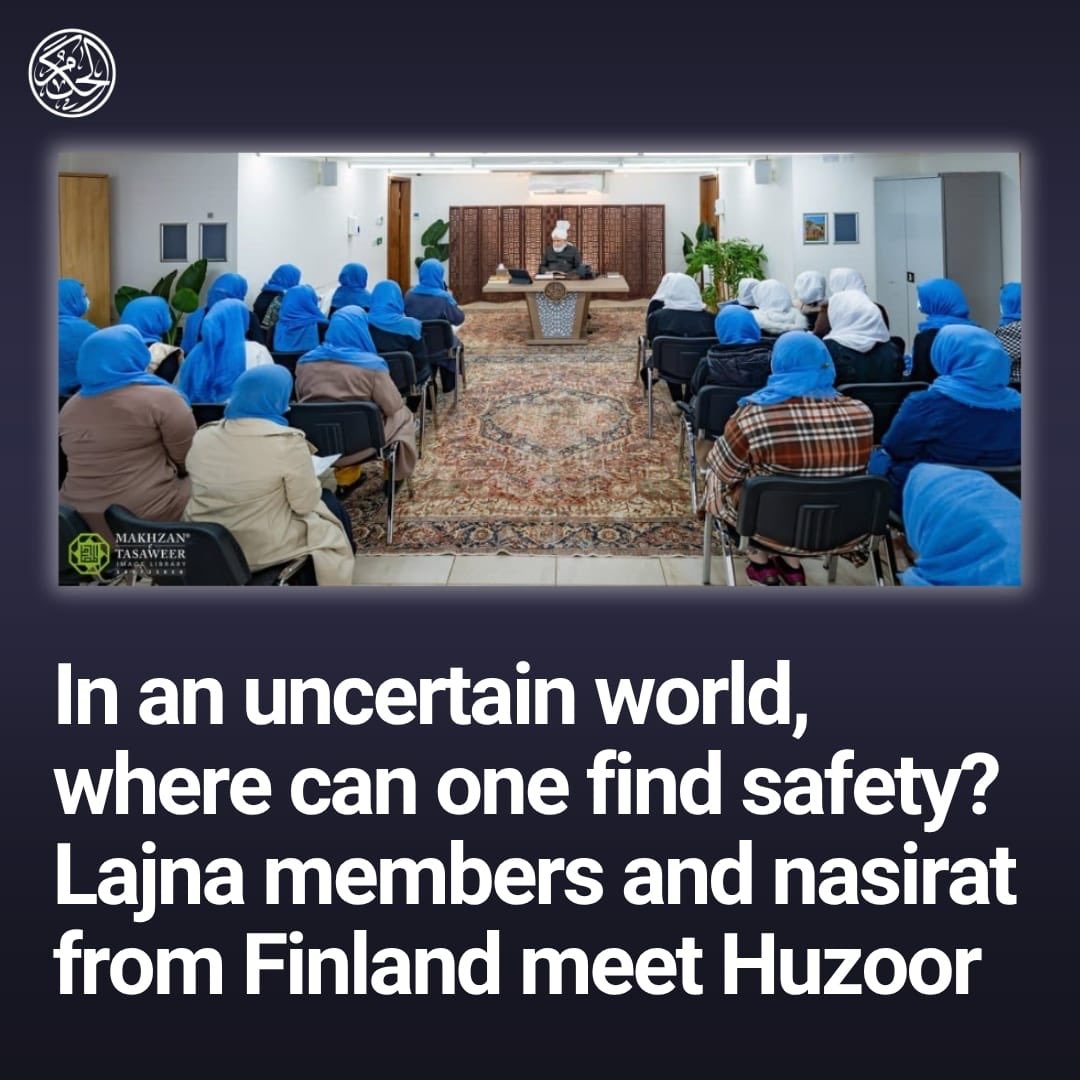
🇩🇪 Only those who turn to Allah will be saved: Lajna members and nasirat from Germany meet Huzoor 🇬🇧 On 11 April 2026, Lajna members and nasirat from Riedstadt and some other majalis of Lajna Imaillah Germany were blessed with a mulaqat with Hazrat Mirza Masroor Ahmad, Khalifatul Masih V (aa) at Islamabad, Tilford, UK. Children born with disabilities are innocent and everlasting life is in the Hereafter A question was asked about children who are born disabled. It was said that such children are innocent, yet they endure suffering and become a great trial for their parents. The questioner asked what the wisdom of Allah the Exalted was in this. Huzoor (aa) explained that such children are indeed innocent and that this world is not the complete and final life. The true and everlasting life is the life to come. He said that in this world, even a long life is only 70 or 80 years. However, Allah the Exalted has already forgiven such children and in Paradise they will be kept healthy and granted an existence of comfort and delight. Huzoor (aa) added that it is mentioned in Hadith that, in Paradise, such little children will be happy and healthy and they will be under the care of Prophet Abraham (as). (Sahih al-Bukhari, Kitab al-jana’iz, Bab ma qila fi awladi l-mushrikin) Thus, a believer should not look only at the suffering of this world, but should keep before them the reality of the next life. Huzoor (aa) then turned to the parents and explained that those who show patience, care properly for such children and remain righteous are also rewarded by Allah. If they are worshippers of Allah, then He can grant them Paradise as well. Even where there are shortcomings, Allah may forgive sins, greatly reduce them or lessen punishment on account of such trials. He further explained that such disabilities should not be understood as though Allah had some hostility towards mankind. Rather, these are often connected with human errors, bodily weaknesses or deficiencies in the physical order. This too becomes a trial through which people may pass and if they endure it with patience and righteousness, Allah grants immense reward in the next life. Tap on the link in bio to read the full report 👆
Al Hakam tweet media
English
1
44
102
1.6K
Al Hakam
Al Hakam@AlHakamWeekly·
📜 Manshur-i-Muhammadi: Early writings of the Promised Messiah (as) from the original source 🗞 During the second half of the 19th century, the Arya Samajists and Christians were running a malicious campaign against Islam, objecting to the teachings of the Holy Quran and attempting to malign the blessed character of the Holy Prophet Muhammad (sa). At that juncture, Hazrat Mirza Ghulam Ahmad (as) of Qadian undertook the task to defend Islam and its Holy Founder (sa). From a young age, Hazrat Ahmad (as) had a great passion for serving Islam. In the 1860s, while he was staying in Sialkot as an employee, he was seen as a passionate defender of Islam amid the rising attacks from the Christian missionaries. The 1870s in British India witnessed a rapid intensification of anti-Islamic rhetoric. It was at that time that Hazrat Ahmad (as) challenged the Arya Samajists and Christians, and wrote articles for some of the prominent periodicals of that time. One of those periodicals was the Manshur-i-Muhammadi of Bangalore. Its editor was Maulvi Muhammad Sharif Sahib, and it was printed at the Matba‘ Bahr-ul-Islam, Bangalore. This periodical, published three times a month, made its first appearance in the world of journalism on 20 Jamadi-ul-Thani 1289 AH, corresponding to 25 August 1872. When we take a look at the 1 December 1877 issue of Manshur-i-Muhammadi, there we find a tract, an announcement and an article by Hazrat Mirza Ghulam Ahmad (as). The titles of these three pieces are as follows: 1. 500 Rupaya ka Ishtihar (A tract for a reward of 500 rupees) 2. E‘laan Nama Muta‘alliqa Ishtihar (An announcement related to the tract) 3. Iqraarat Sawami Ji Pandit Dayanand Saraswati (The admissions of Sawami Ji Pandit Saraswati) Tap on the link in bio to read the full article 👆
Al Hakam tweet media
English
3
57
108
2.8K
Al Hakam
Al Hakam@AlHakamWeekly·
⚖️ Finding physical and spiritual balance through sunnah fasting 🌙 Eid-ul-Fitr is often seen as the ultimate victory after a whole month of battling hunger and thirst. But behind the celebratory echoes of the takbir, there’s a common trend I notice every Shawwal: friends complaining about digestive issues. From diarrhoea and bloating to sudden spikes in cholesterol and blood sugar – you name it. Medically speaking, it’s pretty straightforward – it’s just the result of a drastic change in eating habits. But if we look deeper through the lens of Islamic teachings, this “post-Eid sickness” is actually a spiritual wake-up call. It reminds us of the importance of balance (tawassut), i.e., moderation, a principle we often toss out the window the moment the holiday celebrations begin. After a whole month of training our self-control through Ramadan, there’s this very human urge to go on a “revenge” eating and drinking spree. And that’s where the irony lies. We celebrate our victory over our desires by letting those very same desires take back the wheel. Islam isn’t just about rituals; it’s a complete guide for living that cares deeply about human well-being. Those complaints of diarrhoea and stomach issues after Eid are actually signals from our bodies. They’re telling us that we’ve ignored the principle of consuming what is tayyib, i.e., good, and the importance of moderation in enjoying the blessings Allah has provided. “Eat and drink, but be not excessive. Indeed, He does not like those who commit excess.” (Surah al-A‘raf, Ch.7: V.32) This verse isn’t just a moral rule; it’s actually a very accurate health prescription. When we ignore these limits, our body’s balance gets thrown off, and sickness arrives as a little “reminder”. Right in the middle of all that food euphoria, Islam offers a beautiful solution: the recommendation of six days of sunnah fasting in the month of Shawwal. The Holy Prophet Muhammad (sa) said: “Whoever fasts Ramadan and follows it with six days of Shawwal, it is as if he fasted for the entire year.” Tap on the link in bio to read the full article 👆
Al Hakam tweet media
English
3
35
70
964
Al Hakam
Al Hakam@AlHakamWeekly·
On 5 April 2026, amila of the Muqami Region of Majlis Khuddam-ul-Ahmadiyya Canada had the blessed opportunity to meet Hazrat Mirza Masroor Ahmad, Khalifatul Masih V (aa) at Islamabad, Tilford, UK. Huzoor (aa) emphasised that the office-bearers must first present their own example. Khuddam should be mentally trained to remain firm during an economic crisis One questioner referred to increasing tensions between the United States and Iran, rising oil prices, inflation and the risk of recession and asked what khuddam should do to prepare. Huzoor (aa) replied that khuddam did not control oil wells, refineries or the global oil trade and therefore the issue was not one of directly managing or international supply. Rather, the real matter was that the world may face inflation, recession and widespread economic strain and khuddam should be prepared mentally for such conditions. Huzoor (aa) instructed that khuddam should be trained in such a way that, when crises come, they do not lose courage. He observed that many worldly people, when struck by financial loss, bankruptcy or severe economic hardship, fall into depression, despair and in some cases even attempt suicide. Referring to a well-known observation, Huzoor (aa) noted that when an economic crisis affects the world, it is called a recession, but when it comes upon an individual personally, it becomes a depression. He said that while Ahmadis too would have to endure the broader effects of economic decline along with the rest of society, the task of khuddam was to build courage and resilience within people. In such circumstances, instead of losing hope, Ahmadis should incline even more towards Allah the Almighty, seek His help and pray that He grants them the strength to pass through the crisis with steadfastness. The remedy for vaping lies in tarbiyat, prayer and good company Another question was asked regarding khuddam who were involved in vaping and did not consider it to be haram. Huzoor (aa) replied that such behaviour reflected distance from Allah, weak attachment to the Jamaat and neglect of salat. He added that wasting excessive time on the internet and social media, along with falling into bad company, also contributed to such conduct. Huzoor (aa) said that this was first and foremost a matter of tarbiyat. He instructed that the Tarbiyat Department should become more active and keep an eye on those who had fallen into harmful company. Rather than showing aversion towards them, they should be brought closer with sympathy and understanding. Those who were firm in faith and strong in character should be encouraged to form friendships with such individuals so that they might help bring about their reformation. Huzoor (aa) acknowledged that some efforts were already being made and that a number of boys had improved. He suggested that those who had reformed could be used to help others in different cities, or that others could be brought to them for support and improvement. At the same time, Huzoor (aa) noted that true reform can only be achieved in the case of one who wishes to be reformed; where a person does not want improvement, reform cannot be forced beyond lawful restrictions. When told that the legal age in Canada in this regard was 19, Huzoor (aa) said that attention should especially be given before that age and that parents and home conditions should also be examined. He stressed that such matters are not solved by one auxiliary alone, but require coordinated tarbiyat by the Jamaat, Khuddam-ul-Ahmadiyya, Ansarullah and Lajna, together with the home environment. To read the full report, tap on the link in bio 👆
Al Hakam tweet media
English
1
35
78
1.1K
Al Hakam
Al Hakam@AlHakamWeekly·
On 29 March 2026, thirty-four doctors and medical professionals from the United States of America and Canada were blessed with a mulaqat with Hazrat Mirza Masroor Ahmad, Khalifatul Masih V (aa), at Islamabad, Tilford, UK. During the mulaqat, Huzoor (aa) guided the delegation regarding the importance of Waqf-e-Arzi. He said that doctors and medical professionals should participate in Waqf-e-Arzi and should also encourage others, especially specialists, to do the same. Huzoor (aa) acknowledged that those travelling from abroad sometimes find it difficult to adjust to the local environment and that, at times, suggestions made by visiting professionals cannot be implemented in the same way owing to local limitations and circumstances. Nevertheless, he emphasised that the first matter of importance was to take part in Waqf-e-Arzi. Huzoor (aa) then reminded the delegation that Allah the Almighty is the True Healer. Huzoor (aa) also referred to the following guidance he had given in his Friday sermon of 27 March 2026: “Just observe the subtlety with which the Holy Prophet (sa) would instruct the establishment of the Oneness of God [Tawhid]. In one narration, Abu Rimsah (ra) relates that his father said to Allah’s Messenger (sa), ‘Show me the mark upon your back,’ meaning the Seal of Prophethood, ‘for I am a physician.’ The Holy Prophet (sa) replied, ‘The true Physician is Allah. You are merely a Companion who gives comfort and reassurance. The Physician is He who created him and He alone grants healing.’” Huzoor (aa) reiterated that while doctors treat and console patients, healing comes from Allah. He instructed that whenever a doctor examines a patient, they should first pray to Allah the Almighty. Huzoor (aa) further said that every doctor should have a distinctive way of treating patients. If they travelled to countries such as Pakistan for service, they should not concern themselves with whether they considered themselves more competent than local doctors. Rather, they should focus on the grace of Allah the Almighty and benefit from one another’s experience. He explained that doctors serving locally have their own experience of the environment there, while those coming from abroad bring their own clinical experience from elsewhere. In this context, Huzoor (aa) drew attention to the fact that patients in Pakistan may differ from the kinds of patients doctors are used to treating in North America. Their treatment and the way they are counselled must therefore take local circumstances and temperaments into account. He also said that such patients may ask many questions or disagree or debate and even doctors may differ among themselves. For that reason, he advised the delegation to work with patience, composure and forbearance. He concluded by again urging that as many people as possible should be encouraged to go for Waqf-e-Arzi. To read the full report, tap on the link in bio 👆
Al Hakam tweet media
English
1
35
77
1K
Al Hakam
Al Hakam@AlHakamWeekly·
On 28 March 2026, thirty-five members of Lajna Imaillah and nasirat from Finland were blessed with a mulaqat with Hazrat Mirza Masroor Ahmad, Khalifatul Masih V (aa) at Islamabad, Tilford, UK. A girl said that her parents did not allow her to use social media or messaging applications and had also advised her not to listen to music. She sought Huzoor’s (aa) guidance in this regard. Huzoor (aa) said that her parents were doing the right thing. He noted that even governments had begun to recognise the harmful effects of excessive screen use and social media on children, mentioning that certain restrictions had also been introduced in countries such as Australia. Huzoor (aa) explained that listening to music and spending time chatting on WhatsApp, etc., were, in reality, a waste of time. Instead, he directed her attention towards beneficial and constructive pursuits. He advised her to watch good children’s programmes and documentaries on MTA, to read books, to recite the Holy Quran and to observe the five daily prayers. Huzoor (aa) stated that if one filled one’s time with such worthwhile activities, there would be little opportunity left for idle and unhelpful habits. Huzoor (aa) further advised the girl not to compare herself to her friends or follow what others were doing merely because it was common among them. Rather, he encouraged her to become an exemplary model for her friends. A question was then asked about whether Muslims should migrate if war were to break out in a country and what kinds of countries might be safer to move to. Huzoor (aa) replied by drawing attention to the state of the world at present and asked where, in truth, complete safety could be found. He observed that many Muslim countries, including those in the Middle East, as well as countries such as Turkey and Pakistan were under threat. He also pointed out that European countries were not free from danger either, mentioning that Finland itself shares a border with Russia. Huzoor (aa) said that while some countries in Africa might be comparatively safer than others, it was not possible to identify any country as completely secure. He therefore directed attention to the reality that ultimate safety lies with Allah the Almighty. For this reason, he advised that the real solution was to pray to Allah the Almighty for protection and safety. Tap on the link in bio to read the full report 👆
Al Hakam tweet media
English
2
21
41
764
Al Hakam
Al Hakam@AlHakamWeekly·
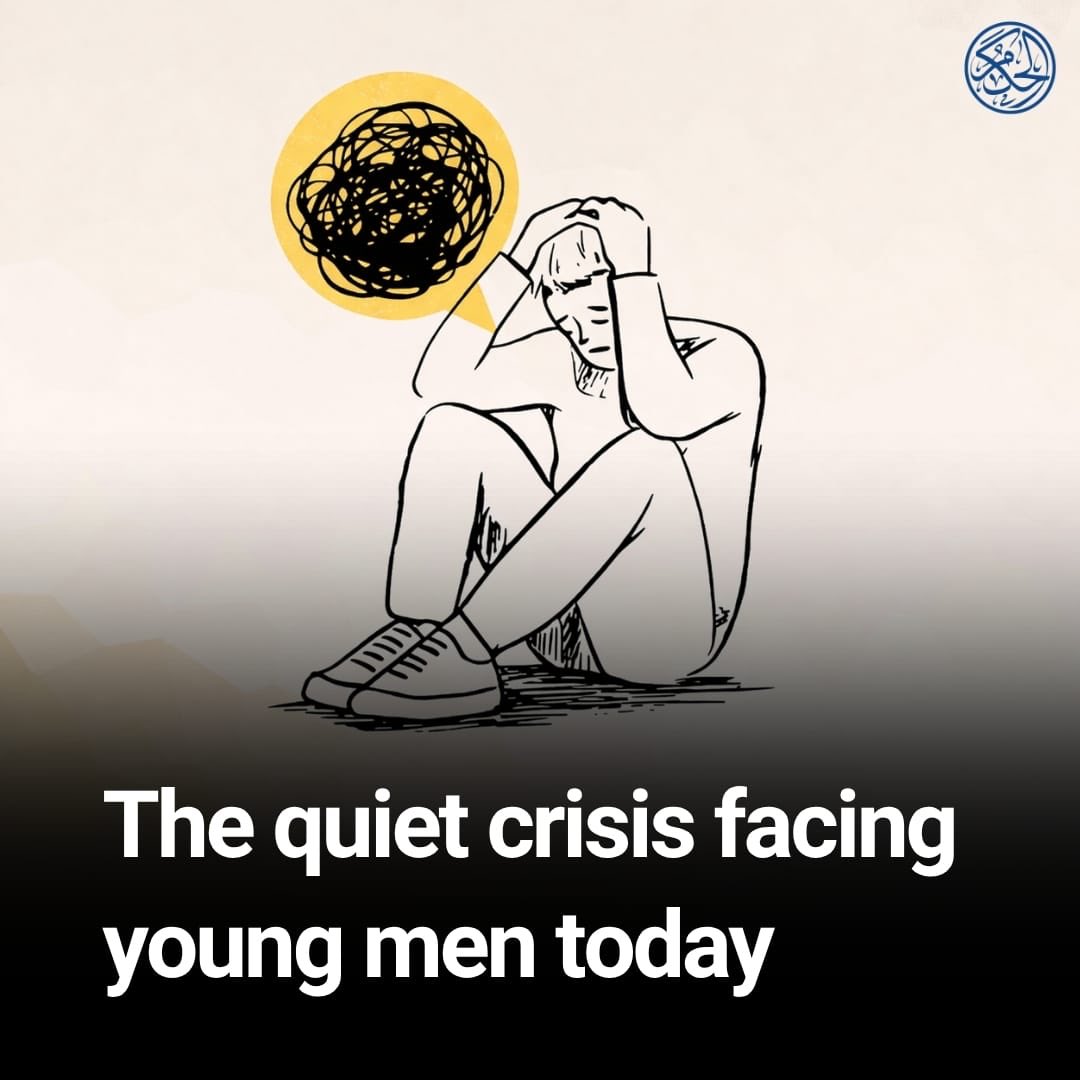
In homes, classrooms and communities across the world, a quiet crisis is unfolding. One that rarely dominates headlines yet increasingly shapes the future of societies. A growing number of boys and young men are struggling to find direction, stability and a sense of identity in a rapidly changing world. Parents sense it in the uncertainty of their sons, teachers observe it in classrooms, and community leaders witness it in the growing distance between young men and the institutions meant to guide them. The evidence of this struggle appears across multiple social indicators. In many countries, young men are falling behind in education and social development. Social data from many countries shows that men experience significantly higher rates of suicide, often two to four times higher depending on the country. According to data published by the World Health Organization, men account for the majority of suicide deaths globally, a pattern that appears consistently across cultures and regions. They are also disproportionately represented in incarceration statistics, drug addiction and school dropout rates. These patterns are not confined to one society or culture; they appear across much of the developed world. Though statistics do not tell the entire story, they point toward a deeper concern. Behind these numbers are young men who feel disconnected from meaningful work, uncertain about their future roles within family life, and unsure of where to seek guidance. Recognising these challenges does not diminish the remarkable progress women have made in education, professional life and public leadership. That progress has been both necessary and beneficial for society. However, the advancement of women should not obscure the difficulties that many boys and young men now face. Islam does not view human development as a competition between genders. Rather, it establishes a balanced system in which families, communities and faith work together to cultivate individuals of strong character and purpose. For much of history, young men were shaped by clear structures of mentorship within their societies. When these structures weaken, the process through which boys grow into responsible men becomes uncertain, leaving many young men to navigate adulthood without clear models of discipline, responsibility, and purpose. It is therefore essential to examine how faith, mentorship and family life can help restore direction for a generation of young men searching for meaning. For parents raising sons today, the question is becoming increasingly urgent: how do we prepare young men for a world that is changing faster than previous generations experienced? Tap on the link in bio to read the full article 👆
Al Hakam tweet media
English
2
38
65
1.2K
Al Hakam
Al Hakam@AlHakamWeekly·
When the name Martin Luther is mentioned today, many think of the 20th-century civil rights leader. Yet four centuries earlier, another Martin Luther stood at the centre of a struggle that reshaped Europe’s religious and political landscape. In very different contexts, both figures challenged powerful systems, guided not by ambition but by conscience. The early 16th century was marked by intellectual revival during the Renaissance, alongside immense institutional power. At the heart of European life stood the medieval Church, whose authority extended across religion, governance, and society. While it provided structure, many of its practices appeared increasingly distant from the original teachings of Christianity. Scripture remained largely inaccessible, preserved in Latin and mediated through clerical authority, widening the gap between leaders and ordinary believers. Within this fractured environment, Martin Luther, a German monk and theologian, emerged as an unlikely challenger. He did not seek to create a new church, but was compelled by conviction to question practices he believed contradicted core Christian principles. In 1517, he articulated that salvation depended on faith and divine grace, presenting his 95 propositions for discussion. What followed was transformative. The printing press enabled his ideas to spread rapidly, fuelling debate across Europe. Luther faced excommunication, political threats, and the possibility of death, yet refused to recant his beliefs. His defiance ignited the Protestant Reformation, breaking the unity of the Church and inspiring widespread religious and political change across Europe. From an Islamic perspective, however, this raises a deeper question: is conscience alone sufficient for lasting spiritual reform? While conscience can challenge injustice, Islam teaches that true and enduring renewal is achieved through divinely guided reformers. The Ahmadiyya Muslim Jamaat believes that Hazrat Mirza Ghulam Ahmad (as), the Promised Messiah, fulfilled this role, bringing reform through divine revelation rather than personal interpretation. Thus, while Luther’s movement emerged from sincere conviction, the distinction lies in divine guidance. Conscience may initiate change, but lasting unity and spiritual renewal, in Islamic thought, come through God’s intervention. Tap on the link in bio to read the full article 👆
Al Hakam tweet media
English
2
26
40
907
Al Hakam
Al Hakam@AlHakamWeekly·
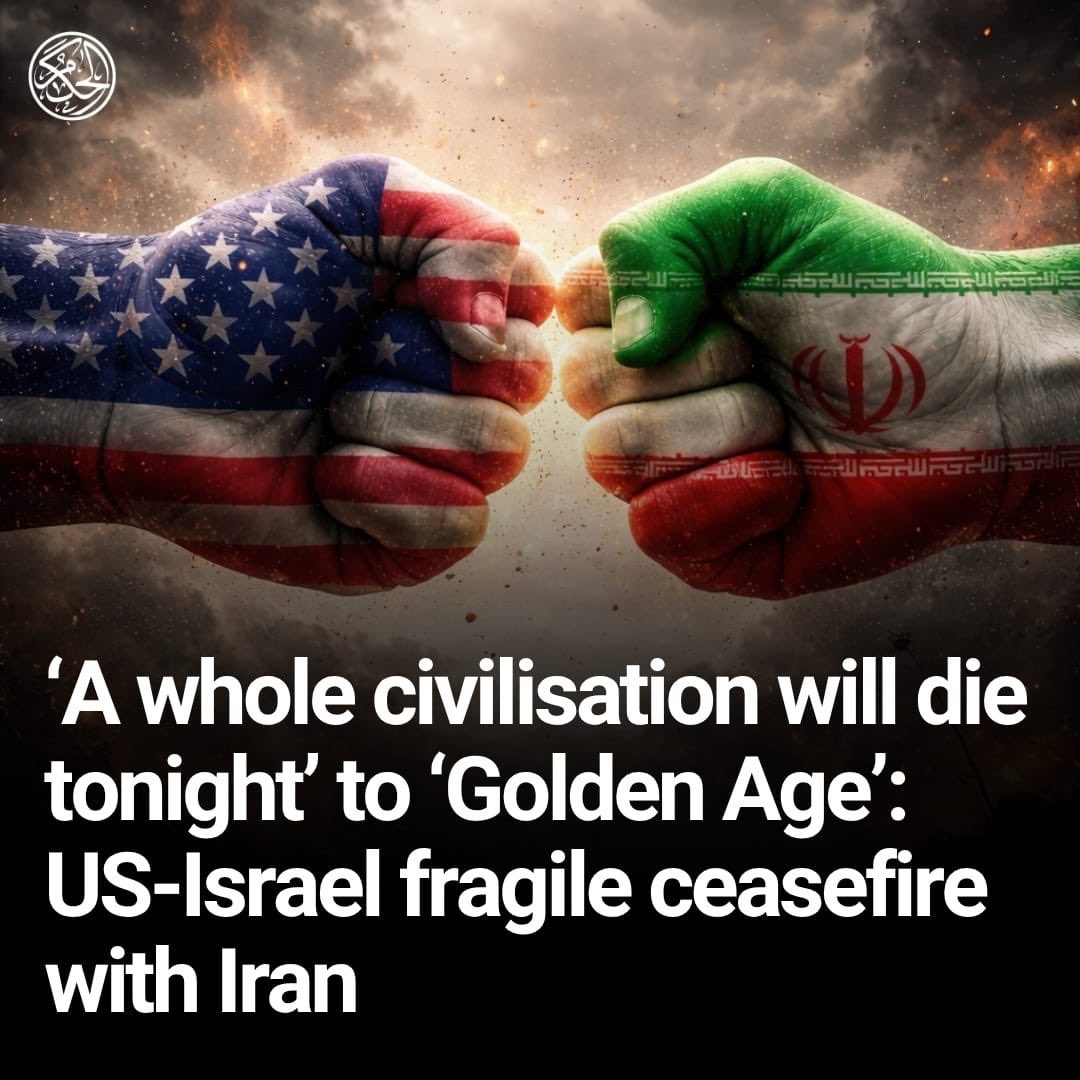
There is a well-known saying of the Holy Prophet Muhammad (sa) wherein he states that “actions are judged by intentions.” (Sahih al-Bukhari, Hadith 1) What a person or a nation truly intends eventually becomes clear and the truth becomes manifest. The ongoing situation in the Middle East painfully reflects this reality. Powerful countries speak of peace, stability and security. Yet their actions often suggest something very different. Their statements about war seem unclear and inconsistent. US President Donald Trump, who has often spoken about ending endless wars and told his supporters, “I’m not going to start a war”, has been associated with such policies and rhetoric that reveal these contradictions. Going against his earlier statements, Trump initiated a war with Iran under the guise of protecting and liberating citizens under oppression. However, as the situation escalated, his tone grew significantly harsher, with statements like “a whole civilisation will die tonight”, raising serious questions about the underlying intentions. There is hope that the current US-Israel ceasefire with Iran holds. But many people now feel that the promises of major powers no longer carry the same weight. Trust has been weakened and despite Lebanon being covered in the ceasefire, the recent attacks on its territory reflect this harsh reality. It is also difficult to understand the contrast in language. On one side, Trump threatens to push a sovereign nation “back to the stone age”. On the other hand, there are claims about helping the region reach a “Golden Age”. History tells us that the Golden Age of Islamic civilisation came at a time when societies were allowed to grow without constant outside interference. If there is a genuine desire to see progress in the Middle East, then perhaps the first step is to respect the sovereignty of its people. Serious questions are now being asked. Who should truly be called a terrorist – those who attack unarmed civilians or those who bomb schools and kill innocent children in violation of international law? These are not easy questions, but they cannot be ignored. At the same time, Muslims in the Middle East face an important responsibility. Internal divisions have often made the region weaker. Rising above theological differences could be a step towards unity and strength. Another important issue concerns public opinion. Do the majority of people in Iran actually want a change in their leadership through external intervention? “The Iranian people don’t want regime change forced by external powers”, Germany’s defence minister Boris Pistorius warned at a joint press conference with EU foreign policy chief Kaja Kallas, following their meeting in Berlin. If this is the case, then harming innocent civilians in the name of “liberation” raises serious moral concerns. Likewise, surveys in the United States show that a clear majority of the public does not support the war with Iran, with many believing that the decision to strike was wrong. If people do not want conflict, why do their leaders continue to move in that direction? It is also worth asking what the real objectives of this war were. How many of those goals have been achieved? If the answer is none, then the cost becomes even harder to justify. Lives have been lost and uncertainty has spread across the world. Tap on the link in bio to read the full article 👆
Al Hakam tweet media
English
2
27
50
849
Al Hakam
Al Hakam@AlHakamWeekly·
Latest research shows: Even moderate alcohol consumption is harmful to health. The global study from 2020 states that light to moderate consumption (up to 20 grams of alcohol per day, approximately one to two drinks) caused over 100,000 new cancer cases worldwide. That’s about one-seventh of all alcohol-related cancer cases. Many believe that a daily glass of wine or beer is harmless or even healthy – this is wrong. Science clearly shows: There is no safe level of alcohol consumption when it comes to cancer. Any amount of alcohol increases the risk of cancer. The study divides consumption into categories: 86% of cancer cases stem from risky or heavy drinking (over 20 grams per day). But even up to 10 grams of alcohol per day (about one drink) led to 41,300 cancer cases. Prevention campaigns must address not only alcoholism but also the risks of moderate drinking. The clear message: To reduce cancer risk, abstaining from alcohol is the safest option. Alcohol is a major cause of early deaths worldwide. The WHO states that many people die each year due to their alcohol consumption. These deaths affect not only a specific age group or gender, but men and young adults are particularly impacted. The reasons for alcohol-related deaths are varied and include acute poisonings, accidents, and chronic diseases such as liver cirrhosis, cancer, and cardiovascular diseases. According to the WHO report from 2019, approximately 2.6 million deaths worldwide were directly attributable to alcohol consumption. This accounts for 4.7% of all deaths in that year. Alcohol is a major threat to public health. Of these deaths, two million affected men and 0.6 million affected women, indicating a higher risk for men. Particularly alarming: In the 20 to 39-year-old age group, alcohol-related deaths accounted for 13% of all deaths. The causes are acute (e.g., alcohol poisoning, traffic accidents) and chronic (e.g., liver diseases, cancer, cardiovascular diseases). The Global Burden of Disease Study 2019 estimated that alcohol caused 116.0 million lost life years (DALYs), equivalent to 4.6% of global DALYs. Although alcohol-related deaths per 100,000 people decreased by 20.2% from 2010 to 2019, the absolute number remains high due to population growth. Considering all these problems of alcohol consumption, Islamic teachings show that Islam is a religion that seeks to save people not only spiritually but also in terms of health and society. Islam prohibits the consumption of alcohol. The Islamic stance on alcohol did not develop suddenly but emerged gradually through a phased revelation in the Quran and Hadith, at a time when alcohol consumption was very widespread in society. Islam has protected individuals, families, and entire communities from the severe negative consequences of alcohol. For this reason, alcohol was declared forbidden, or haram, to safeguard the physical, emotional, and spiritual health of individuals. Tap on the link in bio to read the full article 👆
Al Hakam tweet media
English
1
32
45
927
Al Hakam
Al Hakam@AlHakamWeekly·
Huzoor-e-Anwar (aa) granted the following guidance: “If there is a physical defect which is intended to be removed, then to seek treatment for that defect through this medical procedure is permissible. However, such procedures are not permissible when undertaken purely for fashion. This is because the Holy Prophet (sa) prohibited such practices when done solely for the sake of beautification, amounting to an attempt to alter the creation of God Almighty. “Another reason underlying this prohibition is that during the time of the Holy Prophet (sa), sexual immorality was rife among the Jews, and centres of vice also existed in Medina. The women involved in such vice would resort to practices such as tattooing their bodies, removing facial hair, creating gaps between their front teeth and attaching hair extensions to attain beauty in order to attract men towards themselves. For this reason, Allah’s Messenger (sa) expounded upon the abomination of these acts and forbade believing women from engaging in such practices. “Whilst clarifying a hadith of this nature, Hazrat Aisha (ra) states that al-wasilah [the woman who attaches hair extensions] does not mean the woman you perceive it to mean. For there is no harm if a woman has very little hair, so thin that the skin of her scalp is visible and she attaches braids of black wool or a plait to her hair. Remember, such a woman is by no means an al-wasilah. In reality, an al-wasilah is one who was a prostitute in her youth and when she grows old, she attaches a plait to her head to work as a procurer. [Because of her old age] no client comes to her. And [if any old client comes to her] both of them [this woman and her client] are introduced to one another due to this immorality. “Thus, Islam has based the outcome of actions upon intentions. Therefore, if there is a physical defect or an illness and a surgical treatment of this nature is adopted to rectify that physical flaw, that is permissible. However, such acts are not permissible when done merely for outward display before others.”
Al Hakam tweet media
English
2
41
102
2.2K