Ankur Singh, DNB (Path)

7.5K posts

Ankur Singh, DNB (Path) banner
Ankur Singh, DNB (Path)

Ankur Singh, DNB (Path)

@ankspath

Pathologist with interests in #molecularpath #GIpath and #oncopath #DNBPathology Here on Twitter for learning and sharing T/RT not medical advice

India Katılım Mayıs 2012
1.9K Takip Edilen1.7K Takipçiler
Ankur Singh, DNB (Path) retweetledi
Henry C Fung MD FACP FRCPE | Myeloma & CART
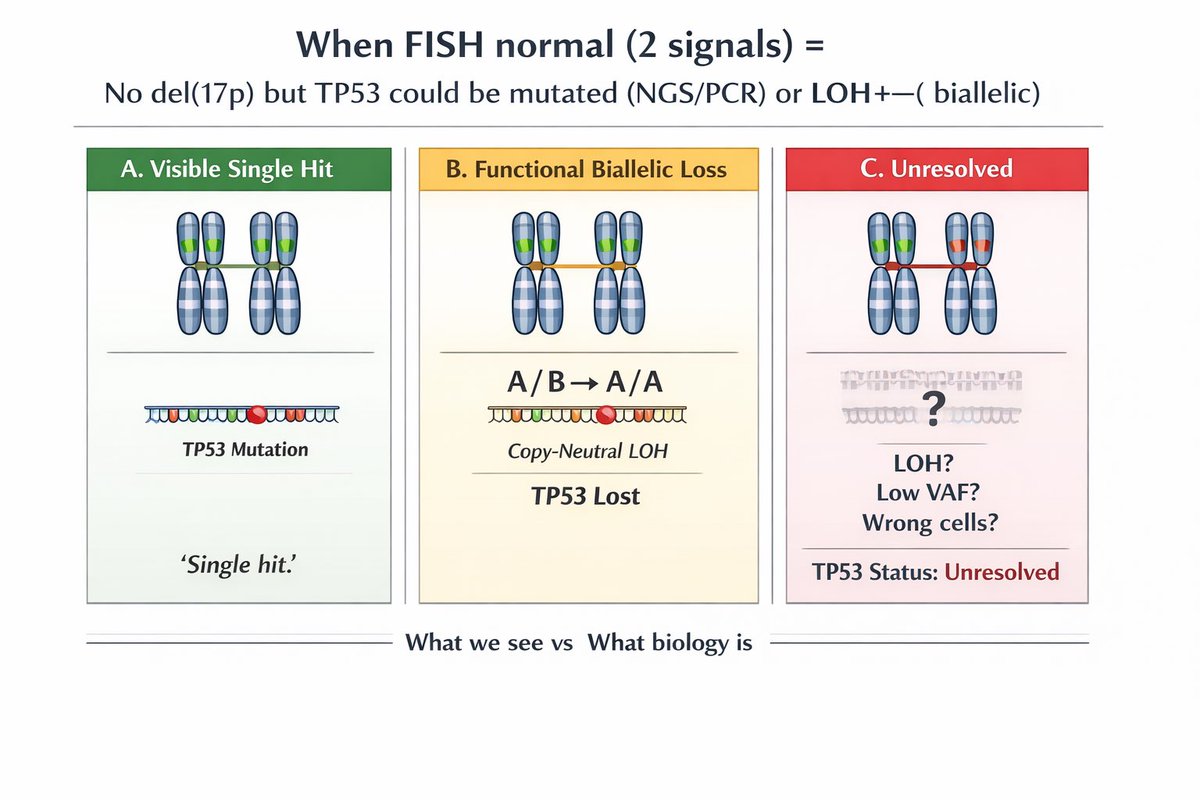
Biallelic TP53 loss is NOT included in IMS/IMWG 2024 risk stratification. Yet most would agree: this is ULTRA –High RISK myeloma. WHY ? Because we only include what we can measure. FISH detects del(17p) → only one hit NGS detects mutation → may suggest double hit but misses many VAF >60% is suggestive, not confirmatory CMA/SNP is key: • Detects copy-neutral LOH • Mutant allele duplicates, wild-type lost • True biallelic inactivation We measure deletions… BUT biology operates through loss of function. Bottom line: FISH + NGS + CMA are needed for full TP53 assessment Until then, we are under-calling ultra–high risk myeloma. #myeloma #MultipleMyeloma #Hemetwitter #smmm
Henry C Fung MD FACP FRCPE | Myeloma & CART tweet media
English
3
23
48
15.3K
Ankur Singh, DNB (Path) retweetledi
Dr Kamlesh Darji
Dr Kamlesh Darji@DrKamleshDarji1·
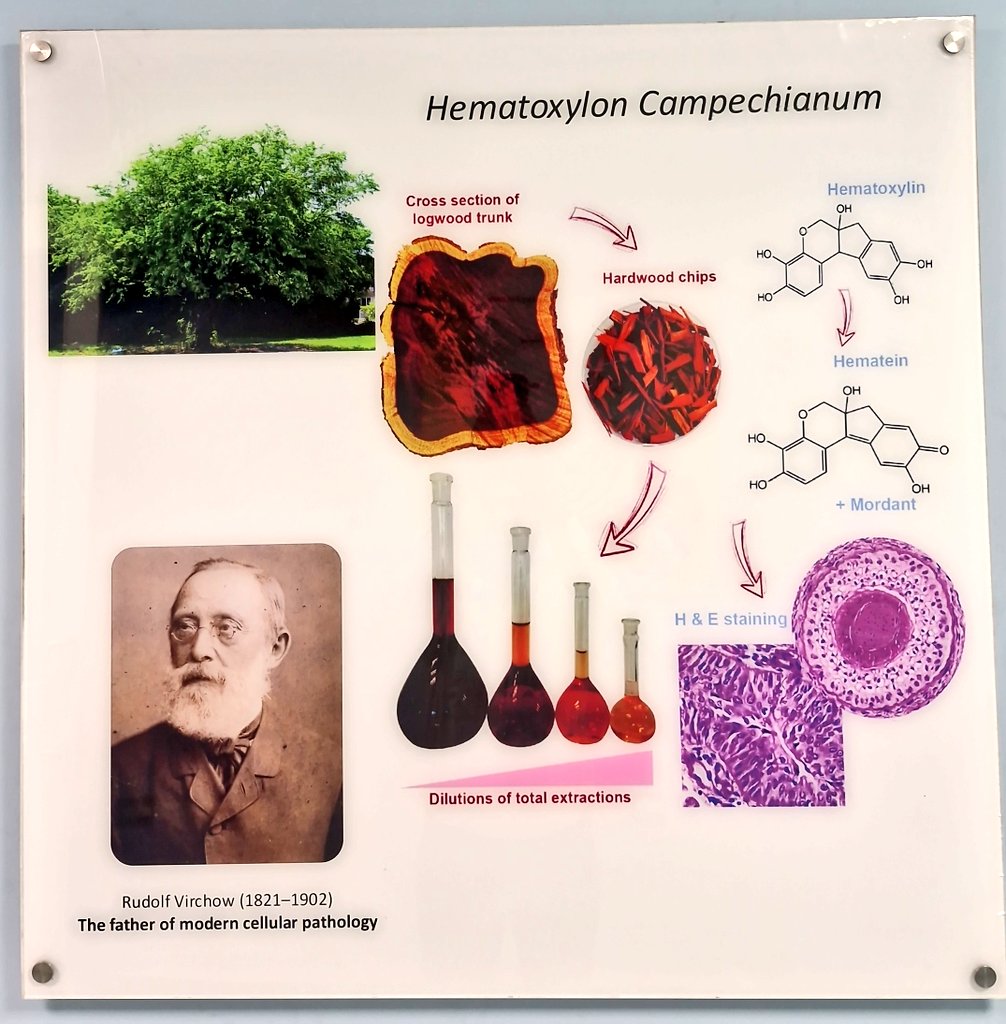
Pathology starts with a tree 🌳
Dr Kamlesh Darji tweet media
English
0
16
63
2.1K
Ankur Singh, DNB (Path) retweetledi
Nathan Punwani
Nathan Punwani@npunwani·
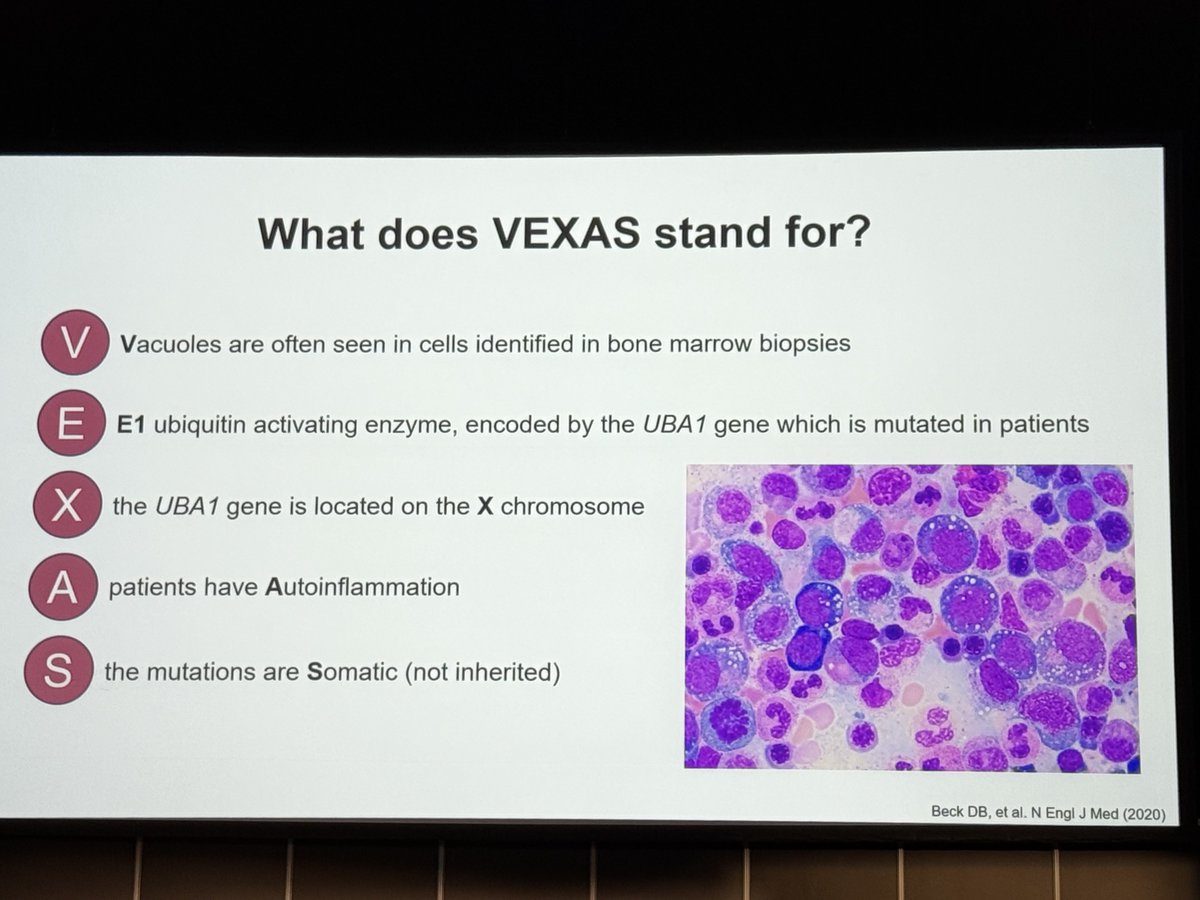
VEXAS Syndrome for Dummies #EBMT26
Nathan Punwani tweet mediaNathan Punwani tweet mediaNathan Punwani tweet mediaNathan Punwani tweet media
English
0
27
89
3.5K
Ankur Singh, DNB (Path) retweetledi
Dr. Chokri Ben Lamine
Dr. Chokri Ben Lamine@abouabdrahman0·
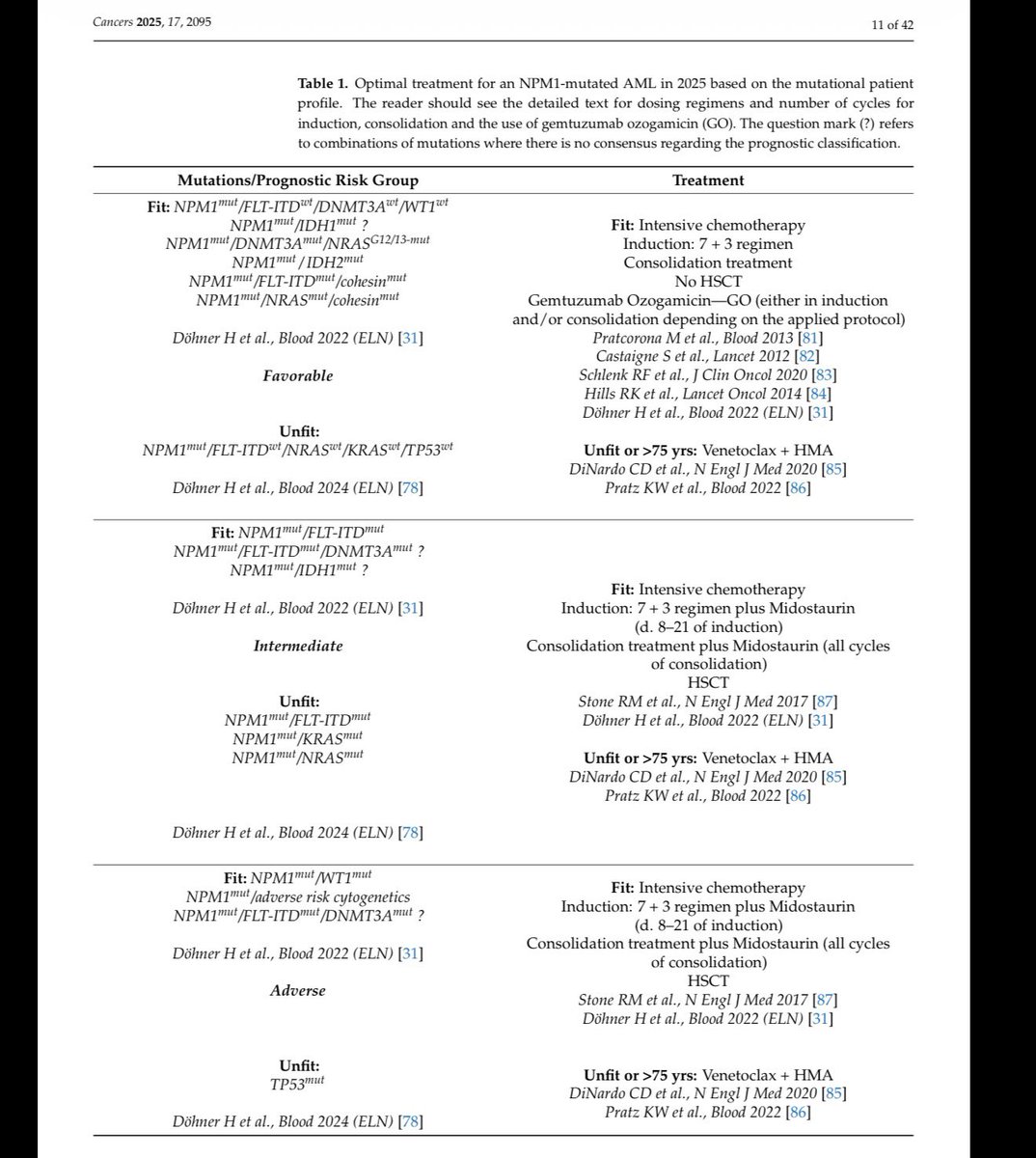
🧬 NPM1-mutated AML (2025): Treatment algorithm based on co-mutations 🩸 Practical interpretation of the treatment table from the review. 📊 Risk category + fitness → determines therapy strategy. (Source: review article on NPM1-mutated AML) ⸻ 💎credits for sharing for Dr Mostafa Saleh, KFSHRC 🧬 1️⃣ Favorable-risk NPM1-mut AML Typical molecular profile: 🔹 NPM1mut + FLT3-ITD WT 🔹 ± DNMT3A, IDH1/2, NRAS, cohesin 👨‍⚕️ Fit patients 💉 Induction → 7+3 (cytarabine + anthracycline) 🎯 Consider Gemtuzumab Ozogamicin (GO) in induction/consolidation 📦 Consolidation chemotherapy 🚫 No HSCT in CR1 👵 Unfit / >75 yrs 💊 Venetoclax + HMA (azacitidine/decitabine) ⸻ ⚖️ 2️⃣ Intermediate-risk NPM1-mut AML Typical profile: 🔹 NPM1mut + FLT3-ITD 🔹 NPM1mut + KRAS / NRAS 👨‍⚕️ Fit patients 💉 Induction → 7+3 + Midostaurin (FLT3 inhibitor) 📦 Consolidation → chemo + Midostaurin 🧬 Allogeneic HSCT in CR1 recommended 👵 Unfit 💊 Venetoclax + HMA ⸻ ⚠️ 3️⃣ Adverse-risk NPM1-mut AML Typical profiles: 🔹 NPM1mut + WT1mut 🔹 NPM1mut + adverse cytogenetics 🔹 TP53 mutation (dominant adverse biology) 👨‍⚕️ Fit patients 💉 7+3 + Midostaurin 📦 Consolidation + Midostaurin 🧬 Allogeneic HSCT strongly indicated 👵 Unfit 💊 Venetoclax + HMA ⸻ 🧠 Key clinical pearls 🧬 NPM1 mutation alone → ELN favorable risk 🔥 FLT3-ITD converts prognosis → intermediate risk ⚠️ TP53 or adverse cytogenetics → adverse risk 🧪 MRD monitoring 📉 PCR-based NPM1 transcript quantification is the preferred MRD marker. 📊 Treatment decision depends on: ✔️ molecular profile ✔️ patient fitness ✔️ transplant eligibility ⸻ #AML #NPM1 #ELN2022 #Hematology #Leukemia #PrecisionOncology #ASH #SOHO #KFSHRC
Dr. Chokri Ben Lamine tweet media
English
2
8
35
1.7K
Ankur Singh, DNB (Path) retweetledi
MV Chandrakanth
MV Chandrakanth@ChandrakanthMv·
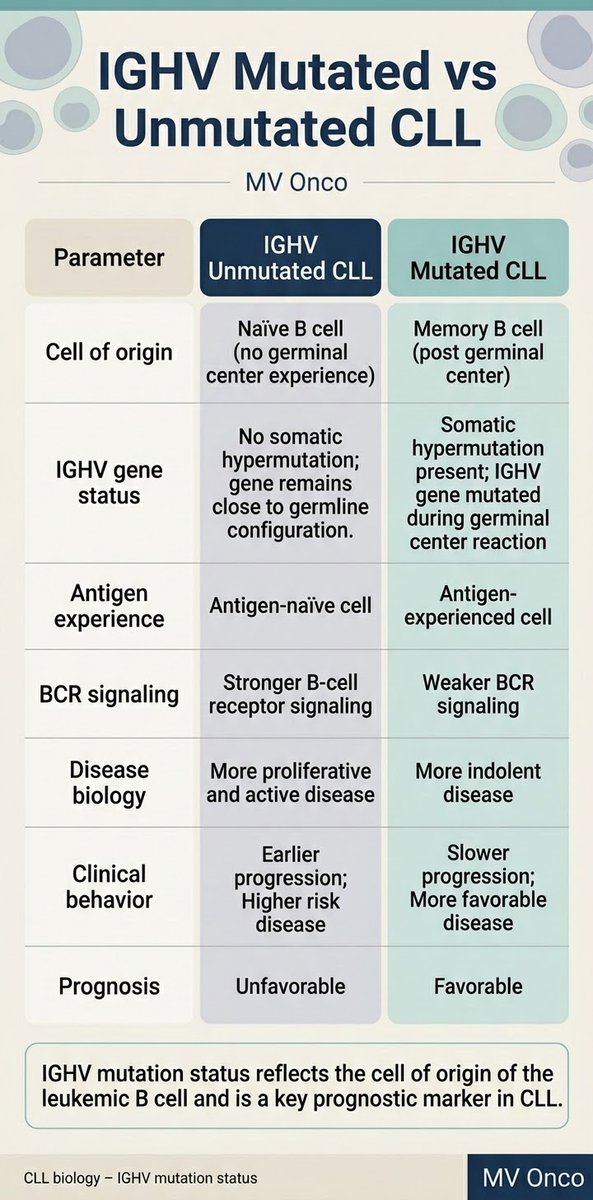
Why IGHV status matters in CLL 👇 • Unmutated IGHV → naïve B-cell origin • Mutated IGHV → memory B-cell origin • Stronger BCR signaling → aggressive disease • Mutated IGHV → more indolent CLL A key biological and prognostic marker. #MVOnco #CLL #Hematology
MV Chandrakanth tweet media
English
0
7
24
1.2K
Ankur Singh, DNB (Path) retweetledi
MV Chandrakanth
MV Chandrakanth@ChandrakanthMv·
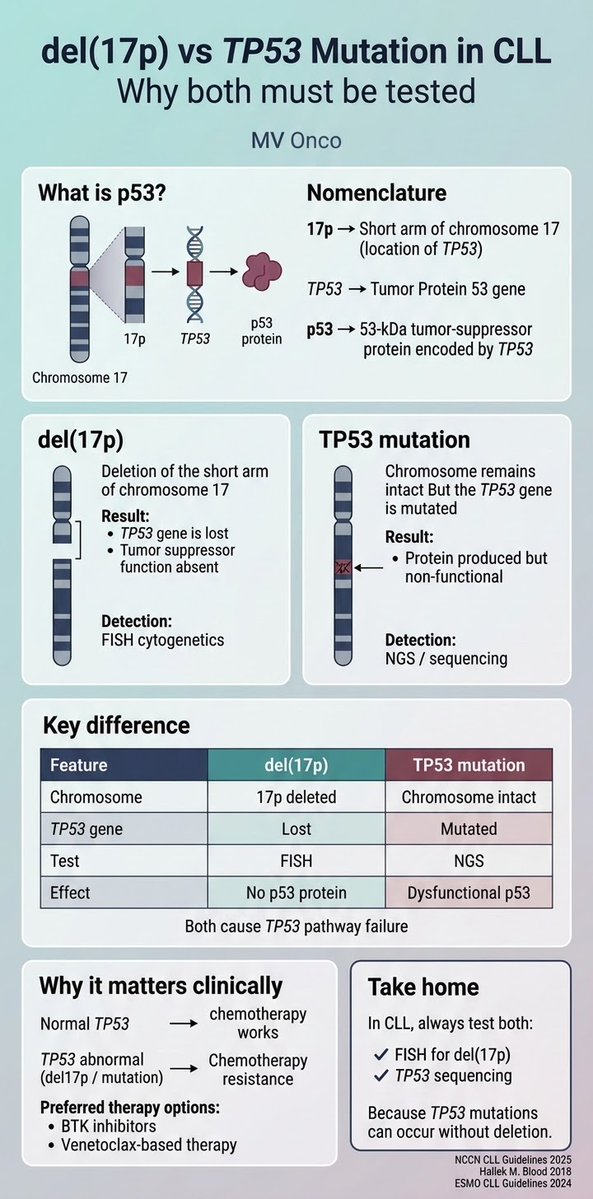
del(17p) vs TP53 mutation in CLL They are related but not identical. • 17p = chromosomal location • TP53 = gene • p53 = protein Both disrupt the p53 tumor-suppressor pathway and predict chemo resistance. Always test FISH + TP53 sequencing before therapy. #MVOnco #CLL #HemOnc
MV Chandrakanth tweet media
English
1
34
82
3.8K
Ankur Singh, DNB (Path) retweetledi
MV Chandrakanth
MV Chandrakanth@ChandrakanthMv·
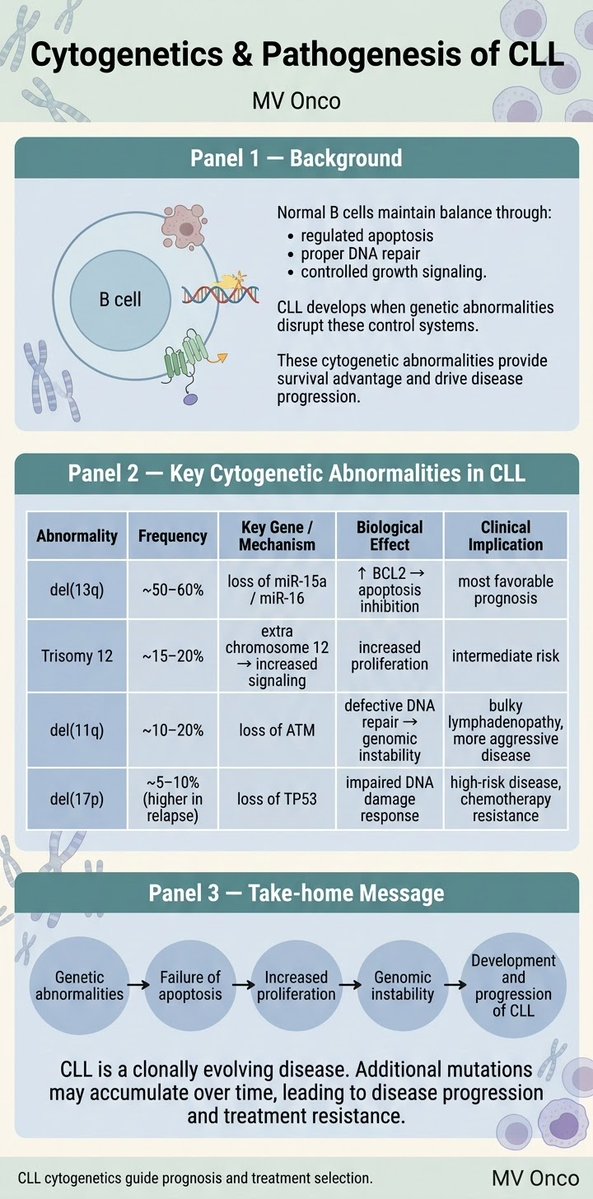
Cytogenetics explain the biology of CLL 👇 • del(13q) → ↑BCL2 → impaired apoptosis • Trisomy 12 → increased signaling • del(11q) → ATM loss → genomic instability • del(17p) → TP53 loss → therapy resistance CLL evolves-accumulating mutations. #MVOnco #CLL #Hematology
MV Chandrakanth tweet media
English
0
36
86
2.9K
Ankur Singh, DNB (Path) retweetledi
Rajal B Shah
Rajal B Shah@rajalbshah·
Join me as I go live on pathCast to discuss recent practice related recommendations from GUPS and ISUP on diagnosis, grading and reporting of intraductal carcinoma of the prostate @pathcast?si=oS57TRSRoalRIUWz" target="_blank" rel="nofollow noopener">youtube.com/@pathcast?si=o…
Rajal B Shah tweet media
English
0
13
38
2.8K
Ankur Singh, DNB (Path) retweetledi
Dr. Chokri Ben Lamine
Dr. Chokri Ben Lamine@abouabdrahman0·
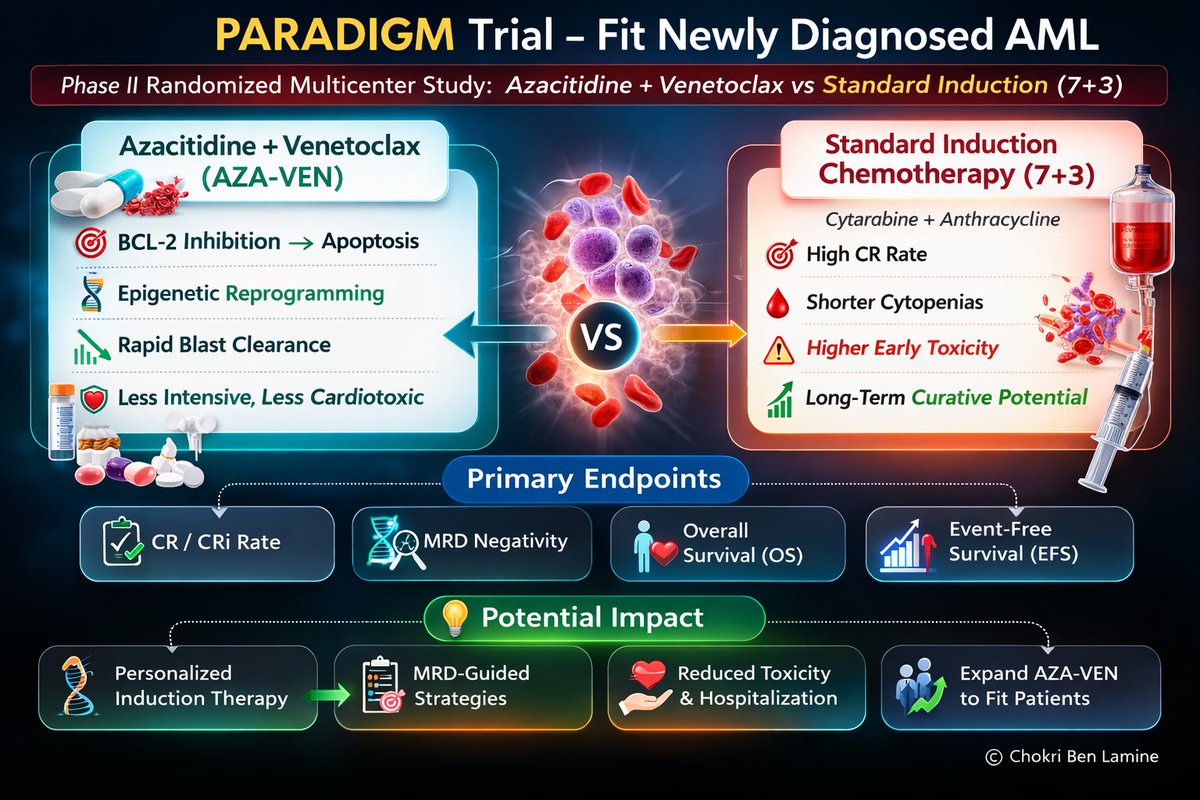
🧬 PARADIGM Trial — Azacitidine + Venetoclax vs Intensive Chemotherapy in Fit Newly Diagnosed AML (Phase II randomized multicenter study) ⸻ 🧵 50 High-Yield Pearls (Tweet-Style with Emojis) 1️⃣ 🧬 PARADIGM trial explores if AZA + VEN can replace intensive induction in fit newly diagnosed AML. 2️⃣ 🎯 Standard of care for fit AML remains 7+3 induction → high CR but significant toxicity. 3️⃣ 💊 Azacitidine + Venetoclax previously revolutionized therapy for unfit/elderly AML. 4️⃣ ❓ Key question: Can AZA-VEN work in younger fit AML patients? 5️⃣ 🧪 Phase II randomized multicenter trial. 6️⃣ 👥 Population: Newly diagnosed adult AML considered fit for intensive therapy. 7️⃣ ⚖️ Randomization: AZA-VEN vs standard induction chemotherapy. 8️⃣ 🧬 Venetoclax → BCL-2 inhibitor causing mitochondrial apoptosis. 9️⃣ 🧫 Azacitidine → hypomethylating agent restoring tumor suppressor gene expression. 🔟 💥 Combination synergy: epigenetic reprogramming + apoptotic priming. 11️⃣ 🧪 Primary endpoint: CR/CRi rate. 12️⃣ 📊 Secondary endpoints: OS, EFS, MRD negativity, safety. 13️⃣ 🔬 MRD assessment increasingly used in AML response evaluation. 14️⃣ 🧠 Venetoclax is particularly effective in IDH-mutated AML. 15️⃣ 🧬 Also active in NPM1-mutated AML. 16️⃣ 📉 Historically lower activity in TP53-mutated AML. 17️⃣ ⚠️ Intensive chemo remains superior for FLT3-mutated AML when targeted therapy added. 18️⃣ 🧪 AZA-VEN produces rapid blast clearance. 19️⃣ ⏱ Response typically occurs within first 1–2 cycles. 20️⃣ 🧫 Bone marrow aplasia often occurs during therapy. 21️⃣ 🩸 Prolonged cytopenias are common toxicity. 22️⃣ 🦠 Infection risk remains major complication. 23️⃣ ⚕️ Careful antimicrobial prophylaxis required. 24️⃣ 💊 Venetoclax requires dose adjustment with azole antifungals. 25️⃣ 📉 Tumor lysis risk in AML is lower than in CLL but still monitored. 26️⃣ 🔬 MRD negativity correlates with longer survival outcomes. 27️⃣ 🧠 Non-intensive therapy may allow better tolerability in selected fit patients. 28️⃣ 📊 Trial evaluates whether remission depth equals that of chemotherapy. 29️⃣ 🧪 Key clinical debate: efficacy vs durability of response. 30️⃣ ⚖️ Intensive chemotherapy still offers long-term curative potential. 31️⃣ 🧬 Allo-SCT remains critical consolidation strategy. 32️⃣ 🧪 Venetoclax regimens increasingly used as bridge to transplant. 33️⃣ 🧠 Molecular subtype likely influences response. 34️⃣ 🔬 MRD-guided strategies may emerge from such trials. 35️⃣ 🧫 Venetoclax regimens show high CR rates in older AML (~65–70%). 36️⃣ 📉 Toxicity profile generally less cardiotoxic than anthracycline regimens. 37️⃣ ⚕️ Hospitalization duration may be shorter with AZA-VEN. 38️⃣ 🩺 Early mortality may be lower than intensive induction. 39️⃣ 🧪 However cytopenias often prolonged compared with chemotherapy. 40️⃣ 🔬 Resistance mechanisms include BCL-XL upregulation and mitochondrial adaptation. 41️⃣ 🧬 Combination strategies under investigation: VEN + targeted inhibitors. 42️⃣ 💊 Trials evaluating VEN + FLT3 inhibitors. 43️⃣ 🧪 Also VEN + IDH inhibitors. 44️⃣ 🧬 Personalized AML therapy increasingly genomics-driven. 45️⃣ ⚖️ PARADIGM contributes to debate: Should all AML patients receive intensive therapy? 46️⃣ 🧠 Fit status alone may not determine optimal therapy. 47️⃣ 📊 MRD-guided adaptive therapy likely future paradigm. 48️⃣ 🧪 Non-intensive therapy may expand frontline AML options. 49️⃣ 🔬 Final interpretation depends on survival outcomes vs CR rate. 50️⃣ 🚀 Trial represents step toward precision-tailored induction therapy in AML.
Dr. Chokri Ben Lamine tweet media
English
2
14
54
1.9K
Ankur Singh, DNB (Path) retweetledi
Dr. Chokri Ben Lamine
Dr. Chokri Ben Lamine@abouabdrahman0·
💉 Eculizumab in Hematology — High-Yield Clinical Pearls 1️⃣ Eculizumab = humanized monoclonal antibody against C5 complement. 2️⃣ Blocks terminal complement activation (C5 → C5a + C5b). 3️⃣ Prevents membrane attack complex (MAC, C5b-9) formation. 4️⃣ Main effect → prevents complement-mediated hemolysis. 5️⃣ One of the first complement inhibitors in clinical hematology. ⸻ 🎯 Main Hematology Indications 6️⃣ Paroxysmal Nocturnal Hemoglobinuria (PNH). 7️⃣ Atypical Hemolytic Uremic Syndrome (aHUS). 8️⃣ Complement-mediated TMA. 9️⃣ Refractory transplant-associated TMA (TA-TMA) post SCT. 🔟 Severe complement-driven hemolysis. ⸻ 🧬 PNH Mechanism 1️⃣1️⃣ PNH caused by PIGA mutation. 1️⃣2️⃣ Loss of GPI anchors. 1️⃣3️⃣ Deficiency of CD55 and CD59. 1️⃣4️⃣ RBC vulnerable to complement-mediated lysis. 1️⃣5️⃣ Eculizumab blocks terminal complement → reduces intravascular hemolysis. ⸻ 📊 Benefits in PNH 1️⃣6️⃣ Reduces hemolysis (LDH normalization). 1️⃣7️⃣ Decreases transfusion requirement. 1️⃣8️⃣ Improves quality of life. 1️⃣9️⃣ Reduces thrombosis risk. 2️⃣0️⃣ Improves overall survival. ⸻ 🧪 Dosing (PNH) 2️⃣1️⃣ Induction phase: 600 mg IV weekly × 4 weeks. 2️⃣2️⃣ Week 5: 900 mg IV. 2️⃣3️⃣ Maintenance: 900 mg IV every 2 weeks. 2️⃣4️⃣ Lifelong therapy often required. 2️⃣5️⃣ Rapid complement blockade after initiation. ⸻ 🧬 aHUS 2️⃣6️⃣ aHUS = complement dysregulation disease. 2️⃣7️⃣ Causes TMA with renal failure. 2️⃣8️⃣ Often due to factor H, factor I, MCP mutations. 2️⃣9️⃣ Eculizumab is first-line therapy. 3️⃣0️⃣ Prevents ongoing endothelial injury. ⸻ 🩸 TA-TMA (Post SCT) 3️⃣1️⃣ Occurs after allogeneic HSCT. 3️⃣2️⃣ Complement activation central mechanism. 3️⃣3️⃣ Presents with MAHA + thrombocytopenia + renal injury. 3️⃣4️⃣ High mortality if untreated. 3️⃣5️⃣ Eculizumab improves survival in refractory cases. ⸻ ⚠️ Safety Issues 3️⃣6️⃣ Major risk → Neisseria meningitidis infection. 3️⃣7️⃣ Vaccination mandatory before therapy. 3️⃣8️⃣ Give meningococcal vaccine ≥2 weeks before start if possible. 3️⃣9️⃣ If urgent therapy → start antibiotic prophylaxis. 4️⃣0️⃣ Monitor for encapsulated bacterial infections. ⸻ 🔬 Monitoring 4️⃣1️⃣ LDH levels. 4️⃣2️⃣ Hemoglobin trend. 4️⃣3️⃣ Reticulocyte count. 4️⃣4️⃣ Complement activity (CH50 suppression). 4️⃣5️⃣ Clinical hemolysis markers. ⸻ ⚡ Newer Complement Inhibitors 4️⃣6️⃣ Ravulizumab = long-acting C5 inhibitor. 4️⃣7️⃣ Dosing every 8 weeks. 4️⃣8️⃣ Similar efficacy to eculizumab. 4️⃣9️⃣ Approved for PNH and aHUS. 5️⃣0️⃣ Other emerging drugs: pegcetacoplan (C3 inhibitor). ⸻ 🧠 Board-Style MCQ ❓ A patient with PNH presents with recurrent hemolysis and thrombosis. Flow cytometry shows CD55/CD59 deficiency. Best targeted therapy? A. Rituximab B. Eculizumab C. Imatinib D. Cyclophosphamide ✅ Answer: B — Eculizumab Explanation: Eculizumab blocks C5 complement activation, preventing intravascular hemolysis in PNH. ⸻ 📚 References •Hill A et al. The complement inhibitor eculizumab in PNH. NEJM. nejm.org/doi/full/10.10… •Kulasekararaj AG et al. Ravulizumab vs eculizumab in PNH. Blood. ashpublications.org/blood/article/… •Jodele S et al. Complement blockade for transplant-associated TMA. Blood. ashpublications.org/blood/article/…
English
0
7
13
753
Ankur Singh, DNB (Path) retweetledi
Dr. Chokri Ben Lamine
Dr. Chokri Ben Lamine@abouabdrahman0·
🧬 ETP-ALL vs Non-ETP T-ALL — High-Yield Hematology Pearls ⸻ 🧫 Early T-Precursor ALL (ETP-ALL) 1️⃣ ETP-ALL = high-risk subtype of T-cell ALL. 2️⃣ Represents ~10–15% of T-ALL. 3️⃣ Derived from very early thymic progenitors. 4️⃣ Shows stem-cell / myeloid features. 5️⃣ Immunophenotype overlaps with AML markers. ⸻ 🔬 Immunophenotype (Key Feature) 6️⃣ CD1a negative. 7️⃣ CD8 negative. 8️⃣ CD5 weak or absent (<75%). 9️⃣ Stem cell / myeloid markers present. 🔟 Examples: CD34, CD117, HLA-DR. ⸻ 11️⃣ Often expresses CD13 or CD33. 12️⃣ May express FLT3. 13️⃣ Sometimes expresses CD11b. 14️⃣ Immature T markers CD7 and cytoplasmic CD3 positive. 15️⃣ Surface CD3 typically negative. ⸻ 🧬 Molecular Features 16️⃣ Frequently FLT3 mutations. 17️⃣ DNMT3A mutations reported. 18️⃣ IDH1/2 mutations possible. 19️⃣ RAS pathway mutations common. 20️⃣ Molecular profile resembles myeloid leukemia. ⸻ ⚠️ Clinical Features 21️⃣ Often presents with high-risk disease. 22️⃣ Poor early response to therapy. 23️⃣ Higher MRD positivity rates. 24️⃣ Historically associated with inferior outcomes. 25️⃣ More frequent chemoresistance. ⸻ 💊 Treatment Considerations 26️⃣ Treated with intensive ALL protocols. 27️⃣ MRD monitoring essential. 28️⃣ Allogeneic SCT often considered in CR1. 29️⃣ Targeted therapy possible if FLT3 mutated. 30️⃣ Increasing interest in venetoclax-based strategies. ⸻ 🧬 Non-ETP T-ALL 31️⃣ Represents majority of T-ALL cases. 32️⃣ Derived from more mature thymic T-cells. 33️⃣ Distinct immunophenotype from ETP. 34️⃣ Better response to chemotherapy. 35️⃣ Generally better prognosis. ⸻ 🔬 Immunophenotype 36️⃣ CD1a positive in many cases. 37️⃣ CD8 often positive. 38️⃣ CD5 strongly positive. 39️⃣ Myeloid markers usually absent. 40️⃣ Typical T-cell markers strongly expressed. ⸻ 🧬 Molecular Abnormalities 41️⃣ NOTCH1 mutations common. 42️⃣ FBXW7 mutations frequent. 43️⃣ TAL1 rearrangements possible. 44️⃣ CDKN2A deletions common. 45️⃣ Different genomic landscape than ETP. ⸻ 📊 Clinical Outcomes 46️⃣ Higher complete remission rates. 47️⃣ Better MRD clearance. 48️⃣ Improved event-free survival. 49️⃣ Lower relapse risk vs ETP. 50️⃣ SCT usually MRD-guided rather than routine. ⸻ 🧠 Board-Style MCQ ❓ Flow cytometry in a T-ALL patient shows: CD1a negative, CD8 negative, CD5 weak, CD34 positive, CD117 positive. Most likely subtype? A. Mature T-ALL B. Early T-precursor ALL C. B-ALL D. Mixed phenotype leukemia ✅ Answer: B — Early T-precursor ALL Explanation: CD1a−, CD8−, weak CD5 with stem/myeloid markers (CD34/CD117) is classic ETP-ALL immunophenotype. ⸻ 📚 References •Coustan-Smith E et al. Early T-cell precursor ALL. Lancet Oncology. sciencedirect.com/science/articl… •Jain N et al. ETP-ALL biology and therapy. Blood. ashpublications.org/blood/article/… •NCCN Guidelines — Acute Lymphoblastic Leukemia nccn.org/guidelines/gui…#ETPALL #TALL #Leukemia #Hematology #FlowCytometry #KFSHRC #ESHHematology
English
0
9
25
973
Ankur Singh, DNB (Path) retweetledi
Mamtha Balla, MD, MPH, FACP
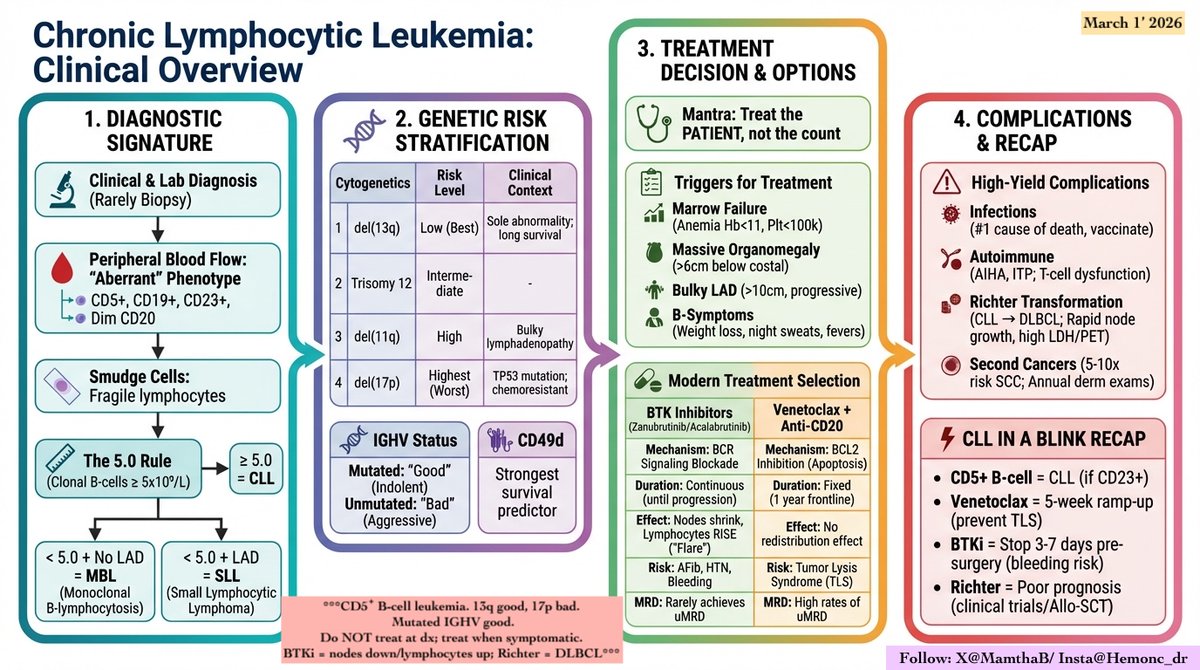
🩸 Chronic Lymphocytic Leukemia (CLL) – Board‑Style at a Glance (Follow ASCO/ASH/NCCN for latest updates) 🎯 CLL = CD5⁺ B‑cell leukemia. 13q = good, 17p = bad, mutated IGHV = good. Don’t treat at dx; treat when symptomatic. BTKi = nodes down, lymphocytes up. Richter = DLBCL. 💫“Mantra: Do NOT treat at dx; treat when symptomatic.💫 ->Most common adult leukemia; median age ~72 ->Older patient + lymphocytosis → think CLL ->Indolent mature B‑cell neoplasm; complications from immune dysfunction 1️⃣ Diagnosis ->Flow only: clonal CD5⁺ CD19⁺ CD23⁺ B cells ≥5 × 10⁹/L. ->Smudge cells on smear/CT not routinely needed. <5 × 10⁹/L + no LAD = MBL; <5 × 10⁹/L + LAD = SLL. 2️⃣ Genetics & Risk del(13q) 👍 best; trisomy 12 😐; del(11q) 👎; del(17p)/TP53 = worst, chemo‑resistant. Mutated IGHV = indolent; unmutated = aggressive. CD49d = strongest flow‑based prognostic marker. 💡 CD5⁺ B cell = think CLL. 3️⃣ When to Treat ->Treat the patient, not the lymphocyte count. ->Start therapy for: marrow failure (Hb <11, Plt <100k), bulky LAD/organomegaly, B‑symptoms, refractory autoimmune cytopenias. Rai 0–IV “0 = lymphocytosis only “III–IV = cytopenias from marrow failure Binet “A/B = ≤ or ≥3 areas, no cytopenias” “C = anemia and/or thrombocytopenia” 4️⃣ Therapy Choice: Frontline options: BTK inhibitors (ibrutinib, acalabrutinib, zanubrutinib) = continuous; venetoclax + anti‑CD20 = fixed duration (1–2 yrs, deep MRD Continuous vs Fixed 1. BTKi (acalabrutinib/zanubrutinib): BCR signaling block, continuous, nodes shrink + lymphocytes rise, risks = AFib, HTN, bleeding, hold 3–7 days pre‑op. 2. Venetoclax + anti‑CD20 (Obinutuzumab/Rituximab): BCL2 inhibition, 1‑2 yr fixed, high uMRD, must use 5‑week TLS ramp‑up.neutropenia main issue; excellent in mutated IGHV. 🚨17p = bad actor; BTKi preferred; del(17p) still high‑risk on ven. 5️⃣ Complications 1. Infections (top killer) → vaccinate (no live vaccines). 2. Autoimmune cytopenias (AIHA, ITP) from T‑cell dysfunction. 3. Second cancers (↑ skin SCC 5–10×) → annual derm exams. 4. Richter: CLL → DLBCL, rapid nodes + high LDH/SUV → trial/allo‑SCT. ⚡️ CLL in a blink: ->CD5⁺/CD23⁺ B‑cell → CLL. ->13q good, 17p bad. ->Venetoclax = TLS ramp‑up. ->BTKi = continuous, bleed risk around surgery. ->Richter = DLBCL, very poor prognosis. #MedTwitter #MedEd #HemOnc #OncTwitter #Leukemia #CLL #HemeOnc #BoardReview #USMLE #ABIM #FellowTwitter #InternalMedicine #FOAMed #OncoMedEd #CancerEducation @ASH_hematology @ASCOorg @theNCCN @EHA_Hematology @EuropeanHemOnc @CLLSociety @LeukemiaLymphoma @MDAndersonNews @DanaFarber @MayoClinic @ClevelandClinic @JCO_ASCO @BloodPortfolio @realbowtiedoc @IMG_Oncologists @HemOncFellows
Mamtha Balla, MD, MPH, FACP tweet media
English
1
24
59
2.6K
Ankur Singh, DNB (Path) retweetledi
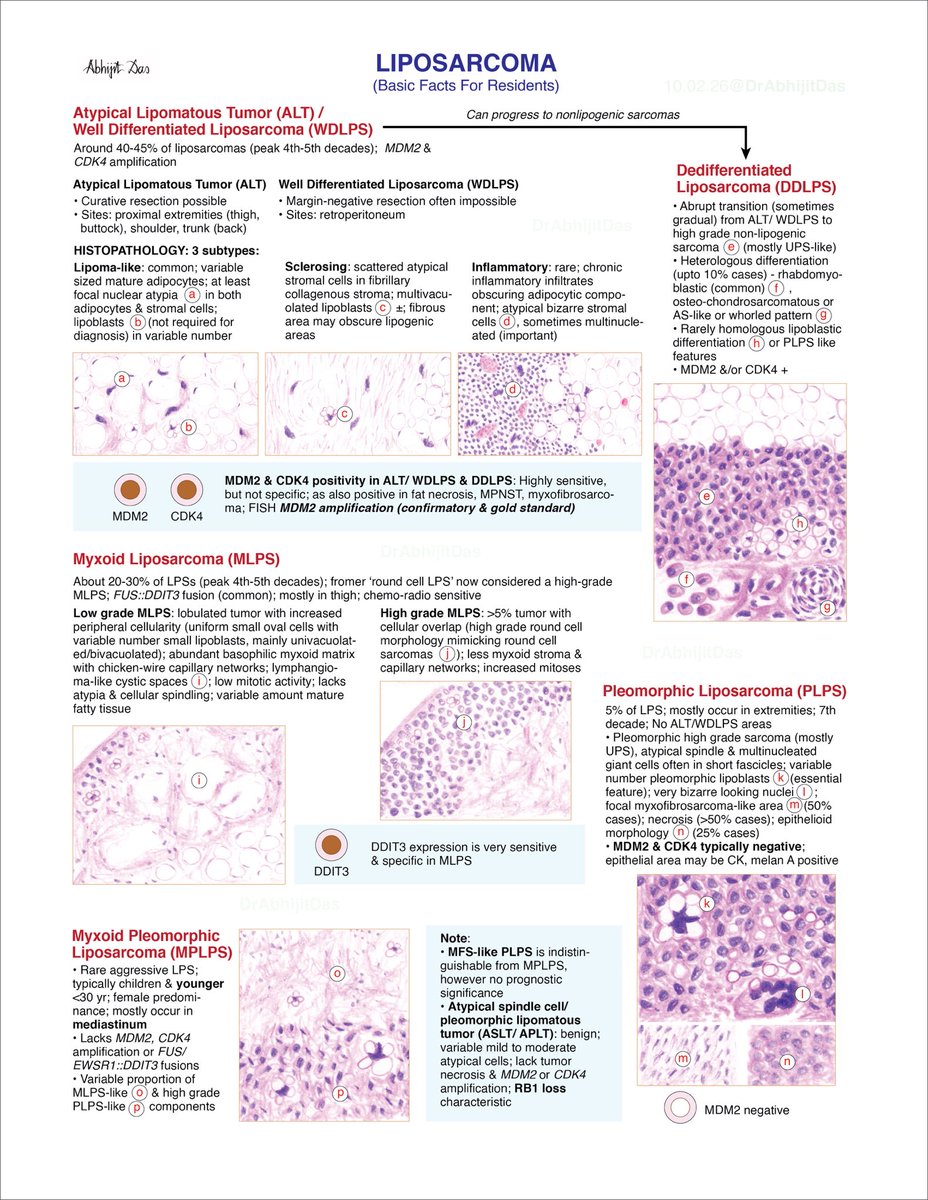
Abhijit Das, MD
Abhijit Das, MD@AbhijitSurgPath·
Liposarcoma: types & salient features (Basic facts for residents)
Abhijit Das, MD tweet media
English
1
67
145
7.1K
Ankur Singh, DNB (Path) retweetledi
Dr. Chokri Ben Lamine
Dr. Chokri Ben Lamine@abouabdrahman0·
🧬 CML – Typical Morphology, Cytogenetics & Molecular Genetics 🧵🔥 Adult 🩸 1️⃣ Peripheral Blood Morphology 🔬 Marked leukocytosis (often >100 ×10⁹/L) 📈 Full spectrum myeloid maturation (myelocytes peak) ⬆️ Basophilia 🔥 (key diagnostic clue) ⬆️ Eosinophilia (mild–moderate) 🧪 Blasts <10% in chronic phase 🫛 Splenomegaly common (clinical correlation) 💡 “Left shift without maturation arrest” 🦴 2️⃣ Bone Marrow Morphology 📊 Hypercellular (>90% cellularity typical) 🔥 Myeloid:erythroid ratio ↑↑ (often 10–30:1) 🧬 Marked granulocytic hyperplasia 🟣 Small hypolobated megakaryocytes (“dwarf megakaryocytes”) classic 📉 Basophils increased 🧪 Reticulin usually minimal in chronic phase 🧬 3️⃣ Cytogenetics (Karyotype) 🎯 Hallmark = Philadelphia chromosome 🧬 t(9;22)(q34;q11) Creates shortened chromosome 22 Detected by: ✔ Conventional karyotype ✔ FISH 📊 Found in ~90–95% cases Variant Ph translocations (5–10%) → complex rearrangements 🧪 4️⃣ Molecular Genetics Fusion gene: 🧬 BCR::ABL1 Location: Chromosome 22 (BCR) + Chromosome 9 (ABL1) Common transcripts: 🔹 p210 (major – typical CML) 🔹 p190 (rare in CML, more in ALL) 🔹 p230 (rare, indolent variant) Mechanism: ⚡ Constitutive tyrosine kinase activation 📈 Activates RAS/MAPK 📈 PI3K/AKT 📈 JAK/STAT → uncontrolled proliferation + apoptosis resistance 📊 5️⃣ Phases & Genetic Evolution 🟢 Chronic phase: blasts <10% 🟡 Accelerated phase: 10–19% blasts or clonal evolution 🔴 Blast crisis: ≥20% blasts (AML-like or ALL-like) ⚠️ Additional cytogenetic abnormalities in progression: +8 i(17q) +Ph +19 These mark clonal evolution 🔥 🎯 6️⃣ Molecular Monitoring 🧪 Quantitative PCR for BCR-ABL1 (International Scale) Key milestones: ✔ ≤10% at 3 months ✔ ≤1% at 6 months ✔ ≤0.1% (MMR) at 12 months Deep molecular response: MR4 (≤0.01%) MR4.5 💊 7️⃣ Therapeutic Target All therapy built around tyrosine kinase inhibition: 🧬 🧬 🧬 🧬 🧬 (T315I mutation) 🧠 High-Yield Exam Pearls 🔥 Basophilia = strong clue 🔥 Low LAP score (historically tested) 🔥 Dwarf megakaryocytes classic 🔥 p210 transcript typical 🔥 Always monitor by PCR, NOT by morphology alone CML is the prototype molecular-driven leukemia — morphology suggests it, cytogenetics confirms it, molecular biology defines prognosis and therapy. #CML #PhiladelphiaChromosome #BCRABL1 #Myeloproliferative #Hematology 🧬🔥
Română
0
4
17
568