AnnalsofEM

3.6K posts

AnnalsofEM banner
AnnalsofEM

AnnalsofEM

@AnnalsofEM

Official journal of American College of Emergency Physicians ; #1 cited EM research journal

Dallas, TX Katılım Kasım 2011
132 Takip Edilen23K Takipçiler
AnnalsofEM
AnnalsofEM@AnnalsofEM·
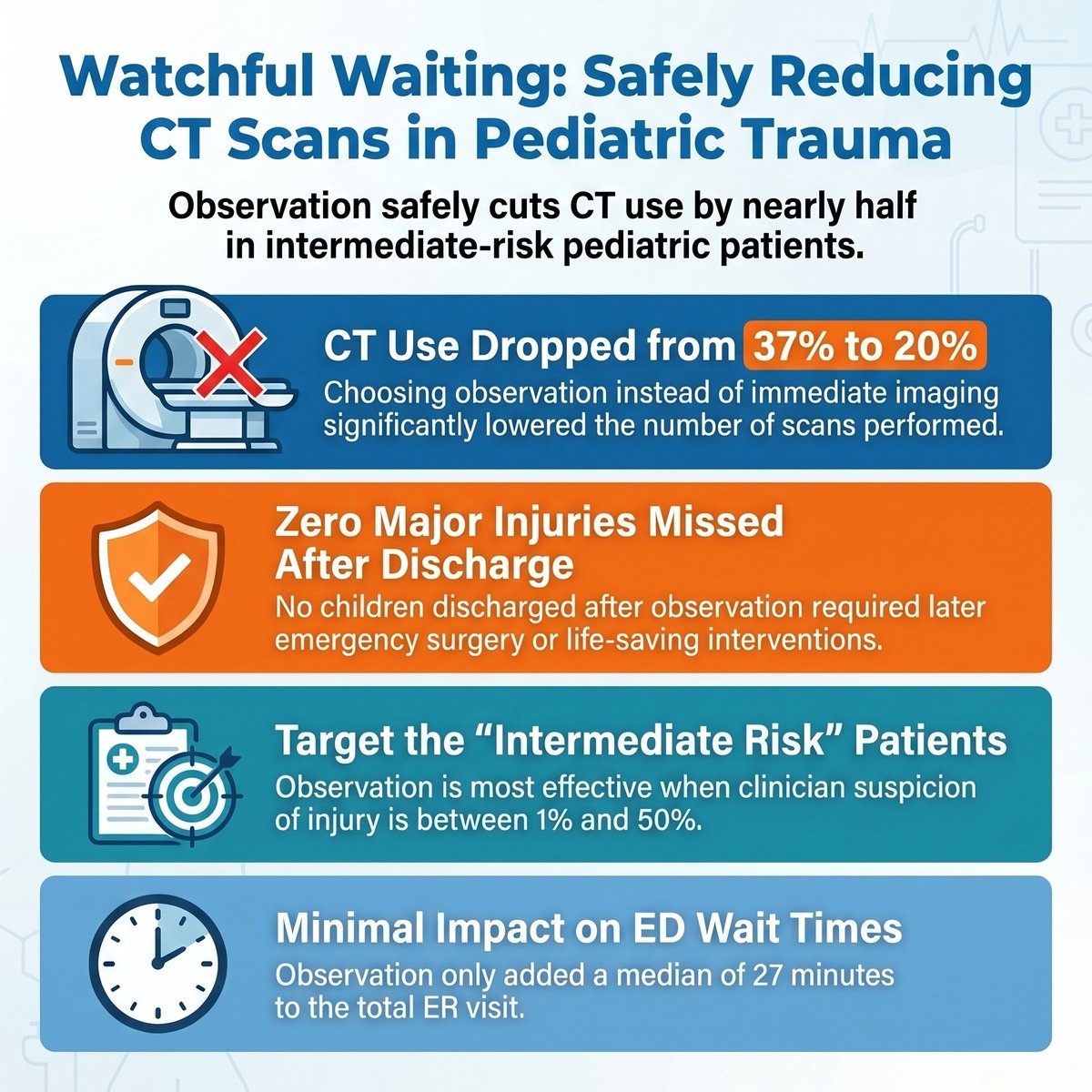
Watchful waiting: The Power of Patience: High-Impact Insights on Pediatric Abdominal Trauma Observation 🩺🛡️ Can a little extra time in the ED save a child from unnecessary radiation? ⏱️ This massive study of 7,442 children proves that observation is a game-changer for blunt abdominal trauma, but it’s important to understand the full picture,. 💪🏾Why this study is a heavyweight (Strengths): -Massive Scale: This was a rigorous prospective multicenter cohort study involving children across six level-1 trauma centers,. -Precision Modeling: Researchers used multivariable logistic regression to adjust for critical factors like age, clinician suspicion, and PECARN risk variables,. -Proven Safety: The study successfully showed reduced CT use—especially in intermediate-risk cases—without an increase in missed injuries,. -Standardized Training: Enrolling clinicians underwent standardized training to ensure consistent documentation of clinical findings. ⚠️ Know the fine print (Limitations): -Setting Matters: The study was conducted in pediatric-specific EDs, so the results might differ in general community hospitals with less pediatric trauma experience. -Unstructured Observation: There was no set protocol for the observation period; the duration, lab tests, and ultrasound use were left to clinician discretion. -Older Kids Skew: The study population skewed toward older children, who are often easier to evaluate for abdominal pain and tenderness than younger ones. -Cost-Effectiveness: No specific cost-effectiveness analysis was conducted for abdominal trauma observation in this study. 🤓The Bottom Line: Choosing to observe rather than scan can safely lower CT utilization with a minimal median increase in ED stay of only 27 minutes. 🔗 Read the full paper here: annemergmed.com/article/S0196-… #PediatricTrauma #EmergencyMedicine #EvidenceBasedMedicine #ERDoctor #MedicalResearch 📚Reference: Ishimine P, et al. Emergency Department Observation and Computed Tomography Use in Children With Blunt Abdominal Trauma. Annals of Emergency Medicine. 2026
AnnalsofEM tweet media
English
0
2
4
534
AnnalsofEM
AnnalsofEM@AnnalsofEM·
🚨 The overdose you think you’re treating… may not be what it seems. As emergency and critical care clinicians, we’re trained to recognize opioid toxicity and respond rapidly. But a new adulterant — medetomidine — is changing that clinical picture. Patients may initially respond to naloxone… yet remain profoundly sedated. Hours later, they can develop rapid, severe withdrawal with agitation, hypertension, and delirium — often refractory to standard therapies. This is not just a variation of opioid toxicity. It’s a distinct and evolving clinical syndrome that demands awareness at the bedside. 🎧 In this reel, I discuss key insights from a recent review in Annals of Emergency Medicine and share perspectives from one of the authors. 👇🏾For the full review, see: Lynch MJ, Pizon AF, Yealy DM. Emergence of Medetomidine in the Illicit Drug Supply: Implications for Emergency Care and Withdrawal Management. 📖 Annals of Emergency Medicine (2025) 🔗 annemergmed.com #EmergencyMedicine #MedicalEducation #Toxicology #FOAMed #CriticalCare
English
0
2
9
1.1K
AnnalsofEM
AnnalsofEM@AnnalsofEM·
Managing Cannabinoid Hyperemesis Syndrome by Rech, Shalaby, Gage, and Gottlieb in Annals of Emergency Medicine reviews how to recognize CHS in the ED, when to broaden the differential, and which treatments current guidelines support. One of the key takeaways: CHS has no definitive test, droperidol or haloperidol are recommended first-line in current guidelines cited by the authors, and long-term symptom control still centers on cannabis cessation. #EmergencyMedicine #medical #FOAMed #MedEd #cannabinoidhyperemesissyndrome #EM
English
1
0
3
1.1K
AnnalsofEM
AnnalsofEM@AnnalsofEM·
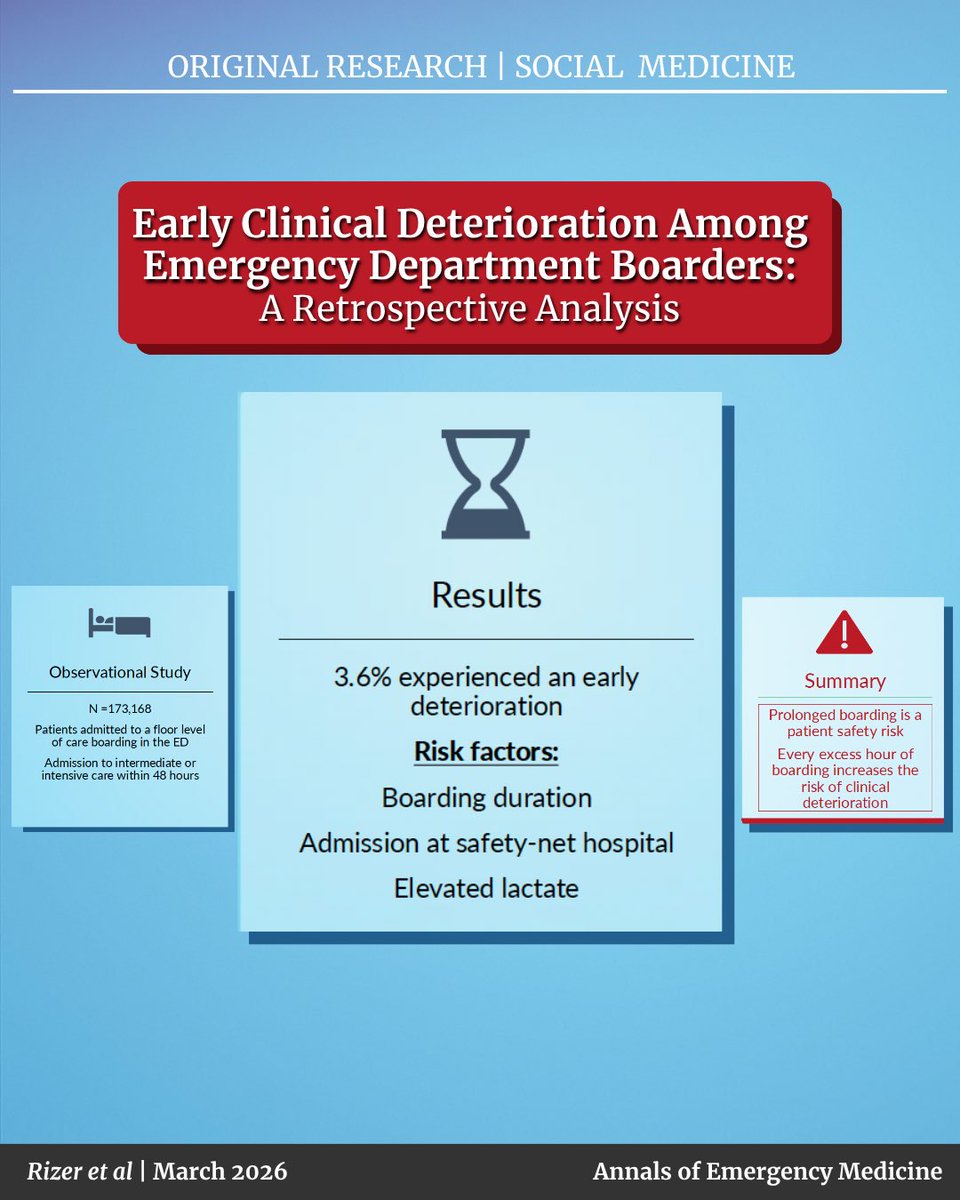
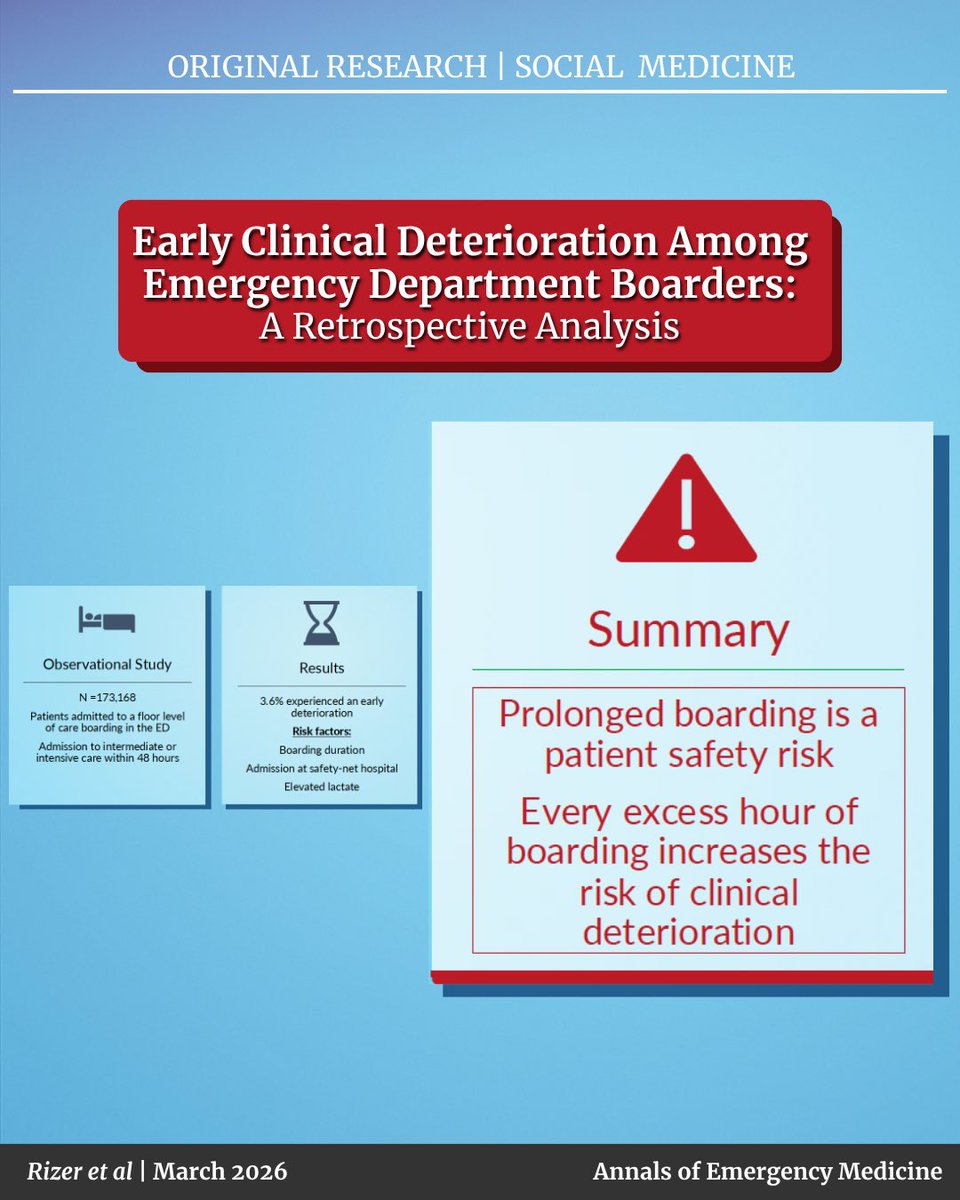
Clinical deterioration is an underappreciated risk of ED boarding. In a multi-center study of >173,000 admissions, nearly 1 in 25 ED boarders admitted to the floor experienced early clinical deterioration requiring an admission to an advanced level of care, with almost half occurring before leaving the ED. Each additional hour of boarding was independently associated with an increased risk of deterioration, and deterioration carried substantially higher 28-day mortality. Identifying high-risk patients early may prevent avoidable escalations in care and patient harm.  #EDBoarding #PatientSafety #EmergencyMedicine #EM #HealthPolicy #SocialMedicine
AnnalsofEM tweet mediaAnnalsofEM tweet mediaAnnalsofEM tweet mediaAnnalsofEM tweet media
English
1
18
36
3.7K
AnnalsofEM
AnnalsofEM@AnnalsofEM·
Before the badge, before the training, there was a daughter at the bedside. Learning the language. Watching closely. Holding on. This piece is about how medicine starts long before we realize it does. And how some of our greatest teachers never leave us. Read this Change of Shift only at annemergmed.com #EM #EmergencyMedicine #ER #ERDoc #EDDoc #Medicine #HealthcareWorkers #MedicalHumanities #MedHumanities #HealthHumanities #NarrativeMedicine #HumanismInMedicine #Diversity #WomeninMedicine #MedTwitter
AnnalsofEM tweet media
English
0
1
1
393
AnnalsofEM
AnnalsofEM@AnnalsofEM·
Could we detect ROSC without stopping CPR? Arterial Doppler During Chest Compressions to Detect Arterial Pulsatility Annals of Emergency Medicine In this ED study of 44 cardiac arrest patients with arterial lines, researchers recorded Doppler waveforms during active chest compressions and compared them to arterial line pulsatility at the next pulse check. For detecting arterial pulsatility: • Sensitivity: 97.7% • Specificity: 81.5% • Accuracy: 88.9% A minimal-flow Doppler pattern strongly predicted absence of pulsatility. This was a small single-center study with experienced operators, but it suggests Doppler during compressions may help identify arterial pulsatility, raising the question of whether future tools could help detect ROSC without interrupting compressions. #EmergencyMedicine #EM #CriticalCare #Cardiology #MedED #MedicalEducation #FOAMed #EBM #MedicalJournal
English
1
4
22
2.4K
AnnalsofEM
AnnalsofEM@AnnalsofEM·
classic teaching: cirrhosis + upper GI bleed = antibiotics for everyone. But how strong is the evidence behind that practice? This Annals of Emergency Medicine Systematic Review Snapshot highlights a Bayesian meta-analysis of 14 randomized trials examining antibiotic prophylaxis in cirrhotic patients with upper GI bleeding. The analysis raises important questions about duration of therapy, while also reminding us about the limitations of older, heterogeneous trials and potential bias in the data. 📚 The takeaway: worth reading, worth discussing, and worth scrutinizing the methods before changing practice. Check out the full Systematic Review Snapshot in Annals of Emergency Medicine and decide for yourself. Reference: Prosty C, Noutsios D, Dubé LR, et al. Prophylactic antibiotics for upper gastrointestinal bleeding in patients with cirrhosis: a systematic review and Bayesian meta-analysis. JAMA Intern Med. 2025;185:1194-1203. Discussed in: Annals of Emergency Medicine Systematic Review Snapshot. #EmergencyMedicine #MedEd #FOAMed #EvidenceBasedMedicine #AnnalsOfEM
AnnalsofEM tweet media
English
1
9
34
26.9K
AnnalsofEM
AnnalsofEM@AnnalsofEM·
February’s episode is here. Hit play, pick up some practical pearls, and catch up with your favorites. Smart insights and a little fun along the way. Listen below or wherever you get your podcasts. soundcloud.com/annalsofem/feb… #EM #EmergencyMedicine #ERDoc #ED #EDDOC #MedSchool #Medstudent #Residency #Fellowship #NursingSchool #Nursing #PA #PASchool #NP #NPSchool #EMS #EMT #Paramedic #MedicalEducation #MedED #FOAM #FOAMed #MedPodcasts #Medtwitter
AnnalsofEM tweet media
English
0
0
2
302