Annie Duke

19.3K posts

Annie Duke banner
Annie Duke

Annie Duke

@AnnieDuke

Speaker/writer/student of decision science. New book #QUIT out now! Author of #ThinkinginBets & #HowToDecide. I used to play poker. Navigating uncertainty.

Katılım Mart 2009
1K Takip Edilen99.2K Takipçiler
Annie Duke
Annie Duke@AnnieDuke·
Join me Tuesday March 24th at 4PM EDT for a free, 30-minute "lightning lesson" on Data Wisdom: Making Better Decisions in a Data-Rich World" Register here → maven.com/p/96d510/data-…
English
0
0
10
1.6K
Annie Duke
Annie Duke@AnnieDuke·
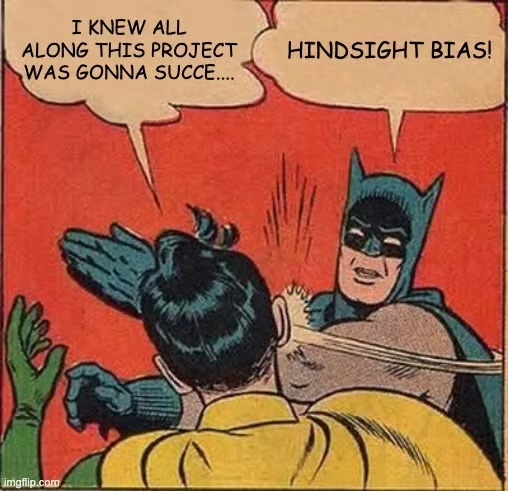
Experience is essential for learning but paradoxically, it can also get in the way. I call this the “paradox of experience.” The core issue here is that we process outcomes sequentially, treating each single result as if it reveals whether a decision was good or bad, even though a single outcome is just one realization of a probabilistic set. To simplify, I like to use my “Cognitive Chain Saw” metaphor. Before a decision, and looking into the future, we see a “tree of possibilities”. Think of the trunk as the present, and various branches representing different ways the future could unfold. After an outcome, once a specific future event occurs, our minds use a cognitive chain saw to hack off the branches that didn’t happen. We leave only the branch that occurred, making the past appear linear and inevitable, rather than probabilistic. The danger here is hindsight bias, causing us to believe that we “knew it all along” or “should have known”, simply because the other possibilities have vanished from our view. To solve the paradox of experience and counter the cognitive chain saw, we have to deliberately reassemble the tree. We must remind ourselves of the full range of potential futures that existed at the time of the decision. Only then can we fairly evaluate the quality of the process rather than the luck of the outcome. Still overwhelmed by the possibilities? I teach a live, online cohort-based @MavenHQ course on how to make smarter, faster, and more confident choices, including how to: - Strengthen analytical reasoning and strategic thinking in complex or ambiguous situations. - Use probabilistic thinking to make sound decisions even when outcomes are unclear. - Enhance collaboration and group reasoning using structured input and feedback techniques. My next Maven cohort starts April 20th. Join us with this offer: bit.ly/4amUIc
Annie Duke tweet media
English
5
7
47
3.6K
Annie Duke
Annie Duke@AnnieDuke·
To achieve high-quality feedback on past decisions, you have to "quarantine" the outcome. In practice, that means withholding whether the decision resulted in success or failure until after the analysis is complete. Why? Because knowledge of the outcome infects the feedback, and once an advisor knows how a situation turned out, that knowledge can cast a shadow over their ability to evaluate the decision process objectively. By revealing a negative outcome, your advisor will naturally hunt for errors in your process to explain the failure. Conversely, if you reveal a positive outcome, they’re more likely to interpret your decisions as brilliant. This phenomenon is known as “resulting,” reduces the quality of feedback by shifting focus from the decision-making process to the outcome itself. As a former professional poker player, I learned this lesson firsthand. When I asked my peers to review a hand, I shared the context available at the time (chip counts, position, opponent behavior), but deliberately withheld the result. When I revealed that I lost the hand, they tended to criticize my play, whereas if I won, they’d praise it. The only way to uncover their true opinion was to keep the outcome quarantined. Now, as an academic, I apply the same principle in seminars. I often frustrate my audience by refusing to reveal who won the pot, because in truth, it really doesn’t matter. The result is irrelevant to determining if the decision strategy was sound. What matters is whether the reasoning, given the information available at the time, was logical and well-structured. Though it’s impossible to make the right decisions all the time, there are certainly ways to get better at it. I teach a course on Maven where you can explore how to make smarter, faster, and more confident choices including how to: - Use probabilistic thinking to make sound decisions even when outcomes are unclear. - Practice through guided exercises and explore new frameworks through real-world examples. - Create consistent habits and systems for disciplined, high-quality decision-making. My @MavenHQ next cohort starts April 20th. Join us with this offer: bit.ly/45gc07V
English
2
0
17
2.4K
Annie Duke retweetledi
Alliance for Decision Education
Alliance for Decision Education@AllDecisionEd·
Calling all @SXSWEDU 2026 attendees: be sure to add Decision Education to your agenda! This Thursday, March 12, catch the live podcast recording of @HsuUntied, hosted by Richard Hsu, Managing Director of Major, Lindsey & Africa, and Alliance Ambassador Council member, as he speaks with Charles Cassidy, our Senior Manager of Organizational Development, and Dr. Katey Arrington, President of @MathEdLeaders and Director of Systemic Transformation for the Charles A. Dana Center at The University of Texas at Austin. Together, they will examine how math instruction can nurture decision-making skills such as probabilistic thinking and numeracy, and how combining analytical and decision-making practices builds habits of careful thinking that students can carry into the future. We hope to see you there! #SXSWEDU schedule.sxswedu.com/events/PP11617…
English
1
2
5
2.6K
Annie Duke
Annie Duke@AnnieDuke·
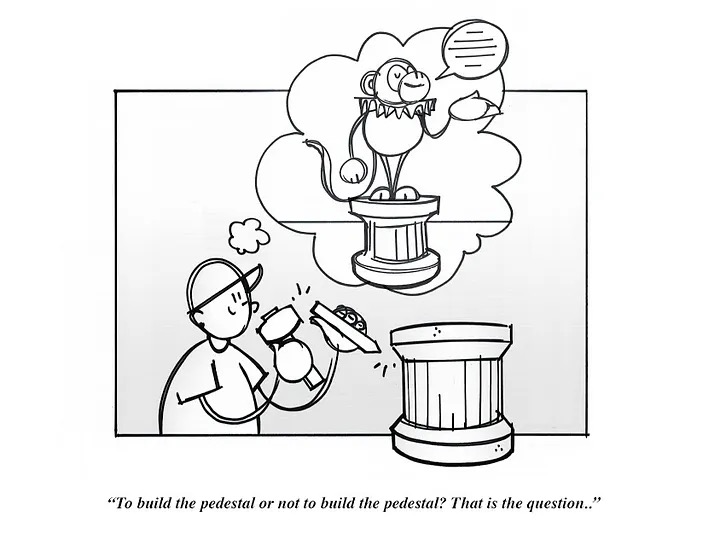
Should you start with your easy tasks or your hard tasks? Astro Teller, CEO of *X, The Moonshot Factory*, offers a powerful mental model to give an answer. The metaphor might sound absurd, but it works. If you want to train a monkey to juggle flaming torches while standing on a pedestal, the endeavor consists of two tasks: 1. Training the monkey (hard part) 2. Building the pedestal (the easy part) Teller argues that building a pedestal is trivial; people have been doing it for millennia, and you could simply turn a milk crate upside down to achieve the same effect. The actual challenge that determines success or failure lies in the training. Therefore, the rule is to “monkey first”, or tackle the hardest part of the problem first. The reasoning behind this mindset is logical. By doing the easy work first, you feel like you’re moving forward, but you have learned nothing about whether the project is actually viable. Instead, you’ll get caught in a sunk costs trap, whether you invest time, money, and effort into a project that doesn't hold weight anyways. This accumulation of resources makes it psychologically harder to quit later if you discover the “monkey” is untrainable. Let’s apply the concept to a business startup. It might seem fun and exciting to begin with a logo, business cards, or picking a cool name, but these are all pedestals. You have to attack the core challenges first. The real monkey is proving product-market fit, validating demand, and building something customers truly want. Even knowing the monkeys on pedestals mindset, I know how hard it is to make the right decisions. Join my course on Maven where you can explore how to make smarter, faster, and more confident choices including how to: - Create consistent habits and systems for disciplined, high-quality decision-making. - Strengthen analytical reasoning and strategic thinking in complex or ambiguous situations. - Learn new frameworks through case studies. My next cohort with Maven starts April 20th. Join us
Annie Duke tweet media
English
4
5
33
3.8K
Annie Duke
Annie Duke@AnnieDuke·
The @alldecisioned 2025 Progress Report is here! ✔️$1M in research grants awarded ✔️ 125 schools across 28 states reached ✔️ New district-wide partnership in Kansas City This is what building a movement looks like. Read the full report 👇🏻
Alliance for Decision Education@AllDecisionEd

We’ve got big news: our 2025 Progress Report is officially live! This past year was a milestone for the Decision Education movement: - We released the “Decision Skills in the Workforce” report, produced in collaboration with The Burning Glass Institute, which demonstrates the tremendous value of decision-making across sectors and industries. - We awarded $1M in inaugural research grants to build the evidence base for Decision Education. - We built a district-wide partnership in @kcpublicschools, helping thousands of students make informed college and career decisions. - We expanded to 125 schools across 28 states — with measurable outcomes like improved media literacy, stronger forecasting accuracy, and intellectual humility. Read the full report to see everything your support and engagement made possible. And share with your networks to help us continue to build the field of Decision Education: alliancefordecisioneducation.org/wp-content/upl…
English
1
0
7
3.3K
Annie Duke retweetledi
Alliance for Decision Education
Alliance for Decision Education@AllDecisionEd·
In a world filled with uncertainty, being able to think in probabilities can help students make better decisions. What makes thinking in probabilities so transformative? New research shows teaching students to think in probabilities improves their ability to assess risk, weigh evidence, and adapt as new information emerges—real skills for navigating complexity. See more about the promising results: alliancefordecisioneducation.org/research/white…
Alliance for Decision Education tweet media
English
2
1
3
1.8K
Annie Duke
Annie Duke@AnnieDuke·
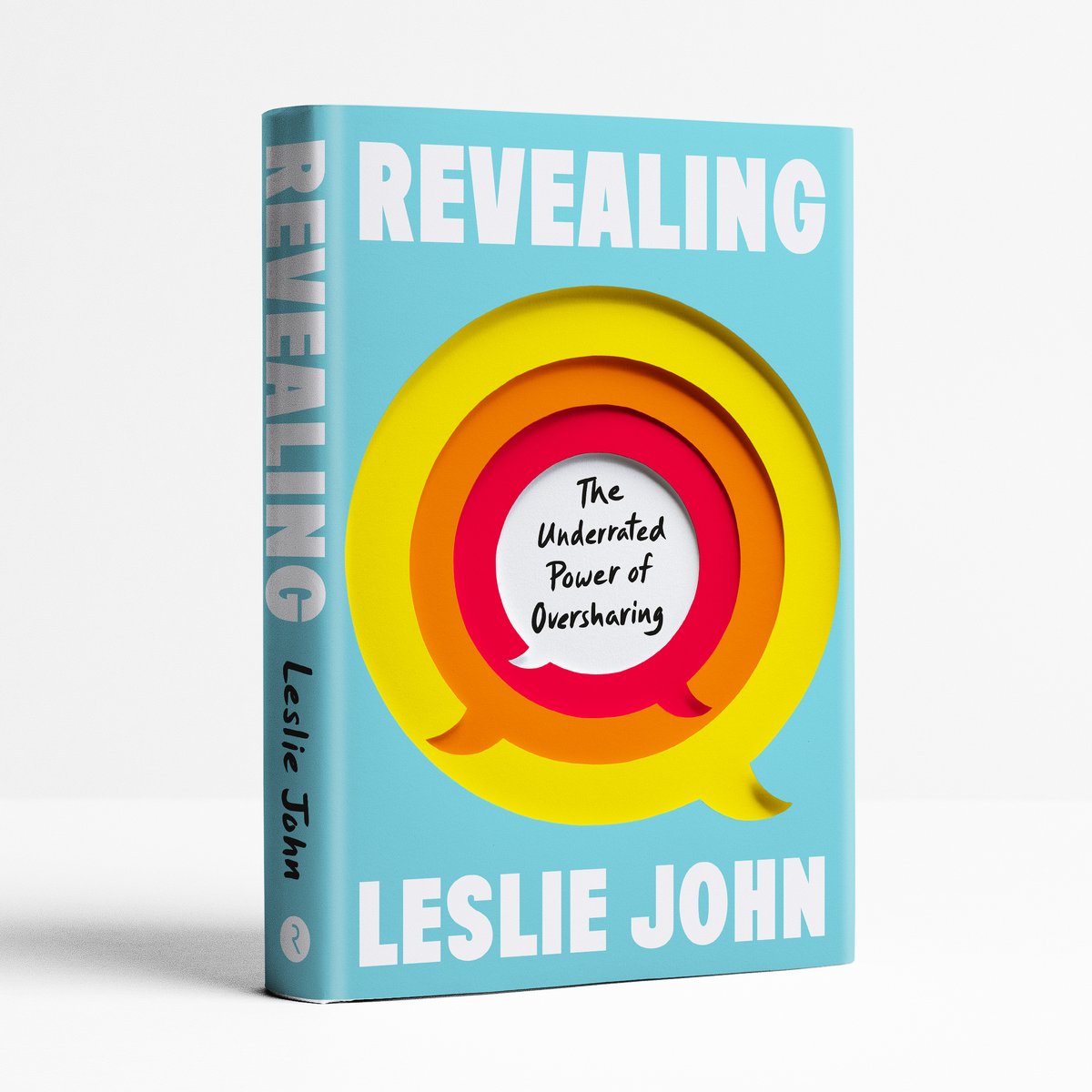
What if we systematically misjudge how much to share? Congrats to my friend @ProfLeslieJohn on the release of her new book, "Revealing." Revealing argues that disclosure isn’t a personality trait — it’s a skill. And like any skill, we can get better at it. Leslie John shows us how. Grab your copy of this excellent book, wherever books are sold! proflesliejohn.com/book
Annie Duke tweet media
English
3
4
18
2.6K
Annie Duke retweetledi
Dr. Jon Beale
Dr. Jon Beale@DrJonBeale·
New episode of @flourishFMcast, out now on all #podcast channels 🎧 We speak to Dr. @AnnieDuke, bestselling author, cognitive psychologist, #decisionmaking expert, & former professional poker player, about how to make better decisions 🎙️ flourishfmpodcast.com/annieduke #annieduke
Flourish FM: a podcast for the good life 🎧@flourishFMcast

New episode, out now on all #podcast channels 🎧 We speak to Dr. @AnnieDuke, bestselling author, cognitive psychologist, #decisionmaking expert, & former professional poker player, about how to make better decisions 🎙️ flourishfmpodcast.com/annieduke #annieduke

English
0
1
5
2.5K
Annie Duke
Annie Duke@AnnieDuke·
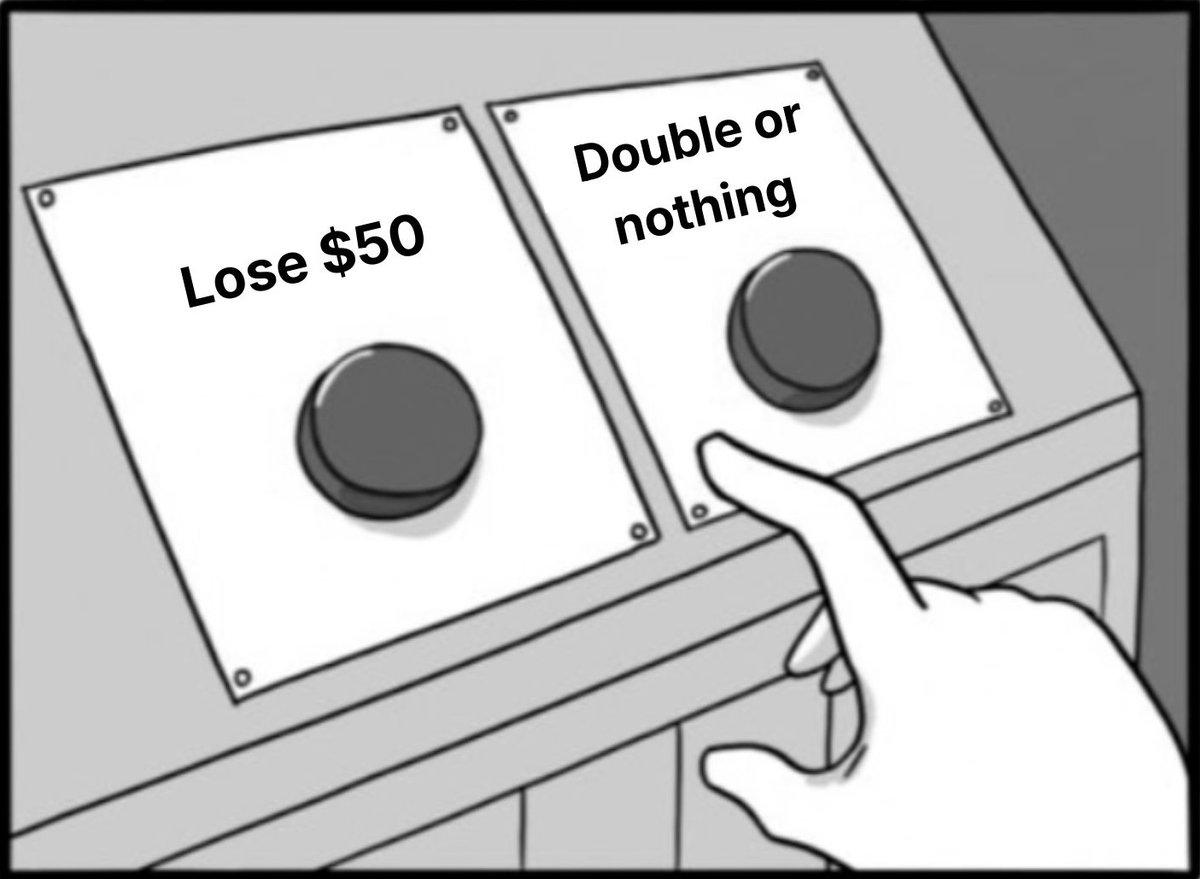
Ever wonder why we continue to gamble after we’ve already lost? The answer lies in a powerful psychological bias called sure-loss aversion. It's a behavior flip that depends entirely on whether we’re winning or losing. In gains, we become risk-averse, eager to lock in wins and protect what we’ve earned. In losses, we become risk-seeking, preferring a mathematically worse gamble that offers a slim chance of recovery over the certainty of accepting a loss. The emotional driver here is that we hate turning a “paper loss” into a “realized loss.” As long as we stay in the game (holding onto that stock, funding the venture, playing one more hand), the loss feels theoretical. Quitting makes it real, and that certainty of loss is often more painful than the risk of losing even more. Here’s a simple way to think about it. Imagine you’ve already lost $100. You can either quit and pay the $100, or flip a coin to owe nothing, or $220. Even though it might be more rational to quit, most people will choose to gamble because they prefer the hope of breaking even to the pain of a guaranteed loss. This escalation of commitment is a katamari effect of rolling up more time, money, and effort into a failing endeavor, making it even harder to quit later. Recognizing sure-loss aversion is critical for leaders, investors, and professionals alike. Understanding that quitting isn’t failure is a strategic choice you can adopt to stop compounding losses and redirect resources toward better opportunities. Interested in changing your mindset to start making better decisions? Join my Maven course where you'll learn how to: - Identify common biases and design processes that reduce their impact on decision quality. - Learn the psychology of bias, decision audits, and apply behavioral design principles to debias team and individual decisions. - Use probabilistic thinking to make sound decisions even when outcomes are unclear. My next cohort starts April 20. Join us with this offer: bit.ly/455QjaB
Annie Duke tweet media
English
4
17
135
13.8K
Annie Duke retweetledi
Mike Neighbors
Mike Neighbors@coachneighbors·
Thanks @AnnieDuke gets the credit… it’s never chess in basketball… and thanks to @BBallImmersion for chance to share… Have you ever faced an opponent who has exact same pieces as you? Can all the pieces only perform certain moves? Do you take turns moving one piece at a time? Chess grand masters rarely, if ever, lose to lower ranked players because of this… but we have major upsets in basketball, at all levels, every night.
Chris Oliver@BBallImmersion

♠️ vs ♟️ Why is basketball more like poker than chess? Mike Neighbors tells all on The Basketball Podcast: basketballimmersion.com/the-basketball…

English
0
6
32
11.1K
Annie Duke
Annie Duke@AnnieDuke·
We see life through two lenses: the inside view and the outside view. Only one keeps us honest. The inside view is our default lens. It feels natural because it’s shaped by personal experiences, beliefs, and intuition. But the reality is that it’s often distorted. Spotting flaws in our own reasoning is a lot like having a “KICK ME” sign taped to our back: obvious to everyone else, invisible to us. The outside view is grounded in what’s true of the world independent of our perspective, basically how an objective observer would assess our situation. The accuracy emerges when we discipline the inside view with the outside view. In order to adopt an outside view, I recommend anchoring decisions in base rates, or the statistical likelihood of outcomes in similar situations. They act as a “center of gravity” for forecasts, allowing us into the reality of our situation. For example, newlyweds often estimate their chance of divorce at 0%. Yet if asked about another couple down the hall, they’ll cite the base rate of 40–50%. Because our beliefs are tied to identity, we resist challenges to them. By weaving the outside view into our decisions, we trade our comforting illusions for an accurate glimpse into our lives. And that’s where our better choices live. Ready to explore other ways to make better decisions? I teach a course on @MavenHQ where we explore how to make smarter, faster, and more confident choices including how to: •Identify common biases and design processes that reduce their impact on decision quality. •Learn the psychology of bias, decision audits, and apply behavioral design principles to debias team and individual decisions. •Use probabilistic thinking to make sound decisions even when outcomes are unclear. My next cohort begins April 20th. Join us. Register Today. maven.com/annie-duke/mak…
Annie Duke tweet media
English
2
3
30
2.9K
Annie Duke
Annie Duke@AnnieDuke·
The problem with your decision-making might be that you’re letting results tell the whole story. When we know the outcome of our decisions, it casts a shadow over our memory of the decision process. We rewrite history to make the result seem inevitable. But the reality is, outcomes are only loosely connected to decision quality in the short run. While a poor choice can be rewarded by dumb luck, a strong decision could be punished by bad luck. One of the most famous examples of resulting comes from Super Bowl XLIX. With 26 seconds left on the clock, Seahawks coach Pete Carroll called a pass play at the 1-yard line. The ball was intercepted, and critics declared it the “worst play call in NFL history.” But if we think about the situation statistically, the interception was a low-probability event (less than 2%). The backlash was clear resulting. Fans judged the decision based on its unlucky outcome rather than its sound logic. But resulting can happen in our everyday lives as well. Think of my job hopper scenario. Quitting your job might seem smart if you love your new role, but foolish if you don’t. The decision-making process is identical; the only difference is the result. Resulting reminds us that success and failure aren’t perfect mirrors of our judgement. By separating process from outcome, we can learn more deeply from both wins and losses.
Annie Duke tweet media
English
4
13
49
4.2K
Annie Duke
Annie Duke@AnnieDuke·
Today is pub day for my friend Tom Griffiths' new book, "The Laws of Thought: The Quest for The Quest for a Mathematical Theory of the Mind." Tom is the co-author of one of my favorite books, Algorithms to Live By. This new book is a *must-read* in this age of #AI. Check out my Substack and grab this book! annieduke.substack.com/p/the-laws-of-…
Annie Duke tweet media
English
0
1
20
3K
Annie Duke retweetledi
Alliance for Decision Education
Alliance for Decision Education@AllDecisionEd·
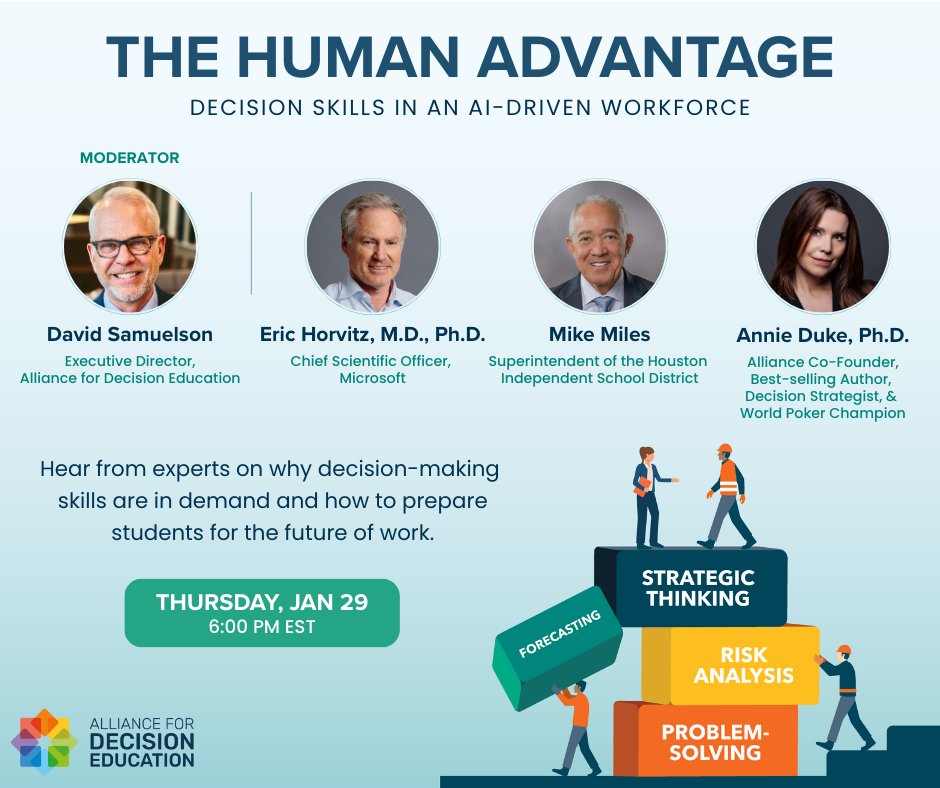
“It’s actually incredibly important to know that AI is not the decision maker, but a support for human decisions.” Last week, we were delighted to host a virtual panel, “The Human Advantage: Decision Skills in an AI-Driven Workforce.” Our Executive Director David Samuelson moderated a conversation with @AnnieDuke, @EricHorvitz, and Mike Miles on what it means to prepare students and workers for a future shaped by AI, and they kept coming back to the same idea: tools will change, but human skills, like decision skills, will endure. The recording of the webinar is available for viewing now! Revisit the vital conversation on our blog. alliancefordecisioneducation.org/blog/watch-the…
English
1
1
6
1.6K
Annie Duke retweetledi
Alliance for Decision Education
Alliance for Decision Education@AllDecisionEd·
🚨 HAPPENING TONIGHT: There’s still time to register for tonight’s webinar, "The Human Advantage: Decision Skills in an AI-driven Workforce." How can we equip students to navigate uncertainty within and beyond the classroom? Join us to hear @EricHorvitz, Chief Scientific Officer for @Microsoft, Mike Miles, Superintendent of @HoustonISD, and @AnnieDuke, Alliance co-founder and decision strategist, engage in a discussion about how to prepare students for the future of work moderated by our Executive Director David Samuelson. Plus, hear from Erik Leiden, Managing Director of Workforce Strategy for The Burning Glass Institute! Register now! bit.ly/TheHumanAdvant…
Alliance for Decision Education tweet media
English
0
1
3
1.5K