Anshuman

2K posts

Anshuman banner
Anshuman

Anshuman

@anshuman_lath

Working on energy solutions, village by village

Pune Katılım Ocak 2014
1.2K Takip Edilen285 Takipçiler
Anshuman retweetledi
Anmol
Anmol@Anmol_299·
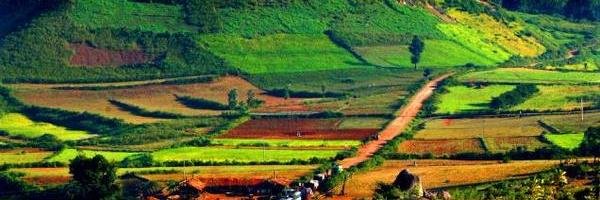
Maharashtra's wildlife diversity is insane Tadoba,Koyna,Bhimashankar, Radhanagri,Melghat,Bhigwan many more Tigers, Leopards, Elephants, Whales, Wolves, Dolphins,Bears, Shekru,Bison, Flying Fox, Sambar etc From Sahyadri's lush forests to Deccan's dry forests to Konkan Mangroves
Anmol tweet media
English
11
123
550
9.9K
Anshuman retweetledi
DD News
DD News@DDNewslive·
A key finding from AIIMS New Delhi research highlights that increased screen time in children under one year of age is associated with a higher risk of autism by the age of three. The study suggests that greater screen exposure may increase the likelihood of autism-related concerns. Experts recommend keeping children below 18 months away from screens. Dr. Shefali Gulati, Professor, Department of Pediatrics, #AIIMS #ChildHealth #ScreenTime #ParentingTips #AutismAwareness @aiims_newdelhi
English
50
1.4K
3.8K
558.9K
Anshuman retweetledi
Anish Moonka
Anish Moonka@anishmoonka·
Before 1994, India was home to 50 million vultures. A cheap cattle painkiller wiped out almost all of them within a decade. Then about half a million people died. The drug was called diclofenac. Indian farmers started giving it to cows around 1994 to treat pain and inflammation. It was fine for the cows. But when vultures fed on the carcasses, the drug destroyed their kidneys within days. This was the fastest collapse of any bird species since the passenger pigeon went extinct. The white-rumped vulture dropped 99.9% between 1992 and 2007. The long-billed vulture dropped 97.9%. In 2024, two economists, Eyal Frank at the University of Chicago and Anant Sudarshan at the University of Warwick, published a paper tracking the human toll. Their method was clever. They compared death rates in Indian districts that used to have lots of vultures against districts that never did. Where the birds disappeared, human deaths rose 4.7% above baseline. That came out to roughly 100,000 extra deaths a year between 2000 and 2005. About half a million in total. The economic damage from those early deaths: $69.4 billion a year. A group of vultures can strip a cow carcass clean in under an hour. Their stomach acid is strong enough to kill the germs behind anthrax, salmonella, and botulism. Remove the vultures and you get dead cattle rotting in fields or dumped in rivers. Feral dogs filled the gap, about 5 million more of them showing up. India is now the world's biggest hotspot for rabies, and rabies vaccine sales rose right alongside diclofenac use. I went looking for good news in the recovery data and couldn't find much. A 2024 Cambridge survey found vulture numbers have flatlined at very low levels, not rebounding. In 2025 the Wildlife Institute of India reported that 72% of the bird's old nesting sites sit empty. Part of the problem is biology. Vultures lay one egg a year and take years to reach breeding age. Part of it is policy. Diclofenac is still sold illegally for cattle, and other painkillers that also kill vultures stayed legal in India for years after the 2006 ban. Twenty years after the ban, the birds are still mostly gone.
Give A Shit About Nature@giveashitnature

Vulture populations in India collapsed. 500,000 people died as a result. In the 1990s, Indian farmers started using a cheap painkiller called diclofenac on their cattle. When vultures ate the carcasses, the drug destroyed their kidneys. Without vultures, cattle carcasses rotted in fields instead of being stripped clean in 45 minutes. Feral dog populations exploded by five million. Rabies cases surged. Pathogens spread through water supplies. University of Chicago economists compared death rates in districts that used to have vultures to districts that never did. Human mortality rose more than 4% after the collapse. Over 100,000 extra deaths a year. Half a million in five years. India banned the drug in 2006. The vultures still haven't recovered. This is what a keystone species is to us. This is why we protect the animals nobody finds cute.

English
7
96
248
19.8K
Anshuman retweetledi
anand mahindra
anand mahindra@anandmahindra·
🫡 Om Shanti 🙏🏽
English
319
1.6K
13.9K
279.2K
Anshuman retweetledi
Anuradha Mishra (Modi's Family)
Anuradha Mishra (Modi's Family)@Anuradham1805·
I so agree, we were forced to accept this nonsense for several decades. The sad part is we actually believed this lie for most of our life.... Read this on a truck sometime back and couldn't take it off my mind since then 🙌 " जाने कितने झूले थे फांसी पर, कितनों ने गोली खाई थी क्यों झूंठ बोलते हो साहब कि चरखे से आज़ादी आई थी"
Anuradha Mishra (Modi's Family) tweet media
Keh Ke Peheno@coolfunnytshirt

Name a bigger scam than this..

English
8
36
70
6.7K
Anshuman retweetledi
Dr. Lemma
Dr. Lemma@DoctorLemma·
In 2003, a German film crew followed a nomadic family in Mongolia's Gobi Desert. The film, The Story of the Weeping Camel, was nominated for an Oscar. A mother camel had rejected her newborn after a brutal two-day labour. Without her milk, the calf would die. The family knew one option. They sent their two young sons on a journey across the desert to find a musician who could perform a ritual called Hoos, a chanting ceremony passed down for centuries specifically for this moment. The musician came. The ritual was performed. The mother camel wept real tears and turned to her calf for the first time. The film crew had gone to document a way of life. They had no idea they would capture that. UNESCO added the Hoos ritual to its Intangible Cultural Heritage list in 2015, alongside flamenco, the Mediterranean diet, and the art of Neapolitan pizza making.
English
539
12.1K
69.2K
2.5M
Anshuman retweetledi
Tathvam-asi
Tathvam-asi@tathvamasi6·
Bhajana or Bhakti should be expressed like this, not with DJs and item songs infront of Ganesh Pandals and Durga Pandals. Once upon a time, this is how festivals were celebrated. Enjoy.
English
12
435
1.9K
14.6K
Anshuman retweetledi
The UnCommon Man
The UnCommon Man@thuncommonman·
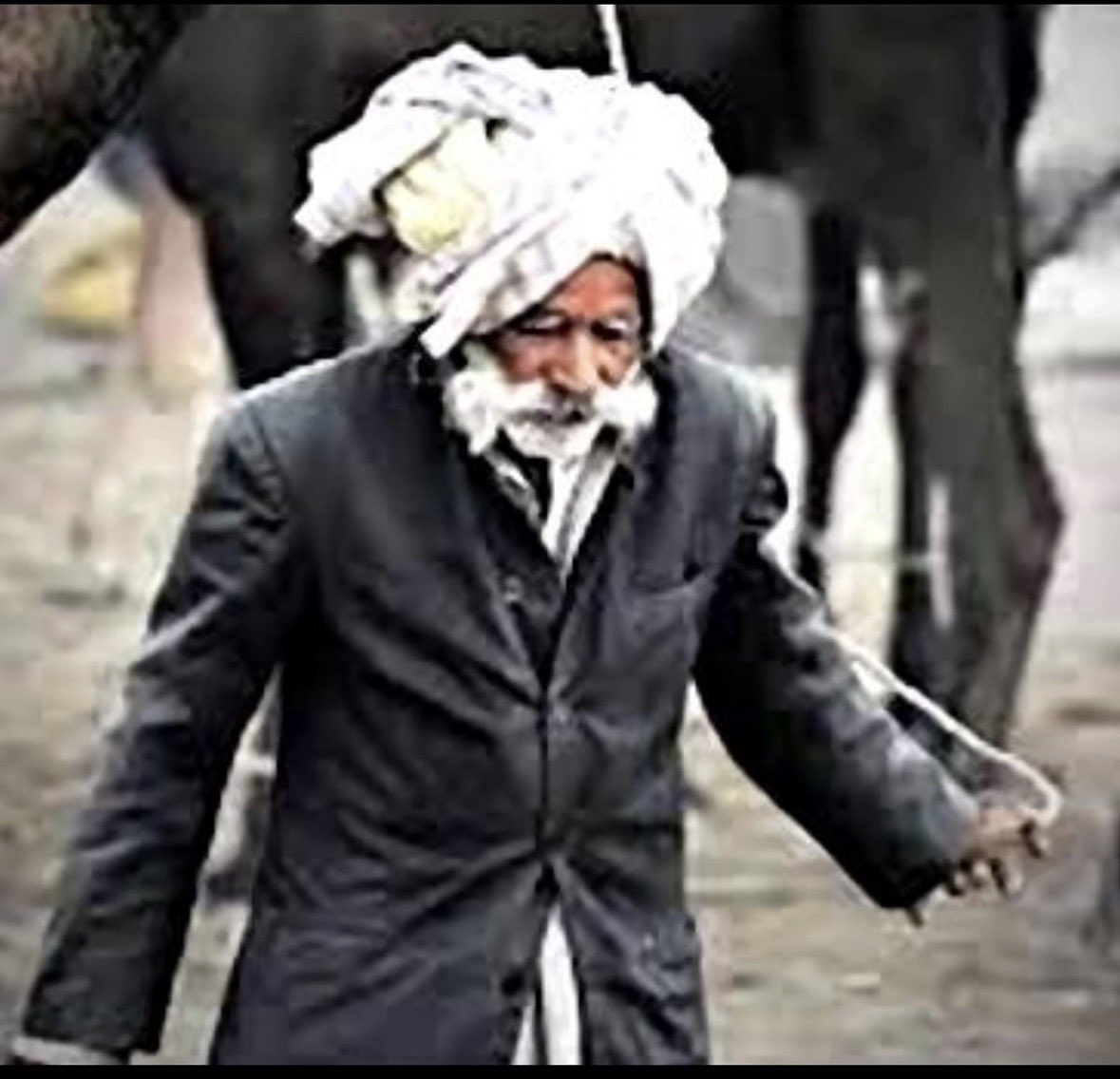
Dhurandhar who lived 108 years 🔥 🔥 You've seen spies in movies. You've watched Dhurandhar. You've heard stories of brave soldiers. But what if I told you that the most dangerous, most feared, and most loyal secret weapon India ever had was not a trained intelligence officer, not a decorated army general, not even someone who went to school? Born in 1901, Ranchodbhai Savabhai Rabari known as "Pagi", meaning the one who shows the way spent his entire life doing exactly that. Guiding Indian soldiers through pitch black deserts. Tracking enemy footprints in the sand. Protecting a border that most of us can't even find on a map. His skill was unlike anything any spy school could ever teach. One look at a footprint and he could tell you how many soldiers passed, how fast they were moving, whether they were armed, and how long ago they walked there. 100 years of living in the desert gave him a sense no technology could replace. During the 1965 war, the Indian Army needed to move 10,000 soldiers to their destination in three days. Pagi guided them and arrived 12 hours ahead of schedule. Through a desert. In complete darkness. With zero technology. Field Marshal Sam Manekshaw one of India's greatest ever military heroes personally gave him the nickname "Pagi" and never forgot him till his last breath. In 2008, lying on his deathbed in a hospital in Tamil Nadu, Manekshaw kept whispering one single word in his semi-conscious state. "Pagi… Pagi… Pagi…" He worked with R&AW and the BSF guarding 540 km of the India-Pakistan border in Gujarat. He won the Sangram Medal, the Samar Seva Star and the Police Medal. The BSF named a border outpost after him that still stands today. His story is now in Gujarat school textbooks. Most people retire at 60. Pagi retired at 108. He left this world on January 18, 2013, at the age of 112. No viral moment. No prime time coverage. No trending hashtag. Just a shepherd from Gujarat who quietly kept a billion people safe for over a century. While we were watching fictional spies on screen, the real Dhurandhar was walking barefoot through the desert making sure we slept safely at night. Share this so his name never gets forgotten. 🔖 Save this. The world needs to know him
The UnCommon Man tweet media
English
88
1.2K
3.3K
81.6K
Anshuman retweetledi
Vertigo_Warrior
Vertigo_Warrior@VertigoWarrior·
The torch lighting at the 1992 Olympics was truly legendary.
English
1
9
137
10.1K
Anshuman retweetledi
Mountain Rats
Mountain Rats@mountain_rats·
This is true Women empowerment . This pic depicts the spirit of two generations. This single frame captures a historical moment of a proud elder sister in uniform, carrying her newly commissioned brother on her shoulders — both walking the same path of service, sacrifice, and honour that their father once did. It speaks of legacy, courage, equality, and the quiet transformation of the Indian Army. For generations, daughters tied rakhi and watched their brothers march into the profession of arms. Today, they march beside them . This is true women empowerment. This is history correcting itself. . women are now forged by the same grit, the same discipline, and the same unyielding spirit. This is a picture that will inspire countless young girls and boys to believe that the uniform belongs to anyone with the courage to wear it. . A picture which deserve to be remembered forever. .
Mountain Rats tweet media
English
56
485
2.5K
50.8K
Anshuman retweetledi
Comman Man
Comman Man@CommanMan777589·
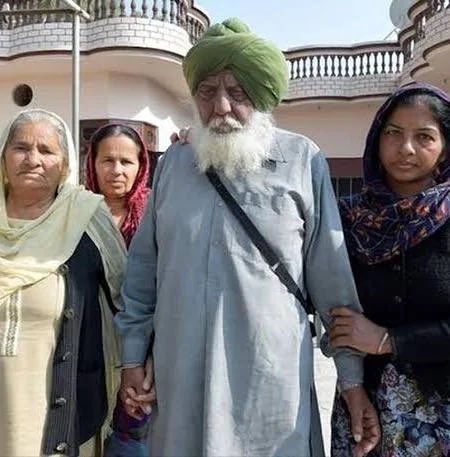
Asli Dhurandhar 🔥🔥 Kashmir Singh - name that stayed hidden in the shadows for decades, yet carried the weight of a nation’s trust. Sent across the border as an undercover operative, he spent years gathering intelligence, risking everything without recognition. Captured and imprisoned for over 35 years, he endured unimaginable hardship not for fame, not for glory, but for India. No headlines. No medals during his struggle. Just silent sacrifice. His story is a reminder that some heroes don’t wear uniforms in public they disappear so the nation can stand stronger. Respect to the man who gave his life to the shadows so others could live in the light.
Comman Man tweet media
English
122
1.8K
9.1K
272.1K
Anshuman retweetledi
Incognito
Incognito@Incognito_qfs·
British Ecocide in India during colonial rule: - Over 80,000 tigers were killed between 1875 and 1925 by the British. - British Civil Servant George Yule killed 500 tigers in 28 years in India. - King George V shot killed 39 tigers in just 10 days during his India's visit in 1911. He also killed 8 rhinos during this visit. - The Indian rhinoceros was extensively hunted during the 19th and 20th centuries by British colonial officials aided by local Indian puppet Maharajas. By 1905, rhinos were near extinction, with only a few dozen left in the Assam region. - Former Governor-General of India Lord Linlithgow killed 4,273 birds in India. - Nehru Govt used to organise tiger "shikar" for foreign tourists as a means of earning foreign exchange and strengthen foreign relations.
Incognito tweet media
Parveen Kaswan, IFS@ParveenKaswan

Hit me with the craziest wildlife facts you know about !!

English
39
1.3K
3.3K
67.7K
Anshuman retweetledi
Dr Poornima 🇮🇳
Dr Poornima 🇮🇳@PoornimaNimo·
Early morning, around 4.30 am in the misty dawn of Daska, Sialkot, two men walked down a deserted street along with another man Hashim Ali carrying an AK 47. They meandered the narrow street and reached the Noor Madina mosque in Daska, Sialkot, at around 5 am. The date is the 11th of October 2023. After the Fajr namaz at the mosque, where only a handful of men are present, the two men step out of the mosque, where two men casually approach them. They halt for a second and address the two men in low tones, "Shahid Latif !!" The other follows, saying with a quiet intensity, "Remember Pathankot ?" Four shots ring out as the man along with his brother falls to bullets, fired at point blank range at his stomach and chest. The last words he hears as he loses consciousness are the words barely perceptible now as he is shot in the head, are, "From the Indian Air Force." His guard Hashim Ali, who is yet to draw is AK47, is shot by a third man who had stood silently, till now. He also shoots Maulana Ahad who had opened his mouth to raise an alarm. The roar of two motorcycles fades into the dusty distance as people start awakening to shots fired in their vicinity in Pakistan. The men who lay dead were, Shahid Latif, senior commander and close operational aide to Jaish-e-Mohammed (JeM), chief Maulana Masood Azhar and his brother Haris Hashim. Shahid Latif was arrested in 1994 by the Indian army, his release was demanded by the JeM during the 1999 IC-814 hijack ransom list with Masood Azhar. Masood was freed but tge government refused to release Shahid Latif. He was deported to Pakistan in 2010, by Sonia Gandhi and Manmohan Singh, as a "goodwill gesture" by the Congress Party(releasing 25 dreaded terrorists) and he had rejoined JeM, rising to launch cadres and handle infiltrations into India. On January 1st 2016, he had sent six JeM terrorists to Pathankot who had targeted India's strategic Air force base near the Pakistan border, k*lling seven security personnel including Lt Col Puri, while holding the Pathankot Air force base, seige for 17 hours, trying to infiltrate the security cordone of Garud Commandos to reach the Apache Helicopters and MIG fighter planes parked there. These six JeM terrorists had carried 50 kg ammo, 30 kg grenades, AK-47s, M4 carbines, 52mm mortars, RPGs, and GPS and had divided themselves into four groups targeting the Air force living quarters, wives and kids and infiltrating the Air force hangers. They had shot and slit the throat of two civilians, Kulbhushan Chaudhary & DSC head guard Ichharam, while seizing their cars at the highway. The Garud Commandos (IAF special forces) made first contact with them engaging immediately, and a fierce 17 hour firefight erupted from 3:30 am January 2, with NSG, Army, and Garuds cordoning the 2,000 acre base. A total of 7 security personnel died that day protecting their base, 7 (5 Army, 1 IAF, 1 DSC), 22 were wounded, with Lt Col Puri dying while searching for them by an IED blast. One Garud Commando lost his life who made first contact with the four Jaish e Mohammad militants and tried to stop them. All Apache Helicopters remained safe, no family of air force personnel was harmed. The Indian government shared intel with Pakistan, leading to Latif's brief arrest, but he was released later. Someone, Somewhere watched and listened, and vowed for revenge. The assassins of Shahid Latif appeared out of nowhere and disappeared into thin air. They didnt need a Dhruv Rathee or a Rahul Gandhi to prove they were right. They don't need any bollywood film to make them as heroes. They dont need any Rajdeep Sardesai or Ravish Kumar to sing their praises and recommend them for Padam Shri. They are the silent warriors of Mother India, faceless, nameless, and UNKNOWN........
English
67
638
1.9K
48.4K
Anshuman retweetledi
Pune Mirror
Pune Mirror@ThePuneMirror·
A Disaster Waiting to Happen: The Bamboo Load That Threatened Lives In a troubling incident on a busy Ravet roadway, the Pune Times Mirror team witnessed a dangerous lapse in transport safety that could have easily turned fatal. A tempo traveling past S B Patil School was carrying long bamboo poles—carelessly and unlawfully. Without warning, two massive bamboo poles slipped off the vehicle and crashed onto the main road, creating an immediate hazard for commuters, especially two-wheeler riders who had little time to react. Shockingly, instead of securing the load properly, the poles were hastily tossed back into the tempo. Moments later, as the vehicle resumed its journey toward a nearby construction site, it braked abruptly—triggering an even more alarming scene. Several wooden poles came crashing down again, jutting dangerously onto the road and putting lives at risk. The bamboo poles extended over 10 feet beyond the vehicle, completely unsecured and untied—a blatant violation of safety norms. Such negligent transport not only flouts regulations but also poses a severe threat to public safety. A single misstep or collision with these protruding or fallen poles could result in serious injury—or worse. This incident serves as a stark reminder: reckless transportation isn’t just illegal—it’s potentially deadly.
English
3
13
36
3.2K
Anshuman retweetledi
Nature Unedited
Nature Unedited@NatureUnedited·
A large elephant herd of about 100 was seen swimming across the Brahmaputra River in Assam, India, navigating the waters at Nimati Ghat, a major river port
English
119
2.6K
15.2K
499.7K
Anshuman retweetledi
Kalam Center
Kalam Center@KalamCenter·
Republic Day Special At just 15 years old, she offered a British magistrate a piece of chocolate… and then shot him dead. Can you imagine two eighth-grade girls picking up a gun to challenge the British Empire? Meet Shanti Ghosh and Suniti Choudhury — the fearless teenagers who shook the Raj in 1931. ✦ December 14, 1931 — A winter morning that changed history In Comilla (now in Bangladesh), District Magistrate Charles Stevens sat at his bungalow, unaware that two young girls were about to rewrite the story of India’s freedom. Shanti (15) and Suniti (14) arrived at his doorstep with a simple request: permission to start a “swimming club” in their school. To make themselves look harmless, they even offered him chocolates or candies. Stevens, seeing only innocence, began reading their petition. And that’s when the masks dropped. From beneath their shawls, the girls pulled out automatic pistols and fired at point-blank range. Stevens died instantly. It was one of the most shocking blows struck against British rule — carried out not by soldiers, but by two schoolgirls. ✦ Fearless even in chains After their arrest, the girls showed no fear. In court, while they were being sentenced, they were reportedly smiling. Shanti’s words still send chills down the spine: “It is better to die than live in a horse’s stable.” (Meaning: better to die than live in enslaved India.) Because they were minors, they could not be hanged. Instead, they were sentenced to life imprisonment — the dreaded “Kala Pani.” For 7 long years, they endured harsh torture in jail. They never begged for mercy. They never apologized. In 1939, after negotiations between Gandhi and the British, they were finally released. ✦ A new life after freedom — the fire didn’t fade Shanti returned stronger: She completed her education. Married Chittaranjan Das (a revolutionary from Chittagong) in 1942. Became an MLA and MLC in independent India, continuing her service to the people. Wrote her autobiography “Arun Bahni” — meaning The Fire of Dawn. She passed away in 1989, but her legacy burns bright. These were not just children… They were flames of a revolution. Their courage reminds us that freedom was not given — it was earned through unimaginable sacrifices. Let us never forget Shanti Ghosh and Suniti Choudhury — the brave girls who gave their childhood for our tomorrow. Jai Hind. Jai Bharat. #IndianHistory #JaiHind #UnsungHeroes #FreedomStruggle #knowledgeadda360 #fblifestyle
Kalam Center tweet media
English
4
67
117
2.8K
Anshuman retweetledi
Epic Maps 🗺️
Epic Maps 🗺️@theepicmap·
How Flowing Water Slowly Carves Valleys Over Time
English
7
124
1.8K
145K
Anshuman retweetledi
Sudarsan Pattnaik
Sudarsan Pattnaik@sudarsansand·
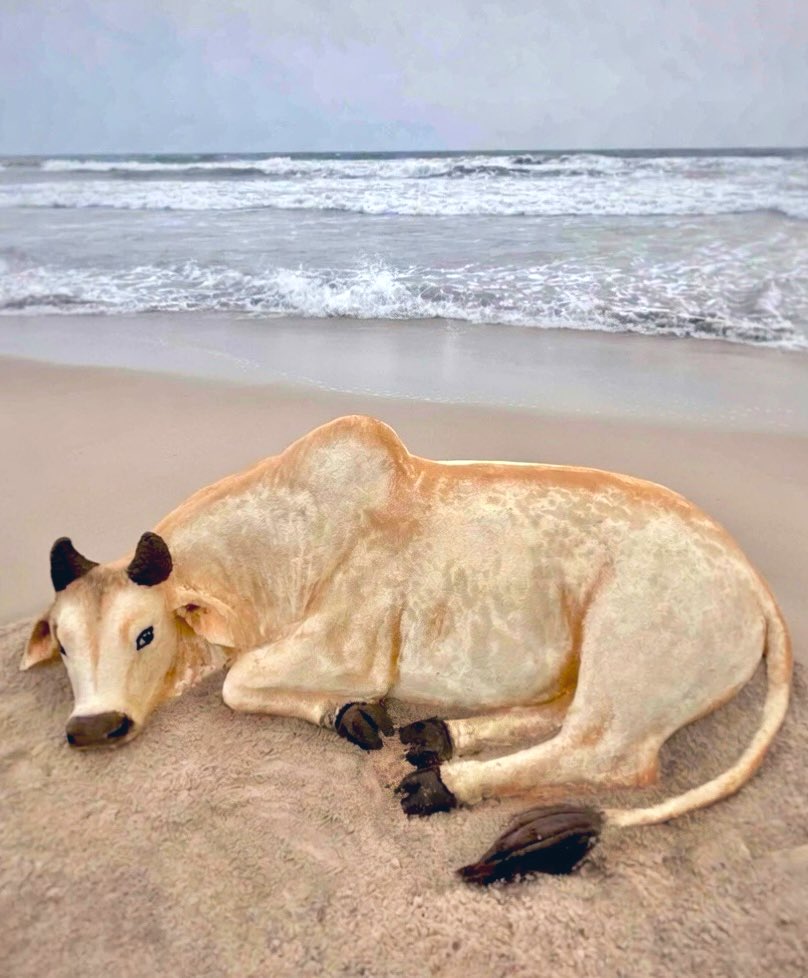
My latest sand art creation of a sacred #GauMata at Puri Beach, Odisha. A tribute to the symbol of compassion, nourishment, and Indian culture. 🙏
Sudarsan Pattnaik tweet media
English
413
2.5K
17.2K
170.6K
Anshuman retweetledi
anand mahindra
anand mahindra@anandmahindra·
I must confess that until recently I had never heard of Phool Dei, a spring festival that was celebrated yesterday in the villages of Uttarakhand. Children gather fresh flowers from the hills and go from house to house placing them on doorsteps, offering a blessing for the household: “Phool Dei, Chhamma Dei, Deni Dwar, Bhar Bhakar…” roughly wishing the home prosperity. In return they receive sweets. It reminded me a little of Halloween in the U.S., where children go door to door saying “trick or treat.” But what a lovely contrast. Here the children arrive not threatening a prank, or asking first, but giving first. Flowers. In an age when we speak so much about environmental consciousness, this graceful celebration of spring and nature deserves to be far more widely known. Just as Holi travelled across India and the world, perhaps Phool Dei should too. For me, the children of Uttarakhand are my #MondayMotivation
English
450
3.1K
13.2K
282.2K
Anshuman retweetledi
All Pure Vibes
All Pure Vibes@allpurevibes·
Best creativity ever🥳
English
0
35
251
19.9K