Elon Musk avait dit un truc qui m'avait marqué sur l'allocation de ressources. En substance : passé un certain niveau de richesse, l'argent n'est plus de la consommation, c'est de l'allocation de capital.
Cette phrase change tout.
L'économie, dans le fond, c'est juste un problème d'allocation. Tu as des ressources finies et des usages infinis. Qui décide où va quoi ?
Imagine une cour de récré. 100 enfants, des paquets de cartes Pokémon distribués au hasard. Tu laisses faire. Très vite, un ordre émerge. Les bons joueurs accumulent les cartes rares, les collectionneurs trient, les négociateurs trouvent des deals. Personne n'a planifié. Et pourtant chaque carte finit dans les mains de celui qui en tire le plus de valeur. Le système maximise le bonheur total de la cour. C'est ça, la main invisible.
Maintenant fais entrer la maîtresse. Elle trouve ça injuste. Léo a 50 cartes, Tom en a 3. Elle confisque, redistribue, impose l'égalité. Trois effets immédiats. Les bons joueurs arrêtent de jouer, à quoi bon. Les mauvais n'ont plus de raison de progresser, ils auront leur part. Les échanges s'effondrent. La cour est égale, et morte. Elle a maximisé l'égalité, elle a détruit le bonheur.
Le problème de la maîtresse, c'est qu'elle ne peut pas avoir l'information que la cour avait collectivement. C'est le problème du calcul économique de Mises, formulé en 1920. L'URSS a essayé de le résoudre pendant 70 ans avec le Gosplan. Résultat : pénuries, queues, effondrement. Pas parce que les Soviétiques étaient bêtes, parce que le problème est mathématiquement insoluble en mode centralisé.
Quand Musk a 200 milliards, il ne les consomme pas, il les alloue. SpaceX, Starlink, Neuralink, xAI. Chaque dollar est un pari sur le futur. Et lui a un track record. PayPal, Tesla, SpaceX. Il a démontré qu'il sait identifier des problèmes immenses et y allouer des ressources avec un rendement spectaculaire.
L'État aussi a un track record. Hôpitaux qui s'effondrent, éducation qui décline, dette qui explose, services publics qui se dégradent malgré des budgets en hausse constante. Le marché identifie les bons allocateurs, la politique identifie les bons communicants.
Le profit n'est pas une finalité, c'est un signal. Il dit : tu as alloué des ressources rares vers un usage que les gens valorisent suffisamment pour payer. Plus le profit est gros, plus la création de valeur est grande. Quand Starlink est rentable, ça veut dire que des millions de gens dans des zones rurales ont enfin internet. Quand un ministère est en déficit, ça veut dire qu'il consomme plus qu'il ne produit. L'un crée, l'autre détruit, et on appelle ça redistribution.
Dans nos sociétés il y a deux catégories d'acteurs. Les entrepreneurs et les bureaucrates. L'entrepreneur prend un risque personnel pour identifier un problème, mobiliser des ressources, créer une solution. S'il se trompe il perd. S'il a raison, ses clients gagnent, ses employés gagnent, ses fournisseurs gagnent, l'État collecte des impôts. Il est la cellule de base du progrès humain.
Le bureaucrate ne prend aucun risque personnel. Son salaire est garanti. Au mieux il maintient une rente existante. Au pire il la détruit par excès de réglementation, mauvaise allocation forcée, incitations perverses qui découragent ceux qui produisent. Mais dans aucun cas il ne crée.
Regarde les 50 dernières années. iPhone, internet civil, SpaceX, Tesla, Google, Amazon, Stripe, mRNA, ChatGPT. Toutes des inventions privées, portées par des entrepreneurs, financées par du capital risque. Pas un seul ministère n'a inventé quoi que ce soit qui ait changé ta vie au quotidien.
La France est devenue le laboratoire mondial de la dérive bureaucratique. 57% du PIB en dépenses publiques, record absolu. Une administration tentaculaire, une fiscalité qui pénalise la création de richesse. Résultat : décrochage face aux États-Unis, à l'Allemagne, à la Suisse. Fuite des cerveaux. Désindustrialisation. Dette qui explose.
Et le pire c'est que la mauvaise allocation s'auto-renforce. Plus l'État prélève, moins les entrepreneurs créent. Moins ils créent, moins il y a de base fiscale. Plus l'État s'endette et taxe. Boucle de rétroaction négative parfaite. La maîtresse pense qu'elle aide, et chaque année la cour produit moins.
Dans nos sociétés, ce sont les entrepreneurs, toujours, qui font avancer la civilisation. Les bureaucrates au mieux maintiennent une rente, au pire la détruisent. Aucune société n'a jamais progressé en taxant ses créateurs pour subventionner ses gestionnaires.
La question n'est jamais qui a combien. C'est qui alloue le mieux la prochaine unité de ressource pour maximiser le futur de l'humanité. La réponse depuis 200 ans n'a jamais changé. Ce ne sont pas les fonctionnaires.
Reading Hebrews 7 leaves you in awe. This is not just clever theology; it feels like divine intelligence unfolding in real time. The writer constructs such a devastatingly logical argument that you almost feel sorry for anyone trying to resist it.
He begins by setting Melchizedek beside Abraham and proving that Melchizedek is greater. How does he do it? First, Abraham pays tithes to him. In Jewish thought, the one who pays tithes acknowledges the superiority of the one receiving them. Second, Melchizedek blesses Abraham, and every Jew knows the principle: the greater blesses the lesser. So the conclusion is unavoidable. Melchizedek is greater than Abraham.
Then the writer tightens the grip. If Abraham acknowledged Melchizedek, then Levi, and by extension the entire Levitical and Aaronic priesthood, acknowledged him too, because Levi was still in Abraham’s loins. That is profoundly Jewish argumentation. It leaves no escape. Even the priesthood bows to Melchizedek. Case closed.
Then the writer brings in Psalm 110 and drops the hammer. God swore that another priest would arise after the order of Melchizedek. And the question becomes unavoidable. If the Levitical priesthood was sufficient, why did God promise another priesthood centuries later? The only logical conclusion is that the old priesthood was never intended to be final. It was always provisional. If the priesthood changes, then the law changes. That is fair, logical, and inescapable.
Now the argument becomes intensely focused. Psalm 110 is about the Messiah. Who is this Messiah-Priest? The answer is Christ. But Christ is not from Levi. He is from Judah. So His priesthood cannot be grounded in ancestry or legal regulation. It must be grounded in something else entirely. The writer answers that directly. His priesthood is grounded in the power of an indestructible life. Melchizedek’s priesthood in Scripture appears without end. Christ literally defeats death and lives forever. The parallel is complete.
Then the writer introduces a detail that detonates everything. The old priesthood came through law. Christ’s priesthood comes through God’s sworn oath. And every Jew knows what an oath from God means. Their entire identity exists because of God’s oath to Abraham. If they take that oath seriously, they must take this one seriously too.
Finally he exposes the failure of the old system. It never brought perfection. It could not give true access to God. Its priests kept dying so the system lacked continuity. They kept sacrificing daily so the system lacked finality. They had to sacrifice for their own sins so the system lacked moral perfection.
Jesus answers every weakness in one sweep. He lives forever. He is morally pure and needs no sacrifice for Himself. He offers one sacrifice, once for all. And He never stops interceding. It is the ultimate once-and-for-all solution. You do not have to keep patching the problem. It is dealt with permanently.
Hebrews 7 does not merely say Christianity is better. It declares that God Himself has moved history forward. The old priesthood is finished. The old system has served its purpose and is now obsolete. Christ stands as the final, eternal, perfect High Priest. Once you see that, you cannot pretend nothing has changed. You do not argue. You bow.
Title: The Parable of the Wedding Feast Explained Through Jewish Culture
Matthew 22:1–14
When we read the Parable of the Wedding Feast some of us feel confused, especially about the man who was thrown out for not wearing wedding garments. At first glance, it sound harsh or unfair. But when we read this parable through Jewish culture, everything becomes clear, logical, and deeply powerful.
Jesus was speaking to Jewish listeners, using Jewish wedding customs they understood very well. This parable is not about cruelty, it is about God’s grace, invitation, and righteousness.
Weddings in Jewish culture, especially the wedding of a king’s son, were among the most important and joyful events in society. Such a wedding was not a private ceremony. It was a public celebration that could last many days. The honor of attending was immense, and rejecting the invitation was seen as a serious insult.
In Jewish custom, invitations to a wedding were sent in two stages. The first invitation announced that the wedding was coming, and those invited agreed to attend. The second invitation was sent when everything was ready, telling the guests that it was time to come. When Jesus begins the parable by saying that a king prepared a wedding banquet for his son and sent servants to call those who had been invited, His Jewish listeners immediately understood that these guests had already accepted the first invitation. Their refusal to come was not ignorance, it was rebellion and dishonor.
This is why the response of the invited guests is so serious. Some ignore the invitation and go back to their farms and businesses. Others go even further and seize the servants, mistreat them, and kill them. To the Jewish mind, this clearly reflected Israel’s history. God had called Israel into covenant, and again and again He sent prophets to call them back to Him. Instead of listening, many ignored the message, and some even killed the prophets. Jesus was not telling a new story, He was retelling Israel’s story in parable form, and the religious leaders knew it.
When the king responds by judging those who rejected the invitation and destroying their city, this would not have sounded strange or cruel to a Jewish audience. In Jewish covenant theology, privilege brings responsibility. To reject a king’s invitation, especially after agreeing to attend, was an act of open rebellion. Many scholars understand this part of the parable as a prophetic warning about the coming destruction of Jerusalem, which happened in AD 70. Jesus was showing that persistent rejection of God’s grace eventually leads to judgment.
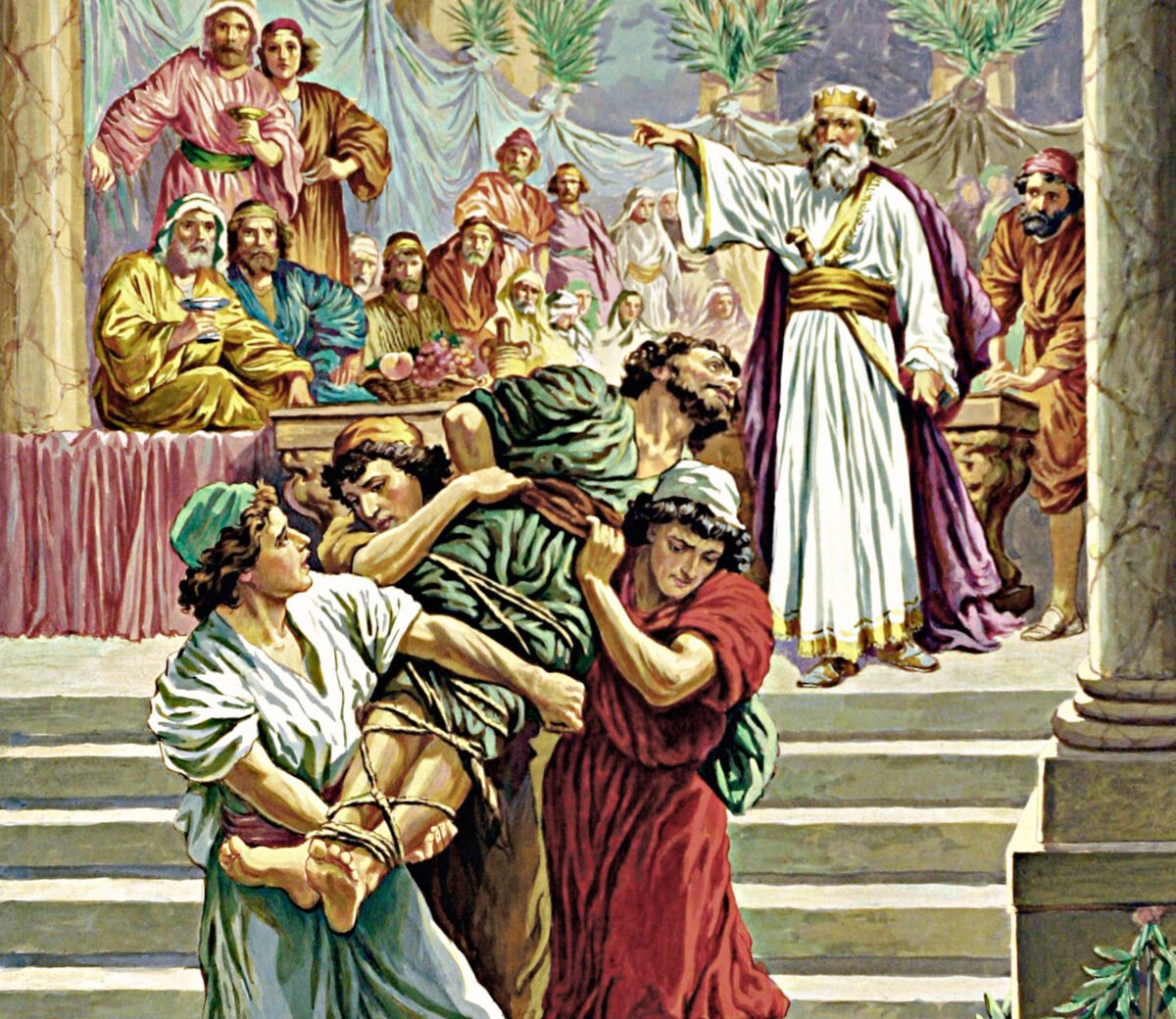
After this, the parable takes a shocking turn. The king tells his servants to go into the streets and invite everyone they can find, both good and bad. In Jewish society, especially at a royal wedding, this was unthinkable. A king’s banquet was for honored guests, not for strangers, outcasts, or morally questionable people. Yet Jesus deliberately includes this detail to show the radical nature of God’s grace. When those who were first invited rejected the call, the invitation did not disappear. It was extended to everyone. This is where the Gentiles enter the picture, along with sinners, the poor, and the socially rejected.
The wedding hall becomes full, and the story seems to end happily. But then Jesus introduces the most misunderstood moment in the parable. The king notices a man who is not wearing wedding clothes and asks him how he entered without them. The man is speechless. This detail is crucial. His silence shows that he has no excuse.
In Jewish royal weddings, it was common for the host to provide wedding garments. This was especially true when guests were invited unexpectedly from the streets. The garment was not a test of wealth or social status. It was a gift. To refuse to wear it was to dishonor the king and reject his authority. This man was not thrown out because he was poor or ignorant. He was thrown out because he deliberately rejected what the king had provided.
In Jewish thought, clothing often symbolized spiritual condition. Throughout the Old Testament, righteousness is described as a garment. Isaiah speaks of being clothed with garments of salvation and a robe of righteousness. Zechariah describes the removal of filthy garments from the high priest and the giving of clean ones. Jesus listeners would have immediately understood that the wedding garment represented a kind of righteousness that comes from God, not from human effort.
The man without the garment represents someone who accepts the invitation but refuses God’s terms. He wants to be present at the feast, but he does not want to submit to the king’s provision. In modern terms, he wants the benefits of the kingdom without honoring the King. This is why his punishment is severe. In Jewish culture, rejecting a king’s gift at his son’s wedding was a direct act of contempt.
This parable teaches that grace is free, but it must be received properly. The invitation costs nothing. The garment costs nothing. Everything is provided by the king. But it must be accepted. A person cannot stand before God on their own righteousness and expect to remain in His kingdom. The wedding garment points forward to the righteousness of Christ, which is given, not earned.
When Jesus concludes by saying that many are called but few are chosen, He is not saying that God invites many but only desires a few. In Jewish understanding, being “called” means being invited, while being “chosen” means responding rightly to the invitation. God’s call goes out to all, but only those who humble themselves and receive what He provides remain at the feast.
This parable fits perfectly with the wider biblical story. It connects with the Jewish wedding imagery found in John 14, where Jesus speaks as a bridegroom preparing a place for His bride. It connects with Revelation, where the marriage supper of the Lamb is described, and the bride is clothed in fine linen given to her. From beginning to end, Scripture presents salvation as an invitation to a wedding, where joy, covenant, and union are central.
In the end, the Parable of the Wedding Feast is not a message of fear but of honor and mercy. The door is open. The table is prepared. The garment is ready. No one is excluded because of background, past sin, or status. The only ones who are excluded are those who refuse the King’s gift and insist on standing before Him on their own terms.
The question Jesus leaves with His listeners, and with us today, is simple. Are we going to accept the invitation and humbly wear the garment the King has provided, or are we going to stand before Him clothed in our own righteousness and be found speechless?
From cleaning up our homes to keeping Kenya fresh for years, Sawa has always been part of the family. @PwaniLifeKe is taking freshness to the next level. #SawaGlow